Samuel Valentine

Samuel Valentine

/samuelvalentine

Samuel Valentine

Grappling with apathy but reaching for aspiration? I will help you move to better decisions by harmonising your habits.

X/TwitterSelf Strong
User Avatar

Samuel Valentine

10mo ago

Day 1: Why I'm Starting To Write Online
Sam Valentine

I recently signed up for Alfie Robertson's community-based 30 Day Challenge, an online space for prioritising health, physique and mind over the coming month.

Here are a few reasons why:

  1. I am training for my first charity boxing match.

  2. To discover the ripple effects of commitment.

  3. For integrating the last few years of inner work.

Over the next 30 days, I plan on writing about attention, devotion, and transformation.

Join me on this adventure—and let me know if you have any questions along the way!

I'm excited to start sharing what I know online.

User Avatar

Samuel Valentine

2y ago

Comparison is not the thief of joy.
Sam Valentine

8 months ago, I would have been the first to object.

The music festival we organise just came to an end and there was a small celebration.

"Everybody has grown so much. The festival evolves each year and so do they. But not me... I stay the same."

I was being sucked into darkness and dread.

Then it hit me.

Take ownership by turning the lens inwards, a friend said to me.

Joy wasn't absent in my life because I kept looking at other peoples' experiences.

It was absent because I did not accept I was unfilled, unhappy, and underprepared in life.

It was denial.

Denial is a way of protecting yourself by ignoring the reality of a situation. It prompts you to look elsewhere. You don't have to see your dirty laundry.

I know living in denial buys you time.

Denial presents itself by not acknowledging reality or denying the consequences of reality.

It can instil hope (not for long) of things changing. It presses you to justify and affirm unhelpful behaviours. It keeps you where it is familiar and comfortable.

But I also know living in denial steals your peace of mind.

Without accepting your current reality, you will give your power to change up to the world around you.

I'm sharing 4 habits I harnessed to overcome helplessness and hopelessness and move from denial to acceptance.

Curious to learn how they could move you too?

First, free-flow thoughts with journalling:

  • be open & truthful with you

  • non-judgemental, non-structured

  • organic self-discovery

Then, commit to communicating:

  • learn to hold space

  • learn to be held and heard

  • learn to trust

Remembering to ground yourself in nature:

  • stimulate multiple senses

  • big hills and horizons humble big problems

  • appreciate life's knack for course-correcting

Finally, run, lift, move daily (aim to manage one):

  • expand beyond your self

  • zoom out of your head and tune into your body

  • improve your current reality

The big takeaway?

Movement is a physical, emotional, mental and spiritual practice.

It is possible to shift your reality. You can achieve this by accepting denial is showing up in some way. You can absolutely show courage by admitting it no longer serves you.

Reason to believe?

Implementing these habits will compound.

You begin to shine a light on parts of you in darkness. You learn to communicate and adopt different perspectives. Change is unsettling but you become resilient to it by pushing yourself physically.

User Avatar

Samuel Valentine

2y ago

How To Recognise A Little Bit Of Light & A Little Bit Of Dark Comes With Every Change & Managing Yourself Through It For Increased Resilience & A Robust Mentality.
Sam Valentine

I find European languages so poetic.

A friend told me the word for dusk in Portuguese is 'lusco-fusco'. A little light, a little dark. The shift from day to night made think about changes in life generally and the presence of light and dark within them

The phrase made me reflect.

After coming out of a long-term relationship I questioned myself, faced past pains, and confronted fear. I recognised three crucial behaviours for moving through change. It's not easy (but these insights help).

Insight 1: The Power of Physical Activity for Mental Health

Physical activity is abundantly beneficial.

There are untold positive impacts from getting more movement into life. But one trumps them all. Physical activity creates stress on the body you can absolutely control because chose it.

Life likes to chuck a curve ball and being physically active better prepares you when it comes (and it will).

Insight 2: The Chain Effect of Planning, Persistence, Motivation, and Progress

Fail to plan, plan to fail.

Leaving out planning was a habit I adopted with a mindset of impending deadlines really spur on creativity. But it leaves you wide open to the everpresent demands of the work, relationships, personal pursuits. Becoming overwhelmed through a significant change can be easy.

Creating a plan to remain focused on your path is fundamental for your wellbeing, especially through change.

Insight 3: Embracing Change for Personal Growth

Not everything that is faced can be changed, but nothing can be changed unless it is faced.

Change was crying out to me from within. Other times life changes around you. However it comes about, change exposes us to the unknown and makes redundant a worldview tightly held for protection.

Trusting the process of change illuminates a beauty in life (and ourselves) we were once blind to.

User Avatar

Samuel Valentine

2y ago

3 Simple Mind Hacks For Worrying And Regretting Less To Take Back Control Of Your Life.
Sam Valentine

"Thinking is the hardest work there is, which is probably the reason so few engage in it."

Are you mindful of your thoughts or caught up in the stories they tell you?

6 years ago I made a personal revelation which changed everything. The way I had to be, what I had to do, where I had to be plagued every interaction. It was mentally exhausting.

I'm dropping 3 simple hacks that helped me turn overthinking into thoughtfulness (time and time again). They are so simple you might find you are already doing them. But you will need to reframe. Here's how:

1) Stop Resisting The Things You Cannot Change.

We do not have the resource to change things that happened in the past or may happen in the future.

Anger, frustration, suffering stems from wanting to influence things we cannot.

We try to influence things because we don't like the meaning we ascribe to the experience.

2) De-Occupy Yourself With Past & Future.

The only important time to occupy yourself with is now.

Decisions for the future are based on protecting ourselves from pains of the past.

By focusing in the past to build my future it took me significantly longer to realise what can be done now to steer myself another way.

3) Observe Your Thoughts.

Become mindful.

When you are mind full, trying to control your thinking, it only fills your head with more gunk.

Instead of trying to control the traffic of thought, I broke the cycle by learning to let them pass by.

The funny thing is you will do all of the above. Instead of doing it inherently, learn to do it intentionally. You can choose to live in the power of now.

The trick is to turn your inner critic into your inner coach.

What is one thing you can coach yourself into observing differently to take back control?

User Avatar

Samuel Valentine

2y ago

Do These 3 Hidden Goal-Setting Gems To Make You Want To Progress Towards Your Goals More Than The Idea Of The Achieving Your Goals (Because The Path Will Test You)
Sam Valentine

January has nearly come to an end.

The first opportunity to see how far you've stuck with 'New Me'. A time to contemplate what helped and what hindered progress towards your goal this month. Looking non-judgementally at your(new)self breathes fresh insight into how you want the rest of the year to go.

Not everything goes accordingly.

There are 3 things hiding in plain sight that combine to keep you on track.

I'm sharing what they are as I look back on the past month to what has helped me progress as an online coach. Want to know what they are and how to put them into practice to keep your resolutions rolling?

1) Visualise the process, not just the destination.

Goals without direction are discouraging.

I held the image of me, with 10 years of success behind me, in my mind.

It held me back moving forward until I could also imagine all the gritty steps I needed to take to get there.

2) Choose your resistance.

Whether it's from what you want to do, what you don't want to do, or any other change you face resistance is felt.

I distracted myself from getting in front of camera because I felt scared of putting myself out there to fail.

The resistance will always be there, so lean into the one you know you ought to be grappling with.

3) Share your work not your goals.

Goals are some way off in the distance and a lot can happen in the meantime.

As soon as I stopped sharing my goal and started sharing the specific task I was currently on the path became clearer.

Share thee work with a trusted friend who's going to tell you what you need to hear, not what you want.

When I practiced these hidden gems of goal-setting I acted quicker with more intent.

Clarity of thought helped trim the fat out of decision-making.

Motivation and mood elevated.

I have been finding solutions to procrastination for 3 years now. And what I can tell you (from experience) is that in order to remain consistent you need to imagine the bad just as much as the good (empowers you to adjust), reframe resistance you hold, and share your current task with awesome people. Break down the complexities with these 3 hidden gems of goal-setting.

Leave a comment on ways you've found success in making goals stick.

User Avatar

Samuel Valentine

2y ago

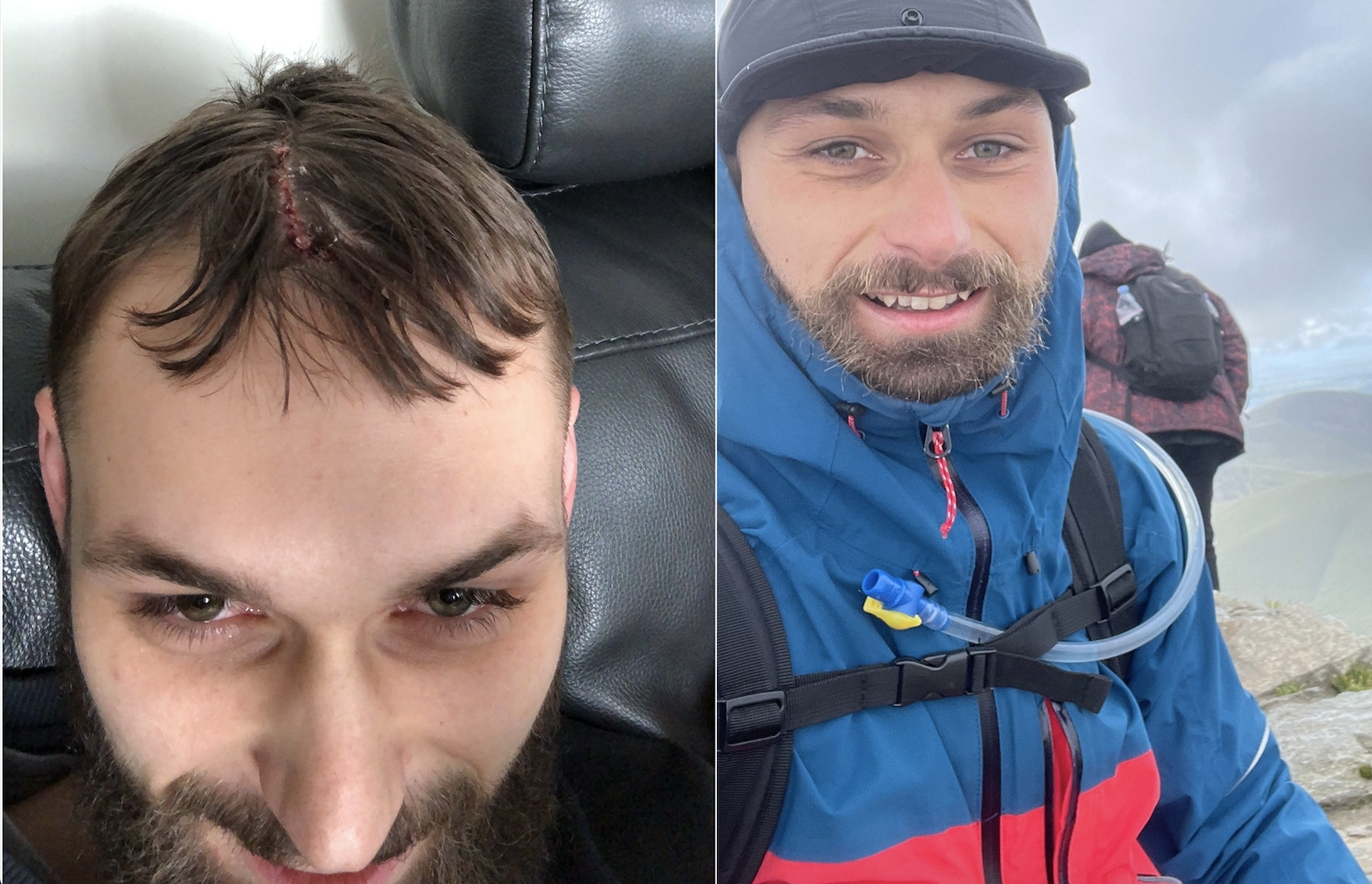
5 Unthinkable Truths About Selective Sobriety That Will Put Things In Perspective And Guarantee You Wake Up On Sunday Excited To Be Alive
Sam Valentine

Did you know there is a generational shift taking place?

Alcohol is chastised for January and is usually compensated for the following month. 'F**ked February' I heard it poetically referred to as today. Celebrating one month off from a nice-to-have with get-together-drinks seems counter intuitive.

Alas, the yearly cycle continues.

But not for a growing number of millennials and Gen-Zs.

More than half of 16-34 years olds in Britain either don't drink or haven't drunk in the last 12 months. It is becoming clear people are paying more attention to their health. Whether physical, mental, financial, spiritual–or all of the above–gains are being made, younger generation social dynamics are changing as booze bottles it.

I'm sharing 5 insights on living selectively sober and how dropping alcohol has changed how I live over the last 4 years. Want to know what they are and how putting them into practice motivates you to extend booze-free streaks?

Benefit 1: Shift of Identity Towards Healthier Habits

Your first beer was an arbitrary rite of passage growing up in Britain.

Looking at your behaviour is a good place to start for understanding what sort of person you are. A seismic shift from weekends centred around a drink to two 100-day sober streaks in my mid 20s. The break promoted deliberate and conscious choices over how time was spent.

Breaking the circuit opens the gate for different behaviours, and new identities, to emerge.

Benefit 2: No Regrets Of Waking Up Hangover-Free

Alert, fresh and focused.

Choosing when and how much to drink creates space over weekends. Even if I decide to drink today, the intake is far less degenerative the next day than 4 years ago. No one ever said "Orgh, I can't handle how good I feel" on a Sunday.

Sundays become a day of opportunity rather than snack-laden lethargy.

Benefit 3: Enhanced Clarity of Mind

Alcohol is a depressant.

The more one drinks, the more one's head spins (literally and figuratively). I notice I am way more sensitive to anxious thinking the day after a few beers. It is easy to live, completely unaware, in this heightened state if alcohol levels are frequently topped up.

Saying yes to sober is a commitment to clearer minds (but not everything you face will be easy–you can find the strength to face it).

Benefit 4: Positive Changes In Relationships

Select sober and select how you want to be.

The foundation to all relationships is the relationship we have with ourself. Without drinking on the weekend I noticed deeper senses of connection (and sometimes disconnect) between myself and others. Drink can mask the intuitive side of living.

Tuning in with selective sobriety guides you through taking positive steps in all your relationships.

Benefit 5: Serving As An Inspiration For Others

Energy emanates between you, others, and the environment.

Selective sobriety is becoming the norm. 100 days without drinking always caught peoples' attention and provoked a few into setting themselves a target when I mentioned it. Demonstrating positive action in your own life can inspire others to think changes they can make.

Ultimately the choice is by you, for you but watch the ripples (not tipples) flow.

I have been selectively sober for 4 years now. And what I can tell you (from experience) is that self-awareness, playfulness, and consistent effort soon compound. It's not easy but is worth it.

To learn more about selective sobriety and how you might get started drop a DM or comment 'Run-To-Pub Crawl' and discover the benefits (non exhaustive).

User Avatar

Samuel Valentine

2y ago

Run-To-Pub Crawl: A Dead Simple Hack For Getting In Your Long Runs Through Dry January.
Sam Valentine

You've set your new year resolutions.

"I want to lose weight. I am going to start running more. And I'm not drinking any alcohol for January after the month's worth was sank over Christmas."

But hang on...

All of the above taken together stresses the limited supply of willpower we can exert over ourselves.

The brain is programmed for us to go about daily tasks on autopilot. New inputs, like the above, all in one go can send our system into overdrive. The challenge and uncertainty of sticking to ambiguous resolutions can kick our unhelpful habits back into action.

I'm sharing 5 tips on a novel way of getting your exercise in while keeping some of what's familiar. Want to know what they are and how to put them into practice to keep your resolutions rolling?

  1. Look out for me, myself and I
    Change is easier when you ground it in a meaningful reason.
    Run-To-Pub Crawls got me outdoors, with mates, without an incentive to drink.
    Find enjoyment in how you do things, not the thing itself.

  2. Tiny changes sustained go a long way
    I want to run long distances.
    Pubs in our local area are plentiful and a pit stop in a few made 13KM much more manageable.
    Factor in checkpoints to keep on keeping on.

  3. Wire your brain to optimise for change
    Friends, different landscapes and terrains, rest and work.
    The brain operates across recharge, medium-, and high-charge states.
    Run-To-Pub Crawls tap into each one and we were fired up to keep going.

  4. Routine is required
    Non-alcoholic drinks in a pub can feel a bit foreign.
    Pick your beverage before and stick with it.
    Preparing for change and acting on it creates new circuits in the brain.

  5. The stick and carrot
    Rewards encourage new behaviour while penalties discourage.
    Book a table for food at the final pub as your reward (this also sets a timebound goal).
    Alcoholic drinks are likely to disrupt your stomach en route–don't punish yourself.

What's the big take away?

I have been searching for novel ways to remain fit for 3 years now. And what I can tell you (from experience) is that in order to keep it up you need to have fun, don't take yourself so seriously, and do it with awesome people. Organising a Run-To-Pub Crawl brings people together, supports sobriety and elevates your health.

Leave a comment on ways you've found success in making fitness habits stick.

User Avatar

Samuel Valentine

2y ago

The Moment I Nearly Procrastinated My Way Out Of Becoming An Online Coach–And The Conversation That Stopped Me.
Sam Valentine

Accepting where we are clears the path ahead.

Today a friend told me he couldn't feel the fire in my belly. He noticed I always had something to think about more whenever we spoke business. It was procrastination in realtime.

The conversation showed me I needed commitment to overcome the obstacles–not thinking my through them.

5 Procrastination Flags & How To Overcome Them.

Flag 1: The Fear Of Failure

I always believe I need to know something more.

Knowing more is part of growing. But I was stopping myself from putting my face online believing I didn't know enough to be taken seriously. And the more I know, the more I realise I don't know.

Rather than fearing the unknown, trust you know enough to start and your capacity to discover as you go.

Flag 2: Not Knowing How To Be Successful

If you want to get different results you have to get used to doing different things.

I muddied the waters by delving into previous roles and how I was successful there. But being self-employed online is a different game to play. The way has been carved out by others before.

Let go of ego and emulate the actions of successful people in the arena you want to play.

Flag 3: The Mind's BS Detector Alerted

Visualisation without actionable steps can be discouraging.

The brain is programmed through previous experiences. I envisioned and believe I can live freely through coaching online but have no pre-existing programme shifting the gears for this experience. To be there, it became clear I needed to do what is required now.

If you are chasing a dream, it will run.

Flag 4: Being Alone In The Journey

Lonely is the result of unmet expectation but being alone is to be content in the sacrifice.

Going your own way can give rise to feeling either of the above. I soon realised you can choose action or inaction to pivot on your expectation. Holding yourself to high targets without doing the action can lead to paralysis.

You'll need encouragement along the way, be it from a close tight circle of friends or an online community of fired up individuals in the same space.

Flag 5: Overthinking The Action

Resistance is a signal for you to lean in.

The brain sees the unknown as threatening. I held my breath, didn't speak my truth and held back from putting myself out there. The unknown exposes our vulnerabilities.

You can't choose what you feel but you can choose how you respond.

Handling the very actions that seem overwhelming releases the potential to uplift you.

User Avatar

Samuel Valentine

2y ago

A Slot-Canyon Taught Me A Valuable Lesson In How To Remain Confident Under Stress.
Sam Valentine

Hell Gill Force is as dramatic as its name suggests.

Waterfalls with inviting pools for wild swimming. A narrow bridge, known as 'Devils Bridge' built by Satan himself, according to folklore. 500 meters worth of meandering canyon enclosed by 20 meter high walls.

It's an adventurer's dream.

It is not for complacency.

A friend (we'll call her Beth) and I hashed out a plan. We would call out "Beth... Sam... Beth... Sam!" to each other as I wondered the canyon and she walked the top. But water running deeper and faster than expected cut us off.

I was alone.

Stress Arises When Confidence Is Knocked.

Being confident is having a belief in yourself and evidence to back that belief up. I went into Hell Gill Force believing I could absolutely make it through. My evidence was a love for outdoor adventure and video of it being done by a father and son (in conditions much fairer than I faced).

My belief began to shake.

There Are Two Channels To a Stress Response.

Your breathing goes and your mind spins. Short shallow breaths and thinking "I could die in here" were not helpful against the gushes of cold water. Confidence was broken but not completely shattered as I recalled evidence of surviving precarious conditions before.

I slowed my breathing which allowed me to reframe my thinking.

Controlling Your Mind Is Crucial To Remaining Confident.

I discovered beliefs are not as robust as we would like. Unpredictable environments create fractures between our meaning systems (what we expect to happen and what actually happens). The disconnect sends our brain into overdrive.

Looking to protect us, it will prompt us to fight, fly, or freeze.

Focused Breathing And Focused Reflection Helps Reclaim Control Of The Mind.

None of those responses were particularly helpful down the canyon in cold water. Slowing my breathing helped me focus on the task at hand. Reflecting in the moment helped build new evidence of absolutely making it through.

No matter what.

What situations challenged your confidence and caused you to experience stress? Let me know in the comments how you responded.

User Avatar

Samuel Valentine

2y ago

It's Nice To Be Liked But Nicer To Like Yourself & Helpful Habits For Learning To Do So.
Sam Valentine
Image

Those that don't study history are doomed to repeat it.

Those that do are directed to learn and progress from it.

Looking back to move forward is top tier self-love. Whichever your chosen channel for reflection, the practice is beneficial for your growth. Talking is mine and I had an enlightened conversation with my dad last night.

Recently I recognised being along for the ride in other people's stories was harmful.

Not liking myself meant not trusting myself meant not living as myself.

And I am (you are) the only person I will (you will) spend 100% of your life with. Living cohesively with this person is crucial for health, happiness, and overall life satisfaction. But as life happens, you will find moments degrade the bountiful confidence and unconditional love you have for yourself when you came into life.

Below are 3 habits I leveraged for learning to like and live well as myself:

Habit 1: Mindfully Meditate

Create space between you and the experience of being you.

Thoughts and emotions are easily caught up in. I spent years crafting a narrative of myself needing to be fixed or not being worthy. It felt like a drag living as me until I returned to stillness.

Begin to notice rather than have your thoughts to let go of them.

Habit 2: Figure Out Through Fitness

Developing fitness and strength is personal discovery.

Regular exercise breaks down barriers, squashes preconceived notions, and pushes you beyond thresholds. When I felt fucked is when I signed up to my first marathon. I'd never run more than 3K before.

Putting the work into you is putting the work in to everything else.

Habit 3: Explore Inwardly With Writing

All of your problems have answers existing within you now.

The subconscious mind is always active and processing information. Without liking myself enough to let myself be my conscious mind was like a hamster on a wheel. So I started brain dumping to let some of the deeper stuff out.

Ease up the pressure on yourself by letting thoughts flow through you onto the page.

Ask yourself what sort of person you want to be and start from the answer you receive.

Let me know which habits help you find out how you go about doing so in the comments.

User Avatar

Samuel Valentine

2y ago

A Question I’ve Been Asking Myself Lately (And Why)
Sam Valentine

I spend a lot of my time thinking about learning, growth and development.

But lately, one question I've been asking myself is this:

What causes me to feel like I am not making any progress despite feeling like I do lots?

For a few reasons:

  • Reason #1: I see others I connected with from previous cohorts further ahead than they were when we started.

  • Reason #2: Work and ideas I engage with appear fragmented.

  • Reason #3: More knowledge hasn't always equated to more doing.

To wrestle with this question, a few things I am doing are:

  • Letting go of comparison

  • Planning

  • Making accountability calls.

But I think it'll be a while before I come to any sort of solid conclusion.

(And if you have a clear answer to this question, I'd love to hear from you.)

User Avatar

Samuel Valentine

2y ago

Playing For The Arsenal Football Development Centre Was An Accomplishment But Getting There Was The Lifelong Lesson.
Sam Valentine

When I was just 13 years old, I was selected for Arsenal Football Club's Development Centre—just 3 months after being rejected from the first round of trials.

Here's the story:

Back then, not many got a second invite to the same centre. Which meant I was pretty close to being among the best players for my age but not good enough!

But the truth is, that seemingly small gap represented an unfathomable difference between me and the best U14 footballers.

And although I was only 13 years old, my childhood experience learning how to bounce back taught me 3 timeless, valuable life lessons:

  1. Attitude is the difference.

I had no right to a second trial.

Other players not selected left with heads hung and drooped shoulders. I thanked the coaches and walked away with my chest out. I felt distraught by the opportunity passing me by but my attitude showed them I wanted to be there.

  1. Respond to feedback.

I ran out of steam before the rest.

Being asthmatic I used to struggle for breath when I played. Speed was my strength but it drained my energy and lungs. Between trials, twice a week, on top of our usual training, a friend and I conditioned for explosive, agile, and interval fitness to out last the next round of competition.

  1. Understand your motivators.

I wanted to develop as a footballer.

My interests shifted after I turned 18 and I pursued coaching. The desire to grow as a player was only a portion of the story. I discovered working to push the limits of myself and doing so with a friend was the biggest factor in getting me to where I wanted.

What were you obsessed with when you were younger? And what life lessons did it teach you?

Let me know in the replies!

User Avatar

Samuel Valentine

2y ago

The Simplest Way To Overcome (Un)Productivity.
Sam Valentine

Everyone struggles with being productive.

Personally, I have for years.

In 2019, I started my post-graduate studies. I intended to not repeat the cycle of my undergrad–intense peaks of work followed by bouts of recovery and procrastination. However, the same pattern emerged and I was no further down the line of being productive.

But what changed for me was how I defined productivity itself. And as soon as that clicked, I started to understand that overcoming it wasn't that hard—I was just doing the wrong thing.

Here's what I should have done instead:

Do whatever matters to you in a way that is intentional and effective, and ideally enjoyable as well.

Ali Abdaal is the productivity guru of YouTube.

Adopting his definition helped bring clarity, consistency and empowerment to my work I. It encouraged me to become aware of the meaning I give to tasks. I also became motivated by pursuing work aligned with my strengths.

Intentional, effective and enjoyable work becomes a learning experience.

It's still a process but the work I feel good in doing (almost) always get done.

User Avatar

Samuel Valentine

2y ago

Focus Requires Escape: A Quick Guide To Block Out Distractions And Guarantee 30 Minutes Of Flow State Per Day
Sam Valentine

Master Shi Heng Yi is the online go-to for flow states.

But despite being the leading Headmaster of the Shaolin Temple, most people have no clue how he did what he did. And honestly, neither did I. So, I took it upon myself to binge over 50 YouTube videos to study exactly how—and see if I could find a repeatable framework I could use myself to achieve flow.

50 hours later, here’s what I learned:

Quick Stats About Shi Heng Yi

Here are a few interesting data points to give you context, in case you're unfamiliar with him:

  • Headmaster of Buddhist Monastery in Germany

  • 30+ years dedicated to study and practice of body-mind interactions

  • 35th generation Shaolin Master

  • Over 16M views on his 5 Hinderances Tedx Talk

Needless to say, they’re one of the best in the world at entering flow.

So... what can we learn?

Master Shi Heng Yi’s 4-Step Framework For Achieving Flow

From my research, all their success can be boiled down to a very simple process:

  1. Recognise

  2. Accept

  3. Investigate

  4. Non-Identify

Pair this framework with an unmatched work ethic and you get a potent combination for rapid growth.

Let's dig in:

Step 1: Recognise

For Shi Heng Yi, everything begins with discovery.

The reason is because each moment is new.

To do this, Shi Heng Yi does the following:

  • Asks, "where is the root of this feeling right now?"

  • Shifts perspective inwards

  • Becomes accountable when things go wrong

Simple, but highly effective.

Step 2: Accept

The next thing Shi Heng Yi focuses on is acceptance.

He does this by acknowledging, and even allowing the situation to unfold as it is. This is what separates him from the competition, and makes him stand out so much compared to the average person. I consider this his “secret sauce.”

Which leads us to…

Step 3: Investigation

Shi Heng Yi is so successful at entering flow state is because he is obsessive about asking:

  • "Why did it come up?"

  • "What is going to be the consequence if I remain in this state?"

  • "How can I act to be aligned with my goals and values?"

And finally...

Step 4: Non-Identification

But the real reason flow state comes so easily to Master Shi Heng Yi is down to his ability to detach:

  • "I am not the body"

  • "I am not the mind"

  • "I am not the emotions"

  • "I am the one who can see these three aspects of being me"

This, combined with accepting, recognising and investigating is what makes him so successful.

So, give the above and try, and maybe you will be the next Grandmaster of flow!

User Avatar

Samuel Valentine

2y ago

How To Solve The 3 Biggest Problems In Your Health & Fitness
Sam Valentine

I have been working in health and fitness for 5 years.

Since starting as a Mental Health Ambassador and working my way up to a Behaviour Change Coach, I have learned a lot about what it takes to solve some of the biggest problems people face in our industry. In fact, they are a lot easier to solve than most people think. You just need to change how you're thinking about them.

Here they are, and how to solve them:

  1. Fitness is supposed to be fun.

    Fun is going to the fair or arcades. Exercise doesn't elicit the same physiological response, although it does heightened it. Give meaning to exercise by thinking how it improves your day-to-day living. This is much more intrinsically motivating and sustainable.

  2. Unattainable Outcomes Set By Unattainable Comparisons.

    Fractions of fitness are glorified. Social media portrays some of the story. What is desired is more programmed than thought out with clarity. Become mindful to define life how YOU want to live it and position diet, sleep and exercise as the vehicle.

  3. More Knowledge Does't Equal More Doing.

    There is abundant information on how best to be healthy. But we are seeing more and more people become chronically ill. There is a mismatch. Understand the brain above all else to optimise its functions for building sustainable, consistent and reliable habits.

See? That wasn't so hard.

User Avatar

Samuel Valentine

2y ago

Most People Think Keeping Your Partner Happy Maintains A Healthy Relationship. Here's Why They're Wrong.
Sam Valentine

The world’s most valuable skill is self awareness.

Unfortunately, thinking about what our significant others think about us keeps us from ever learning how to nurture it. We spend hours (and usually a ton of money) trying to learn how to keep relationships healthy, all the while failing to realise the focus must changed. Fixing the situation isn’t relevant anymore—because now, in order to be at peace, you have to develop a deep understanding of yourself.

I know, because I lived in a cycle for 5 years and damaged relationships trying to learn this myself.

But, my loss is your gain.

Here are 5 self awareness frameworks that will save you dozens of painful hours trying to learn about yourself:

  1. BelieveInMind's 4-Types Framework

Hearing this completely changed the way I thought about understanding myself.

According to BelieveInMind, all you have to do is distinguish and work through the following one at a time:

  • Intrapersonal Self Awareness: how you relate to you.

  • Interpersonal Self Awareness: how you relate to others.

  • Behavioural Self Awareness: how you relate to behaviours.

  • Emotional Self Awareness: how you relate to emotions.

  1. Charmas Lee's Think Say Do Framework

Hang this up in your room somewhere—and stare at it everyday.

  • Think of your highest potential daily.

  • Speak your thoughts to into creation.

  • Do the work required to build your dreams.

  1. Eckhart Tolle's Modalities Of Awakened Doing Framework

I consider this the Bible of expanding self awareness.

  • Acceptance: Not everything you do, or what happens for you, will be enjoyable but you recognise for now, this is what the situation, in this moment, requires from you, and so you do it willingly.

  • Enjoyment: Joy–dynamic in nature–is experienced as a result of being fully present in whatever action you are engaged as it flows through you out into the world.

  • Enthusiasm: When smaller scale actions are enjoyed combine with a vision or larger scale goal, you become aware of your outer expansion and experience some tension to grow through.

  1. Kishimi & Koga's Courage To Be Disliked Framework

Struggling with accepting yourself?

  • Self-Forgiveness: Your experiences are not determined by what happens to you but by the meaning you give to them, a largely unconscious protective process to be forgiven when you start waking up.

  • Self-Care: Separate your level of responsibility from others' throughout experience and take steps to control your response, not the reactions of others.

  • Mind Decluttering: Discern what you're in control by disregarding the need for recognition from others and focus on becoming useful for something larger than yourself.

  1. Anthony De Mello's Awareness Framework

Finally, this is how you achieve peace of mind and heart:

  • Live In Openness & Willingness: Listen to internal and external signals to discover something new.

  • Pass The Test of Love Through Sacrifice: Love is generated through awareness of what is, allow parts of you to 'die' to live as it is and not as you are.

  • Remove Attachments Remove Suffering: Identify, recognise and let go of fear and suffering.

These 5 frameworks completely changed the way I thought about life, relationships and happiness.

If only I had discovered them sooner…

User Avatar

Samuel Valentine

2y ago

5 Realisations From Joining The Fitness Industry As A Professional After I Started Training 15 Years Ago.
Sam Valentine

I first joined a gym at 13 years old.

I wanted to be bigger, faster and stronger to help my development as a football player. But my interests shifted as I got older. Going to the gym became about looking better not performing better.

Since our bodies are always changing, I found this to be a fragile motivator and I fell out of training some years later when I got to university.

By the time I was 25 I found different, intrinsic edges to becoming fit again.

Realisation 1: Aesthetics to Functionality

A body is like clothing–when it functions properly you don't even notice you're wearing it.

A major mind-shift in training came from being able to maintain good posture. I became aware of some subtle and not so subtle imbalances in my body when I started running and practicing yoga. This awareness brought a new focus on how my body felt during movement and being still.

Working towards daily functionality and moving freely is the biggest confidence booster.

Realisation 2: Body Exploration

You have workout equipment at your disposal.

2 years I couldn't afford a gym membership. Undeterred, I trained in the park I lived opposite using YouTube (Strength Side, check 'em out). Over time I found my was way more capable of different movement patterns beyond what I got used to in the gym years previously.

Exploring the boundaries of my body ignited fun, drive and curiosity.

Realisation 3: Overcoming Mental Barriers

"Just one more step, focus on the next step."

Running became a remedy for depressive episodes. I lived in a cycle and, oddly, the monotony of running helped me break it. Going one more step became a mantra for getting through the darker moments.

Training your body and training your mind sit of different sides of the same coin.

Realisation 4: Persistence and Consistency

Train often enough to the point of becoming disciplined.

Training harnesses commitment, persistence and consistency. Before I started training again I would not have described myself as a disciplined person. With it, I was able to land a job in 2 weeks of moving to the other side of the country and commit myself to further projects, interests, and connections.

Training is a meta-skill for significant progress and benefits across life.

Realisation 5: Continuous Learning, Sharing, and Growth

Wins from working out are relative.

Every body is unique, each mind shaped differently, and all spirits express differently through physical activity. I have trained over 500 people across different areas of health and fitness and not one session has produced the same outcome for different people. I believe being active is unrivalled for discovering more about ourselves.

Physical activity expands what we're capable of as individuals and a collective.

Curious about how physical activity can play a role in your development? Or have your own insights from training? Be active in connecting, I'd love to hear your stories.

User Avatar

Samuel Valentine

2y ago

What I Learnt From Jumping On A Skateboard Again After 15 Years.
Sam Valentine

When I was 13, I stopped skating after dropping in and falling off. Twice.

I became scared of the quarter pipe and the pain I felt. I didn't have the resilience to get up for a third attempt. I moved on from skateboarding and forgot about it.

But a visit to Venice Beach in my early twenties ignited a lost love.

I watched skaters glide through the bowls.

Mesmerised by raw and rugged grace. The low rumble of wheels on concrete and rhythmic grind of trucks consumed my mind. Fear began to shred away.

The idea of skateboarding crept into the realm of possibility.

Here are 4 lessons in it never being to late to start...

Lesson 1: The Power Of Imagery

Visualise and sense all aspects of a successful outcome.

Feelings, sounds, sights, thoughts can be simulated in mind before even taking action. For years I constantly imagined feeling two front wheels hitting the ramp and skating onwards. I had no plan to skateboard but my curiosity and confidence grew.

Become successful at being successful through multi-sensory experiences in your mind.

Lesson 2: The Importance Of Full Commitment

Not going 100% on a drop-in results in failure 100% of the time.

It can be scary up there. But I only felt scared on top of the quarter pipe. Being scared serves to keep us safe so we don't fully commit to something that might harm us.

Truth is we can only progress by doing the thing so feel scared and drop in anyway.

Lesson 3: Don't Hesitate To Ask For Help

My friend Jay was there to hold my hand.

Quite literally Jay held my hand on the first two attempts. I could've put off dropping in and stayed within my comfort zone on the floor. But asking for his help allowed me to try, fail, try, succeed, then succeed on my own.

Going beyond your comfort zone is made easier with someone there to begin with–ask and you'll find they are usually happy to help.

Lesson 4: Finding Your Flow Is Key

Stiffen up and stack it.

Dropping in is all about pushing your body forward and downward. Moving forward and getting your head down into difficult tasks can tend to be met with resistance. Feel resistance, lean into it and use it as a signal to let go otherwise it can stop you in your tracks.

Flow isn't necessarily about feeling a certain way, but being able to adapt, shift and recenter to the situation now.

What fired you up as a kid? Explore that as an adult and share what you learn about yourself.