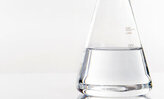
On this day (or thereabouts) in 1827, a young Charles Darwin made his first scientific discovery. In the collection 'From So Simple a Beginning: Darwin's Four Great Books,' edited by E. Wilson is the quote: "In 1827, Charles Darwin made his earliest scientific discovery, at age 18. He dissected some specimens of a barnacle-like marine organism, the polyzoan Flustra. Thus he began what became a lifelong interest in natural history." Reading this quote reminded me of a defining moment in my own life during a Grade 11 biology class. We were clustered around our teacher, who presented a beaker containing a clear liquid and challenged us, "What do you think this is?" My classmates immediately shouted, "Water!" In a mischievous tone, he replied, "Are you sure? How would you try to determine what it is?" The room fell silent. Crickets. I had an idea but was reluctant to speak out, being the shy, fat kid that I was. Yet, I gathered my courage and suggested, "Smell it?" The teacher smiled, confirming, "Exactly." He reminded us that we have five senses and should not rely solely on sight but use our other senses to make observations. He demonstrated how to safely waft the air from the beaker toward our noses. Immediately, we identified its contents as vinegar. That day, I learned that I might possess the mind of a scientist, igniting my own lifelong interest in biology.