Ross Boyd 🚢

/TheRossBoyd

Ross Boyd 🚢

I help leaders turn bold ambition into action | Psychologist | Executive Coach | 🇬🇧 Veteran | Virgin Group Alumni

User Avatar

Ross Boyd 🚢

3y ago

Five Generalisations I Stand By After Writing Online Every Day For 30 Days In A Row
Ross Boyd

30 days ago, I signed up for Ship 30 for 30.

I have written and published 30 Atomic Essays daily.

I have learned the fundamentals of Digital Writing, made some awesome friends and started to think more deeply about a handful of topics.

Here are six generalisations I stand by after publishing consistently every day for 30 days:

1. It flips how you use social media

I used to passively scroll through Twitter. Now I actively read with a much higher degree of curiosity.

2. Twitter is filled with some lovely people

Money Twitter gets a lot of bad press. I am blown away by the generosity of spirit of the majority of people in my orbit. I have had calls with some amazing people.

3. It's impacted how I write offline

The impact is pervasive across all channels. How to structure and land a message and communicate more generally.

4. "I didn't have time to write you a short letter so I wrote you this long one instead"

Clarity of thought creates clarity of action. Writing forces clarity of thinking.

5. Follower count =/= success

The majority of people I have come across are objectively very successful in life outside of Twitter. Follower count does not reflect efficacy of experience.

I committed to write for 30 days online. I have sacrificed other endeavours to not break the streak, even when I didn't feel like it. Ship 30 has been a hugely valuable experience and I recommend it to anyone sitting on the fence.

User Avatar

Ross Boyd 🚢

3y ago

The Biggest Blocker To Implementing OKRs In Businesses That Want To Scale
Ross Boyd

Noone I Know Has Enough Time

I'm yet to meet a leader or team that doesn't have a time problem.

Unlocking the constraints of only having 24 hours in the day requires a process for prioritisation. Goal setting is absolutely fundamental to human performance. OKRs helps create both robust and flexible goals.

OKRs helps create a time dividend by answering the question 'if I'm saying yes to this, what am I saying no to?'

The Biggest Blocker To Implementing OKRs

Most teams I work with struggle to get OKRs off the ground because they fail to understand a fundamental premise.

Choosing to implement OKRs is choosing to change your culture, not just choosing to use a particular framework to set goals. It's giving permission to people to make their own decisions in the knowledge that those decisions might lead to failure. It's giving permission to people to be really creative with the initiatives they commit to and thus bringing innovation to the organisation.

Buyer beware, OKRs will change you culture, not just how you set goals.

The Impact of Successful OKR Application

The teams I see embracing OKRs don't sweat the small stuff.

They're clear on the boundaries and the outcome they're solving for. They know what a good decision looks like and they're not paralysed by overthinking or a fear of failure. They are laser focussed on the most important thing on a daily basis and what needs to be done to deliver it.

The longer I work with OKRs, the more I wonder why more teams don't adopt it.

User Avatar

Ross Boyd 🚢

3y ago

Five Bits Of Self Talk From The Military I Used Every Week To Build My Business
Ross Boyd

One of the few things I miss about the military is the calibre of characters in it.

A never ending cast of legends and the one liners they've delivered is vast.

Here are five that I've leaned on heavily whilst building my business.

Train hard, fight easy

This maxim is a staple of every instructor at every training establishment across the country.

When I started out as a coach I used this belief to force myself into taking big risks in low stake environments. I would coach people I found intellectually intimidating for free to build confidence and muscle.

Sleep is a weapon

There are few scarcer commodities for an infanteer than sleep. The routine whilst training is to enforce four hours sleep a night. Stop what you're doing, sleep. Then keep going.

Whenever I find myself on the cusp of an all nighter, I remind myself of the diminishing returns. I'm way better well rested, behind with a mountain to climb than turning in work completed with bleary eyes.

You can't manage risk down to zero

Life is a risky business. You don't have to work in 'Risk' to manage it on a constant basis. Failure to learn to live with risk will turn you into Chicken Licken.

Judgement is the link between intent and effect

Being able to see the situation for what it is, not what you think it is, is a super power. Objective judgement, as clear from bias as possible is the critical moderator between your intent, and the effect you would like to have.

"No way you shag with that"

One of the lads has just stepped on a landmine, blowning his clothes clean off.

Naked from the waist down, screaming for his mum, on a stretcher headed for a helicopter. In an attempt to distract, one of the lads leans and shouts "no way you shag with that?".

It didn't have the desired effect, but I always use it as a reminder that there is rarely not space for a bit of humour.

User Avatar

Ross Boyd 🚢

3y ago

A COO Asked Me What My Conditions Were For Working With Their Team
Ross Boyd

I work with some very coll clients. Amazing people determined to do deliver incredible things.

I met with a COO from a nascent tech company. They think of the team they're building as a high performing sports team.

They want coaching support for the fundamental elements of human performance. Building resilience to deliver ambitious goals. Challenge thinking for quality of action. Creating awareness for building trust.

They asked me if I had three requirements for working with the team, what would they be?

This is what I said:

  1. Allow things to get messy. The path of coaching and personal development is not linear. Some truths reveal themselves in minutes, some insights take months or years to unpack. High expectations on immediate results adds pressure to an already high pressure environment.

  2. If you want coaching expertise in house, you have to have a culture of coaching. It can't be window dressing in order to tick a box. That means leadership show up for coaching and role model the behaviours they expect of the team.

  3. The needs of the individual come first. Sometimes you don't know where the line is until you cross it. If someone realises that they're on a path they don't want to be on, and to continue makes them deeply unhappy/stressed/depressed - alternative possibilities are going to be explored in the coaching.

Coaches I'm curious, what would your responses have been?

User Avatar

Ross Boyd 🚢

3y ago

Three Slow Punctures To Trust That Leaders Must Avoid For Teams To Flourish
Ross Boyd

"Hurry up and wait". I must have heard this 1,000 times in the army.

All that time spent waiting is filled with talk amongst soldiers. It starts small. 'Name as many brands as you can that have become a noun...?' Hoover, band aid, sellotape....

Eventually you're done and the deeper stuff comes out. How you want your funeral to run. Pariahs in the family. Emotional highlight reels.

I never made it to the front line with a soldier I didn't 100% trust with my life.

The research on trust and the game theory of cooperation points to three big levers to be aware of for building trust:

  1. Avoid zero sum games: always seek the win - win. This seems really obvious in something like a contract negotiation with well defined outcomes for each side. Think about conversations characterised by your determination to be 'right' on a particular issue. You being right means the other person is therefore wrong. That's an insidious, pervasive and damaging zero sum game.

  2. Communication: In my 41 years across multiple industries and contexts, I am yet to encounter an issue that was created from over-communicating a consistent message. Soldiers deep bonds of trust are built on communication. Too often we assume people see a situation the same way as us, and as a result we don't communicate.

  3. Reduce the likelihood of deliberate mistake: A tit for tat strategy whereby you role model the standard expected. Reciprocal behaviour enables the development of trust. In this context the person in the position of power HAS to go first. Waiting for the team to go first won't yield the result you expect.

How have you seen trust undermined in a non obvious way?

User Avatar

Ross Boyd 🚢

3y ago

How To Write Your Company Level OKRs If You Don't Know Where To Start
Ross Boyd

Objectives and Key Results (OKRs) are an excellent mechanism for implementing strategy.

Done well it will give you focus and clarity to sift the noise out of your workflow and keep you and the team focussed on the most important decisions and priorities.

The end of year is fast approaching. So if you're stuck for inspiration, or just keep putting your planning off, follow these 10 steps.

  1. Write your vision for the company. It should be a concrete picture of the future in 5 - 10 years time. Make it concise, consistent with you mission, feasible, quantifiable and time bound. This serves to points you in the right direction.

  2. With the vision top of mind, reflect on the question 'what needs to be true in one year to give me confidence we're building momentum towards our vision?

  3. Use the business model canvas as your framework for objective setting as it forces you to think about the business end to end.

  4. With your leadership team, IN SILENCE, select three to five priorities that align to different segments of the business model canvas.

  5. Do not confer, we want to avoid group think.

  6. Starting with the quietest person first, present priorities for the coming year. Place post its in the respective business model segment. We don't want the loudest voice in the room to dominate (you know who you are).

  7. A good litmus test for a priority to become a quality objective is:

    1. Problem - is it a bottle neck for the business? Why does it matter now?

    2. Opportunity - why is going after it game changing

  8. Anything in-between probably doesn't warrant OKR level attention.

  9. De duplicate any repetition. Cluster your themes.

  10. Get curious about what you can measure to define your Key Results. If you're struggling, use Google's HEART framework for inspiration.

User Avatar

Ross Boyd 🚢

3y ago

A Six Step Process For Developing Part Of Your Emotional Intelligence When Leading Through Change
Ross Boyd

Leadership often ignores a fundamental truth about people.

Humans aren't optimised for self actualisation. We're hard wired for survival.

We subconsciously scan the environment multiple times a second searching for threats. When a metaphorical branch snaps, warning of impending danger, a fight or flight response kicks in.

Change represents a metaphorical branch snapping and triggers that same fight or flight response.

To successfully lead people through change that sticks, you can't force it on people. They've got to want to do it for you.

Emotional intelligence is the set of emotional and social skills that establish how we (amongst other things) develop and maintain social relationships. It can be measured, and like any other muscle, can be developed over time.

Interpersonal relationships is a component of emotional intelligence.

When working with leaders implementing change, I use this simple technique for developing relationships:

  1. Think of the people who are important in the change you want to create.

  2. Make a list, include everyone.

  3. Put all of the names into three columns:

    • People I connect really well with (left hand column).

    • People I think I connect really well with(middle column).

    • People I don't connect with at all (Right hand column).

  4. Look at which column is longest.

  5. Consider how you treat the those people in the left hand column. How do you behave towards them?

  6. Looking at those in the middle and right hand column, what do you need to do differently to move them to the left?

This is a simple and effective exercise that forces reflection on our relationships and how we show up in them.

User Avatar

Ross Boyd 🚢

3y ago

For Those With Performance Anxiety, Try Giving Yourself An 'A'
Ross Boyd

Ben Zander is the conductor for the Boston Philharmonic Orchestra, and a professor at the New England Conservatory of Music.

Every year for 25 years he noticed students were in a chronic state of anxiety over the measurement of their performance. This meant they were reluctant to take any creative risks.

He devised an approach to tackle the anxiety with his partner who is a therapist. He decided to give everyone an A at the beginning of the course. Students had to write a letter detailing what they had delivered, learned and overcome in the process of achieving an A.

The A was not intended as a way to measure student’s performance against a standard, but as an invitation to open themselves up to new possibilities.


This practice is called 'giving an A'.

  1. It is a shift in attitude that makes it possible for you to speak freely about your own thoughts and feelings

  2. The practice flips your mindset from a world of measurement against peers and standards into creating a universe of possibility.

How to write yourself a Zander letter:

  1. Place yourself 12 months in the future;

  2. Imagine you have achieved an A for your previous 12 months of work;

  3. Ignore all societal expectations of modesty;

  4. Report on all the insights you've acquired and the milestones you've delivered throughout the year, as if those accomplishments were already in the past;

  5. Everything must be written in the past tense. Phrases such as ‘I hope,’ ‘I intend,’ or ‘I will’ must not appear; and

  6. Aim for a minimum of 500 words (but any output is better than nothing).

Reflect on what shifts for you as you read back 500 words of pure possibility.

User Avatar

Ross Boyd 🚢

3y ago

A Challenge On Self Awareness For Those Struggling With Confidence
Ross Boyd

Two huntsmen are walking alongside a lake one Saturday morning.

A bird takes flight. The first huntsman snaps his shotgun tight into his shoulder, takes aim and fires.

The bird falls to the water.

His retriever sprints across the surface of the lake, snaps the bird up in his jaws and sprints back to the hunters.

The second huntsman's jaw drops open in amazement.

Five minutes later the exact same thing happens again. The retriever springs into action again to retrieve the dead bird.

The second huntsman is bewildered. This time he speaks up.

"I think there's something unusual about your dog!"

The second huntsman ponders for a moment.

"You might be right. Come to think of it, I don't think he can swim".

You can walk on water, yet you don't even think you can swim.

User Avatar

Ross Boyd 🚢

3y ago

A 7 Question Blueprint For Building Bombproof Plans To Use In Any Situation
Ross Boyd

There are some things that the military is very good at.

  1. Cooked breakfasts (but you can only have one sausage).

  2. Sleep deprivation (if you can do it tired you can do it any time).

  3. Cold weather sleeping bags (if you know, you know).

The thing the military is Olympic gold standard at is planning.

Planning gets bad press. But there's a healthy level of planning.

Striking the balance between clueless halfwit and procrastination dressed up as mental masturbation.

These are the seven questions the military use to plan, whether it's raiding the enemy or covering ambulance strikes:

Q1: What is the context?

What in the wider external environment do I need to be mindful of and how might it change?

Q2: What have I been told to do?

What is the exact problem I'm solving for. Define planning guidance and underlying hypotheses. Validating your hypotheses as the chaos unfolds steers how the plan develops.

Q3: What is the outcome I want to achieve?

...and what is my 'definition of done'.

Q4: What are my options?

Brainstorm all options (obvious and innovative) and generate contingency for when 'plan A' goes to a ball of chalk. (which it will, because everyone has a plan until they get punched in the face)

Q5: What actions must I take to achieve my chosen option

Generates your specified and implied task list.

Q6: When and where do I do everything?

Creates your timeline.

Q7: Control measures?

What sensible control mechanisms do I need to have in place to reduce friction and maximise flat and fast passage of information.

Who else loves to plan? What questions would you add or change?

User Avatar

Ross Boyd 🚢

3y ago

The Five Symptoms That Suggest Objectives And Key Results (OKRs) Could Help Scale Your Business
Ross Boyd

John Doerr's net worth is estimated at ~$10bn.

His invested in Google in 1999 on the condition they used OKRs as their organisational goal setting framework.

OKRs help you map bold strategic intent to very tactical, quantifiable activity at the coal face of a business.

It answers specifically 'WHAT are we going to deliver'.

It creates boundaries within which to determine 'HOW we will deliver'.

I have coached countless teams and businesses in OKR implementation.

It's also the framework I use for my own personal and professional goal setting.

Five things I often see in clients that suggest they'd benefit from OKRs

  1. Low Ego: OKRs are built upon a philosophy of hypothesis testing. If your ego demands you be right all the time or have all of the answers, you may not get the most from OKRs.

  2. High Expectations: After raising capital there is high investor expectation on delivery. OKRs brings focus, objectivity and feedback loops to the process of deciding what to do and when.

  3. High Curiosity Teams: The data is conclusive on the psychology of workplace engagement. Autonomy = high performing teams. Curious teams often crave intellectual freedom to design their own work.

  4. Siloed Teams: Teams in a vacuum exist everywhere. The planning cycle of OKRs forces communication and collaboration. Sales, product AND legal working together? I'm here to tell you it can be done.

  5. High Uncertainty: Constant change creates shifting prioritise. OKRs enables two speed execution. Long term (annual) planning with quarterly execution cycles (recast plans every Q) enables agile prioritisation. A project manager's wet dream.

What's your experience of working with OKRs?

User Avatar

Ross Boyd 🚢

3y ago

The Mental Razor I Use To Calm Myself Down If I Think I'm Having A Bad Day
Ross Boyd

Three kids. Successful wife. Busy business.

I often feel like I'm watching life on fast forward.

It's easy to catastrophise:

  1. Landlords trying to sue you...

  2. Injury prevents you from exercising...

  3. Kids busy manifesting their inner tortoise when you're trying to leave the house...

  4. Feedback that crushes self efficacy and forces you to fundamentally question the path you're on...

  5. Etc...

Our vision narrows as a physiological response to stress. We can only see the threat in front of us.

We very quickly lose perspective.

When this happens to me, I think of one man.

Alistair Urqhart

  1. Aged 22 posted to Singapore.

  2. Aged 23 captured by the Japanese after their invasion in 1942. Imprisoned, starved and forced to work on the Burma railway for two years.

  3. Aged 24 loaded onto a prisoner 'hell ship' bound for Japan.

  4. En route to Japan, sunk by a US submarine. Spent five days adrift in shark infested seas with no food or water.

  5. Picked up by a Japanese whaling ship, Urqhart was imprisoned in a camp and forced to work in coal mines.

  6. He was in a camp just outside Nagasaki when the US dropped the atomic bomb there.

He survived.

Urqhart documented his trials in 'The Forgotten Highlander; My Incredible Story of Survival During the War in the Far East'.

He's from my wife's town just outside Dundee.

Whenever I'm having a bad day, I immediately think of Urqhart and I immediately feel better.

Who's your inspiration?

User Avatar

Ross Boyd 🚢

3y ago

Anyone That Leads A Team Should Read The 15 Commitments Of Conscious Leadership
Ross Boyd

There's no end of books with a perspective on leadership.

The price of entry to the domain is low. You need an experience and an opinion and a NY Times bestseller is sure to follow.

If you want a refreshing take on a crowded space, then you need to read 'The 15 Commitments of Conscious Leadership'.

Here's why:

  • In the military there's a saying 'moral is to physical as three is to one'. This is a book on the moral component of leadership.

  • Books that focus on 'doing' of leadership, often address short term fixes to systemic leadership issues. 15 Commitments focuses on the 'being' of leadership. This is a powerful way to show up.

  • It is grounded in psychological principles and emotional intelligence. It understands that playing zero sum games destroys the ability to build trust.

  • It challenged me to rethink some of my perspectives on what it is to lead. As someone with 25 years leading teams, that's no easy task. (I gave it to a client with a similar edge to their leadership, and it did the same for them).

  • The Conscious Leadership Group do some brilliant (and inexpensive) insight courses to bring the concepts to life. This is an excellent way of deepening understanding of really impactful ways of being.

Honestly, this book changed my perspective on leadership and how I coach clients around the subject.

Reading it is a no regrets use of your time.

User Avatar

Ross Boyd 🚢

3y ago

3 Mistakes I Made When Transitioning Into Unfamiliar Careers, And How To Fix Them
Ross Boyd

Changing careers can be utterly terrifying.

Swapping out your comfort zone for wholesale change.

I've done it twice.

Military to financial services.

FInancial services to solopreneurship.

I didn't have a clue what I was stepping into.

These mistakes didn't look like mistakes at the time. In hindsight I was trying to drive with the handbrake on.

1. Over personalising feedback

When there's a gulf in expertise between you and your new environment you get a lot of feedback.

It can be difficult to filter the signal from the noise.

The values and standards from your previous existence don't necessarily port across to your new environment. Expectations need to be recalibrated.

Often feedback is just projection. Power does not correlate automatically to quality feedback.

2. Over training

It's easy to fill a lack of knowledge or confidence with training.

I've often been guilty of 'when I've done X training, I'll be great at Y'. ,

This is just creative avoidance dressed up as diligence.

The biggest leaps in my professional development came from doing the thing that terrified me the most.

I coached the people I found most intellectually intimidating. Far greater dividend than any academic qualification or training course.

3. Traditional measures of success for non traditional ways of being

It's imperative to have a clear view of how you frame success if you're going to be successful in whatever path you walk down.

If you take a role to have more time with your family, but measure your success by the size of your salary, you will always be out of kilter.

You need to notice what in your life you want and then understand the ways to measure this.

This may change over time, and that's ok. But it's helpful to remind yourself of it when you find yourself at a low ebb.

User Avatar

Ross Boyd 🚢

3y ago

5 Lessons To A Soldier From A Buddhist Monk
Ross Boyd

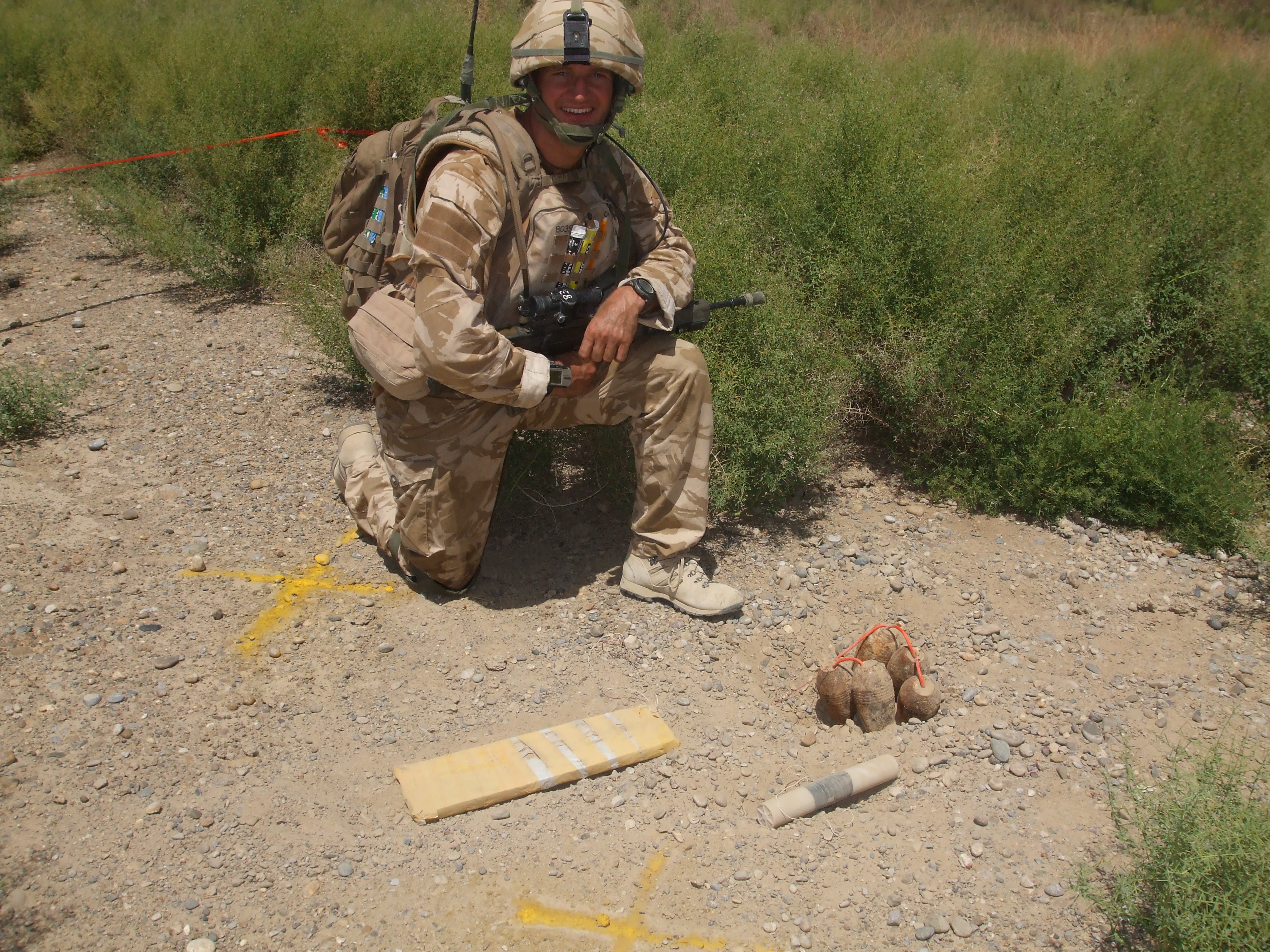
When I was in my 20s, I was either preparing to deploy or deployed on operations.

This is an improvised explosive device (IED). I'm 26 and smiling because I didn't step on it.

At the start of October aged 41, I spent a week with 25 other coaches on a spiritual retreat facilitated by a Zen Buddhist monk.

26 year old me would never have believed 41 year old me would be into this.

5 Insights from a week spent with a Buddhist monk:

  1. You cannot get it wrong. Very few of us are performing surgery. If you want to transform the way people show up in your life, create a culture of 'you can't get it wrong'. Energy wasted on trying to correct things to a 'right' way of being or doing gets channeled into just trying and being curious.

  2. Intention focuses attention. What are you taking a stand for?

  3. To fully receive something is an act of generosity to both yourself and the giver. We often allow pride or a made up narrative get in the way of an ability to receive.

  4. We mistake self awareness for self absorption. Self absorption is when you can't disaggregate the story you tell yourself about a feeling you're having. The narratives you attach to your behaviours/actions/beliefs keep you stuck in a never ending loop of paralysis.

  5. The past influences everything and dictates nothing. Absolutely nothing at all.

There were many more insights. These are the top ones that stand out to me.

User Avatar

Ross Boyd 🚢

3y ago

3 Patterns Of Behaviour I See That Materially Impact You Getting What You Want
Ross Boyd

I have been a coach for nearly five years.

I've been a people person for way longer.

I often see these patterns of behaviour getting in the way of people's dreams:

Pattern #1: Taking the short term view

Too often people work with the wrong time frames.

They are almost always too short termist.

When challenged with "what shifts for you as you think about the long term view? How does that [insert feeling] shift?"

It always eases.

It took me 10 months to lose 15 kilos this year. In the beginning I thought it would take two.

Short term expectation creates unnecessary stress in the long term game of life.

Pattern #2: Expecting winning strategies to work in all contexts

What made me a good soldier isn't what makes me a good coach.

Jordan was the GOAT of basketball and awful at baseball.

People don't appreciate that what caused them to be successful at a point in time, may not work for them in the present/future.

Thus the realms of possibility become limited to where you think you can replay the same strengths, delivering the same outcomes.

Pattern #3: Confusing self awareness with self absorption

Self awareness is a holistic understanding of oneself and the impact you have on your environment and other people.

Self absorption is about the narratives you attach to your behaviours/actions/beliefs which keep you stuck in a never ending loop.

You can't disaggregate the story you tell yourself about a feeling you're having.

It stands in the way of objectivity.

I share these insights in the hope that if you know that when you take the long term view, believe you can develop new operating systems for new environments and can separate fact from story...every opportunity is yours to take.

User Avatar

Ross Boyd 🚢

3y ago

The Highest Leverage Habit
Ross Boyd

I once worked with a guy whose nickname was “Timmy the seal”. 

After ten minutes in his company you’d want to club him to death. 

He was incredibly bright, and he’d want you to know it with his intellectual flexing. 

Timmy’s thesis was you should aspire to spend six hours a day thinking. SIX HOURS!

I was too young, too naive and too consumed with wearing busy as a badge of honour to see any sense in this. 

As adults we learn differently to kids. Our formative experience galvanises our beliefs. Our belief systems drive our behaviour, which is sometimes not what we need it to be. 

In my coaching practice I often hear:

“I don’t have enough time”

“I spend all my time being so reactive”

“I need to be more strategic”

The people that say these things are often the people that don’t take any time out to reflect on the day they’ve had or the day ahead. 

Timmy’s gift was to always see the bigger picture and thoughtfully prioritise the critical activity.

Adult learning requires us to actively engaging in a process of reflecting on our experience. 

The most asymmetrical action you can take on a daily basis is to spend 15-30 minutes reflecting on your day. 

There is zero downside. The yield of 30 minutes reflection is huge. You’re lying to yourself about what you could get done with those 30 minutes instead. 

"What was significant about what happened?"

"What were the strengths and weaknesses of the outcome?"

"What was the significance of the timing?"

Steal this framework here (no email required - links to Google Slides).

User Avatar

Ross Boyd 🚢

3y ago

1 Huge Mistake I Made When I First Started Out In Coaching
Ross Boyd

When I started my own business I had no mentor. No in house experience. No play books. No black book of warm leads.

Critically, no understanding of how to sell.

I created a pitch deck for 'leadership development' and approached the most successful business owner I knew.

I sold myself.

For five figures.

A life changing sale.

Phase one smashed out of the park.

And then I didn't get paid. I was fucked.

And that's when I learned my most valuable lesson in sales.

Many small fires keep you warm. One big fire can burn you.

I now have a much more resilient approach to my sales pipeline.

I find clients through the following channels:

  • Referrals. Put enough love out into the world and eventually it will find its way back to you. Comport yourself with integrity, be generous with your time and attention and persistent curiosity is a potent combination.

  • Webinars. Once a quarter I put on highly specific webinars. I go deep on a fairly universal pain point that I know I am very good at helping people solve. I meet a lot of cool people that need support directly and indirectly from these.

  • Retained fee. Some clients are so fun to work with, after delivering a piece of work I've proposed staying on for a retained fee. This sacrifices a degree of premium for certainty of revenue.

  • Associate network. There are lots of organisations that need quality coaches. The price of entry can high (accreditation, trained on certain psychometrics, client testimonials). I am yet to encounter any downside to putting these hard yards in.

When I was starting out my deal flow didn't look anything like this. It's the old cliche of 'it took four years to become an overnight success'.

This list is by no means exhaustive. What ways have you found effective for creating clients?