
Developer Advocate at Tanzu by Broadcom focused on Kubernetes and Spring related technologies.
I think every country around the world requires that packaged foods include a list of ingredients so that consumers can make informed decisions about whether or not to put said foods into their bodies.
For software, it's still a bit more wild west. Organizations need to vet software before deploying to production. The question is, where to get the list of ingredients?
Software Bill Of Materials (SBOM)
SBOMs are the ingredient lists for software. They can include component names, versions, licenses, dependencies, and origin. And since the gatekeepers (you at the supermarket or your automated Software Supply Chain at work) may speak different languages, they can be written in different formats (SPDX vs CycloneDX, for example).
You Get An SBOM, And You Get An SBOM, And YOU Get An SBOM!
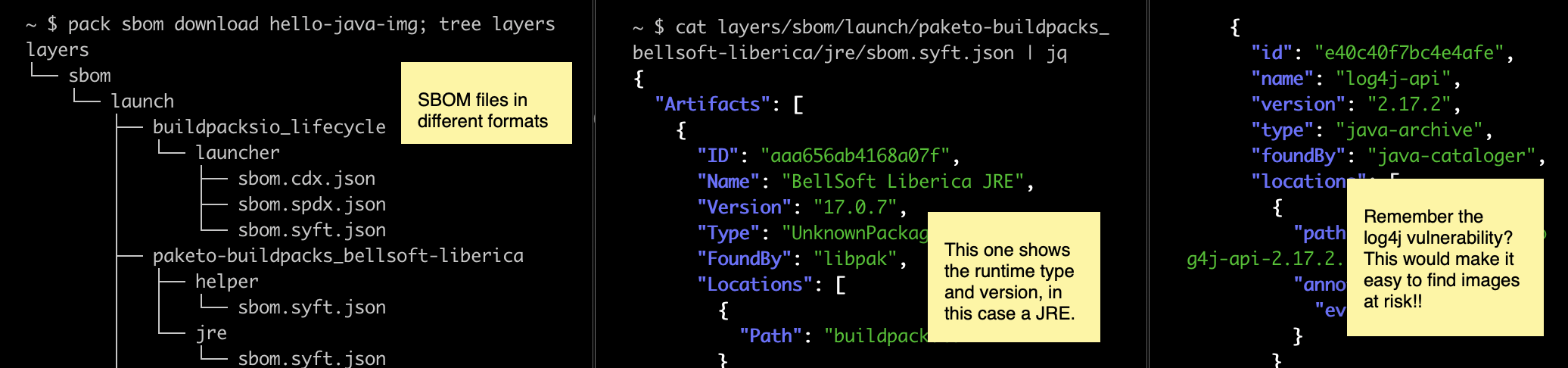
Cloud Native Buildpacks generate SBOMs as part of the build, and they embed these files as a layer inside the resulting Docker image. You can try it for yourself on one of your apps:
pack build my-img --builder paketobuildpacks/builder:tiny
pack sbom download my-img; tree layers
This will produce detailed inventory files that your scanner of choice can use to sniff out any peanuts, thereby preventing hazardous reactions in production. Saved!
Conclusion
It's hard to say your production environment is secure and compliant if you don't know what's in it. Thankfully, if you build your container images using Cloud Native Buildpacks, you'll have the transparency you need to thoroughly inspect them before dropping them into your most precious environments.