Nancy Nelson

/nancynelson

Nancy Nelson

Engineering Educator | Director, Teaching Innovation | AI Advisor

User Avatar

Nancy Nelson

2y ago

Are your Research Notes Useful? Try a 5 Minute Paper Summary
Nancy Nelson

I’ve read hundreds of research papers over the last few years.

One of the most useful practices I developed was creating timeless research notes. They took various forms, but the style I keep going back to is a 5 Minute Paper Summary (5MPS). It’s a cross between visual and written notes and, as the name implies, it’s a quick and concise summary of a paper’s key elements:

Research Question - what they set out to find

Background - underlying theory

Methods & Results - what they did and found

Key Takeaways - how it can be applied in a classroom

Here’s one of my 5MPSs for an active learning paper.

User Avatar

Nancy Nelson

2y ago

3 Strategies that Support Introverts in Active Learning
Nancy Nelson

A few years ago I extended the ideas from Networking for Introverts (Zack, 2010) into the classroom. Here are 3 strategies profs can use to help introverts learn in an active classroom:

Start group activities with a minute or two of individual thinking

Introverts think before they talk. Give all learners (and therefore introverts) a bit of time to organize their thoughts, and introverts are more likely to participate and have a better learning experience.

Provide authentic, structured, and purposeful activities

In an active classroom we have to find that balance between providing enough time for the introvert to dig into the assigned task, and keeping it short enough to keep the extroverts engaged.

Punctuate group activities with individual time

Introverts need I-time. Adding an individual activity that applies or extends the concept just learned with the group, provides introverts with time to consolidate what they’ve learned.

So please … give the introverts in your class the support they need to be active learners.
User Avatar

Nancy Nelson

2y ago

Are you ready to stretch your teaching comfort zone?
Nancy Nelson

15 years ago I took a sabbatical to explore ways to enhance student learning. 

Asked to shared my findings when I returned, I offered a workshop called “Stretch Your Teaching Comfort Zone”. It was designed to challenge the assumptions we as profs had about teaching … our choices about content, methods, tools, and expectations. 

I suggested that students had a different comfort zone. That they’d thrive when provided with autonomy, authentic tasks, and the opportunity to express their ideas and efforts using methods and tools that may be different from ours.

I also noted that for many students, learning meant getting marks. They practiced shallow and strategic learning to get the required marks. They’d go through the motions and jump through whatever hoops we threw at them. I even quoted a student who claimed “I only have time to do it, I don’t have time to learn it.”

It seems that not much has changed. Maybe now’s the time to truly stretch our teaching comfort zones!

User Avatar

Nancy Nelson

2y ago

Try Mind Map Relays for Fast, Student-Driven Reviews
Nancy Nelson

Looking for a new way for students to review a unit or course?

Try a Mind Map Relay. This collaborative retrieval practice helps students identify, consolidate & connect what they've learned. Here's how it works ...

Goal: create the most comprehensive map summarizing the topic(s)

Prep: draw the map's central node on each board (course or topic)

Teams: form equal size teams, one at each board (1 marker/board)

Rules: no peeking; wait for “Go”; add 1 sub-item to the map; pass marker to next person in line who adds another sub-item; repeat until time is up (~5 minutes)

Debrief: Highlight key concepts; Discuss missing or misplaced items.

I really don't care if they peek at the other maps. The ultimate goal is to recall, capture and connect as many key concepts as possible.

User Avatar

Nancy Nelson

2y ago

4 AI prompts Profs can use to help teach Difficult Concepts
Nancy Nelson

I've been running a series of genAI workshops for faculty. Here is a thread of prompts they're finding useful to teach difficult concepts:

  1. Identify {N} misconceptions {discipline} college students have about {topic} in a {course} course that has these {N} learning outcomes: list outcomes

  2. Which of these is the most troublesome?

  3. What 3 analogies could I use to help students to better conceptualize this troublesome concept?

  4. Provide me with a multiple choice question for each learning outcome. There should be 4 possible answers. The incorrect answers should include the most common misconceptions students have about each outcome. Put the correct response first. Provide a brief statement for each response indicating why it is correct or incorrect.

As always, use your expertise to vet the output. Then use this quick summary to plan in-class activities that deepen student learning about those difficult concepts.

User Avatar

Nancy Nelson

2y ago

I Do, We Do, You Do: A Simple Way to Support Learning
Nancy Nelson

I often observe classes where practice is left to the end of class.

This is a lost opportunity for both you and your students. By including practice throughout each class, you get feedback on whether students ”get” what you’re teaching. And students get to practice what they’re learning with you there to help. A simple and effective model that supports this form of active learning is “I do, we do, you do”…

I do (prof): Teach new concepts, modelling and describing associated processes

We do (prof and students): Guide students through a problem reviewing the thinking process

You do (students): Students work through a similar problem on their own. Watch for areas where students stumble or struggle.

Take the time to review and correct any misconceptions before moving on to the next concept. Both you and your students will benefit from this simple way to support student learning.

User Avatar

Nancy Nelson

2y ago

A Simple Switch to Strengthen In-class Comprehension Checks
Nancy Nelson

I do a lot of teaching observations.

I hear “Any questions?” in almost every class. And inevitably, the same one or two students reply “No”. Then the prof moves on. But what about the rest of the class? Maybe they do have some questions, but don’t want to speak up.

Here’s a simple switch that encourages questions.

Instead of asking "Does anyone have any questions?" profs should ask "Who has the first question?". And then wait 8 - 10 seconds, which seems like forever, to let students know you really do expect them to ask something.

Depending on the complexity of the concept, you may even want to add “Who has the next question?“ to extend the conversation.

User Avatar

Nancy Nelson

2y ago

Are your Assessments Authentic? Rate them with these 4 Dimensions
Nancy Nelson

Do your assessments qualify as authentic?

If your course is anything like those included in a recent program-wide study from University of Guelph, it depends on the year of study and the size of the class (Hobbins et al, 2022). Assessments in 4th year or smaller classes were more authentic than those in 1st year or larger classes. What's more important is how they measured authenticity. Each of 4 dimensions was ranked on a scale of 1 (low) to 3 (high):

Realism – Tasks are real-world problems or questions.

Cognitive Challenge - Students apply knowledge in new ways.

Evaluative Judgment Criteria – Students judge their own performance, based on specific criteria.

Feedback – Students get timely and meaningful feedback from the prof.

Take a look at your latest assessment. Does it get a low, moderate or high authenticity ranking? What could you tweak to make it more authentic?

User Avatar

Nancy Nelson

2y ago

5 Elements required for Complex Change in Higher Ed
Nancy Nelson

Managing complex change requires the presence of five change elements (Thousand & Villa, 1995) …

Vision, Skills, Incentives, Resources & Action Plan


Without vision, we have confusion.


Without skills, we have anxiety.


Without incentives, we have resistance.


Without resources, we have frustration.


Without an action plan, we’re on a treadmill.


For situations that require complex change make sure your have a vision + skills + incentives + resources  + an action plan.

User Avatar

Nancy Nelson

2y ago

My AI Insight: From complexity to simplicity
Nancy Nelson

I've spent a lot of time thinking about and working with AI.

Some days it's exhilarating, and other days it's worrisome. But I had an insight during an AI event last week where I was a panelist. We were talking about AI's ability to easily and eloquently write in any style, when the thought came to me:

AI can write, plan, curate, analyze, draw and vocalize for us, but it cannot speak for us.

Here's why speaking is a differentiator:

  • We must be knowledgeable to speak intelligently

  • We must make sense of the context to contribute quality ideas

  • We must articulate our thinking to add value

At first, it seemed too simple.

But then? It just made sense.

User Avatar

Nancy Nelson

2y ago

Evidence that AI Learning Assistants can Speed Up Learning
Nancy Nelson

An AI-based learning assistant can significantly increase learning speed for distance education degree students.

Yesterday I read a paper preprint from Germany’s International University of Applied Sciences (Möller et al, 2024). They tracked the completion time of thousands of cross-disciplinary students, comparing the completion times of those who chose to use an AI-based learning assistant to those who didn’t. What they found was quite surprising.

First, they found that students who chose to use the AI assistant at least once were already completing their studies 24% faster than all other students. And 3 months after the AI become available, that gap increased to 70%. There was little change in the pass rates, but AI users saw a 3.4% decrease in their grades.

Assuming this work is validated during peer review, this provides evidence of a scalable and cost-effective way to support efficient personalized learning in higher Ed.

User Avatar

Nancy Nelson

2y ago

A Simple, Focused & Actionable Way to Improve Your Teaching
Nancy Nelson

How are your classes going this term? 

Now’s a great time to ask your students. A simple and focused Start, Stop, Continue check will capture feedback you can act on right away. Here are the questions I use:

What could I start doing that will help you learn better?

What should I stop doing that makes it hard for you to learn?

What should I continue doing because it helps you learn?

Read through the feedback. Categorize it into what you can and can’t do. Then talk to the students. Thank them for their input. Highlight the thing’s you’ll address and explain why others aren’t possible. 

Most importantly … follow through.

Try it. It’s a simple, focused and actionable way to improve your teaching.

User Avatar

Nancy Nelson

2y ago

Amazing Exam Strategy that Sounds Weird but Works Wonderfully
Nancy Nelson

I have been teaching engineering for decades.

Along the way, I have tried all sorts of things to encourage regular and distributed effort over cramming.

And then one day I heard about Magic Moments. I dispensed with it because it seemed silly. I heard about and ignored it again. Finally I tried it. I’ve never had students so prepared for an exam.

Here’s how it works:

Prep: Students create a 1-sided handwritten reference sheet

Sign-off: The prof/TA signs off on the sheet prior to the exam

Exam day: Sheet is put into an envelope as students enter. Envelope is put on corner of desk.

Magic Moment: Each student is allowed one “Magic Moment” … a 90 second look at their sheet, whenever they choose. When they can’t remember that key thing, they hold up their envelope, wait for a nod, and refer to the sheet. Then the sheet goes back in the envelope and on the floor, It gets handed in with the exam.

Why it works? Because student take the time to review and summarize the most difficult concepts. They organized and prepared knowing there would be a fleeting look at their sheet.

So simple, yet effective. And in my experience, fewer than half of the students actually used it.

User Avatar

Nancy Nelson

2y ago

Agility: A key requirement for project-based learning
Nancy Nelson

Agility is the ability to move quickly and easily.

In the software world, it’s an approach where applications are developed iteratively. Each iteration is a fully functional part of the final product.

Agility is perfect for project-based learning (PBL). Think about each project deliverable as an iteration. Planning, analysis, design, building and testing are all essential stages. The end result is assessed. Feedback informs both the learner and the prof.

The learner is accountable for corrective action as they take on the next deliverable. The prof is responsible for adjusting instruction, deliverables, and/or available resources. And all of this is required for the next iteration.

Agility in PBL means continual improvement in both teaching and learning. What could be better?

User Avatar

Nancy Nelson

2y ago

Is your perspective and need for change impeding student learning?
Nancy Nelson

We sometimes forget that we’re experts and our students are just learning.

People have a tendency to see and respond to a situation from their own perspective (myside bias). This can affect the way we teach. We plan and deliver classes with our advanced conceptualizations, often forgetting that our thinking is well beyond that of our students.

Teaching courses more than a few times can also lead us to “improve” them. We get tired of doing things the same way (feature fatigue), so to keep our own interest up, we add a bit more content, make things more challenging, or introduce new tools and techniques (feature creep). We forget that the core concepts are new and often difficult for our students to learn.

Change is good, as long as it improves and enhances student learning … as the experts, we have to make sure that myside bias, feature fatigue and feature creep aren’t finding their way into our classrooms!

User Avatar

Nancy Nelson

2y ago

Student Workload: Too Much or Too Little?
Nancy Nelson

How much work are you actually assigning your students?

Most of us don’t really have a sense of how long it take our students to do the work we assign. Is it 1-2 hrs per week? 3-5 or even more? It may be that their cumulative workload is what causing them to offload their work to genAI.

To help our students be more successful we need to have a better sense of the workload we're asking of them. Consider the time requires for these 4 main tasks:

  1. pre-work (reading, watching videos, etc.)

  2. writing (reports, projects, essays, data collection, etc.)

  3. doing homework assignments

  4. studying

If the average for each week is more than the scheduled hours for your course, you may just be nudging them to offload.

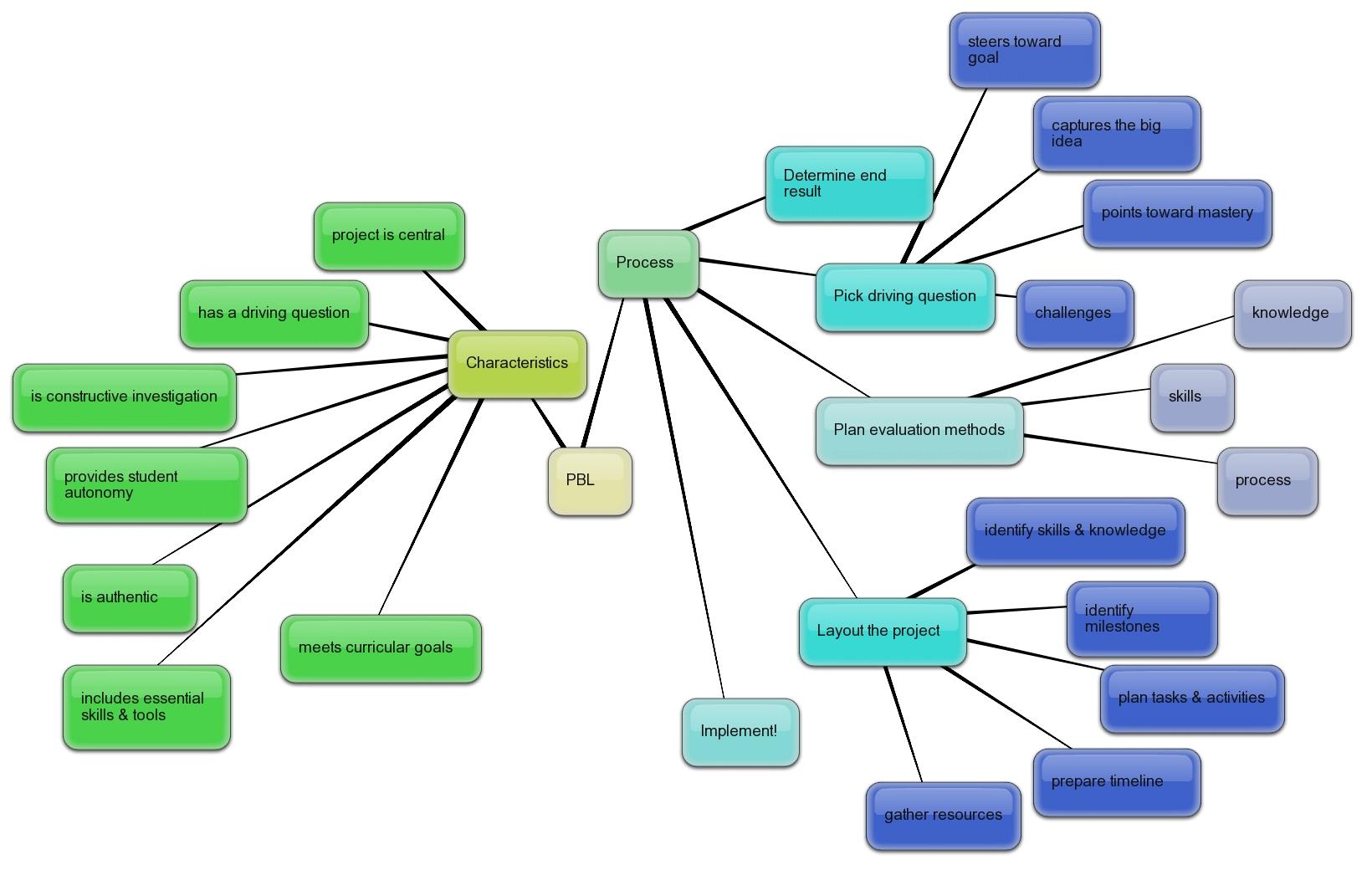
Check out this Course Workload Estimator for a more accurate tally.
User Avatar

Nancy Nelson

2y ago

Value Factors: Are you setting your students up to be learners or offloaders?
Nancy Nelson

Many factors influence the choices our students make.

Last week @Marc__Watkins wrote a post about how influencers are selling AI as a solution for students. Not to cheat, but as a quick way to get their work done. It's so easy and tempting!

Marc speculates that students don’t see this offloaded work as a core to their learning. To me, this is a much bigger problem than either influencers or AI. Students don't perceive value in what we’re asking them to do. Here’s how you can use 4 value factors to create meaningful learning tasks:

  1. Attainment Value- make tasks important to the students’ discipline-specific identity and success

  2. Intrinsic Value - make tasks enjoyable (i.e. not boring)

  3. Utility Value - show how and why tasks are useful and necessary within the discipline

  4. Cost - balance the time & effort required to complete tasks with their value

So look at that task where students chose to offload their learning. How can it be tweaked so students see it as valuable?

User Avatar

Nancy Nelson

2y ago

What to do when Student Feedback is Distressing
Nancy Nelson

Feedback is meant to be formative, developmental and growth-oriented. Unfortunately, if it's negative, it can cause undue stress.

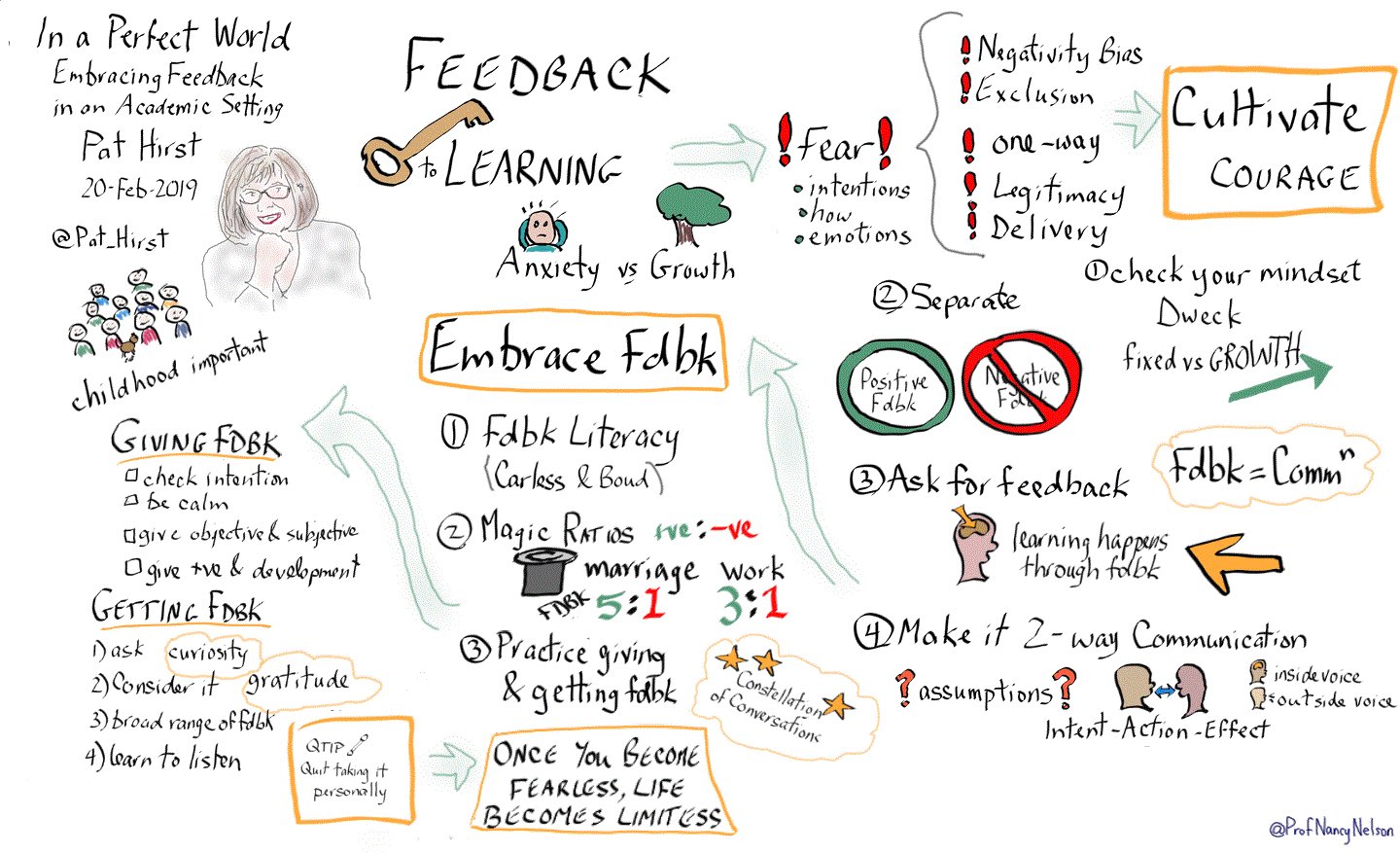
A few years ago I was part of a research team that measured levels of distress when thinking about receiving feedback. A comparison of levels before and after a keynote and workshop showed a shift from fearing feedback to seeing it as an opportunity for growth.

Here are my sketch notes from that keynote where Pat Hirsh shared ways to embrace feedback …

User Avatar

Nancy Nelson

2y ago

How ‘What/So What/Now What‘ can help students learn
Nancy Nelson

The other night a friend mentioned using the What/So What/Now What method to analyze a situation.

I had to admit that I never really understood how it worked as a reflective activity. So I did some digging. Here’s how it can help students reflect on and consolidate their learning:

What - describes the situation

A student might ask ‘What did I learn?’, ‘What did I achieve?’ or ‘What process did I follow?’

So What - reflects on the situation

The student then asks 'So what does that tell me about what I learned?’, ‘So what could I have done to improve?’ or ‘So what do I now know about the situation?’

Now What - considers possible actions

Finally, the student asks ‘Now what do I do to get better?, “Now what could happen if I change one thing? or ”Now what else should I research?’

So give What/So What/Now What a try to get students to describe, reflect on and extend their learning.

User Avatar

Nancy Nelson

2y ago

Something every prof should remember
Nancy Nelson

A few years ago this @mdroush tweet caught my attention:

Teach unfamiliar skills with familiar content.

Teach unfamiliar content with familiar skills.

If you want students to fail, teach them unfamiliar content with unfamiliar skills.

This makes so much sense … so why do some profs continue to do the latter?