Rajat Mishra

Rajat Mishra

/rakumikura

Rajat Mishra

I make Software Engineering fun and easy using visuals. 20+ years of experience in building large-scale software systems.

User Avatar

Rajat Mishra

2y ago

"A Philosophy of Software Design"
Rajat Mishra

"A Philosophy of Software Design" book by John Ousterhout provides great insights into software design principles elegantly. The key ideas from the book are:

  • Complexity as the Core Problem: Emphasizes that the main challenge in software design is managing complexity

  • Deep Modules Vs Shallow Modules: Advocates for creating 'deep' modules with simple interfaces but rich functionalities, reducing complexity. In contrast 'shallow' modules have complicated interfaces but limited functionality.

  • The Law of Demeter: Suggests minimizing a module's interactions with other modules to reduce dependencies and complexity.

  • Working Code Isn’t Enough: Stresses that simply working code isn't sufficient; it must also be clean, readable, and maintainable. Software should be designed for ease of reading, not ease of writing.

  • Evolution of Software: Acknowledges that software evolves over time and necessitates continuous design improvement. The increments of software development should be abstractions, not features

  • Strategic vs. Tactical Programming: Encourages strategic programming for long-term solutions over tactical programming, which offers quick fixes but can increase complexity.

User Avatar

Rajat Mishra

2y ago

The 10x Engineer: Hype or Reality
Rajat Mishra

The 10x Software Engineer has an order of magnitude higher productivity compared to the average Engineer. So are these people real?

This concept was first mentioned in the 1987 book Peopleware by Tom DeMarco and was based on a few studies done on developer productivity. However a few important caveats:

  • The 10x difference was found between the best and worst developers and the productivity difference was only 2-3x between the median performance and the best.

  • The measurement was specifically for coding tasks. As every developer knows coding comprises only between 10-30% of work for a developer.

In my personal experience, I have come across many developers who are significantly more productive than others.

  • But coding speed doesn’t always correlate to real productivity. In fact, many of the fast coders write very bad quality code that requires significant refactoring and defect fixing later in the cycle.

  • The real productive Engineers are those who can come up with elegant solutions to complex problems, focus on code quality, and long-term architectural evolution of the software. These factors work as force multipliers making all other developers productive.

  • And finally, some so-called 10x Engineers are just nasty and a pain for everyone. The sooner you can get rid of them, the higher will be the team's productivity.

User Avatar

Rajat Mishra

2y ago

“Agile” vs being agile
Rajat Mishra
  • The agile software development movement over the last two decades is a massive positive change over software development processes followed earlier.

  • But now that "Agile" is the default process to develop software, in most organizations it has degraded to the point of being agile in name only:

    • Excessive focus on Tools to manage agile processes

    • Too many and too long planning meetings

    • Too much of internal documentation

    • Weaponization of retrospectives and metrics like Velocity

  • However, being agile is simple: relentlessly focus on the timeless agile principles as listed in the Manifesto and ignore the noise of heavyweight frameworks and tools sold by consultants and tools vendors:

    • Individuals and Interactions over processes and tools

    • Working software over comprehensive documentation

    • Customer collaboration over contract negotiation

    • Responding to change over following the plan

See more at: https://agilemanifesto.org/

User Avatar

Rajat Mishra

2y ago

Is GenAI the Silver Bullet for Software Development?
Rajat Mishra
  • In an influential paper titled “No Silver Bullet—Essence and Accident in Software Engineering” Fred Brooks claimed that "there is no single development, in either technology or management technique, which by itself promises even one order of magnitude improvement within a decade in productivity, in reliability, in simplicity."

  • Software is inherently complex, and this complexity is the main reason for the challenges in software development

  • Different software projects have different requirements and challenges, so a single solution can't solve all problems in software engineering

  • His prediction has proven correct despite all the hype around new technologies and processes like “Object Oriented Programming”, “SOA”, “Agile”, “Microservices”, “DevOps” etc. over the last four decades.

  • However, Gen AI and LLMs seem to be the most promising development for building software after the invention of High-Level Programming languages six decades ago.

  • Just like High-level languages, LLMs seem to be very good at removing the accidental complexity of modern software development (boilerplate code, plumbing of APIs and frameworks, etc.) so that programmers can focus on the essential complexity of solving the user’s problems.

User Avatar

Rajat Mishra

2y ago

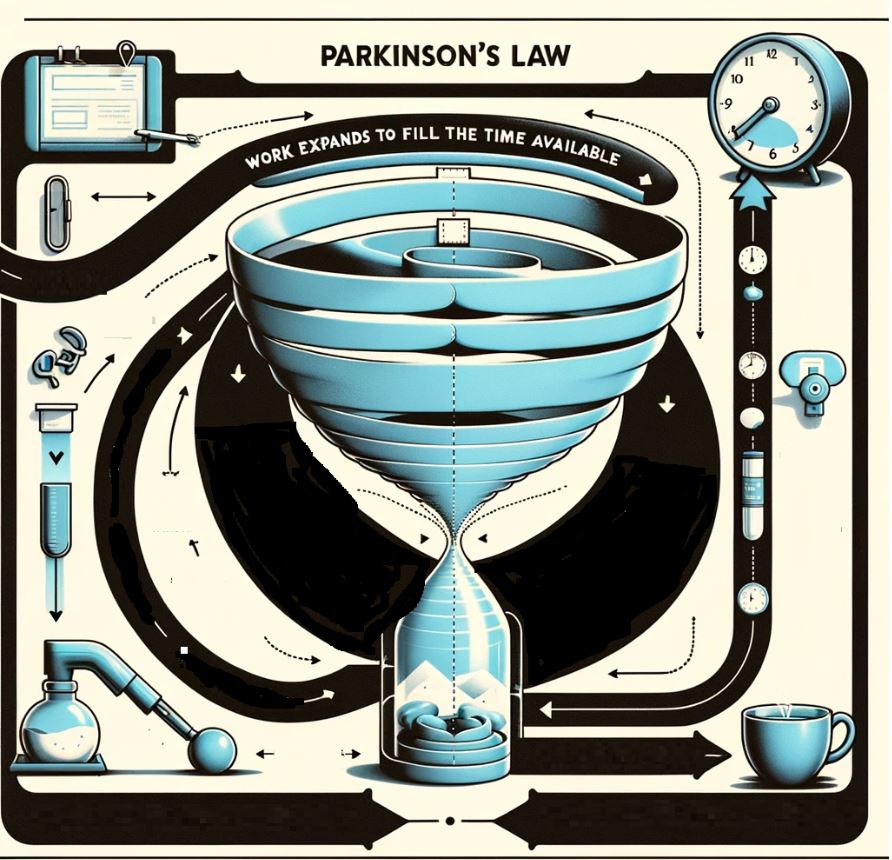
Parkinson's law: why shorter deadlines can lead to faster task completion without reducing quality
Rajat Mishra
  • Parkinson's law ("work expands to fill the time available for its completion") is an observation originally found in administrative and bureaucratic work

  • Parkinson's law was originally observed in administrative and bureaucratic work

  • But it’s universally applicable due to human psychology and has been seen in all kinds of work, particularly in knowledge work

User Avatar

Rajat Mishra

2y ago

Software Estimation - All Estimates are wrong...some are useful
Rajat Mishra

Software estimation is sometimes considered a black art. Developers usually despise the estimation process but good estimates are very important for the business.

  • Bottom-up estimates:

    • Although this is the most common form of estimation, these estimates are usually wrong by significantly underestimating the effort required.

    • Checklists are very useful tool for improving these estimates

    • Another major factor in underestimation is that developers usually provide the most optimistic estimate, rather than the most likely one considering the risks, dependencies, and uncertainties

  • Comparative estimates that use baseline data from past projects are more reliable. The challenge here is to find past projects of similar complexity.

  • Team skills and experience can make a massive difference in estimation. A long-lived dev team estimating its work will be a lot more reliable than estimates of a new team.

User Avatar

Rajat Mishra

2y ago

Good Metrics, Bad Metrics
Rajat Mishra

Metrics are important to understand the productivity of Software Development processes but the wrong metrics can do more harm than the value they provide.

Bad Metrics usually measure effort, are easy to calculate but also easy to game

  • Lines of Code added

  • Number of code check-ins

  • Number of Pull Requests created

  • Number of features completed

  • Number of QA-raised defects

  • Number of story points completed

Good Metrics usually measure outcomes and are difficult to game

  • Customer Satisfaction

  • Developer Satisfaction

  • Number of customer-raised defects

  • System Uptime

  • DORA Metrics (Deployment frequency, Lead time for changes, Mean time to recovery, Change failure rate)

No discussion of metrics can be complete without Goodhart’s Law
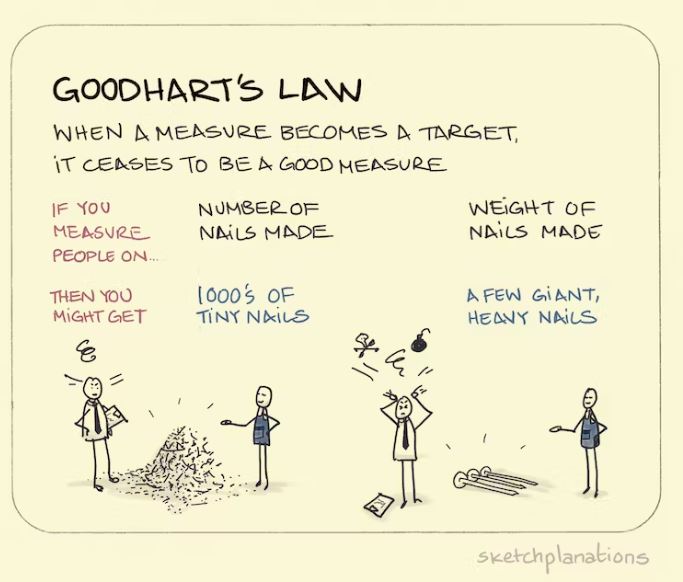
Image Source: https://sketchplanations.com/goodharts-law
User Avatar

Rajat Mishra

2y ago

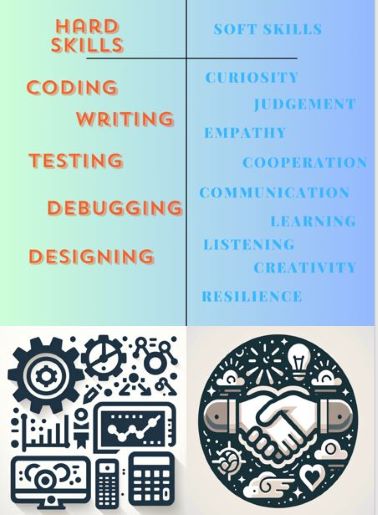
Hard Skills Vs Soft Skills
Rajat Mishra
  • Hard skills help you to get the tasks done and solve technical problems.

  • Soft Skills help you to find the right problems to solve at the right time and build team culture

User Avatar

Rajat Mishra

2y ago

Brooks' Law of Software Project Management
Rajat Mishra

Brooks' Law: Adding manpower to a late software project makes it later

  • In the seminal book on software project management, Fred Brookes shares the "man-month" fallacy based on his experience of managing the development of IBM's System/360 and OS/360 systems.

  • The "man-month" fallacy: the idea that a software project's duration can be shortened by simply adding more manpower

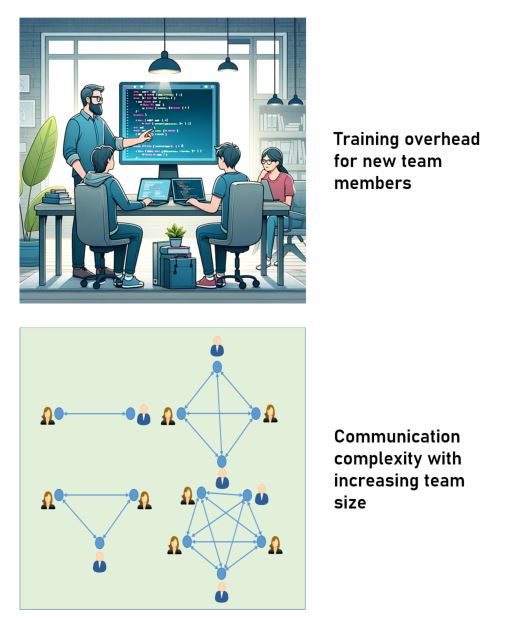
  • The two key factors contributing to this: the new team members must be trained and the increased team size causes more communication complexity

  • Unfortunately, many Managers still ignore this idea written almost fifty years ago, only to learn it from bitter personal experience.

User Avatar

Rajat Mishra

2y ago

Conway's Law
Rajat Mishra
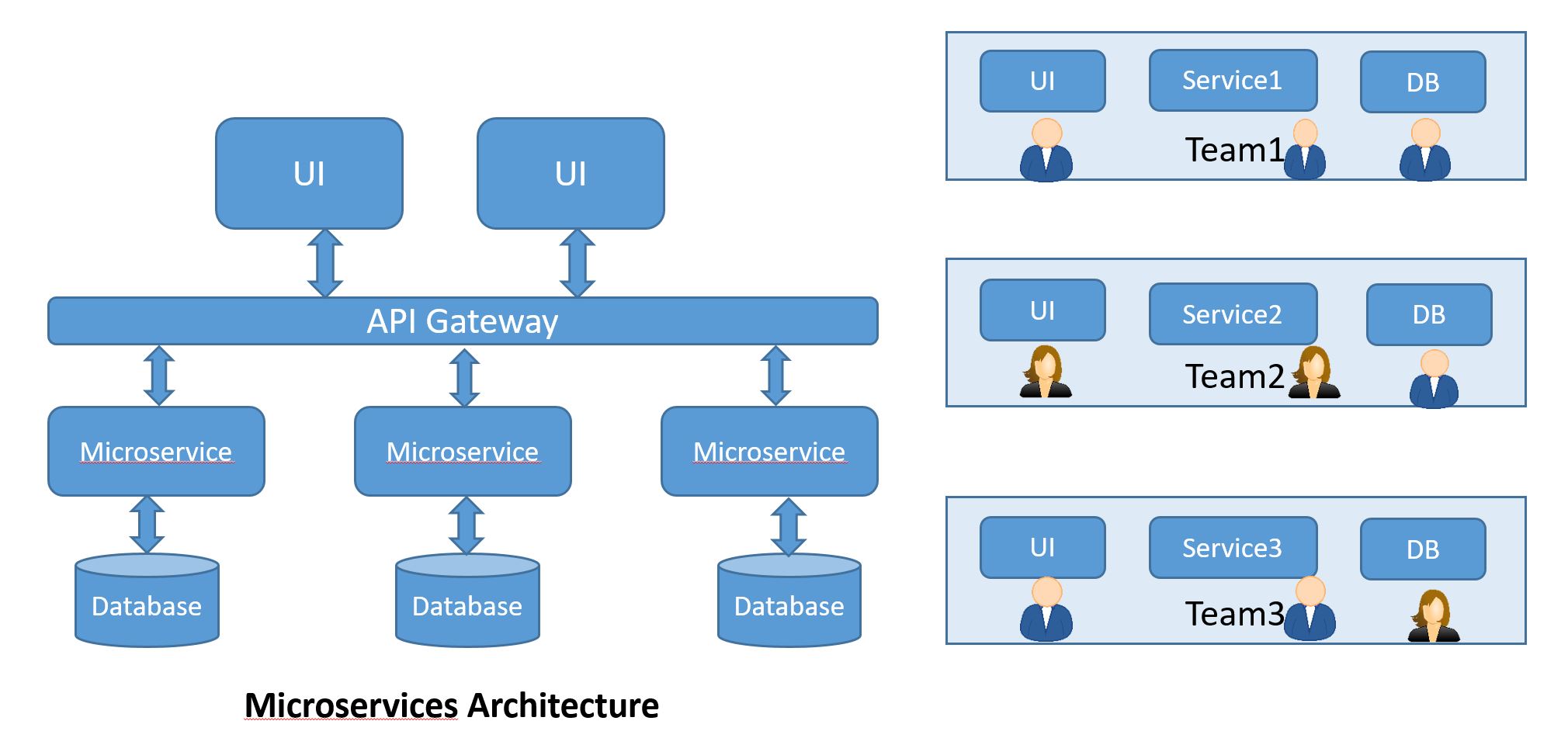
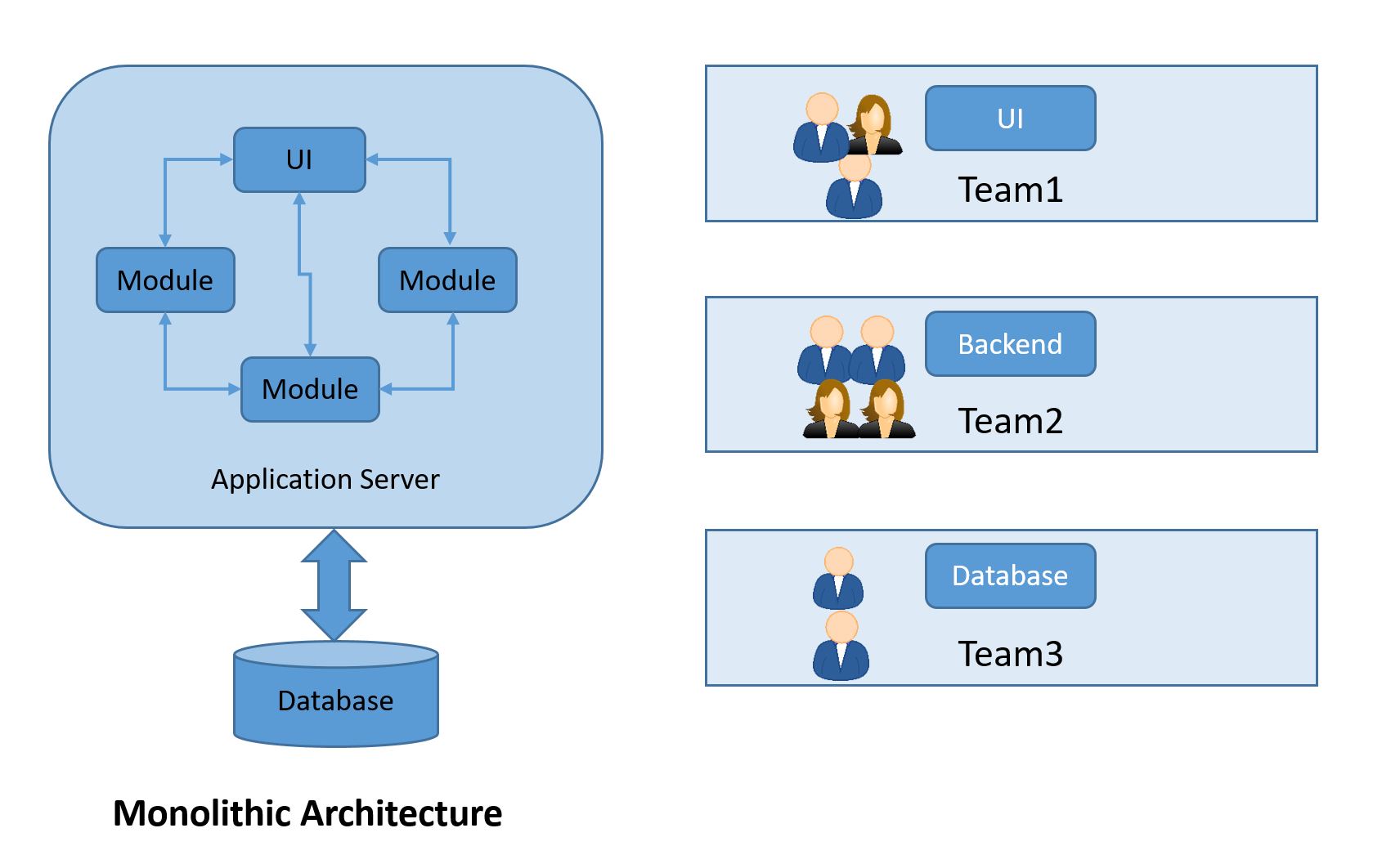
  • Conway's Law - The structure of a system designed by an organization is a mirror of the organization's own communication structure

  • Conway's Law implies the importance of organizational structure in the design of systems.

  • For example, a product built on micro-services Architecture requires small independent cross-functional teams while having functional teams might be better for a product with monolithic Architecture.
  • Here are some resources if you want to go deeper:

  1. The original paper by Conway: "How do committees invent?" https://www.melconway.com/Home/pdf/committees.pdf

  2. The Mythical Man-Month" by Fred Brooks discusses Conway's Law in the context of software engineering project management.

User Avatar

Rajat Mishra

2y ago

The Architecture Astronaut
Rajat Mishra
  • The Architecture Astronauts are dangerous characters in the world of software development.

  • They live in the abstract world, only care about high level design, and love complexity for its own sake

  • They often design systems that are disconnected from practical, real-world needs and they often forget that software is built for real users

  • Joel Spolsky coined this term more than two decades ago and things have improved since then but we still have to be cautious of them

User Avatar

Rajat Mishra

2y ago

Maker's Schedule - Manager's Schedule
Rajat Mishra
  • Paul Graham's classic essay "Maker's Schedule, Manager's Schedule" discusses two different types of work schedules

  • The "maker's schedule" is for those who need long, uninterrupted blocks of time to be productive, like programmers and writers. For these people, even a single meeting at the wrong time can disrupt half a day’s work.

  • The "manager's schedule" is divided into hourly slots and is suitable for short, discrete tasks, emails, and meetings.

  • There is often a clash between these two schedules, especially when a manager sets a meeting that cuts into a maker's time, potentially ruining their creative flow.

  • Everyone particularly Managers needs to be aware of this and respect the other’s schedule.

User Avatar

Rajat Mishra

3y ago

The Happiness Formula
Rajat Mishra

Happiness is subjective and doesn’t easily fit into a formula. However, it’s important enough that researchers still try to find the elusive formula.

One of the most comprehensive formulas is provided by the Positive Psychology researchers Martin Seligman and colleagues.

Happiness (H) = Set Level (S) + Conditions (C) + Voluntary activities (V)

H = S + C + V

Happiness here refers to our enduring level of happiness and overall well-being in life and not the momentary spikes of happiness or pleasure we can induce throughout the day.

Set Level(S) is our biological baseline level of happiness and this is mostly fixed for an individual.

Conditions (C) are the various situations and external conditions in our life (relationships, health, wealth, etc.) that impact our happiness. Some of the conditions can be controlled by us but many will be outside our control and driven by the external environment.

Voluntary Activities (V): These are the most controllable variables. These include our mindset and emotions about the past, present, and future. The ancient wisdom traditions from The Buddha to Epictetus have taught many practices that are very useful for improving happiness and well-being (e.g. meditation, mindfulness, cultivating indifference).

User Avatar

Rajat Mishra

3y ago

The Surprising Truth About Happiness
Rajat Mishra

Scientists studying happiness find some common patterns again and again:

  • Relationships are the single most important factor for happiness. People living in poverty can be happy if they have a supportive community and conversely rich people can be unhappy if they are lonely or in a stressful relationship.

  • Wealth positively correlates with happiness up to a certain point but very high levels of wealth can make people happy or miserable depending on how it is used

  • Good Health positively correlates with happiness

However, the really surprising aspect of happiness is that it is not always tied to the objective circumstances of a person’s life and is very subjective.

  • Which peer group people choose (usually unconsciously) to compare themselves against can make them happy or miserable. If your net worth is a million dollars but you compare yourself only with your neighbors who are worth 10 million dollars, you will be miserable even though you are objectively richer than 90% of people in the world.

  • People are happier when they are making progress toward a goal compared to after they achieve the goal.

  • People are happier when they have autonomy and ownership at work, even though they end up doing more work compared to the positions where they just do what someone else tells them to do.

User Avatar

Rajat Mishra

3y ago

Naval on Happiness
Rajat Mishra

Naval Ravikant is an Entrepreneur, Startup Investor, and modern-day philosopher.

These are some of his best quotes on Happiness taken from the book “The Almanack of Naval Ravikant” by Eric Jorgenson.

  • “… happiness is really a default state. Happiness is there when you remove the sense of something missing in your life.”

  • ”… happiness is not about positive thoughts. It’s not about negative thoughts. It’s about the absence of desire, especially the absence of desire for external things.”

  • ”..when I say happiness, I mean peace. When a lot of people say happiness, they mean joy or bliss, but I’ll take peace.”

  • “Desire is a contract you make with yourself to be unhappy until you get what you want.”

  • ”Happiness is being satisfied with what you have. Success comes from dissatisfaction. Choose.”

  • “The enemy of peace of mind is expectations drilled into you by society and other people.”

  • ”Jealousy: It’s such a poisonous emotion because, at the end of the day, you’re no better off with jealousy. You’re unhappier, and the person you’re jealous of is still successful or good-looking or whatever they are.”

  • ”My most surprising discovery in the last five years is that peace and happiness are skills. These are not things you are born with.”

  • ”You can very slowly but steadily and methodically improve your happiness baseline, just like you can improve your fitness.”

  • “When working, surround yourself with people more successful than you. When playing, surround yourself with people happier than you.”

  • ”At the end of the day, you are a combination of your habits and the people who you spend the most time with.”

User Avatar

Rajat Mishra

3y ago

The Happiness Curve - Why Life Gets Better After Mid-Life
Rajat Mishra

Multiple studies on happiness and life satisfaction by Psychologists and Economists have found a surprising pattern.

When an individual’s happiness is plotted against age, there is a clear U pattern. It decreases as go into adult life, becomes lowest around middle age (40-50), and continues to go up as we age and peaks in old age.

This is true irrespective of people’s baseline level of happiness that is derived from their personalities. However, there can be significant variations between individuals regarding the shape of the curve and when the bottom comes.

Jonathan Rauch in his book “The Happiness Curve” provides the reasons for why this happens:

  • Stress declines after about age fifty. There are multiple factors contributing to this but multiple studies confirm the same results.

  • Emotional regulation improves: “Young people are miserable at regulating their emotions,” as per Psychologist Laura Carstensen.

  • Older people feel less regret: People start making peace with themselves as they grow older.

  • Older people are not depression-prone: Contrary to the stereotype, depression is less frequent (or no more frequent) in late life than in midlife as per psychiatrists.

  • Older people focus on the present rather than the distant future and have meaningful goals that align with their values and purpose in life.

User Avatar

Rajat Mishra

3y ago

How to Make Weakness your Strength
Rajat Mishra

We all have a natural tendency to not talk about our weaknesses and assume there is nothing to gain from our weaknesses.

However psychological studies show that opening up to our weaknesses and vulnerabilities can be beneficial both to us and others around us.

Being able to build better human connections is one of the most common ways opening up our vulnerabilities helps us:

  • Leaders build rapport with their subordinates and are seen as more authentic and effective when they open up and share their vulnerabilities

  • Writers get more engaged audiences when they open up to their weaknesses

Arthur C. Brooks in his book “Strength to Strength” provides many examples of how people have turned weaknesses into strengths. One of the most interesting stories is about the legendary composer Beethoven who lost his hearing.

Beethoven’s hearing loss started in middle age and in the last decade of his life (he died at fifty-six), he was completely deaf. This was really tragic for the most talented composer and pianist of his generation as it was very difficult for him to conduct performances being deaf.

However, he continued to compose and conduct till the end of his life and counterintuitively developed his most original and brilliant compositions after he went deaf. His later compositions broke out of the prevailing traditions of the period and started a new period. As his hearing deteriorated, he was less influenced by the prevailing compositional fashions and more by the music forming inside his head.

The tragedy of hearing loss became his gift to become really original and create history.

User Avatar

Rajat Mishra

3y ago

The Intelligence Curves: How We Can Get More Intelligent As We Age
Rajat Mishra

What we typically consider intelligence is more specifically called fluid intelligence in Cognitive Psychology literature. It’s the ability to reason, think flexibly, and solve novel problems. Innovation in any area requires fluid intelligence. It peaks in early adulthood and decreases rapidly in the thirties and forties.

However, fluid intelligence is not the only type of intelligence.

As per the research done by Raymond Cattell, there is another type of intelligence - crystallized intelligence, that continues to grow throughout our life. Crystallized intelligence relies on prior learning and past experience and is built by synthesizing existing knowledge.

Fluid intelligence can simply be referred to as raw smarts and crystallized intelligence as wisdom.

This difference has major implications for our careers and the type of work we do.

Our ability to innovate and solve novel problems decreases significantly around the middle-age so we will be swimming against the tide if we stay in a job/career requiring us to innovate continuously. This is the reason most Scientists, Inventors, and Engineers do their best work very early in their careers.

However, if we jump into the crystallized intelligence curve, it can be a new start and we can continue to make significant contributions until the end of our life. Since it involves synthesizing and getting meaningful knowledge out of a large body of information, certain types of jobs and careers are better suited for this phase of life. Teaching of all kinds and study of social sciences like History, are particularly well suited for utilizing crystallized intelligence.

I would strongly recommend the book “Strength to Strength” by Arthur C. Brooks if you want to know more about Fluid Vs crystallized intelligence curves and dig deeper into the topic of mid-life transition.

User Avatar

Rajat Mishra

3y ago

The Progress Principle of Happiness
Rajat Mishra

Jonathan Haidt is one of the most influential Psychologists and the author of multiple best-selling books.

In his book “The Happiness Hypothesis” he defines the “progress principle” of happiness: “Pleasure comes more from making progress toward goals than from achieving them.”

As per Psychological studies, the pleasure from reward comes immediately after achieving something and does not sustain for long. So we derive most of the pleasure from a goal when we take the steps in the right direction and not when we meet the goal.

However, in practice, we completely forget this fact while setting and chasing our goals. We become so fixated on the end result that we don’t pause to enjoy the journey.

We assume in our subconscious mind that we will be happier after we achieve the goal. But once we meet our goal, we immediately start planning for the next goal. A few months after getting that long-coveted promotion at work or growth in business, a new baseline sets in and we start thinking about the next set of goals.

That is the adaptation principle. In Jonathan Haidt’s words: “We create for ourselves a world of targets, and each time we hit one we replace it with another. After a string of successes, we aim higher; after a massive setback, such as a broken neck, we aim lower.”

User Avatar

Rajat Mishra

3y ago

What Learning Really is - by David Foster Wallace
Rajat Mishra

"This is Water" by David Foster Wallace probably has one of the best ratios of wisdom per word among anything you will ever read or listen to.

It’s a commencement speech to the graduating class at Kenyon College and talks about what learning really is. Here are a few excerpts from the speech:

  • “ … the most obvious, important realities are often the ones that are hardest to see and talk about.”

  • “…the really significant education in thinking that we’re supposed to get in a place like this isn’t really about the capacity to think, but rather about the choice of what to think about”

  • “teaching you how to think is actually shorthand for a much deeper, more serious idea: learning how to think really means learning how to exercise some control over how and what you think. It means being conscious and aware enough to choose what you pay attention to and to choose how you construct meaning from experience.”

  • “The point here is that I think this is one part of what teaching me how to think is really supposed to mean. To be just a little less arrogant. To have just a little critical awareness about myself and my certainties. Because a huge percentage of the stuff that I tend to be automatically certain of is, it turns out, totally wrong and deluded.”

  • “The really important kind of freedom involves attention and awareness and discipline, and being able truly to care about other people and to sacrifice for them over and over in myriad petty, unsexy ways every day.”

You can read or listen to the complete speech here: https://fs.blog/david-foster-wallace-this-is-water/