Blake Wyatt

Blake Wyatt

/blakewyatt

Blake Wyatt

The Clark Kent of Client Acquisition.

User Avatar

Blake Wyatt

🚀Ship 30

2y ago

3 Proven Post-Purchase Call Offers To Convert 40→60% Of New Low-Ticket Customers Into High-Ticket Sales Calls (copy)

3 Proven Post-Purchase Call Offers To Convert 40→60% Of New Low-Ticket Customers Into High-Ticket Sales Calls (copy)

Discover the transformative power of in-funnel call offers with this expert guide designed for digital marketers and online entrepreneurs. Unveil the secrets to converting low-ticket front-end buyers into high-value clients at an astonishing rate. This article not only challenges the traditional focus on immediate Average Order Value (AOV) but also shines a light on maximizing Lifetime Value (LTV) through strategic, easy-to-implement call offers. Whether you're yet to establish a low-ticket funnel or looking to optimize an existing one, these insights will grant you a competitive edge, enabling you to book qualified sales calls like never before. Dive deep into the methodology that has revolutionized digital sales funnels, driving astonishing booking rates of 50% to 70% directly within the funnel. Embrace this simple yet profoundly effective strategy to enhance your sales process, fostering stronger customer relationships while significantly boosting your conversion rates.

User Avatar

Blake Wyatt

🚀Ship 30

3y ago

High-Ticket Coaches & Consultants: Copy And Paste This ChatGPT Prompt To Draft Your First (Or Next) $100M Offer Outline In 60 Seconds Or Less
Blake Wyatt

"Unlike baseball, where a grand slam scores a maximum of four runs, a Grand Slam Offer in the business world, can score you a thousand-fold pay off and result in a world where you never need to work again."

- Alex Hormozi

$100M Offers has sold over 300,000 copies and held a top spot on the Amazon best-seller list for the last 74 weeks for good reason. It's simple, and it works.

While the book is short enough to be read within a few short hours, it is jam-packed with dense material for high-ticket coaches, consultants, service providers, and product owners to make offers so good people feel stupid saying no to.

We were originally left to our own devices to create these offers on our own. But, thanks to AI advancements and every marketer's best new friend, ChatGPT...

We can drum up a first draft of our own $100M Offer in 60 seconds or less with this plug-and-play template.

How To Use The Template:

Step 1 - Fill in your Niche and Avatar

Step 2 - Fill in any information in the $100M Offer section of the template that you already have to improve the responses that ChatGPT provides you. Some of the best responses come after adding in:

  • Your current offer name

  • Your current pricing

  • Your current guarantee

  • Current testimonials to use

  • Your vision

That being said... if you're looking to get a first draft, all you really need to do is Step 1 and then modify the responses and guide ChatGPT towards your fine-tuning your very own $100M Offer.

Without further adieu... here's the goods:

=== TEMPLATE START ===

>Act as if you are a professional direct-response copywriter who loves to use visceral, real-life, dimensional language. You are to use the content of $100M Offers by Alex Hormozi for the offer section. Then complete PERSONA AND PAIN POINTS using [Niche] and [Avatar] below as your foundation to fill in the rest of the information and the following $100M Offer template.

NICHE: [DYNAMICALLY FILLED IN BY ME - NOT CHATGPT]
AVATAR: [DYNAMICALLY FILLED IN BY ME - NOT CHATGPT]

=== PERSONA & PAIN POINTS ===
[Primary Goal]=
[Primary Complaint]=
[Secondary Goals]=
[Secondary Complaints]=
[Promises]=
[Benefits]=
[Objections]=
[Ultimate Fear]=
[False Solutions]=
[Mistaken Beliefs]=
[Expensive Alternatives]=

=== $100M OFFER SECTION START ===
$100M Offer: [OFFER NAME]
Target Market: [FILL IN]

5-Year Vision (BHAG): [FILL IN]

Dream Outcome (Options): What is our ideal client's dream outcome?
1)
2)
3)

Potential Problems List: [LIST CHALLENGES THE NICHE + AVATAR FACES]

$100M Offer Summary: [FILL SUMMARY]

Core Offer: [FILL IN] Bonus #1: [NAME]

  • [INPUT SHORT DESCRIPTION - OUTCOME FOCUSED LANGUAGE] Bonus #2: [NAME]

  • [INPUT SHORT DESCRIPTION - OUTCOME FOCUSED LANGUAGE] Bonus #3: [NAME]

  • [INPUT SHORT DESCRIPTION - OUTCOME FOCUSED LANGUAGE] Bonus #4: [NAME]

  • [INPUT SHORT DESCRIPTION - OUTCOME FOCUSED LANGUAGE] Bonus #5: [NAME]

  • [INPUT SHORT DESCRIPTION - OUTCOME FOCUSED LANGUAGE] Bonus #6: [NAME]

  • [INPUT SHORT DESCRIPTION - OUTCOME FOCUSED LANGUAGE]

Guarantee: [GUARANTEE NAME AND/OR STACKED GUARANTEE SUGGESTIONS]

Duration & Terms: [FILL IN SPECIFIC DURATION & SPECIAL TERMS]

Scarcity / Urgency: [FILL IN SCARCITY & URGENCY DESCRIPTION]

Pricing Structure: [FILL IN PROPOSED PRICE + PAYMENT PLANS]

Comparative Analysis: Compared to [Common Alternative]:

  • Advantage of our offer

  • Benefit the client gets

  • Money or time saved

Social Proof (Testimonials & Case Studies):

  1. "[INSERT TESTIMONIAL OR SHORT SUCCESS STORY]"

  2. "[INSERT ANOTHER TESTIMONIAL OR SHORT SUCCESS STORY]"

FAQ Section: [PROVIDE FAQs THAT HANDLE OBJECTIONS THE TARGET MARKET MAY HAVE]

CTA: [WRITE A COMPELLING CTA FOR THIS OFFER THAT LEADS TO BOOKING A CALL]

=== TEMPLATE END ===

Helpful Follow-Up Prompts:

  • If you don't get the offer you were looking for... give ChatGPT more context and run it again

  • If you'd like it to expand further (for example if it only gives you 3 FAQs) then modify the prompt to be more specific

    • I.e. "Provide 5-10 FAQs"

  • If you are on a roll and want to dive deeper... crack open Alex's book and go chapter by chapter to feed it more and more information to refine things like your guarantee, and other offer components

A Final Word Of Warning:

Do not use the responses or testimonials verbatim, and ensure that you are following appropriate compliance protocols for your business. Just have fun with this and use it as a tool to spark creative ideas for new offerings or refining and improving existing offers that you already have.

Now go nuts, and get drafting up your own $100M Offer.

PS - Shoutout to Jon Benson for the comprehensive and extremely helpful avatar prompt.

User Avatar

Blake Wyatt

🚀Ship 30

3y ago

7 Rules For Online Course Creators To Stick The Sale And Achieve Sub 5% Refund Rates At Scale
Blake Wyatt

"If I told you that your funnel would shut off after 100 buyers… how differently would you treat them?"

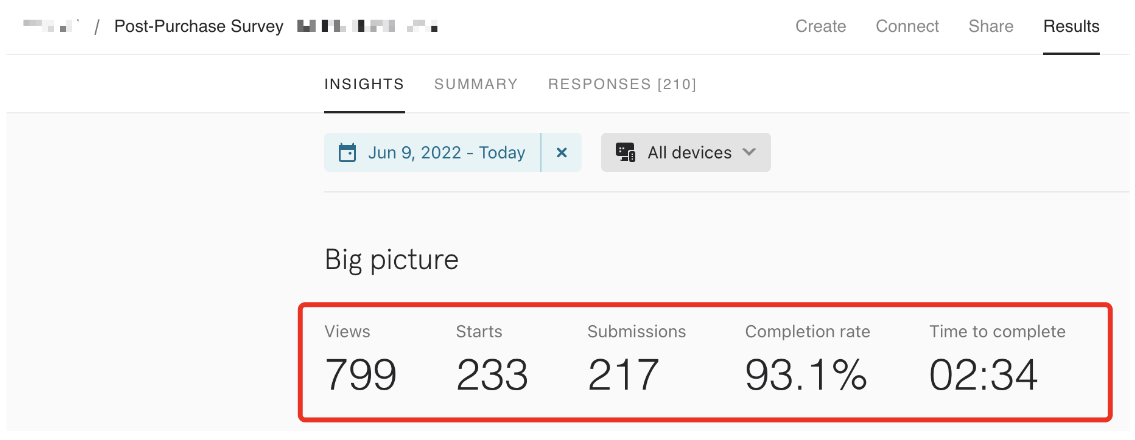
After scaling 3 different digital products to over 100 sales a day, I've seen refund rates as high as 30% all the way down to < $3.5% refund rates (almost 10x lower refunds than another offer).

Below are seven cardinal rules, tested and tried, to consistently launch and scale online courses with a refund rate capped at a mere 5%.

And or the skeptics... here's the proof from one of my offers doing 100+ sales a day (last 3 months data):

Rule #1: Mirror Promises with Deliverables

One of the fastest ways to break trust and trigger refunds and dreadful disputes is by marketing something that does not exist, or is not congruent with your customer's experience.

Name your modules and bonuses with the exact same names you have displayed on your sales funnel.

People remember what they were promised, and if the names they see after they purchase are different then what they expected... they will label you as untrustworthy.

Rule #2: Always Overdeliver

One of the simplest ways to do this is by adding a module titled "Unadvertised Bonuses" and loading up 3-5 high-impact trainings to help them get results faster.

Make sure these unadvertised bonuses are actually valuable.

(i.e don't just toss in your old lead magnets lying around in your Google Drive).

This will skew a subtle reciprocity bias in your favour while building goodwill.

Rule #3: Race To The Relationship

People resonate with people.

Assign an accountability coach to your new customer (or a support rep) as fast as humanly possible. If you're just starting out or are a solopreneur with a course... send them a personalized welcome video to help reaffirm their decision to spend their time and money with you.

If you can assign a real person as their primary point of contact when it comes to issuing a refund... they are less inclined to break the relationship with the person instead of looking at the purchase as transactional... They will look at it as if it is a breach of trust with a friend.

Take advantage of tools like Bonjoro if you desire to automate this with a human feel.

Ringless voicemail is great for this as well - but it must sound exactly like a non-automated message - and NO pitching anything (delay upselling them or inviting them to book a coaching call on purpose).

And if you have a community, prioritize getting them into the group and introducing themselves as fast as possible so they can connect with others in a similar situation as them.

Seeing others ahead of them getting stellar results and breakthroughs will boost their motivation and consumption.

Rule #4: Showcase Case Studies

It reinforces the idea: "If they did it, so can I!"

In your very first lesson and throughout your first module, showcase testimonials and case studies of previous clients and customers who used your course to achieve their desired outcome.

Module 1 is the perfect place to re-instil their belief in your product to stick the sale.

Rule #5: Illuminate Their Path To Victory

When your new customer logs into their portal for the first time... they will likely be overwhelmed with your content if they do not see a clear path to achieving what they set out to do with your course.

Take the time to provide visuals and infographic demonstrations along with a polished presentation of the steps they will be taking with you to achieve their desired outcome.

Platforms like Canva or Piktochart can assist in creating engaging infographics.

Rule #6: Make Your Experience Greater Than Their Expectations

Promise less, deliver more.

The quality of your product should always supersede your claims. Unfulfilled promises of your product made by your copywriting is the fastest way to skyrocket your refund rates.

Every lesson, every live, and every post you make in your group should wow your customers and increase the quality of their experience.

Set appropriate expectations, and then overdeliver on them.

Rule #7: Quick Wins Matter

The best selling online courses and digital products are designed to solve a problem...

- Improve sales skills to earn more commissions

- Learn to code so you can land a high-paying job

- Learn how to run ads to get clients on retainers

- [Learn How X To Achieve Y Outcome] essentially is the name of the game

The problem is, most course creators, experts, consultants, and thought leaders fail to realize and appreciate the stage their new customer is experiencing... and overwhelm them with information but no action steps.

One of the most empowering ways to both increase the consumption of your products while simultaneously lowering refund rates is to get your new customer a win as fast as humanly possible.

The first win should be easy to attain while simultaneously providing two realizations for your customer:

a) That they can in fact, do this

b) That your course is the path to getting what they want

Your goal should be to provide a tangible result as early and easily as possible (in most cases).

A Closing Note On High Refund Rates

If the refund rates of your course are higher than 20%... in my professional, unlicensed, and heavily biased decision based on my experience...

You should start over.

(i.e. new funnel, new copy, new product)

You will never turn around a high refund rate around with slow, gradual improvements. And if the refund rate is >10%... it tells me one of two things are true:

  1. The copy that sells the product is far too aggressive and the product cannot keep up with the promises being made to sell the course.

  2. The product is so lacklustre that buyer's remorse is triggered as soon as they press play on module one.

Or... both.

It's better to start over from scratch and do things right instead of trying to fight your way out of a losing battle with little improvements that are damn near impossible to measure.

User Avatar

Blake Wyatt

🚀Ship 30

3y ago

From Skepticism To Success: The One Simple Math Lesson Every Course Creator Needs In Their Program
Blake Wyatt

"Faith in oneself is the best and safest course."

- Michelangelo

Many experts and course creators jump right into the thick of their program's content after a brief introduction video—which most new customers skip anyway. In the rush to condense our expertise into digestible chunks, we often overlook the unique stage of our customers' journey. This oversight can lead to low course consumption and disengaged customers who quietly seek answers elsewhere.

So how can we increase customer retention, success, and ascension into our higher-ticket offers?

There's a crucial psychological bridge that your prospects need to cross before they can engage with the rest of your course modules.

The Most Effective First Step You Can Take For Your Customers Is To Boost Their Belief In Two Key Areas:

  1. Themselves (which reaffirms their decision)

  2. The outcome they desire (what they paid for)

NOTE: This implies that your course must not just be good, it must be stellar

To facilitate this belief, I recommend using a Simple Math Lesson inside of Module 0 (more on module 0 in a future post). This crucial segment precedes all other content in your course, setting the tone and establishing the necessary "AHA" moment required to believe your course is exactly what they've been looking for.

Module 0: Lesson 1 - The Math Lesson

One of the most impactful ways to bolster someone’s belief in themselves and your course is by demonstrating the simplest math required to achieve the desired outcome.

For example: a Facebook ads course that helps users secure clients on retainer might be framed like this:

  • 20 outreaches per week [Action]

  • 2 sales calls per week [Action]

  • 1 client secured for every 4 sales calls [Result]

4 Clients @ $2,500/mo each = $10k/month [Outcome]

In a sales training scenario, the math might look like this:

  • 5 calls a day [Action]

  • 20% close rate (equals 1 sale a day) [Action]

  • $500 commission per sale [Result]

This equates to $15k/month earnings [Outcome]

For a course about coding, the breakdown could be:

  • Study 1 module per day [Action]

  • Code for 1 hour a day [Action]

  • Achieve certification in 6 weeks [Result]

  • Apply to 1 job a day post-certification [Action]

Secure a job as a coder in 90 days or less [Outcome]

By distilling the desired outcome into simple, accessible math, your customers can visualize the outcome you promised while gaining a clear understanding of the steps needed to achieve it. This increases content consumption, community engagement, and personal accountability, fostering a deeper commitment to the program and the intended outcomes.

This approach helps customers think, “That's so straightforward, I can definitely do this!” or “That explains why I haven’t achieved XYZ yet… Now it all makes sense!”

Pro-Tip: Minimize the numbers associated with daunting tasks, and maximize the numbers tied to desired outcomes.

Remember, once your customers see the math, they're invested in the journey.

User Avatar

Blake Wyatt

🚀Ship 30

3y ago

How I Went From Fighting For 42 Sales A Day To Soaring Over 110+ Sales A Day Overnight While Slashing CPA 2.45x Using "Lightning Bolt-On" Ads
Blake Wyatt

"Simplicity is the ultimate sophistication."

- Leonardo da Vinci

I've seen a lot in my 7 years and $13M+ running Facebook ads... but this new ad creation strategy is now in the top 3 of my favourite breakthroughs of all time. After battling to restore performance of this particular front end sales funnel for more than 6 months for this account... we went from averaging 42 sales a day at $153.85 CPA to clocking in (on average) 114 sales a day over the last 7 days while slicing my CPA by 2.45x down to $62.87

To be honest, I'm a little hesitant to share it because it works so well that it's almost too easy, and telling you what it is essentially is giving away the keys to the Zuckerberg mint if executed correctly.

3 Things before I continue...

#1) This method was introduced to me by Will Perry of Unicorn Traffic and founder of Elite Media Buyers, and this is only ONE of his methods that I took and ran with. If you haven't checked out his stuff, I highly recommend it.

#2) I have only had outstanding success with this ad style thanks to collaborating on implementing this strategy with the legendary copywriter Peter Lu (@peter_lu01).

#3) Here's proof that it works (insert guru-style blurry screenshot below that seems hard to believe)... and it's worth mentioning that I've tried 5 different variations of this method, and it's worked all 5 times.
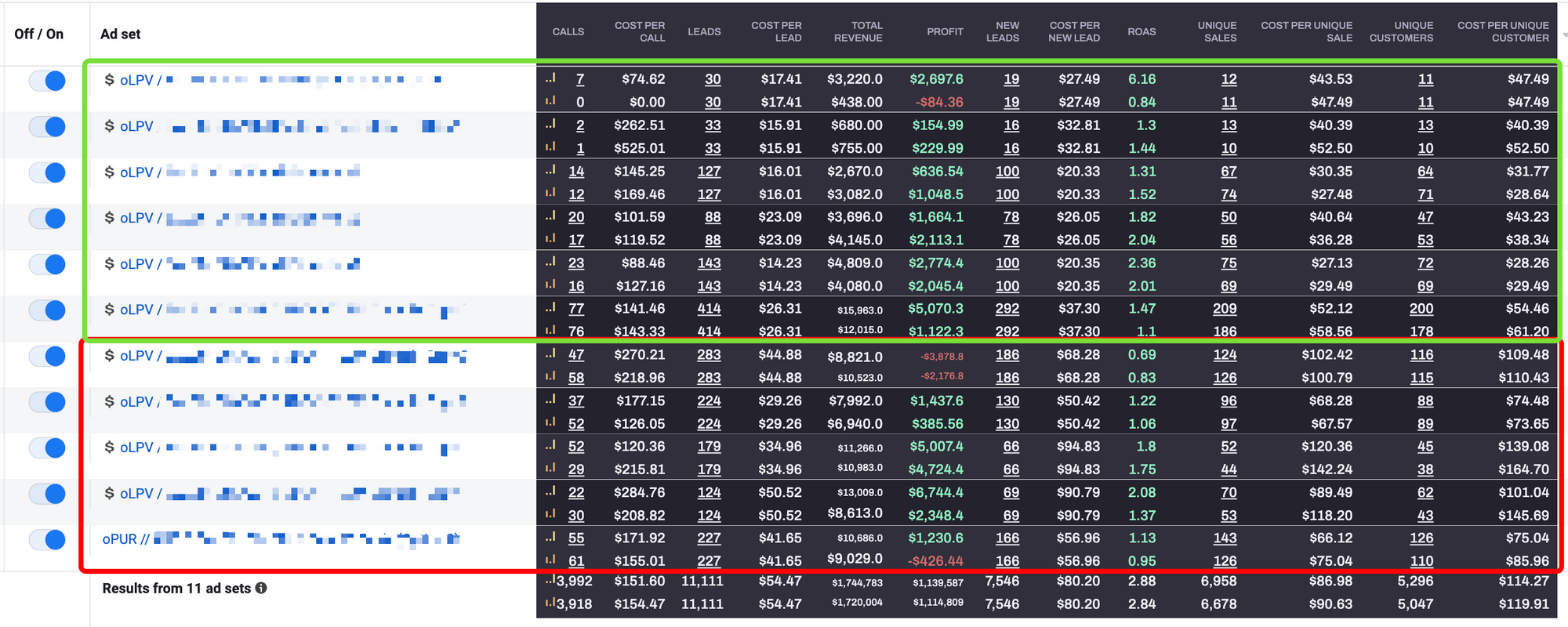
Note: The lightning-bolt ads covered in this article are inside the green box, and some of the old ads for comparison are circled in the red box.

Dang... Alright Blake! But What Are These Lightning Bolt-On Ads?

So glad you asked. It's quite simple really, and once you have this ad creation strategy in your tool belt... you'll never run out of ads again.

First, they are called "Lightning Bolt-On Ads" because they are fast and are essentially two pieces of video content bolted together, a core video element (more on that in a moment) and a CTA (Call To Action) video element. That's it. Because there are only 2 main parts, and in many cases you can get away with just a few CTA video element variations... you can have endless combinations where the rate limiting factor is how much core video content you can make and how good your content is.

If this strategy does not work for you... it means the content you chose to use in the ad is not good. Repeat and try again.

Step #1: The Core Video

One of the easiest ways to find ideal core video content to use as the first section of your ads is to review your organic posts and reels on Instagram, YouTube, or TikTok... and grab the ones with the highest combinations of reach, likes, and comments.

Pro-Tip: If you already post a lot of great content... review your content in Meta Business Suite or with whatever tools you use to analyze your top performing content and start with those first.

If you don't have plenty of good content to use, I recommend creating some base core videos to start with that have a strong hook (I.e. first 3-5 seconds of the video) followed by a great piece of content.

Here are some examples of content styles that work exceptionally well:

1) Demonstration/Educational content (my personal favourite)

2) Polarizing view content (I.e. taking a stance against a commonly held belief)

3) Top 3/5/7 Tip-Style Videos (e.g. the top 5 online businesses to start in 2023)

The key here, in most cases, is to post these types of videos and see which videos get the best organic

Step #2: The CTA Bolt-On Video

All you have to do is film a quick 30-90 second call to action (CTA) script that ideally takes place in the same setting as the original piece of content so that it looks relatively natural when you bolt the pieces of content together.

So, if the core video content is in front of a whiteboard with a blue shirt... film the CTA in front of the same whiteboard with a blue shirt. If the core video content was filmed on a hike with your dog wearing a white shirt... well, you get where I'm going with this.

Then, you attach the core video from step #1 to the CTA video in step #2 and voila... you have your first Lightning Bolt-On Ad created and ready to launch.

Here's a sample template you can copy and paste to get started with your own Lightning Bolt-On Ads:

"And if you're looking for [insert number of tips, tricks, strategies, or resources] more [insert relevant solution] to elevate your [insert relevant achievement or goal], and boost your [insert business metric],....

Then luckily for you, we've compiled it all inside the [insert product name] [show product in hand]

These [insert what the product provides - tips, strategies, etc] have been successfully implemented in [insert number of industries] industries and counting...

As of this filming, there are [insert number of users or customers] [Editor: show screenshot on page] who have used these [insert what the product provides - tips, strategies, etc] with a considerable amount of success since [insert start date].

You can get this [insert product type - book, guide, etc] for yourself today.

Go read it, use it, and see what that does for your [insert business metric].

You won't regret it."

All you have to do is fill in the template with your relevant information and tweak the copy to whatever product or lead magnet you're offering.

A Final Note On Quality...

The simple yet harsh truth about this strategy is that it will result in one of two outcomes...

#1) You'll make drastic cuts to your CPA and your ads will begin to soar off the backs of your amazing content.

Or...

#2) The ads will absolutely bomb and it means that the quality of your content is missing the mark.

User Avatar

Blake Wyatt

🚀Ship 30

3y ago

The 3 Split-Testing Sins Derailing Your Sales Funnel – And How to Avoid Them
Blake Wyatt

"If it ain't broke, don't fix it"

- Thomas Bertram Lance

Humans have a distinct ability to solve problems. Where this becomes detrimental in practice is when we try to solve problems that do not exist. This is especially prevalent in the digital marketing world. Most notably from my experience, this surfaces most often when it comes to split-testing practices.

In this article, I'm going to lay out the top 3 ways sales and marketing funnels go sideways through making a few small but catastrophically crippling mistakes can be hard to reverse.

Let's jump right in.

Split-Testing Sin #1: Testing The Wrong Things In The Wrong Order

First things first... do NOT, under ANY circumstances... launch a split-test on something that is working (unless you hate your funnel). I have unfortunately done this so many times myself out of greed for higher conversion rates, and it has ended badly every single time.

I have also been part of a project where something was 3x'ing on the front end (I.e. without any backend or high ticket products/services) and we split-tested it for 8 months into oblivion, only to revert the funnel back to the original control.

Save yourself the time, and resist the urge to run a test for the sake of running a test... or trying to go from a 40% optin rate to a 45% while your checkout page converts at 20%. Greediness for an extra percentage of conversion will almost always lead to lost conversions more often than gains. Which brings me to my next point...

Always optimize the point of most friction first. You should analyze the individual conversion of every step of your marketing or sales funnel and have clear benchmarks to what those are. Whatever metric is the lowest... let's say it's your checkout page has a KPI benchmark of 50% and your checkout page is converting at 20%. That metric should be like a red spinning siren going off indicating THAT STEP is the step you should be split-testing to improve.

Pro-Tip: If you try beating a control multiple times and it wins every time… just stop trying to beat it. Instead, test a completely different page in isolation while the control brings home the bacon.

Split-Testing Sin #2: Deploying Variants Too Early

However long you think you should run a split-test... you should probably run it longer (assuming that your split-test variants are not dropping overall performance of the funnel). Here's why...

Most marketers ignore the velocity of their incoming data (I.e. how many visitors they're getting on a daily basis to their funnel/site) which dictates how short or long a split-test needs to run, and at what percentage of traffic.

But without getting too complicated, all you really need to know is that even the most promising split-tests can be proven to be statistical anomalies with enough runway. You absolutely must let each test run long enough than you to sufficiently validate the conversion economics and sequential impact of each step of your marketing or sales funnel.

Note: Sequential impact is the resulting changes in conversion rate to the following steps of your funnel of the test you're running (e.g. split-testing your optin page can change the purchase conversion rate and/or call booking rates).

Split-Testing Sin #3: Not Leaving Breadcrumbs

The final and most debilitating mistake marketers make with split-testing is not keeping a detailed log of their tests. If don't leave a trail of crumbs, you'll never find your way back to the cookie (or in this case your control).

You can absolutely optimize your way OUT of performance gradually over time if you’re not careful. This happens way more often than most realize, and if you've ever split-tested a webpage or funnel page more than twice, I can almost guarantee you've lost a variant (and the data of that variant) to prevent yourself from repeatedly testing the same concepts over and over again.

And the worst part about failing to keep a detailed log of split-tests, it makes it extremely difficult to retrace your steps back to a place where you were profitably converting visitors into leads and customers.

Here's the top 3 things you should be keeping a log of:

  1. A full-page snapshot of the variant in colour (I.e. version history)

  2. A description of what the variant is testing and a hypothesis of the test

  3. The outcome of the test

Remember to always have your original control somewhere safe that you have easy access to at any time to roll back your changes.

You are now armed with the knowledge of the top 3 split-testing sins that can save you years of headaches and thousands of dollars of wasted ad spend.

A Note On "Conversion Contrast":

One important thing to remember (and sort of a bonus #4) that trips up most well-to-do marketers is that they fail to provide enough of what I call "Conversion Contrast" in a test.

If you're conversion rate is significantly below your target... no button colour change is going to save your funnel. For big changes you need big differences (I.e. contrast) between the control and the variant.

One of my favourite ways to apply this is by having drastically contrasting the big idea on the sales page or even testing different promises and angles.

But, Conversion Contrast is an article for another time.

User Avatar

Blake Wyatt

🚀Ship 30

3y ago

Unleash Your Thank-You Page's Secret Weapon: Turbocharge Sales, and Decipher Your Market With This 15-Min Power Tactic
Blake Wyatt

Today, we're going to dive into how to supercharge your sales, unearth critical market insights, and broaden your customer base with one uncomplicated yet potent tactic - the Post-Action Intake Form.

This seemingly simple step is a treasure trove of data that you can leverage to refine your marketing strategy and better cater to your customers. If you're tired of seeing your Cost Per Acquisition (CPA) climb while your messaging keeps missing the mark, then it's time to tap into the power of a well-devised intake form. Trust me, it's a game-changer.

The Post-Action Intake Form Accomplishes 2 Key Objectives:

First, it primes your customers for future engagement with your sales and marketing teams. They've filled out the form, they're committed, and now your sales team has the playbook for their needs and desires. It's like handing them conversion cheat codes to maximize the lifetime value of every new lead or customer.

Second, you're secretly gathering market research that's worth its weight in bitcoins. You’re like a highly trained military operator… gathering intel before engaging. Every answer on that form is a clue to what your customers want, need, and will pay for.

Now you might be wondering how exactly to set this up (and do it so quickly)… So let's dive into the simple 3-step setup process:

Step 1: Map Out Your Questions

Setting up an intake form on your thank-you page post-sale is the first step. It may sound as exciting as a tax return, but trust me, it's the sales equivalent of finding the treasure chest in a pirate adventure.

Quick example: Imagine your sales team being handed a map marked with an 'X' for every new customer. They can skip the pleasantries and dive right into the heart of what your customer wants (while dodging many common objections and wishy-washy prospect behavior).

You want to keep your questions to as few as possible to reduce the time to completion (and increase your completion rates)… while also asking enough questions to get the valuable insights you desire. I recommend sticking to between 5-10 questions (no more than 10, as your lead or customer is already psychologically drained from watching your ads and going through your digital mousetrap).

Stick with me ‘til the end of the article and I’ll give you some base questions to start with.

Step 2: Set up Your Post-Action Intake Form & Integrations

Now that you’ve got your questions mapped out… all you have to do is pop them into your favorite question-based software tool (I recommend Typeform or Jotform). You’ll want to start with the easiest questions to build momentum before getting to the longer-form answers, like asking them to confirm their first name, last name, and email they used to sign-up or purchase.

Next, you’ll want to ensure that you use a tool like Zapier to connect your form to your CRM so that all of the juicy details about every single customer who fills this out get added to their contact information for your sales team.

Once you’ve got your shiny new Post-Action Intake Form built, which should take a few minutes, all you have to do is grab the embed code and place it on the Thank You Page of your funnel. Here’s an example of what the thank-you page might look like…
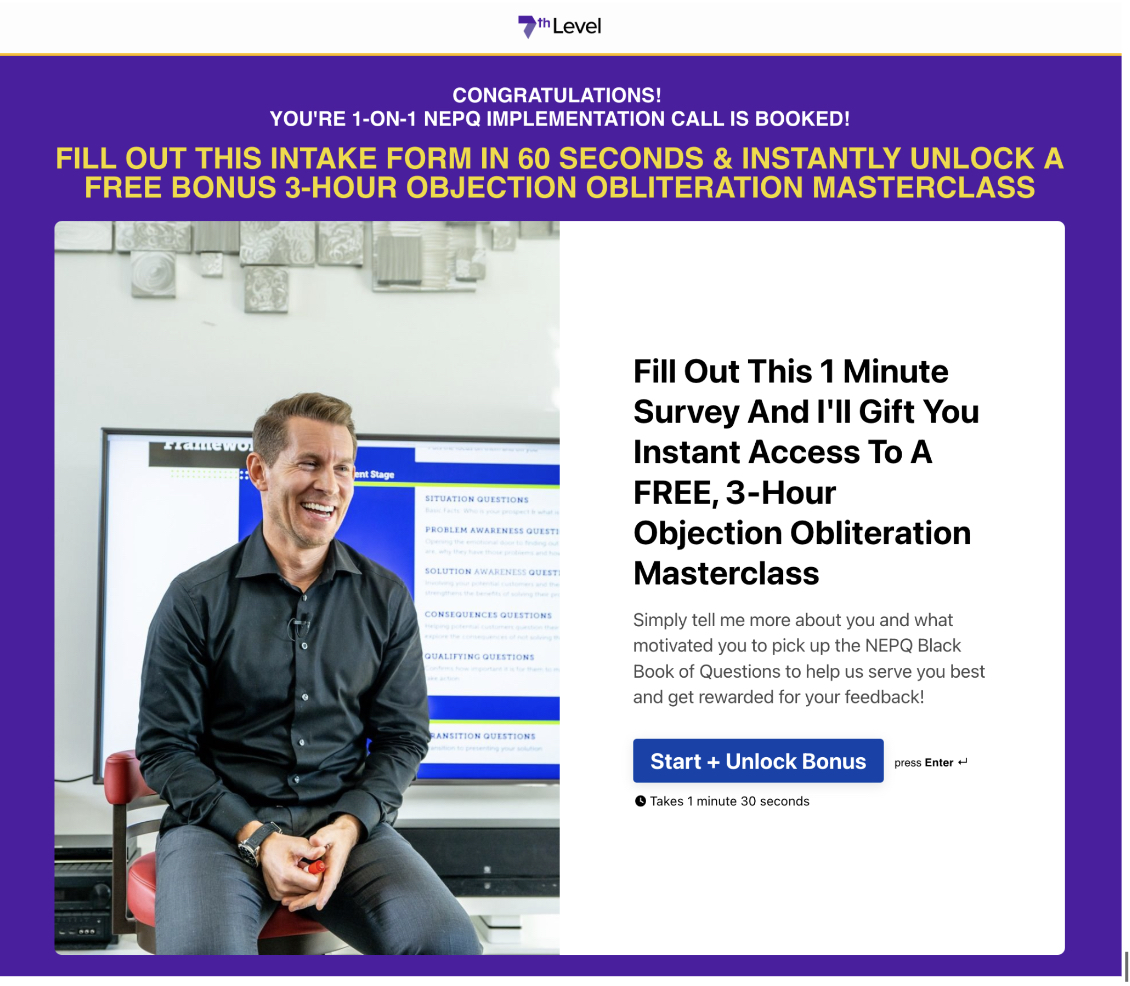
Pro-Tip: if you want to skyrocket the amount of intake form completions, simply offer them an additional free bonus training or resource for filling in the form.

Step 3: Use the Insights to Tailor Customer Experience

And here's the beauty of it all - it culminates in an enhanced sales process, enriched customer relationships, and insightful market understanding. You're not just running a business; you're building an empire with a loyal following of customers who actually feel understood.

Pro-Tip: export the answers gathered from your Post-Action Intake Form and upload them into a free word-cloud software tool to uncover messaging patterns, and common goals as well as challenges that your customers are facing to turn these answers into actionable insight.

Here are a few example questions to kickstart your Post-Action Intake Form:

  1. First things first, please confirm the email that you used to [sign-up for/buy] the [PRODUCT/LEAD MAGNET NAME].

  2. What prompted you to grab the [PRODUCT/LEAD MAGNET NAME]? (Make this multiple choice with an "Other" answer option just in case.)

  3. What is your #1 goal this year when it comes to [NICHE/INDUSTRY/DESIRE]?

  4. Permission to vent to us... what has been your biggest challenge preventing you from hitting your goal?

  5. If we could provide a clear pathway from your current state to your desired outcome, would you be open to further training or resources from us?

Then, on the thank you page, you just need to provide them with a link or a button to access their bonus training for completing the intake form.

Try crafting your own Post-Action Intake Form to transform your thank-you page from a bounce page into an engaging customer research tool. Then, watch as your show-up rates increase, your objections decrease, and your close rates skyrocket from this simple tactic.

PS - THE SUBTLE NUANCE: 'INTAKE' VS 'APPLICATION' OR 'ASSESSMENT'

There is a strategic reason we named it an "intake form" rather than an application or assessment form. Intake forms are a common requirement with authoritative figures in our lives (like doctors or personal trainers), hinting at an upcoming service. By dubbing it an "intake form," there's a tacit understanding that the form must be completed before progressing, thereby encouraging prospects to engage more deeply with the process.

User Avatar

Blake Wyatt

🚀Ship 30

3y ago

Day 1: The Best Time To Write Was Years Ago. The Next Best Time Is Now
Blake Wyatt

David C. Baker once wisely noted, "If you want to know what you think about something... write about it."

Like many, I've often questioned...

Are my thoughts worth sharing?

We grapple with imposter syndrome, struggle to find time, and fight against the overwhelming anxiety screaming at us not to hit that intimidating "Publish" button...

So, why should we write and share?

Here are several compelling reasons why you should consider writing—and sharing—your thoughts with the world, even if it feels like no one's listening.

#1) Cultivating a "Slow-Down" Habit

In our current era, where technology relentlessly accelerates the pace of life while paradoxically complicating it, cultivating a habit that both necessitates and enables you to slow down has never been more beneficial.

In fact, I believe this practice is not new. It's a lost art—supplanted by endless dopamine-triggering scrolls for likes—that once kept us in the present, rather than enslaved to our screens.

Writing possesses a remarkable ability to slow down our frenzied world, offering a cathartic release and restoring control over our lives.

This segues into my second reason for writing...

#2) Mental Health and Emotional Well-being

Writing and sharing thoughts can offer profound therapeutic benefits for the author.

Not convinced? Try sitting down to write just one page—old-school, with pen and paper—today, and see if you don't feel like a burdensome weight has been lifted from your shoulders.

My decision to embark on the Ship 30 for 30 challenge alongside Dickie Bush and Nicolas Cole was driven by a blend of selfishness and selflessness...

#3) Self-Mastery & Advancement

Humans have a deeply ingrained connection with tools.

Among these, pen and paper have proven timeless. Writing bridges the gap between consciousness and reality, streaming thoughts into existence with a mere flick of the wrist or gentle keystroke.

I believe that writing and thinking are intrinsically linked. We can harness writing as a meditative tool to clarify our perceptions of the world and refine our craft.

Some of the best insights I've ever uncovered have come from the tip of a pen.

Even if your post goes unnoticed, the results accrued from investing time to transform your experiences into Intellectual Property will garner applause.

Writing can help you build an audience, establish a business, and impact your industry when done well and with genuine intent.

Over the next 30 days, I plan on delving into topics like Marketing Principles, Advertising Economics, and Customer Acquisition Strategies.

I invite you to join me on this journey, and please feel free to ask any questions along the way!

I'm eager to begin sharing my knowledge online.

Who knows... perhaps this might inspire you to do the same.