What Is A Headline? The Meaning, The 5 Pieces Of A Good One, And 12 Headline Examples To Steal
Nicolas ColeNovember 12, 2026
What is a headline? The line above your writing that decides if anyone reads it. Learn the 5 pieces of a good one and steal 12 headline examples.
A headline is the title at the top of a piece of writing: an article, a newsletter, a post or an ad. It tells the reader what the piece is about and what they get for reading it, so it decides whether anyone reads the rest.
A few years ago, I spent a two-hour writing session next to Craig Clemens, one of the greatest living sales copywriters.
We were at his house in the Hollywood Hills, working on different projects. When his timer went off, he asked how my writing was going. "Great!" I said. "I've written almost 3,000 words!" Then I looked over at his page. It was almost empty. "How's yours going?" I asked.
"Great!" he said. "I think I've almost got the headline figured out."
That day changed how I write. I stopped writing headlines last, and today I spend most of my writing time on the headline and the first line. I've written over 5,000 articles online. They've earned more than 100 million views, and I've spent more than 3,500 hours obsessing over how to write the perfect headline. Below is what a headline is, the 5 pieces every good one has, 12 headline examples and a few exercises to get better fast. (Looking for the line under your name on LinkedIn? That's a profile headline, and we have LinkedIn headline examples for it. If the rest of your piece needs work too, start with 15 writing tips for beginners. And when you're ready, write your next post in Typeshare. You do the writing; the robots do the rest.)
What Is A Headline? The Headline Definition
A headline is the title at the top of a piece of writing.
It sits above an article, a newsletter, a blog post, a social post or an ad. It tells the reader two things: what the piece is about and what they get for reading it. Newspapers gave us the word. A headline was the line of large type at the head of a story, and on a front page its size told you how big the news was. Online, every piece of writing has one, even when nobody calls it that. The subject line of an email is a headline. So is the first line of a LinkedIn post, the title of a YouTube video and the bold text on an ad.
Here's the headline definition I'd give a new writer:
- What it is: the first words a reader sees, above everything else.
- What it does: it promises the reader something specific.
- What it decides: whether they read the rest.
Some people use "title" and "headline" for the same thing, and that's fine. The difference is in the job. A title can name a piece ("Chapter 3"). A headline has to sell it.
That's what a headline is.
What Does Headline Mean Online? The Headline Meaning For Writers
Online, a headline means one thing: it's the reason anyone reads your writing at all.
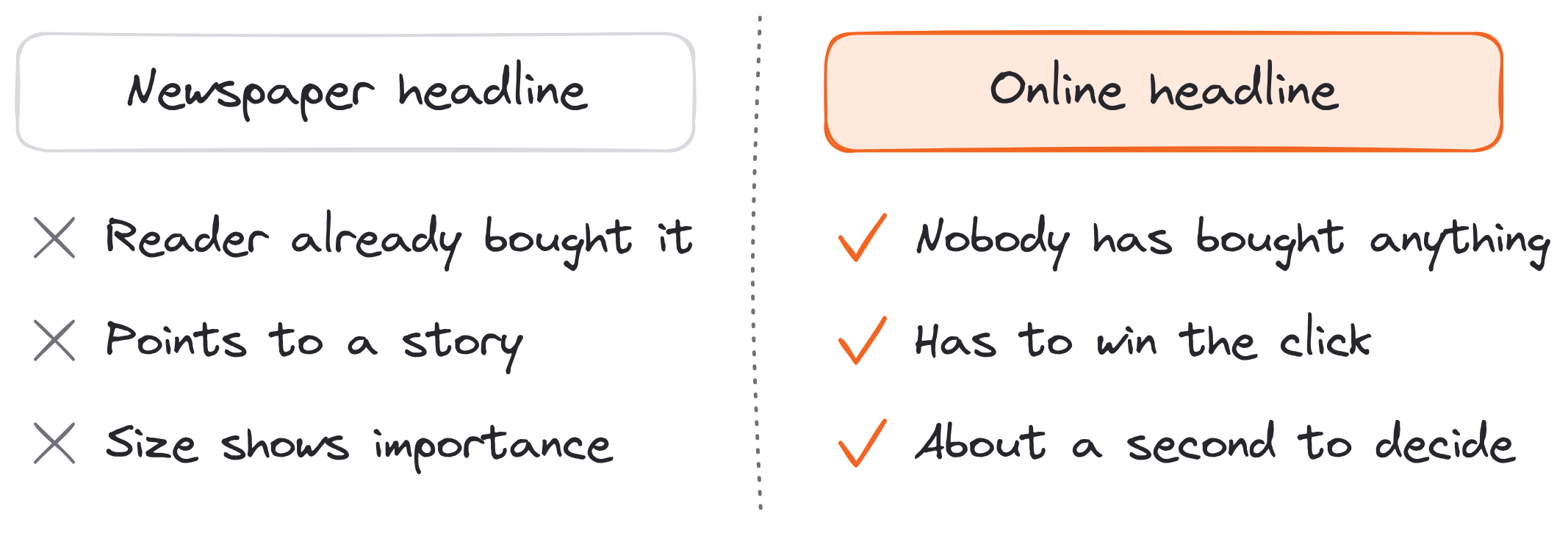
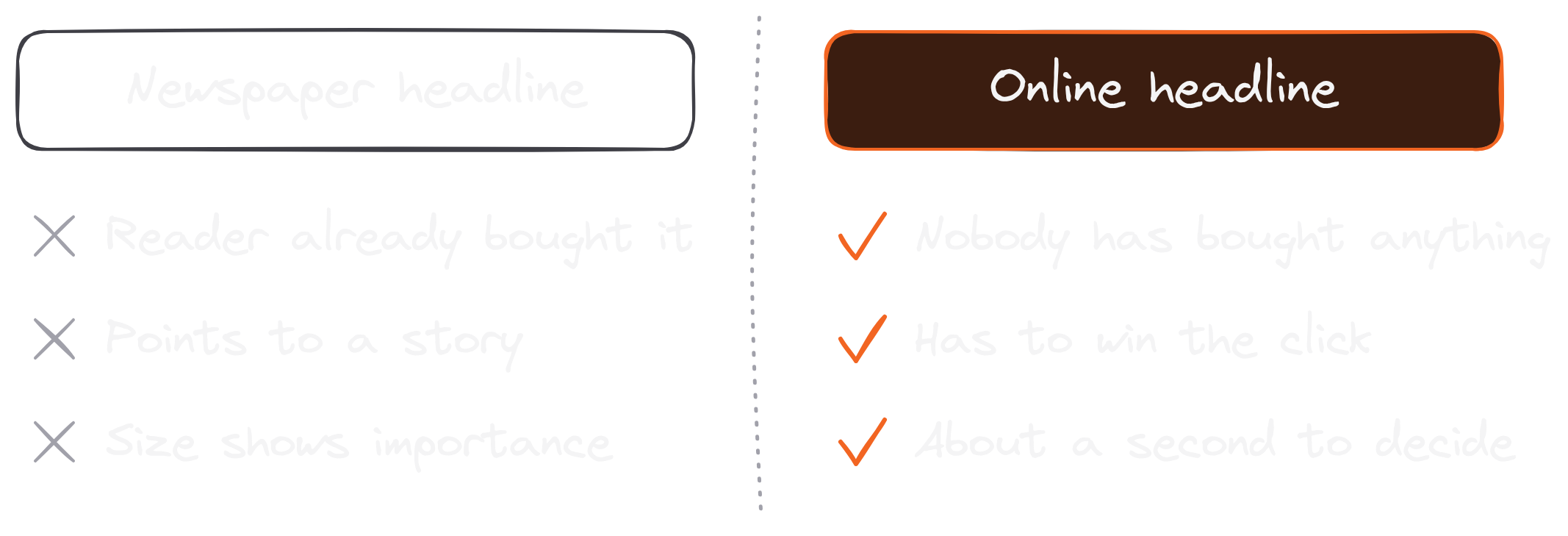
A newspaper reader has already bought the paper, so the headline only has to point them to a story. Online, nobody has bought anything. Your headline sits in a feed or an inbox next to thousands of others, and the reader gives it about a second. It doesn't matter how good your writing is. If the headline fails to hook their attention, no one will read it.
Most writers push back on that. I've heard three objections more than any others:
- "That's clickbait!" Writers think a number, a strong adjective or a hinted outcome makes a headline clickbait. It doesn't. A headline is only clickbait if the piece fails to keep its promise.
- "That headline is too long!" What matters is whether you're speaking to the reader. If you are, there's no such thing as too long. If you aren't, even a 4-word headline wastes their time.
- "My favorite writers don't do this!" Seth Godin's headlines are short and quippy, things like "Everyone Is Someone." He can, because his readers already open anything he writes. Until yours do, your headline has to do the work.
So the headline meaning, for anyone writing online, is the promise that earns the click.
That's what a headline means online.
The 5 Pieces Of A Good Headline: How To Write A Headline
Every headline that grabs attention and holds it shares the same structure.
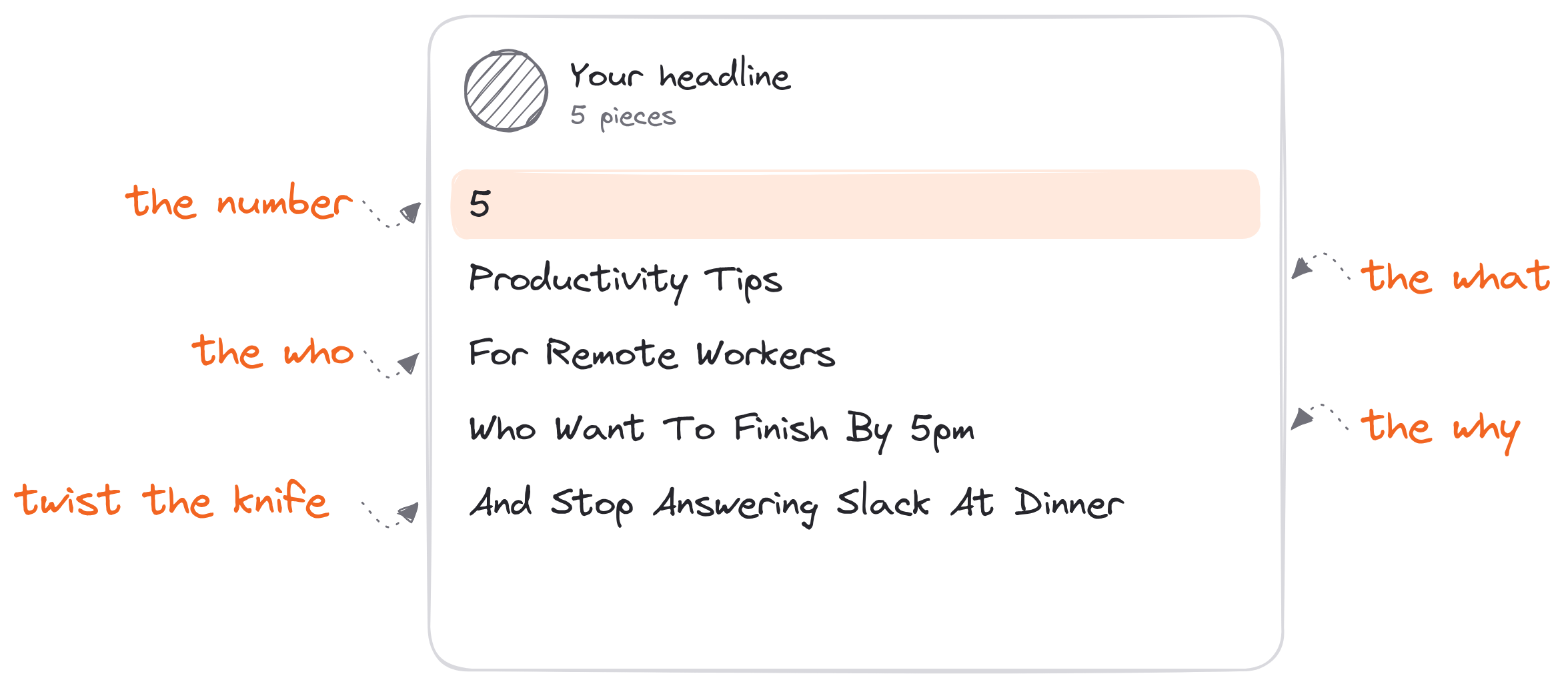
I call it the 5 pieces of an effective headline. You won't need all five every time, but the more you use, the stronger the headline gets:
- The Number. A number sets expectations. Readers do quick mental math to decide if a piece is worth their time. "3 Steps" feels a lot more doable than "300 Steps." Always use the digit (8), never the word (eight), because the eye grabs it faster.
- The What. Say what the piece is about, plainly. The biggest mistake writers make is being clever. Clear wins every time.
- The Who. Name the reader: "for freelancers," "for first-time founders." The right person should read it and think, "That's me."
- The Why. Answer the reader's biggest question, "What's in it for me?" Read this to get a good outcome, or read this to avoid a bad one.
- Twist The Knife. Stack a second and third outcome on the first. "Write better headlines that get more clicks and help you build a loyal audience" pulls harder than the first half alone.
Here's how all five come together in one headline:
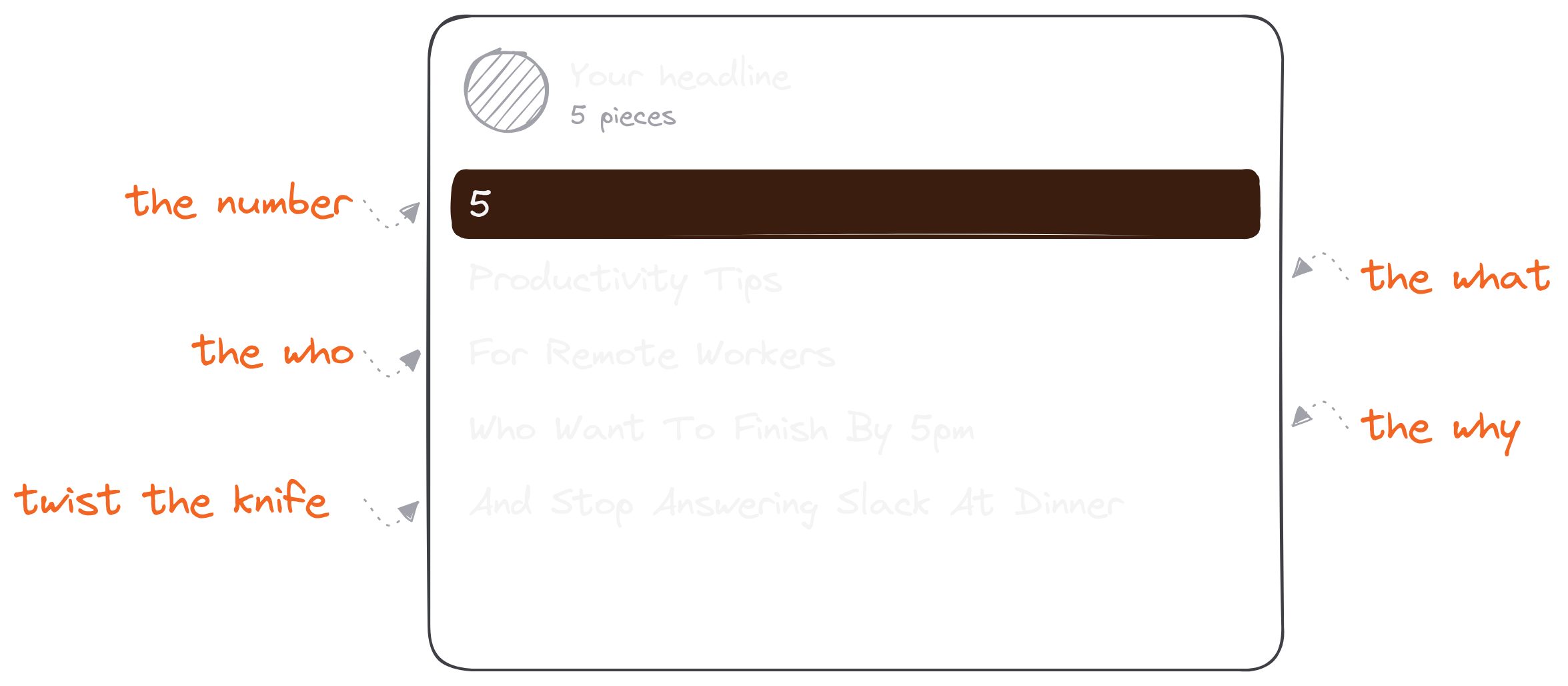
5 Productivity Tips For Remote Workers Who Want To Finish By 5pm And Stop Answering Slack At Dinner
The number tells you how long it is, and the what tells you the topic. The who tells you it's for you. The why and the knife tell you how your evening changes.
One more rule makes all five work: tangible beats intangible. "Fall in love" is something you can't hold in your hands. "Find someone you'll want to stay married to for 50+ years" is.
That's how to write a headline.
12 Headline Examples: Eye-Catching Headlines And Why They Work
The fastest way to learn headlines is to see a weak one rewritten.
In one of our issues, we pulled 10 headlines from around the internet and rewrote each using the 5 pieces. Here are five of them, with the problem we found in each:
- Before: Things Men Secretly Do. Problem: So what? What happens when men do these things? After: 5 Mistakes Men Secretly Do That Cost Them Their Marriage
- Before: Betting Big on Retail, Live TV, and (maybe) the Metaverse. Problem: Betting big, but why? What's the outcome? After: If You Believe In The Metaverse, Add These 7 Stocks To Your Portfolio ASAP
- Before: The Hidden Advantages of Working for Yourself by Making Money Online. Problem: It hints at a list, so make it a list. After: 8 Hidden Advantages Of Working For Yourself, From Home, Making Money Online
- Before: Eight Uncomfortable Truths About Life That Will Wake You Up. Problem: The number is spelled out, and what does "wake up" mean? After: 8 Uncomfortable Truths About Life That Will Put Things In Perspective And Guarantee You Wake Up Tomorrow Excited To Be Alive
- Before: The Wisdom of Thinking for Yourself In An Age of Experts. Problem: Lots of fancy words, but what do you walk away with? After: In A World Of Gurus And Overnight Experts, Here's An Independent Thinker's Guide To Stress-Test Your Own Beliefs And Think For Yourself
Next, four of my own headlines that went viral, with their view counts:
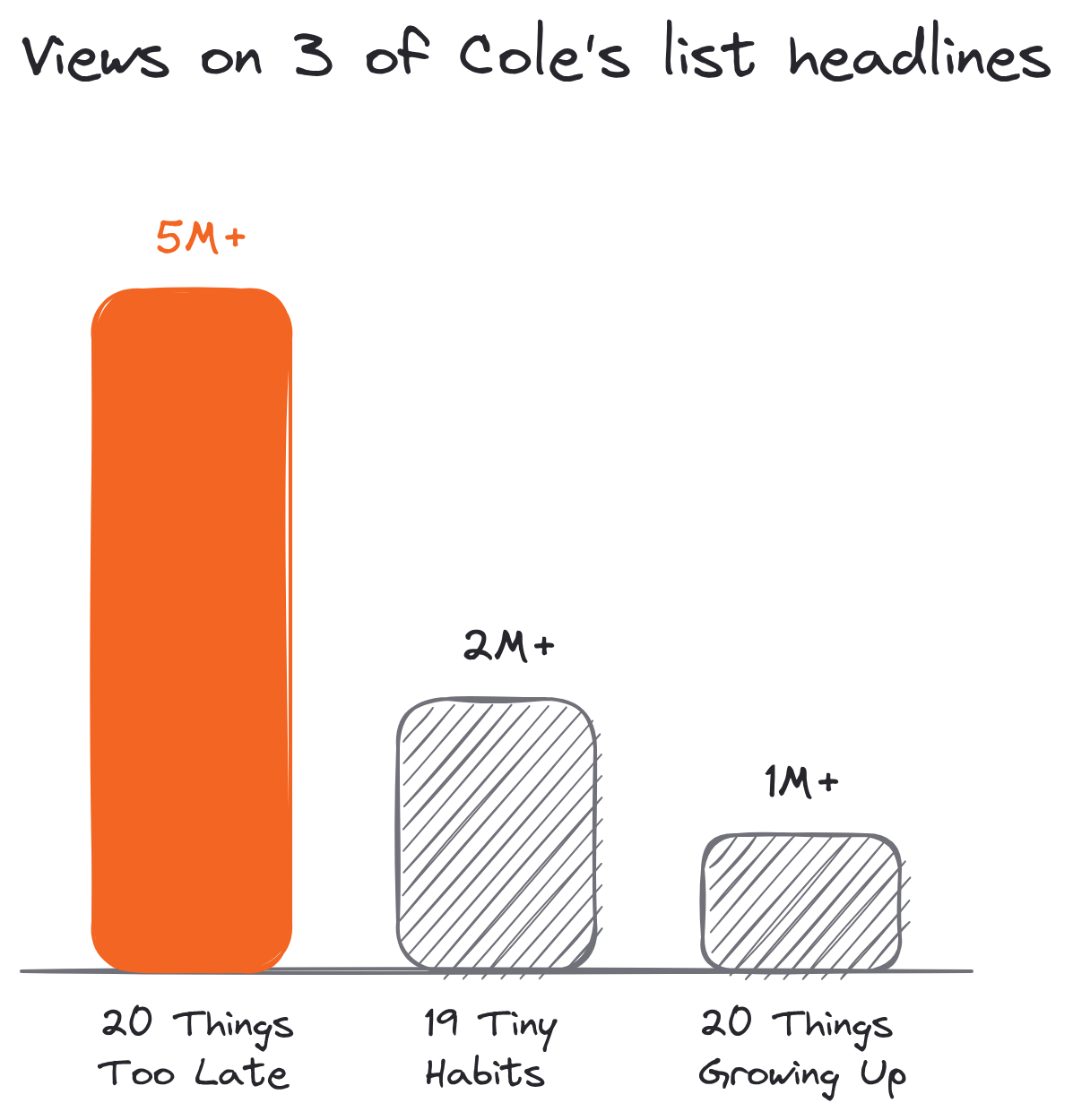
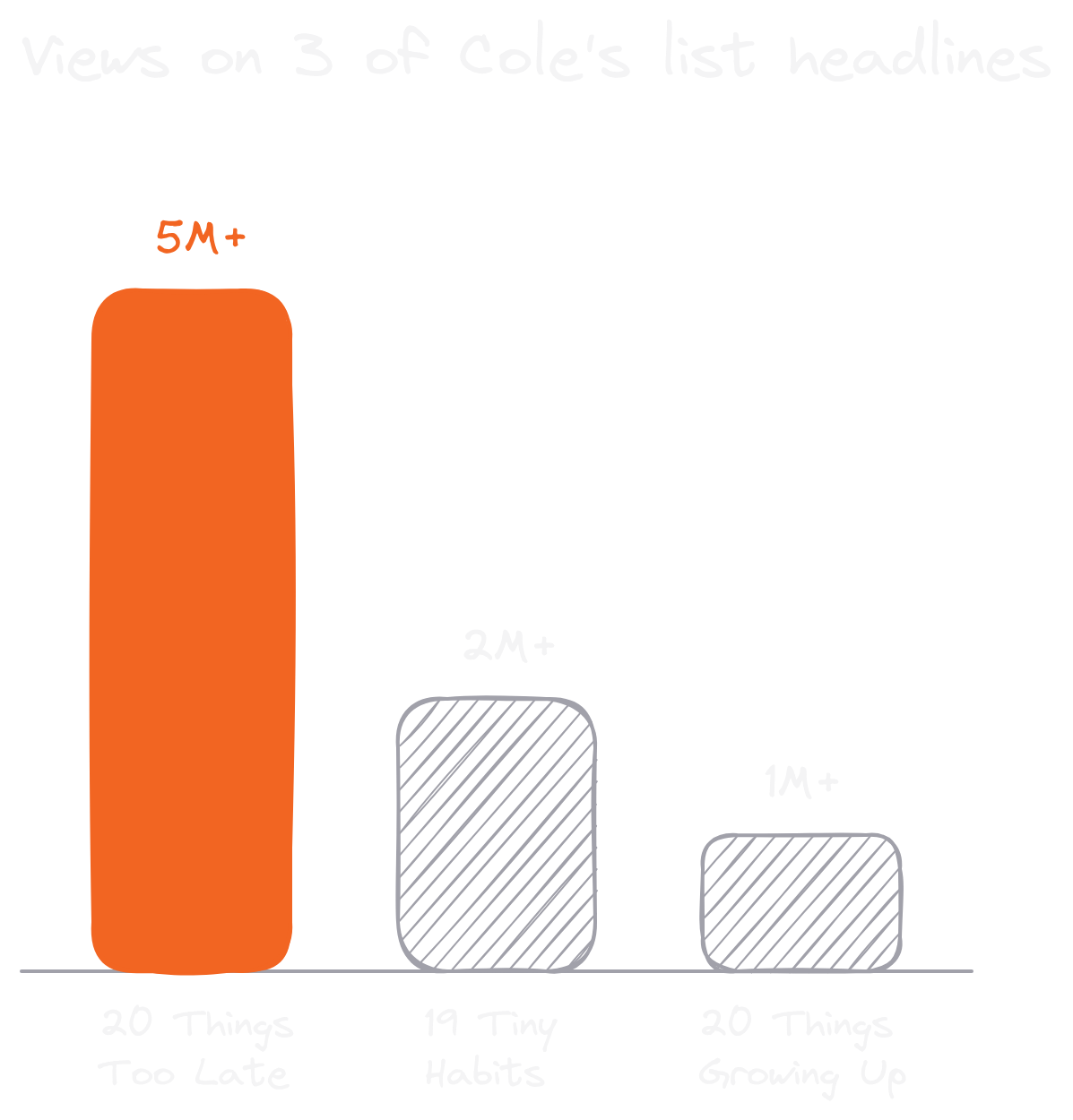
- 20 Things Most People Learn Too Late In Life (5M+ views)
- 19 Tiny Habits That Lead to Huge Results (2M+ views)
- 20 Things Nobody Tells You About Growing Up (1M+ views)
- What I Learned Being Betrayed By My 6 Closest Friends Growing Up
The first three are lists that deliver on their number. The fourth is a story, and you know exactly what you're getting.
Last, three recent headlines from Dickie's and my newsletters and posts:
- 5 Steps To Launch A New Substack From Scratch In 2026
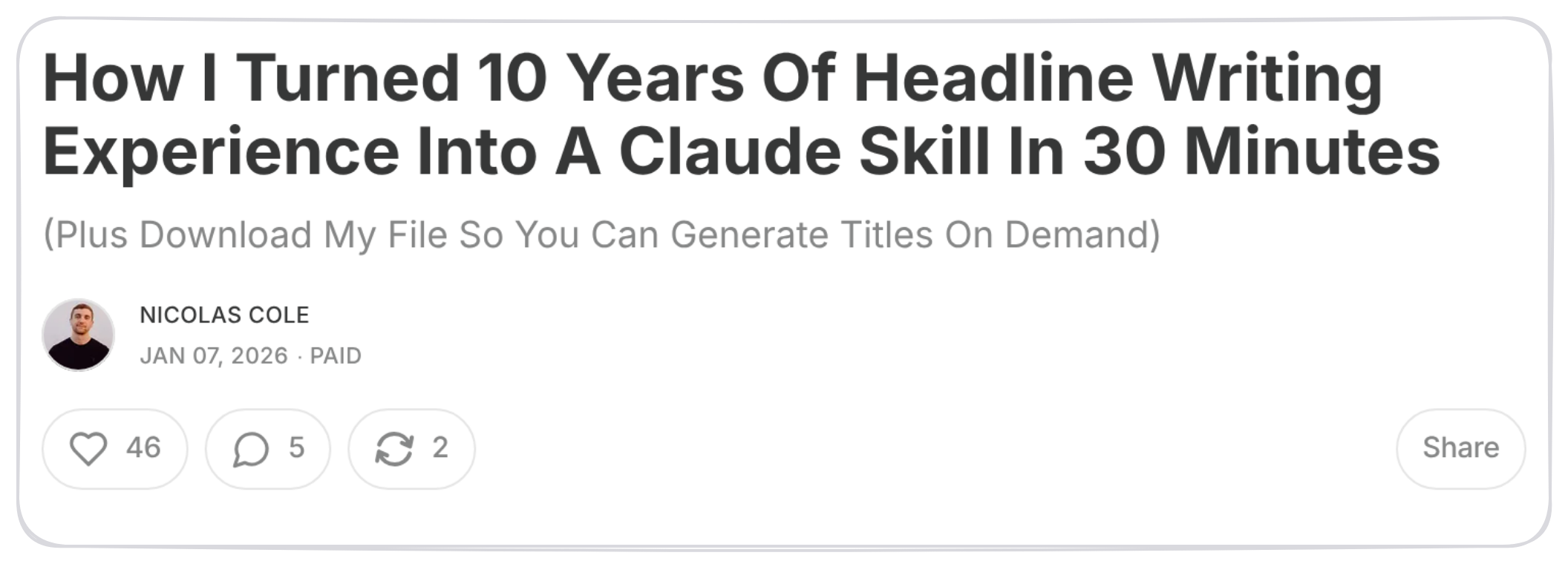
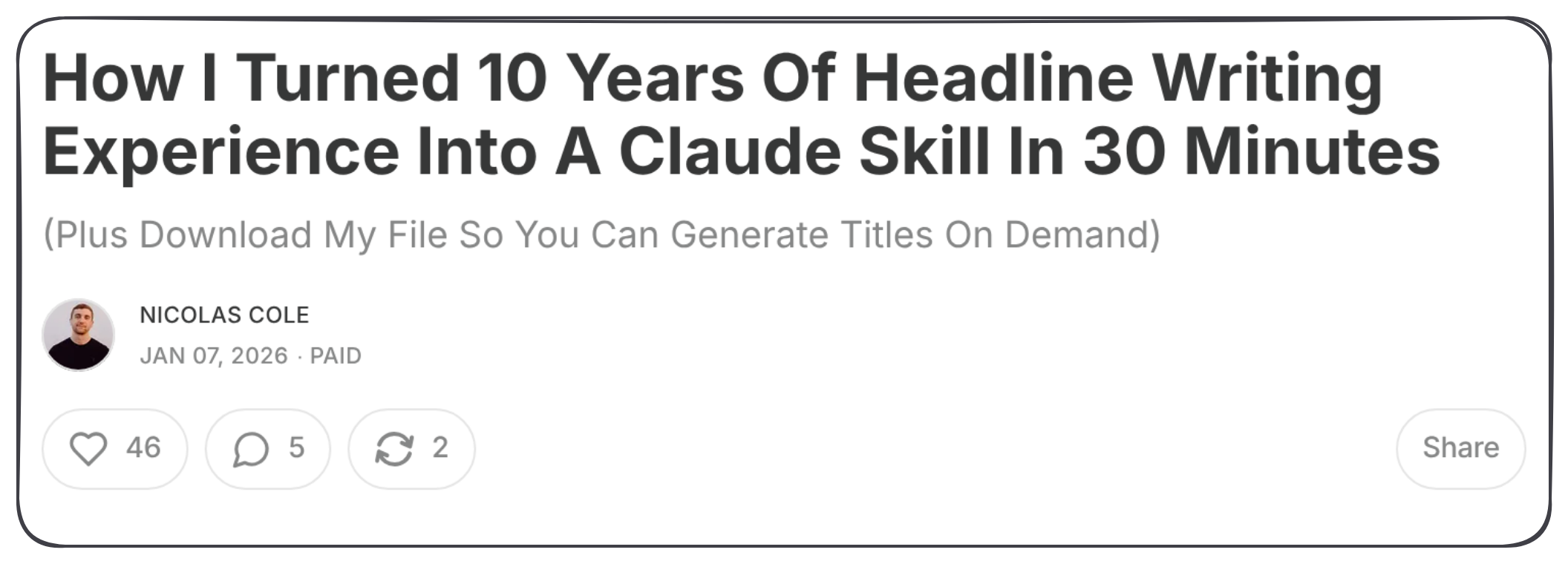
- How I Turned 10 Years Of Headline Writing Experience Into A Claude Skill In 30 Minutes
- We took our Substack from zero to $10,000/month in recurring revenue in less than 30 days.
Each one has a number, a clear what and a tangible outcome. Want more? Here are 100 hook examples sorted into 10 types, and since your first line is a headline too, here's what a hook is.
Those are headline examples worth stealing.
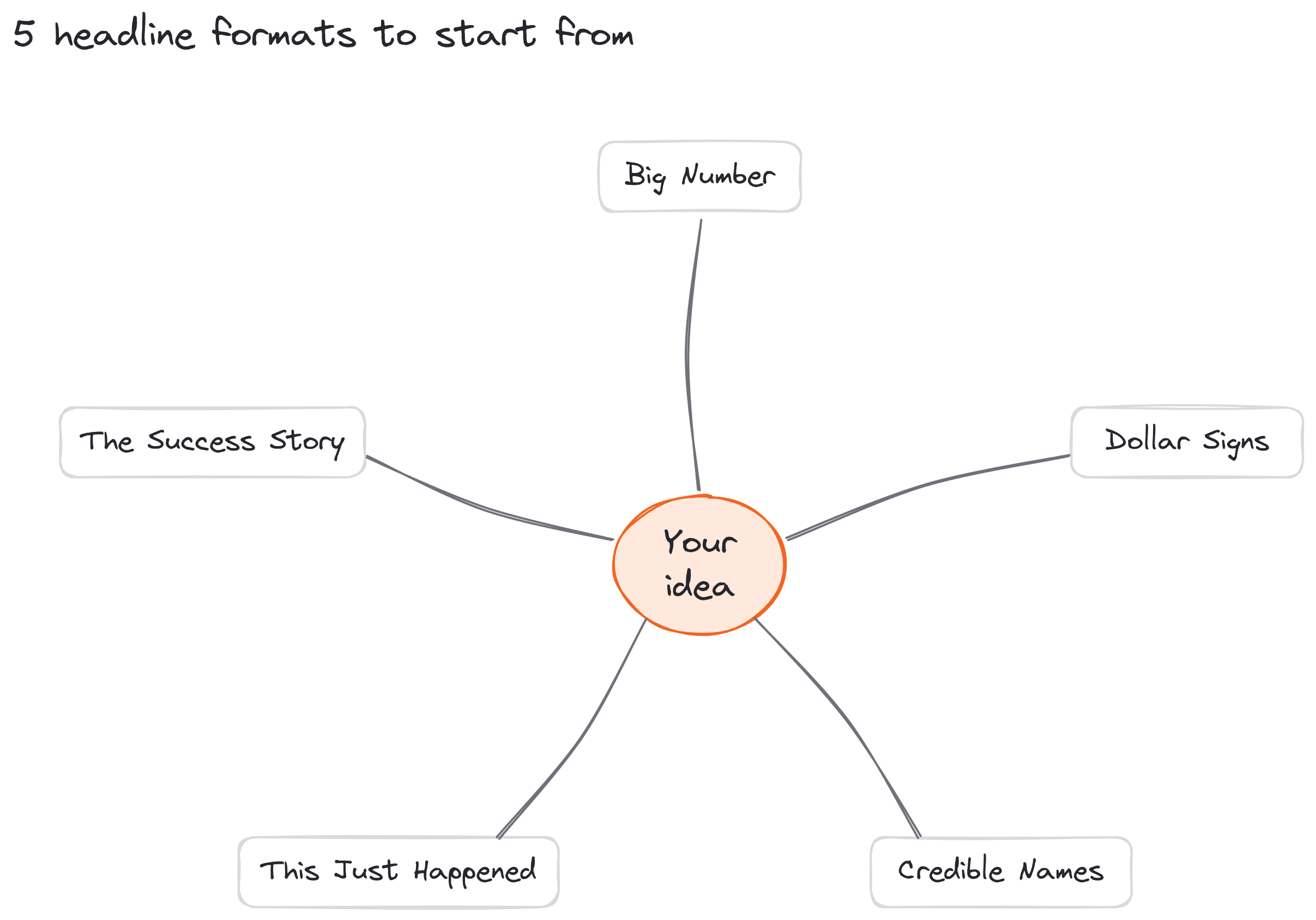
5 Headline Ideas: The Formats To Start From
Staring at a blank headline is the worst way to write one.
Start from a format. These are the 5 proven headline formats I'd hand anyone who wants to grow faster on LinkedIn, and they work on every other platform too:
- The Big Number. Lead with a number that makes people look twice: "I've written 5,000+ articles online."
- Dollar Signs. Money is the most tangible outcome there is: "We took our Substack from zero to $10,000/month…"
- Credible Names. Borrow attention from someone the reader already knows: "Ray Dalio Has A Net Worth Of $20 Billion. But These 7 Pieces Of Business Advice From His Book Are Priceless."
- "This Just Happened." News from your own life or work, told while it's fresh.
- The Success Story. Where you started, where you are now and the one thing that changed.
When you're stuck, run your idea through all five. One of them will fit.
And keep a list. Every time a headline stops you in the feed, save it and ask which format it used. After a month, you'll have a swipe file of headline ideas you know work.
Those are the headline ideas to start from.
Headline Writing Exercises To Get Better Fast
Want to get better at headlines? Write a lot of bad ones.
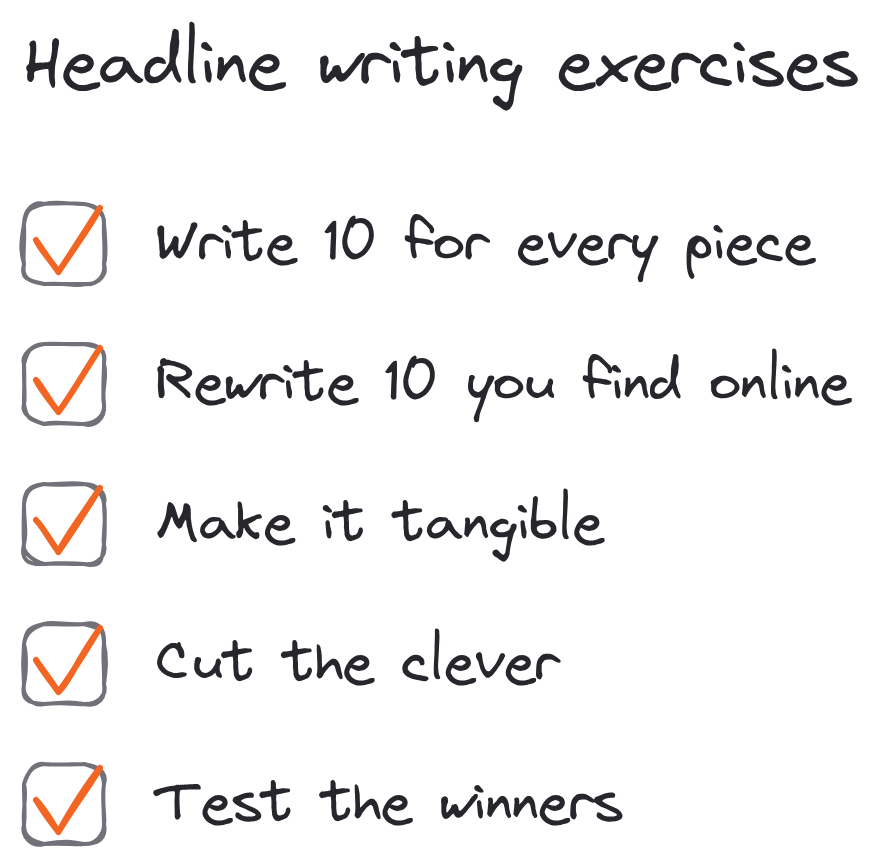
Writing headlines is a skill, and skills come from reps. These are the exercises I've used myself and taught to thousands of writers:
- Write 10 for every piece. Before you write a word of the piece, write 10 headlines for it. The first three will be obvious. The good ones usually come after that.
- Rewrite 10 headlines you find online. Pick headlines from a site you read. Find the problem in each and fix it with the 5 pieces, like the rewrites above.
- Make it tangible. Take one outcome from your headline and keep rewriting it until you could hold it in your hands. "Get healthy" becomes "Lose 10 pounds before your sister's wedding."
- Cut the clever. Read each headline and ask, "Would a stranger know what this is about?" If not, swap the clever word for the plain one.
- Test the winners. Post short versions of your best headlines as social posts. The ones that get the most engagement become your next articles.
Do these for a month and you'll notice something. You'll start to spend more time on the headline than on the piece, and your pieces will get read more.
Craig was right. The headline is most of the writing.
FAQ
What is headline on LinkedIn?
On LinkedIn, your headline is the line under your name on your profile. It shows next to every post and comment you write. It follows the same rules as any headline (say who you help and what you help them do), and here are LinkedIn headline examples to copy.
How long should a headline be?
As long as it needs to be to say what the piece is and why the reader should care. A clear 15-word headline beats a vague 4-word one. For search results, keep the start strong, because Google cuts long titles off.
What's the difference between a headline and a hook?
The headline is the title above the piece. The hook is the first line of the piece itself, written to get the second line read. On a social post, they're often the same sentence. See what a hook is.
What is an example of a good headline?
"5 Mistakes Men Secretly Do That Cost Them Their Marriage." It has a number, a clear topic, a reader and a painful outcome. It took one rewrite of "Things Men Secretly Do" to get there.