What Is A Hook In Writing? The Definition, 8 Examples, And Why The First Line Decides Who Reads The Rest
Nicolas ColeNovember 11, 2026
What is a hook? The first line of your post, email or video, written to get the next line read. See 8 examples and write your own in 3 steps.
A hook is the first line of a piece of writing (or the first seconds of a video), written to get the reader to keep going. Its only job is to get the second line read.
A hook is the first line of a piece of writing, and it has one job: get the reader to read the second line.
That's the whole definition. On a post, it's the first sentence. In an email, it's the subject line and the opening. In a video, it's the first few seconds. Wherever it sits, the hook decides if anyone reads, watches or listens to the rest.
I've spent more than 3,500 hours obsessing over how to write the perfect headline, and with Dickie Bush I've taught more than 10,000 writers through Ship 30 for 30, where we spent 2 of our 8 live sessions on hooks and headlines alone. Below is what a hook is, where it shows up, why it matters so much and 8 examples you can borrow. If you want 100 more, here are hook examples sorted into 10 types, and if the rest of your post needs work too, start with 15 writing tips for beginners. When you're ready, write your next post in Typeshare. You do the writing; the robots do the rest.
What Is A Hook? The Definition In Writing
A hook is a promise the reader can't ignore.
It tells the reader, in one line, what they get for reading on: an answer, a story, a shortcut, a result. A good one is specific enough to picture and short enough to read in a glance. Most of the time it's a single sentence, standing alone, at the very top. The rest of the piece then keeps the promise.
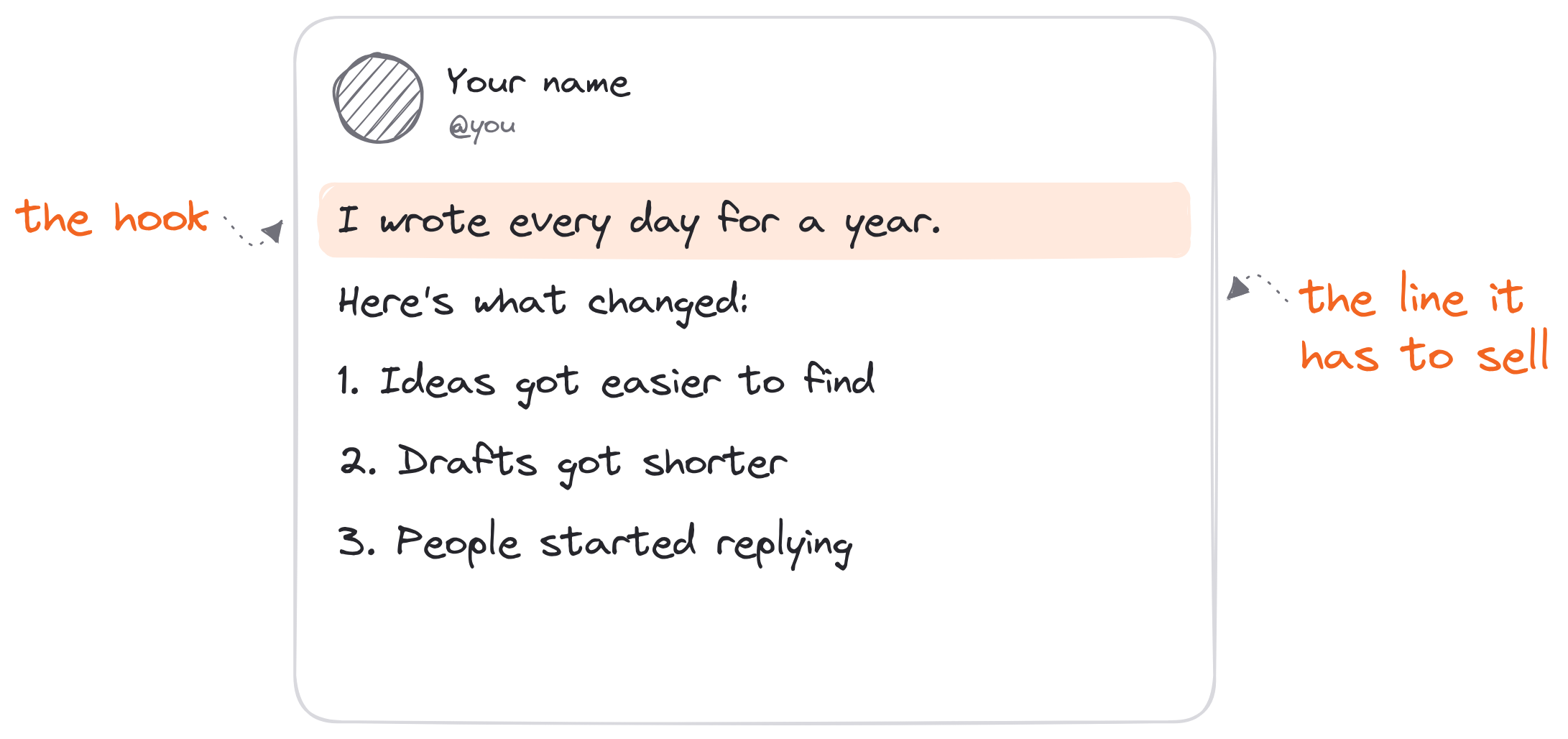
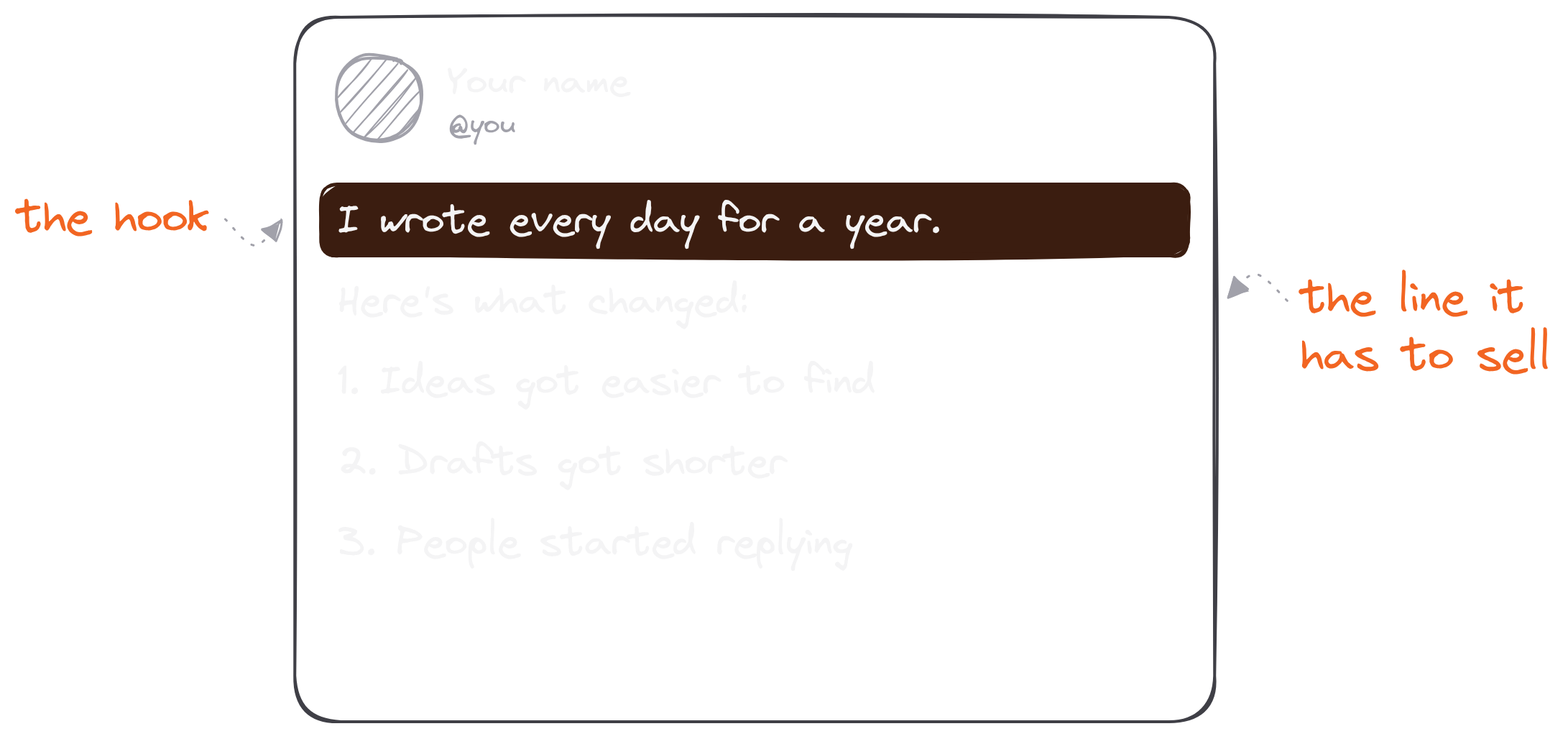
The word comes from fishing, and the idea is the same. The first line only needs one bite: the reader's next few seconds.
That's what a hook is: the line that buys the next line.
Where The Hook Shows Up (Posts, Emails, Newsletters And Video)
Every format has a hook, even when nobody calls it that.
On LinkedIn, X and Threads, the hook is the first line, the part the feed shows before anyone decides to stop. In an email, there are two: the subject line gets the open, and the first sentence gets the read. A newsletter's hook is its opening paragraph. A video's hook is whatever happens before the viewer's thumb moves, which is the first few seconds.
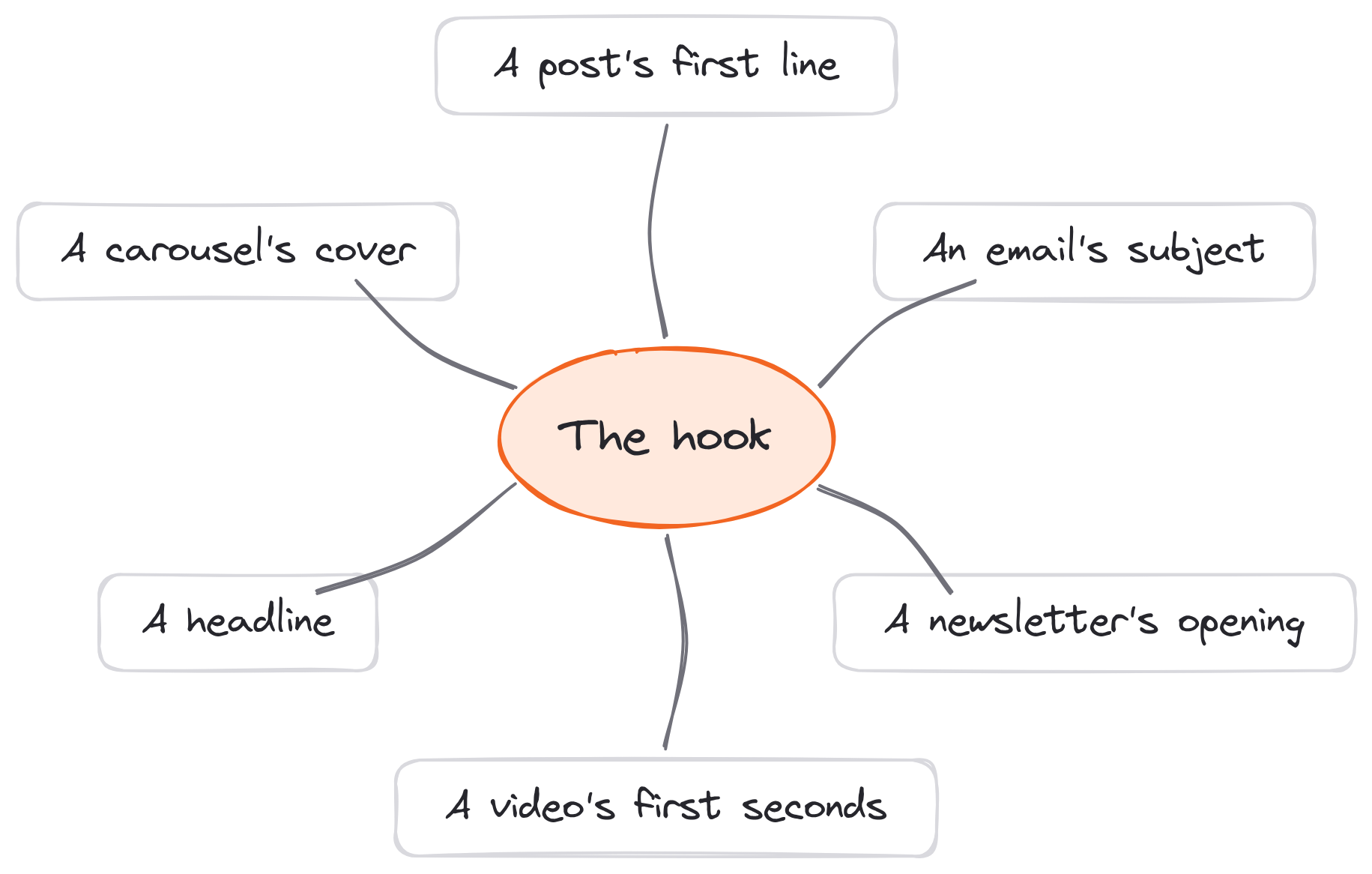
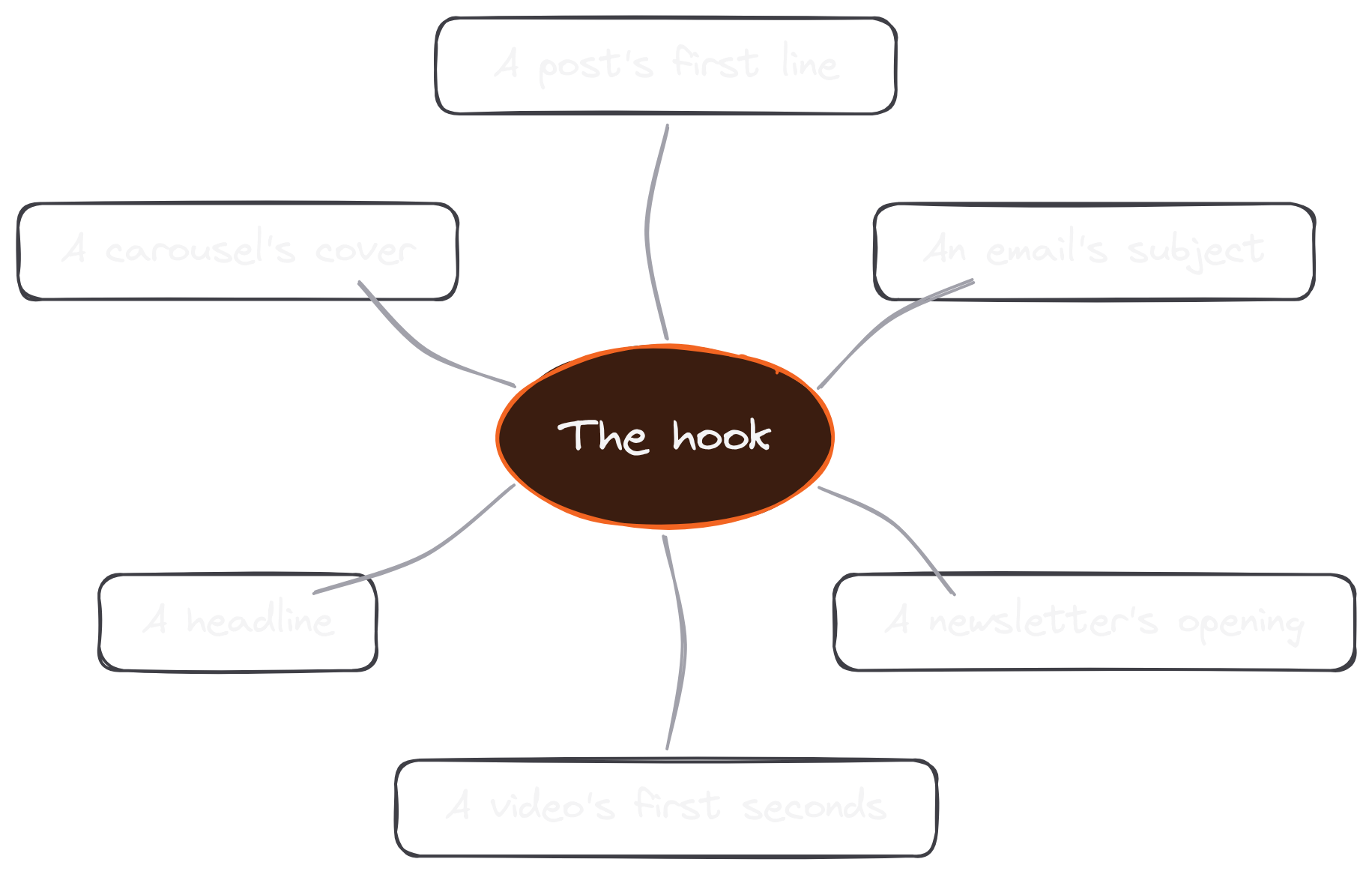
Headlines and carousel covers are hooks too. A headline gets the click, and a carousel's cover gets the first swipe. (On LinkedIn, the hook also has to fit above "…see more". Typeshare for LinkedIn shows your post the way LinkedIn will, so you can see where the cut falls before you post.)
Wherever you publish, the hook is the first thing people judge.
Why The First Line Decides Who Reads The Rest
Nobody owes your writing their attention.
Online, a reader sees your first line next to dozens of others, and they give each one a moment before they move on. If your opening doesn't earn the second line, the best idea in your post never gets read. That's why a weak hook costs more than any other weak sentence. Every line after it depends on it.


It works like a chain:
- The hook earns the second line.
- The second line earns the rest of the post.
- The rest of the post earns the action: a reply, a follow, a click on your call to action.
Break the first link and nothing after it matters. Your best story, your sharpest list and your offer all sit behind that one sentence.
The first line decides who reads the rest, so write it like it does.
8 Hook Examples In 4 Types
Most hooks that work make the same kind of offer.
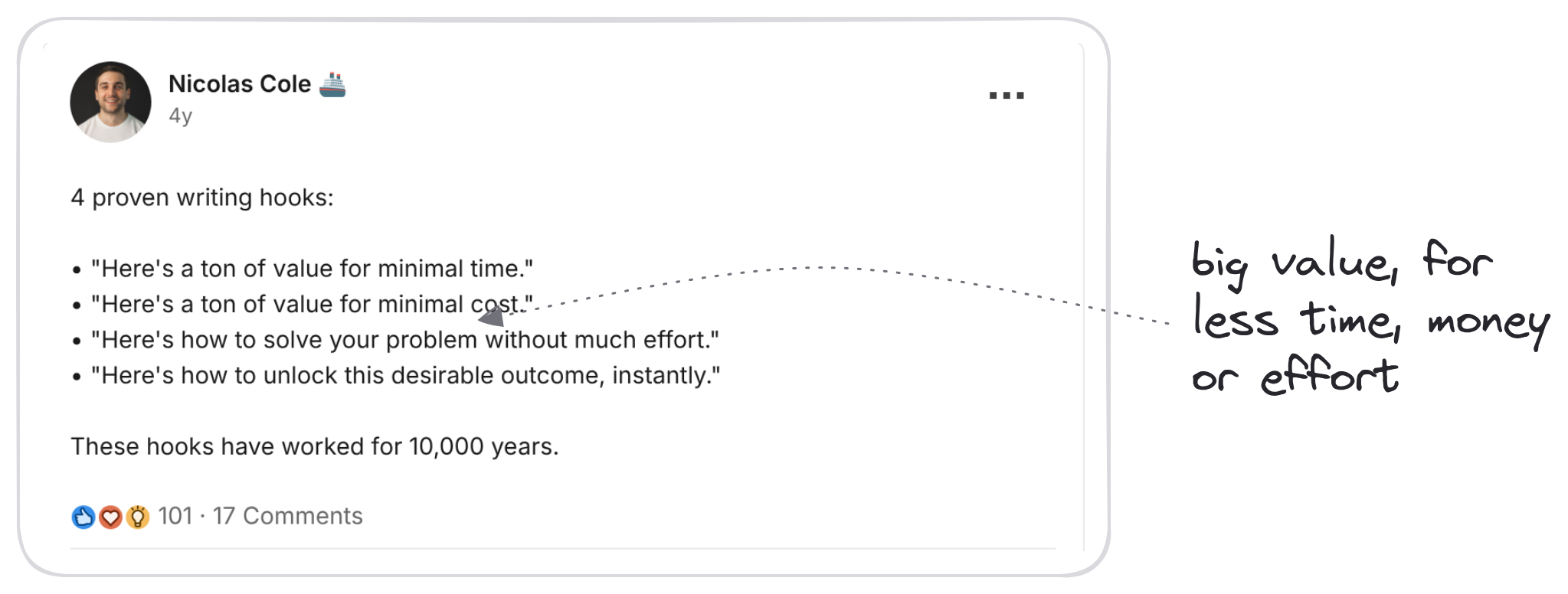
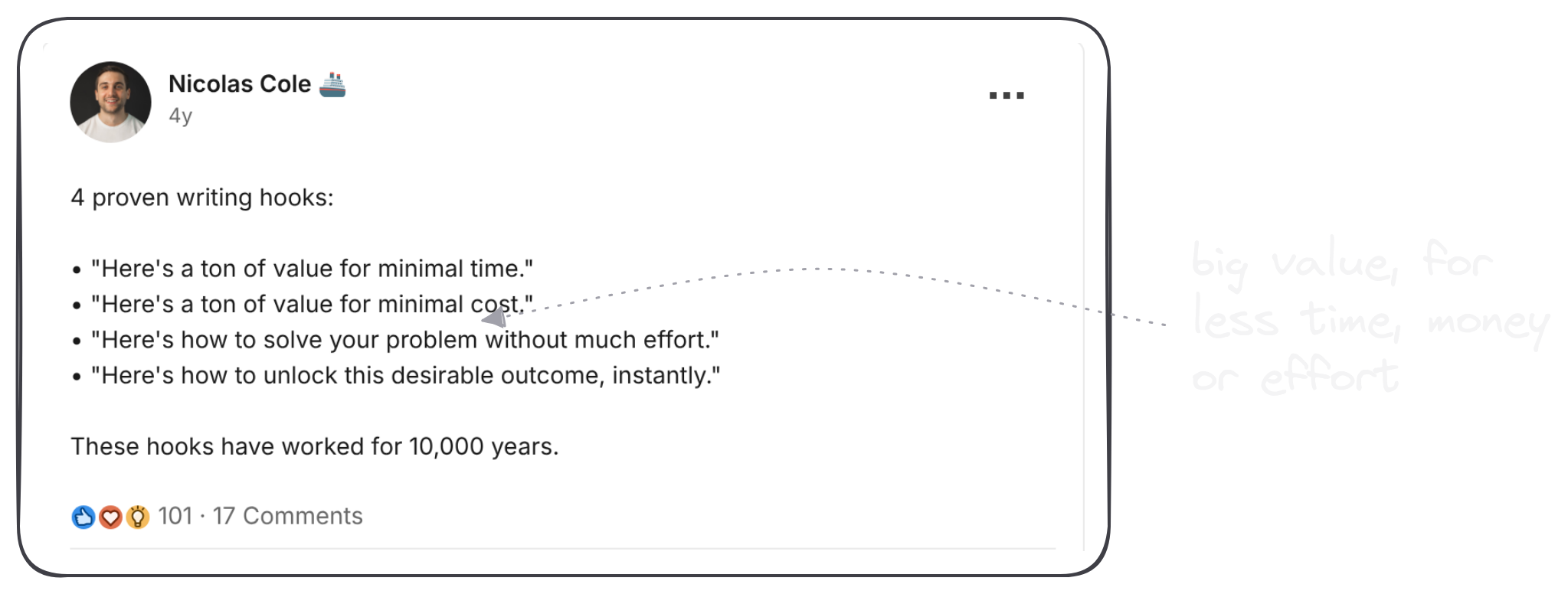
Years ago I boiled them down in a post called "4 proven writing hooks": a ton of value for minimal time, a ton of value for minimal cost, a way to solve your problem without much effort, and a way to unlock something you want, instantly. "These hooks have worked for 10,000 years," I wrote. Every type promises a big reward for a small price.
Here are 2 examples of each. (I wrote these as samples, so swap in your own numbers and topics.)
Type #1: A ton of value for minimal time
- "Everything I know about writing headlines, in 5 minutes."
- "Read this before your next sales call. It takes 2 minutes."
Type #2: A ton of value for minimal cost
- "4 free tools that run my whole newsletter."
- "The writing course I'd buy for $1,000, as one free post."
Type #3: Solve your problem without much effort
- "How to write a week of posts in one sitting (without a content calendar)."
- "The lazy way to edit a draft: read it out loud once."
Type #4: Unlock a desirable outcome, instantly
- "Write a sharper first line in the next 60 seconds."
- "One edit that makes your next post easier to read: delete the first sentence."
Those are 8 hook examples, and each one is an offer.
What Makes A Hook Work: Clear Wins, Clever Loses
A common hook mistake is trying to sound like a writer.
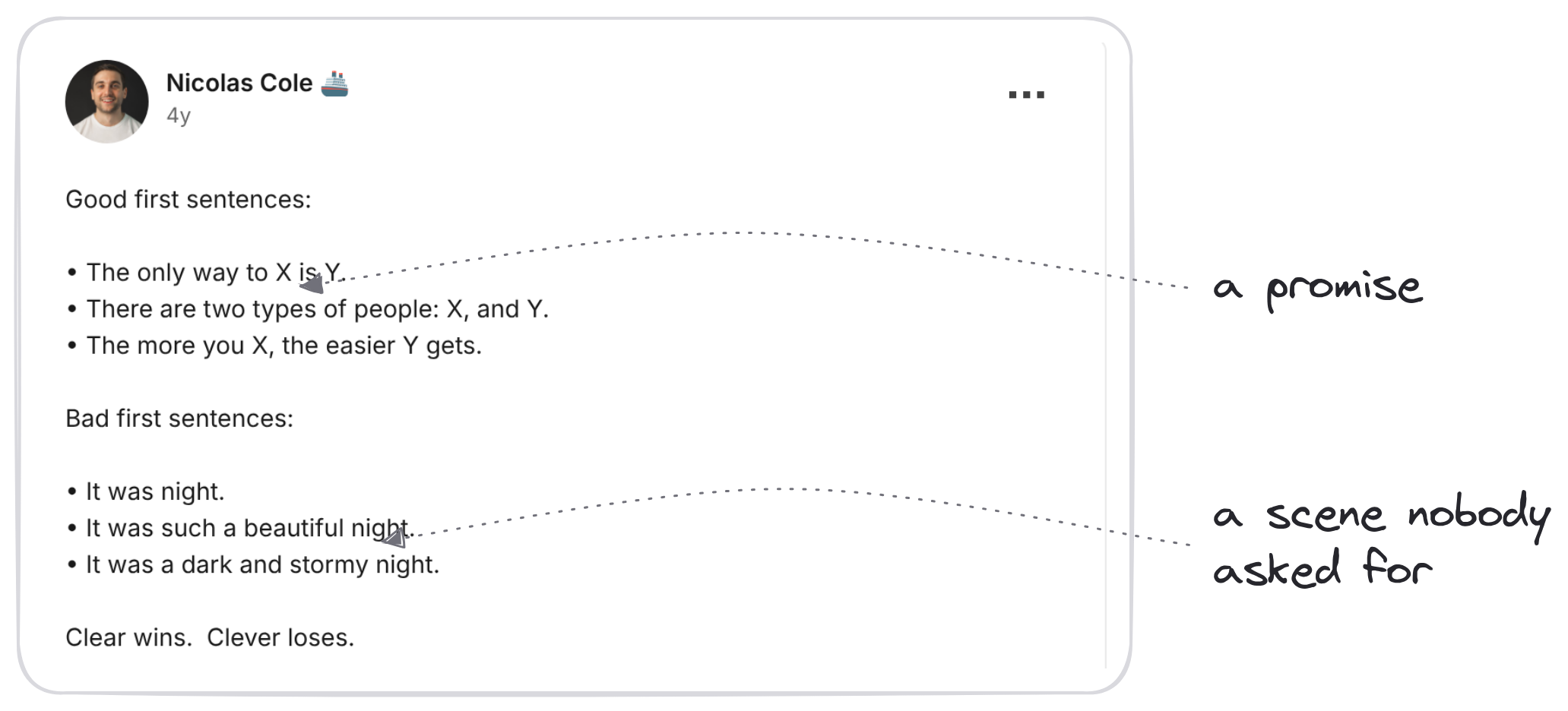
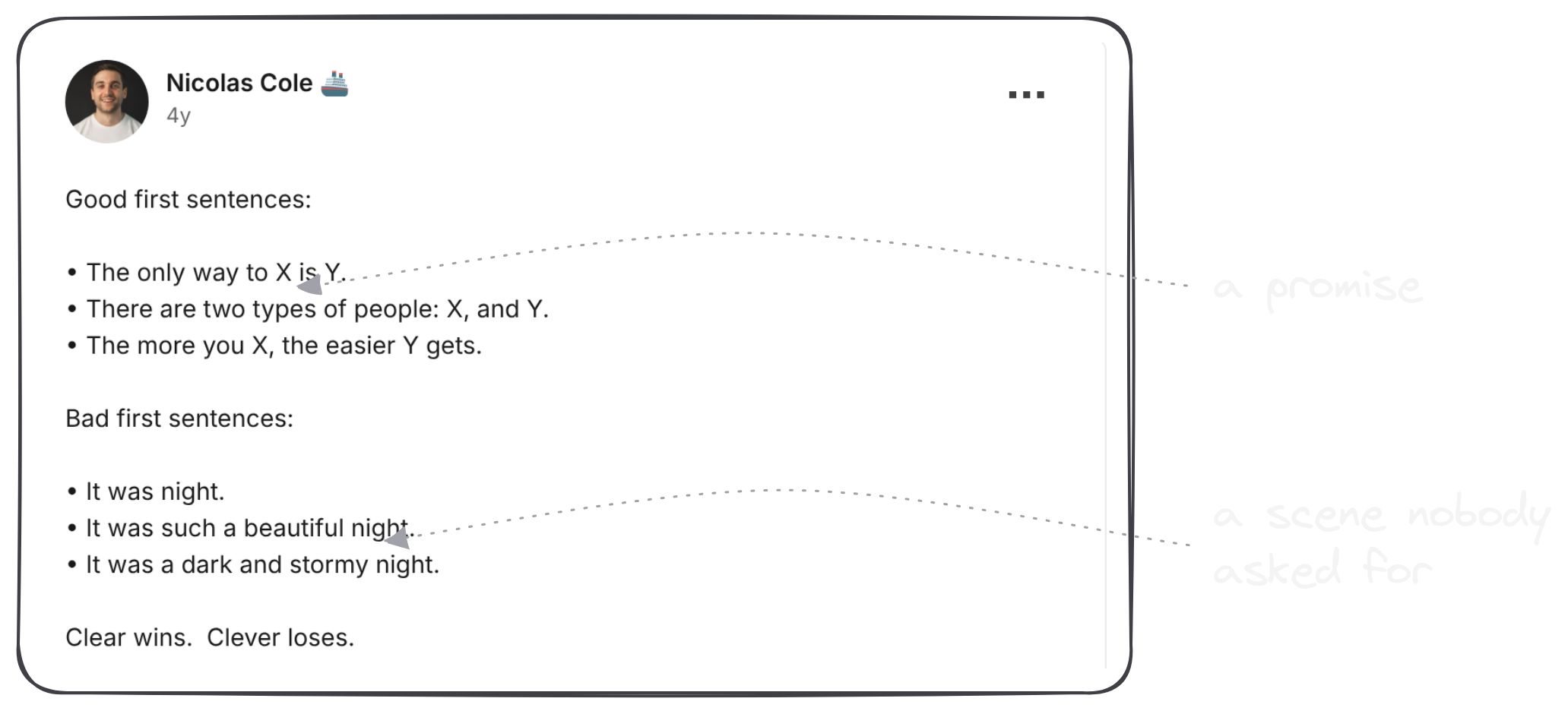
I made the point in a short post on good and bad first sentences. The good ones make a claim you can test: "The only way to X is Y." "There are two types of people: X, and Y." "The more you X, the easier Y gets." The bad ones set a scene nobody asked for: "It was night." "It was such a beautiful night." "It was a dark and stormy night."
Clear wins. Clever loses.
So test every hook against three questions:
- Can the reader picture it? "Grow your audience" is vague. "Get your first 100 subscribers" is a picture.
- Does it promise something? A hook with no promise is only a first sentence.
- Is it as short as it can be? Cut every word the promise doesn't need.
A hook works when it's clear before it's clever.
How To Write A Hook In 3 Steps
The easiest hook to write is the last one you write.
That sounds backwards, but it works. When you start with the hook, you're promising something you haven't written yet. When you write the post first, the promise is sitting right there in your draft, usually in the conclusion or in a line you buried halfway down.
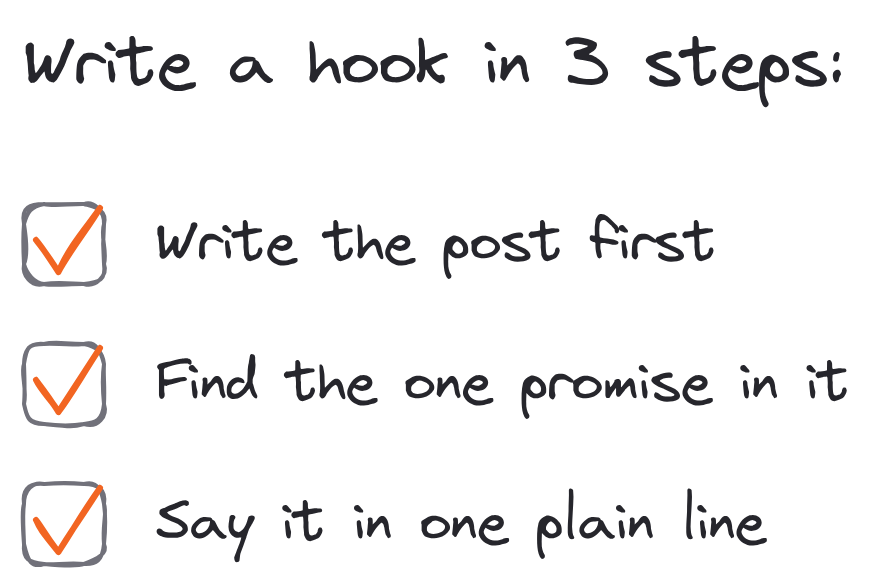
Here's the process:
- Write the post first. Get the whole idea down, then stop.
- Find the one promise in it. Ask what the reader walks away with. That's your hook's job to name.
- Say it in one plain line. Pick one of the 4 types above, write it 5 different ways and keep the clearest.
Write the post, find the promise and say it plainly: that's how to write a hook.
FAQ About The Hook
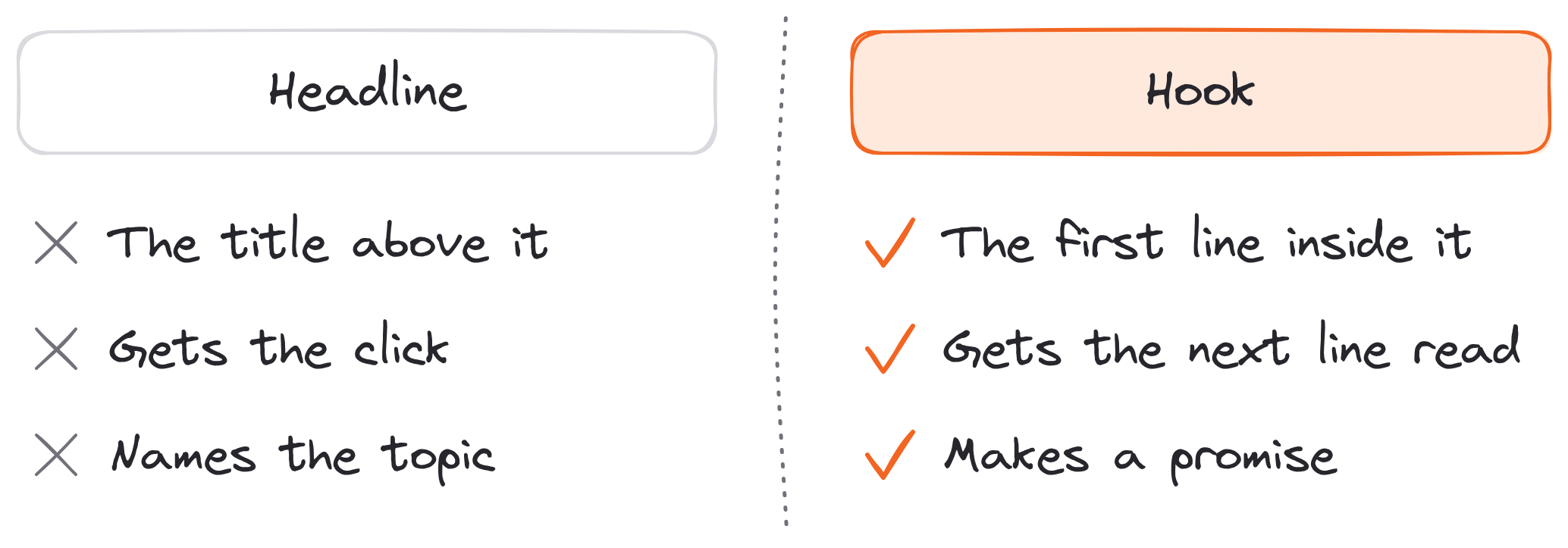
What is the difference between a hook and a headline?
A headline is the title above a piece, and its job is the click. The hook is the first line inside it, and its job is the next line. A post on social media often has no headline at all, so the hook does both jobs.
How long should a hook be?
As short as the promise allows. Usually one sentence, on its own line.
What is "the hook" in a story?
The same thing: the opening moment that makes you want to know what happens next. In a story, that's often a moment in time ("At 2 a.m. on a Tuesday, I deleted three years of work"), which is one of the 10 hook types.
Is a hook the same as a call to action?
No. The hook opens the piece and gets it read. A call to action closes it and tells the reader what to do next.
Does every post need a hook?
Yes. Even a two-line post has a first line, and readers see it before anything else. The only question is whether you wrote it on purpose.