What Is A Call To Action? The Meaning, 50 Phrases, And How To Write CTAs People Click
Nicolas ColeNovember 9, 2026
What is a call to action? The meaning in one line, 50 call to action phrases to copy, and 5 steps to write CTAs people click in posts, emails and essays.
A call to action (CTA) is the line that tells the reader what to do next, like \"Subscribe,\" \"Start your free trial\" or \"Reply with yes.\" It turns a reader into someone who acts.
Most writers end a great post and then say nothing.
The reader finishes, nods and scrolls on. They liked it. They might have subscribed, replied or bought. Nobody asked them to.
I've used newsletters (and the one-line asks at the bottom of them) to build a $20,000,000 writing business with Dickie Bush. The line that turns those emails into sales is the shortest one in them: the call to action.
Here are the 6 questions I'd answer about calls to action, with 50 phrases to copy and real examples from our posts, our emails and other people's homepages. A call to action is copy, so if you're new to that, read my 11 website copywriting tips next. For the other end of a post, study our 100 hook examples. And if you want somewhere to practice both every day, start writing in Typeshare. You do the writing; the robots do the rest.
Question #1: What Is A Call To Action? (The Call To Action Meaning)
A call to action is the line that tells your reader what to do next.
"Subscribe." "Start your free trial." "Reply with yes." "Book a call." Marketers shorten it to CTA, and the CTA call to action is usually the shortest line on the page: a button, a link or the last sentence of a post. It's also the line that decides whether the page did its job.
Here's the definition of call to action I use with writers: one action, asked for clearly, at the moment the reader is ready.
Each part of that matters.
- One action. "Subscribe, follow me on X and check out my course" is three asks, and readers pick none of them.
- Asked for clearly. "Click here to grab a copy" tells the reader exactly what happens next.
- At the moment they're ready. The end of a post, the PS of an email or the button under a headline: right after you've given them a reason.
The call to action meaning comes down to this: everything above it earns the reader's attention, and the CTA spends it.
That's what a call to action is.
Question #2: What Kinds Of CTA Are There? (Soft And Hard Calls To Action)
How hard you ask depends on how much the reader already trusts you.
Our email strategy is built on that idea. We send a few simple kinds of emails, and each asks for something different:
- The Value email. A purely educational email with no pitch in the body. Its only job is to build trust, one reader at a time. The only "ask" lives in the PS.
- The Indirect email. A mix of teaching and a gentle upsell. It goes after one faulty belief, one objection or one transformation the reader wants, so the sale feels like a byproduct of a useful lesson.
- The Direct email. A short, confident pitch: usually 300 to 500 words, with no teaching at all. It asks the reader to take one clear next step: apply, book a call or buy at checkout.
The first is a soft call to action. The last is a hard one.
Most writers only know the hard kind, so every post ends in a pitch and readers learn to skip the last line. Mix them. Earn trust with soft asks ("Reply and tell me which one you'll try"), and when you do make a hard ask, make it the only thing in the email.
Match the ask to the trust.
That's what kinds of CTA there are.


Question #3: What Does A Good Call To Action Look Like? (Examples Of Call To Action)
The best way to write CTAs is to collect ones that worked.
Here are 6 examples of call to action, from social posts to software homepages. Each one asks for one thing.
Social Media Call To Action Examples
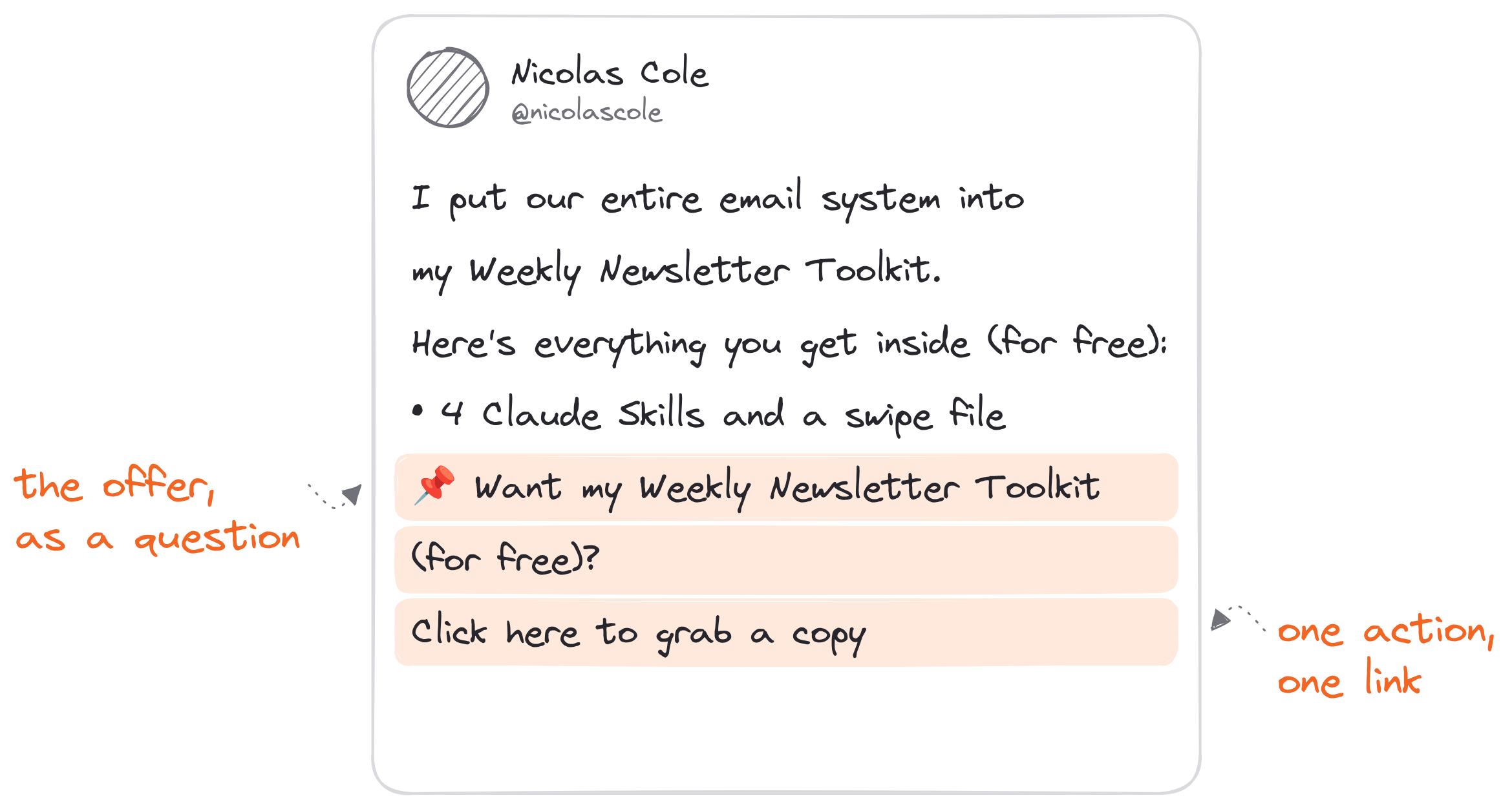
1. Cole's pinned question. My LinkedIn posts often end with a line that starts with a pin: "📌 Want my Weekly Newsletter Toolkit (for free)? Click here to grab a copy." The question names the offer. The second line names the action. (That's the post sketched under Question #1.)
2. Dickie's pinned tip. Dickie ends a post on Joe Sugarman's copywriting process with: "📌 The best way to improve your copy skills? Start writing online. Here's a free 13,000-word Ultimate Guide with everything you need to get started." The CTA answers the question the post raised.
3. The reply ask. "Reply and tell me which one you'll try." No link and no pitch: a soft call to action that starts a conversation with the people who read to the end.
Homepage Call To Action Examples
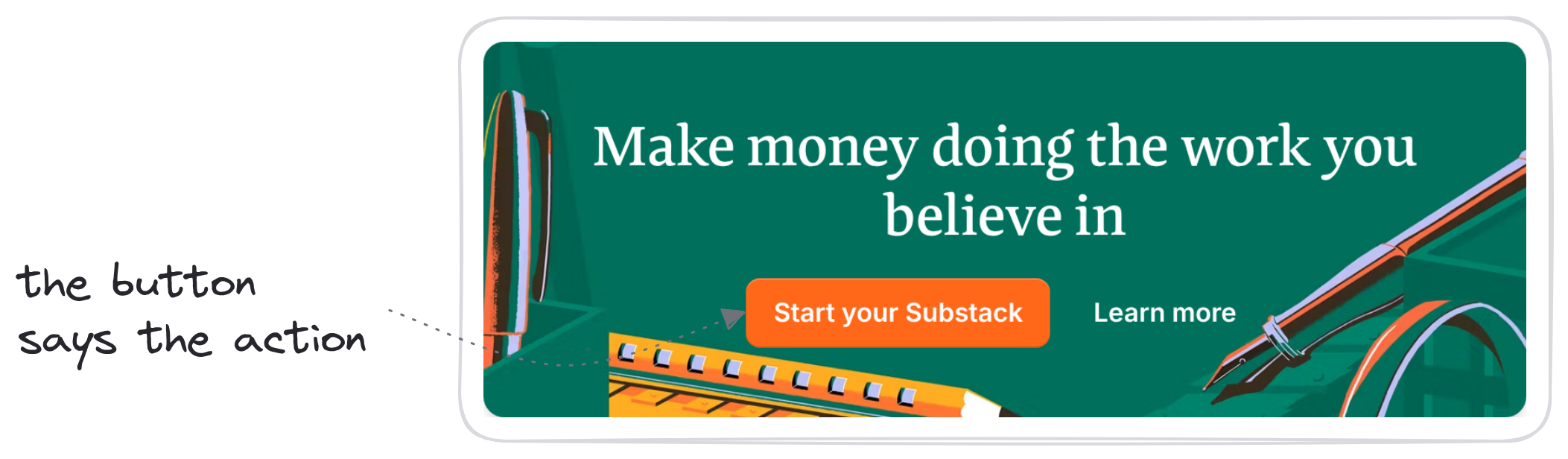
4. Substack. One headline ("Make money doing the work you believe in") and one button: "Start your Substack." The button says the action in the reader's words.
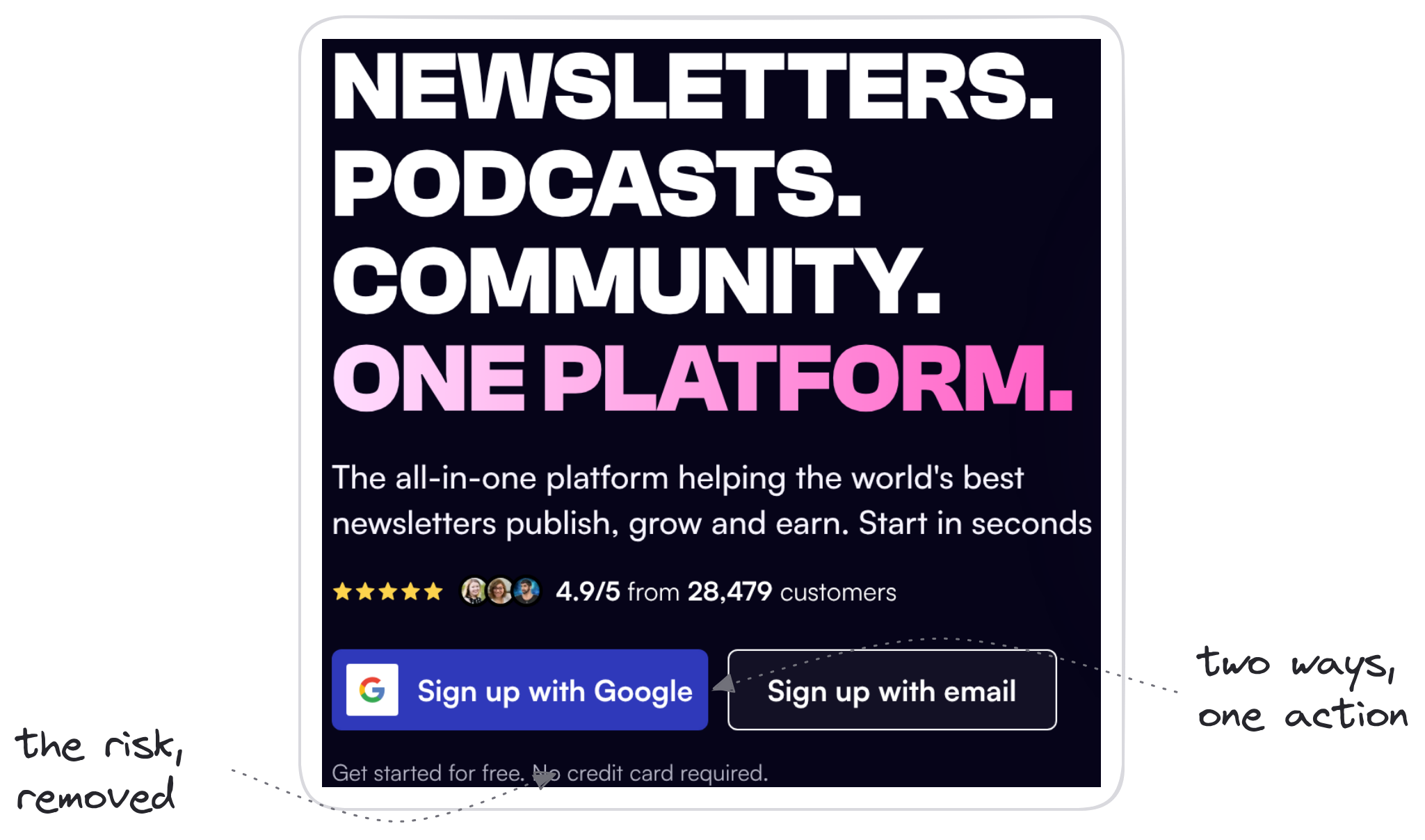
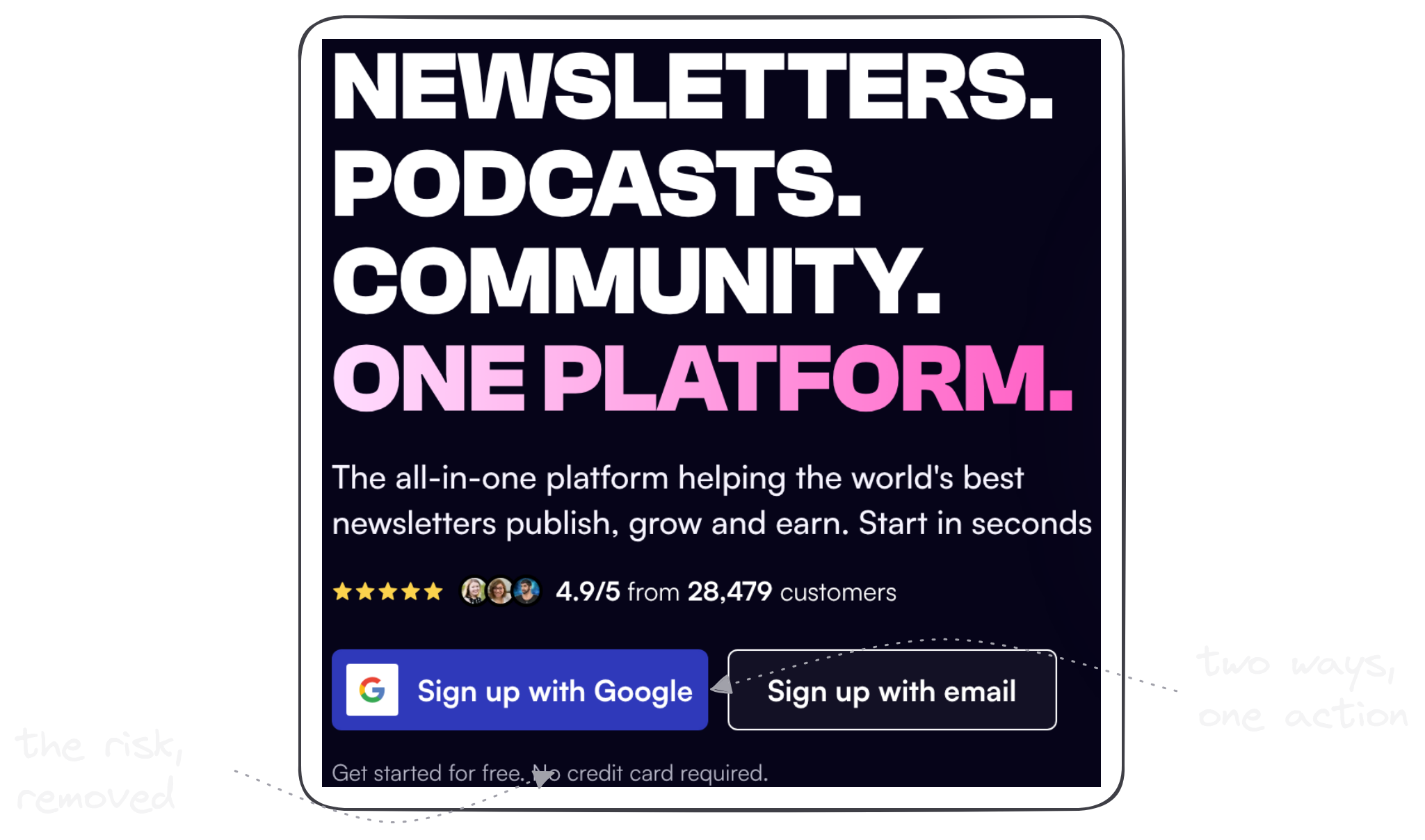
5. beehiiv. Two buttons ("Sign up with Google" and "Sign up with email") that ask for one action in two ways. Under them, one line removes the risk: "Get started for free. No credit card required."
6. Typeshare. Our homepage button says "Build your Digital Brain," which names the outcome you get.
Notice that none of them says "Click here" alone. Each one tells you what you get.
That's what a good call to action looks like.
Question #4: What Are The Best Call To Action Phrases? (50 Powerful Call To Action Phrases)
Every good call to action starts with a verb.
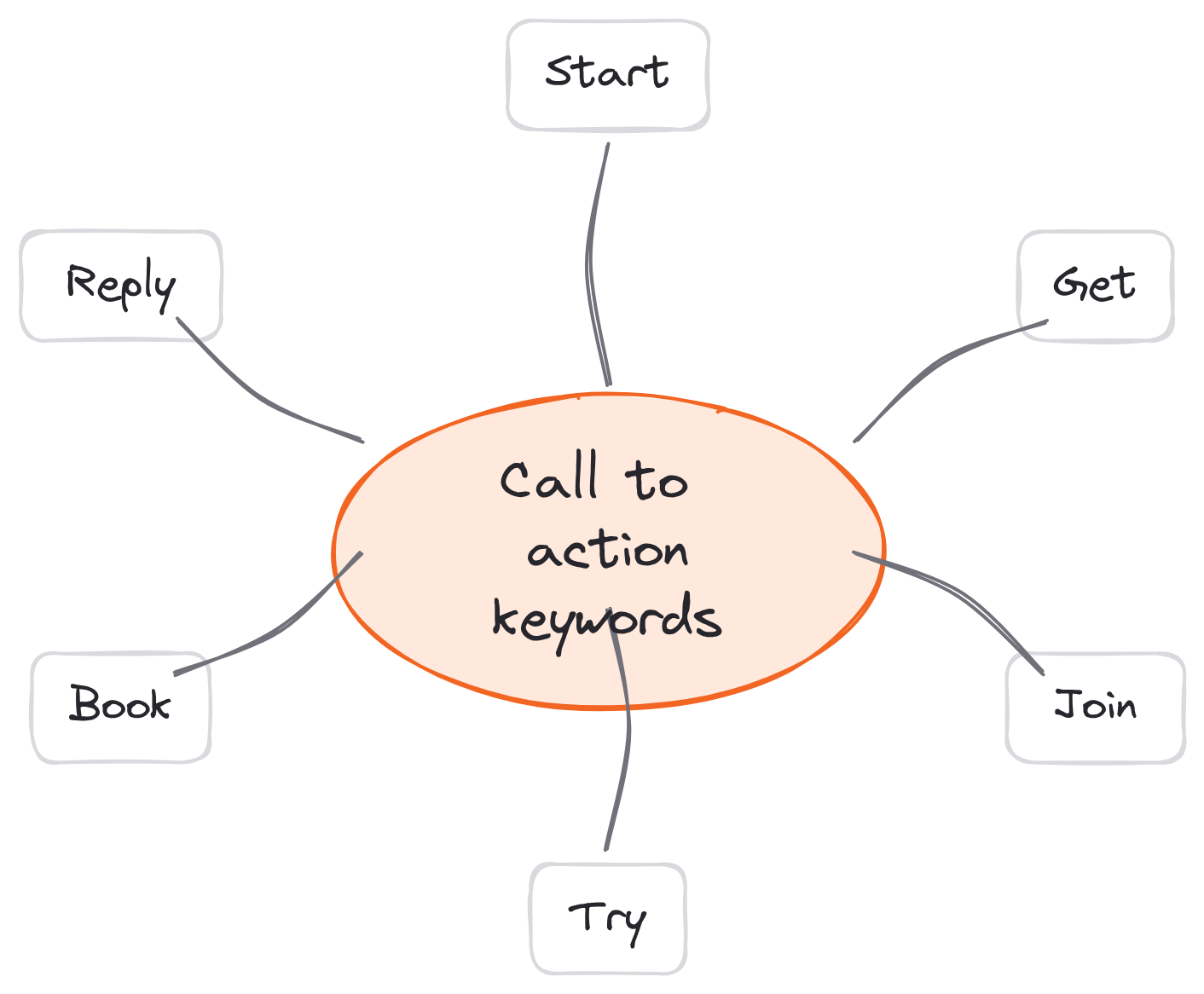
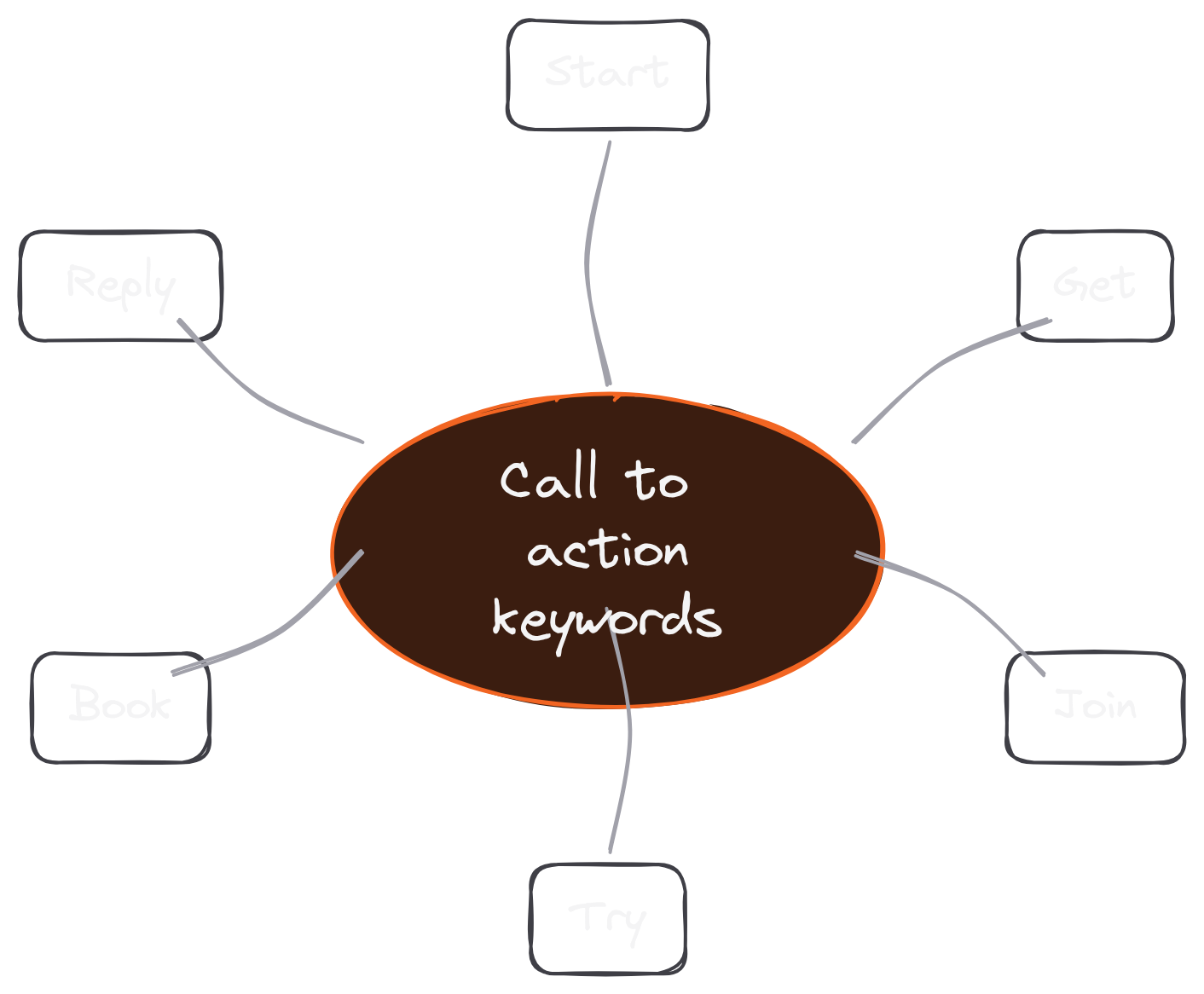
The call to action keywords that show up most are short and plain: start, get, join, try, book and reply. Pair one with what the reader gets, and you have a CTA. Here are 50 call to action phrases, sorted by what you want the reader to do.
To get subscribers and followers
- Subscribe for free
- Join the newsletter
- Get the next issue in your inbox
- Follow for part 2
- Never miss a post
- Sign me up
- Count me in
- Send me the weekly email
- Turn on notifications
- Join the readers who get it first
To get signups and trials
- Start your free trial
- Get started for free
- Try it free
- Create your account
- Start writing
- Build your [thing]
- Claim your spot
- See it in action
- Watch the demo
- Get early access
To make a sale
- Buy now
- Get yours
- Grab a copy
- Get instant access
- Add to cart
- Order today
- Upgrade now
- Reserve your seat
- Unlock the full course
- Yes, I want it
To get a click or a read
- Learn more
- Read the full guide
- See how it works
- Find out how
- See the examples
- Read part 2
- Download the guide
- Take the quiz
- Get the free lesson
- Start here
To start a conversation
- Reply with "yes"
- Book a call
- Apply now
- Leave a comment
- Tell me which one you'll try
- Share this with a friend
- Repost to help someone
- Schedule a demo
- Ask me anything
- DM me "guide"
Swap the bracket for your own offer, and change the verb to fit the platform. "Repost" belongs on LinkedIn or X; "Reply" belongs in an email.
Those are the call to action phrases worth stealing.
Question #5: How Do You End An Essay With A Call To Action? (Call To Action Examples In Persuasive Writing)
A persuasive essay without a call to action is a speech that ends mid-sentence.
You spent the whole essay convincing the reader. The last paragraph is where you tell them what to do with that conviction. In persuasive writing, that ask usually takes one of three forms:
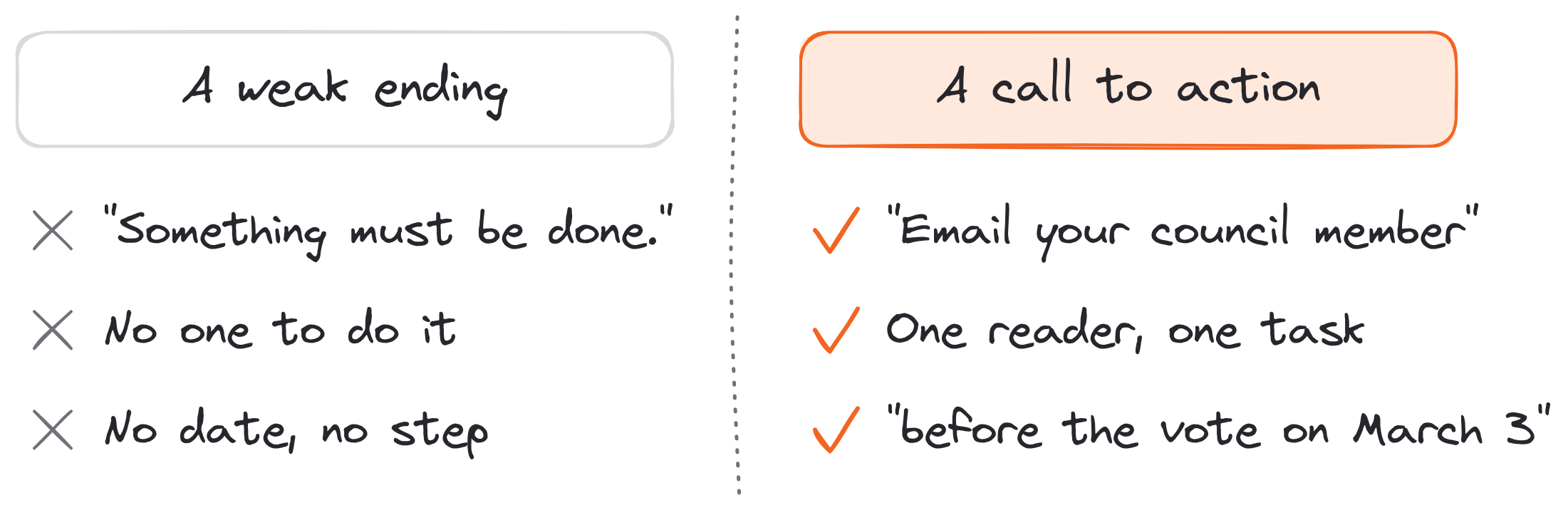
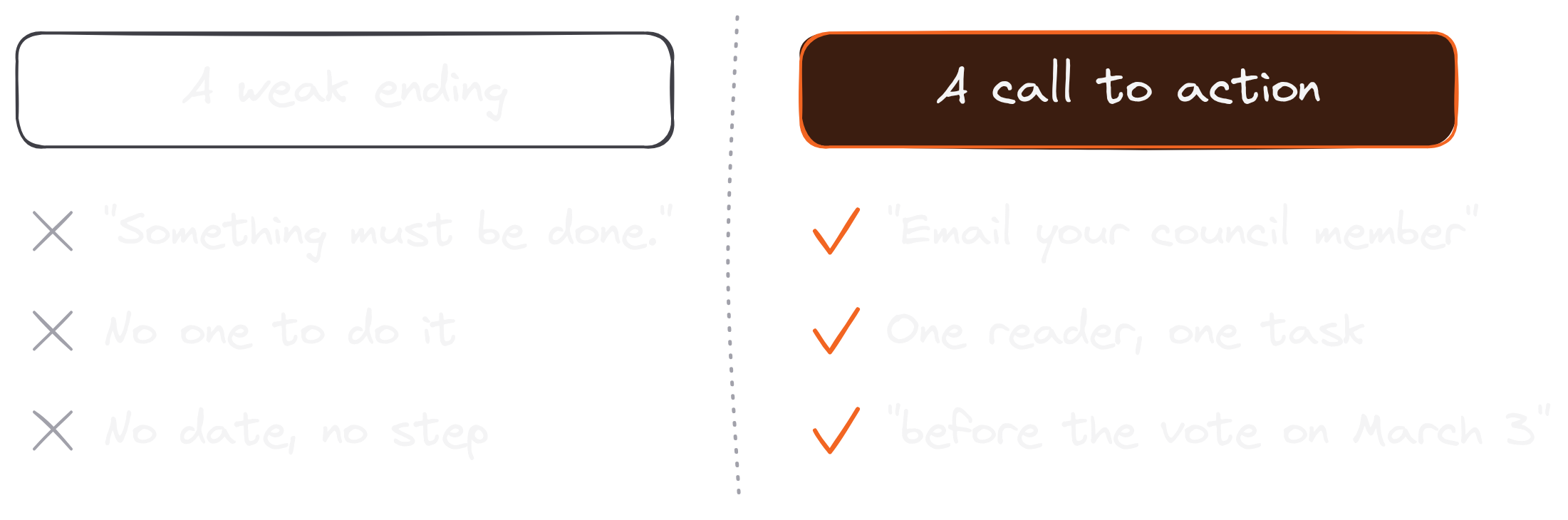
- Do something today. "Email your council member before the vote on March 3."
- Change one habit. "Next time you buy coffee, bring your own cup."
- Think about it differently. "Before you judge the next person who quits, ask what they quit for."
The weak version is a vague wish. "Something must be done" names no one to do it and no step to take. The strong version gives one reader one task, and a deadline if there is one.
Call to action examples in essays follow the same rules as a button on a homepage. One action. Plain words. A reason right before it.
Your essay already made the case. The last line asks the reader to act on it.
That's how you end an essay with a call to action.
Question #6: How Do You Write A Call To Action People Click? (Call To Action Ideas)
Stuck for call to action ideas?
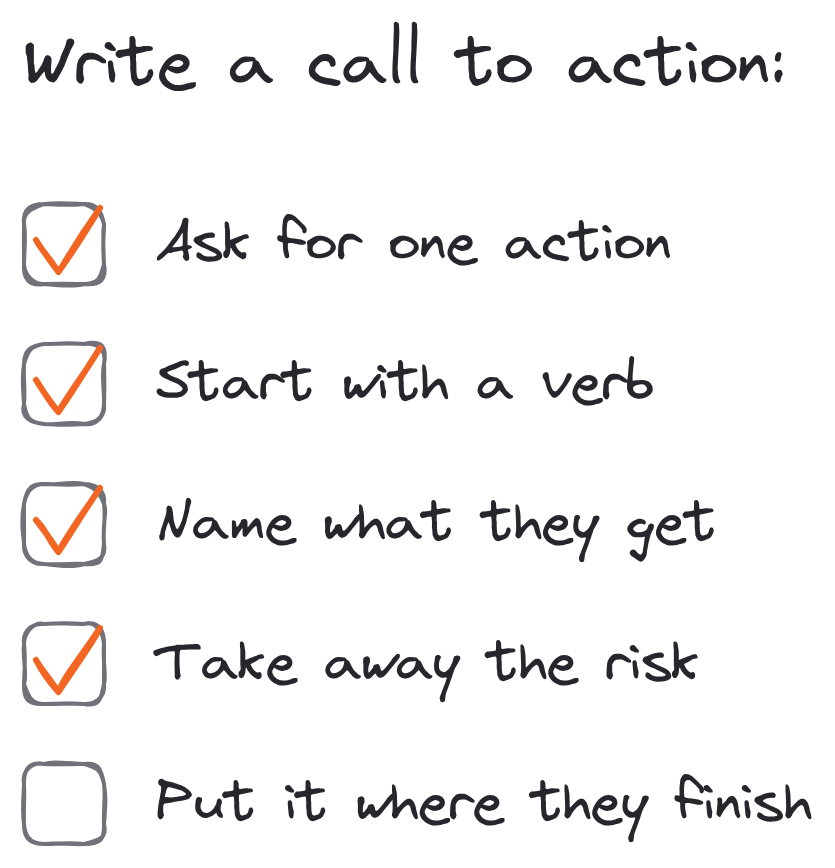
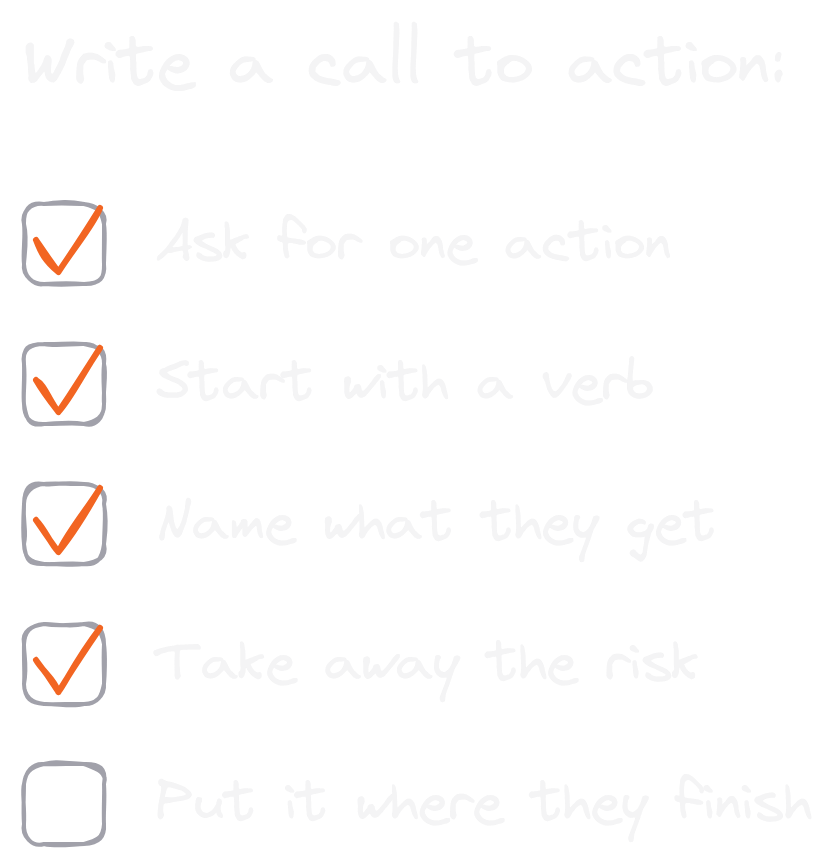
Start from what you want the reader to do, then work backwards. These are the 5 steps I go through for every CTA, whether it's a button, an email PS or the last line of a post:
- Ask for one action. Pick the single most useful thing a reader could do next. Cut the rest.
- Start with a verb. "Get," "start," "reply" and "join" tell the reader what to do before they've read the whole line.
- Name what they get. "Get the toolkit" beats "Submit." "Start writing" beats "Sign up."
- Take away the risk. "For free." "No credit card required." "Unsubscribe anytime." Answer the reason they'd say no before they think of it.
- Put it where they finish. The end of the post, the PS of the email, the button under the headline. Ask right after you've given value.
Then write five versions and pick the plainest one.
If you write online every day, you'll get to test a new call to action every day, too. That's the fastest way I know to learn which ones your readers click.
That's how you write a call to action people click.
FAQ
What does CTA stand for?
CTA stands for call to action: the line, link or button that asks the reader to do one specific thing next.
What is a call to action poster?
A call to action poster is a poster built around one ask: "Register to vote," "Recycle here," "Scan to order." The rules are the same as online. One action, a verb first, and few enough words to read from across the room.
What is a QR code call to action?
It's the line next to a QR code that tells people why to scan it. A bare QR code gets ignored; "Scan for the menu" or "Scan to get 10% off your first order" gives people a reason. Good QR code call to action examples always name what's on the other side.
Do animated call to action buttons work better?
A small movement can draw the eye to a button, but it can't fix weak words. Write the button first ("Start your free trial"), and test any animation against a still version.
How many calls to action should a post have?
One. A post, an email or a landing page can repeat the same call to action more than once, but every one of them should ask for the same thing.