Website Copywriting: 11 Copywriting Tips For Beginners Who Want Pages That Turn Visitors Into Customers
Nicolas ColeNovember 8, 2026
Website copywriting for beginners: 11 copywriting tips to write a homepage, landing page and emails that name one reader and turn visits into signups.
I have spent hundreds of hours rewriting one web page.
It's the landing page for Ship 30 for 30, the writing cohort Dickie Bush and I run. Headlines, bonuses, testimonials, the order of every section: I've rewritten all of it, many times over. Most of what I know about website copywriting came from those rewrites.
And the biggest lesson fits in one line.
The page is never about you. It's about the reader: their problem, their words and the result they want. More than 10,000 writers have joined Ship 30, and our writing business has done $25,000,000 in lifetime revenue, almost all of it from organic writing and email.
Here are the 11 copywriting tips I'd tape above the desk of anyone writing their first homepage, landing page or sales email.
They're simple. The hard part is following them on every page. Copywriting starts with the same skills as any other writing, so if you're new to it, start with how to write better, study 100 hook examples for your first lines, and do your daily practice in Typeshare's editor. You do the writing; the robots do the rest.
Tip #1: Speak To 1 Person (The First Rule Of Web Copywriting)
Never address the crowd.
Most web copywriting reads like a speech to a stadium. "Hey everyone." "Whether you're a founder, a marketer or a freelancer…" "We help businesses of all sizes." The writer is afraid of leaving someone out, so they write to all of them. And the result is a page that feels like it was written for nobody in particular.
Thousands of people will read your homepage, but they read it one at a time.
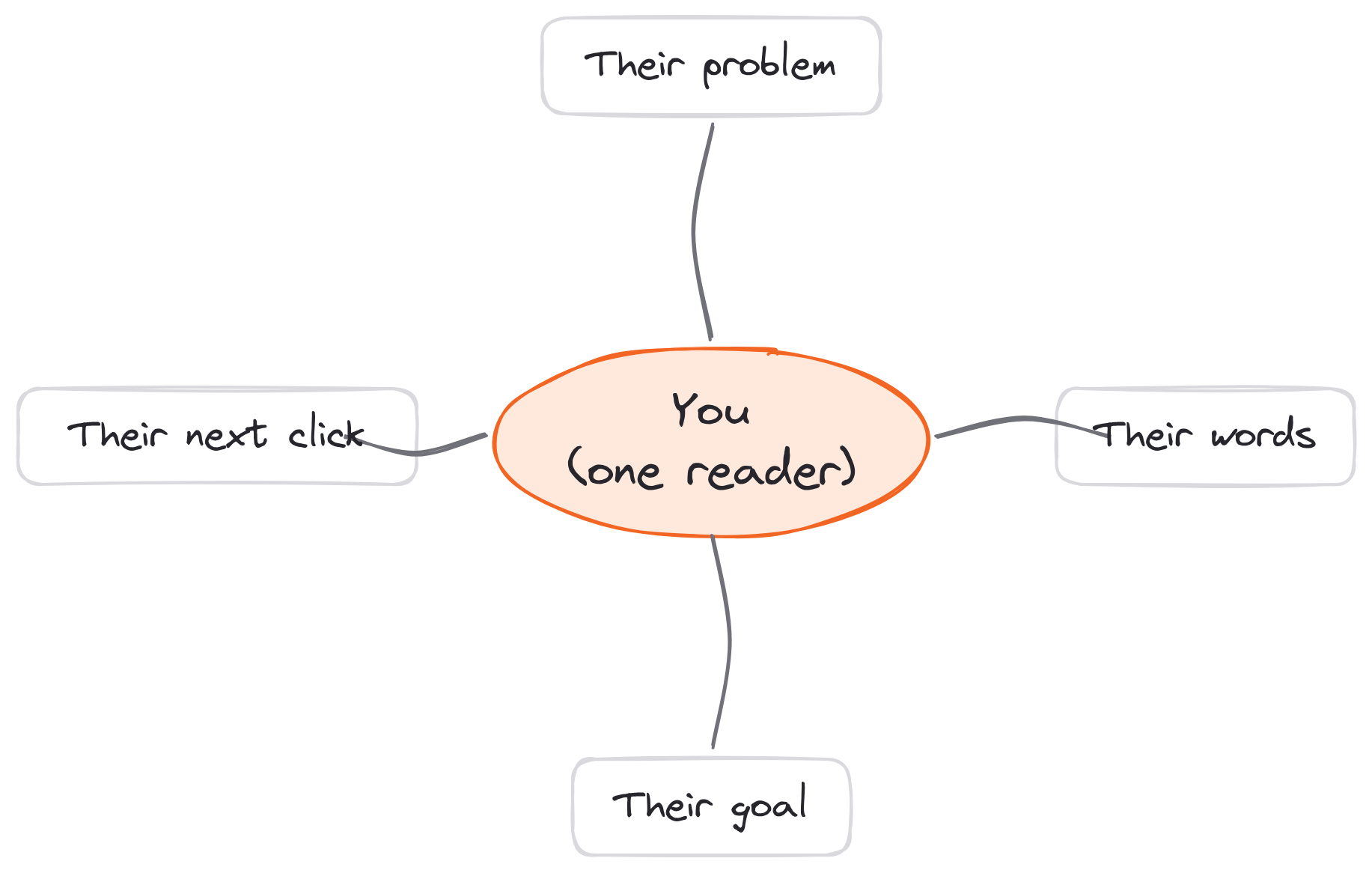
So write to one of them. Don't say "you all." Say "you." Picture a single reader with a single problem, and write the page the way you'd explain it to them across a table. Here's what you need to know about that person before you write a word:
- The problem keeping them up at night
- The exact words they use to describe it
- The result they want
- The one thing you want them to click
Get those four right and every individual in the crowd feels seen, heard and understood.
Speak to one person, and the whole crowd listens.
Tip #2: Be Clear, Not Clever (The Copywriting Tip To Start With)
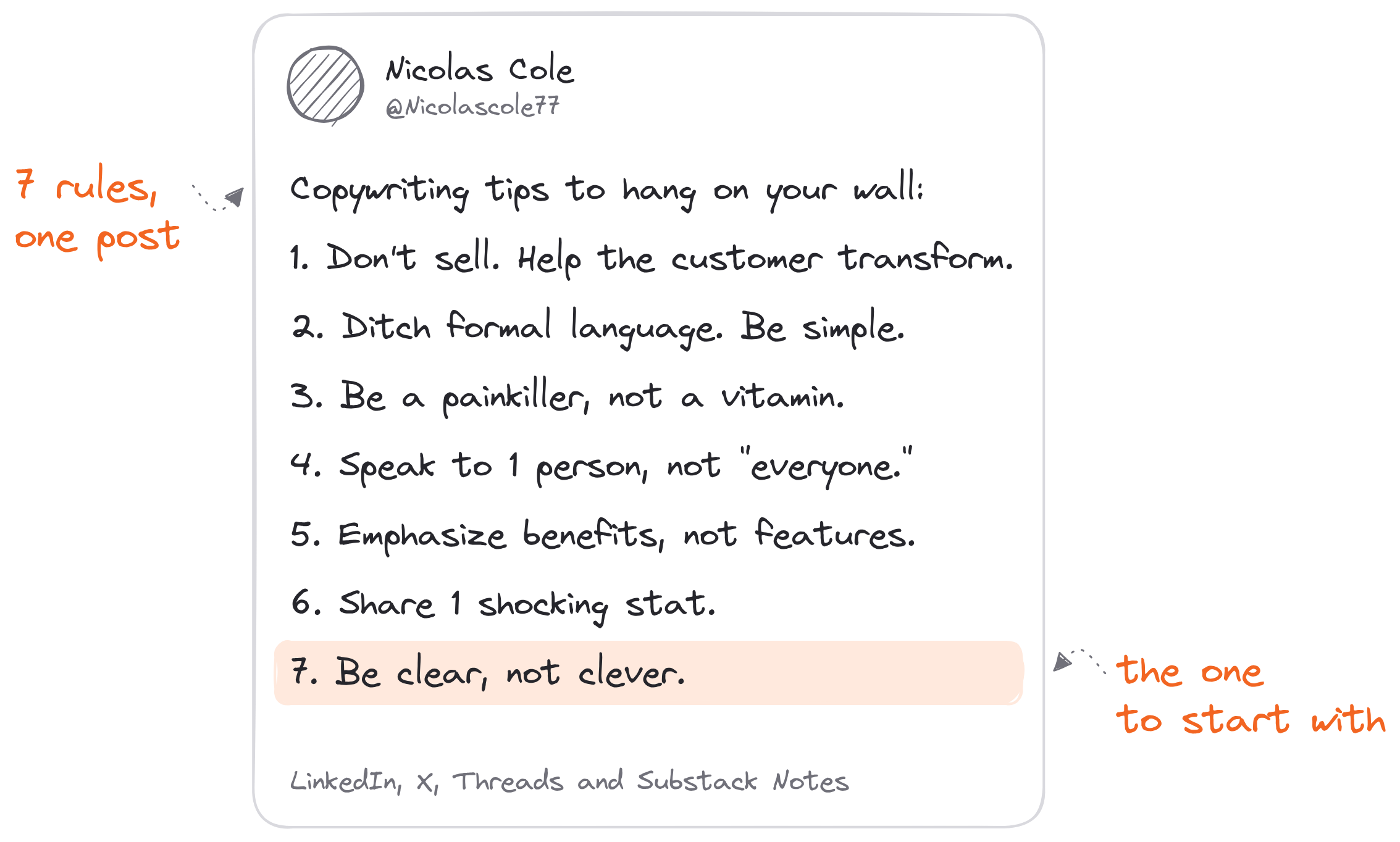
I once posted seven copywriting tips "to hang on your wall."
I've posted that list on LinkedIn, X, Threads and Substack Notes over the years. Every rule on it matters. If you only take one, though, take the last one: be clear, not clever.
Clever copy is fun to write. Puns, wordplay, a headline with a double meaning. You read it back and feel smart.
Your reader doesn't have time to decode it.
They land on your page, read the headline, and decide whether to stay. If they can't tell what you do and who it's for by the end of that first line, they leave. A clever headline asks them to work. A clear one tells them what they get. "Unleash your inner storyteller" is clever. "Write your first newsletter issue this weekend" is clear, and it's the one people click.
So here's the test I run on every headline: could a stranger read it once and repeat back what I'm offering?
When in doubt, be clear, not clever.
Tip #3: Sell Benefits, Not Features (Marketing Copywriting 101)
Brutal truth: nobody wants to learn.
Anyone who buys an online course wants the outcome. Anyone who buys software wants the result it gets them. This is the heart of marketing copywriting, and it's where most first-time copywriters go wrong. They list features, because features are what they built.
Features describe the product. Benefits describe what the product does for the reader.
"30 video lessons" is a feature. "Publish 30 essays in 30 days" is a benefit. "AI-powered scheduling" is a feature. "Write once on Sunday and post all week" is a benefit. The reader can't picture a feature doing anything for them, but they can picture a benefit.
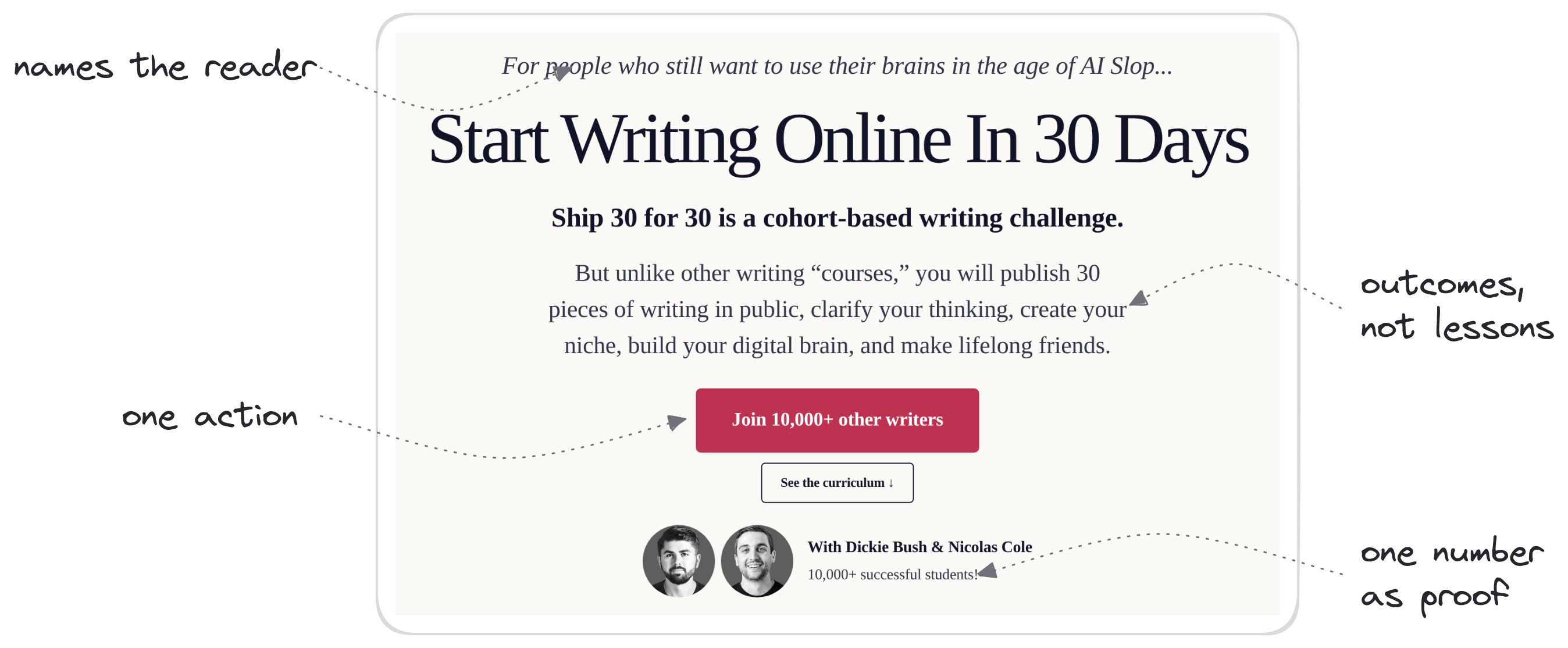
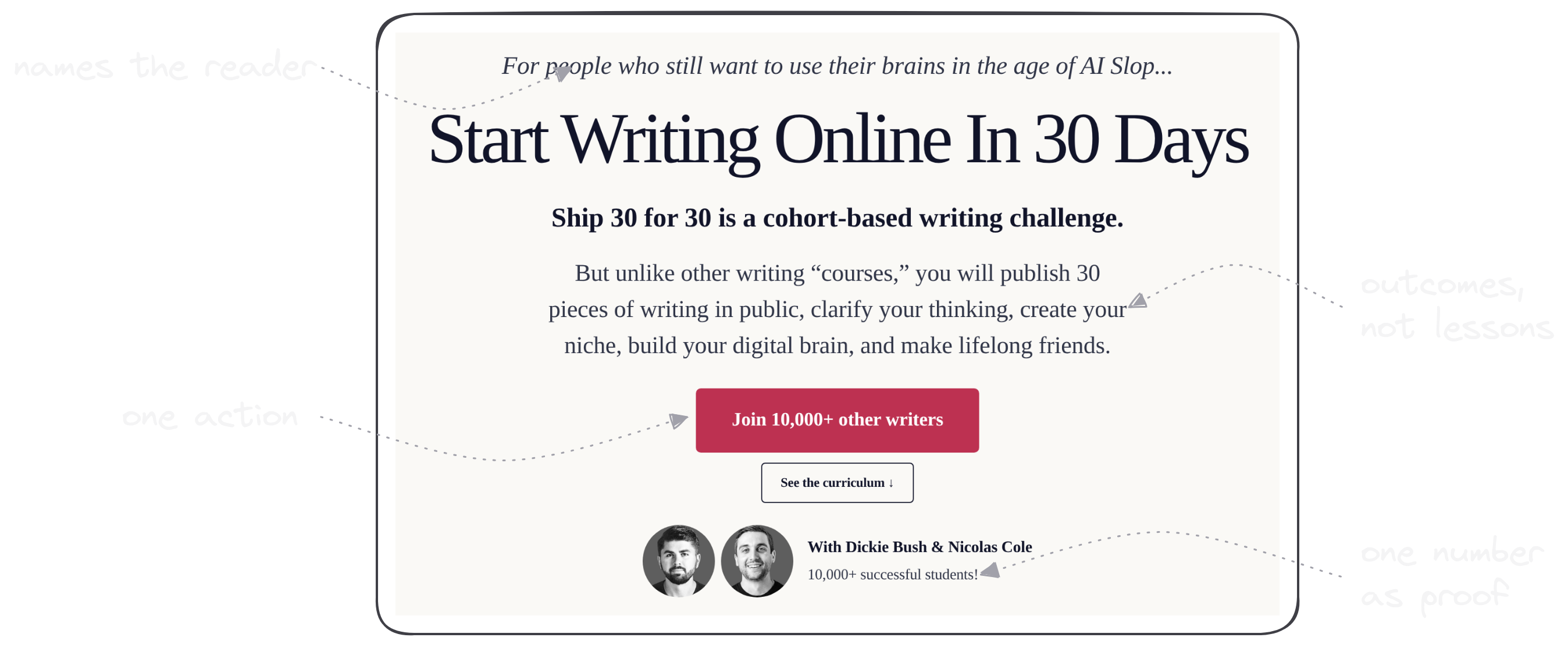
Look at the top of the Ship 30 landing page. It doesn't promise you'll learn anything. It promises you'll publish 30 pieces of writing in public, clarify your thinking, create your niche, build your Digital Brain and make lifelong friends. Every item is something you do, experience or unlock.
That's the swap. In your headlines, state the benefits. In your descriptions, describe the outcomes.
People pay for the benefits.
Tip #4: Be A Painkiller, Not A Vitamin (Copywriting For Websites That Sell)
Would you rather buy something that might make you feel a bit better someday, or something that stops the pain you feel right now?
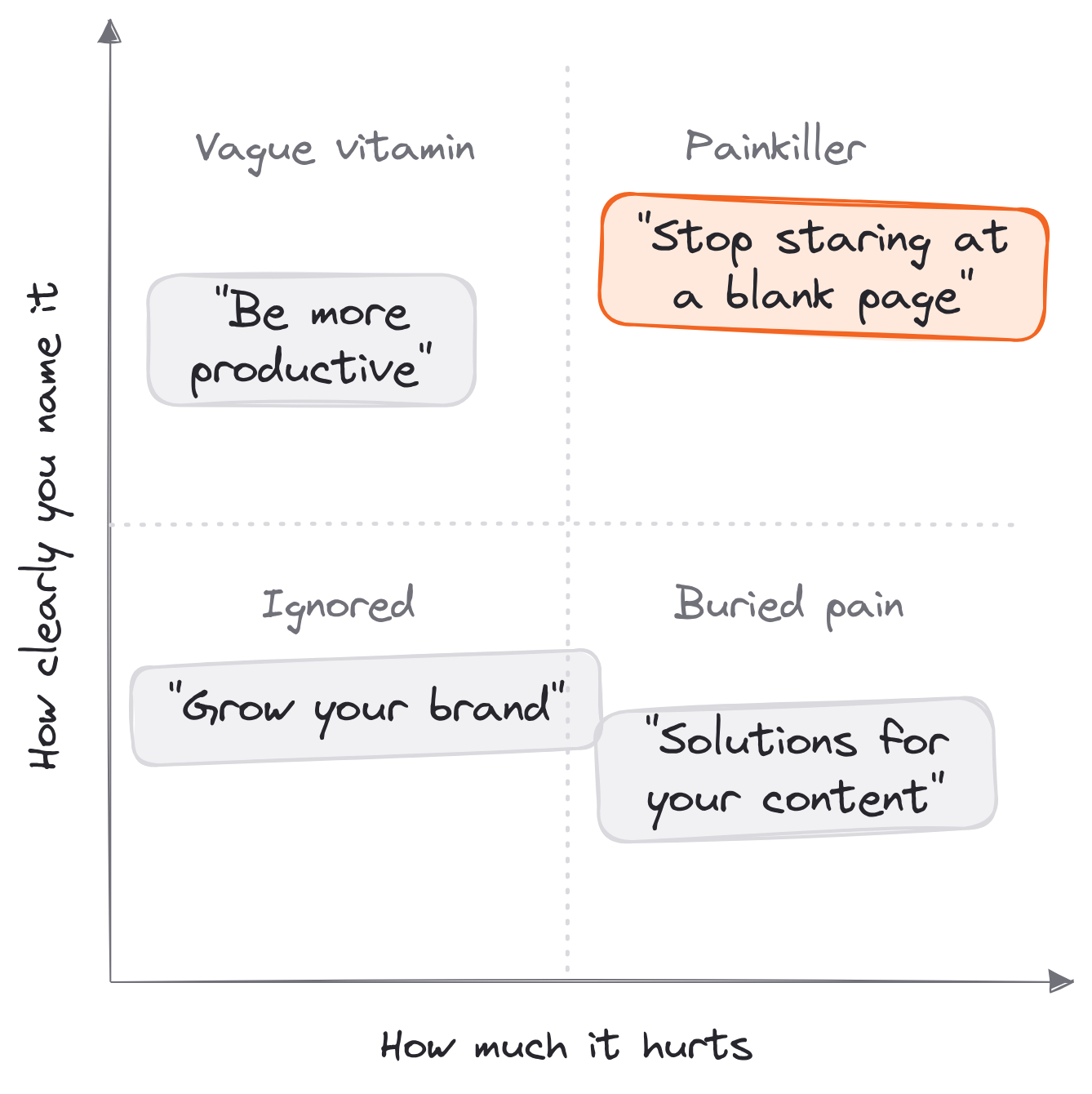
A vitamin is nice to have. People mean to take them and forget. A painkiller solves a problem the reader feels today, and they'll pay for it without thinking twice.
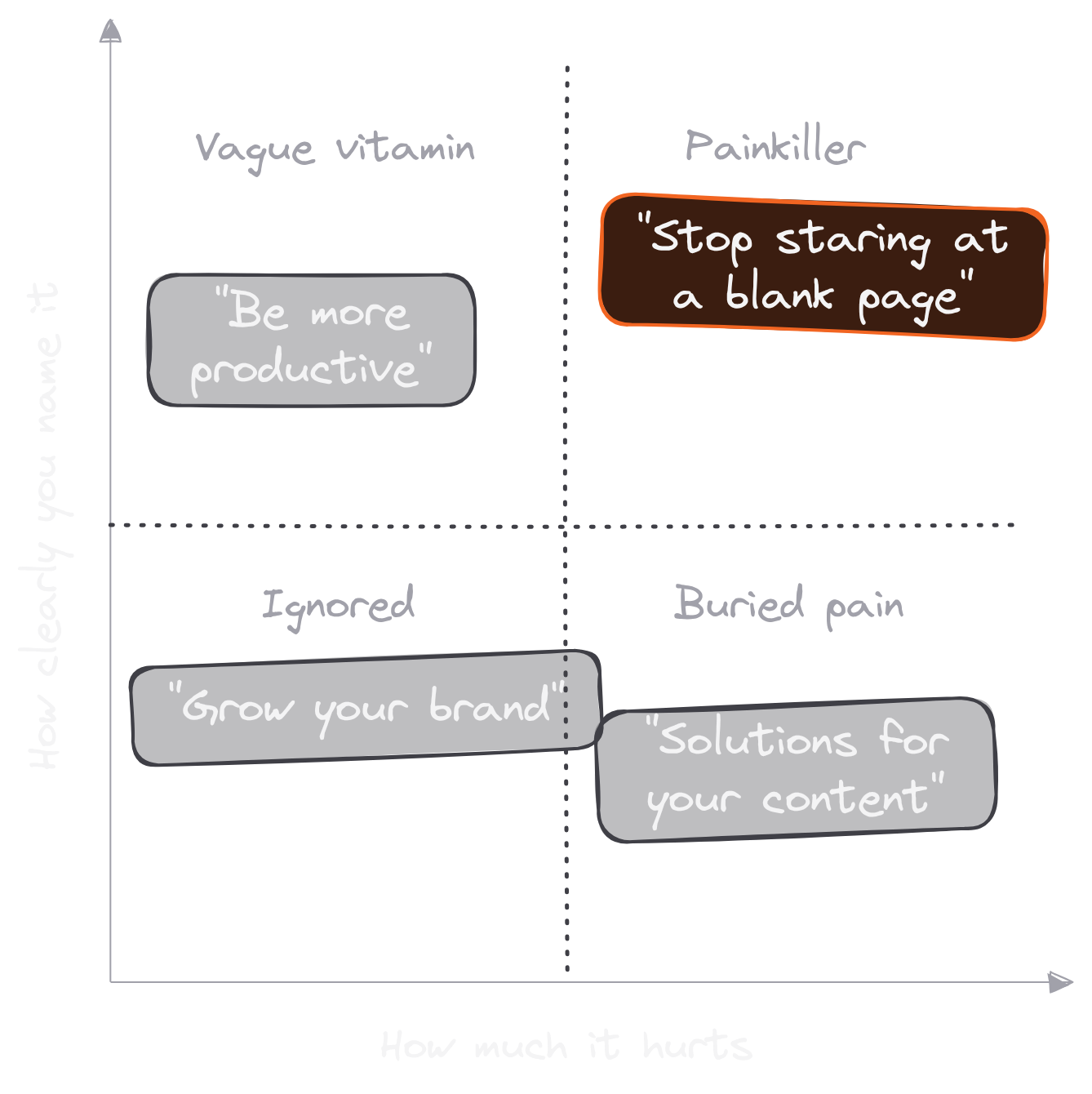
Copywriting for websites works the same way. "Grow your brand" is a vitamin: vague, distant and easy to ignore. "Stop staring at a blank page every morning" is a painkiller. It names a problem the reader felt this morning, in words they'd use themselves.
To turn vitamin copy into painkiller copy, ask three questions:
- What does my reader do today that frustrates them?
- What does that frustration cost them (time, money, sleep, pride)?
- How fast does my product make it stop?
Put the answer to the first question in your headline. Put the answer to the third right under it.
People forget their vitamins. They never forget the painkiller.
Tip #5: Ditch Formal Language (A Copywriting Best Practice That Costs Nothing)
Nobody talks the way most websites read.
"We leverage best-in-class solutions to empower your content workflows." You'd never say that sentence to a friend. You'd say "We help you write faster." Formal language is a costume businesses put on to look serious, and it makes them sound like everybody else.
Be simple instead.
Dickie has a rule for this in his copywriting process: when you write the first draft, rip out your backspace key; when you edit, put it back and rip out everything else. Then he bans a list of words outright. Just, that, very, really, actually, basically. They add length and no meaning.
Here's the copywriting best practice I'd add on top: read your page out loud. Anywhere you stumble, or anywhere you'd sound strange saying it to a person, rewrite it until it sounds like you talking. If you need help finding that voice, our guide to tone of voice walks through it.
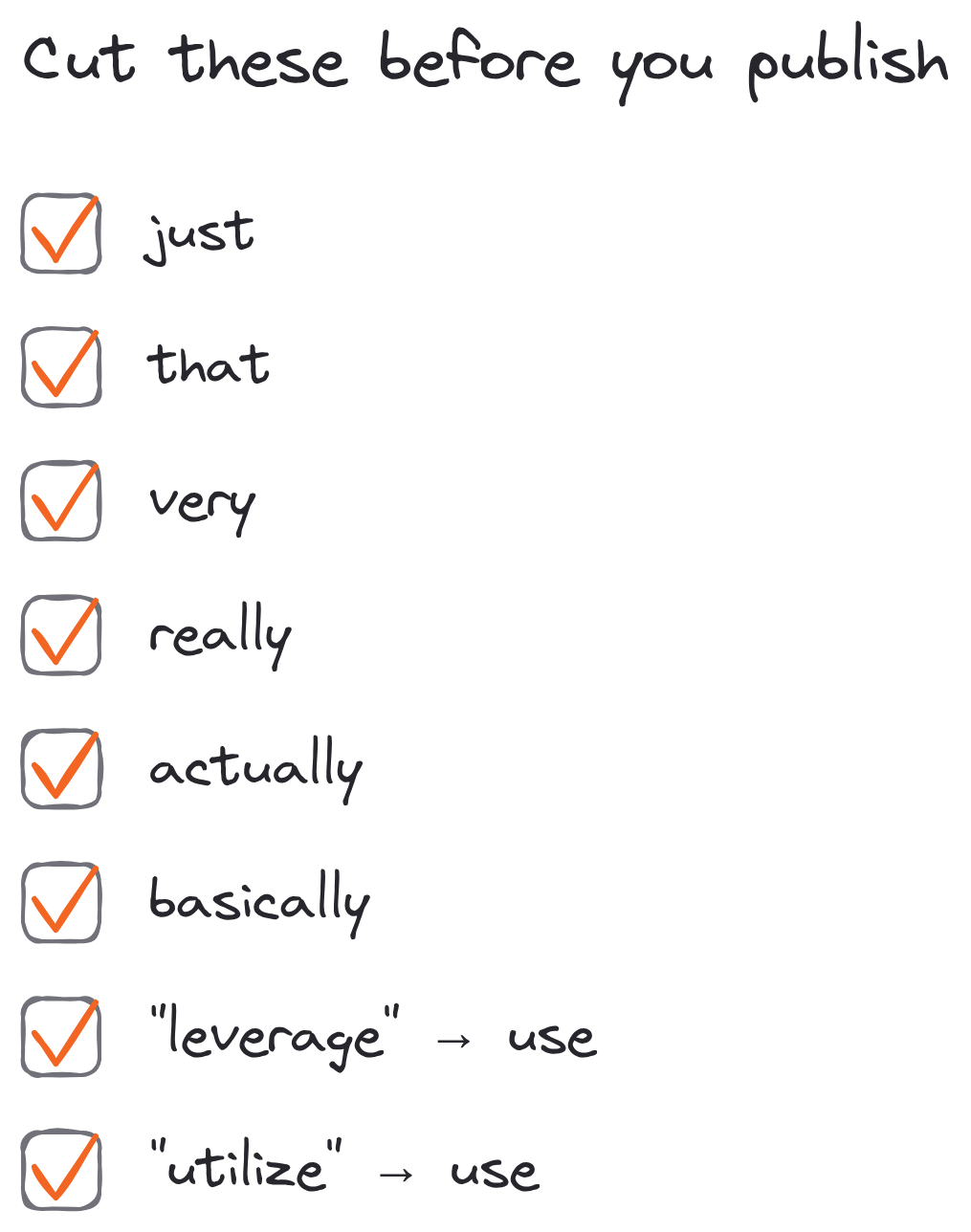
Ditch formal language, and your page starts to sound like a person worth buying from.
Tip #6: Put Problems In Third Person And Outcomes In Second (A Sales Copywriting Trick)
This is my favorite small trick in sales copywriting.
When you describe a problem (why your reader is failing at something), write in the third person. "Most founders write a homepage about themselves." It gives the reader an out. They think, "Other people make that mistake," and they keep reading.
When you describe the outcome (the benefits, the win), switch to the second person. "You'll publish your first essay this week." Now the reader is the main character, and you're telling them how great things are about to be.
Flip it and the page turns on you.
"You're writing your homepage all wrong" puts the reader on the back foot. "Most people will finally publish their first essay" makes the win sound like it belongs to somebody else. Same facts, wrong pronouns, and a reader who leaves.
So go through your page with two highlighters. Every sentence about a problem should say "most people," "a lot of writers" or "they." Every sentence about a result should say "you."
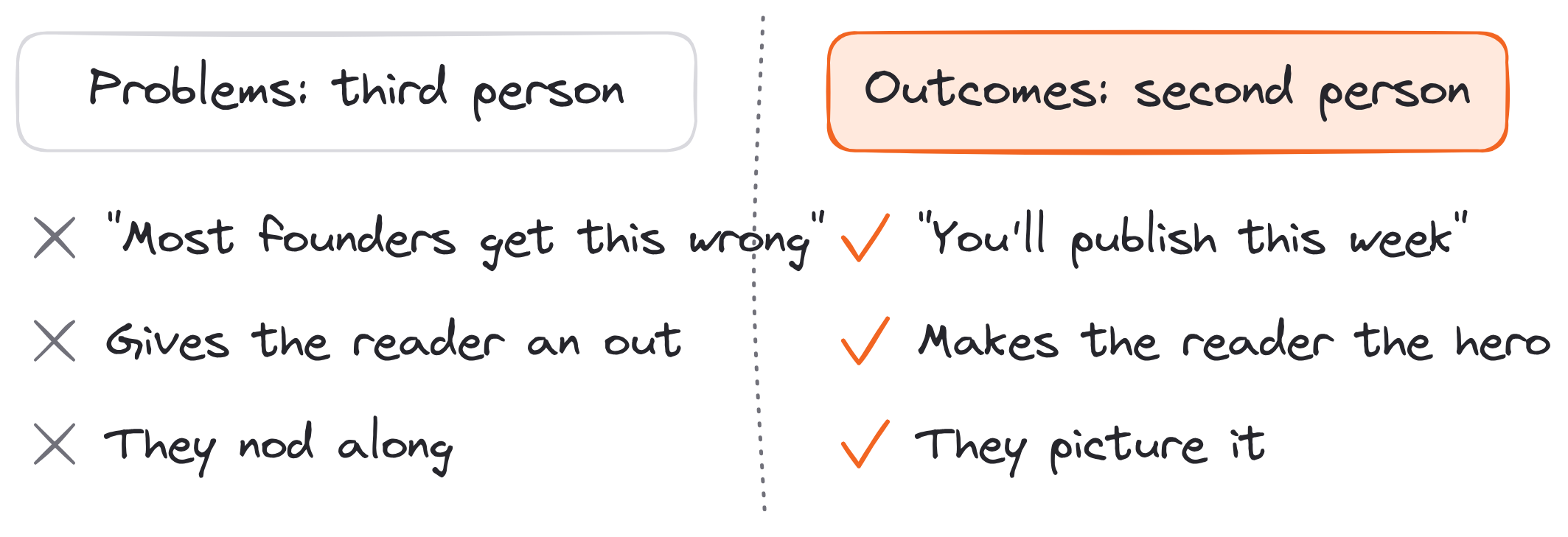
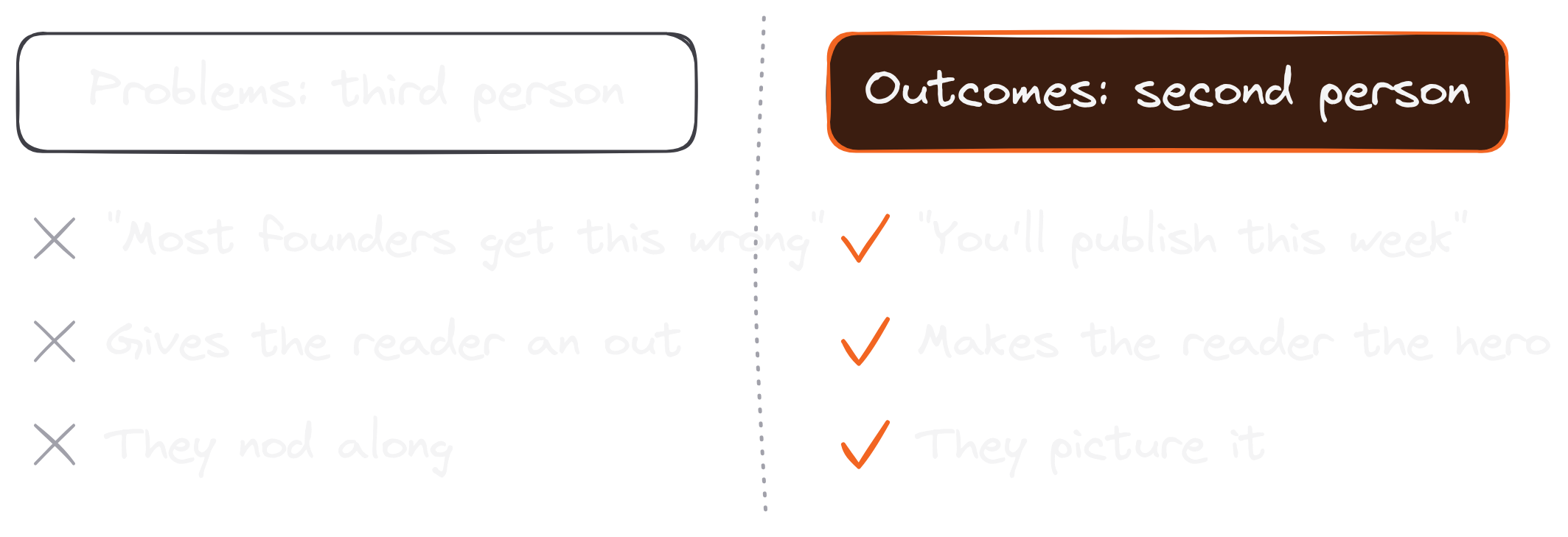
Problems belong to other people. Outcomes belong to your reader.
Tip #7: Write Your Landing Page In 5 Steps (Conversion Copywriting Made Simple)
A landing page has one job: get the reader to take one action.
That's what conversion copywriting means. Your homepage can wander a little. A landing page can't. Every line either moves the reader toward the button or gets cut. When I write one, I follow the same five steps every time:
- Name the reader. Say who this page is for in the first line, so the right person knows to keep reading.
- Frame the legacy problem. Describe the old, frustrating way they're doing it now.
- Name the new category solution. Give your way of solving it a name, so it feels different from everything they've tried.
- List out the benefits. What they'll do, experience and unlock (Tip #3).
- Offer-stack the outcomes. Pile on everything they get until saying yes feels like a no-brainer.
Notice what's missing: you.
Nothing about your story, your team or how hard you worked. Those belong on your About page, if anywhere. The landing page is all about them.
One button, too. If you give the reader three things to click, most of them will click none.
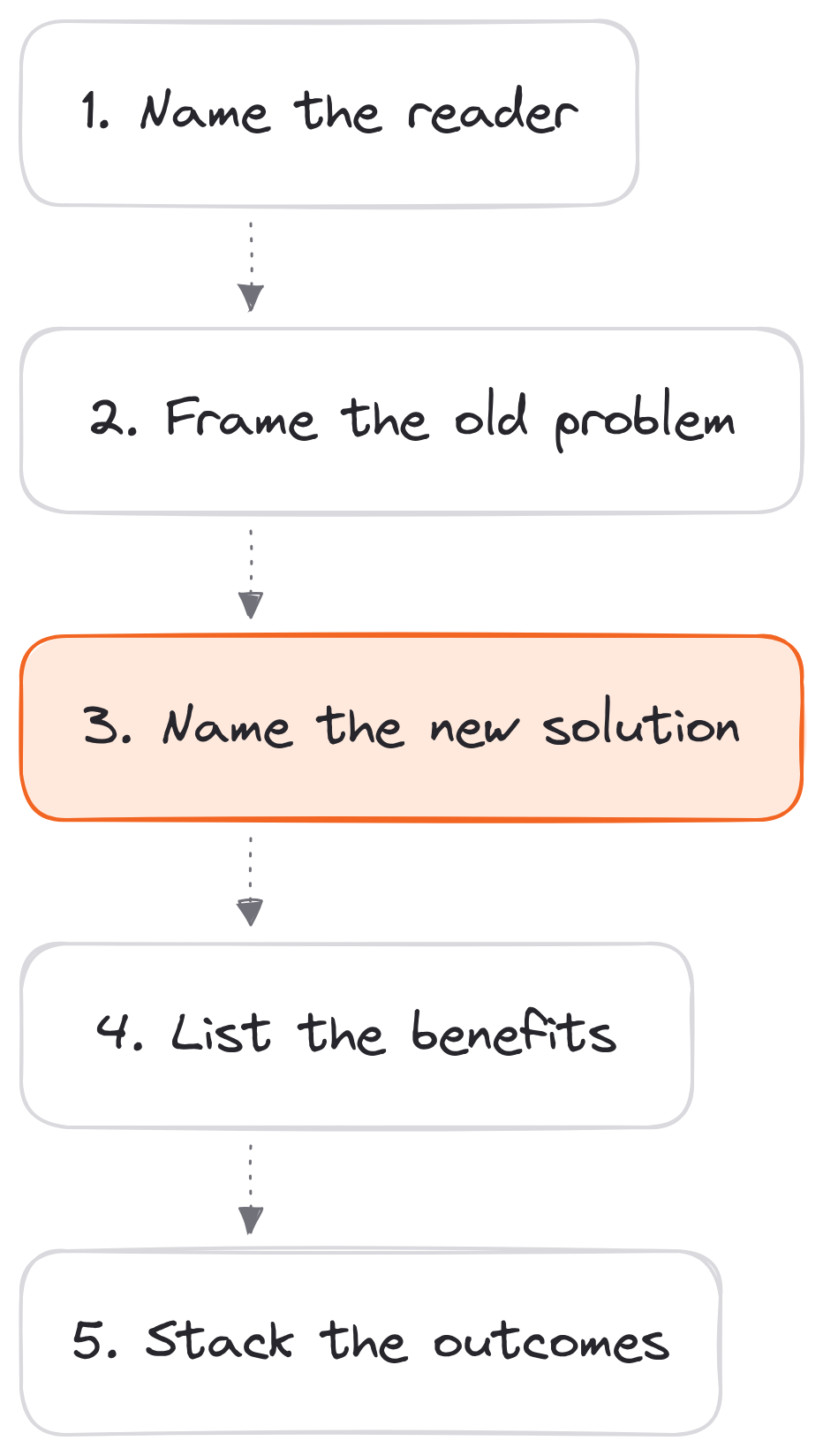
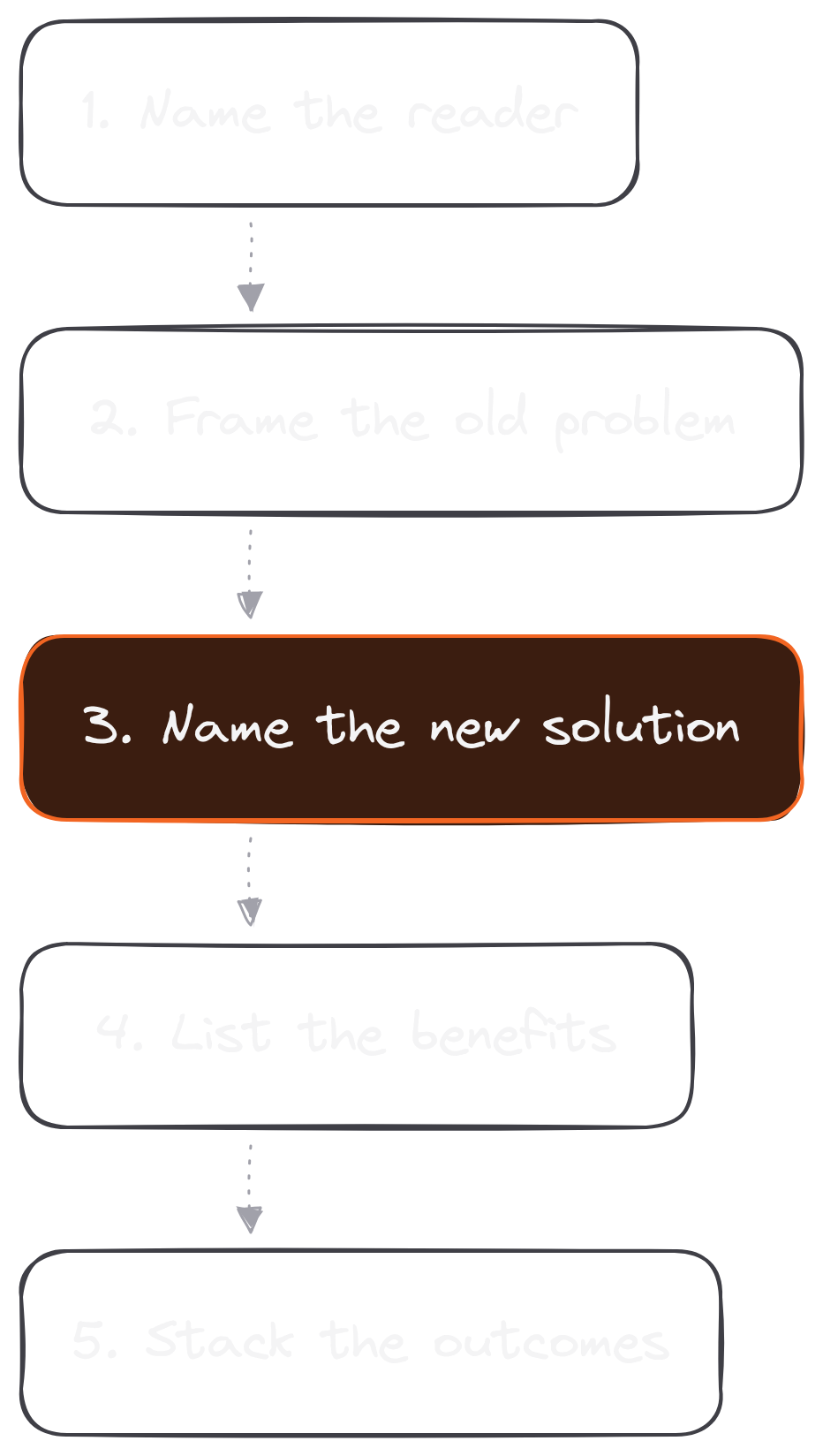
Five steps, one reader, one button: that's conversion copywriting.
Tip #8: Stack The Outcomes Until Saying Yes Is Easy (Website Copywriting That Converts)
The fifth step of a landing page deserves its own tip, because it's where most pages leave money on the table.
After all those hours on the Ship 30 page, I see the same five mistakes on most course and product pages. Each one makes the offer feel smaller than it is:
- Promising lessons. "Here's what you're going to learn" sells homework. Promise what they'll do, experience and unlock.
- Promising features. "Here's what you get" sells effort. Nobody cares how many hours of video you recorded.
- No templates. The value of a course or a product is in how specific and usable the action steps are. "I do X, I unlock Y."
- No bonuses. Bonus templates, bonus sessions, bonus Q&As. The more you add, the easier the decision.
- Too few testimonials. Most pages settle for two or three. You want so many that the reader stops scrolling them and starts believing them.
That's offer stacking. You start with the outcome the reader wants, and you keep adding reasons to say yes until the price feels small next to the pile.
It works on any page that asks for a signup, a call or a purchase. Website copywriting that converts puts the whole offer where the reader can't miss it.
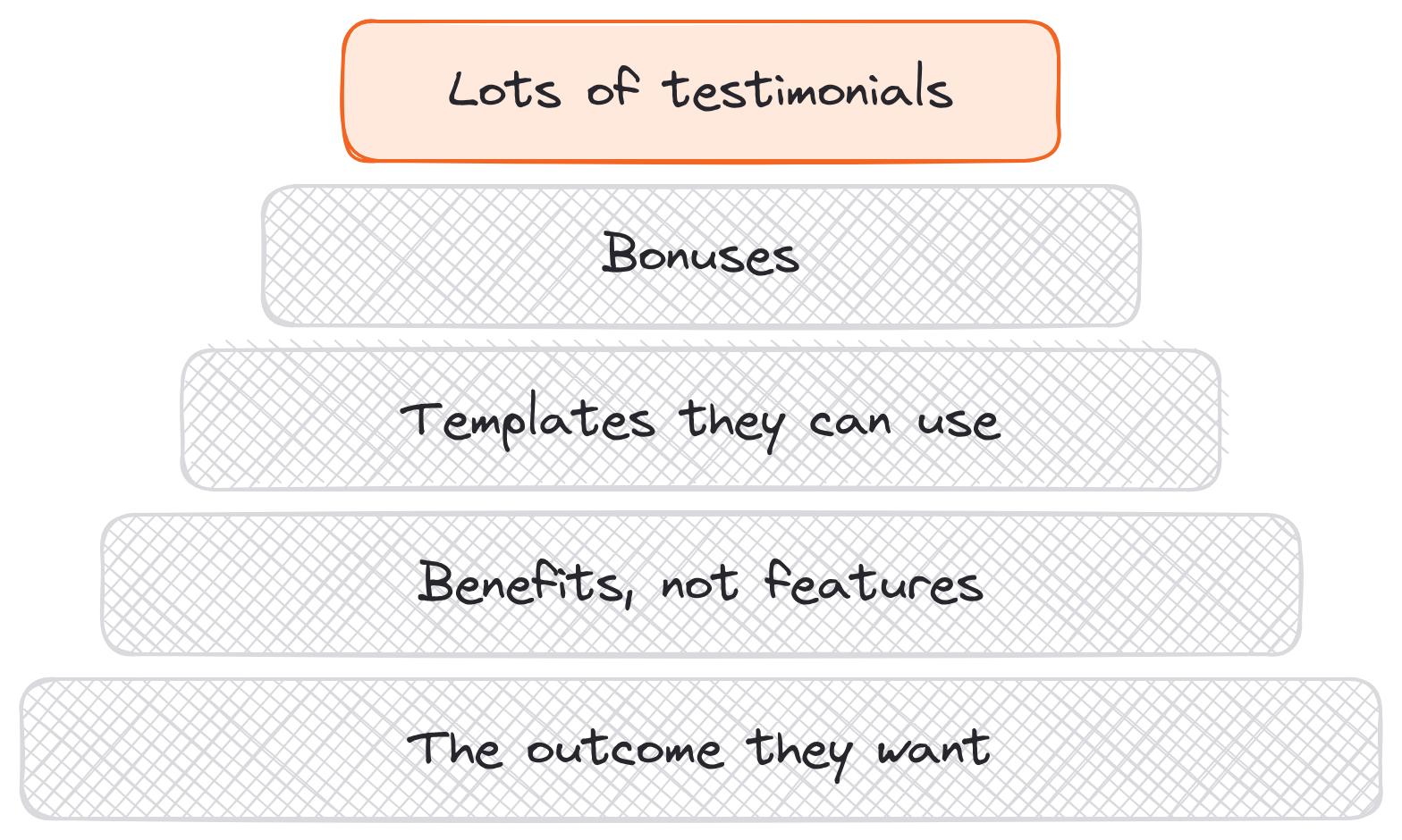
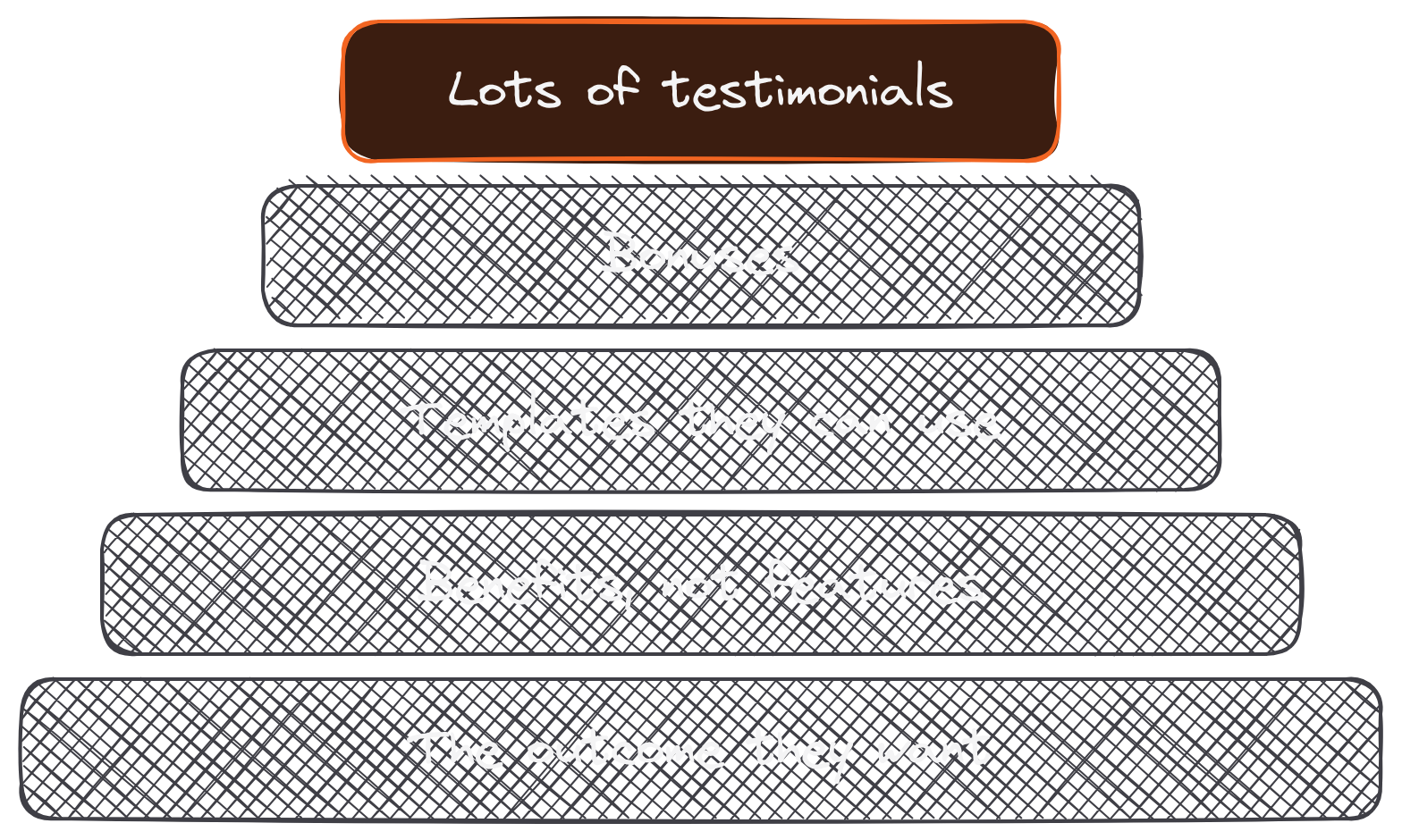
Stack the outcomes, and the yes takes care of itself.
Tip #9: Send More Emails Than Feels Comfortable (Email Copywriting That Sells)
The page that converts best is often the one in your reader's inbox.
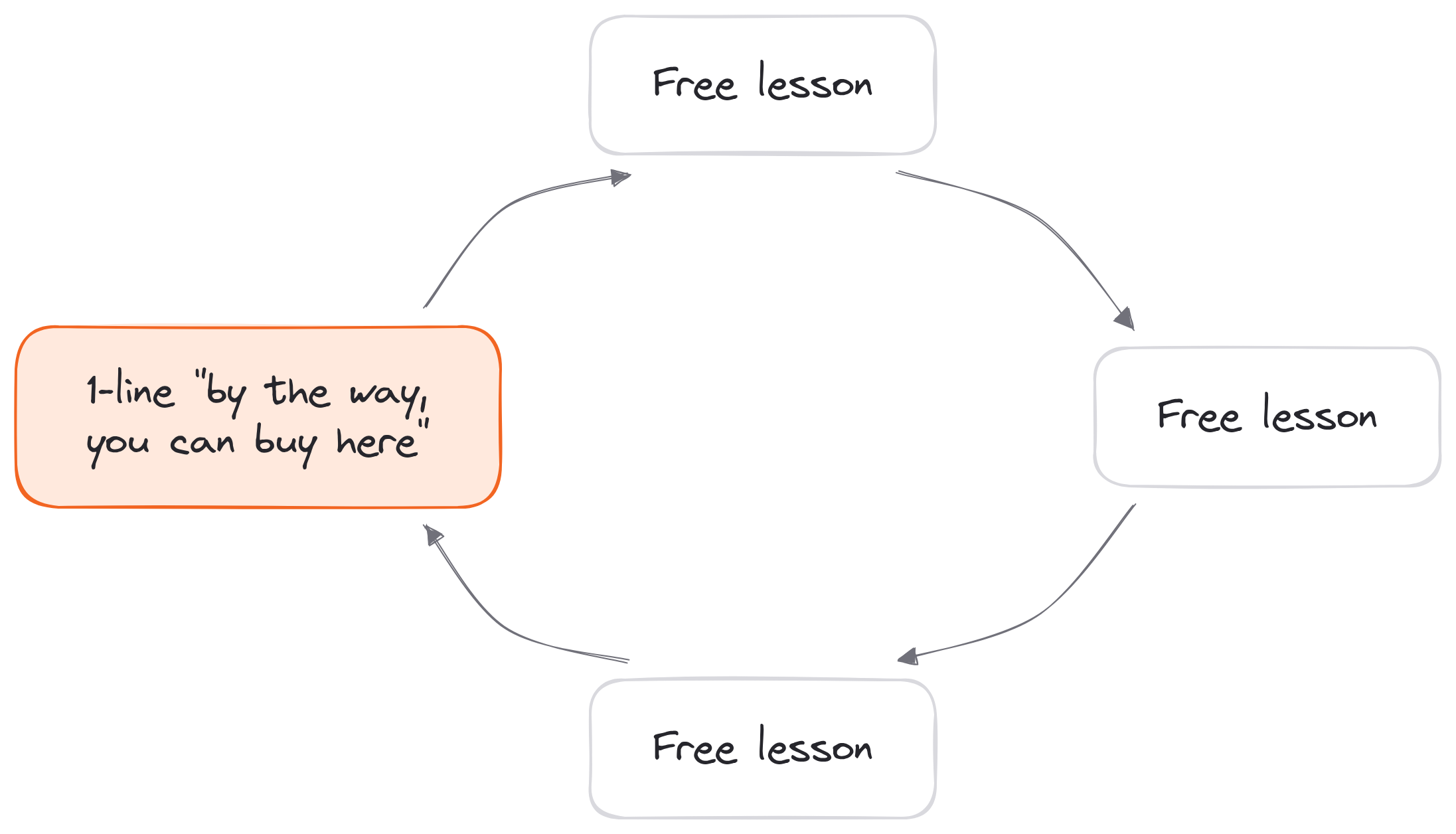
Email is the channel I'd bet on if I could only pick one. In the last 5 years, it has helped me generate over $20,000,000 in sales. And the lesson that surprised me most is how many emails it takes. After 20+ cohorts of Ship 30, our data says it takes nearly 20 emails, on average, for someone to buy.
Most creators stop at one or two. They're afraid more will feel spammy, that people will unsubscribe and never buy.
From everything we've measured, that fear is wrong, as long as the emails are worth opening.
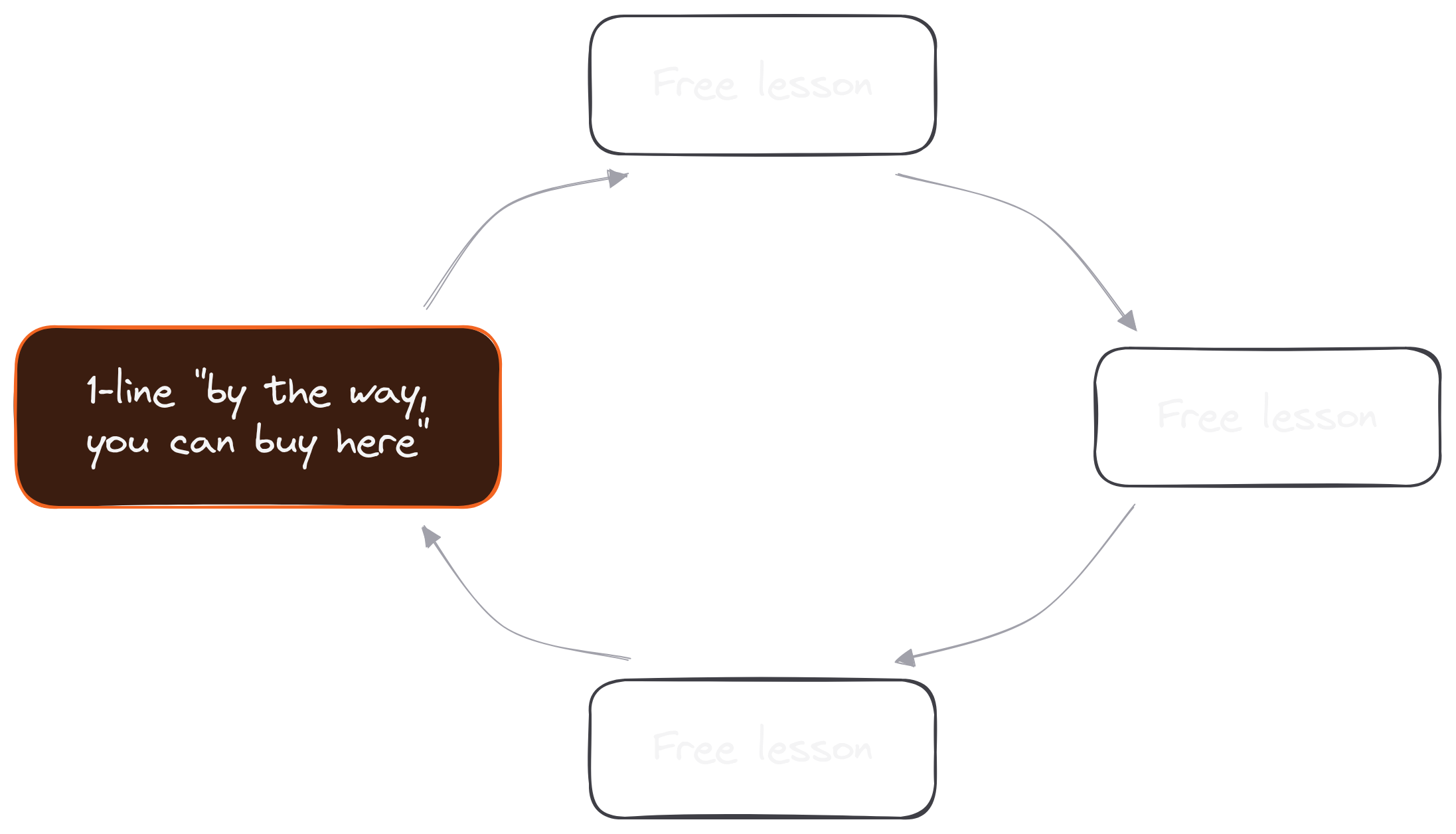
Here's the email copywriting rule that makes it work: each email is 99% free value and 1% "Oh, by the way, you can sign up here." Teach something useful. Tell a short story. Answer a question your reader has. Then end with one line that reminds them the product exists.
Do that a few times in a row, and the pitch stops feeling like a pitch. It feels like the next step.
Send more emails than feels comfortable, and make every one worth opening.
Tip #10: Practice Every Day In Public (How Social Media Copywriting Makes You Better)
How do you get better at copy when you don't have a product, a page or a list yet?
You write social posts. Every post on X, LinkedIn or Threads is a tiny piece of social media copywriting: a first line that has to stop the scroll, a promise, and a payoff. And unlike a landing page, you find out within an hour whether it worked.
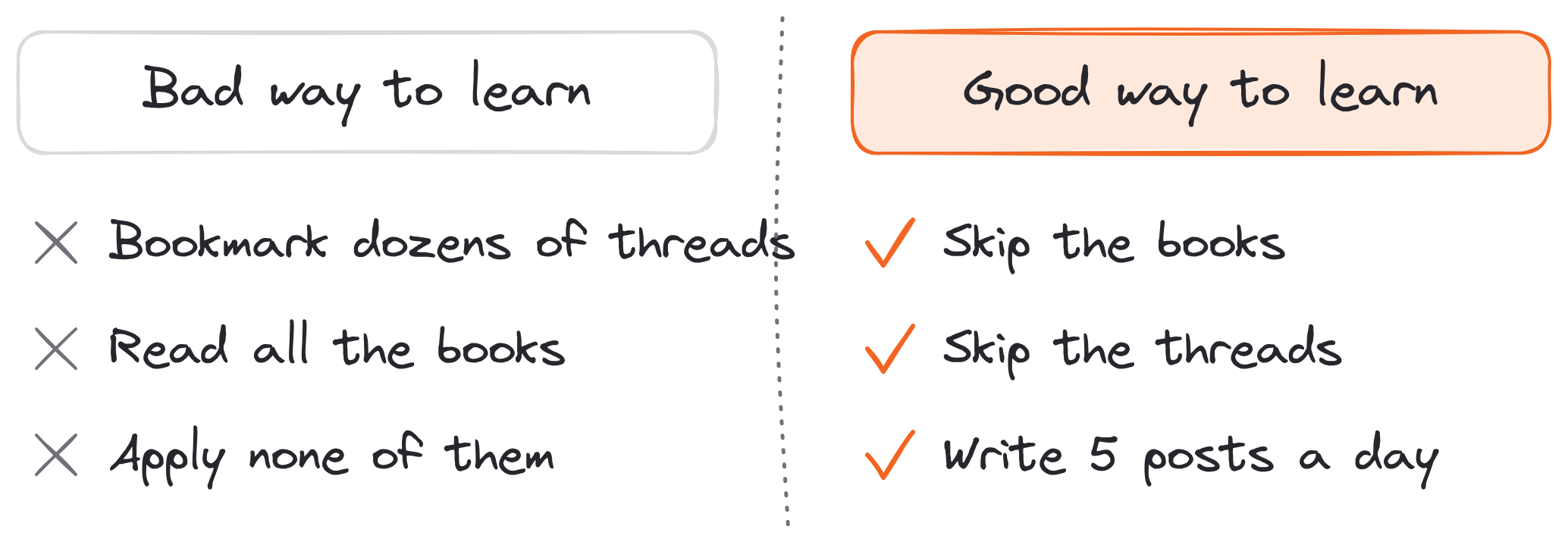
Dickie puts the difference better than I can:
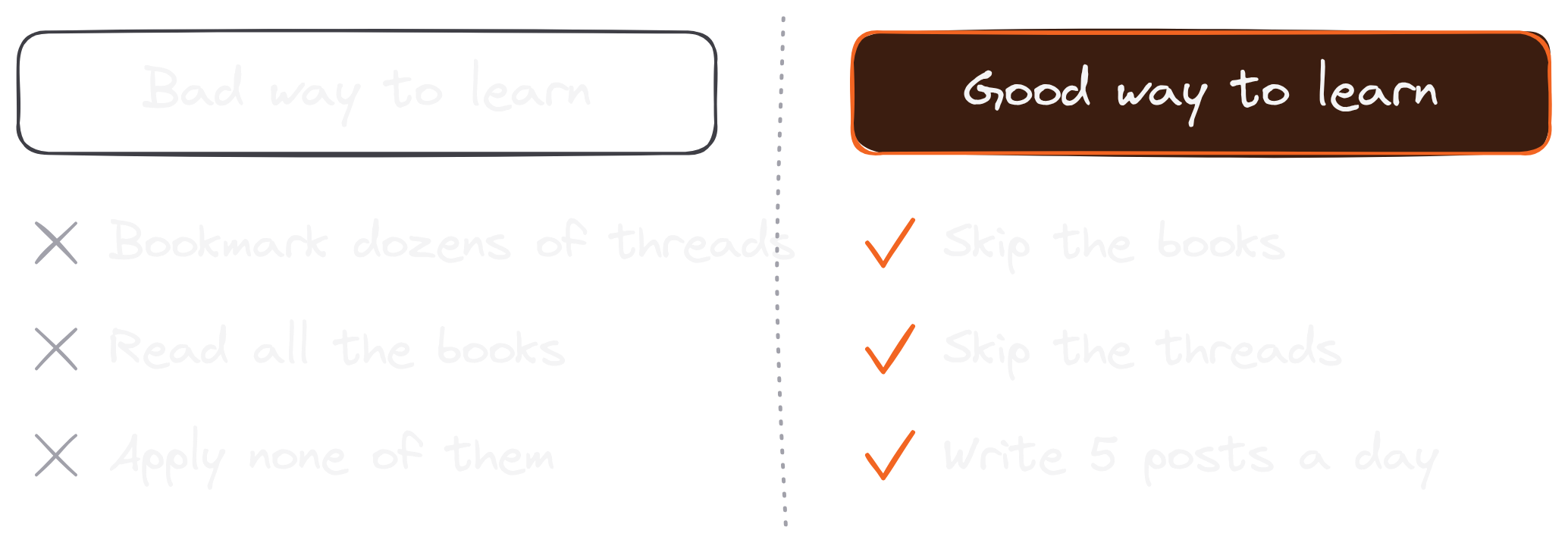
- The bad way to learn copywriting: bookmark dozens of threads, read all the books, apply none of them.
- The good way: skip the books, skip the threads, and start writing 5 tweets a day.
Then, once you have a lens to apply the information, start reading.
Short posts are the cheapest copywriting reps there are. Each one tests a headline. The ones that take off tell you which words your readers respond to, and those are the words that belong on your website.
The easiest way to keep the reps going is a schedule: write a week of posts in one sitting and let them go out each day. That's what Typeshare's LinkedIn tools are built for.
Practice every day in public, and your copy gets better whether you're selling anything yet or not.
Tip #11: Study 1 Copywriter At A Time (How To Learn Copywriting Fast)
When Dickie decided to learn copywriting, he tried to read every book, take every course and study every sales letter at once.
It was way too much. So he stopped everything and followed the 3-step process he now recommends to any beginner asking how to start copywriting:
- Immerse yourself in one copywriter's worldview. He picked Craig Clemens and binged 10 podcasts he spoke on, 10 sales letters he wrote and 10 presentations he gave. Just like that, he had a foundation.
- Read 3 foundational books. In his words, the only three worth reading are The Boron Letters, Writing That Works and The Adweek Copywriting Handbook. Reading more than that without applying it is procrastination disguised as productivity.
- Practice copywork. Take 10 legendary pieces of copy and write them out by hand, word for word, start to finish. Your brain starts to feel what good copy sounds like.
Notice the order. One teacher before many, a few books before a library, and your own hands on the words before you write anything new.
If you're wondering how to learn copywriting without a course, this is it. Combine it with Tip #10, and you'll be writing copy every day while you study the people who wrote it best.


Study one copywriter at a time, and you'll learn faster than the person reading ten.
FAQ
What is website copywriting?
Website copywriting is the writing on your site that gets a visitor to do something: sign up, buy, book a call or read on. It covers the headline and subhead on your homepage, your landing pages, your product descriptions and the words on your buttons.
What is copywriting in marketing?
In marketing, copywriting is any writing meant to make the reader take an action. Ads, landing pages, emails, social posts and sales pages are all copy. Content informs or entertains; copy asks for something at the end.
What are the best copywriting tips for beginners?
Speak to one person, be clear before you're clever, and sell what your product does for the reader. Then practice in public: write short posts every day and watch which lines your readers respond to.
Is B2B copywriting different?
The reader changes, the rules don't. A B2B buyer is still one person with one problem, and they still want to know what your product does for them. B2B copy often needs more proof (case studies, numbers, named customers) because the buyer has to justify the decision to someone else.
What is SEM copywriting?
SEM (search engine marketing) copywriting is writing for paid search ads: the short headlines and descriptions that show above Google's results. It follows the same tips with fewer words: one reader, one clear benefit and the words they typed into the search bar.
Can you start a copywriting business with no experience?
You can start one with no clients, but not with no practice. Write every day in public so you have samples, rewrite pages you admire as practice, and offer to rewrite a friend's landing page first. Your first clients will want to see copy you've written.