What Is Copywriting? The Definition, 9 Examples, And How To Land Your First Copywriting Job
Nicolas ColeNovember 9, 2026
What is copywriting? A plain definition, 9 real examples of copy that sells, and the steps to land your first copywriting job, salaried or freelance.
Copywriting is writing with one job: getting the reader to take an action, like buying, signing up or replying. The words on ads, sales pages, emails and buttons are all copy.
My first job out of college was writing copy.
In 2016, I was an entry-level copywriter at an advertising agency in downtown Chicago, making $50,000 a year. I had a degree in creative writing and no portfolio. I thought copywriting meant clever taglines. It took me years to learn that the job is something much simpler, and much harder: getting a reader to do one thing.
Since then, Dickie Bush and I have used copy (mostly emails and the pages behind them) to build a $20,000,000 writing business.
So I know what copywriting is, what it isn't and how copywriters get paid.
Below are the 5 questions people ask most about copywriting, with 9 real examples and the steps to land your first copywriting job. If you want the how-to next, read my 11 website copywriting tips. If you want your copy to sound like a person, read tone of voice in writing. And if you want somewhere to practice every day, start writing in Typeshare. You do the writing; the robots do the rest.
Question #1: What Is Copywriting? (The Copywriting Definition)
Copywriting is writing that asks the reader to do something.
That's the whole copywriting definition. Buy this. Sign up here. Reply to this email. Click the button. "Copy" is the ad business's name for the words on the page, and a copywriter is the person who writes them. Every word on an ad, a sales page, a product email or a signup button counts as copy.
As I put it in Writer Career Path #7, the correct use of the term has to do with sales copywriting: writing words with the singular goal of increasing customer conversions.
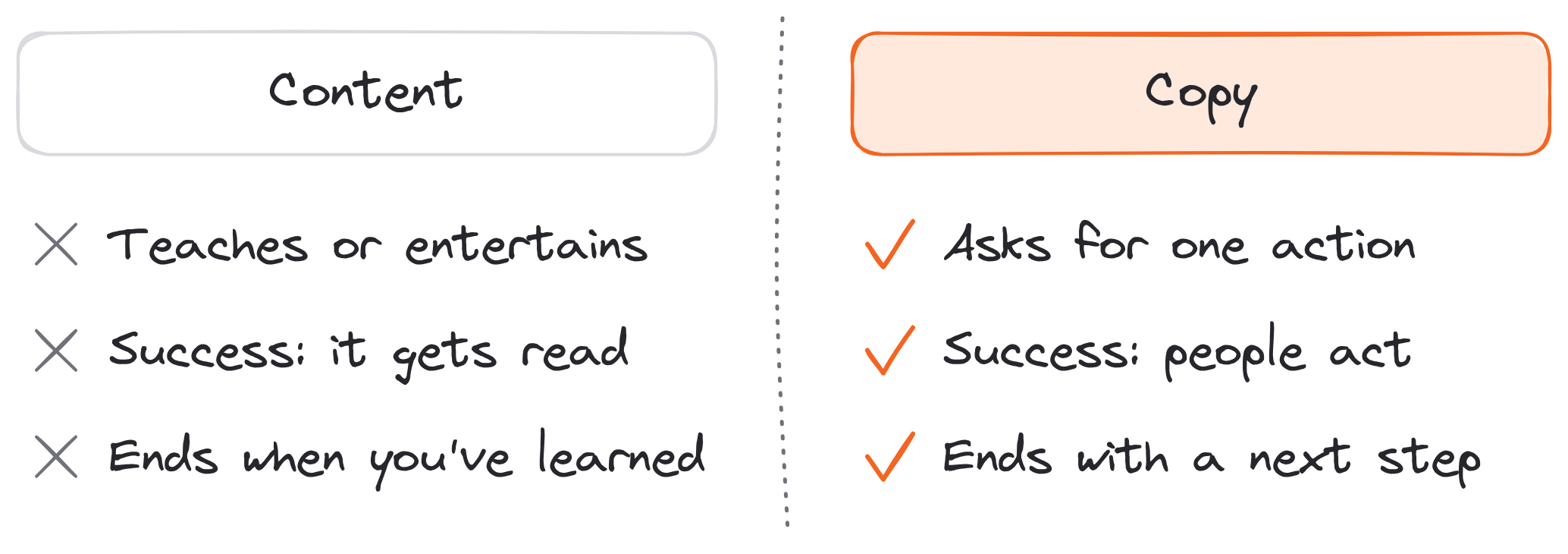
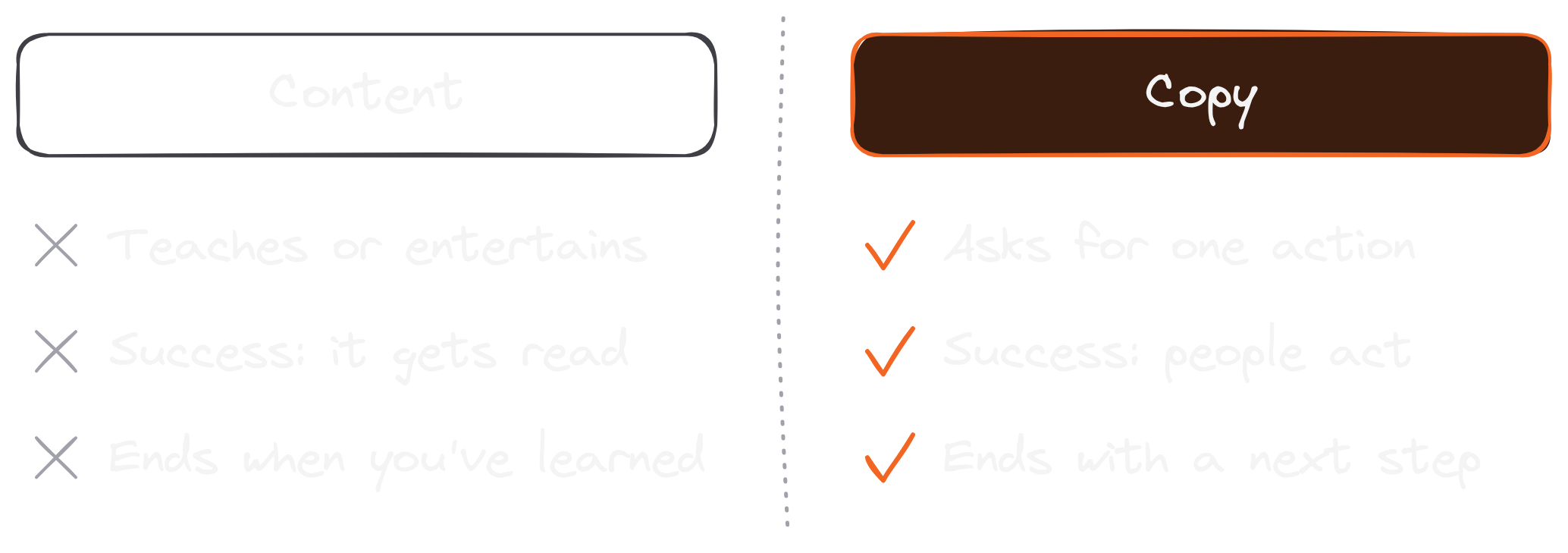
The easiest way to see the copywriting meaning is to set copy next to content:
- Content teaches, entertains or informs. A blog post, a newsletter essay or a LinkedIn post is content. It works when people read it.
- Copy asks for an action. A headline on a landing page, a subject line or a "Start your free trial" button is copy. It works when people act.
The two overlap all the time. A newsletter can teach for 900 words and then ask you to buy in the last line. The teaching is content; the ask is copy.
So when someone asks what copywriting means, here's the short answer.
It's writing measured by what the reader does next.
Question #2: What Does Copywriting Mean In Practice? (5 Pillars)
Most writers misunderstand what copywriting is.
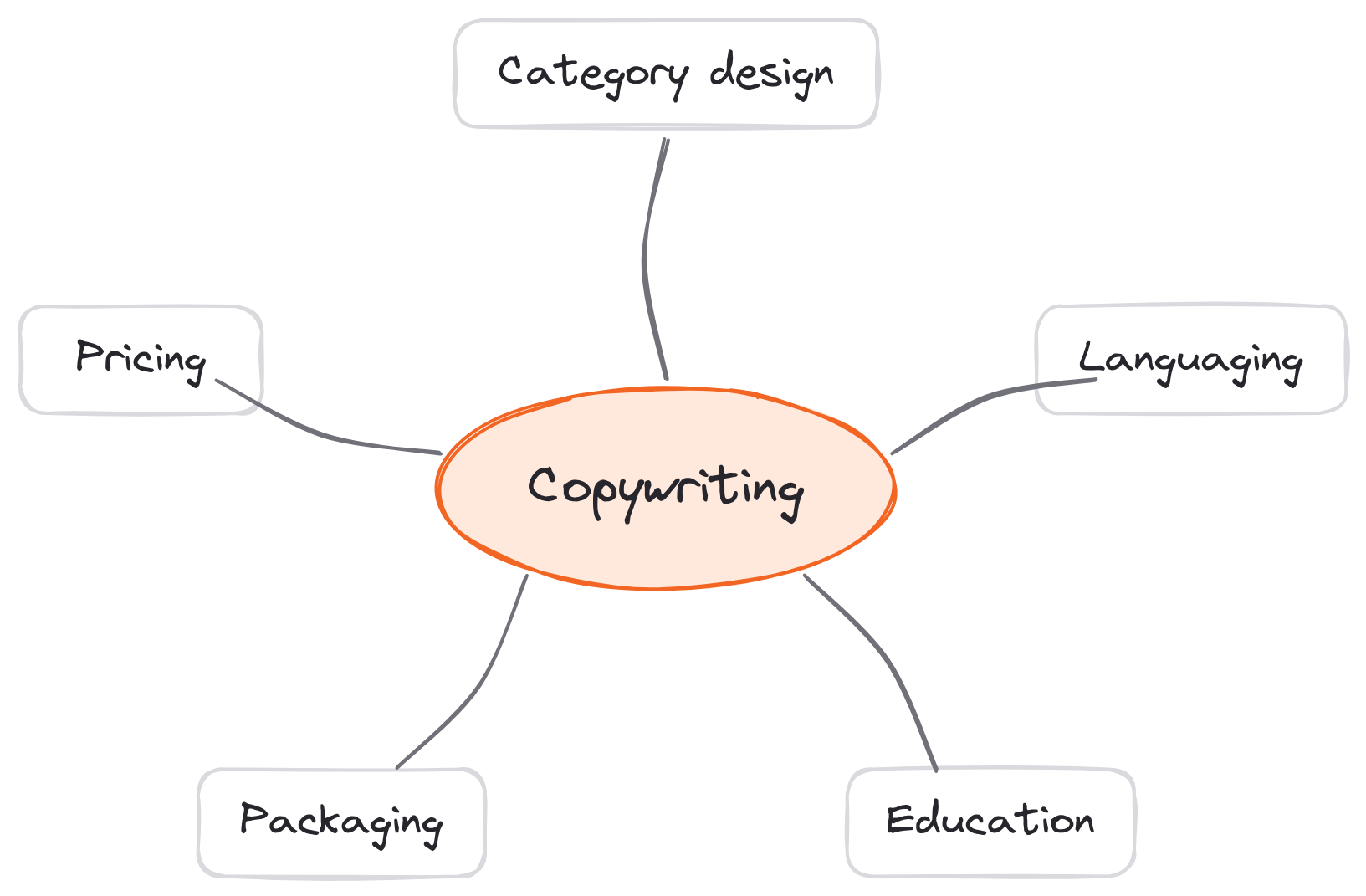
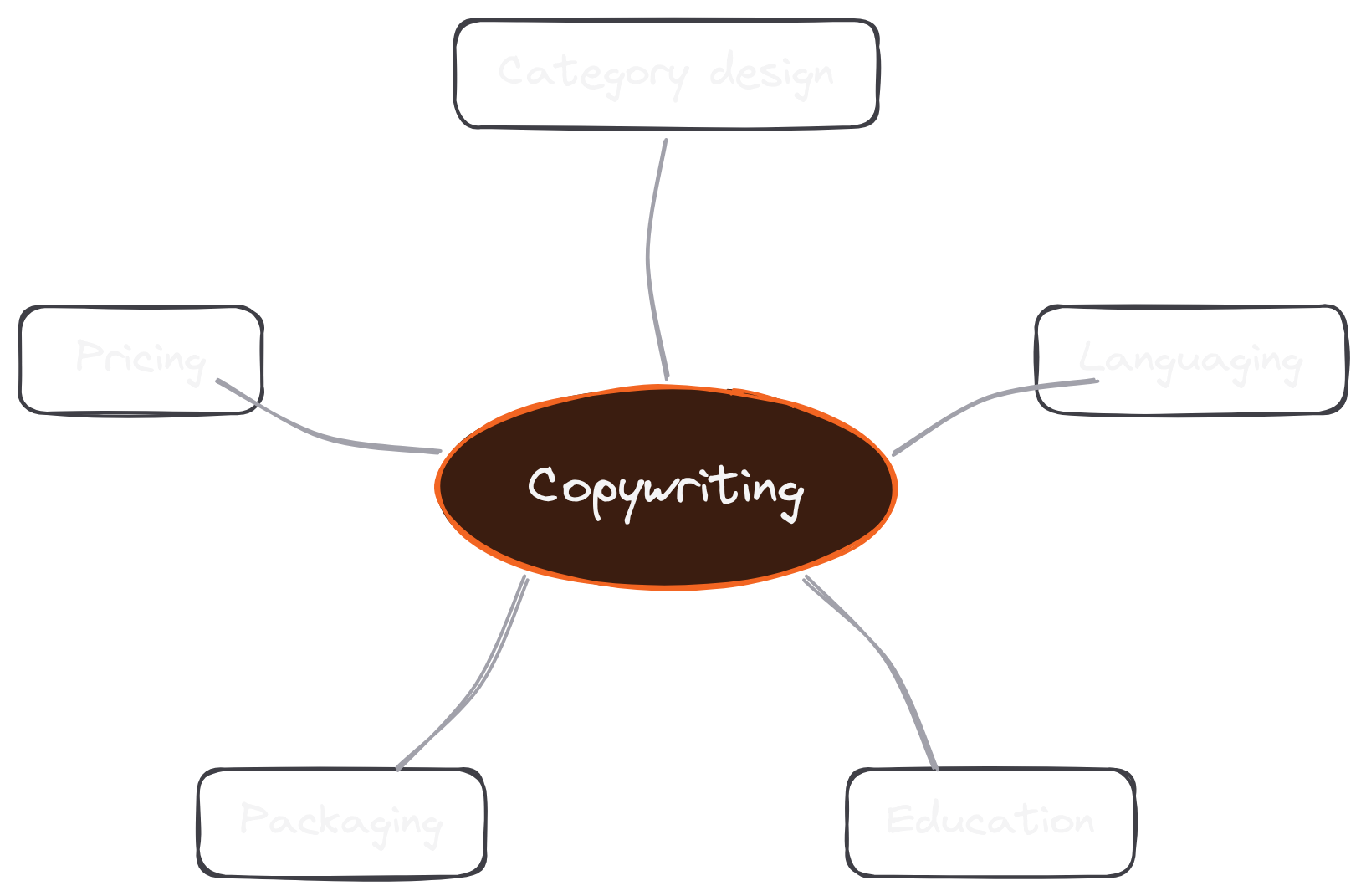
They think it means shocking words to grab attention. They think it means big promises, psychology tricks or a hard sell. It isn't any of those, and readers can smell all of them. In practice, I've found the whole art of copywriting is a combination of 5 pillars:
- Category design. Moving the customer's thinking from somewhere to somewhere else. "Writing app" is one category; "a Digital Brain that posts for you" is another.
- Languaging. Coining terms for the problem you solve, your unique solution and the difference between the old way and the new one.
- Education. Showing the customer you understand their problem so well, and know how to fix it so clearly, that they walk away smarter whether they buy or not.
- Packaging. Making it obvious what you're offering and how it gets done, so all the customer has to say is, "Ok, let's do it."
- Pricing. Anchoring the price against what it earns or saves them: ideally, 10x more than they pay.
The third pillar matters most.
The art of copywriting is education. If you can teach the customer well enough, they will sell themselves. Dickie puts the reach of it even wider: "Everything is copywriting." Asking for a raise is copy. So is a job application, a hiring pitch or a request for the corner table at your favorite steakhouse.
Get these 5 right, and you can sell anything without it ever feeling like a hard sell.
That's what copywriting means in practice.
Question #3: What Do Good Copywriting Examples Look Like? (9 Examples)
The fastest way to learn copy is to look at copy that worked.
Here are 9 copywriting examples, from a print ad in the 1970s to the homepage of a software-as-a-service (SaaS) company today. For each one, notice the single action it asks for.
Ads That Sold Straight From The Page
1. Joe Sugarman's airplane ad. In the 1970s, Sugarman sold a used $190,000 airplane for $240,000 with a single ad. As Dickie tells it, Sugarman later put 40 years of lessons into The Adweek Copywriting Handbook. The lesson in the airplane ad is that copy can sell something for more than it's "worth," because people pay for the outcome.
2. Sugarman's BluBlocker sunglasses. His most famous ad sold over 100,000 pairs of sunglasses from a single ad. Sugarman's first step, as Dickie breaks it down: become an expert on what you sell. Then write about what it does for the buyer.
SaaS Copywriting Examples
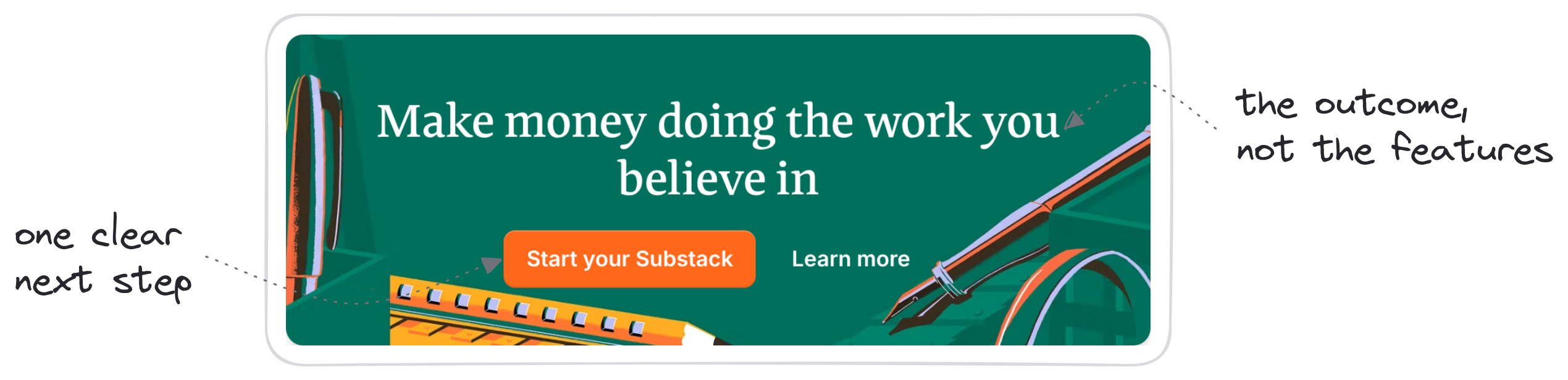
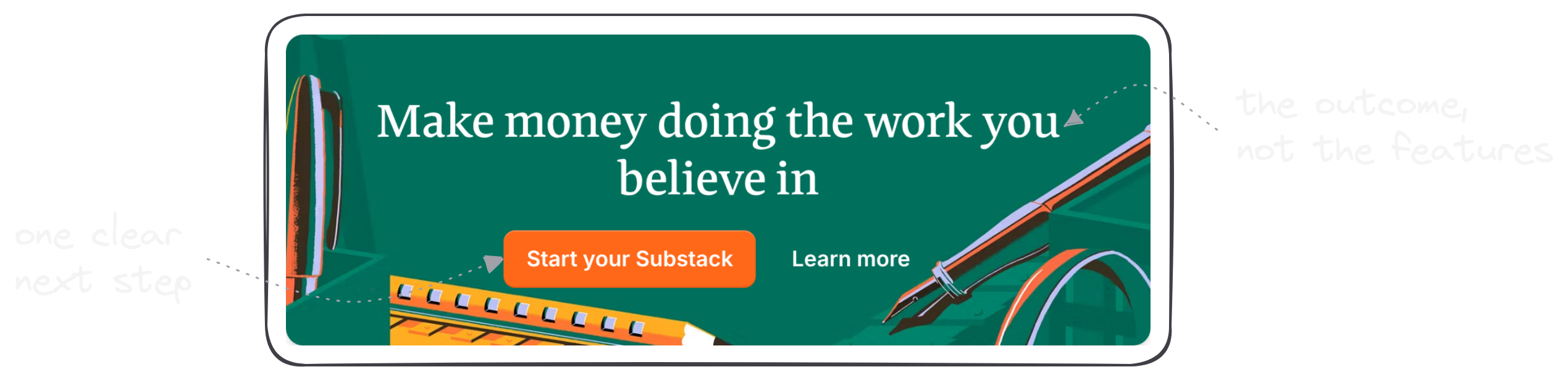
3. Substack. The homepage banner reads "Make money doing the work you believe in," with one button: "Start your Substack." It never mentions a feature. It names the outcome a writer wants, then gives them one next step.
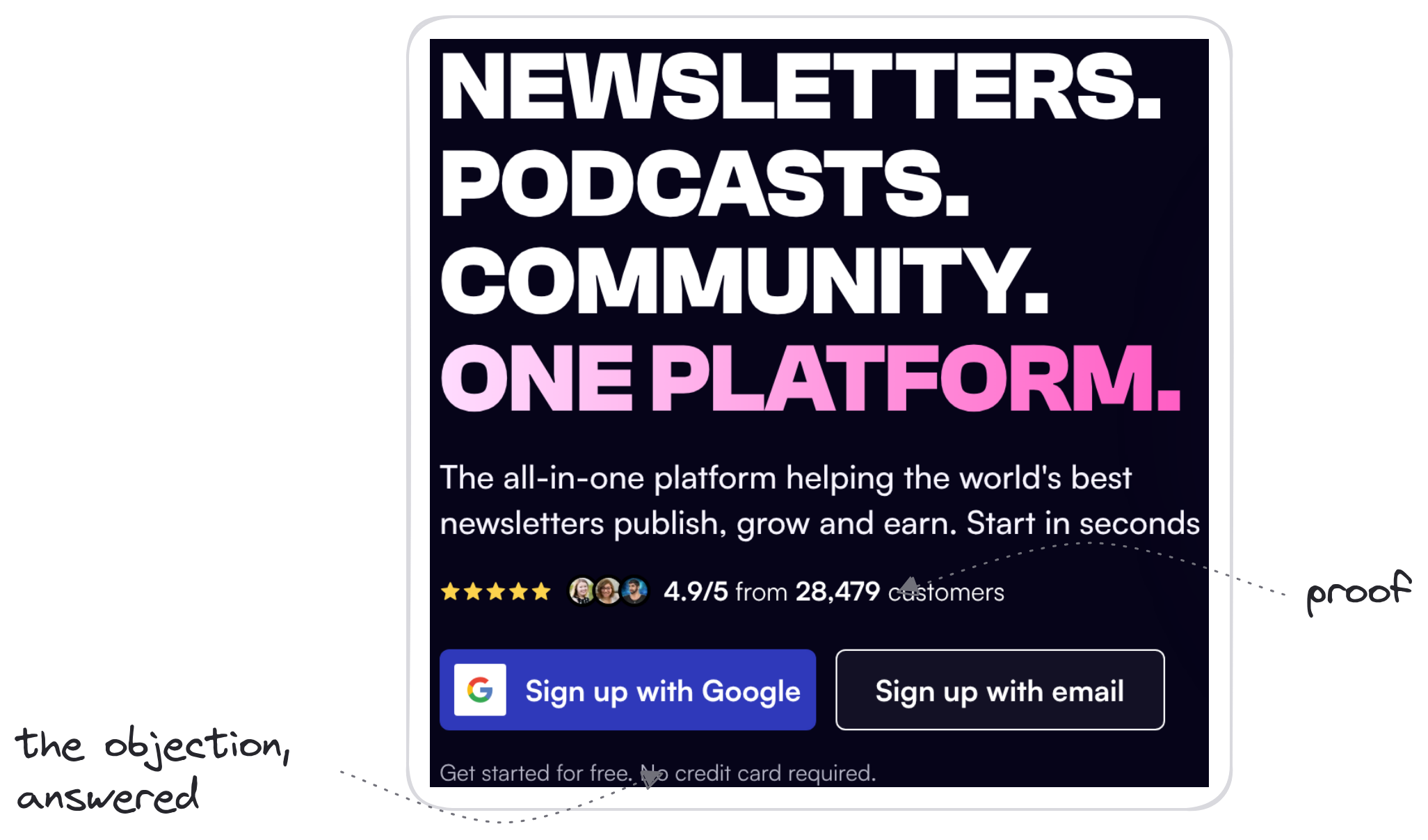
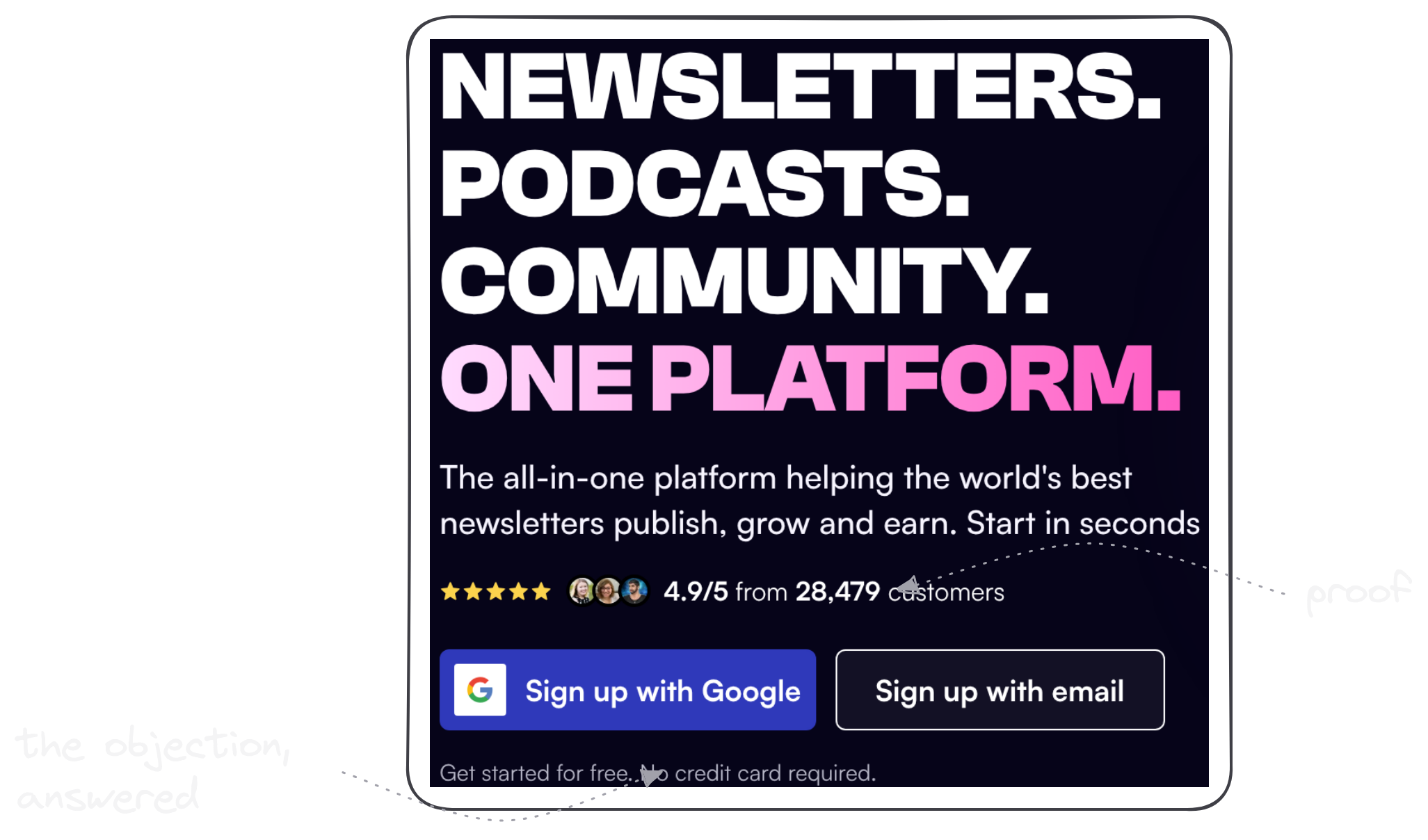
4. beehiiv. Four words stacked in capitals ("Newsletters. Podcasts. Community. One platform.") do the category design. Under the buttons, one line answers the objection before you can raise it: "Get started for free. No credit card required." Above them sits the proof: "4.9/5 from 28,479 customers."
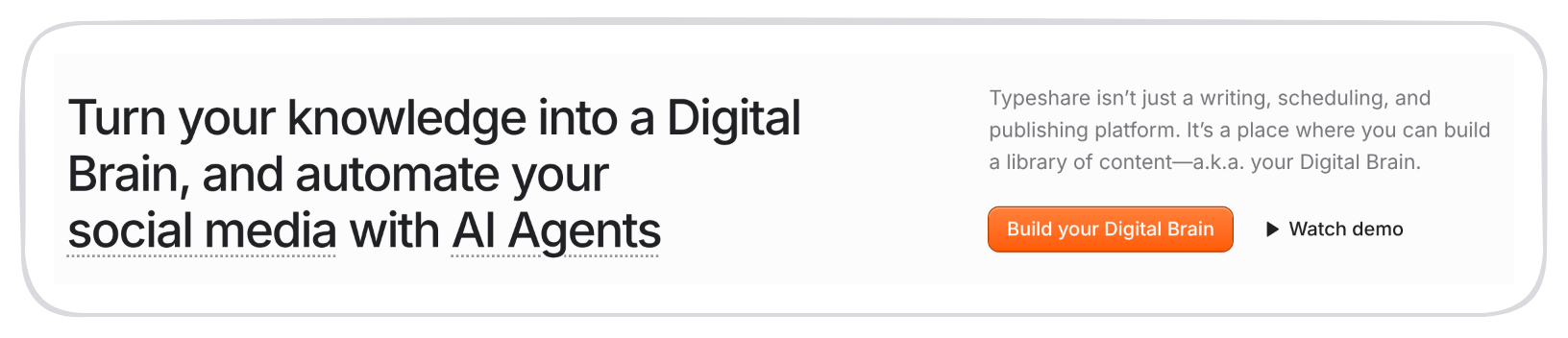
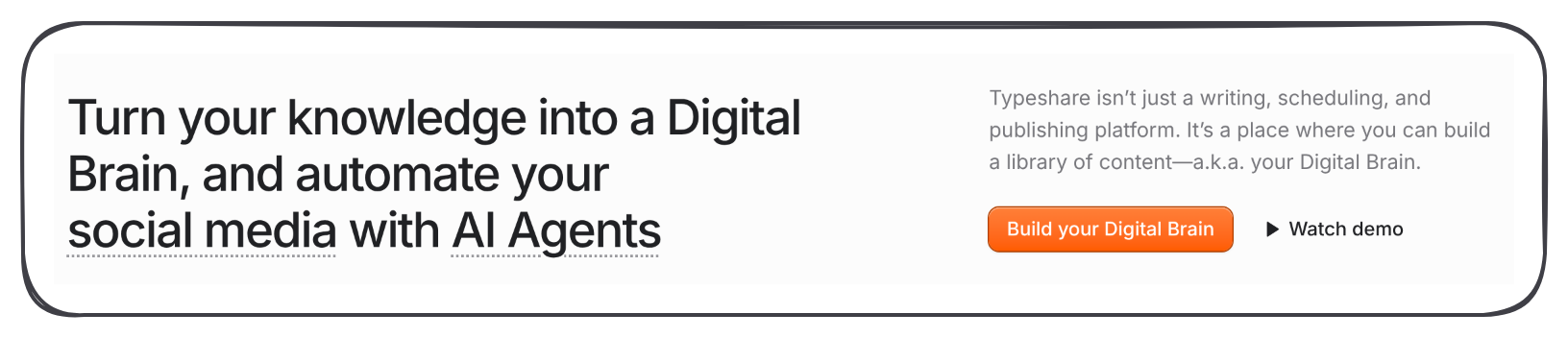
5. Typeshare. Our own homepage leads with "Turn your knowledge into a Digital Brain, and automate your social media with AI Agents," and the button says "Build your Digital Brain." That's languaging, pillar #2: we coined "Digital Brain" so the reader has a name for the thing they're getting.
Copy On Social Media And Email
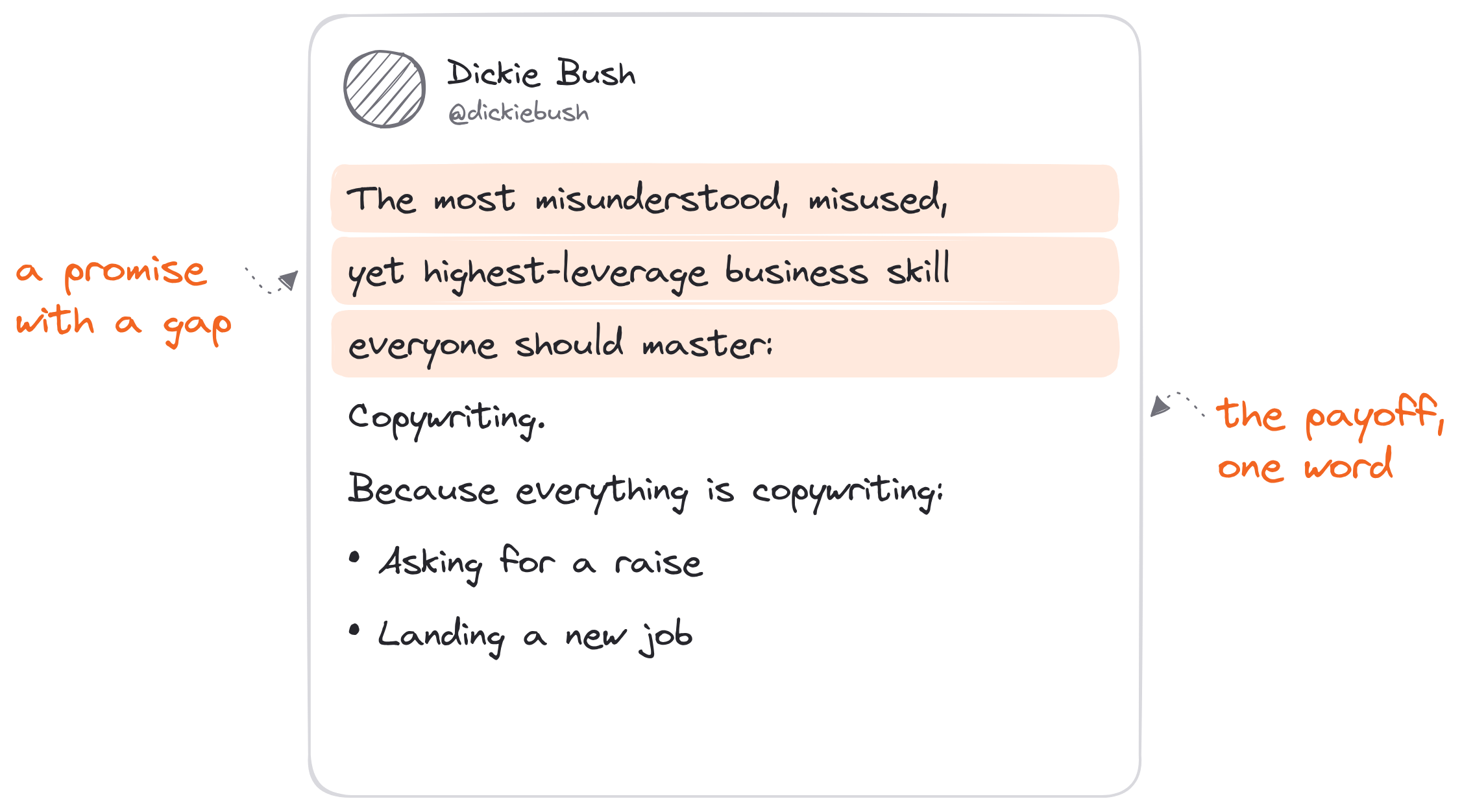
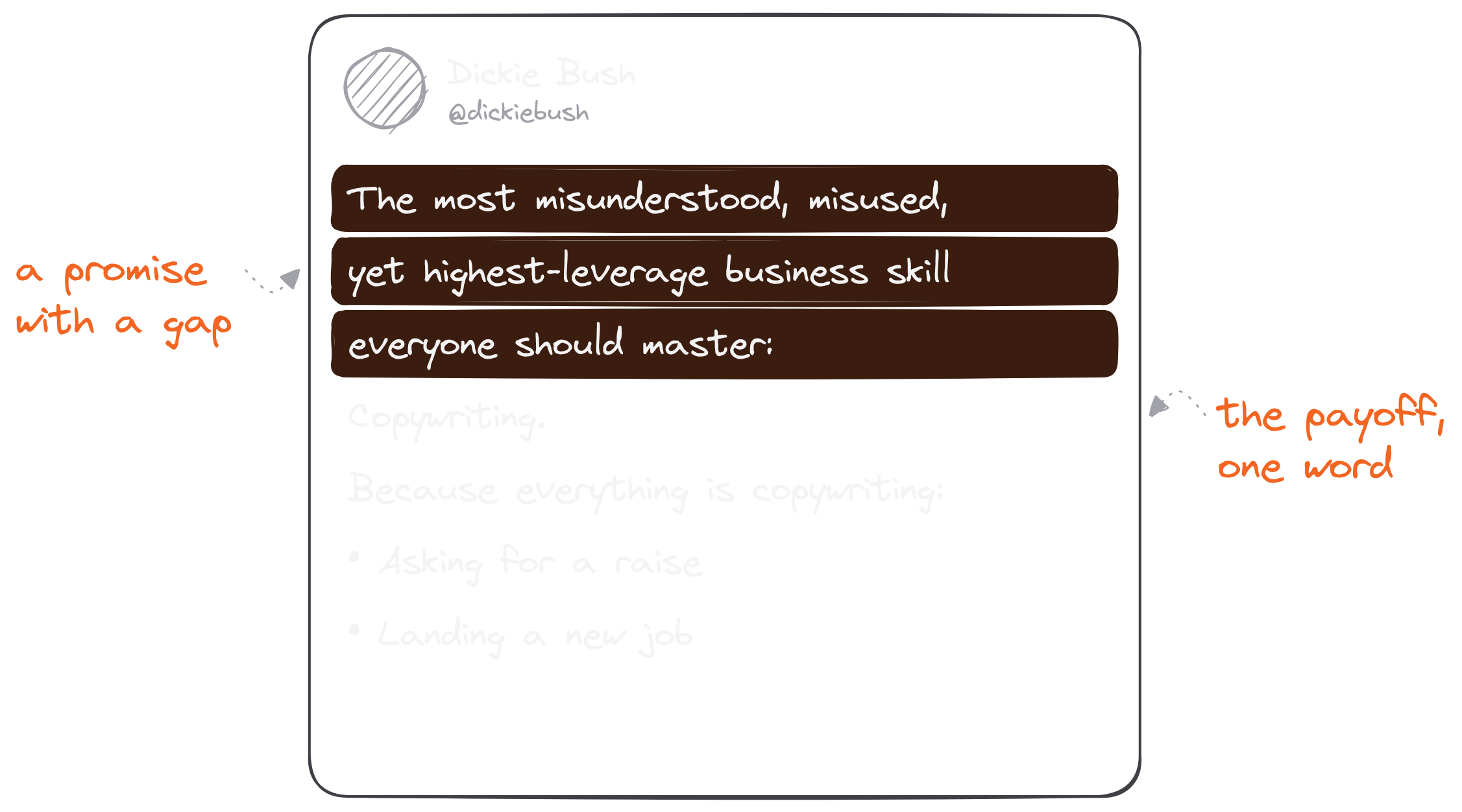
6. A hook. Dickie opened one LinkedIn post with "The most misunderstood, misused, yet highest-leverage business skill everyone should master:" and paid it off on the next line with one word: "Copywriting." The first line's only job is to get you to read the second. (More of those in our 100 hook examples.)
7. A call to action. My LinkedIn posts often end with a line that starts with a pin: "📌 Want my Weekly Newsletter Toolkit (for free)? Click here to grab a copy." One question, one link, nothing else to decide.
8. A value email with the ask in the PS. Our longest emails teach a framework with no pitch in the body. The only ask lives in the PS, so the reader trusts us by the time a sales email lands.
9. A direct email. The opposite: 300 to 500 words, no teaching, and one clear next step (apply, book a call or buy).
Every one of these asks for exactly one thing.
That's what good copywriting examples look like.
Question #4: What Is A Copywriting Job? (And Where Copywriting Jobs Are)
A copywriting job is getting paid for words that make a business money.
That can look like a lot of different desks. These are the copywriting jobs you'll see most:
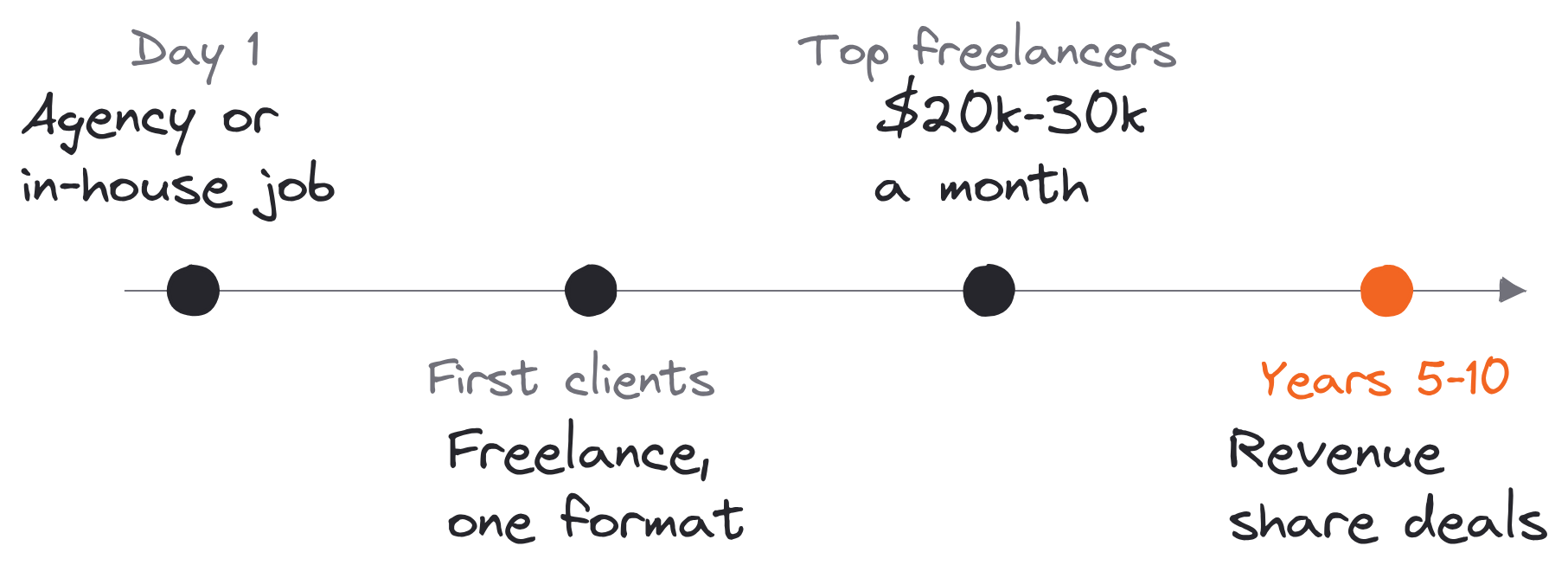
- Agency copywriter. Ads, campaigns and taglines for an agency's clients. This was my first job.
- In-house copywriter. The same work for one company: its website, emails, product pages and launches.
- Email copywriter. Newsletters, launch sequences and sales emails, often for creators and online businesses.
- SaaS or product copywriter. Homepages, onboarding screens, buttons and in-app messages for software companies.
- Direct response copywriter. Sales letters and long sales pages where every sale can be tracked back to the words.
You'll find the salaried roles where you'd look for any job: search "copywriter" on LinkedIn Jobs, Indeed or a company's careers page, and look up the ad agencies in your city. I got my agency job with a creative writing degree and no portfolio, which tells you how low the bar sits.
The money is where copywriting gets interesting.
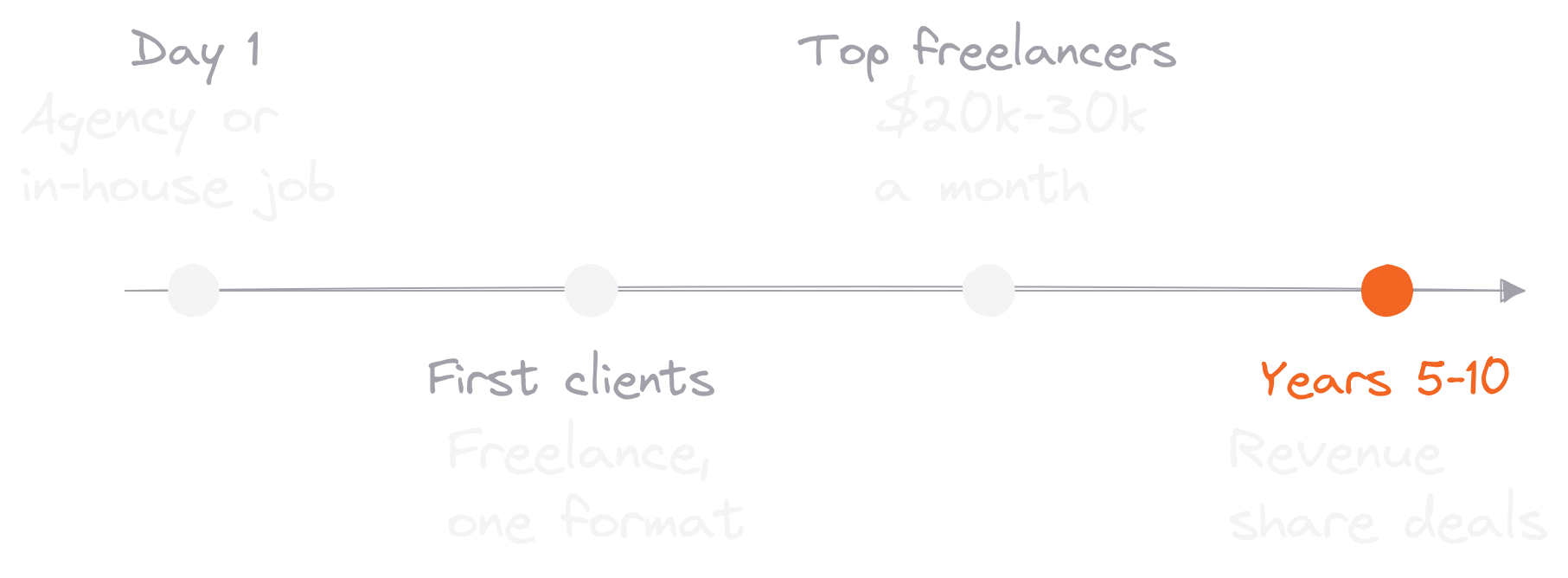
In Writer Career Path #7, I wrote that a copywriter can get to $20,000 or $30,000 a month. But there's a big gap between that and the copywriters who get paid a percentage of the sales their words make (and earn upwards of $500,000 to $1,000,000+ a year). Plan on 5 to 10 years of building skills and connections to get there. Along the way, you'll spend far more time studying human psychology and persuasion than you will novels. Copywriting is a different language, with different rules.
That's what a copywriting job is.
Question #5: How Do You Land Your First Copywriting Job? (Freelance Copywriting)
I quit my agency job in 2016 and went freelance.
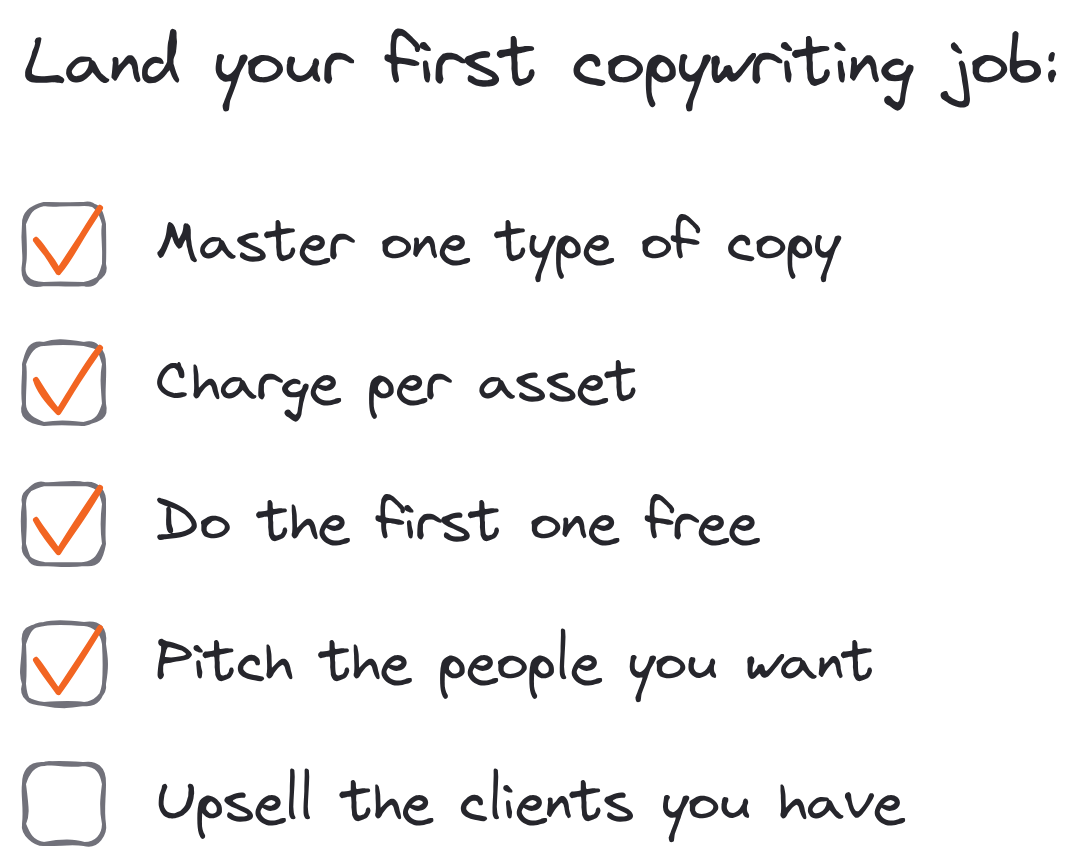
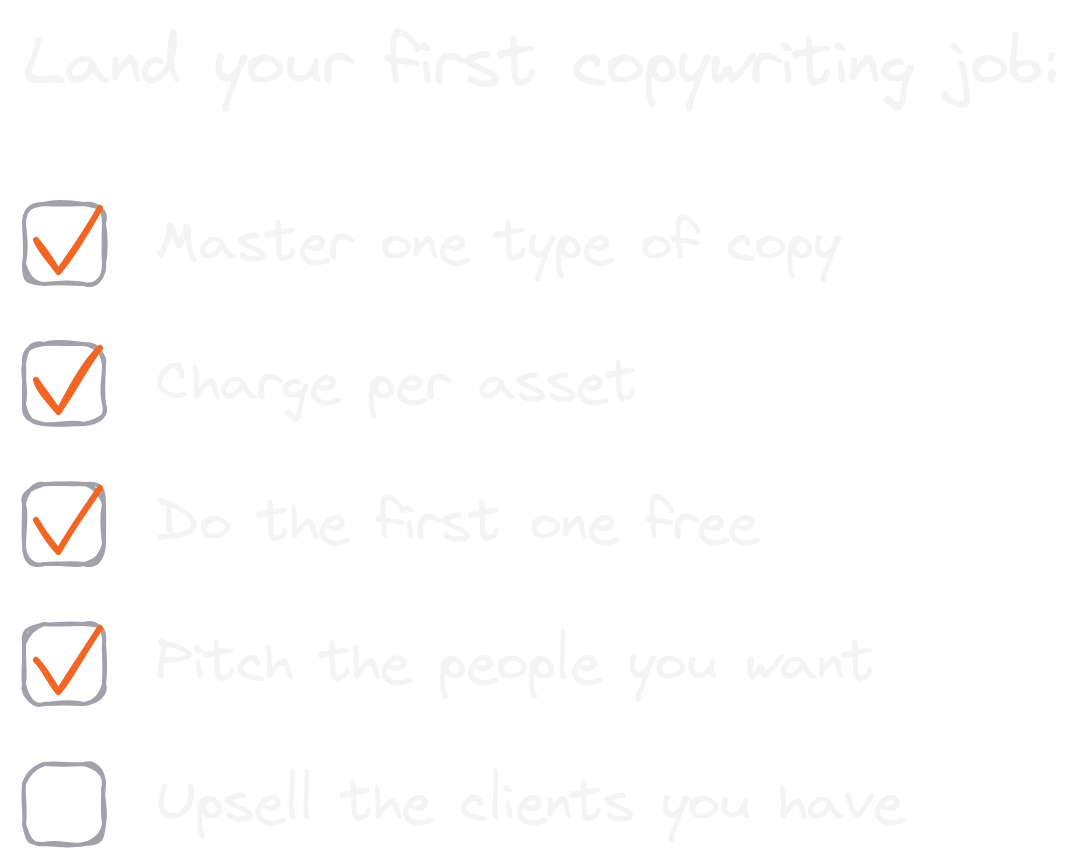
It was the best career decision I've made. But freelance copywriting rewards different habits than a salaried job. These are the 5 steps I'd follow again (I first wrote them up as Freelance Writing 101):
- Master one type of copy. The biggest mistake freelance writers make is spreading themselves thin: blogs, newsletters, website copy and marketing materials all at once. Pick one. Master it. Do nothing else.
- Charge per asset. Price each piece by the result it delivers. One sales email is $X. One landing page is $Y.
- Do the first one free. I went from nobody to ghostwriting for millionaires and billionaires by working for them for free first. Prove you can deliver the result, and the money follows.
- Don't wait for freelance copywriting jobs to find you. DM the people you want to work for. Send cold emails. Tap your network. Offer to do the first one free.
- Upsell the clients you have. There are two ways to grow: more clients, or more work from the clients you already have. The second is much easier.
Job boards like Upwork list freelance copywriting jobs too. But the fastest way I know to get clients is to show your copy where they'll see it.
Write online every day.
Every post you publish is a small piece of copy with a measurable result: did people stop, read and act? Dickie calls it the best way to improve your copy skills, and his advice to new copywriters is to start as a ghostwriter on LinkedIn. That's how he made his first $10,000 online while still working 40+ hours a week. A year of daily posts is also a portfolio, which is the thing I didn't have when I started.
That's how you land your first copywriting job.
FAQ
What's the difference between copywriting and content writing?
Content teaches or entertains and works when people read it. Copywriting asks for one action and works when people take it. Content writing, ghostwriting and copywriting share the same fundamentals, but they pay differently: copy sits closest to the sale.
Is copywriting the same as copyright?
No. Copywriting is writing words that sell. Copyright is the legal right to your creative work. They only sound alike.
Do you need a degree to get a copywriting job?
No. Clients and hiring managers care about your samples more than your diploma, and freelancers rarely get asked about school at all. A month of daily posts gives you samples to show.
Can AI do copywriting?
AI can draft copy fast, but it doesn't know your customer, your offer or what has worked for you before. Use it for first drafts and variations, then edit like a copywriter: one reader, one action, no claims you can't back up. Our chapter on why AI doesn't sound like you goes deeper.
What are SaaS copywriting examples?
SaaS copywriting is the words on a software company's homepage, pricing page, onboarding screens and buttons. Substack's "Make money doing the work you believe in" and beehiiv's "Get started for free. No credit card required." (examples 3 and 4 above) are both SaaS copy.