What Is A Ghostwriter? Ghostwriting Explained, And How To Become One In 5 Steps
Nicolas ColeNovember 16, 2026
What is a ghostwriter? A writer whose words go out under someone else's name. Learn what ghostwriting is, what it pays and 5 steps to land your first client.
A ghostwriter is a writer who writes for someone else, and that person publishes the work under their own name. Ghostwriting is the job: books, speeches, articles, newsletters and LinkedIn posts written for a client who takes the credit.
In 2016, I quit my 9-to-5 job and started writing for business owners at $250 an article.
A close friend didn't believe me. "Couldn't they just hire some freelance writer on Upwork for $20 an hour?" he asked. Eighteen months later, my agency had 80+ clients and 23 full-time employees, and we were charging $2,500 an article. None of those articles had my name on them.
That's ghostwriting. Since then, I've made $3M+ as a ghostwriter and spent 10,000+ hours writing for over 300 industry leaders: CEOs, Olympic athletes, Silicon Valley founders and Grammy-award-winning musicians. Below is what a ghostwriter is, what the word means, what ghostwriters write and earn today, and the 5 steps I'd take to land a first client. (If you'd like to build your own audience first, here's how to become a content creator on LinkedIn. If your writing needs work before anyone pays for it, start with 15 writing tips for beginners. And when you're ready to write, open the Typeshare editor. You do the writing; the robots do the rest.)
What Is A Ghostwriter?
A ghostwriter is a writer whose words go out under someone else's name.
The client brings the ideas, the stories and the expertise. The ghostwriter turns them into writing that sounds like the client: a book, a speech, a newsletter, a LinkedIn post. Then the client publishes it as their own, and the ghostwriter's name appears nowhere (sometimes in the acknowledgments, usually not at all).
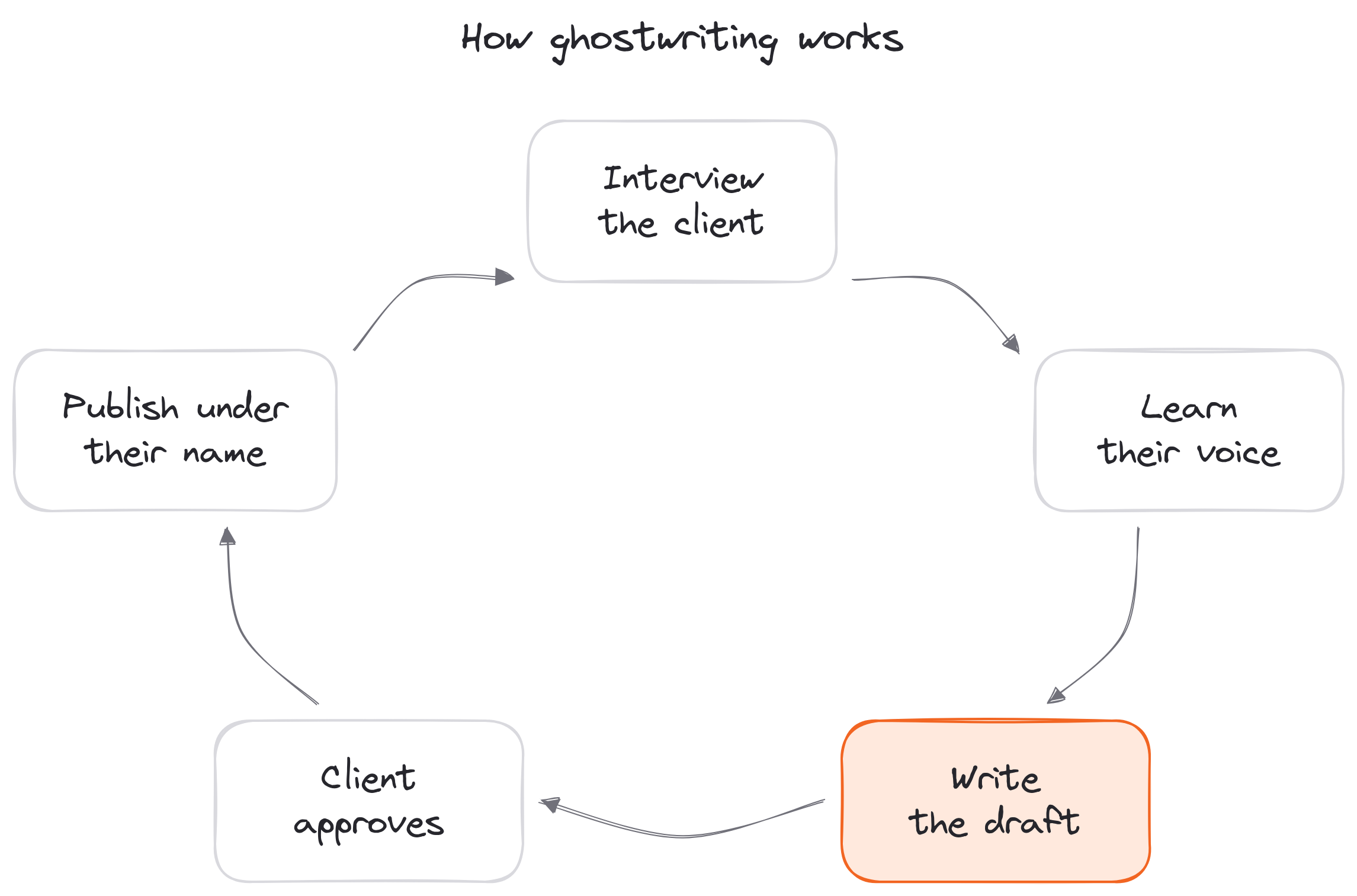
Here's what a ghostwriter does on a typical project:
- Interviews the client. They pull out the stories, opinions and lessons only the client has.
- Learns the client's voice. How they talk, the words they use, the words they'd never use.
- Writes the draft. In the client's voice, about the client's ideas.
- Gets it approved. The client edits, signs off and publishes.
- Does it again. Much of ghostwriting today is ongoing: a week of posts or a newsletter, every week.
A ghostwriter is different from an editor, who improves writing someone else already did. And they're different from a copywriter, who writes for a brand. (Here's what copywriting is, if that's the path you're weighing.) A ghostwriter writes as a person.
That's what a ghostwriter is: the writer behind someone else's name.
Ghostwriter Meaning: What Is Ghostwriting, And Is It Honest?
The name says it all: a ghostwriter is in the room, but nobody sees them.
So the ghostwriter meaning is the invisible writer, and ghostwriting is the work they do. People spell it three ways ("ghostwriter," "ghost writer" and "ghost-writer"), and all three mean the same job. The verb is "to ghostwrite": "She ghostwrites for three founders."
The first question most people ask is whether ghostwriting is dishonest. Here's how I think about it, after writing for hundreds of clients:
- The ideas are the client's. A good ghostwriter finds a founder's opinions through interviews and writes them down clearly.
- The client signs off on every word. Nothing goes out until they've read it and agreed with it.
- Busy people have always had help. Leaders have speechwriters. Executives have communications teams. A ghostwriter is the same idea for one person's posts or book.
- The line is the client's to draw. Some say "written with help." Others never mention it. Both are common.
The one place it isn't fine is where the rules say so: a student turning in a ghostwritten essay, for example. School work is meant to show what you can do on your own, and having someone else write it is cheating.
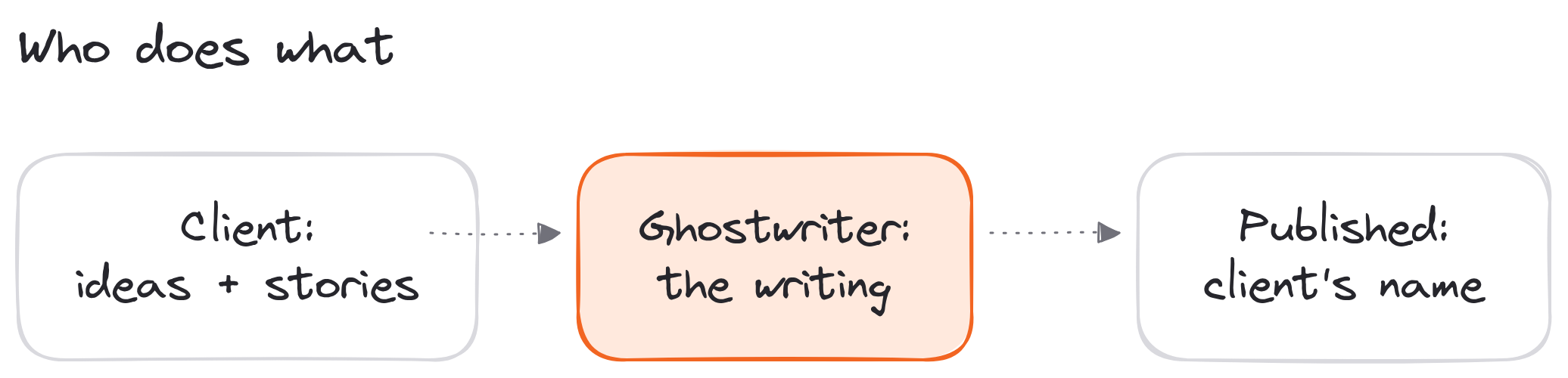

That's the ghostwriter meaning: the ideas are the client's, and the writing is the ghost's.
What Ghostwriters Write: From Books To LinkedIn Posts
When most people hear "ghostwriting," they picture a celebrity memoir.
Books are still part of the job. Much of the work today is shorter and more frequent. Founders and executives know they should be posting online. They don't have the time, or they don't know how to write in a way that gets read. So they hire someone who does. When I started, I wrote articles for business owners. If I were starting over today, I'd become a LinkedIn ghostwriter.
Here's what ghostwriters write for clients now:
- Social posts: LinkedIn and X posts for a founder, an investor or a business owner, usually several a week.
- Newsletters: a weekly email that teaches the client's readers something and keeps the client top of mind.
- Email courses: a short series of emails that turns website visitors into subscribers.
- Thought leadership articles: long pieces that show a company knows its field.
- Books: memoirs, business books and the occasional novel.
- Speeches and talks: keynotes, conference talks and wedding toasts.
The common thread is that the client has something to say and no time to write it. A founder who has spent 20 years building a company has a hundred stories in their head. The ghostwriter's job is to get them out, one post at a time.
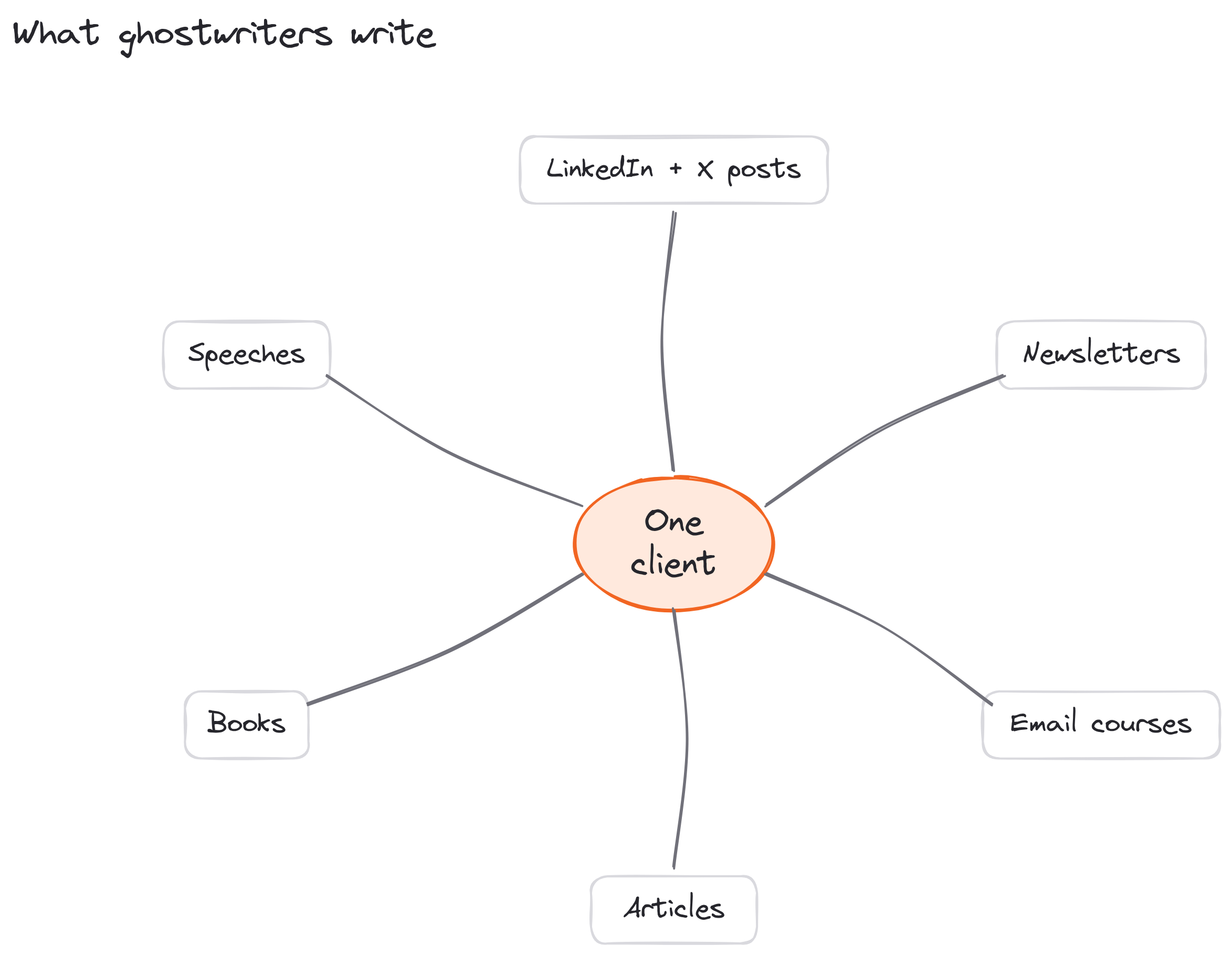
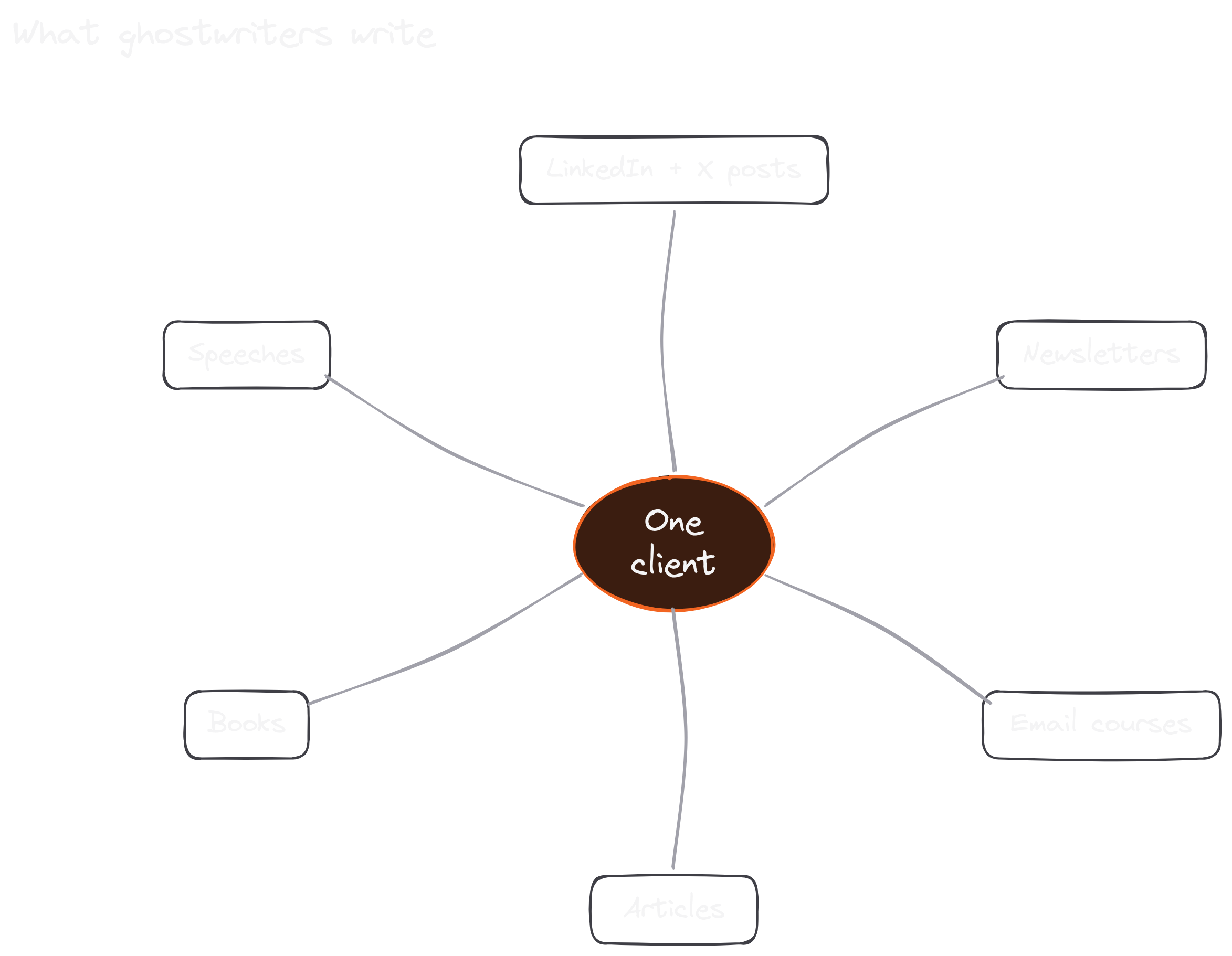
What ghostwriters write now runs from books to LinkedIn posts, and LinkedIn is where I'd start today.
What Ghostwriters Earn: Ghostwriting Rates
Ghostwriting pays better than most writing jobs, because clients pay for the outcome.
A ghostwriter sells a founder's reputation, written for them every week. That's why most of the rates below are monthly. Here are the figures Dickie and I have published:
- LinkedIn posts (3 to 4 a week): at least $3,500 a month (Cole)
- Social media content: $3,000+ a month (Dickie)
- A weekly newsletter: $3,000 to $10,000 a month (Dickie)
- An educational email course: $5,000+ (Dickie)
- One article: $250 at first, $2,500 later (Cole)
My own first months show how fast it can move. In my first month after quitting my full-time job, I made over $10,000 ghostwriting, more than double my old salary. The next month I made $20,000. What changed was the title. I stopped calling myself a "freelance writer" and started calling myself a "Premium Ghostwriter," and the clients who called me were ready to pay for it.
As Dickie puts it, every writer should have a ghostwriting business that makes $10k a month. A few clients on monthly retainers get you there.
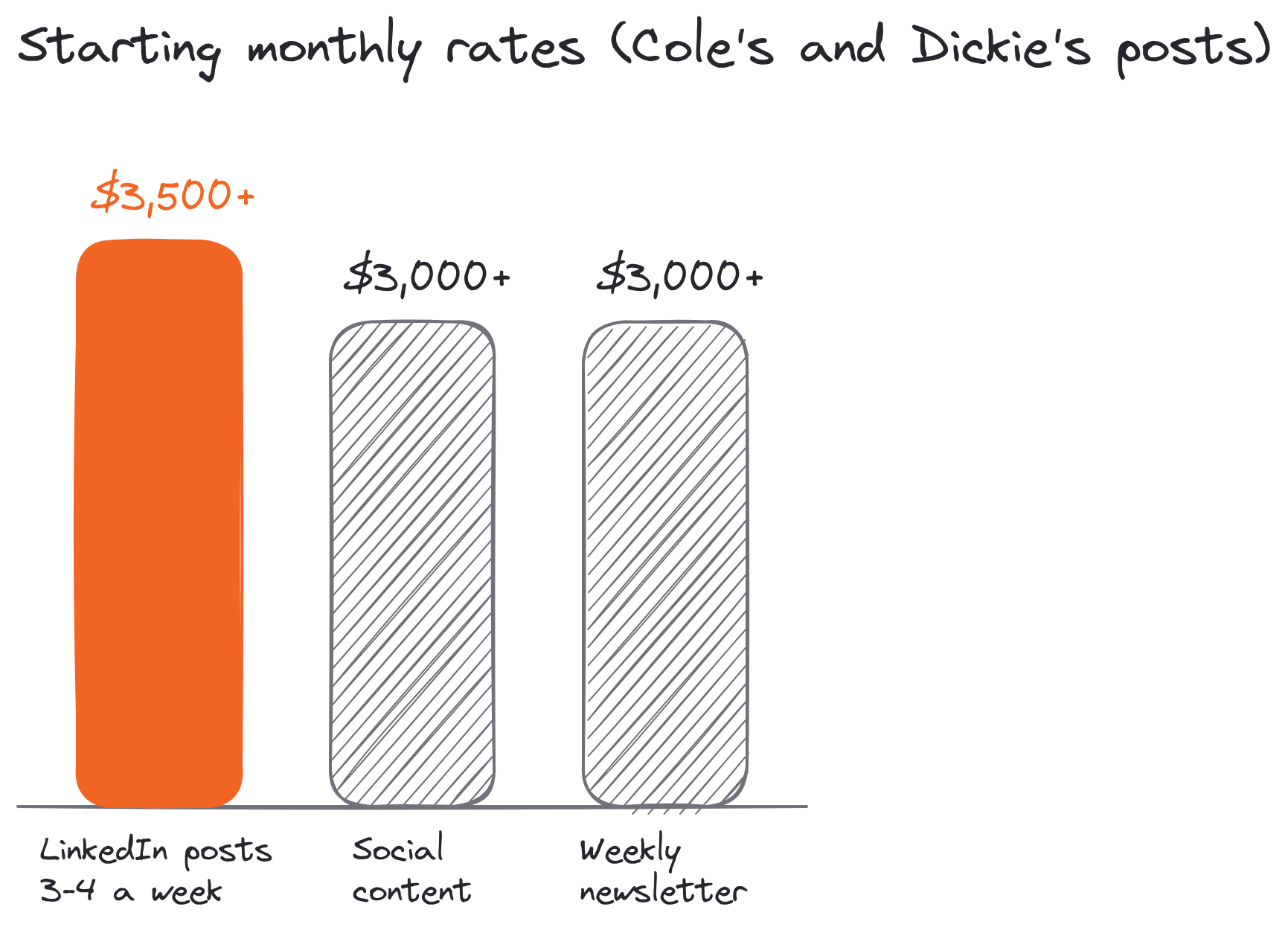
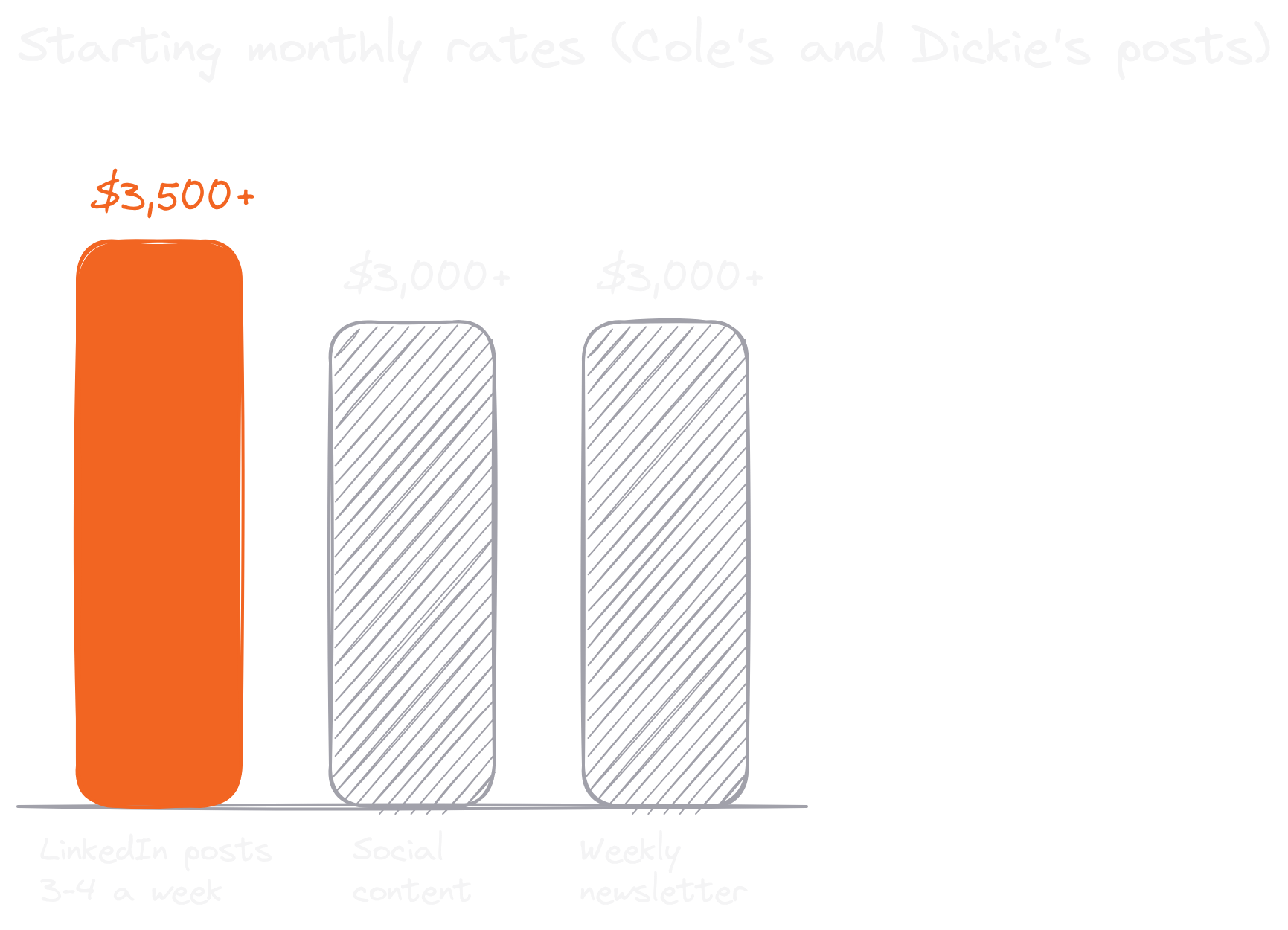
What ghostwriters earn comes down to what they sell: an outcome, every month.
How To Become A Ghostwriter In 5 Steps
You don't need an audience, a portfolio or years of experience to become a ghostwriter.
I started with none of those. What I had was a clear way to describe what I did and the nerve to keep following up. Today, these are the 5 steps I give anyone who wants to land a first LinkedIn ghostwriting client:
Step #1: Say Exactly What You Do In Your Bio
A client should know what you do in one glance. "Writer" tells them nothing. "I ghostwrite LinkedIn posts for B2B founders" tells them whether to message you. Put it in your LinkedIn headline, the line under your name, because that's what shows up next to every comment you leave.
Step #2: Be Your Own Case Study
Before anyone pays you to write their posts, write your own. Post on LinkedIn a few times a week about what you know. Every post shows a future client how you'd write for them, and a post that does well becomes your proof.
Step #3: Make A List Of "Leaks" And "Faucets"
This is how I found my first clients without cold pitching strangers. A leak is someone who needs a ghostwriter right now. A faucet is someone who knows people who do. Go through your phone contacts, your LinkedIn connections and everyone you've worked with, and mark each one. One of my first clients came through a chain of four people.
Step #4: Pitch In Public
Post about the work itself. Share a before-and-after of a post you rewrote, a lesson from a client or what you're offering. People who'd never answer a cold message will raise their hand under a public post.
Step #5: Follow Up (Till They Call The Cops!)
Many clients don't say yes to the first message. They're busy, which is the reason they need you. Follow up until you get a clear "No thanks" or "Sure!" A polite third message often does the work.
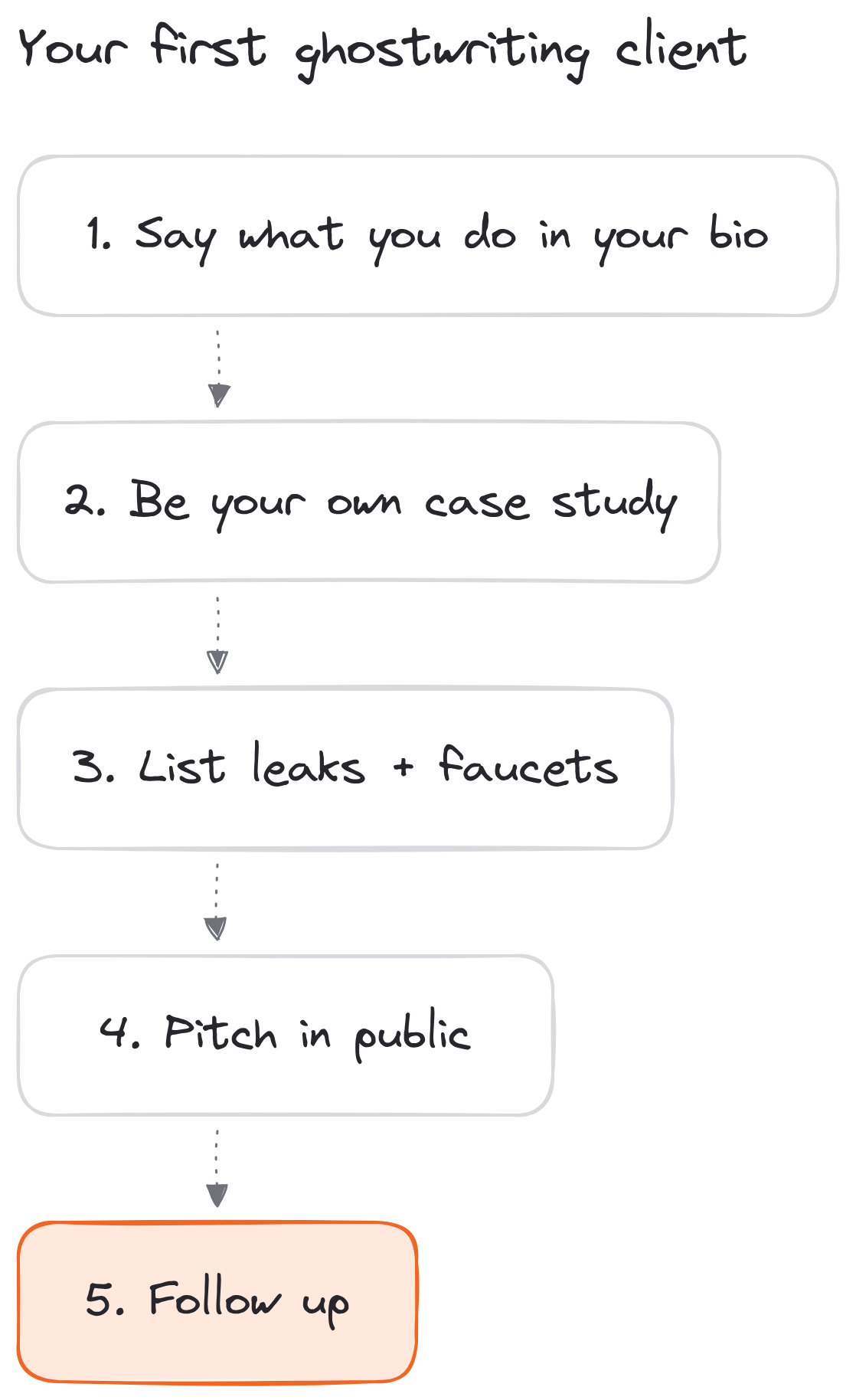
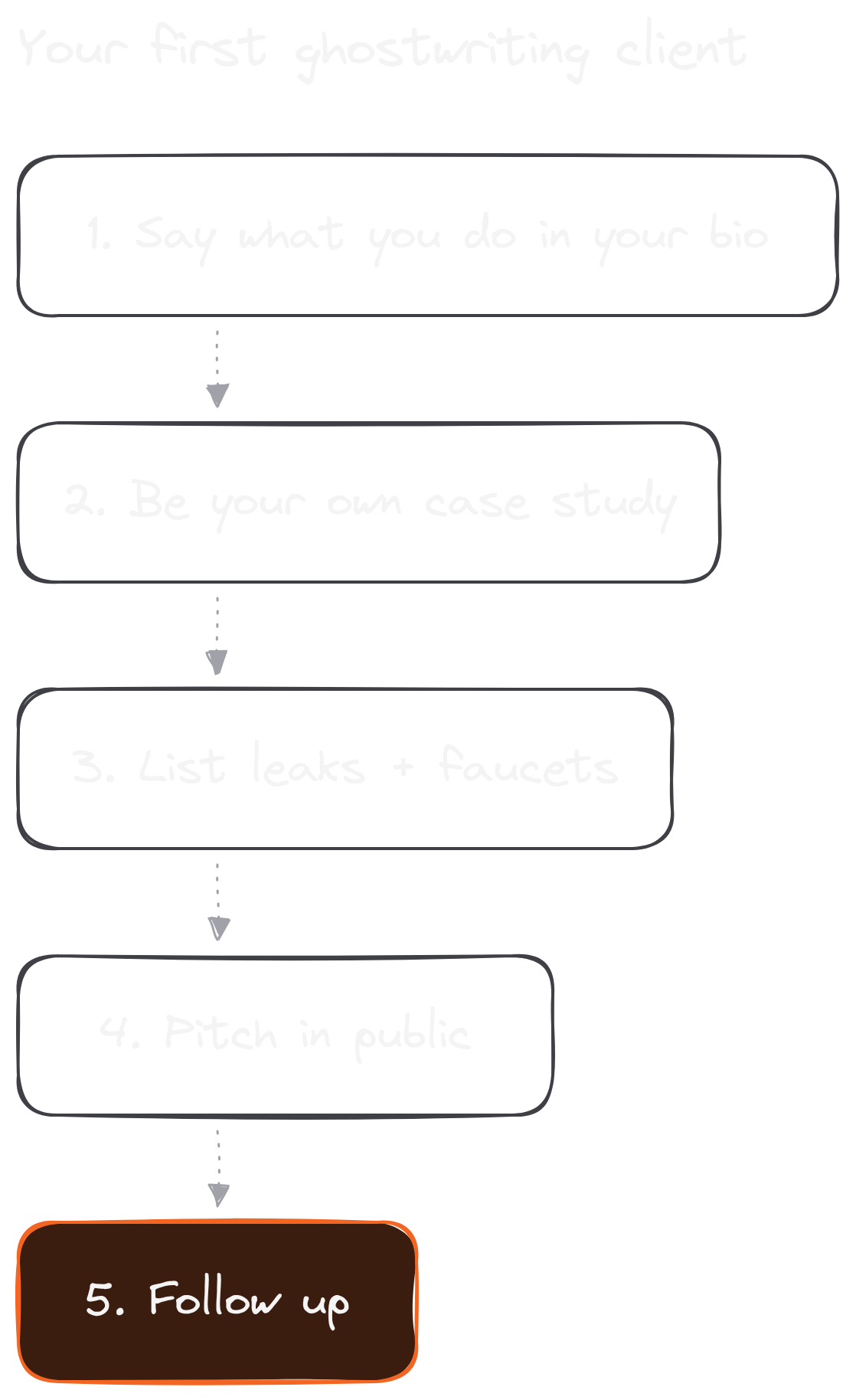
That's how to become a ghostwriter: say what you do, show it, and ask until someone says yes.
The Tools Ghostwriters Use For Each Client
Once you have a few clients, the hard part changes from finding work to keeping it straight.
Every client has their own voice, their own accounts and their own schedule. Write for 3 founders and you're juggling 3 sets of logins, 3 queues and 3 ways of talking. Mix them up once, and a post goes out on the wrong account. Here's what a ghostwriter needs for every client:
- A separate space per client, with their accounts, drafts and queue apart from everyone else's.
- A record of their voice, built from what they've already written, so every draft sounds like them. (Here's how tone of voice works.)
- A way for the client to review, so nothing goes out they haven't approved.
- A schedule, so posts go out on time while you write next week's.
This is what workspaces in Typeshare are for. Each client gets a workspace with their own connected accounts, drafts, queue and analytics. Pick Separate Brain when you create it, and the workspace gets its own Digital Brain. It learns only from that client's writing, so the drafts sound like them and never like you. You can invite the client to review, and people you invite don't pay. Each workspace is $39 a month on top of the All-Access plan.
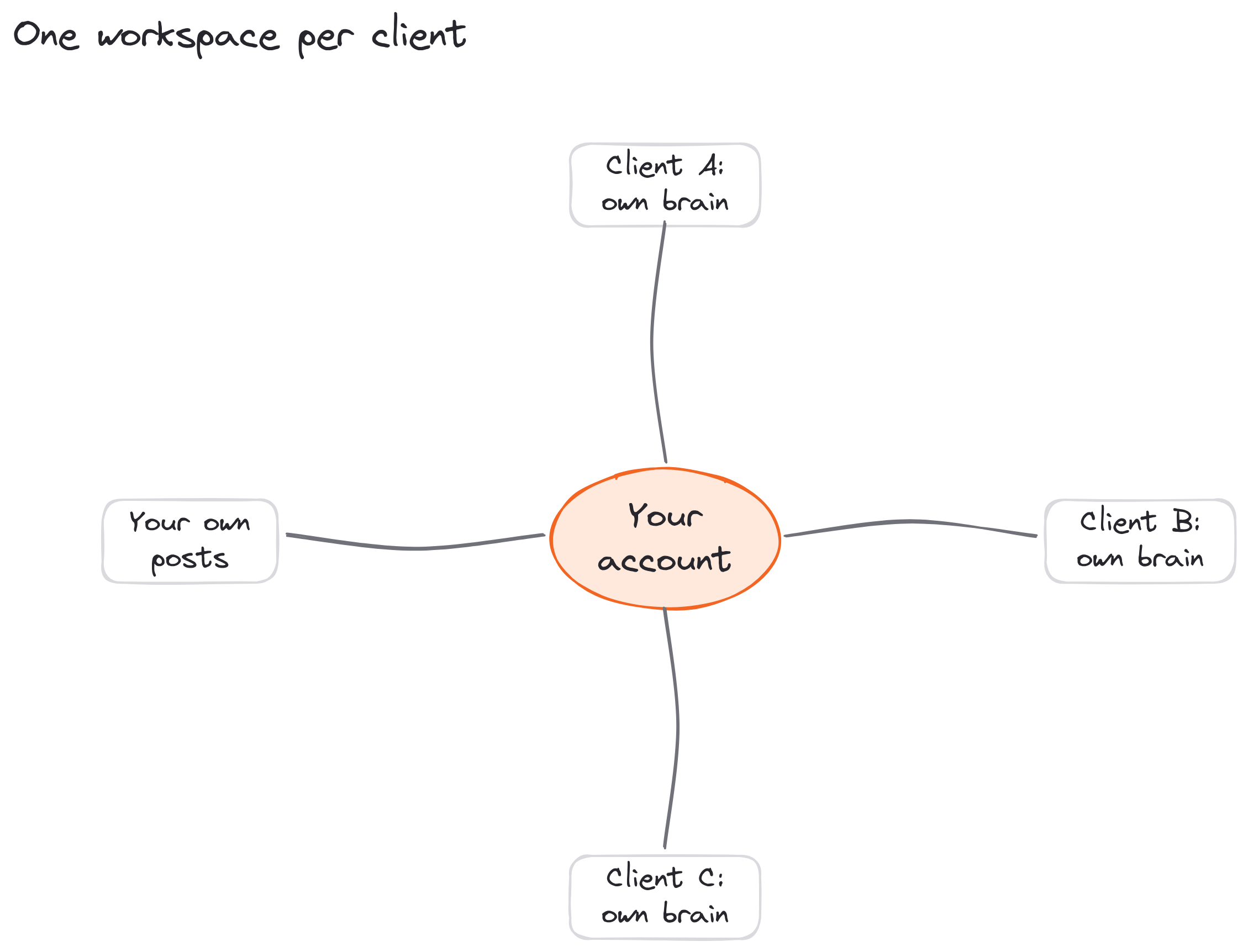
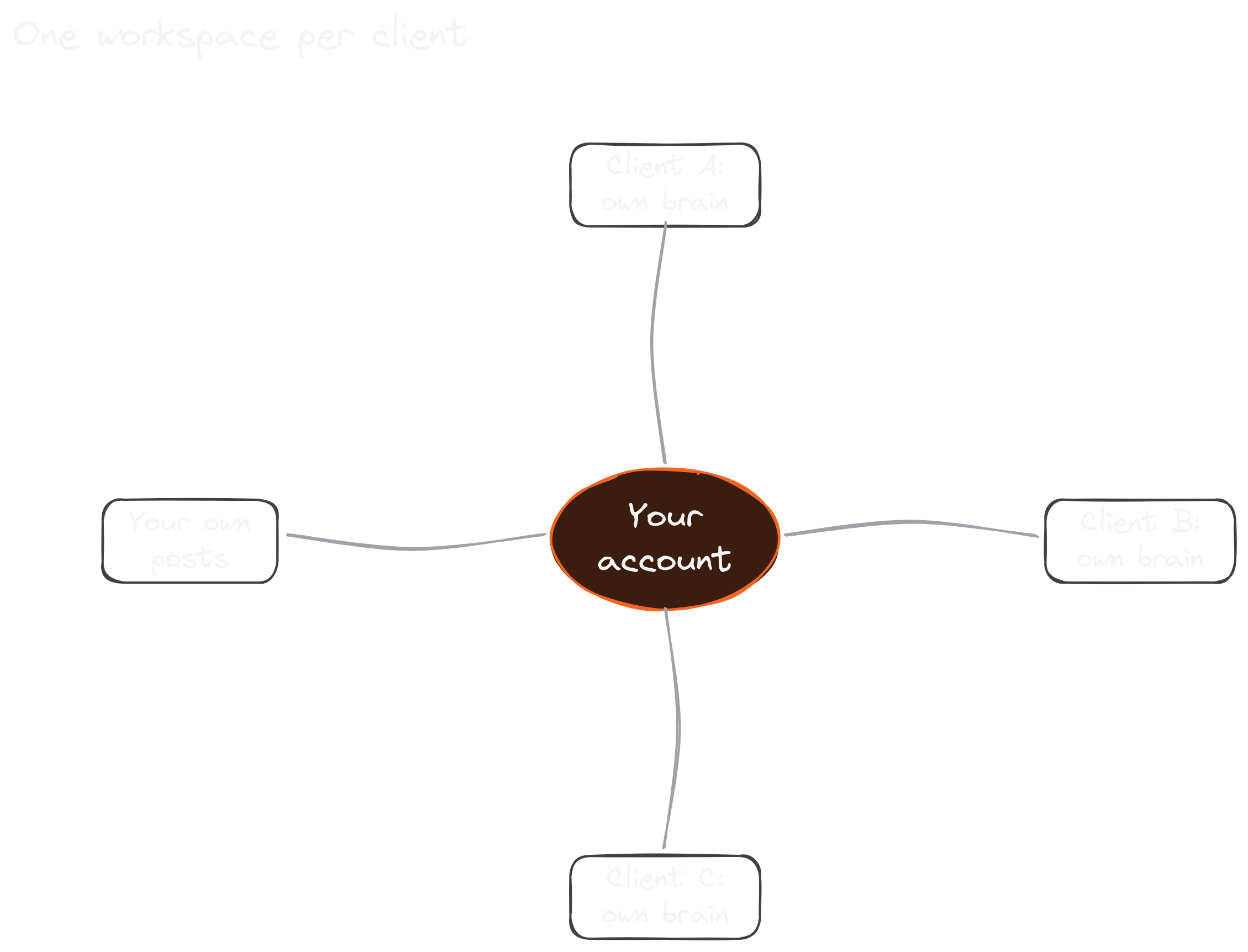
The right tools keep each client's voice, accounts and schedule apart, so you can take on the next one.
FAQ
Who is "the ghostwriter"?
The ghostwriter is the writer behind a piece that goes out under someone else's name. If you searched for a film or TV show with that title, this page is about the job.
Is ghostwriting legal?
Yes. Ghostwriting is a normal writing service: the client pays for the work and publishes it as their own, usually under a contract that says so. The exceptions are places with their own rules, such as school assignments, where turning in someone else's work breaks the honor code.
Do ghostwriters use AI?
Many do, for the slow parts: turning interview notes into a first draft, finding post ideas or matching a client's voice. The ideas, the stories and the final edit still come from the client and the ghostwriter. In Typeshare, a client's Digital Brain learns from their own writing, so drafts start in their voice.
Do you need experience to become a ghostwriter?
No. I started ghostwriting with no clients and no network. Start by writing your own posts (Step #2), then use them as your portfolio.
How much does a ghostwriter cost?
For ongoing LinkedIn posts, at least $3,500 a month for 3 to 4 posts a week. A weekly newsletter runs $3,000 to $10,000 a month. Books and speeches are priced per project.