What Is Thought Leadership? Definition, 7 Examples, And A Strategy That Brings Clients To You
Nicolas ColeNovember 15, 2026
What is thought leadership? A plain definition, 7 examples of thought leadership content and a 5-step strategy that brings clients to you.
Thought leadership is sharing what you know and think about your field, publicly and consistently, until people follow you to hear what's next. It earns their trust before you ever pitch them.
"So, I looked you up online before this call, and I was really impressed by what I saw."
That's how almost every sales call I had at Digital Press started. Cold leads, warm leads, direct introductions: they all Googled my name first. They found hundreds of articles I'd written on the exact subjects we were about to discuss. By the time we said hello, the hardest part of selling was done.
They already trusted me.
That's thought leadership at work, and it's the business I was in. Digital Press wrote thought leadership articles for founders and executives, and I've ghostwritten for 300+ industry leaders. My own writing brought in over $1 million in revenue for the agency.
So here's what thought leadership is, 7 examples of what it looks like, and the strategy I'd use to start. It all comes down to writing, so it helps to know how to become a content creator, how to tell a story people remember, and where you'll write every week (I use Typeshare). You do the writing; the robots do the rest.
Question #1: What Is Thought Leadership? (The Thought Leadership Definition)
Thought leadership is sharing what you know and think about your field, in public, consistently enough that people start following you for it.
Here's my own definition of a thought leader. Someone is at the forefront of their industry the moment I want to keep tabs on what they're doing and saying. I follow them because I want to follow where they're headed: the things they're thinking about, and the insights they find faster than I do. They tell me what I should know before I think to look it up.
How do you become that person?
You think. You share. And you do it consistently.
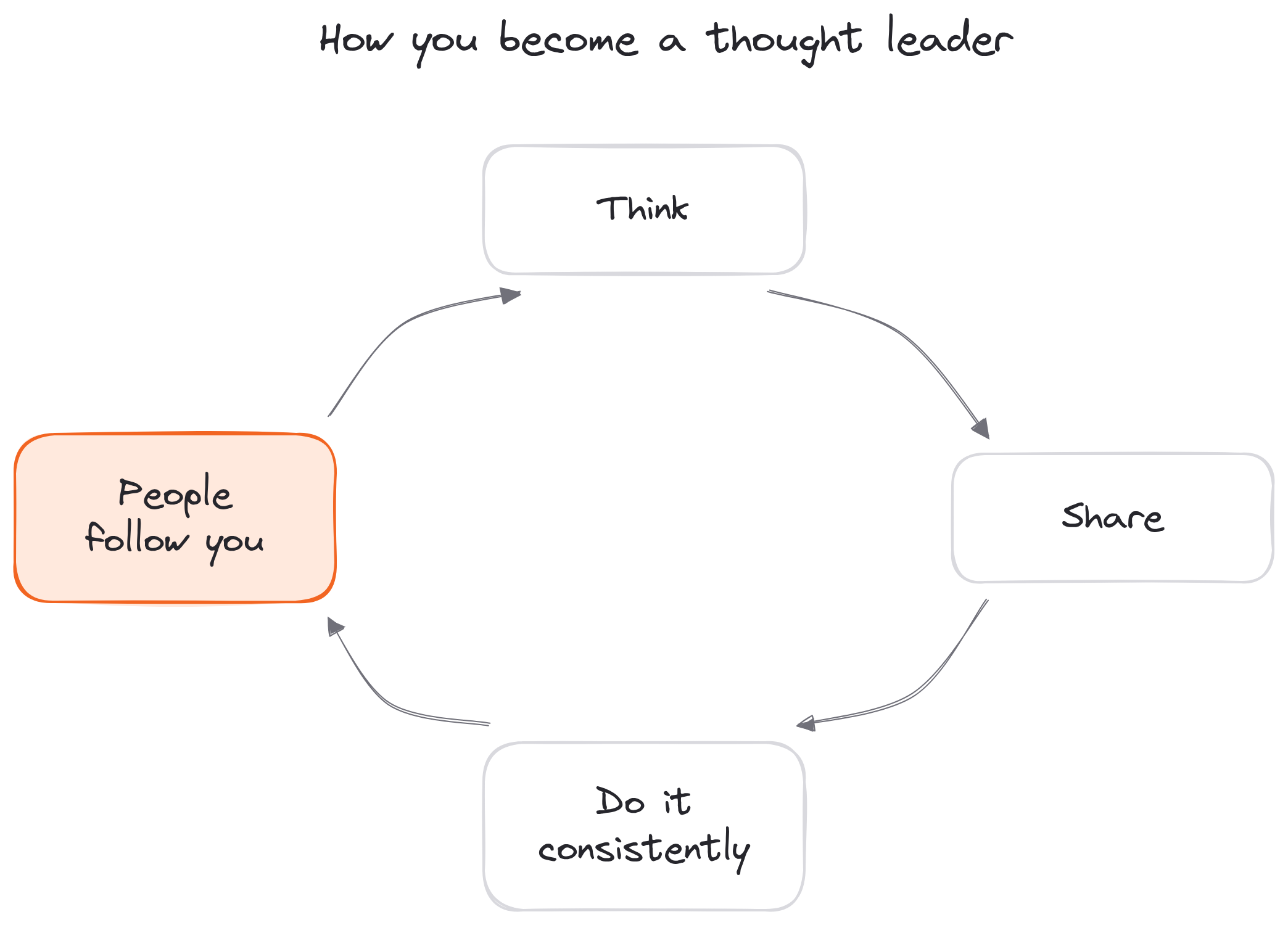
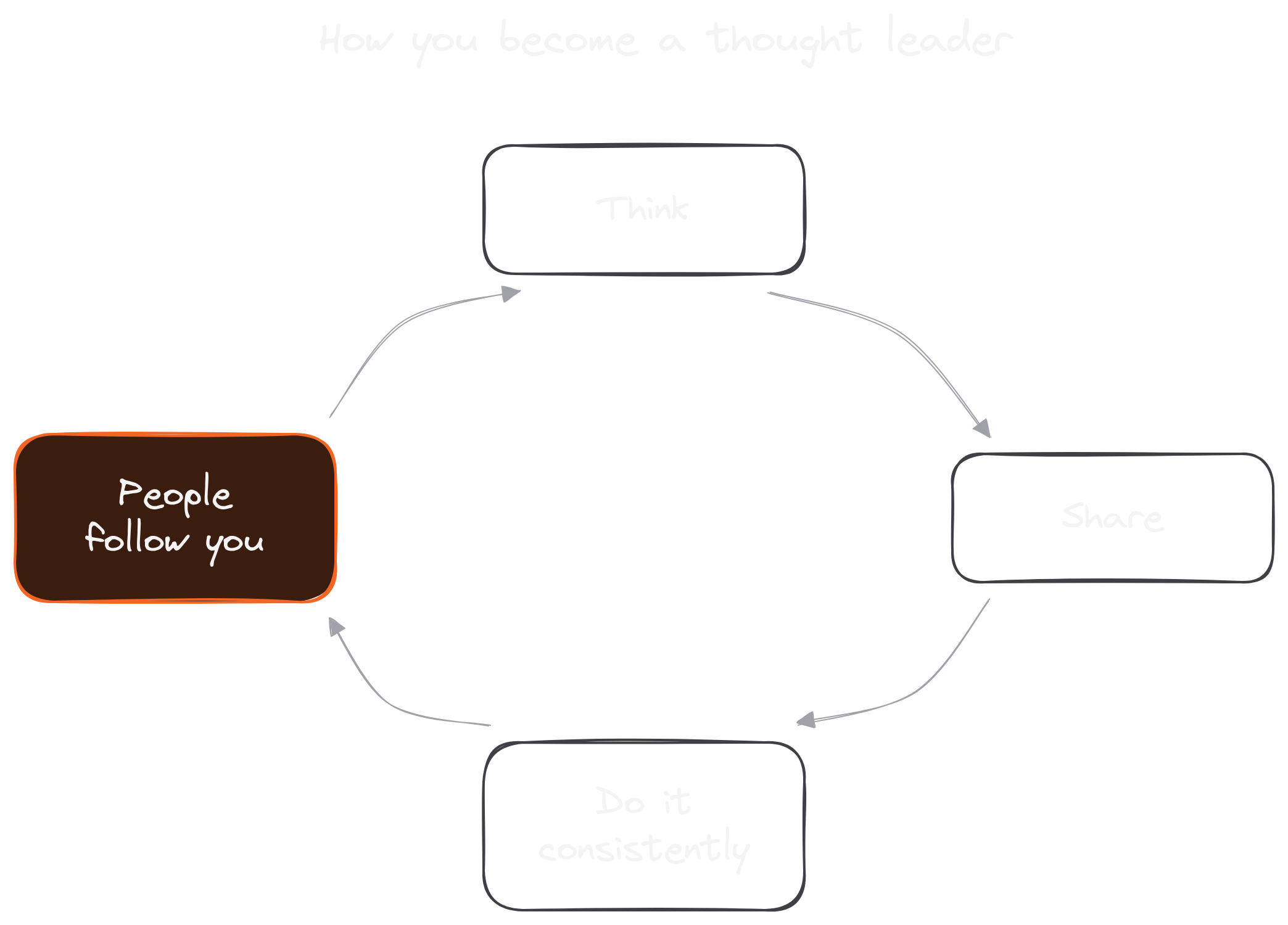
Notice what's missing from that definition. No title, no badge, no column in a famous magazine. People don't follow columns or platforms. People follow people, and plenty of people cram more value into one post than most "business leaders" with a column ever do.
So thought leadership is a habit, measured by one thing: whether people want to hear what you'll say next.
Question #2: Why Does Thought Leadership Work?
Thought leadership flips the equation.
Without it, you have to go find every opportunity yourself: "Hey, do you want to write about me?" "Can I get 15 minutes of your time?" With it, opportunities come to you. I once wrote a piece about why founders should share their knowledge first-hand. Within a week, several publications had republished it, and their media teams reached out to me.
That's the first benefit: you stop selling yourself.
The second is trust at scale. Imagine an ad that made anyone who saw it trust your company. You'd pay for it. Thought leadership is that ad, and it costs nothing to run. That's why, when founders asked me what return on investment (ROI) to expect, I said the same thing every time: "You reached out to me. That's the ROI."
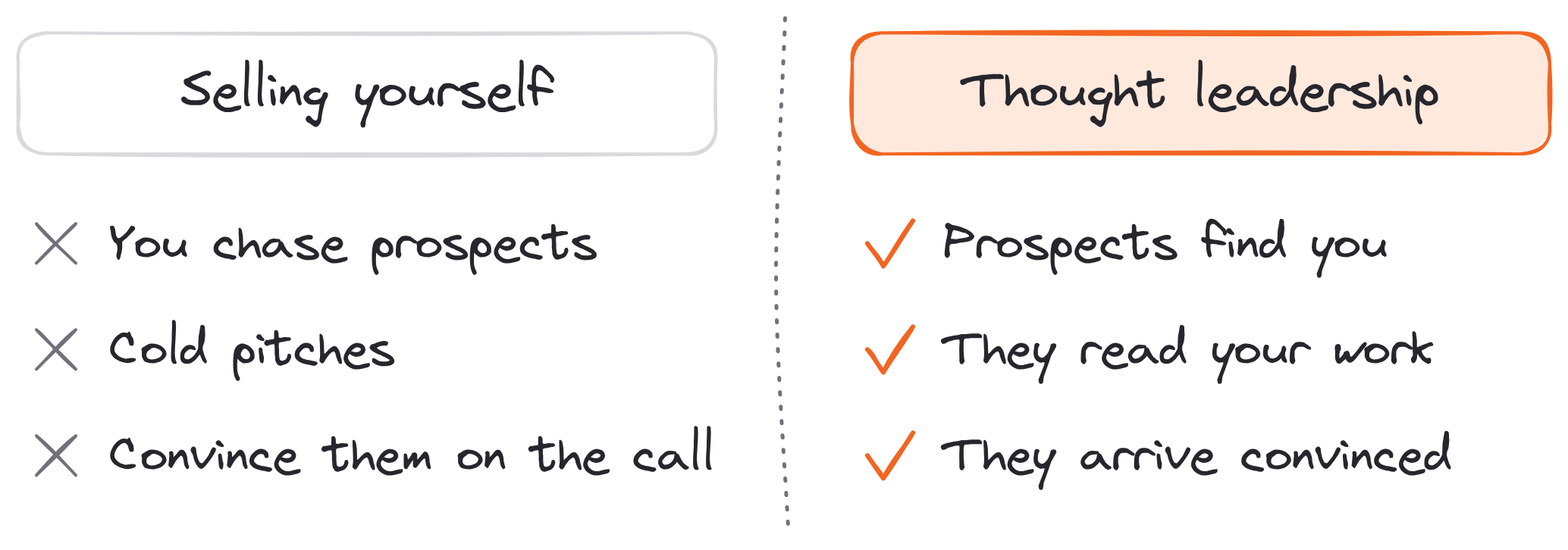
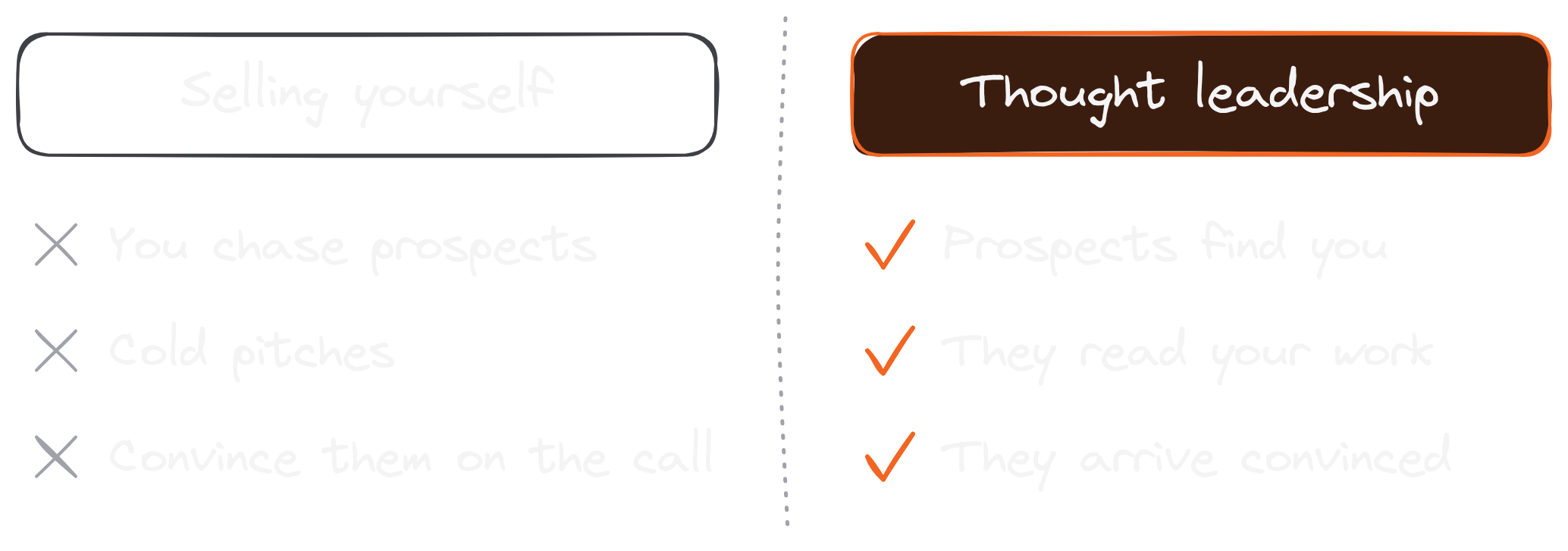
The third benefit is compounding. A post you wrote a year ago can still be what a prospect reads tonight. Every new idea adds to the pile of proof that you know your field.
Thought leadership works because it does the selling before you arrive.
Question #3: What Does Thought Leadership Content Look Like? (7 Examples)
Thought leadership content is any piece that shows how you think, in a form people can read in a few minutes.
White papers and keynotes count, but most of it is short posts written by someone who knows their field. Here are 7 examples of thought leadership content, all real, from Dickie Bush and me:
- A contrarian opinion. I pushed back on the popular advice "you are the niche" with one line: "You are NOT the niche. Your READER or CUSTOMER is the niche." An opinion with a clear position gives people something to agree (or argue) with.
- A framework. After years of ghostwriting, I noticed every client fit one of 5 voices: the Storyteller, the Opinionator, the Fact Presenter, the Frameworker and the F-Bomber. A named framework is easy to remember and easy to share.
- A lesson from your own story. In 2014, I challenged myself to write one Quora answer every day for a year. That story carries a lesson (daily practice compounds) that a list of tips never could.
- Your own numbers. Dickie published where his business's 34,295 organic leads came from in 2025: 55% from LinkedIn, and what he'll change because of it. Real data from your own work is something nobody else can publish.
- A pattern you see in your clients. I shared what our top 5 clients at Digital Press had in common: they'd stuck with it the longest, and they spent their time asking how to share more insight.
- An answer to a question you hear all the time. Founders kept asking me, "When should we start doing Thought Leadership Marketing?" So I answered it in public: "Now. Right now. Forever."
- A call-out of what everyone gets wrong. One of my posts was just a list of contrasts: everybody wants to be a thought leader, but nobody wants to come up with something new to say every single day.
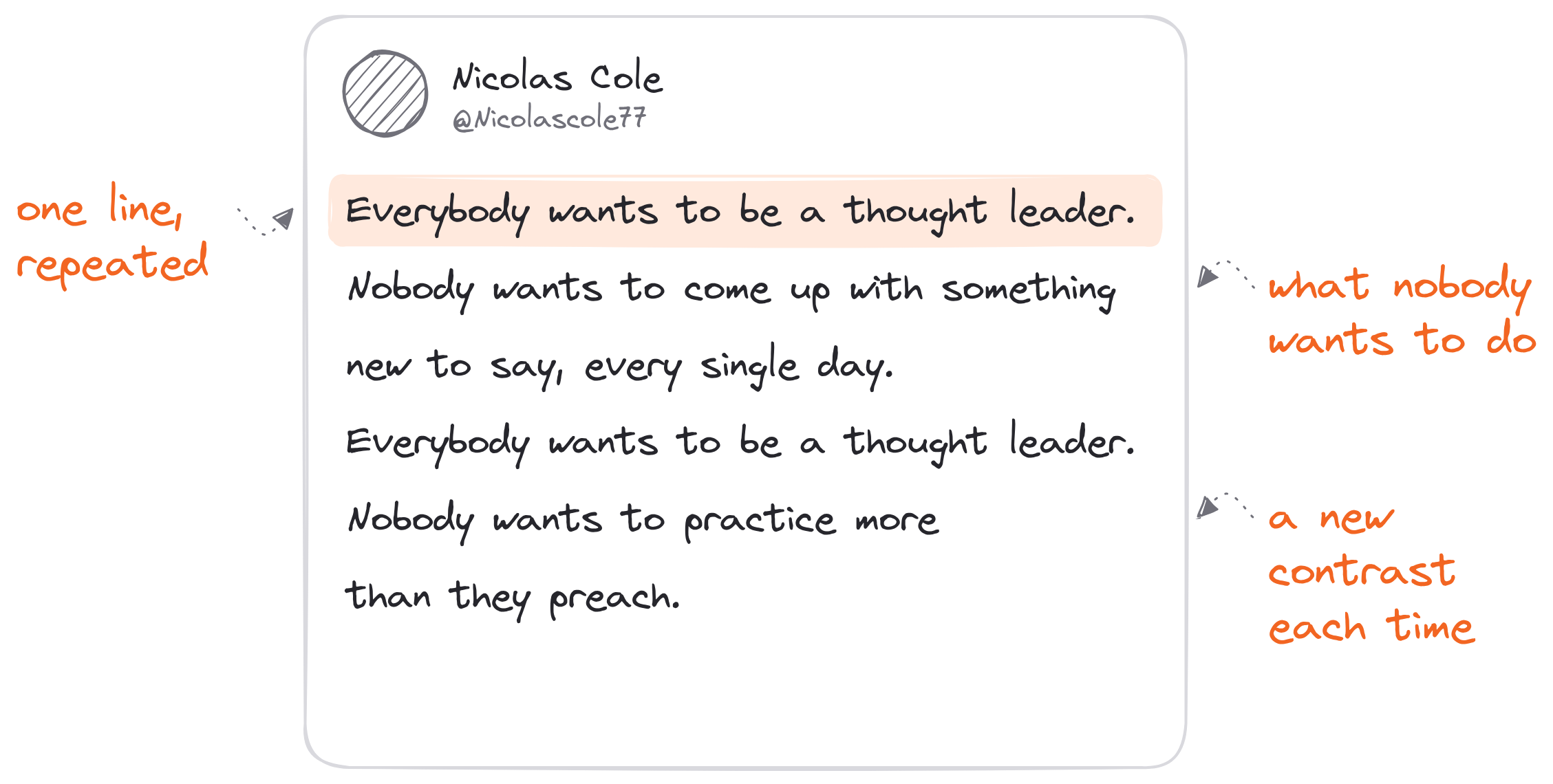
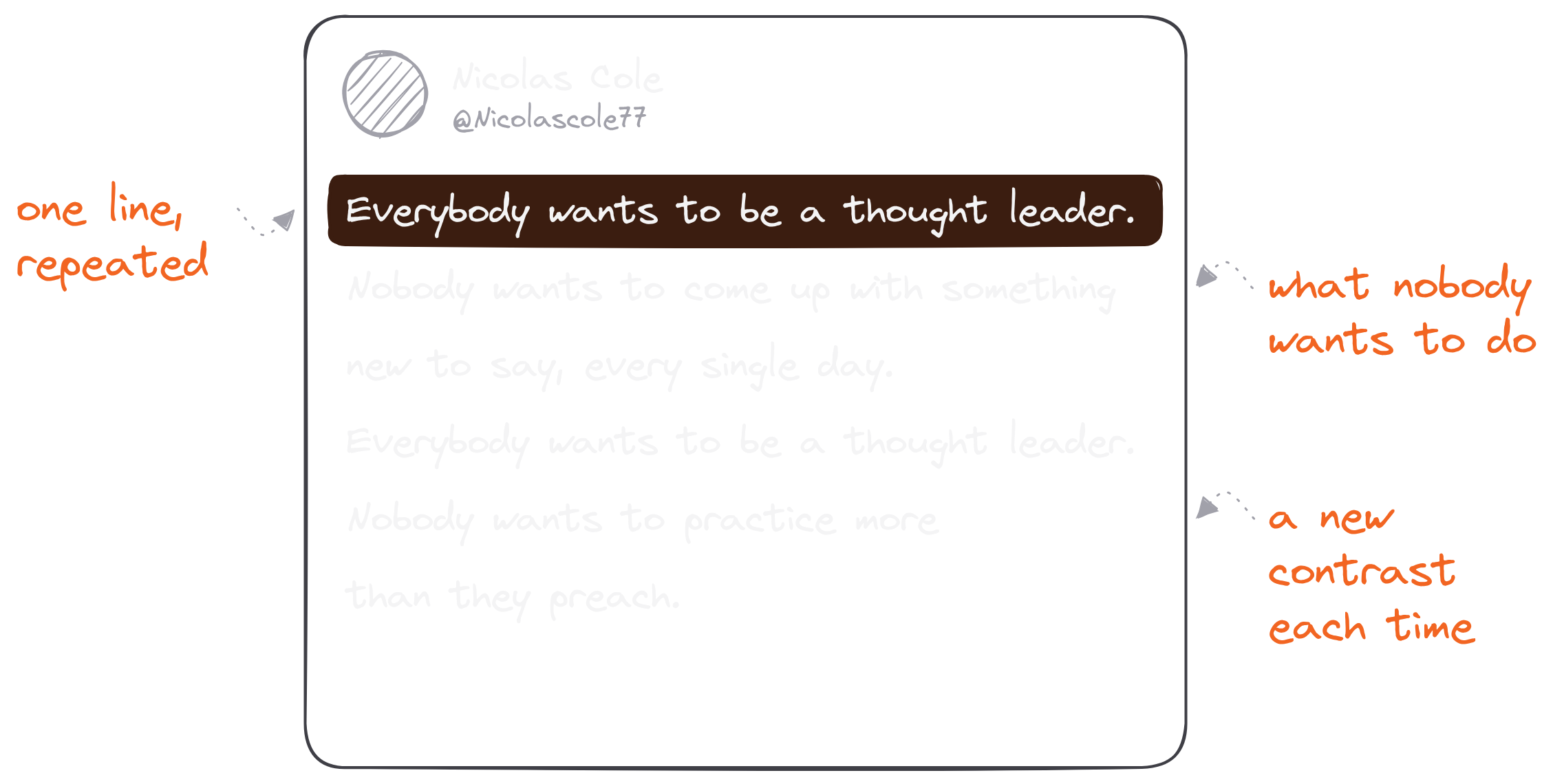
None of them needed a big production. What made each one thought leadership was the idea, and the idea came from years of doing the work.
Good thought leadership content shows people how you think, one idea at a time.
Question #4: How Do You Build A Thought Leadership Strategy?
A thought leadership strategy is a plan for what you'll say, where you'll say it and how often.
Mine fits on an index card. Here are the 5 steps I'd follow:
- Plant your flag. Write one sentence that says who you are, what you do and what you think. Everything you publish should come back to it.
- Pick the reader, then the niche. Choose one reader you want to help and the 3 to 5 topics they care about. You'll write about those topics for years, so pick ones you won't get bored of.
- Pick one main platform. Go where your readers already spend time. For most professionals, that's LinkedIn, which brought 55% of Dickie's 2025 leads.
- Set a schedule you can keep. Three posts a week for a year beats a daily burst that dies in a month. Write in batches and schedule them, so a busy week doesn't break the streak.
- Give it a year. Our best-performing clients at Digital Press stuck with the process for a year or more.
Step 5 is where most people quit.
On day 1 of standing next to your flag, nobody sees you. Keep standing there for a week, two weeks, eight weeks, twelve weeks. One by one, people come and stand by you: "Hey, I was just thinking about that. Thanks for sharing!" Then a small group, then a crowd.
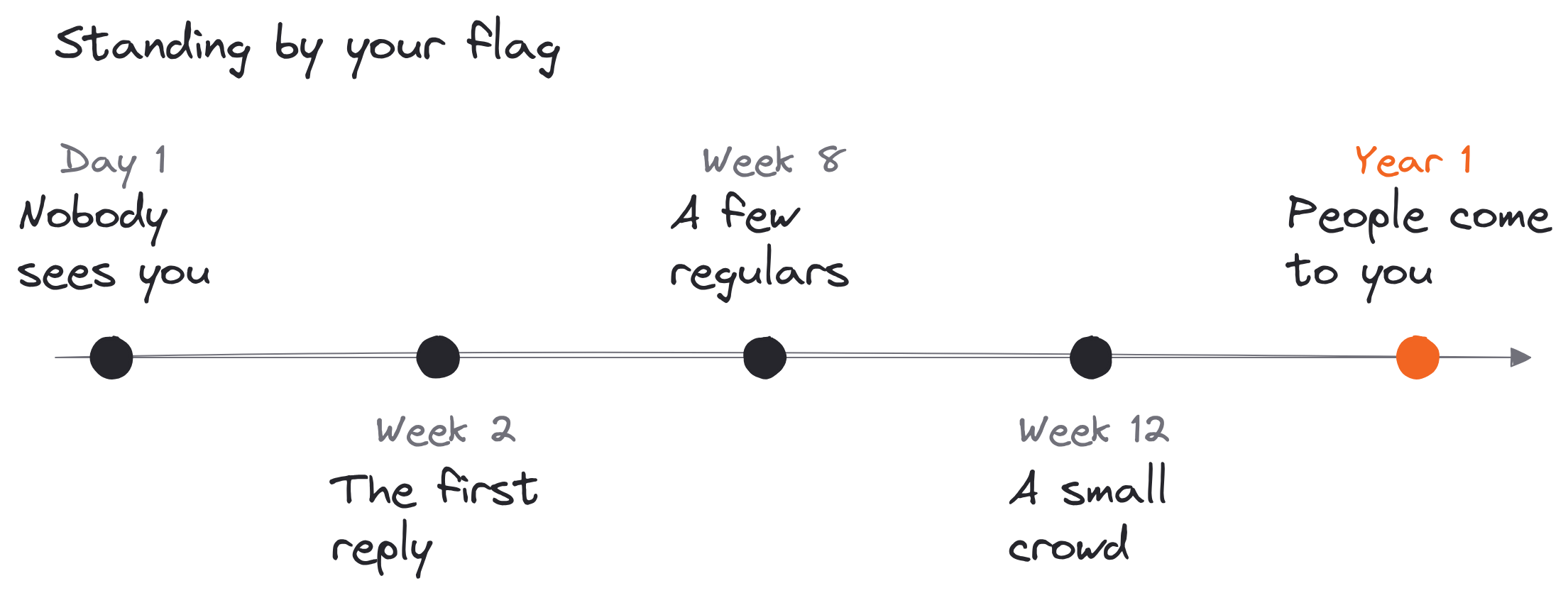
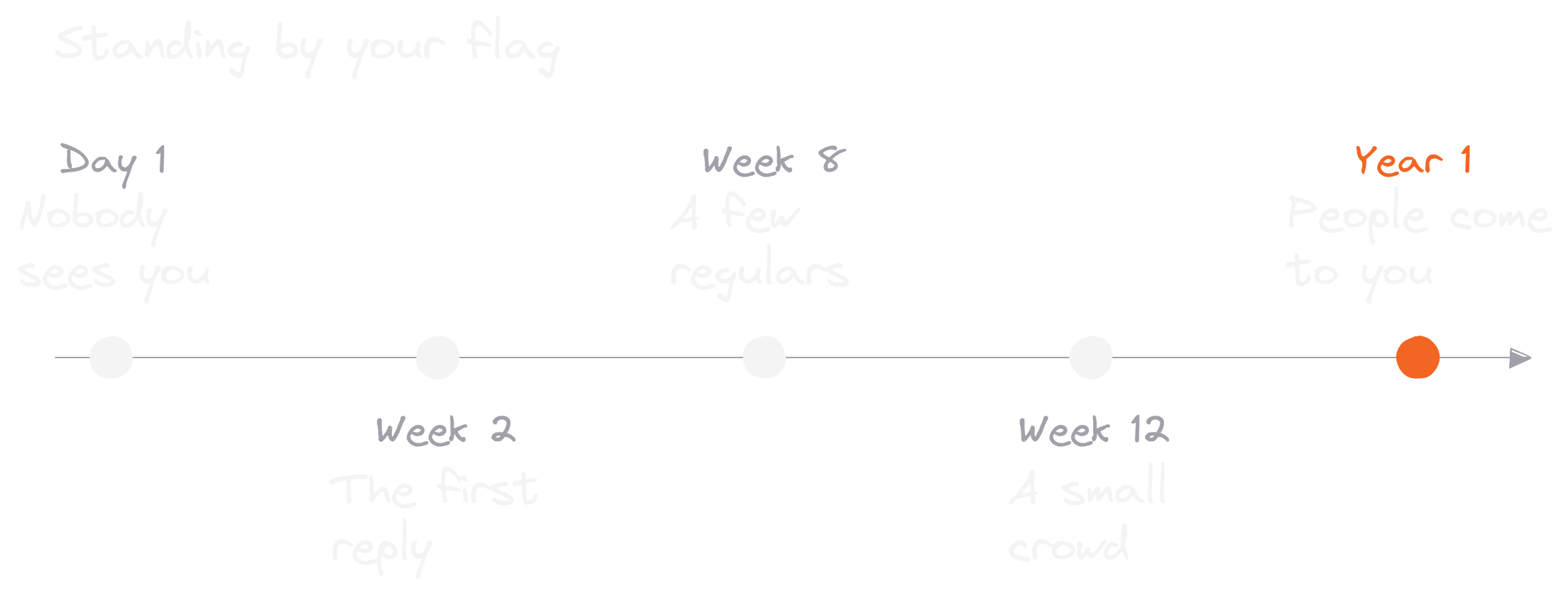
A good thought leadership strategy is one you can keep for a year.
Question #5: How Is Thought Leadership Different From Content Marketing And Personal Branding?
The three overlap, and people use them interchangeably.
Here's how I separate them. Content marketing is a company publishing to attract customers: guides, case studies, a blog. Personal branding is what people find and conclude when they look you up. Thought leadership is the ideas: the original thinking that makes a person (or a company) worth following.
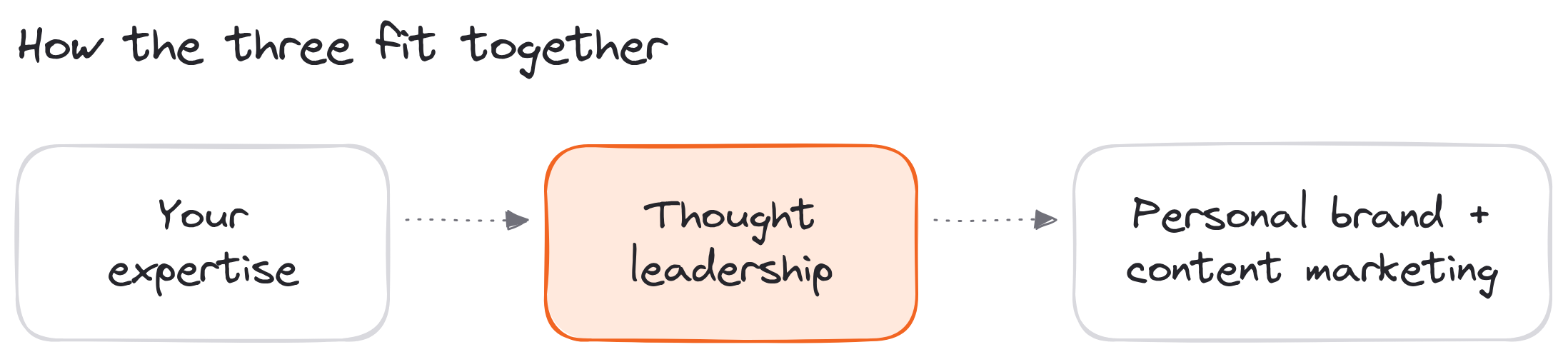

They work best together.
Your thought leadership gives your content marketing something new to say. Your personal brand is where people go to check whether you're worth hearing. And when a founder publishes original ideas, the company's content gets a face people can follow.
Of the three, thought leadership is the part only you can make, because the ideas come from your work.
FAQ
What is an example of thought leadership?
A founder posting the real numbers from their business and what they're changing because of them is thought leadership. So is a consultant naming a framework they use with every client, or answering, in public, the question every prospect asks them. It's an original idea from someone who does the work, shared where their readers will see it.
What makes someone a thought leader?
People want to keep tabs on what they say next. That comes from three things: they know a field deeply, they share original ideas from it, and they do it consistently for a long time.
Is thought leadership just for executives?
No. Executives use it to build trust for their companies, but freelancers, consultants, engineers and creators use it the same way. Anyone a few steps ahead of their reader has something to share.
How long does thought leadership take to work?
Months, usually. Expect the first few weeks to feel quiet, and judge it after a year of steady publishing.
Can AI write thought leadership content?
AI helps most with the drafting. Write down your own insights and stories first, then use AI to shape them. Start from AI's ideas and you'll sound like everyone else using it.