What Is The Importance Of Storytelling? 7 Reasons Stories Get Read, Remembered, And Shared (Plus How To Tell One)
Nicolas ColeNovember 11, 2026
What is the importance of storytelling? 7 reasons stories get read, remembered and shared, plus a 5-part structure to turn your own experience into one.
Most of what you read online says the same thing as 9,000 other articles on the same topic.
It sounds the same too, because the person who wrote it was imitating the last person who wrote it. Nobody stands out, because everybody sounds alike. And the one thing that separates the writing people remember from the writing they scroll past is a story.
I learned this the long way. I graduated with a "meaningless" creative writing degree. Since then, my work has drawn around 50M views online, I've been featured as a ghostwriter in TIME, Fortune and Forbes, and I founded a ghostwriting agency for CEOs. Every step of that ran on one skill: telling a true story well.
So here's my answer to "what is the importance of storytelling?": 7 reasons stories get read, remembered and shared, and the 5-part structure I use to tell one. If you want to practice as you read, start writing in Typeshare: you do the writing; the robots do the rest. A story also needs a first line that earns the second, so keep our 100 hook examples open. If your sentences feel clunky, start with how to write better.
What Is Storytelling? (The Art Of Storytelling In One Line)
Storytelling is showing a reader a moment where something changed, so they feel it before you explain it.
That's the whole art of storytelling. A tip tells the reader what to do. A story puts them inside the moment you learned it, with a person, a problem and something at risk. Narrative storytelling (a story told in order: a beginning, a turn and an end) is the oldest way humans have passed on what they know.
Every story worth telling has the same few parts:
- A character: you, a client, a reader, someone the audience can picture.
- A moment: a specific time and place ("the night before my first launch").
- Stakes: what happens if things go wrong.
- A change: the character ends somewhere different from where they started.
- A lesson: what the change means for the reader.
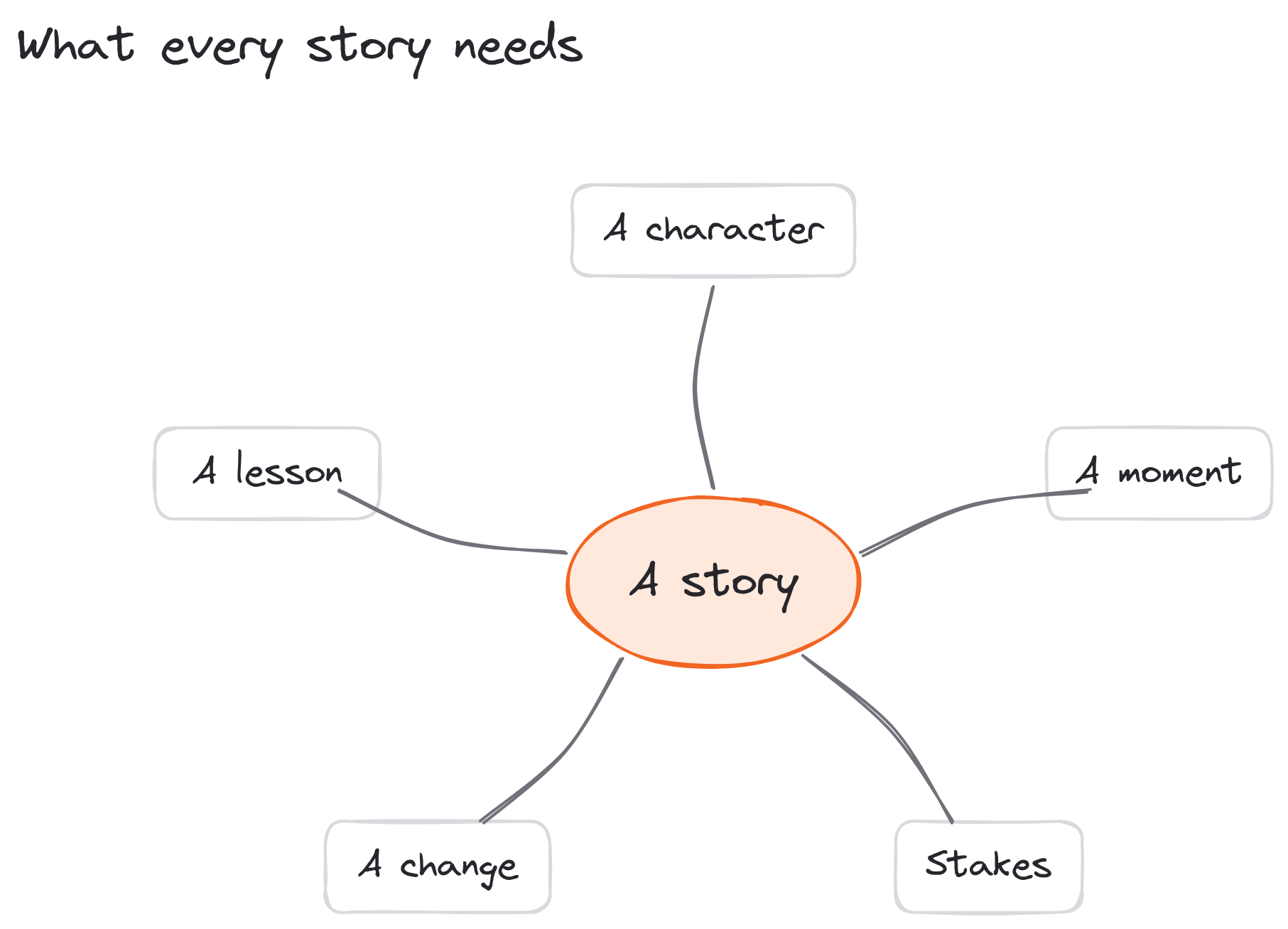
Leave out the change and you have an anecdote. Leave out the moment and you have advice.
Storytelling is the moment, the stakes and the change, in that order.
Reason #1: Stories Get Read (The Science Of Storytelling)
A story with rising tension holds attention in a way a flat explanation can't.
The neuroscientist Paul Zak tested this with a short video. In it, a father talks about his two-year-old son Ben. Ben has a brain tumor and doesn't know it will take his life within months. Zak's team found that a story with rising tension made viewers' brains release stress hormones that sharpened focus. It also released oxytocin, the chemical he ties to empathy. Afterward, about half of viewers donated to a childhood cancer charity.
Then he showed a second version: Ben and his father at the zoo, with no tension and no arc. Viewers "began tuning out mid-way through" and gave very little to charity.
Same people. Same boy. Different structure.
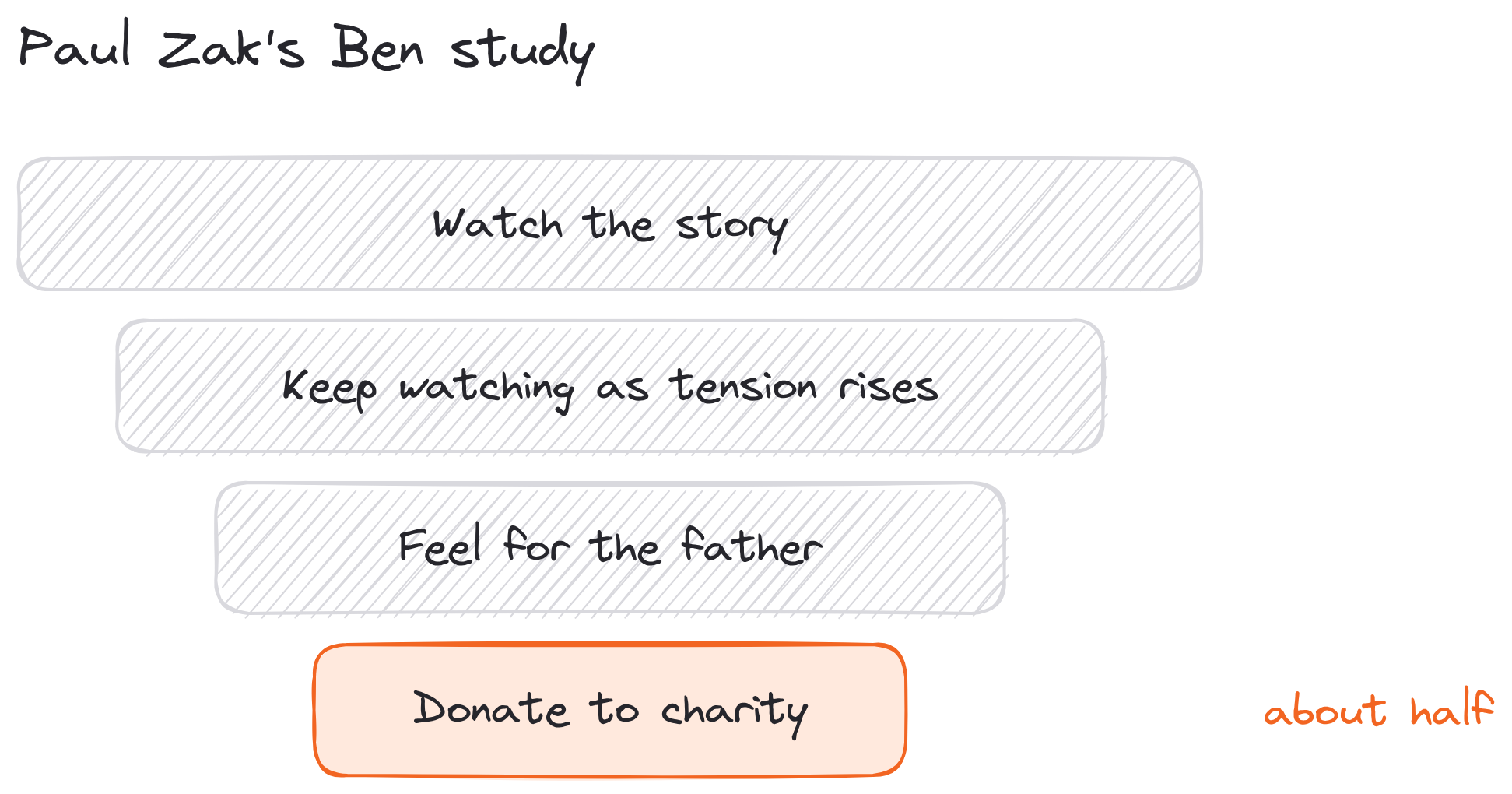
That's the science of storytelling in one experiment, and it maps straight onto a feed. A post that opens on tension gets the second line read. A post that opens on a generality gets the scroll.
Stories get read.
Reason #2: Stories Get Remembered (Why Storytelling Is Important)
Think about the ideas that guide your life, and you'll find a story attached to each one.
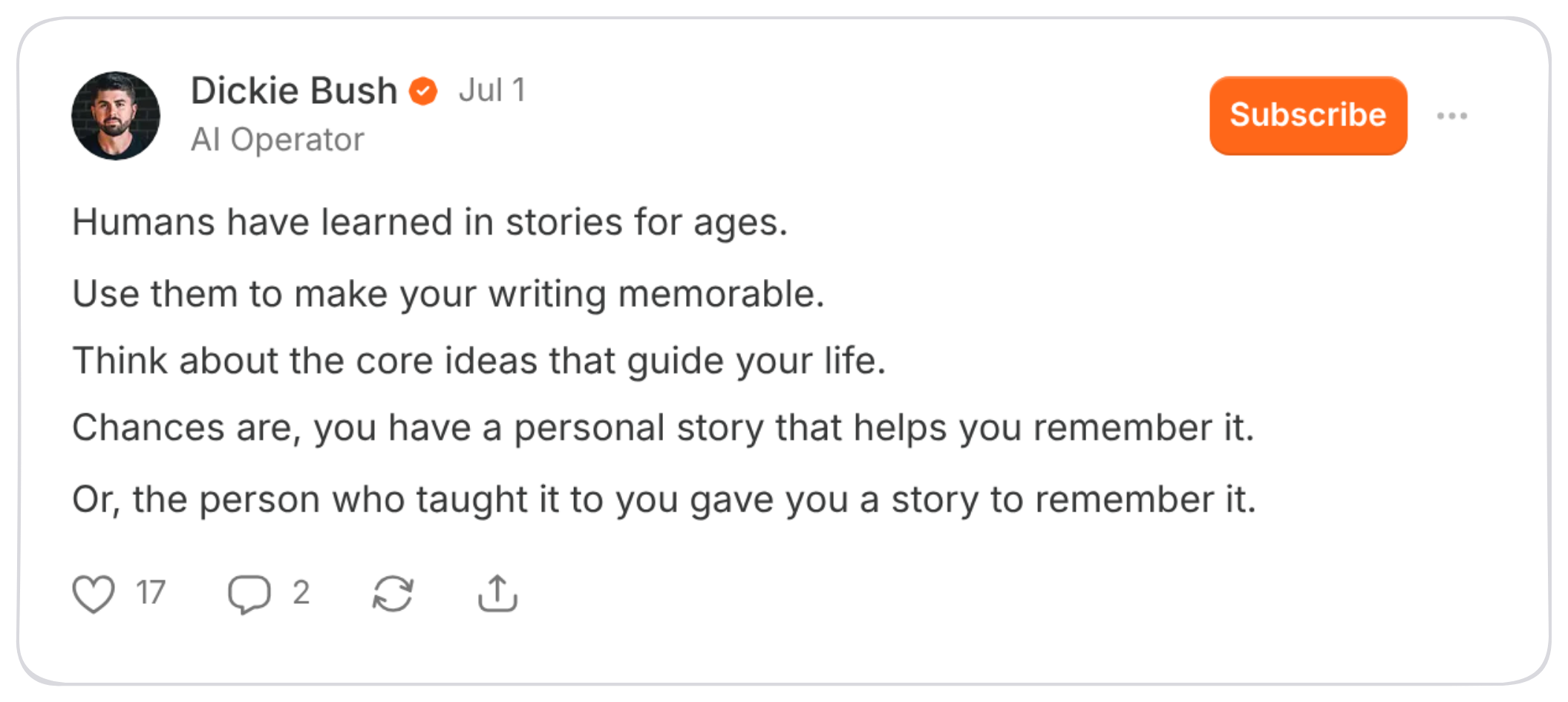
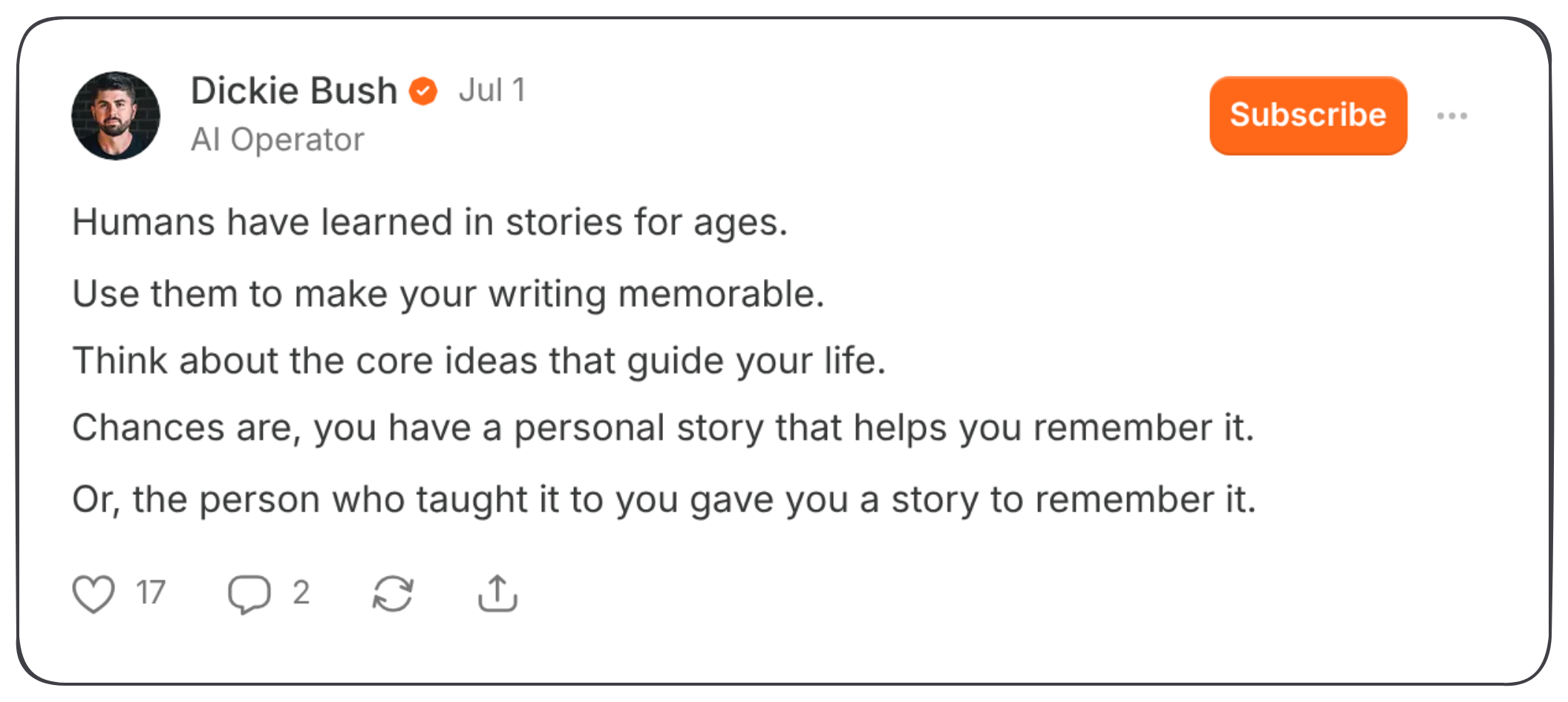
Dickie Bush puts it this way: "Humans have learned in stories for ages. Use them to make your writing memorable." Chances are you remember a rule because something happened to you, or because the person who taught it to you told you a story to go with it.
This is why storytelling is important for anyone who teaches online. Your reader will forget your "5 tips for productivity" by lunch. They'll remember the afternoon you stared at a blank page for hours and wrote two lines, because they've been there too, and now your tip has a picture to hang on.
A good test before you publish anything: what's the one moment a reader could retell to a friend tomorrow? If there isn't one, add it.
Stories get remembered.
Reason #3: Stories Make You Impossible To Copy (Narrative Storytelling)
When I was 17, I was one of the highest-rated World of Warcraft players in North America, and I had one of the first e-famous gaming blogs on the internet.
I once opened a LinkedIn post with that line, and followed it with the point of the whole post: that one detail is why you'll remember it.
Nobody else can write it. A thousand people can write "consistency beats talent." Only one person can write about being a ranked World of Warcraft player at 17 and what it taught them about practice. Your narrative is the one part of your writing nobody can copy, and in a feed full of advice that sounds alike, that's the part that makes people follow you.
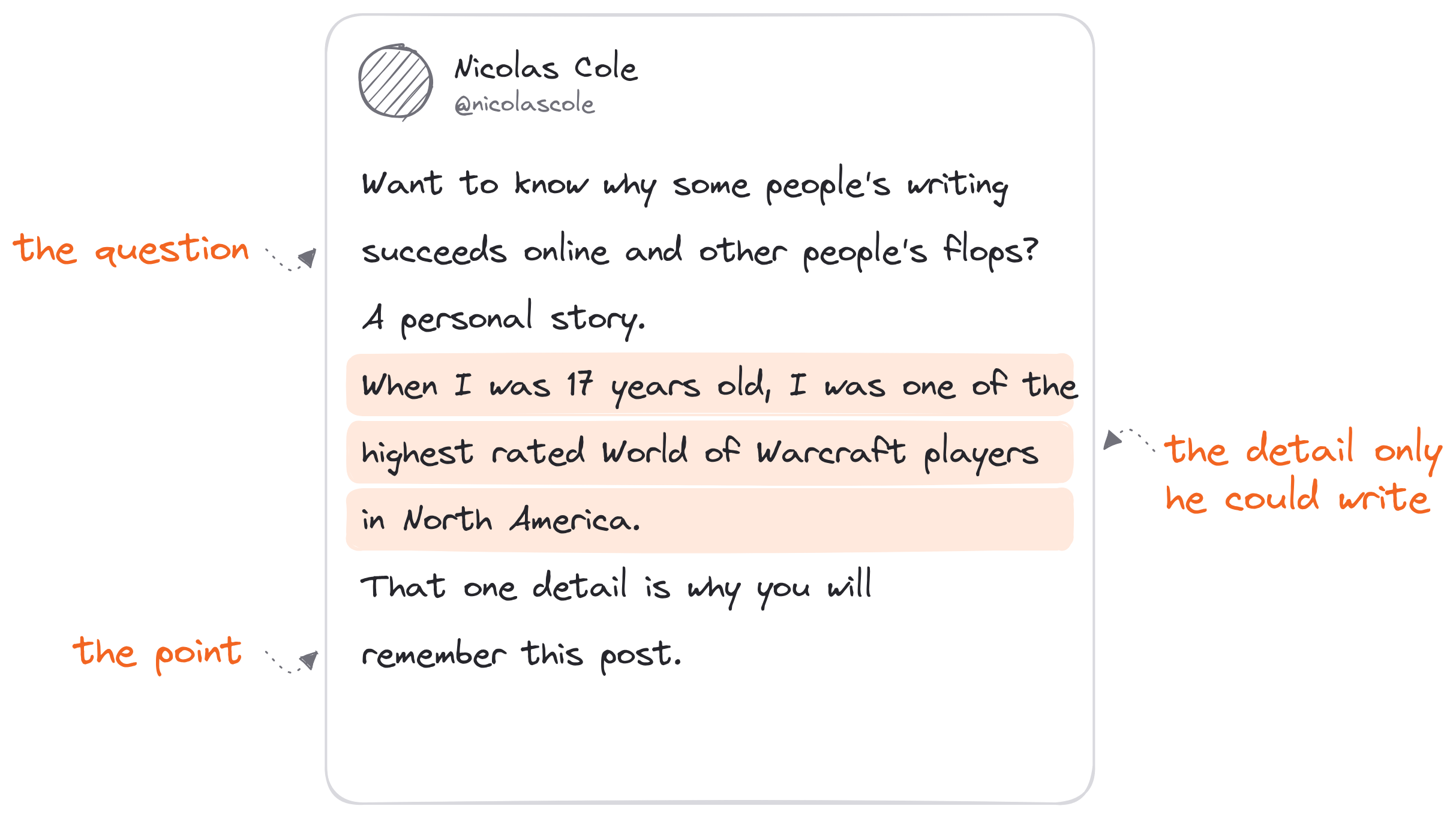
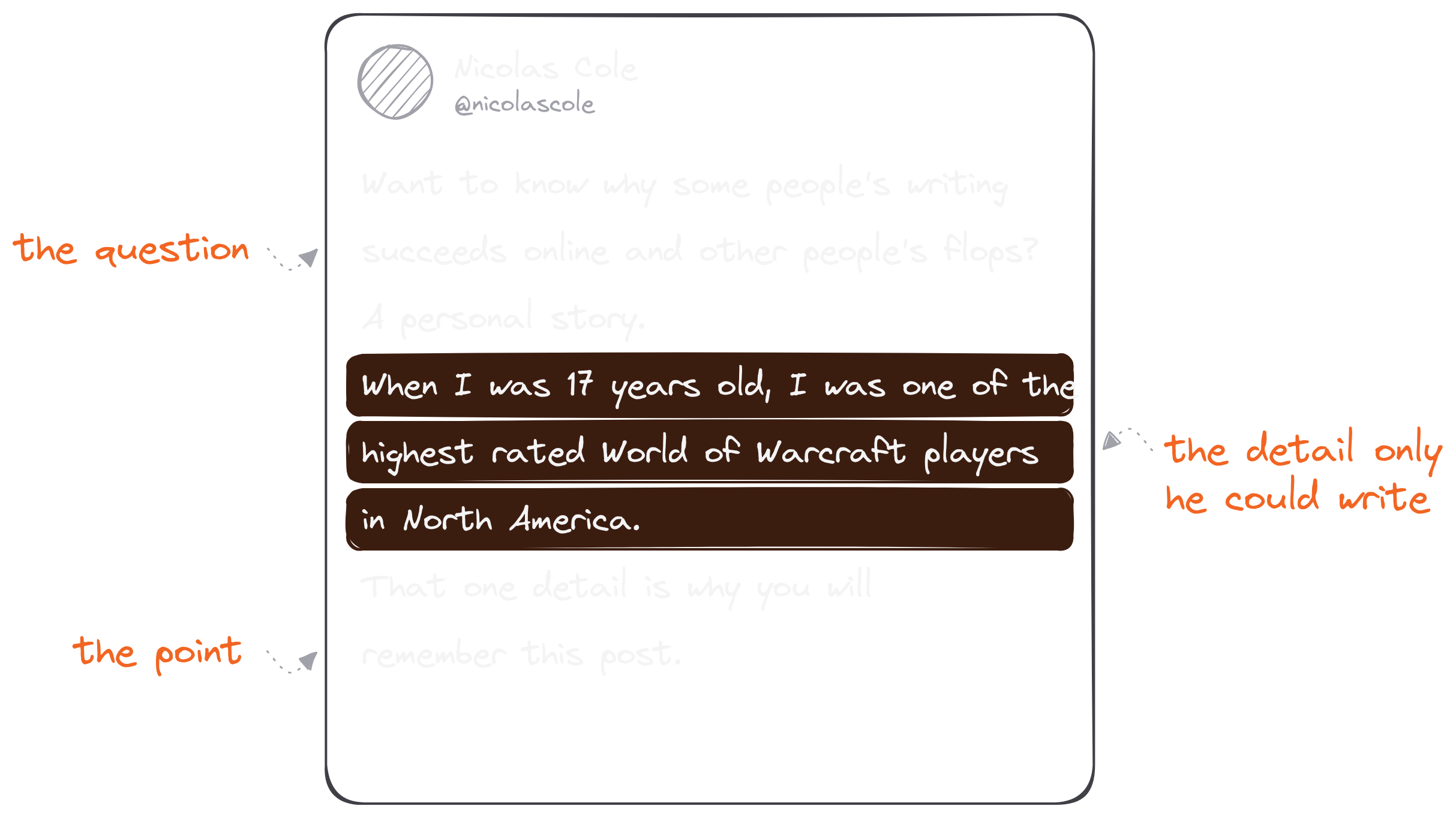
This is what I mean when I tell writers to package their story. All you need is one specific detail that belongs only to you, placed where it does the most work: right after the claim it proves. It also shapes how you sound, which is the heart of your tone of voice.
Stories make you impossible to copy.
Reason #4: Stories Make Readers Feel Something (Emotional Storytelling Techniques)
What made you cry, laugh or wince the last time you read something online?
Chances are it was a moment. Emotional storytelling works when the reader feels the moment for themselves, and you can't get there by saying "it was terrifying." You get there by showing the thing that terrified you and letting them react.
Here are 6 emotional storytelling techniques I use:
- Show the moment that caused the feeling. "My hands were shaking when I hit send" beats "I was nervous."
- Raise the stakes early. Tell the reader what could go wrong before you tell them what happened.
- Admit the embarrassing part. Readers trust the writer who says "I got this wrong" before they trust the one who only wins.
- Use one sensory detail. A sound, a smell, a time on the clock. One is enough to put the reader in the room.
- Slow down at the turn. Spend more sentences on the 10 seconds that mattered than on the 10 years around them.
- Pick your climax. I sort them into six: Oh no!, Haha, YES!, Sigh. Finally., Oops., and SURPRISE! Know which one you're writing toward.
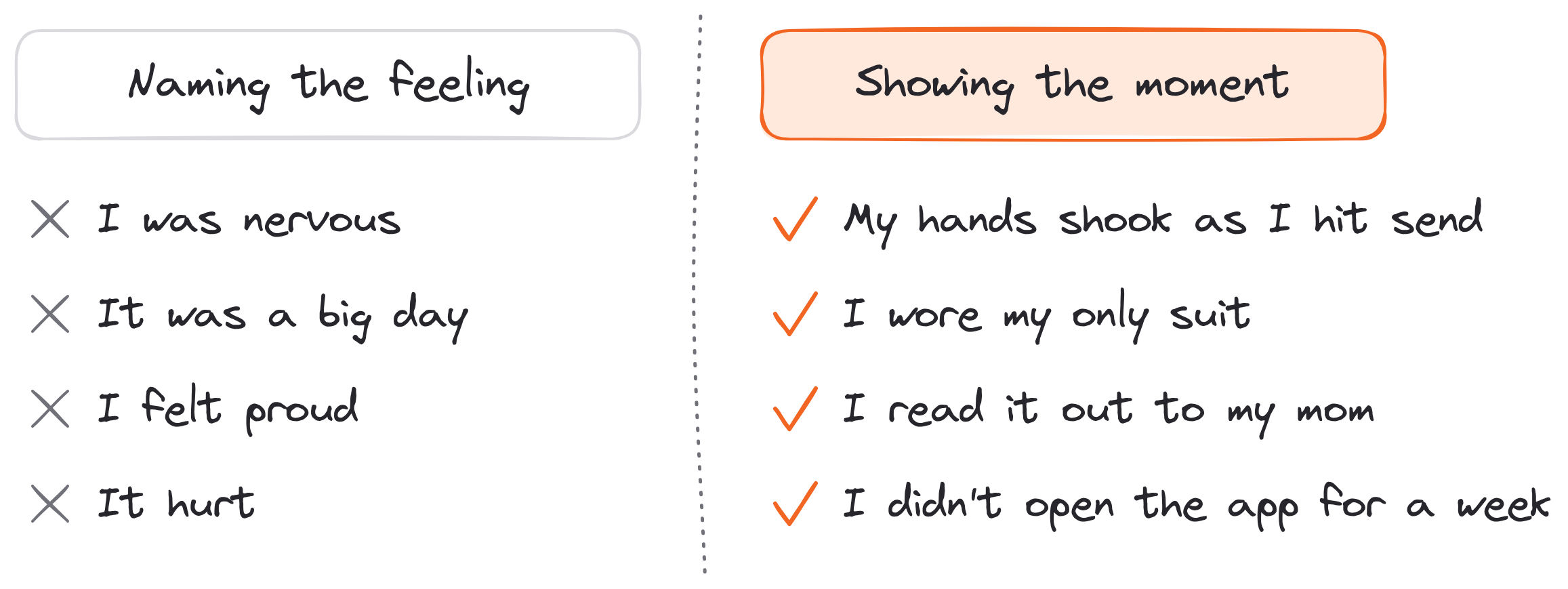
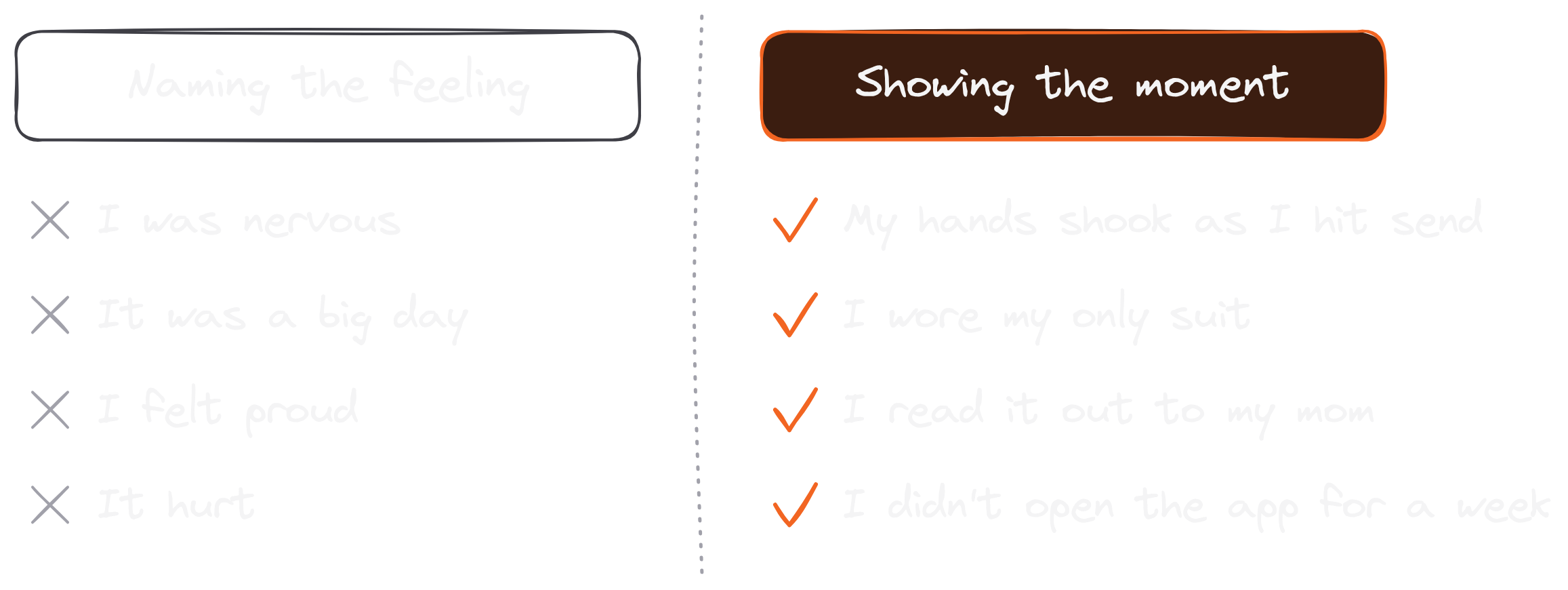
The common thread is restraint. The less you tell readers how to feel, the more they feel.
Stories make readers feel something.
Reason #5: Stories Sell (Business Storytelling)
People buy the version of themselves on the other side of a product.
That's why business storytelling works. A feature list asks the reader to imagine the result. A story about a customer (or about you) shows them the result, with someone who looks like them, starting where they are now. Storytelling for business follows the same order every time:
- The story: the moment you or a customer hit the problem.
- The lesson: what you learned getting out of it.
- The offer: the thing that gets the reader there faster.
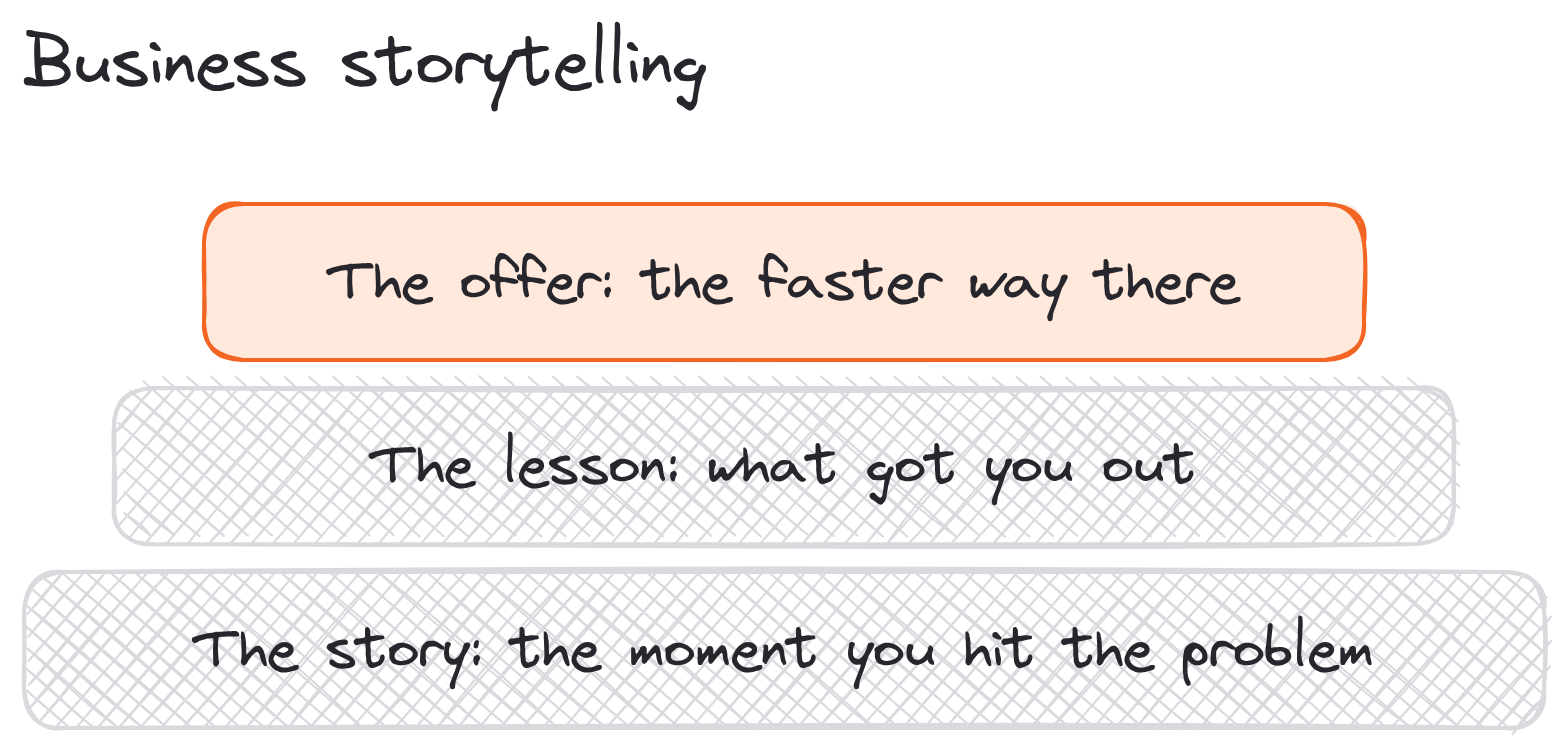
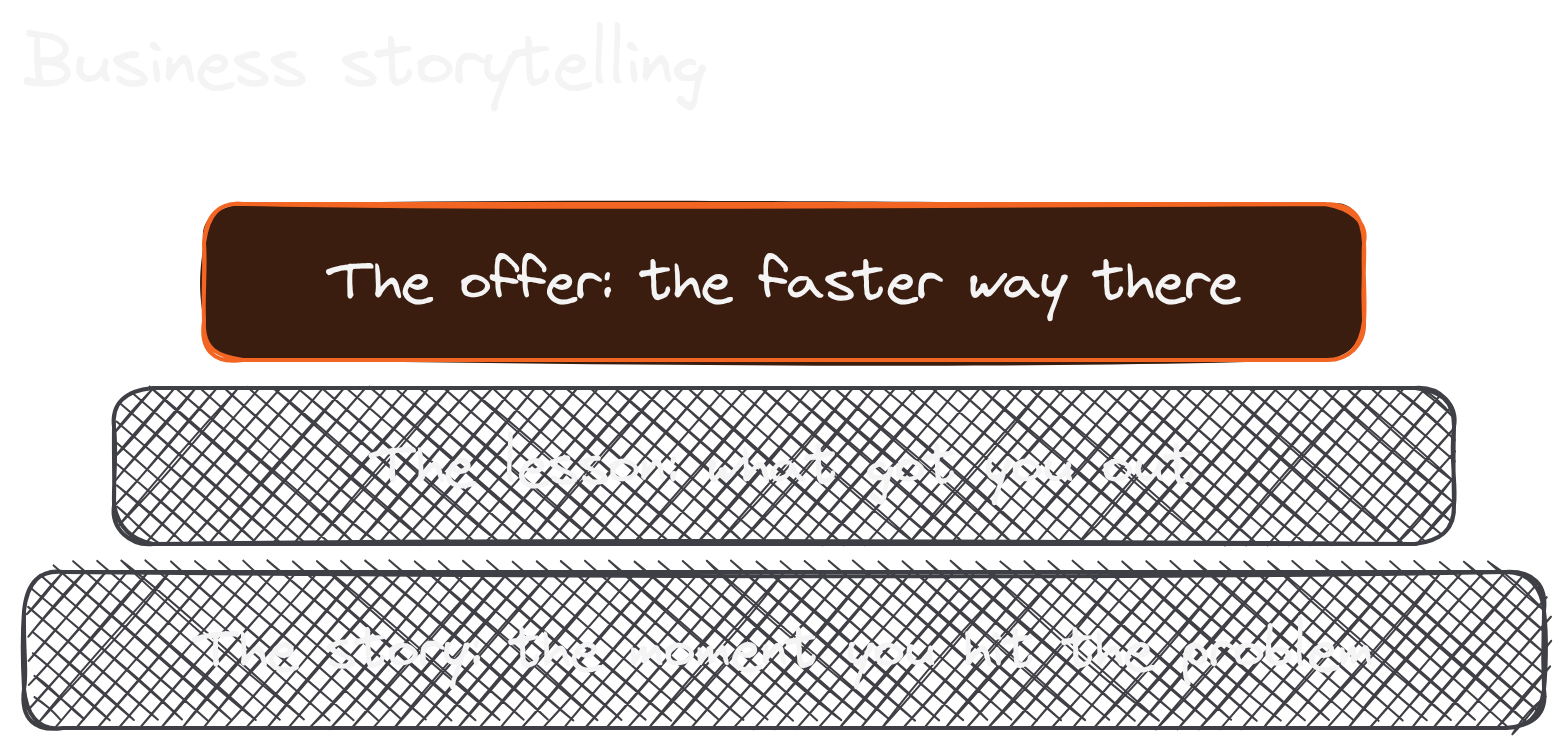
Authentic brand storytelling is the same idea at the scale of a company: the founder's story, told straight, without the stock photo smiles. The word that matters is "authentic." Readers can tell a lived story from one a marketing team wrote, and they reward the first. It's the same skill as copywriting, with a person at the center.
So when you write a sales email or a launch post, start with the story and earn the offer.
Stories sell.
Reason #6: Stories Hold A Room (Storytelling In Presentations And Video)
The fastest way to lose a room is to open with your agenda slide.
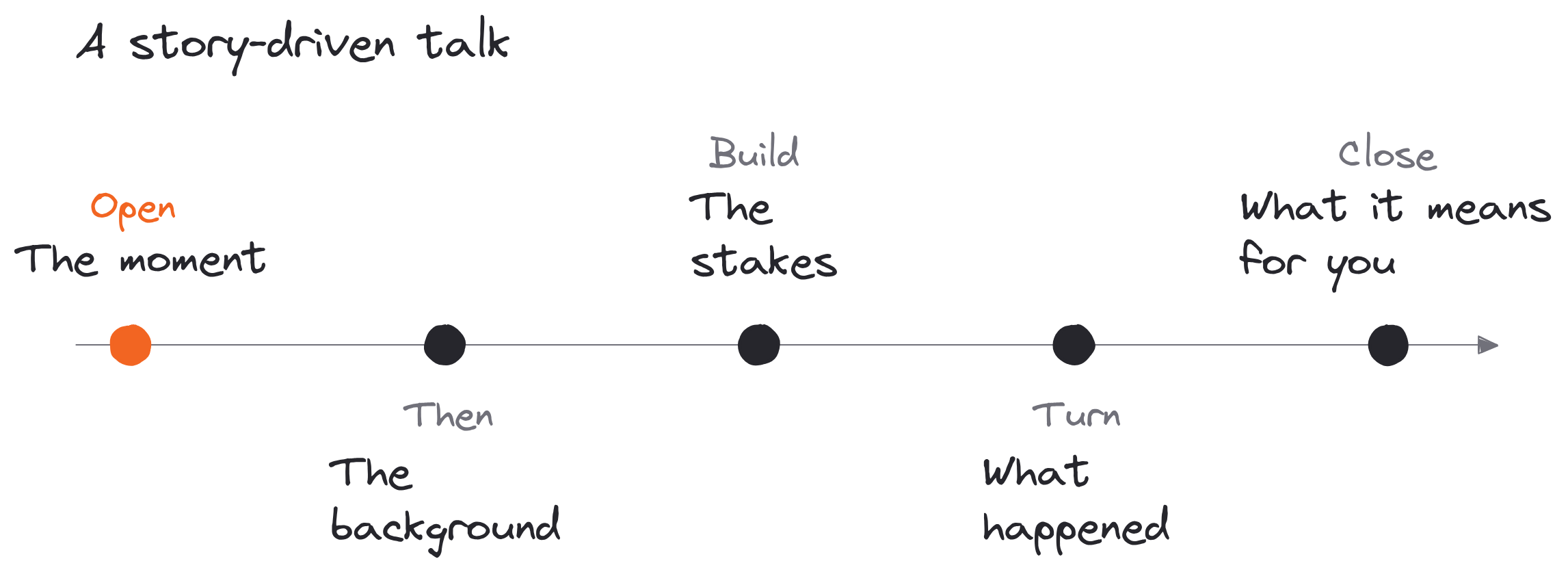
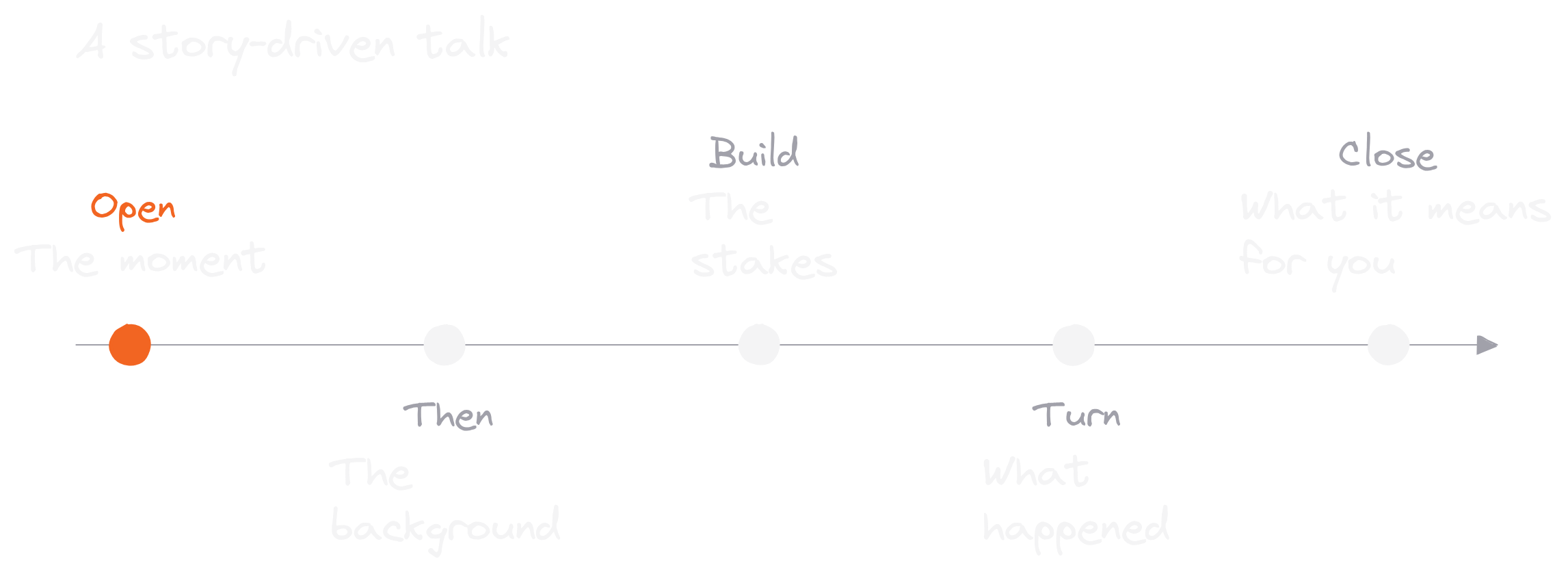
Storytelling in presentations works for the same reason it works in a post: tension holds attention. Open with the moment ("Three weeks before launch, our biggest customer called to cancel"). Then give the background and build to the point. The slides become the backdrop to a story, and the room stops reading ahead.
Video storytelling follows the same rules, just faster. On a short video you have a few seconds before the swipe, so the action comes first and the context comes second. A few rules that hold for both:
- Start in the middle of the moment, never with "Hi, I'm…"
- Cut every line that doesn't move the story forward.
- Put the point after the story, where it lands.
- End on what the audience should do or think next.
A storytelling presentation and a 60-second video are the same structure at different lengths.
Stories hold a room.
Reason #7: Stories Can Be Learned (Storytelling Techniques)
Storytelling is a set of techniques, and you can practice every one of them.
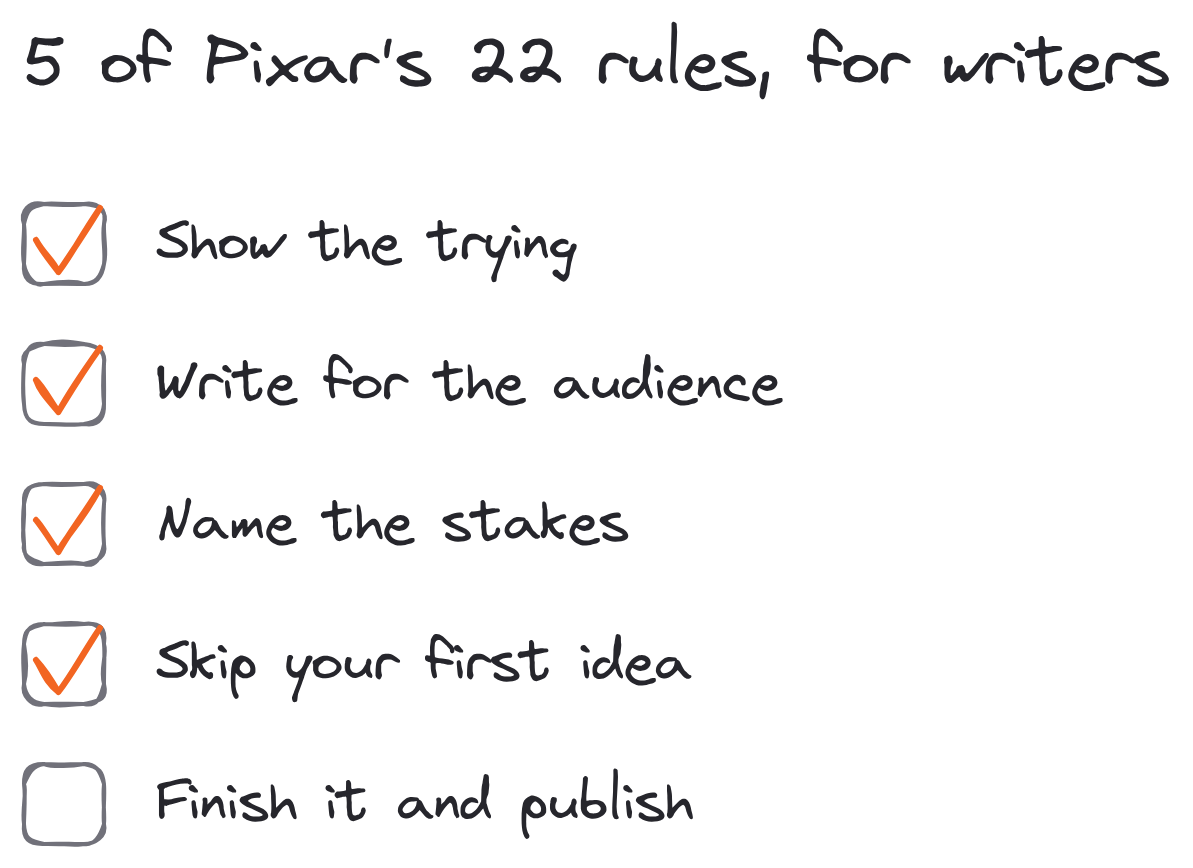
Nobody shows this better than Pixar. In 2011, Pixar storyboard artist Emma Coats shared the studio's "22 Rules For Storytelling," and Dickie Bush broke them down for writers in his thread on Pixar's storytelling framework. A few that apply to every post you'll write:
- You admire a character for trying more than for their successes. Show the struggle on the way to the win.
- Keep in mind what's interesting to you as an audience, not what's fun to do as a writer. As Dickie puts it: "You, the writer, are completely irrelevant."
- What are the stakes? Give the reader a reason to root for someone.
- Discount the first thing that comes to mind. Get the obvious out of the way and surprise yourself.
- Finish your story, let go even if it's not perfect. Publish, then do better next time.
Dickie's own reading of rule #10 is the best advice I know on how to learn storytelling: "90% of being a good writer or storyteller is being a good noticer." Pull apart the stories you like, notice why they work, and use the same moves in your own.
Stories can be learned.
How To Tell One: The ABDCE Storytelling Structure
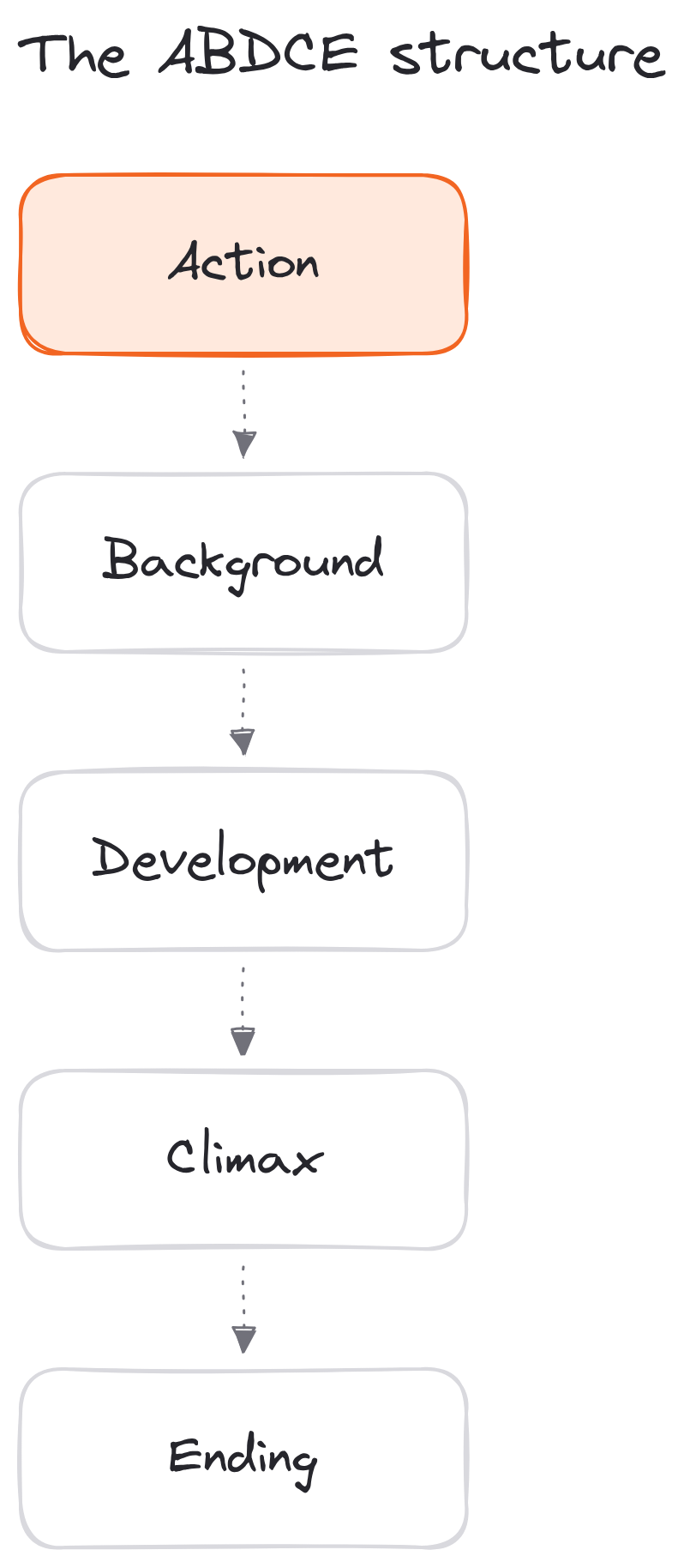
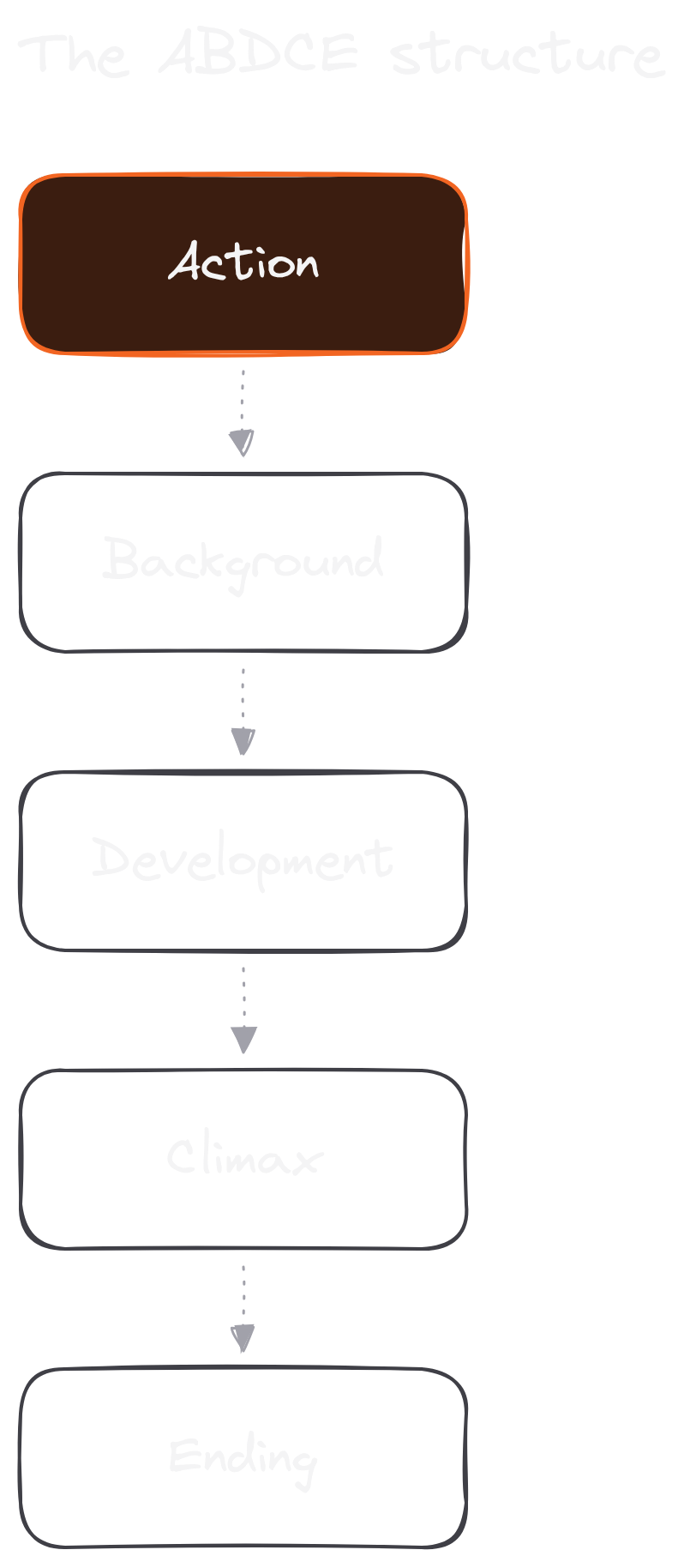
The storytelling structure I use for almost everything is called ABDCE: Action, Background, Development, Climax, Ending.
It's the shape you'll find in Romeo and Juliet and The Great Gatsby, and it works just as well in a 200-word LinkedIn post. Here's how each part works:
- Action. Drop the reader into a moment. "It was a pleasure to burn" is the first sentence of Fahrenheit 451, and there's no buildup, no scene-setting. You're there.
- Background. Only once you have the reader's attention do you explain how you got there. It's hard to care about people or ideas before you see them in action.
- Development. Build the stakes back up. Where is this going? What happens if it doesn't go to plan? What's at risk?
- Climax. The tipping point, the thing the reader could feel coming. Oh no, YES, or SURPRISE.
- Ending. Say what it was all for: who won, who lost, and what everyone learned.
Here's a storytelling example built on it. It's made up to show the shape, so picture a writer one month into posting:
(Action) I hit publish on my 30th post and refreshed the page. A handful of likes. One was my mom.
(Background) I'd written online every day for a month about productivity, because that's what everyone else wrote about.
(Development) I had one more week before I told myself I'd quit. So I wrote about the thing I knew: the years I spent getting good at one video game, and what it taught me about practice.
(Climax) It got more views overnight than my first 29 posts combined.
(Ending) The lesson: nobody wants your advice until they know why it's yours. Your story is the reason.
Notice where the lesson sits: last, after the reader has lived through the moment with you. That order is what makes it a story.
Write yours this week. Pick one moment that changed how you work, drop the reader into it, and follow ABDCE to the end. When it's done, write it in Typeshare and schedule it where your readers already are.
That's how to tell one.
FAQ
What is environmental storytelling?
Environmental storytelling is a term from game design and film: telling a story through the setting, with little or no dialogue. A half-eaten meal on a table, a door left open, a child's drawing on a fridge. Writers can borrow the idea by letting one detail of a scene (what was on your desk, what was playing in the room) carry the story on its own.
What does storytelling have to do with healing trauma, according to psychology?
The best-known research on this is psychologist James Pennebaker's work on expressive writing. In one study, students wrote for 20 minutes a day, four days in a row. Those who wrote about their own traumatic experiences went to the student health center at half the rate of those who wrote about superficial topics. Turning an experience into a story seems to help people make sense of it. (If you're working through trauma, a therapist is the place to start; writing can sit alongside that.)
How do you learn storytelling?
Read stories you love and take them apart: where does the action start, where does the background come in, where's the turn? Then write one short story a day from your own life, using ABDCE, and publish it. You'll learn more from 30 published stories than from any book on storytelling.
What are the main storytelling methods?
The three I see work best online are the personal story (something that happened to you), the customer story (something that happened to someone you helped) and the borrowed story (a true story from history, business or science, told to make a point). All three follow the same structure: a moment, stakes, a change and a lesson.
Why is storytelling important in business?
Because people buy outcomes they can picture, and a story lets them picture it. A customer story shows the reader someone like them getting the result, which a list of features can't do. That's also why the best founders tell the company's origin story so often: it's the shortest way to explain why the company exists.