100 Hook Examples For Social Posts And Emails (Sorted Into 10 Types You Can Copy Today)
Nicolas ColeNovember 7, 2026
100 hook examples for LinkedIn, X, Threads and email, sorted into 10 types, so you can pick one and write a first line people finish.
Your first sentence has one job: get the reader to read the second one.
That's it. Every hook in this article is built to do that one thing. A reader scrolling LinkedIn, X or their inbox gives your first line about half a second. If it doesn't earn the next line, nothing you wrote after it matters.
I learned this the slow way. I've spent more than 3,500 hours obsessing over how to write the perfect headline, and today more than 129,000 people follow me on LinkedIn. With Dickie, I've taught more than 10,000 writers through Ship 30 for 30, and we spent 2 of our 8 live sessions on hooks and headlines alone. Once you understand them, growth gets a lot easier.
Below are 100 hook examples sorted into the 10 types I use most, with 10 examples each, plus how to use them in emails and how to turn any type into your own. (I wrote these as samples. The numbers and stories in them aren't from my life, so swap in yours.) If you want the rest of the post to hold up too, read 15 writing tips for beginners, then start writing in Typeshare. And if LinkedIn is where you post, Typeshare for LinkedIn shows you how your hook looks before "…see more." You do the writing; the robots do the rest.


What Makes A Hook Work? (Hook Sentence Examples, Good And Bad)
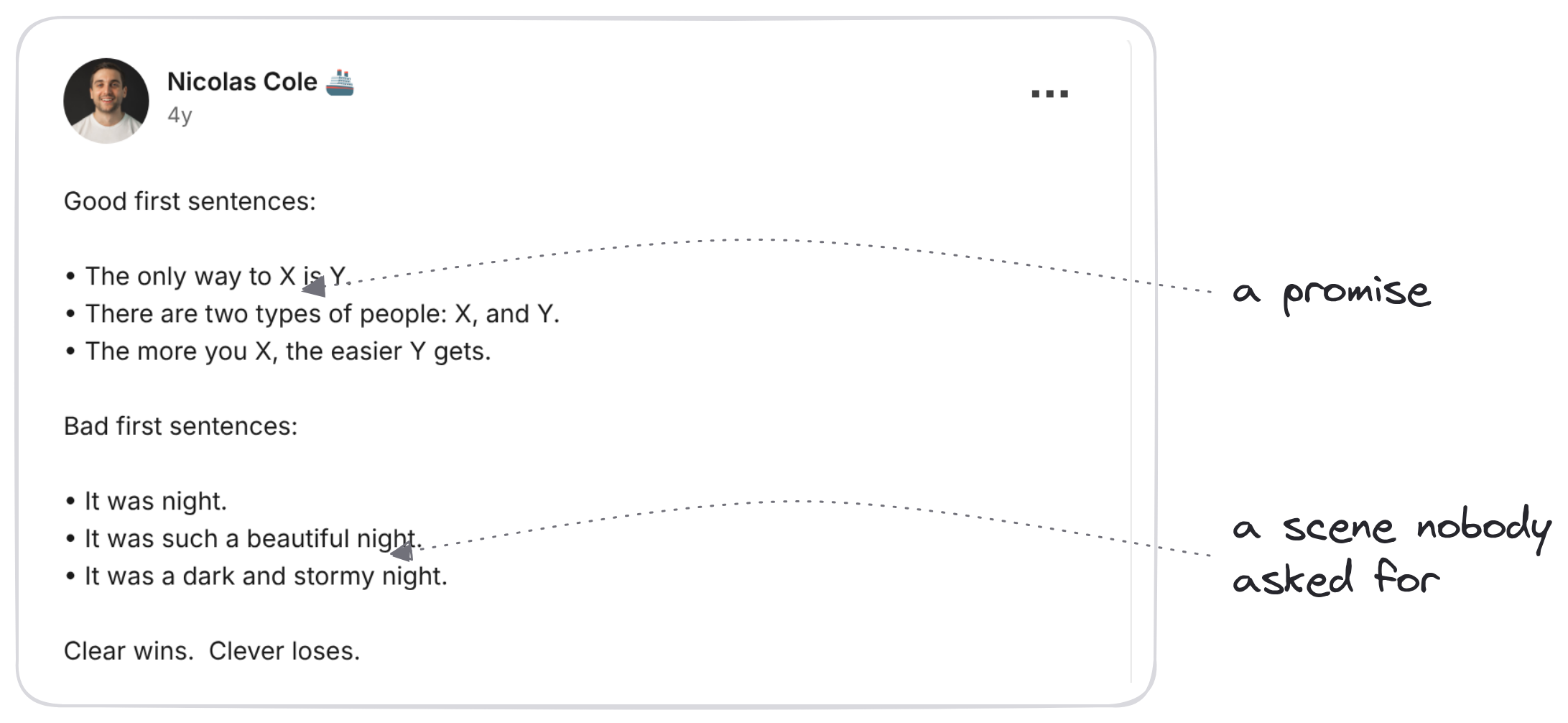
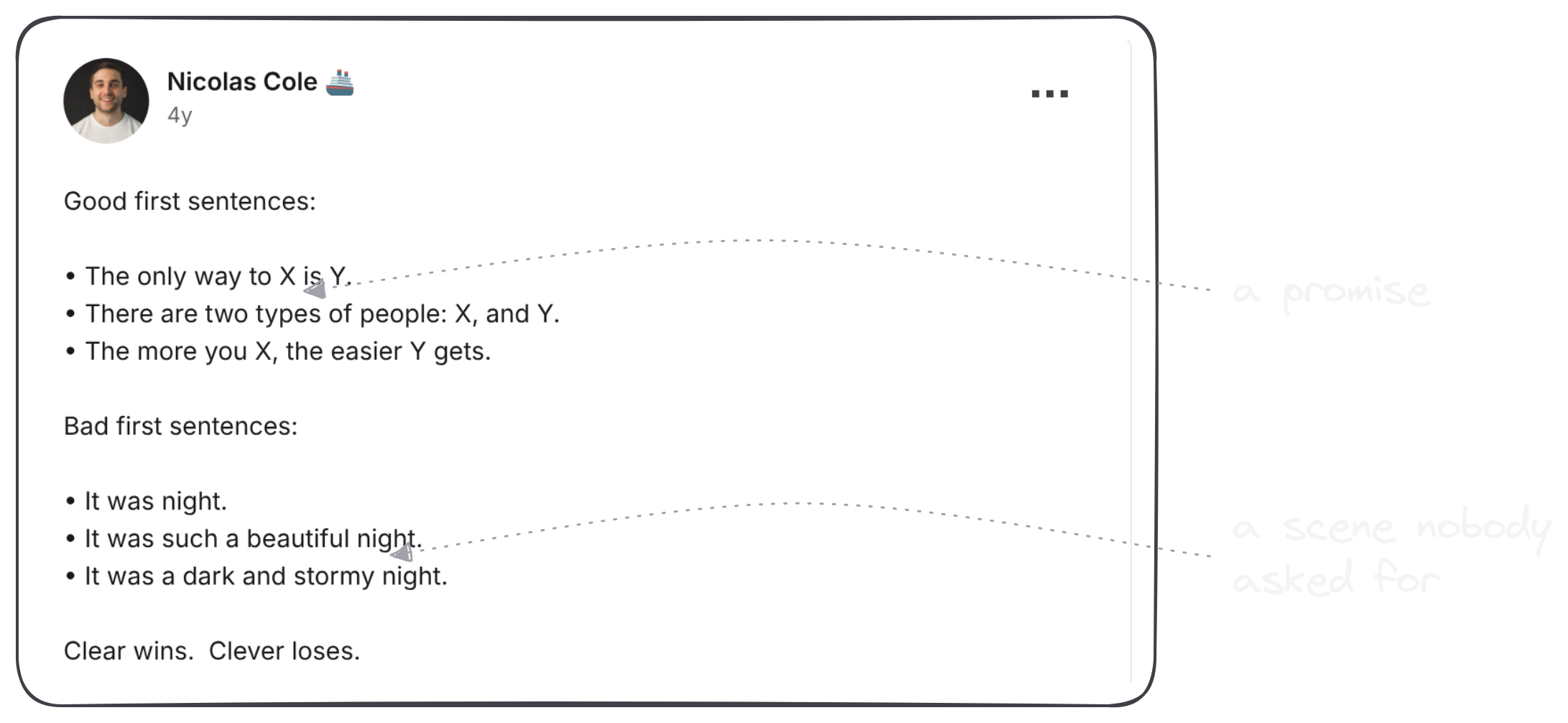
Clear wins. Clever loses.
That's the line I ended this post on first sentences with, and it's still the best test I know. Here are the hook sentence examples from that post, side by side:
- Good: "The only way to X is Y." "There are two types of people: X, and Y." "The more you X, the easier Y gets."
- Bad: "It was night." "It was such a beautiful night." "It was a dark and stormy night."
The good ones make a promise. A reader knows what the post is about and wants to see how you'll back it up. The bad ones set a scene nobody asked for, and the reader is gone before the scene ends.
Every hook that works does three things:
- It's short. One line, often under 15 words, with no warm-up.
- It's specific. A number, a name, a moment or a strong claim the reader can picture.
- It opens a loop. The reader has a question only the next line answers.
Hit those three and the type you pick matters less than you'd think. Miss them and no type will save you.
That's what makes a hook work.
Hook Type #1: The Moment In Time (10 Hook Examples)
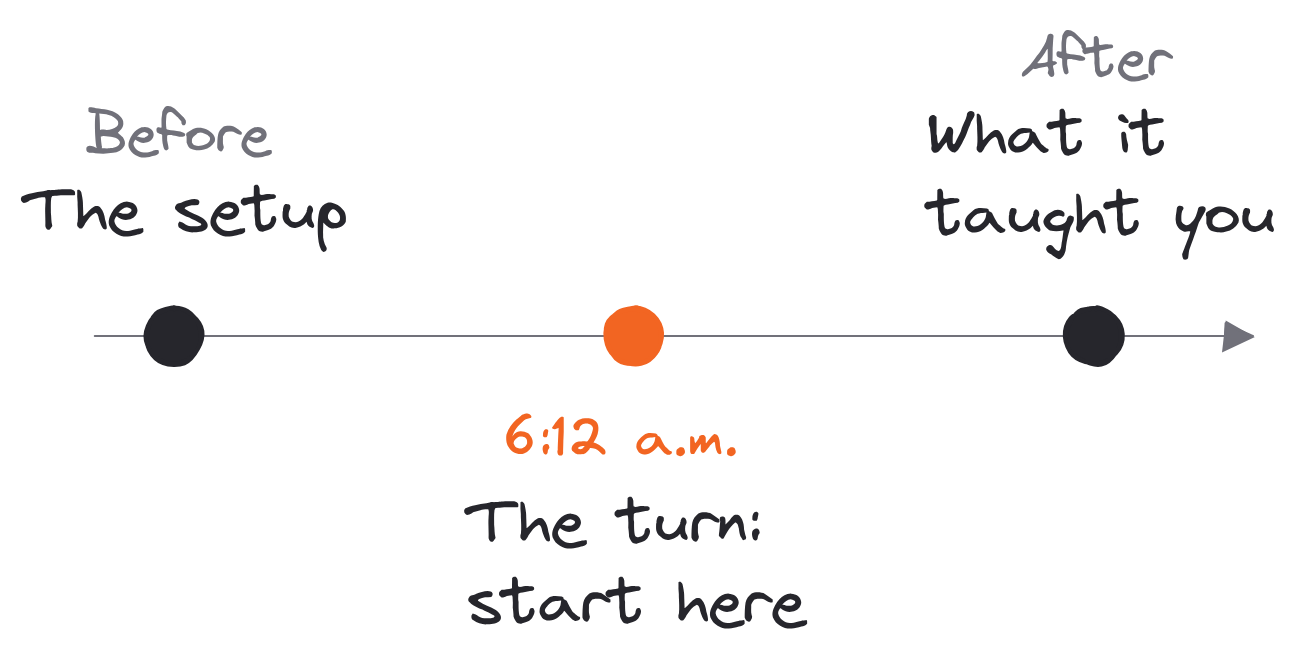
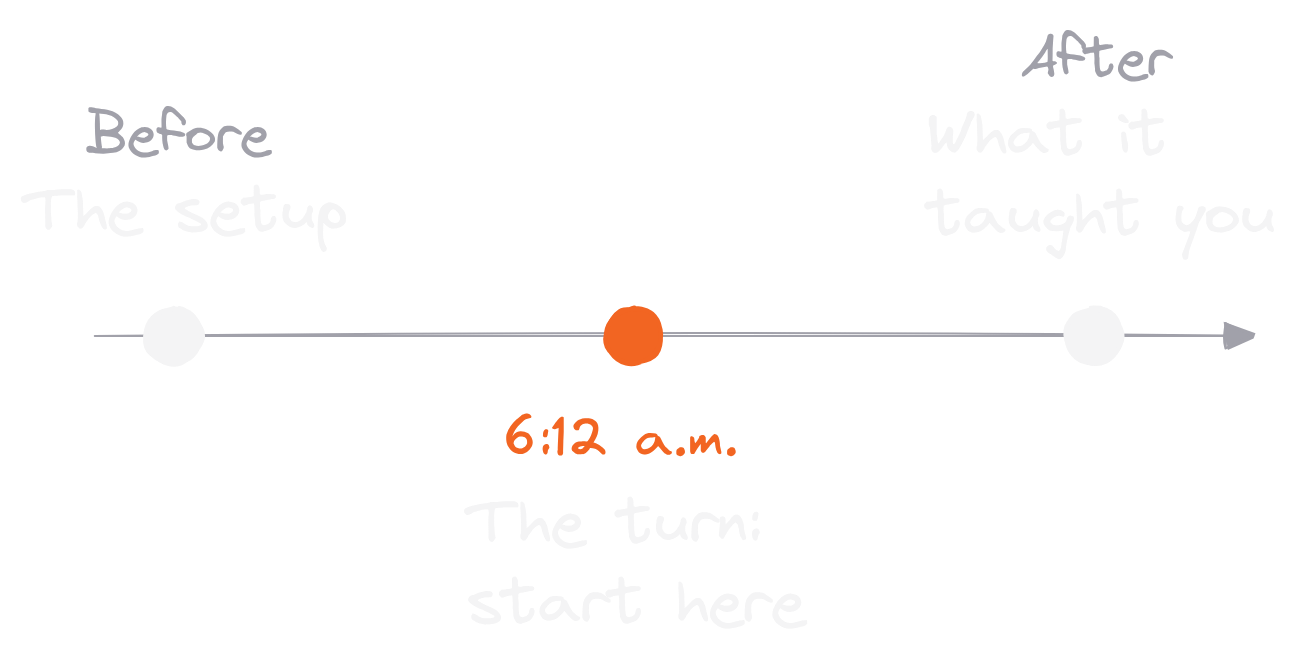
At 6:12 a.m. on a Tuesday, I wrote the first line of this section.
See what happened? You're in a scene now. A moment in time drops the reader into a story with a date, a time or an age, and readers can't help wanting to know what happened next. It's the easiest upgrade you can make to any story post.
- At 22, I quit the only job I'd ever had with $400 in the bank.
- Last Thursday, a client fired me in a two-line email.
- In 2019, I wrote my first post online and got zero likes.
- Three years ago today, I almost shut the business down.
- The night before my first launch, I deleted the whole sales page.
- At 4 p.m. on a Friday, our biggest customer called to cancel.
- Ten minutes into my first keynote, the slides stopped working.
- In my first month as a manager, I made every mistake in the book.
- When I was 17, I spent every night writing about one video game.
- Yesterday, I hit publish on the post I'd been scared to write for a year.
Pick the exact moment the story turns. That's where the hook starts.
That's the moment in time hook.
Hook Type #2: The Bold Statement (10 Hook Examples)
Some hooks just say the thing.
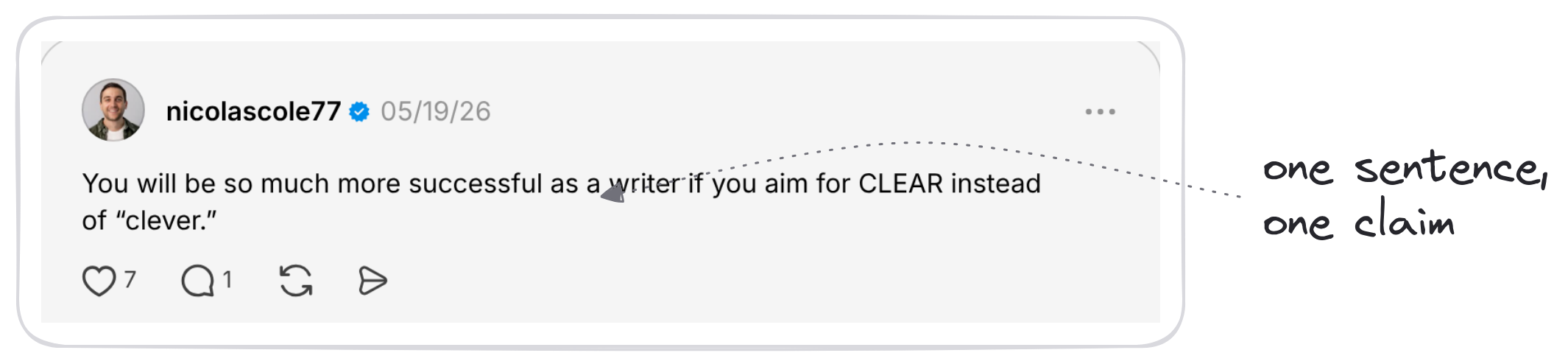
A bold statement is a short, strong claim with no hedging: no "I think," no "maybe," no "in my opinion." It works because it's confident, and confidence reads as expertise. I posted the one in the screenshot below on Threads, and it's a good model: one sentence, one claim, and a reader who agrees or disagrees wants to keep going.
- The only way to get better at writing is to publish.
- There are two types of founders: builders and talkers.
- The more you post, the easier it gets.
- Most advice about productivity is wrong.
- Your first 100 posts will be bad, and that's the point.
- Consistency beats talent every single time.
- The best marketing is a product people talk about.
- Every great writer is a great editor first.
- Nobody cares about your job title.
- Clear writing comes from clear thinking.
Say it like you mean it. A bold statement with a hedge in it is just a statement.
That's the bold statement hook.
Hook Type #3: The Contrarian Opinion (10 Hook Examples)
Disagree with something your reader has heard a hundred times.
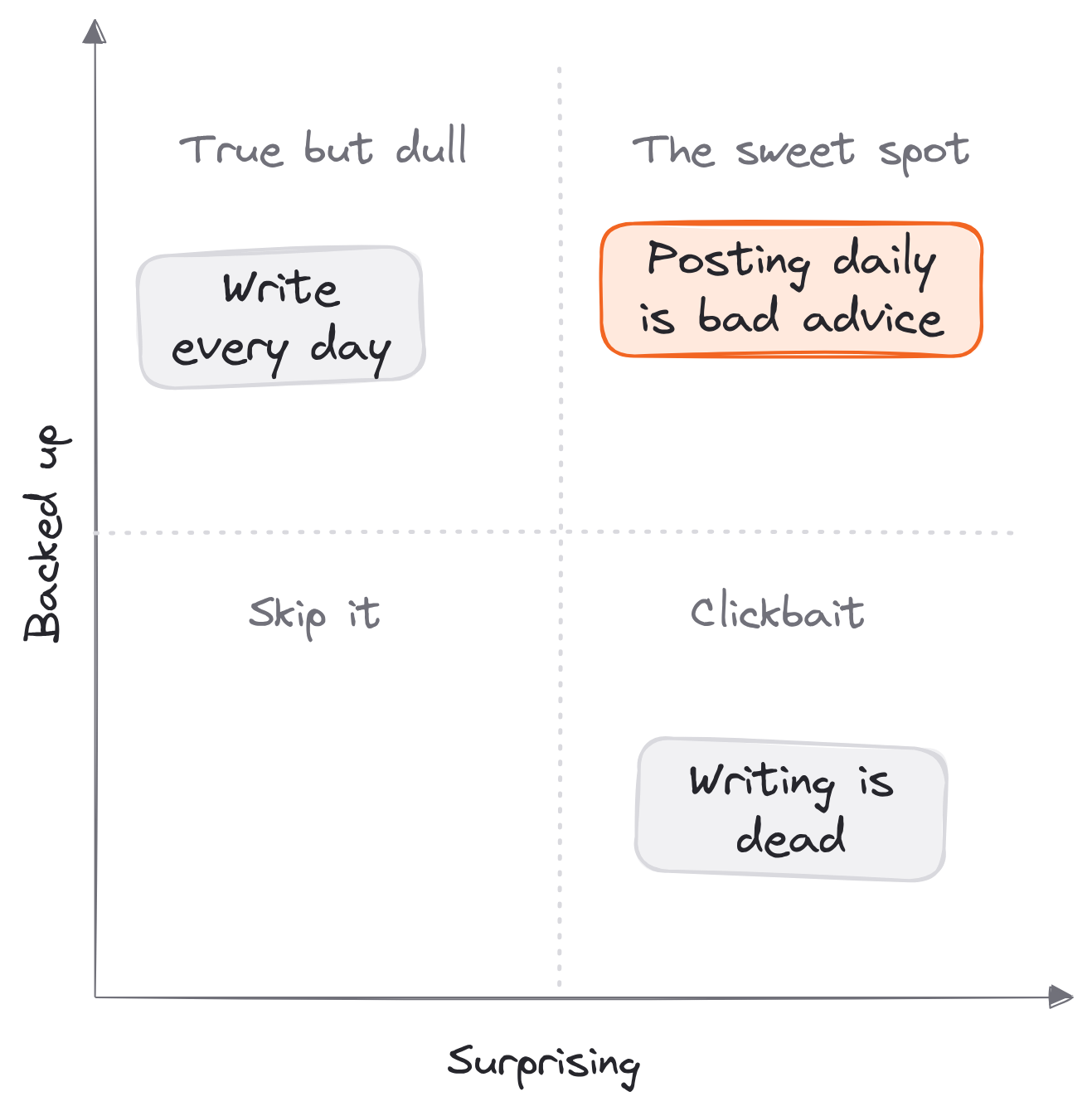
The contrarian hook takes a piece of common advice and pushes back on it. Readers stop because it breaks the pattern: they expected the usual tip and got the opposite. The trick is to be right. A contrarian claim you can't back up is just clickbait, and readers can tell by the third line.
- Posting every day is bad advice for most people.
- You don't need a niche to start writing online.
- Networking events are a waste of time.
- Morning routines are overrated.
- Your best ideas won't come from brainstorming.
- Followers are the least important number on your profile.
- Writing a book won't make you an authority.
- Stop asking for feedback on your first drafts.
- Hustle culture didn't make anyone rich.
- The worst time to start a newsletter is when you have something to sell.
Pick advice your reader follows, then give them a better rule.
That's the contrarian opinion hook.
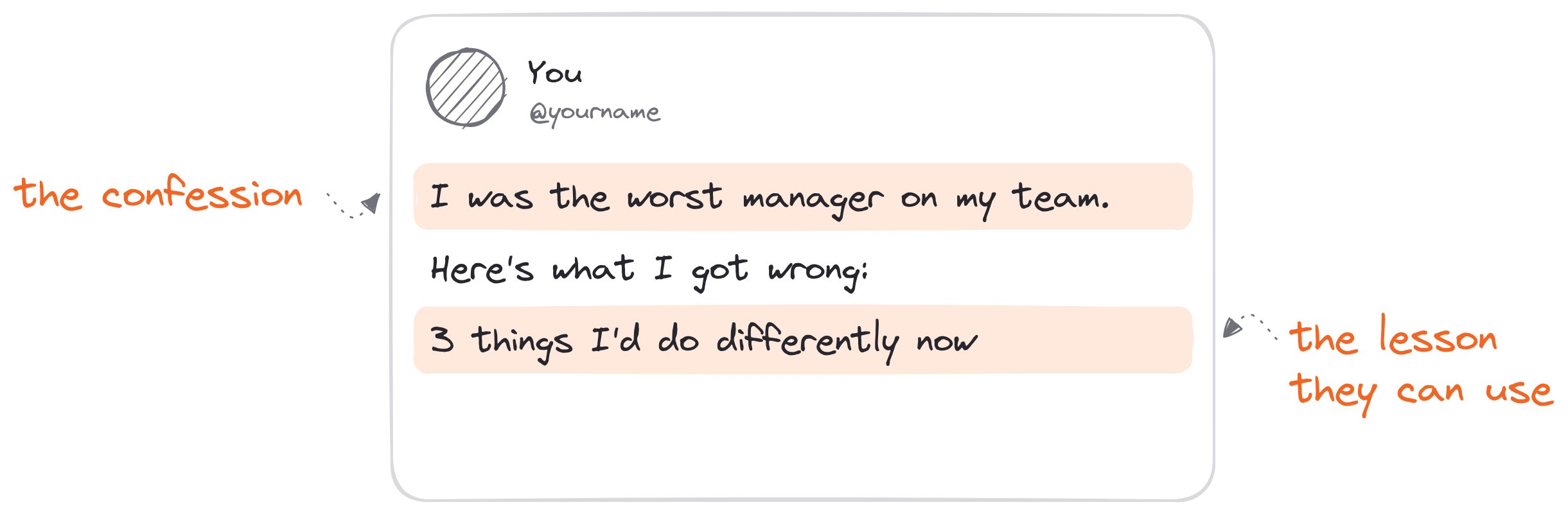
Hook Type #4: The Vulnerable Confession (10 Hook Examples)
I almost didn't write this section.
A vulnerable hook admits something most people wouldn't. Readers trust a writer who shows a crack, and they keep reading to see how it turned out. It works best when the confession is specific (a number, a moment, a feeling) and when the post gives the reader something useful by the end.
- I made six figures last year and still felt like a fraud.
- I've been writing online for two years, and I still get nervous hitting publish.
- I was the worst manager on my team.
- My first business failed, and it was my fault.
- I didn't read a book cover to cover until I was 25.
- I got rejected from 40 jobs before anyone said yes.
- For three years, I pretended I knew what I was doing.
- I've never been good at math, and I run a finance newsletter.
- I lost my biggest client because I didn't ask a simple question.
- I wanted to quit the week I hit my first milestone.
Confess the thing, then teach the lesson. That order turns a confession into a gift.
That's the vulnerable confession hook.
Hook Type #5: The Question (10 Hook Examples)
What would you write if nobody you knew would ever read it?
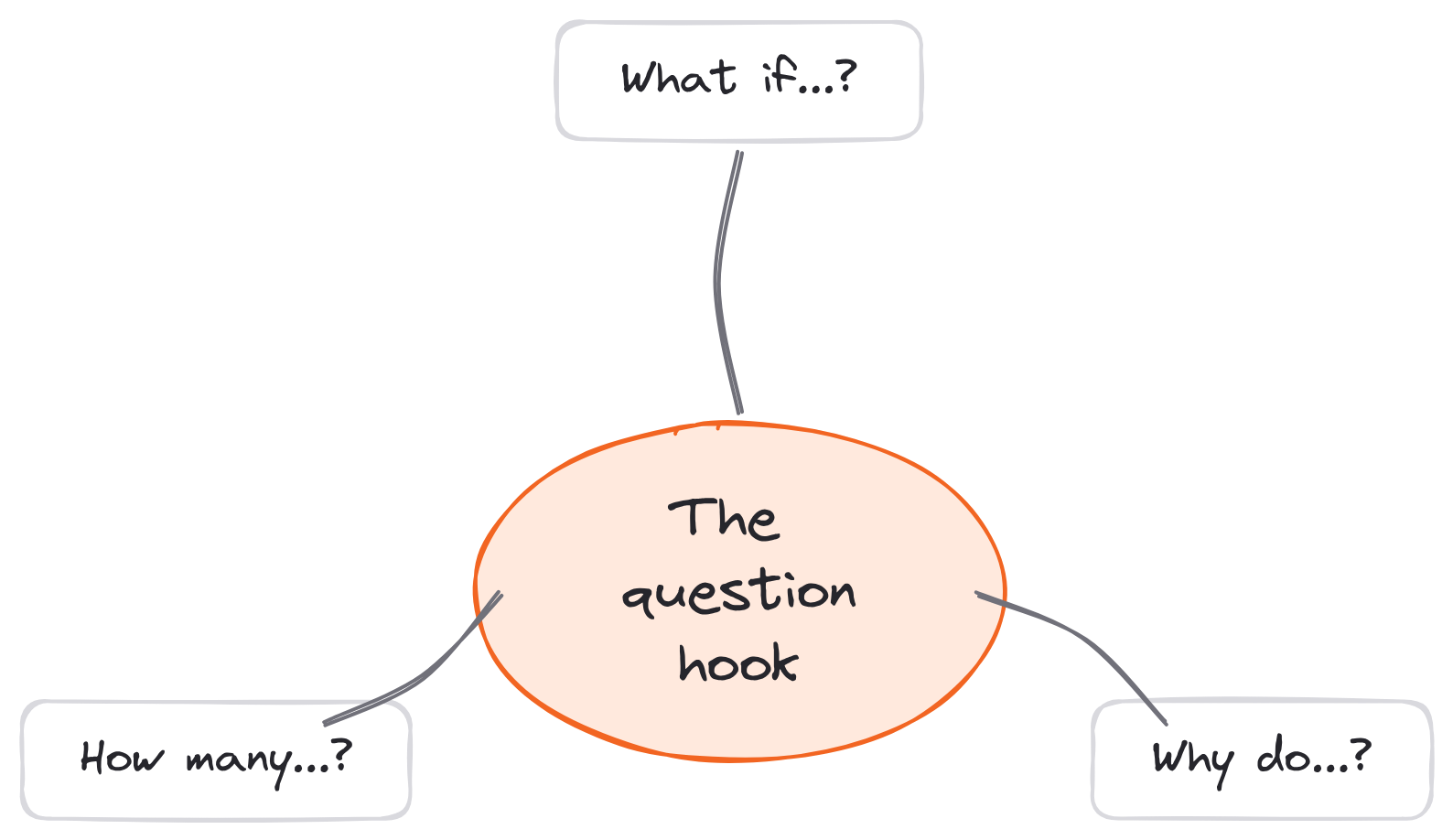
A question hook works when the reader can't answer it in one second. "Do you want more followers?" fails: yes, obviously, next. A good one makes the reader stop and think, and then they read on to compare their answer with yours. Ask about something they care about, and make it specific.
- What would you build if you knew it couldn't fail?
- Why do some posts get 100 likes and others get 10,000?
- How many hours did you spend in meetings last week?
- What's the one habit you'd keep if you had to drop the rest?
- Have you ever written a post you were proud of that nobody read?
- What if the advice you're following is the reason you're stuck?
- Why do the best writers publish less than you'd think?
- When was the last time you changed your mind about something big?
- What's stopping you from charging double?
- How would your work change if you only had 2 hours a day?
A good question opens a loop in the reader's head. The rest of your post closes it.
That's the question hook.
Hook Type #6: The Big Number (10 Hook Examples)
Numbers stop the scroll.
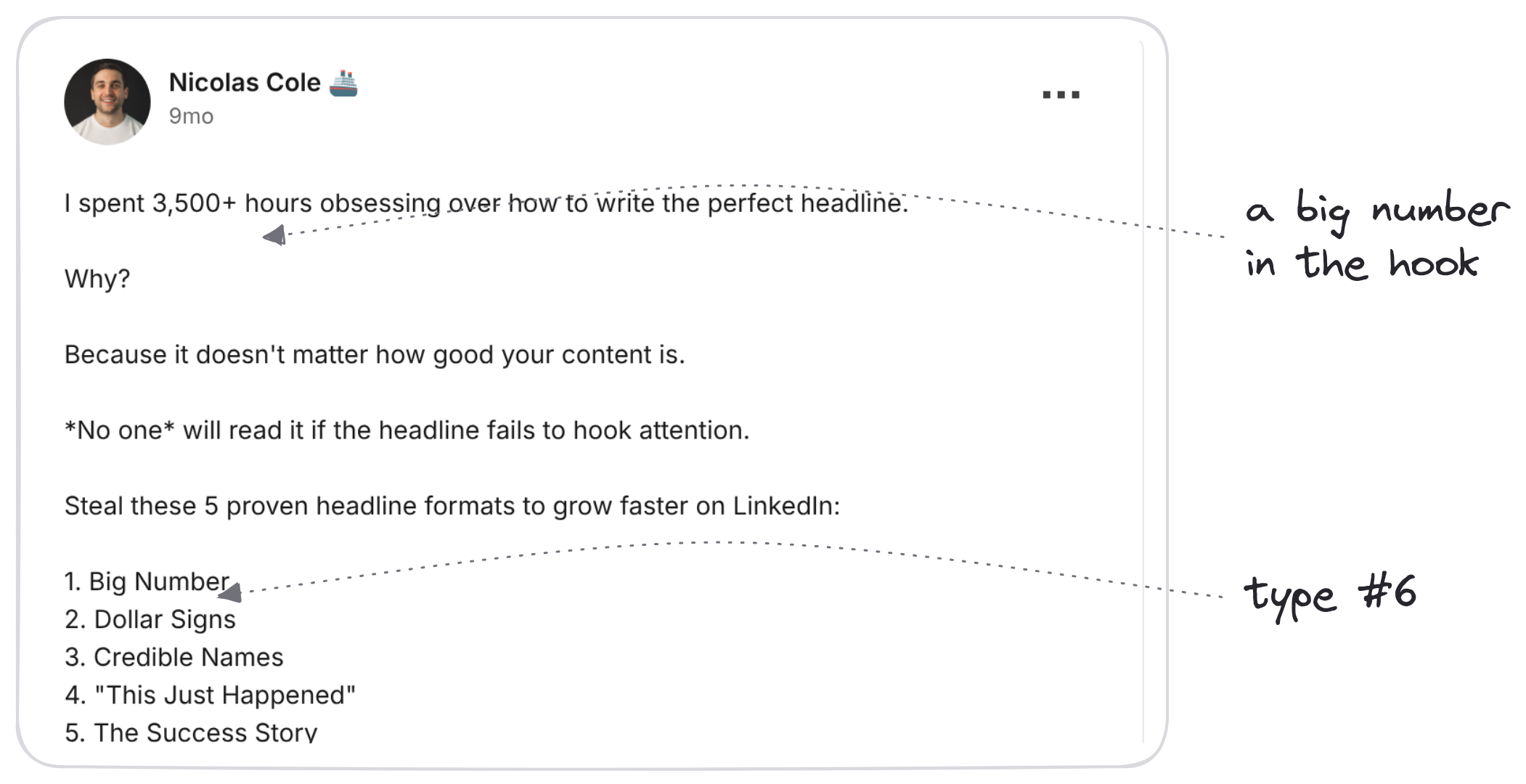
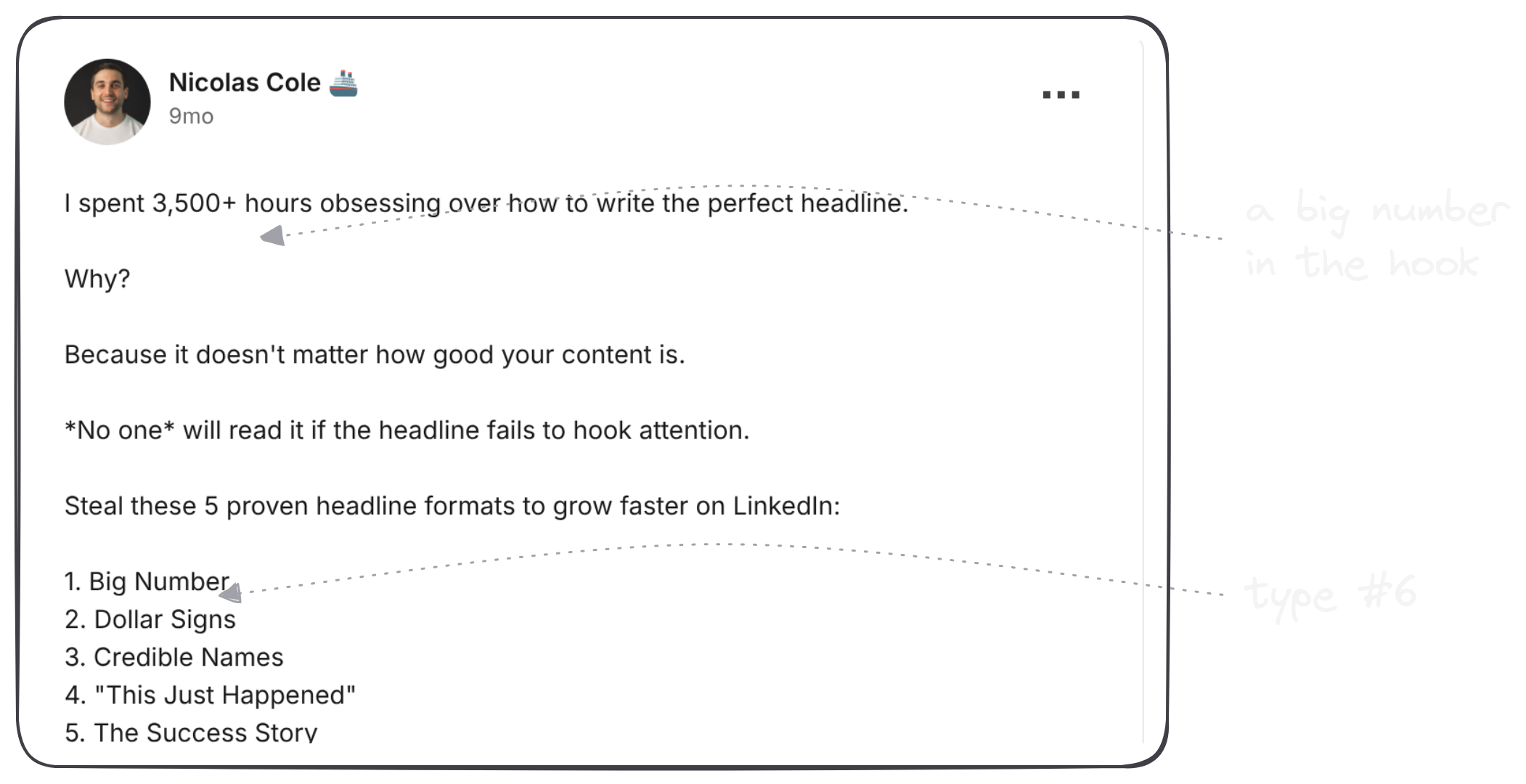
"Big Number" is the first of the 5 headline formats in my post on headlines, and it's the easiest one to use. A number makes a claim concrete: "a lot of posts" means nothing, while "1,000 posts" is something a reader can picture. Use a real number from your own work. Big works. Specific works better.
- I've written 1,000 posts in 3 years. Here's what the first 100 taught me.
- 47,000 people read this newsletter every week. It started with 12.
- I've interviewed 200 founders. They all made the same mistake.
- 9 out of 10 posts you write will flop. Write them anyway.
- I sent 500 cold emails last year. 11 got a reply.
- 30 days, 30 posts, 1 rule.
- I've reviewed 3,000 LinkedIn profiles. Most make one mistake.
- 80% of your results come from 3 habits.
- 10,000 hours is a myth. Here's what actually takes 100.
- I've read 300 books on business. These 5 changed how I work.
Put the number first. It's the part a scanning eye catches.
That's the big number hook.
Hook Type #7: The Dollar Sign (10 Hook Examples)
Money is the most specific number of all.
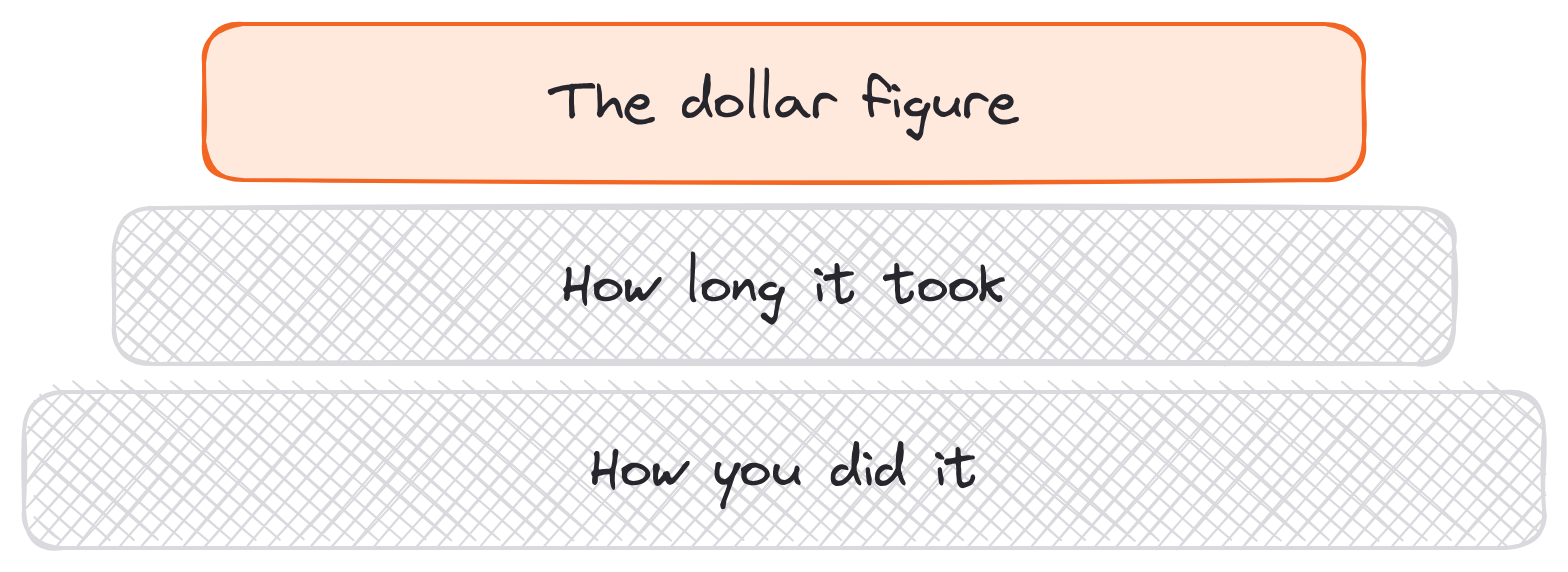
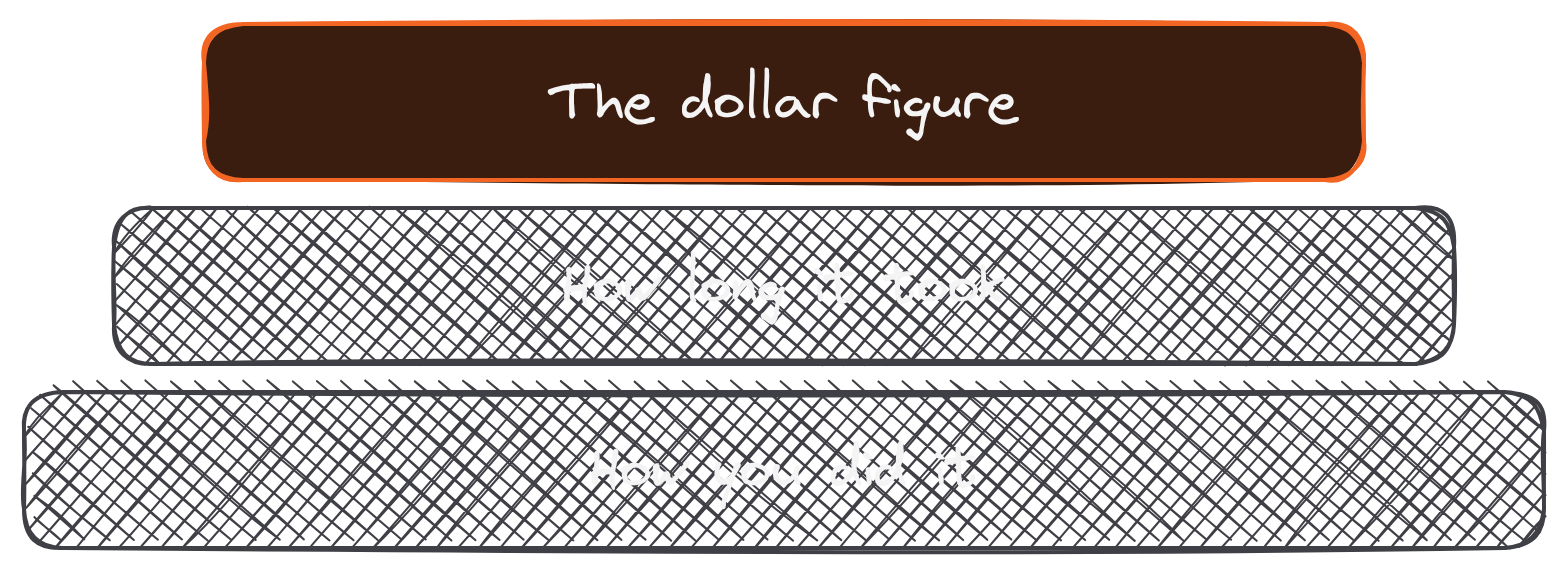
The dollar sign hook puts an amount up front: what you made, saved, lost or spent. It's the second format on my headline list for a reason. Readers want to know how you got there (or how to avoid where you ended up). Only use money you can back up. A made-up figure is the fastest way to lose a reader's trust.
- I made $10,000 from one post. Here's how.
- This mistake cost me $40,000 in my first year.
- I charged $500 for my first client. I should have charged $5,000.
- We saved $12,000 a year by canceling one tool.
- My newsletter made $0 for 18 months. Then this happened.
- A $20 book changed how I run my business.
- I turned down $100,000 and don't regret it.
- How a $5 product made me my first $1,000 online.
- We spent $30,000 on ads. Here's what we learned.
- The best $200 I ever spent was on a writing course.
Pair the amount with a short time frame or a twist, and the reader has to know the rest.
That's the dollar sign hook.
Hook Type #8: The Credible Name (10 Hook Examples)
Borrow attention from someone your reader already knows.
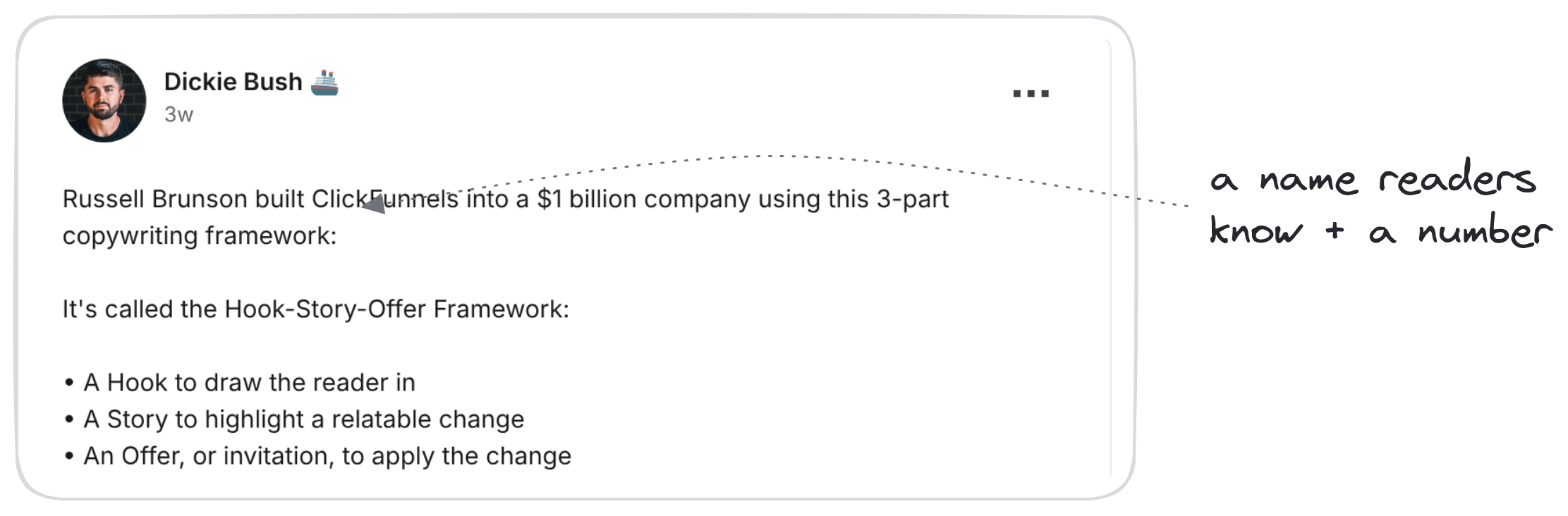
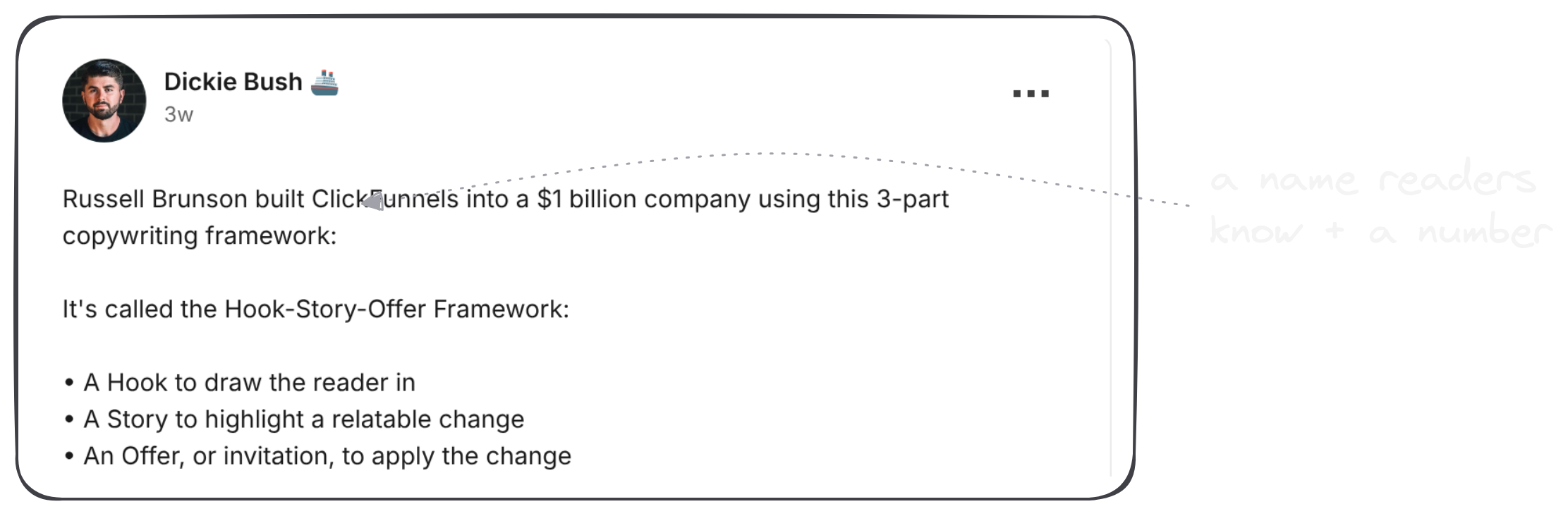
A credible name hook opens with a person or company the reader respects, then promises what you learned from them. Dickie opened this post on the Hook-Story-Offer framework with "Russell Brunson built ClickFunnels into a $1 billion company using this 3-part copywriting framework." The name and the number do the work. Keep it honest: share what the person did or said, and link the source.
- Warren Buffett says he spends most of his day reading. Here's how to start with 10 pages.
- David Ogilvy wrote an internal memo called "How to Write." It still holds up.
- Stephen King wrote 2,000 words a day. Here's what that habit teaches.
- Jeff Bezos banned PowerPoint from his senior team meetings. Here's what replaced it.
- Russell Brunson built ClickFunnels with one copywriting framework.
- Ernest Hemingway stopped writing each day when he knew what came next.
- Sara Blakely's dad asked one question at dinner every night.
- Benjamin Franklin taught himself to write by rewriting essays from The Spectator.
- Toni Morrison wrote before sunrise. Here's why that worked for her.
- Paul Graham says writing about a topic shows you how little you knew about it.
Check every claim before you post it. A famous name with a wrong fact attached does more damage than no name at all.
That's the credible name hook.
Hook Type #9: The "This Just Happened" (10 Hook Examples)
News travels faster than advice.
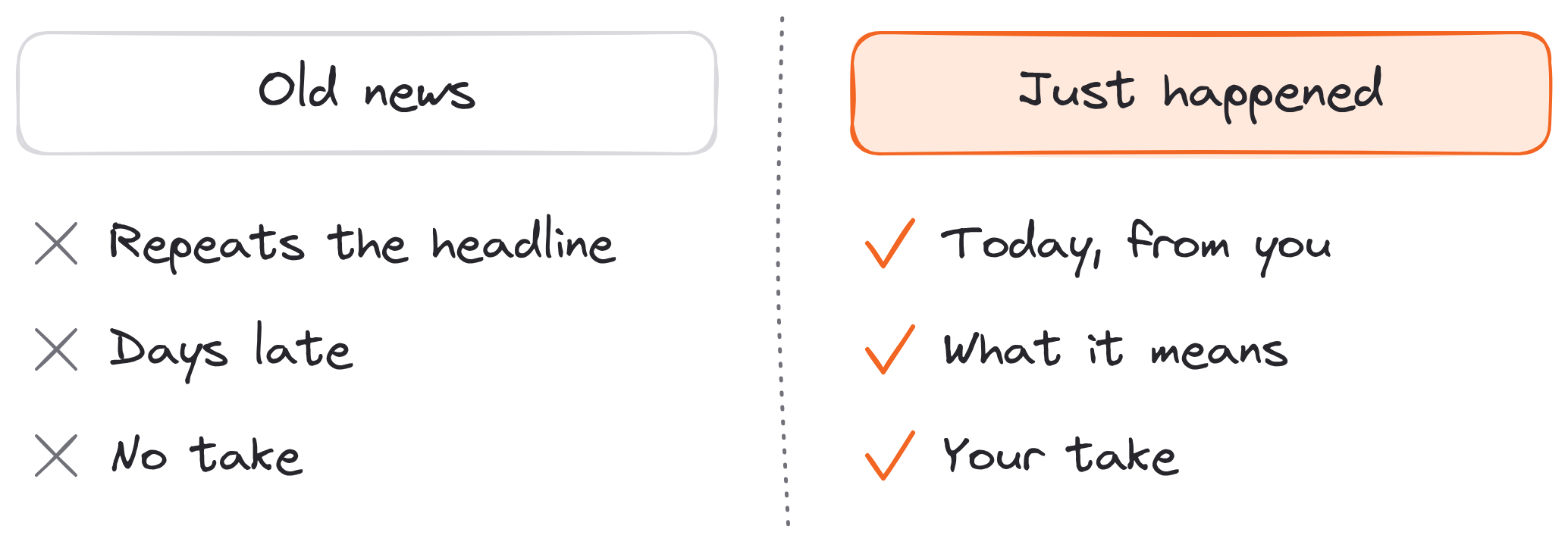
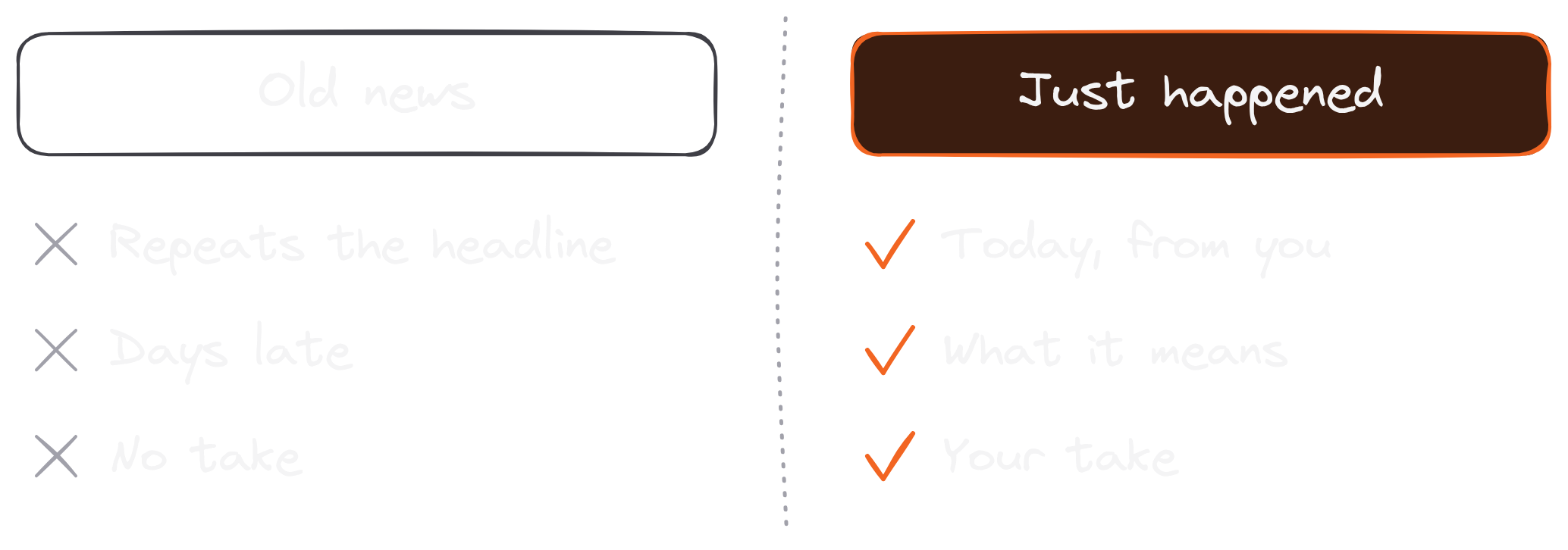
The "this just happened" hook ties your post to something fresh: a launch, an announcement, a change in a tool your reader uses, something that happened to you this week. It's the fourth format on my headline list. Readers stop because it feels current. The key is your take. Everyone else just repeats the news.
- LinkedIn just changed how posts show in the feed. Here's what it means for you.
- I just hit 10,000 subscribers. Here are the 5 posts that got me here.
- Our biggest launch went live this morning. Here's what almost went wrong.
- A new AI tool came out this week. I tested it on 20 posts.
- I just got my first book deal. It started with a 200-word post.
- Today marks one year of writing every day.
- A reader sent me this message this morning, and it changed my plan.
- We just raised our prices for the first time. Here's how we told customers.
- I just finished my 100th client project. Here's my checklist.
- This week, I deleted every app on my phone except two.
Move fast. A "this just happened" hook loses its pull every day you wait.
That's the "this just happened" hook.
Hook Type #10: The Success Story (10 Hook Examples)
Everyone wants to know how someone got from there to here.
The success story hook shows a before and an after in one line, and the post explains the bridge. It's the fifth format on my headline list, and it's a natural fit for case studies, client wins and your own milestones. It works best when the "before" is something your reader recognizes from their own life.
- Two years ago, I had 200 followers. Today, I have 50,000.
- She went from burned-out nurse to full-time writer in 18 months.
- My client went from 0 to 40 inbound leads a month with one change.
- I went from hating writing to doing it every morning.
- We went from 3 customers to 300 without a single ad.
- He was fired in March. By September, he'd started his own agency.
- From 10 hours a week on content to 2. Here's the system.
- I failed my first launch. The second one sold out in a day.
- She wrote 30 posts in 30 days and landed her first client.
- From an empty newsletter to 1,000 readers in 6 months.
Make the gap big and the bridge believable. That's the whole post in one line.
That's the success story hook.


Hook Examples For Emails And Newsletters
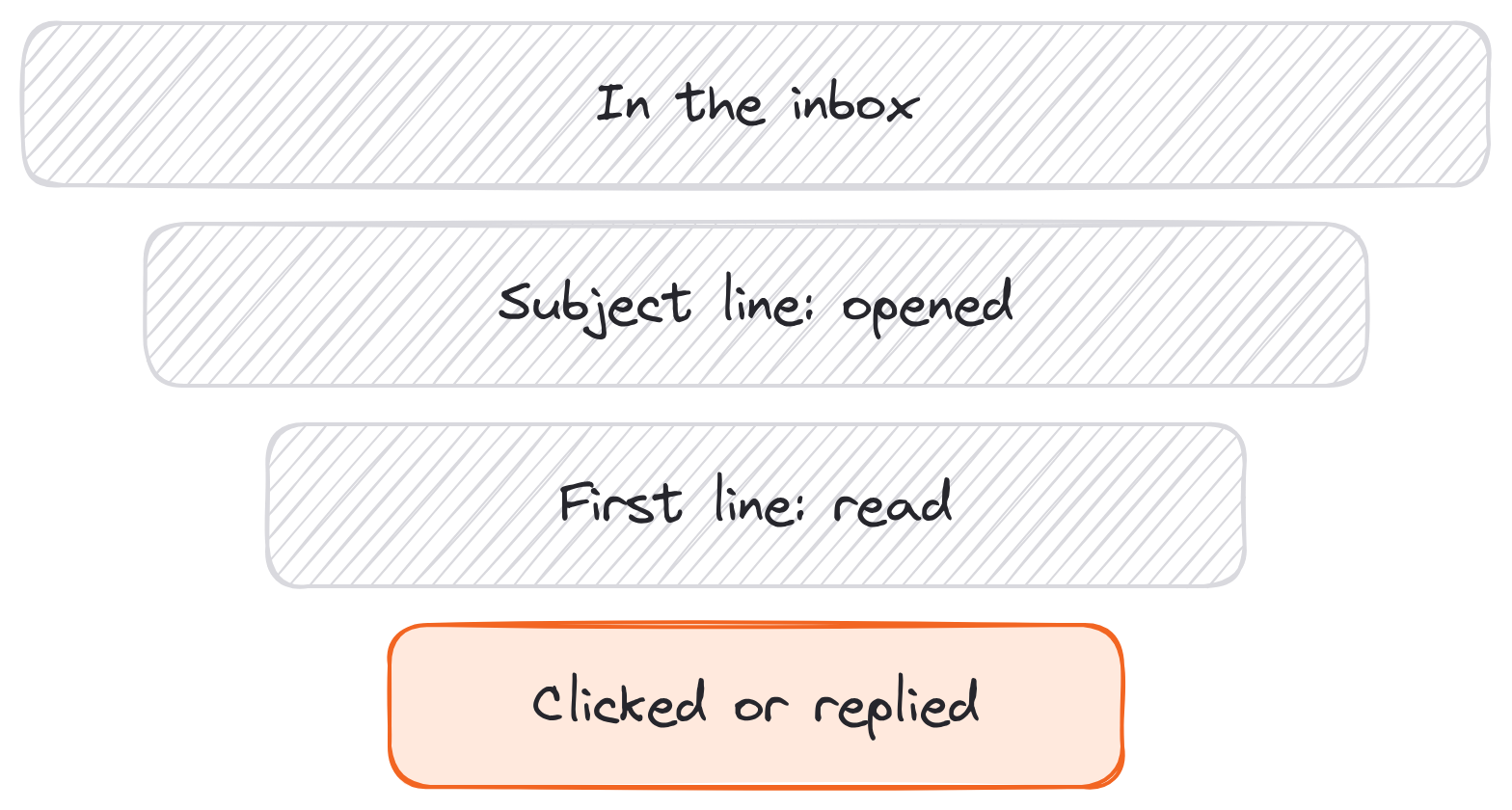
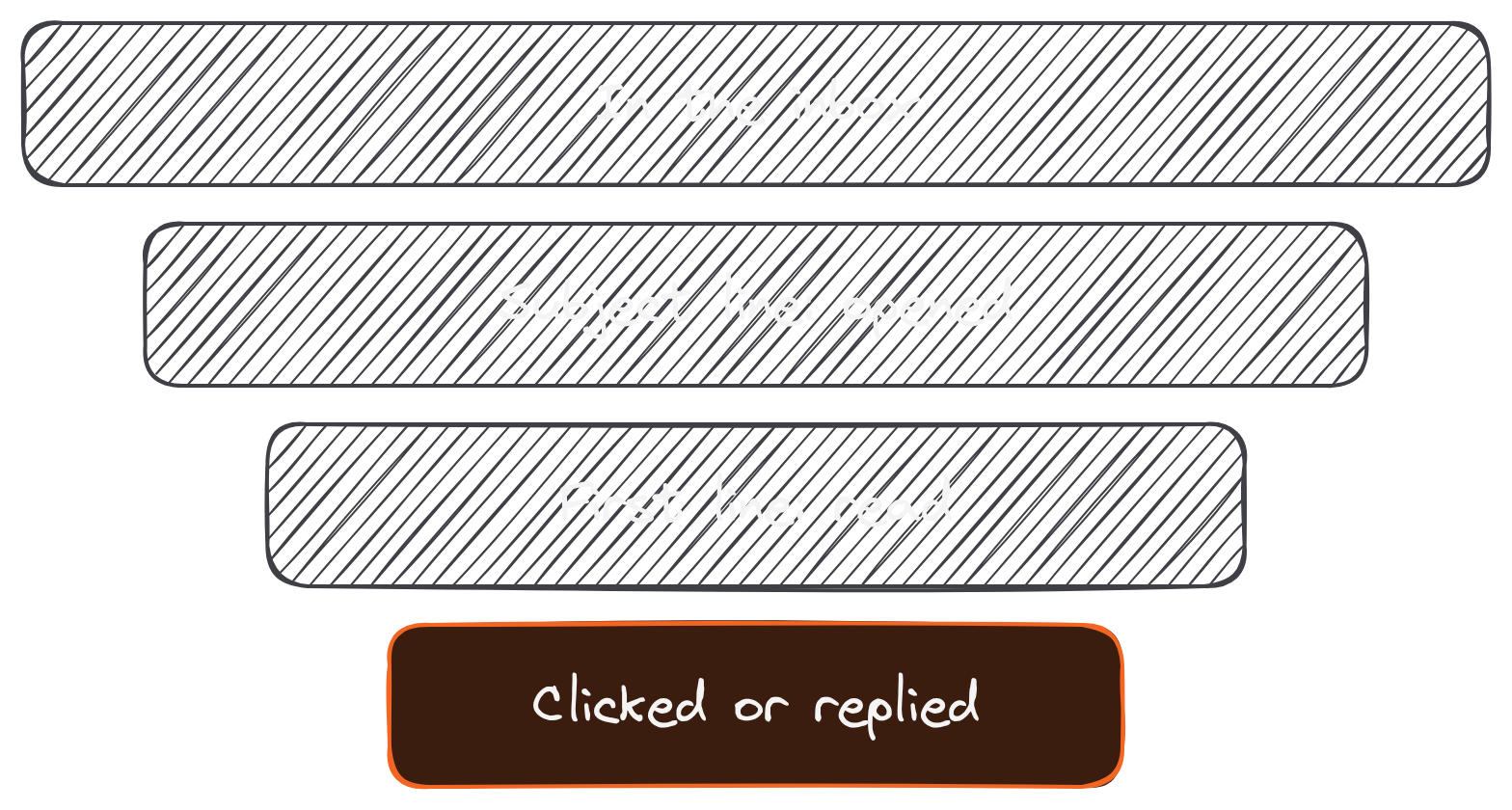
An email has two hooks: the subject line and the first line.
The subject line gets the open. The first line, which most inboxes show next to the subject as a preview, decides whether the reader keeps going. Any of the 10 types above works in both spots. Here's how I'd use them:
- Subject line: keep it short and use the type that makes the clearest promise (big number, dollar sign or question).
- First line: pick a different type than the subject so the two work together: a question in the subject, a moment in time in the first line.
- Add something new: the first line should move past the subject, never restate it.
- Keep the preview in mind: write the first line so it makes sense when someone reads it alone in their inbox.
Here's how a few of the hooks above look as an email:
Subject: I made $10,000 from one post
First line: At 9 p.m. on a Sunday, I almost didn't hit publish.
Subject: Why do the best writers publish less?
First line: I've reviewed 3,000 LinkedIn profiles, and the best ones all post on a schedule.
Your inbox is a feed like any other. Hook it like one.
Those are hook examples for emails and newsletters.
How To Turn Any Hook Idea Into Your Own
A hook you copy word for word will sound like someone else.
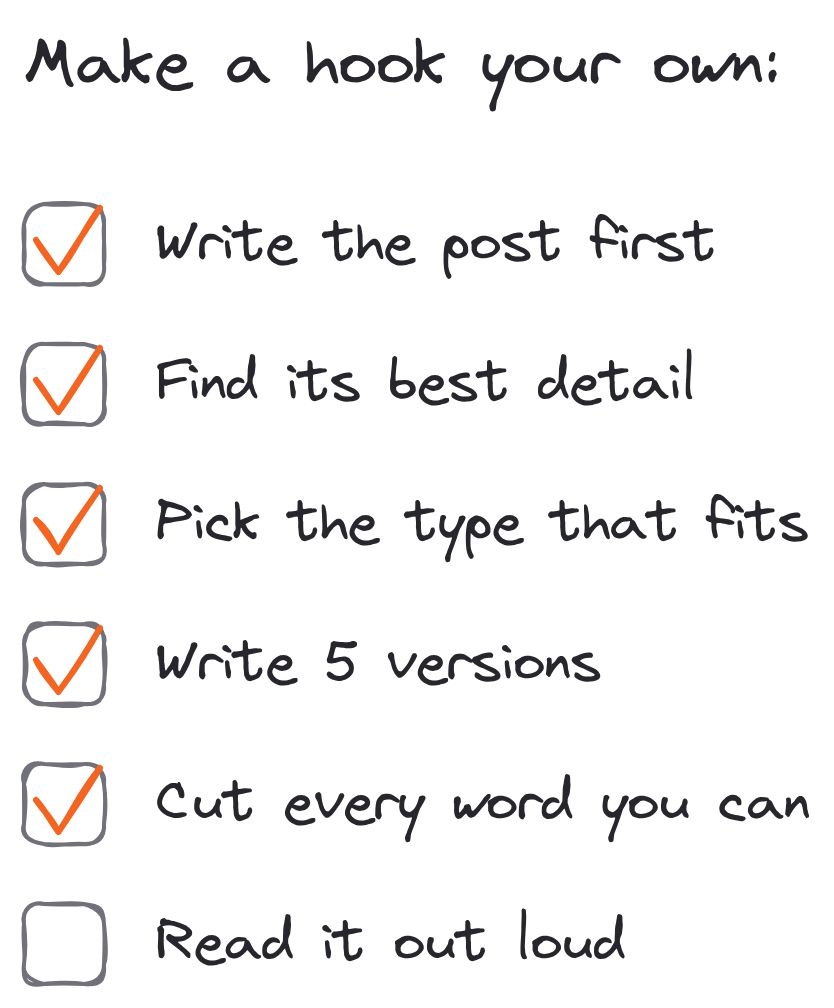
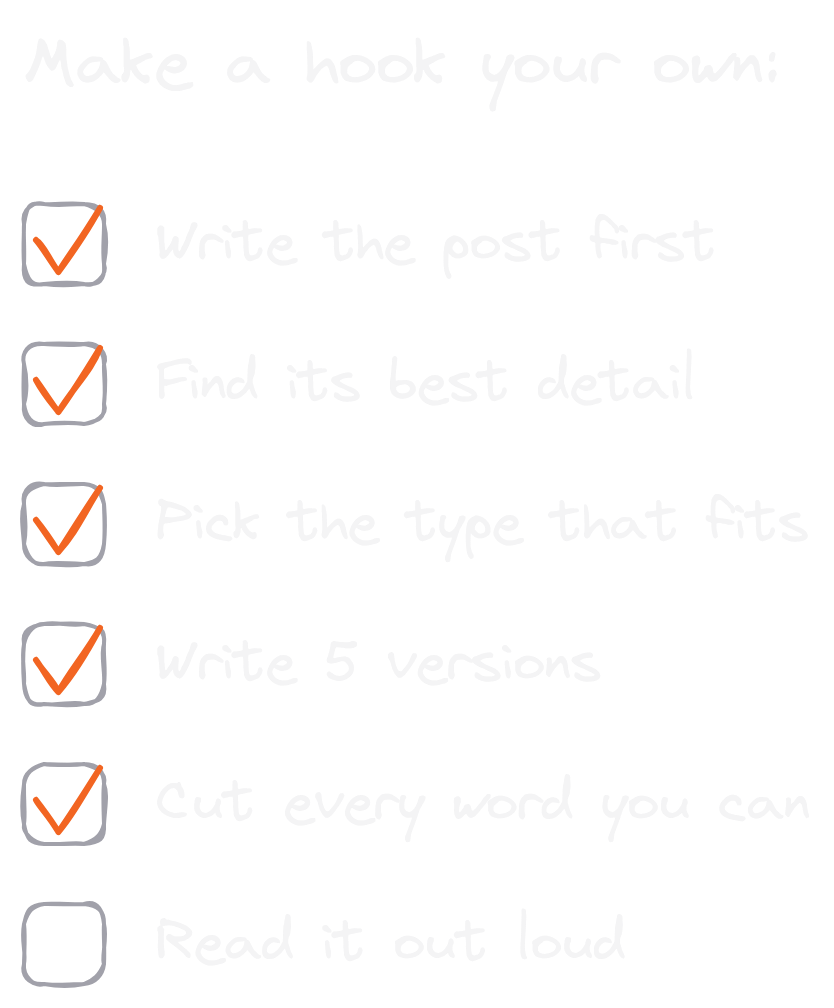
So use these examples as frames. Here's how I turn a hook idea into my own:
- Write the post first. It's easier to hook a post when you know what it says.
- Find the most interesting thing in it. A number, a moment, a mistake or a claim.
- Pick the type that fits that thing. A number goes in a big number hook, a mistake in a confession, a claim in a bold statement.
- Write 5 versions. Use two or three different types. The first one is rarely the best one.
- Cut every word you can. Then cut one more.
- Read it out loud. If you'd scroll past it, so will everyone else.
The type is the frame. Your story is what goes in it. (If you want help finding the voice to write it in, read my guide to tone of voice.)
That's how to turn any hook idea into your own.
FAQ
What is a hook in writing?
A hook is the first line of a piece of writing, written to make the reader read the next line. On social media, it's the line people see before they decide to scroll on. In an email, it's the subject line and the first sentence.
What are good hook ideas for a LinkedIn post?
A big number, a moment in time and a vulnerable confession all work well on LinkedIn, because readers see two or three lines before "…see more." Put the most specific part of the hook in the first line.
How long should a hook be?
As short as it can be while still making a promise. Most of the hooks in this article are under 15 words. On LinkedIn and X, aim to fit the whole hook before the post gets cut off.
Can I use the same hook type every time?
You can, but your readers will notice. Rotate through 3 or 4 types you're good at, and test a new one every week or two.
Is it okay to copy hook examples?
Copy the structure. "I made $X from one post" is a frame anyone can use. The number and the story behind it have to be yours.