How To Write Better: 15 Writing Tips For Beginners Who Want Clearer Drafts And More Readers
Dickie BushNovember 6, 2026
15 writing tips you can use on your next post: write to one reader, split writing from editing, cut filler words and open with a sentence people finish.
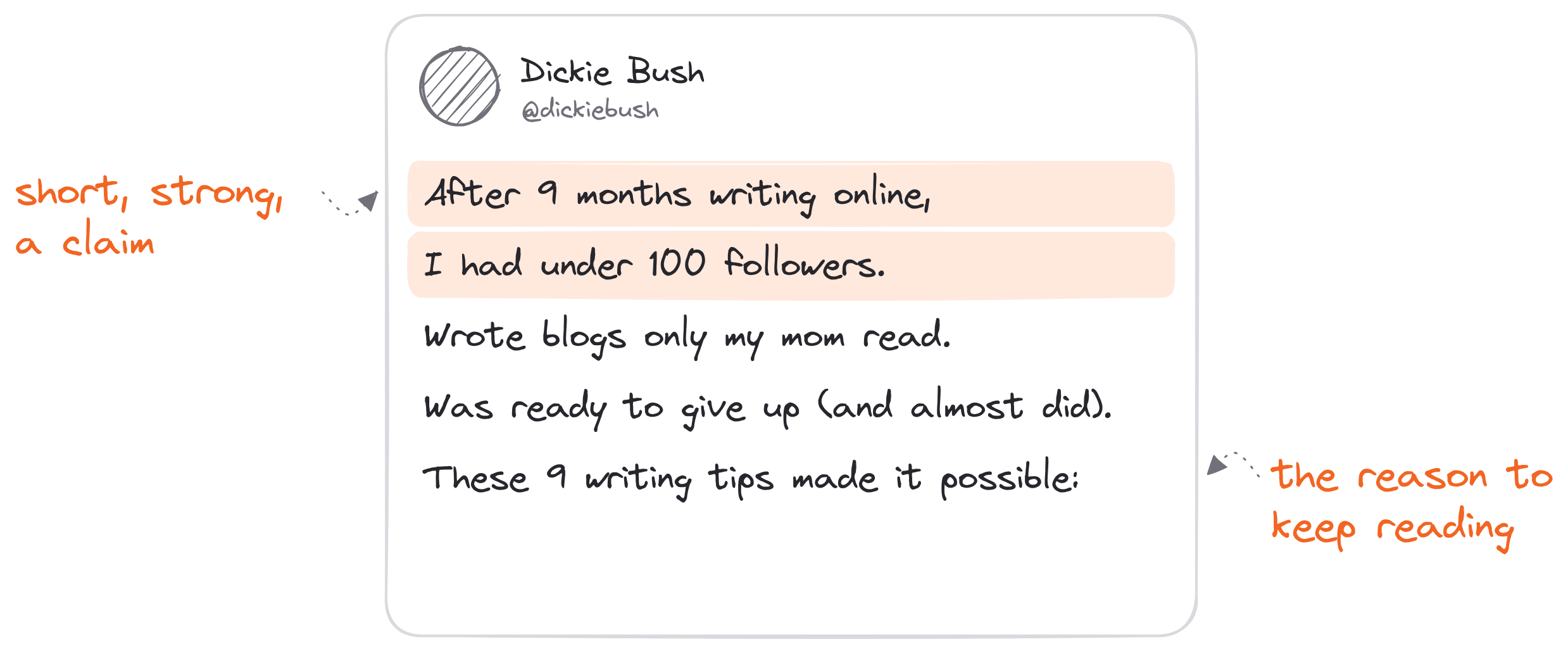
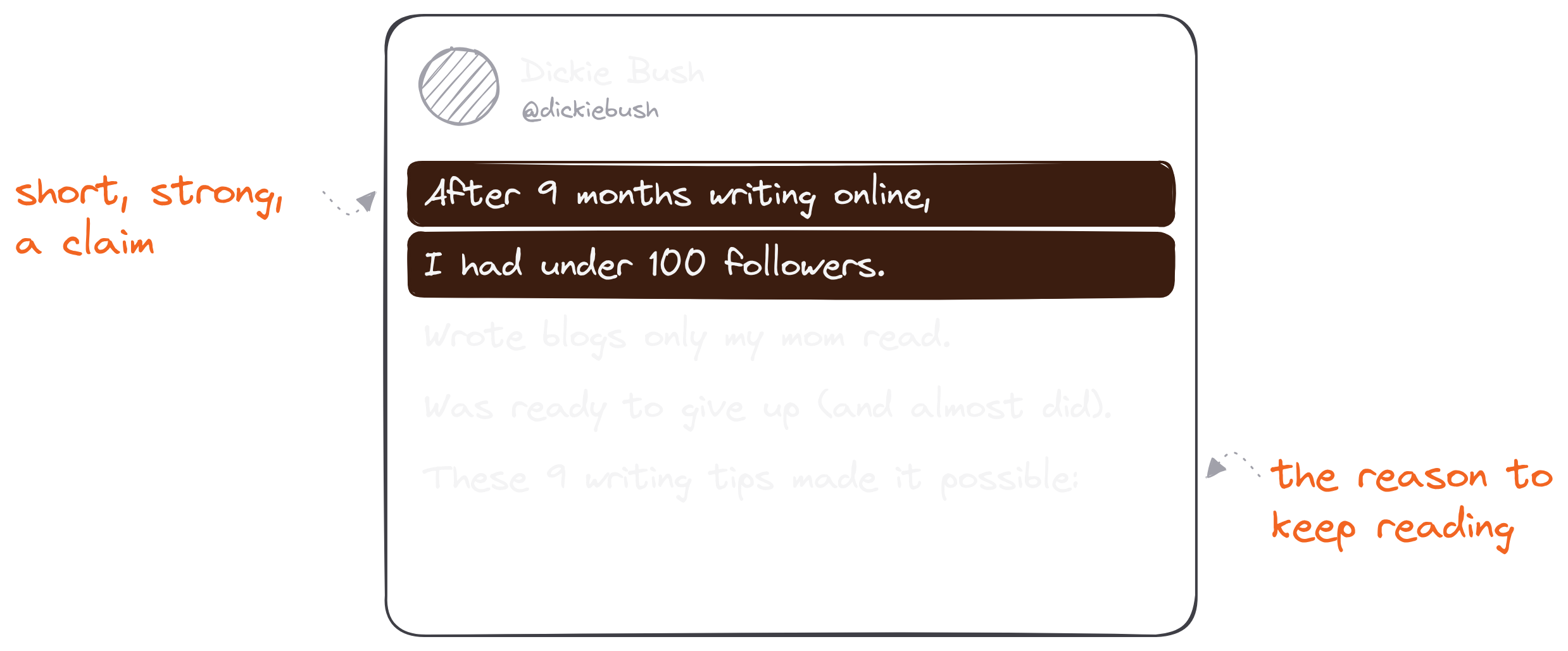
After 9 months of writing online, I had under 100 followers.
I wrote blogs only my mom read. I spent 6 hours every Sunday on a single piece, hit publish and heard nothing back. I was ready to give up, and I almost did. The problem wasn't my ideas or my effort. I was a bad writer, and nobody had ever shown me the handful of techniques that make writing easy to read.
So I went looking for them.
Since then, I've spent over 1,000 hours learning to write and co-founded Ship 30 for 30 with Nicolas Cole. My audience has grown to 588,000 followers. In 2025, our little writing business brought in $8,000,000. Every one of those readers came from a short list of writing tips I wish someone had handed me on day one.
Here are the 15 I use every time I sit down to write. Try one on your next post. (When you're ready to put them to work, write and schedule your posts in Typeshare, read how your writing voice holds up next to AI, and set up a daily writing habit that keeps you shipping. You do the writing; the robots do the rest.)
Tip #1: Write To One Person (The Fastest Way To Write Better)
If you try to write for everyone, you end up writing for no one.
This is the fear that holds back every beginner writer. You worry that being specific will cut readers out, so you stay general. And general writing slides right off the reader. Get uncomfortably specific, and your writing lands with a crowd.
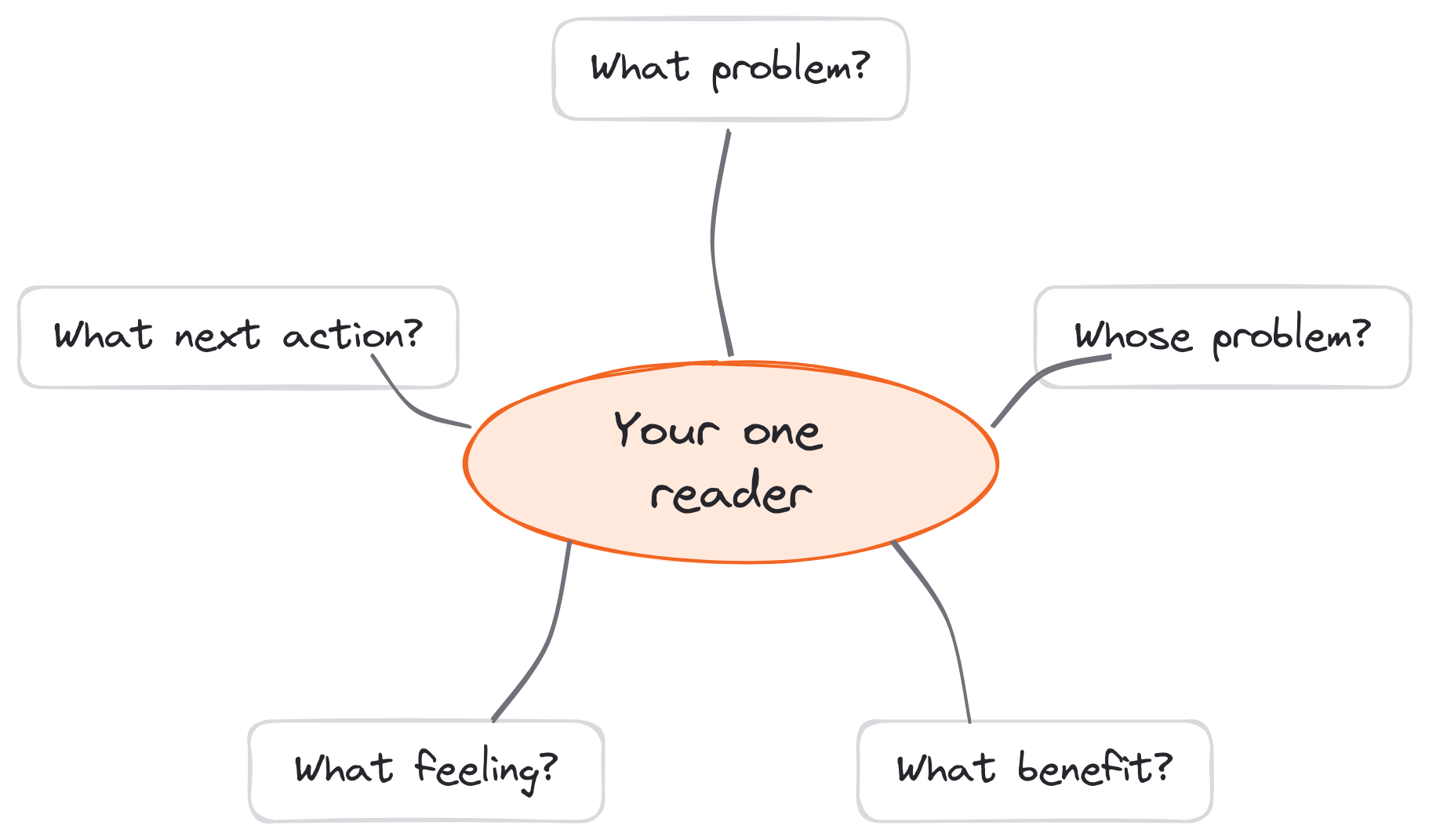
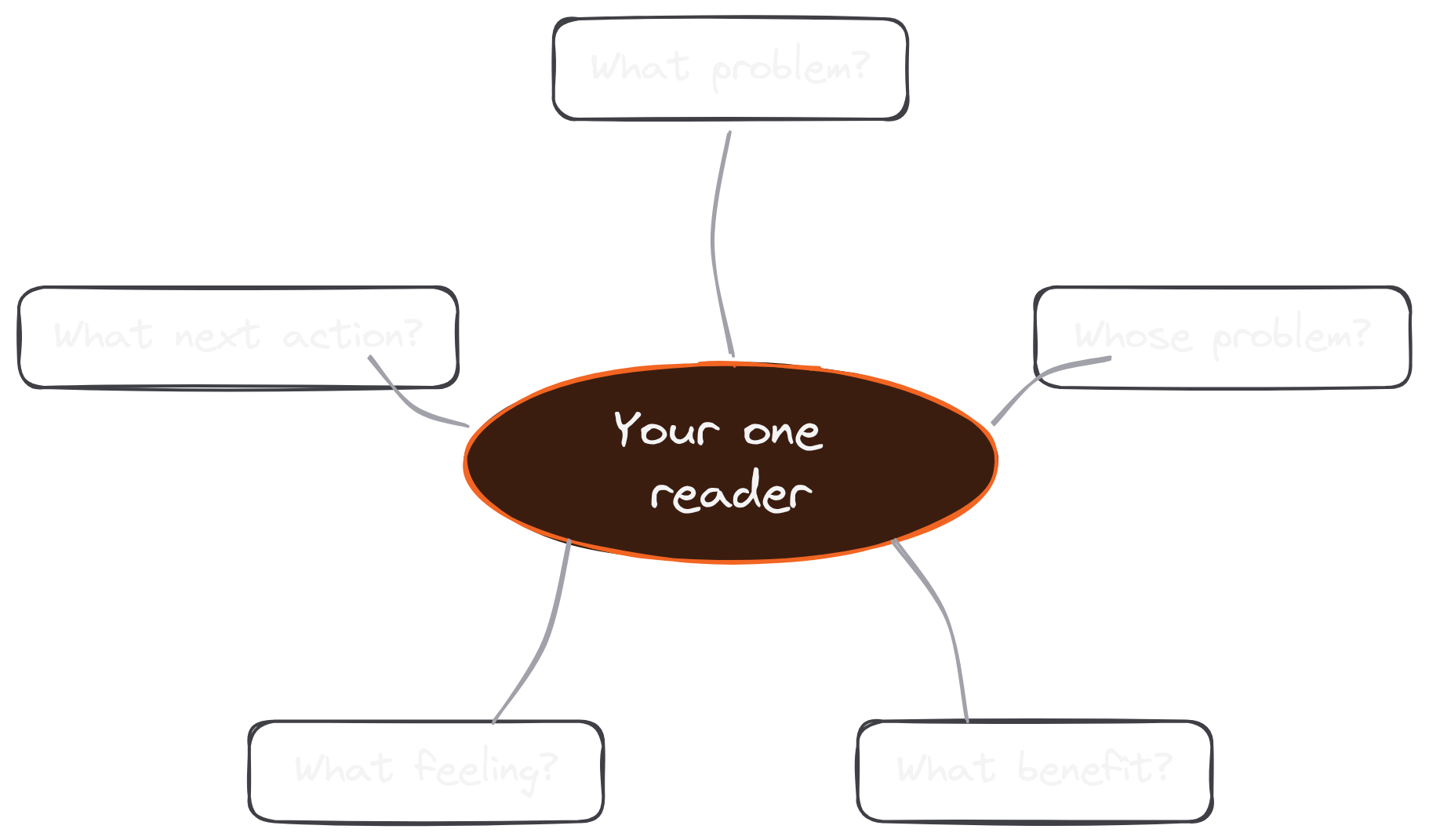
In Ship 30 for 30, we call this Pinpoint Writing. Before you write a word, answer these five questions:
- What problem am I solving?
- Whose problem am I solving?
- What benefit am I unlocking?
- What emotion am I generating?
- What's the next action my reader should take?
If you can't answer the first two with one problem and one person, you're not being specific enough.
In practice, you're writing for the hundreds, thousands or millions of people who share that exact problem. The internet is big enough to guarantee they're out there.
Want to know how to write better by tomorrow? Write to one person.
Tip #2: Write Like You Talk (A Writing Tip For Beginners)
Great writing sounds like someone talking.
Read most first drafts aloud and you'll find them hard to say. Long words, stiff phrases and sentences nobody would ever speak out loud. Writing that is hard to speak is hard to read, because your reader is saying the words in their head as they go.
So skip the keyboard for your next draft and use your voice:
- Go for a walk.
- Record yourself talking through one idea on your phone (I use a transcription app like Otter).
- Use the transcript as the outline for your piece.
- Keep the same voice when you clean it up.
Just like that, you've found your writing voice. It was the one you talk in all along.
Of all the writing tips for beginners, this is the one I'd hand out first.


Tip #3: Write And Edit At Different Times
I used to think writing and editing were the same thing.
They're two different processes. Writing is all addition: getting raw material out of your head and onto the page, fast and with no judgement. Editing is all subtraction: slow and careful, pruning every word. When you try to do both at once, you stall on the first sentence and never reach the second.
Your writing also looks great right after you write it, because you just wrote it.
It needs time to breathe. Here's how I split the two:
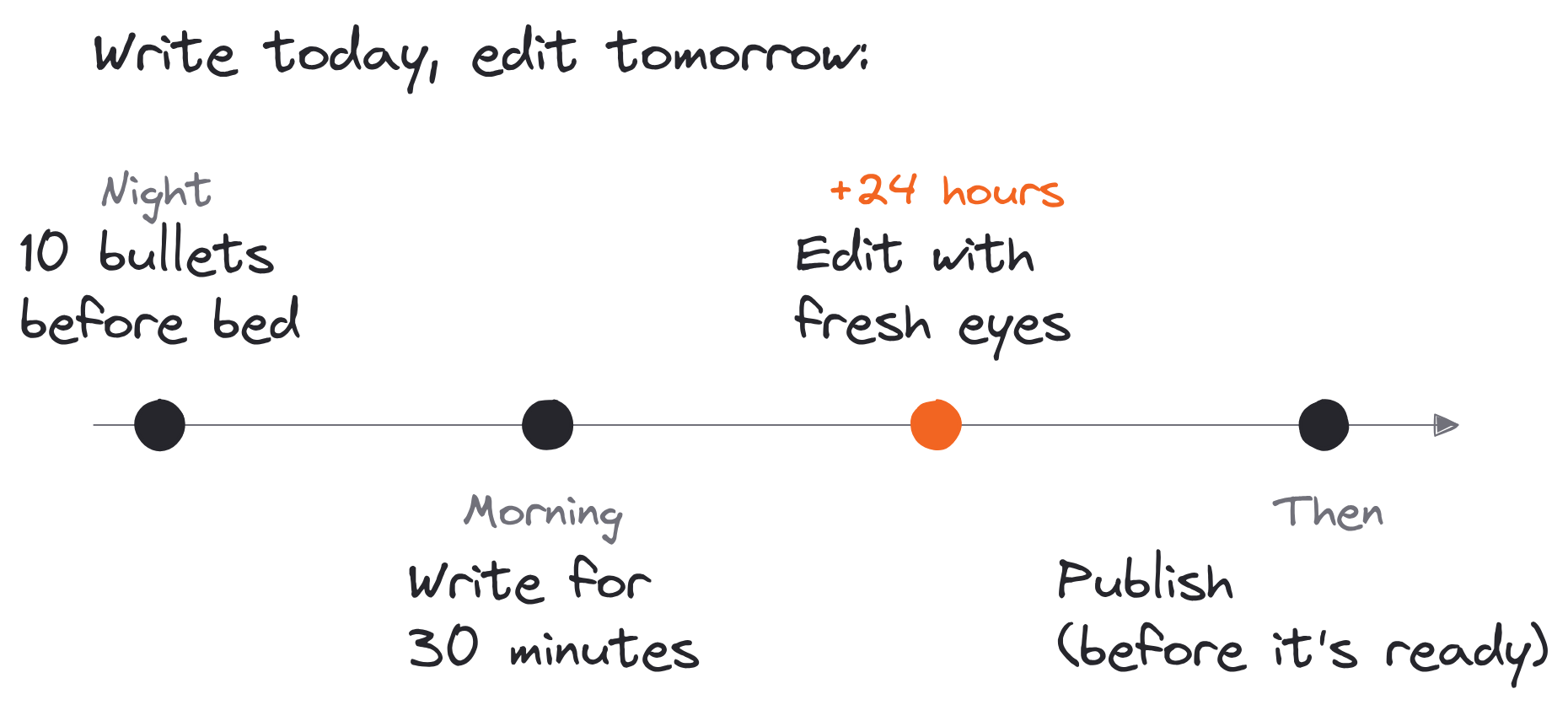
- Brain dump 10 bullets on an idea before bed.
- Wake up and write about it for 30 minutes.
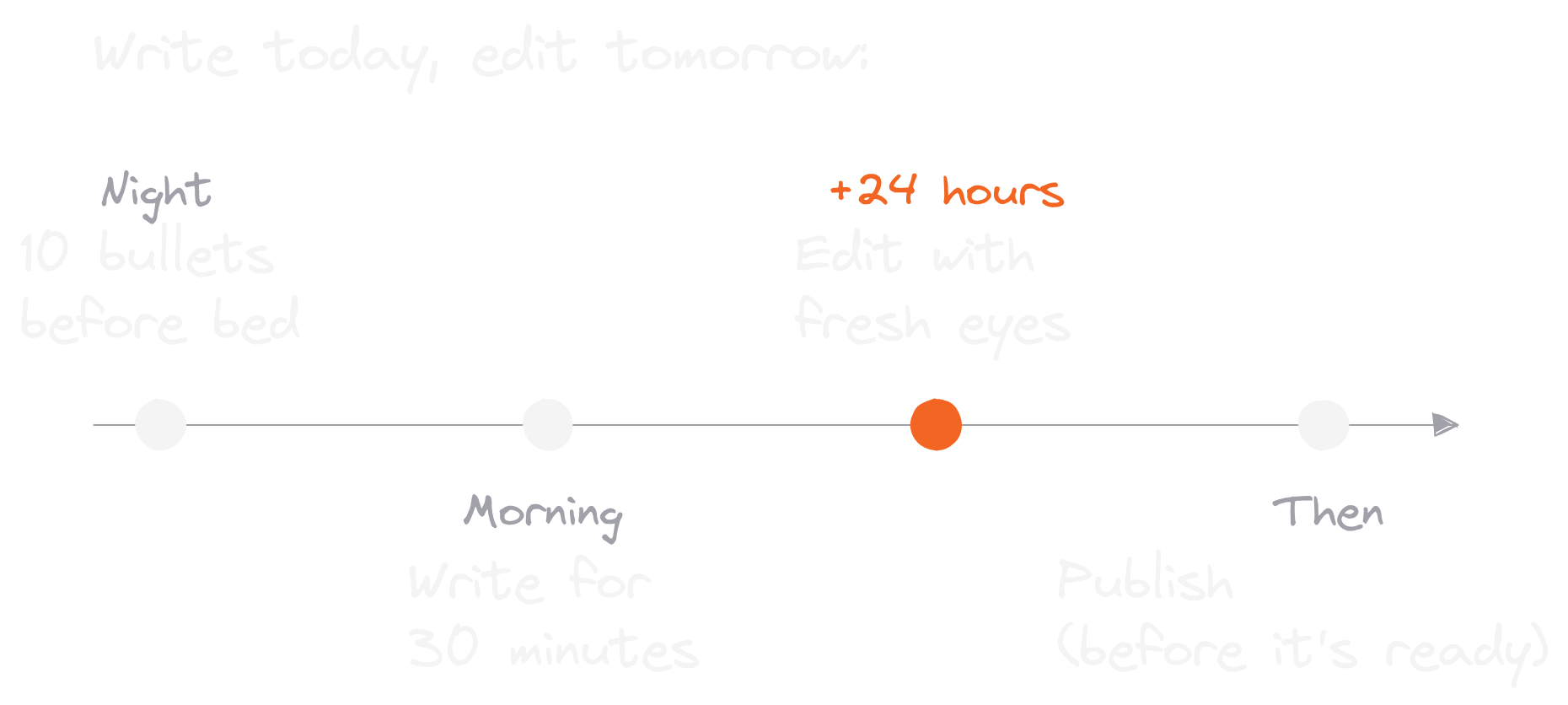
- Wait 24 hours.
- Edit it the next morning.
- Hit publish (before it feels ready).
During the writing step, rip out your backspace key. During the editing step, put it back and rip out everything else.
Write today, edit tomorrow.
Tip #4: Read Your Writing Aloud
It's hard to see the clunky bits in your writing, so you have to hear them.
Everything looks fine on the screen. Read the same paragraph out loud, though, and the problems jump out within a sentence or two. This is the easiest writing upgrade you can make, and it costs about two extra minutes per post.
Listen for two things:
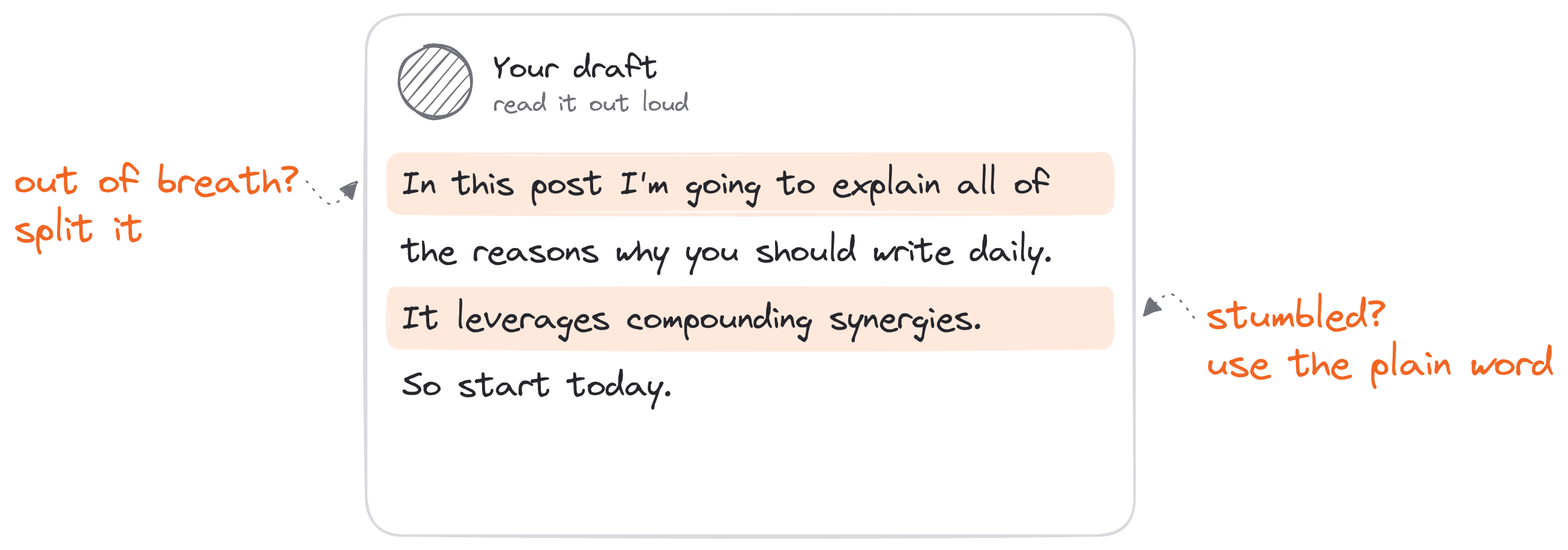
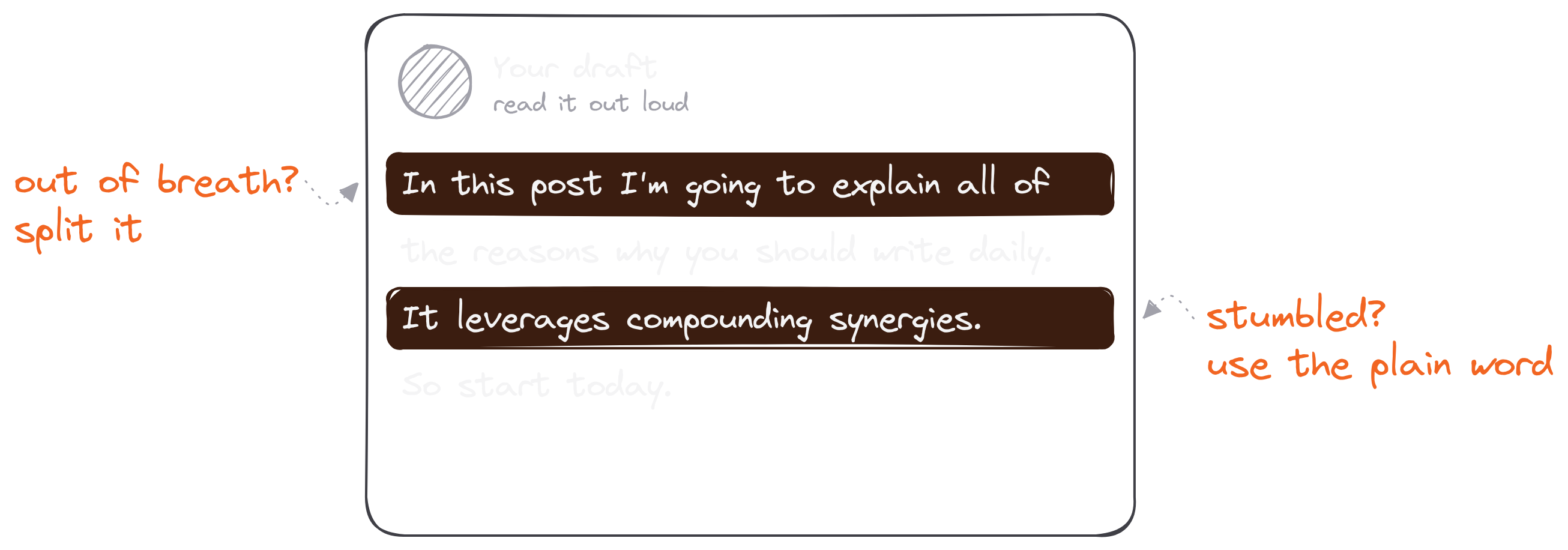
- Where you run out of breath. That's a run-on sentence. Split it in two.
- Where you stumble over a word. That's jargon, or you trying to sound smart. Swap it for the plain word.
I learned this one from the copywriter Gary Halbert, and I still do it on every post. Your ear catches what your eye skips.
If you can't say it, your reader can't read it.
Tip #5: Edit On A Different Screen
Most people write and edit on a desktop and never check how the piece looks on a phone.
That's a problem, because most of your readers are on one. At least 70% of reading happens there. On a phone, people skim first and read second. If the skim doesn't give them a reason to stop, they're gone.
So edit on the device your readers use.
Send the draft to yourself, open it on your phone and read it top to bottom. You'll see walls of text you missed, paragraphs that need a break, and lines that run on for a whole screen. Bonus points for switching formats, from typed to printed or from your notes app to a messaging app. A new screen gives you a new perspective, and it makes what to cut obvious.
Write where you want. Edit where they read.
Tip #6: Prep The Page (A Content Writing Tip That Kills Blank Pages)
A blank page is the hardest thing in writing to fill.
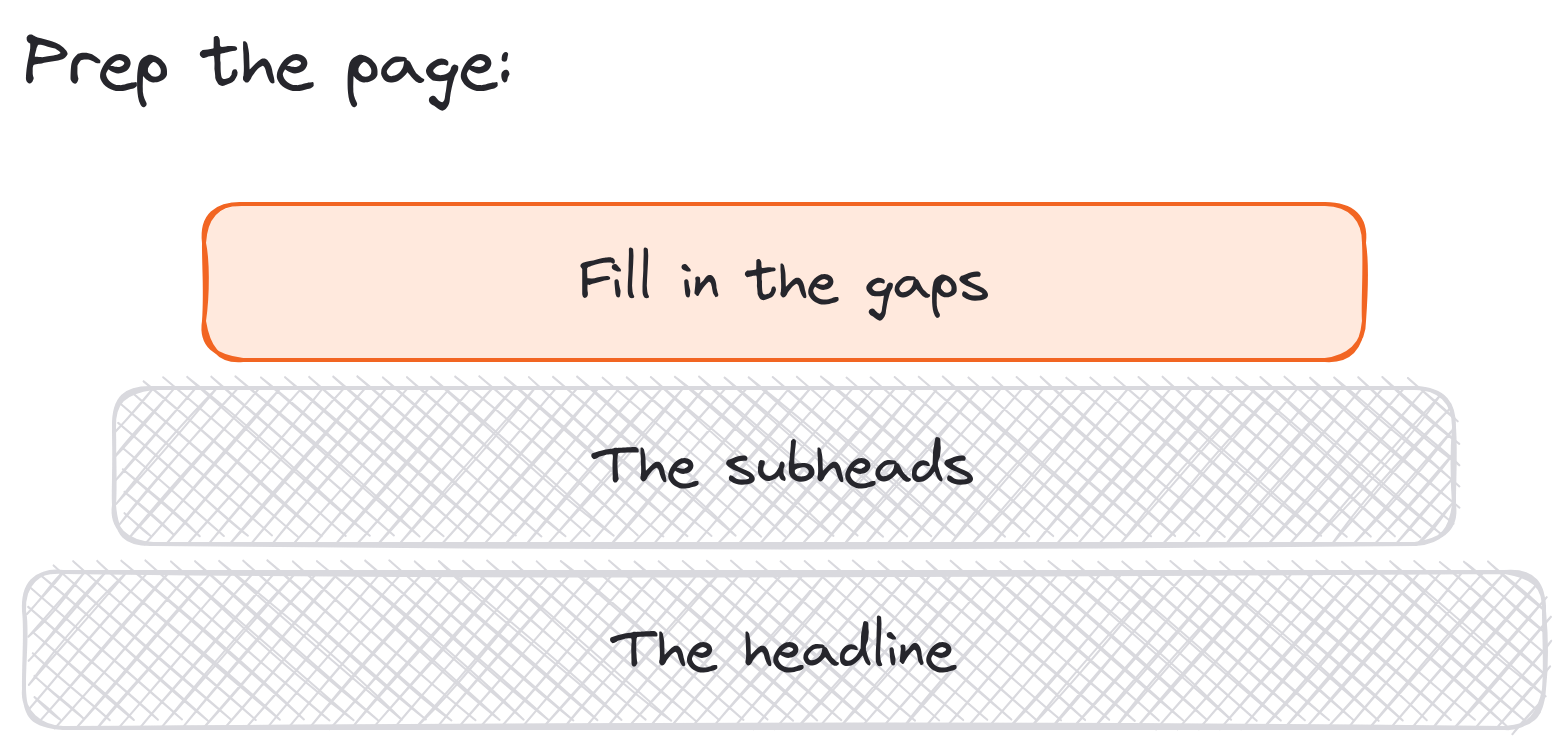
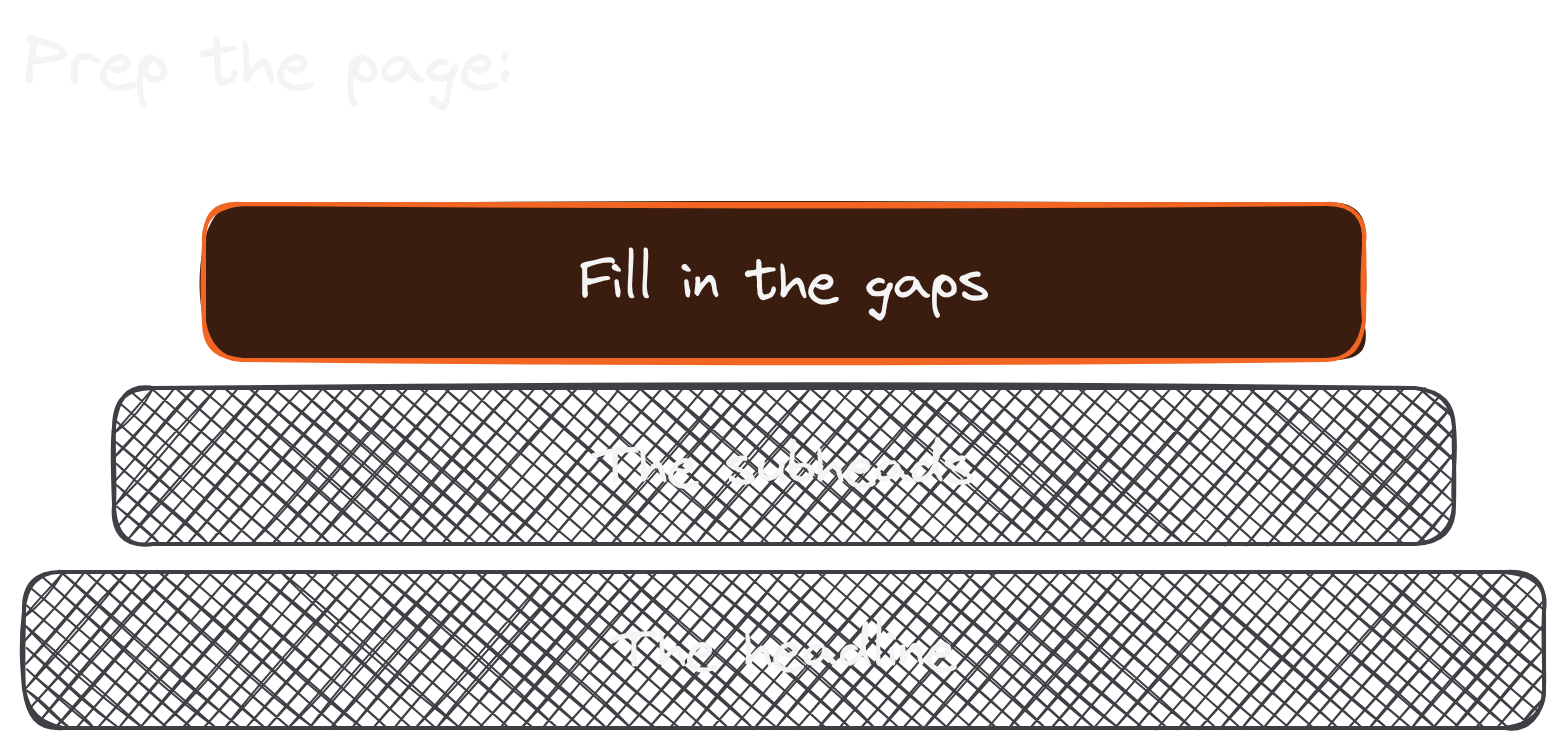
So don't start with one. Before you write a single sentence, prep the page in three steps:
- Write the headline.
- Write your subheads underneath it.
- Fill in the gaps.
Now every section has a job, and you only have to write the next small piece. You'll also notice the holes in your thinking before you've spent an hour on paragraphs. If a subhead doesn't fit the headline's promise, cut it now, while it's one line instead of 300 words.
Prepping the page is one of the 19 writing tips Cole and I share most, and it's the content writing tip I'd give anyone who sits down and freezes.
Prep the page, and the page fills itself.
Tip #7: Compress What You're Saying Into Bullets
If you don't know the bullet points of what you're writing, you don't know what you're saying.
Fuzzy writing comes from fuzzy thinking. You sit down with a vague sense of the idea, write 800 words around it, and hope the point shows up somewhere along the way. Usually it doesn't. The reader finishes and can't tell you what the piece was about, because you couldn't either.
The fix takes five minutes.
Before you draft, write your idea as three to five bullets. One line each, no full sentences. If you can't do it, go back and think some more. Once the bullets read cleanly, each one becomes a paragraph or a section, and the draft almost writes itself. (This is the same move as Tip #3's 10 bullets before bed.)
Clear bullets make clear writing.


Tip #8: Open With A Short, Strong First Sentence
Crack open the Wall Street Journal and look at how the top stories begin.
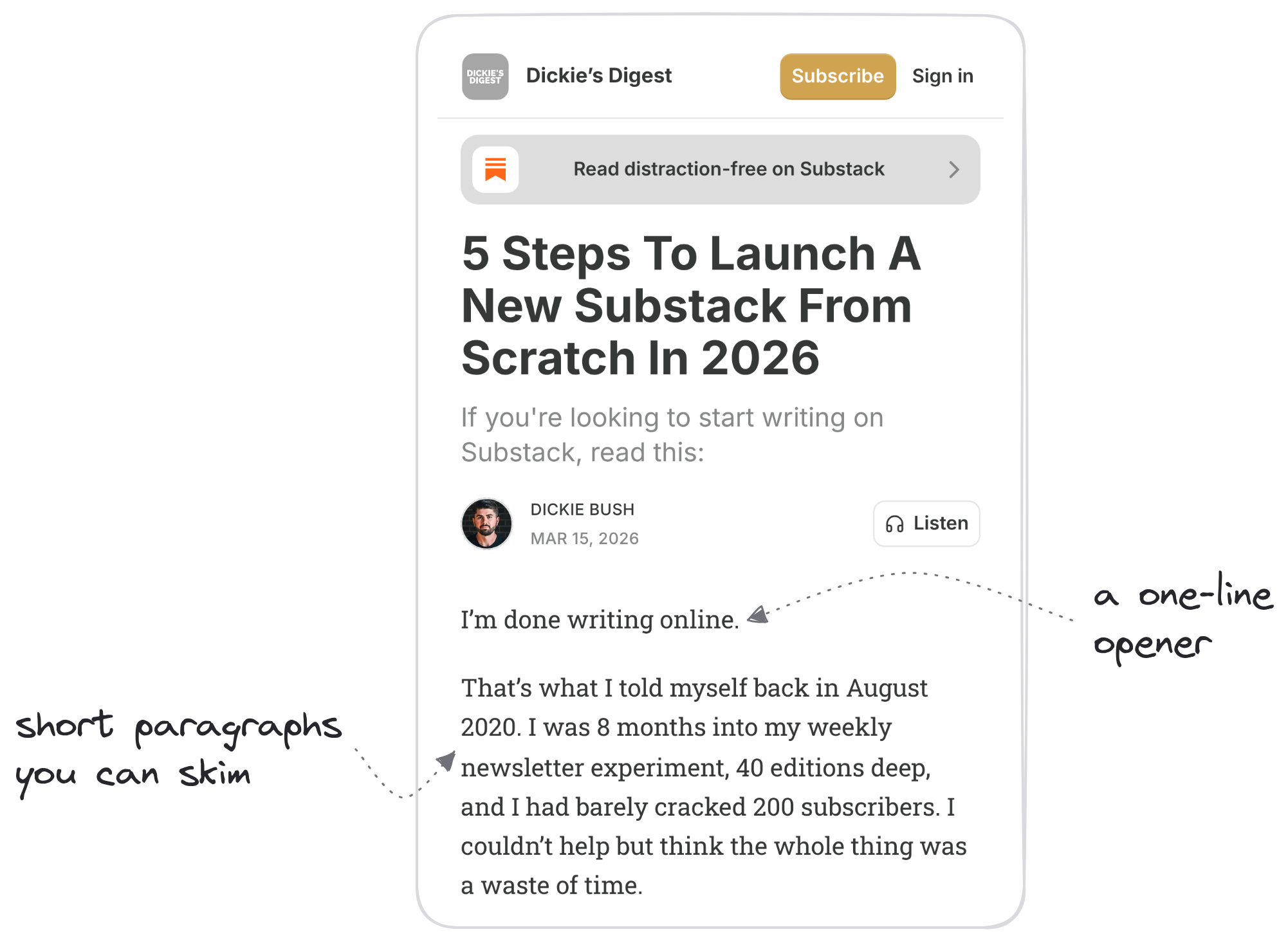
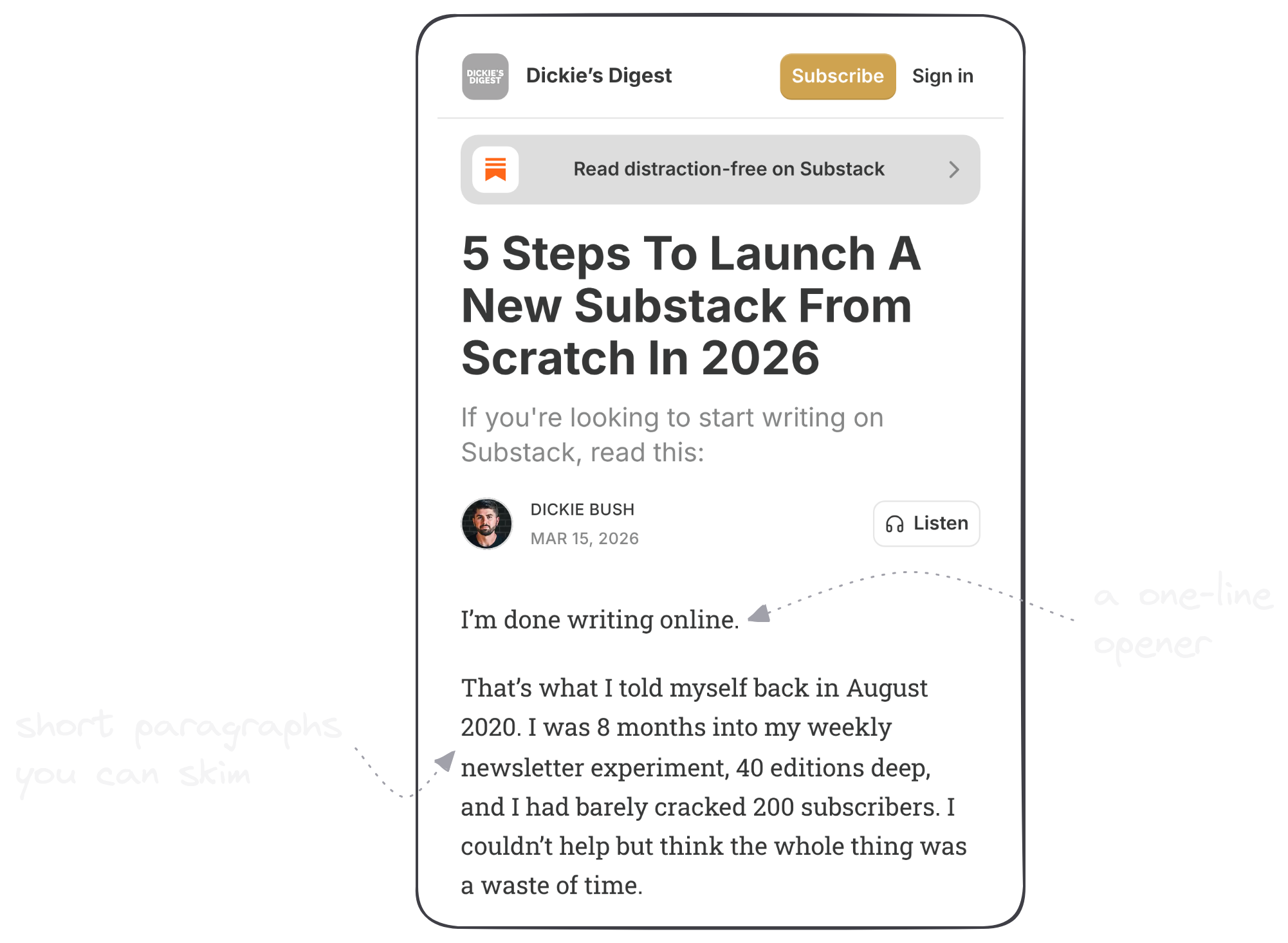
Most of them start with one or two short sentences. That's on purpose. The only job of your first sentence is to get the reader to read your second one, and a wall of text at the top of a post kills that job before it starts.
So make your first sentence short, strong and declarative. A few that work:
- "I almost quit writing in August 2020."
- "Most writing advice is wrong."
- "After 9 months of writing online, I had under 100 followers."
Each one makes a clear claim and leaves a question hanging. Notice that none of them opens with "I think" or "In this post, I'll explain." I picked this up from Writing That Works, a 1981 guide by two advertising executives, Kenneth Roman and Joel Raphaelson. Their golden rule fits in two words: don't mumble.
Never open with a wall of text.
Tip #9: Use The 1/3/1 Sequence
Your first sentence got the reader in. The 1/3/1 sequence keeps them reading.
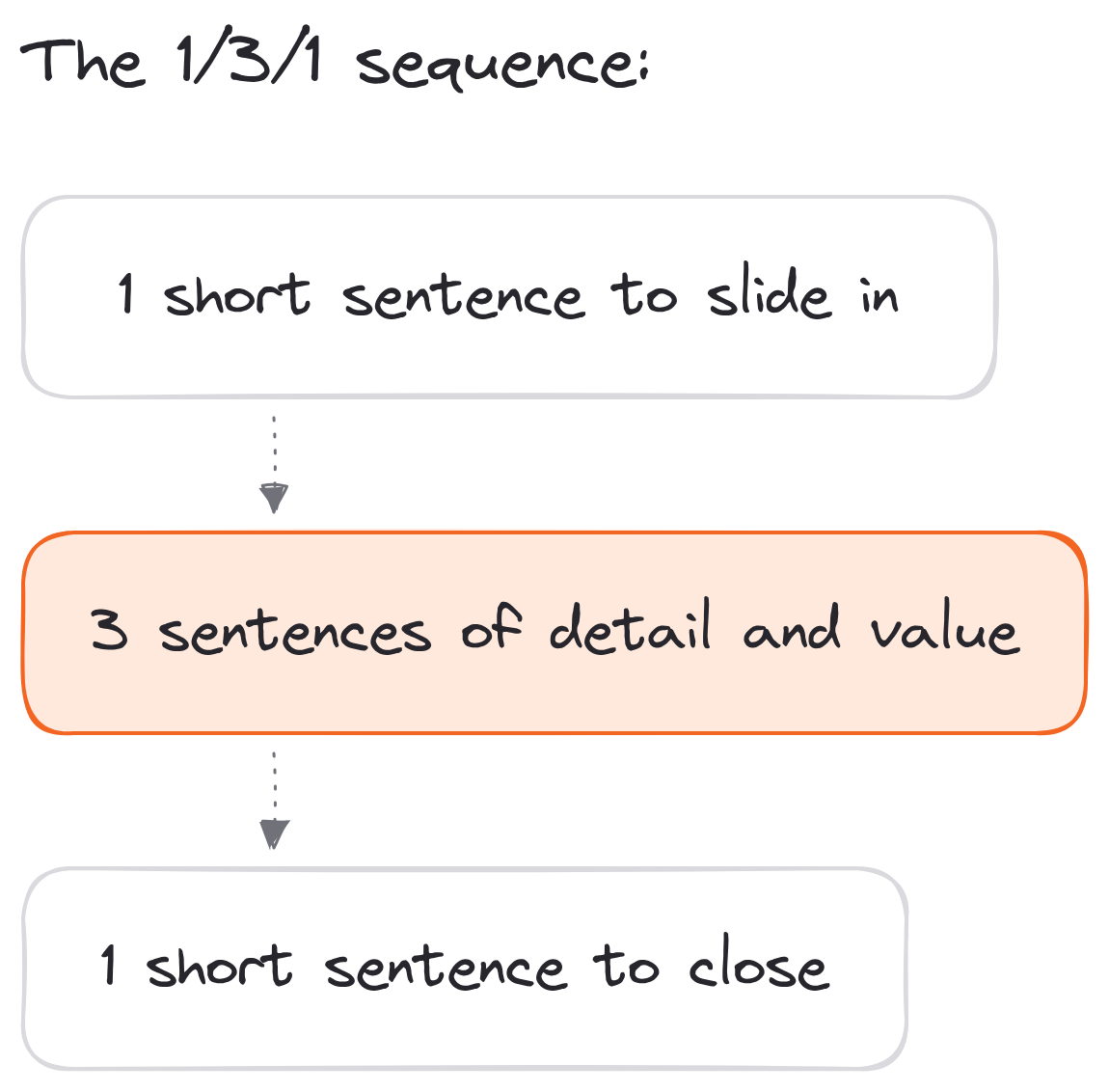
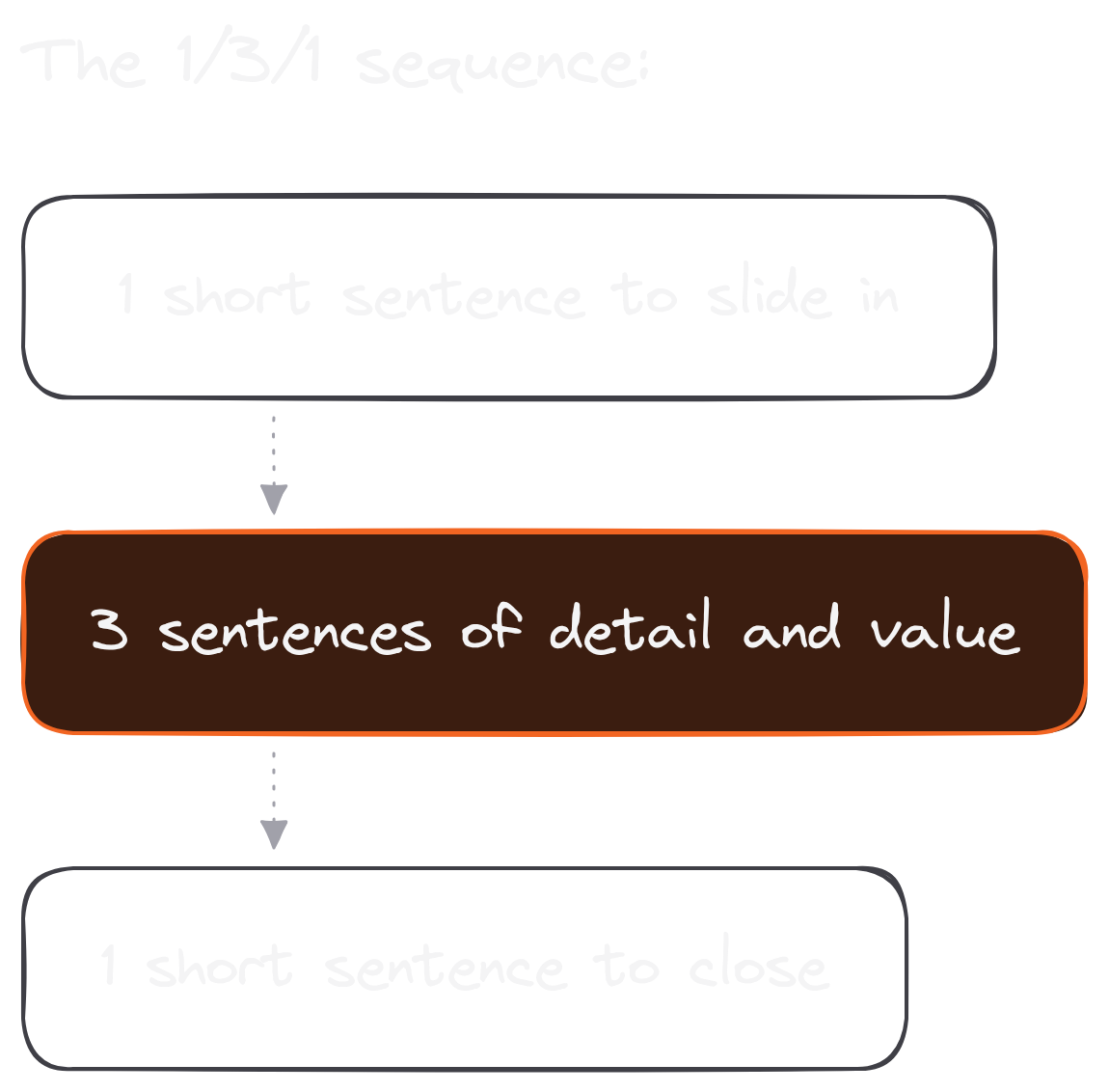
It's a cadence for your opening paragraphs, and it's simple. One short sentence. Then three sentences that add detail, color and the actual value. Then one short sentence that closes the idea. The first and last lines read like candy, and the middle is where you deliver.
You've already read a dozen of these in this article.
Go back up to Tip #8 and look at its first paragraphs. Short line, a longer paragraph, short line. Once you see the pattern, you'll find it all over the internet's best writing, because it gives the reader's eyes an easy place to land and a reward for getting through the middle. When you need more room, grow the middle (1/4/1, 1/5/1) and keep the short lines on either side.
One, three, one.
Tip #10: Make The Last Word The Most Important
Readers remember the end of a sentence.
That's where the emphasis lands, so put your most important word there. Here's an example from our 19 writing tips:
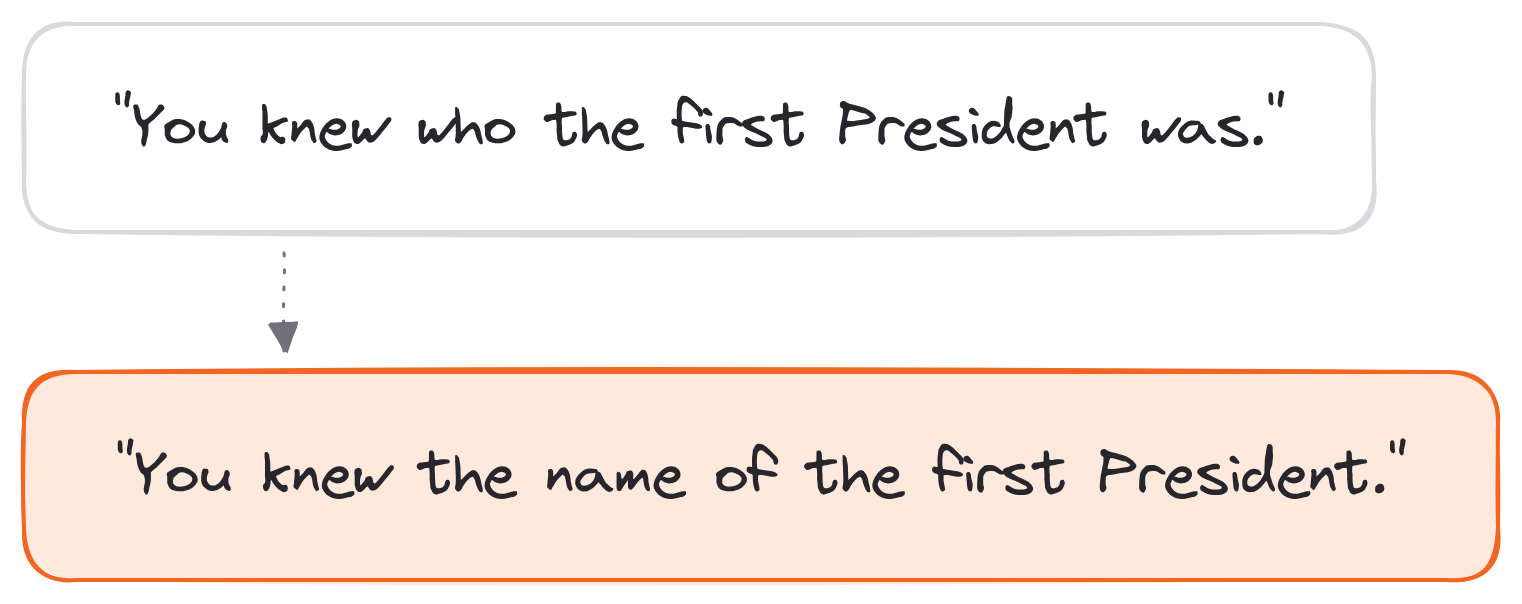
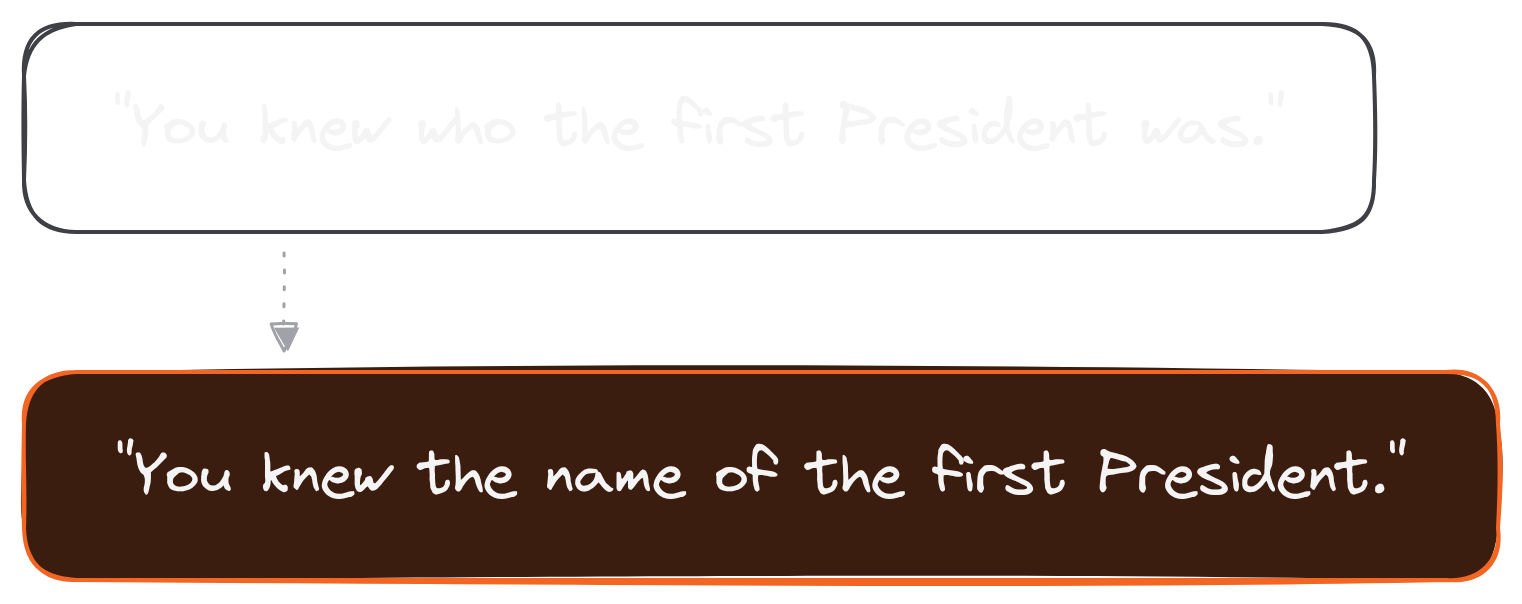
Before: "You knew who the first President was."
After: "You knew the name of the first President."
The second version ends on "President," the word that matters. The first ends on "was," which carries nothing.
Try it on your next draft. Read the last word of every sentence in your opening and ask whether it's the word you want ringing in the reader's head. Most of the time, a small reshuffle moves the strong word to the end and the sentence gets sharper without getting longer.
End on the word that matters.
Tip #11: Cut The Words Your Reader Skips
Some words take up space and give the reader nothing.
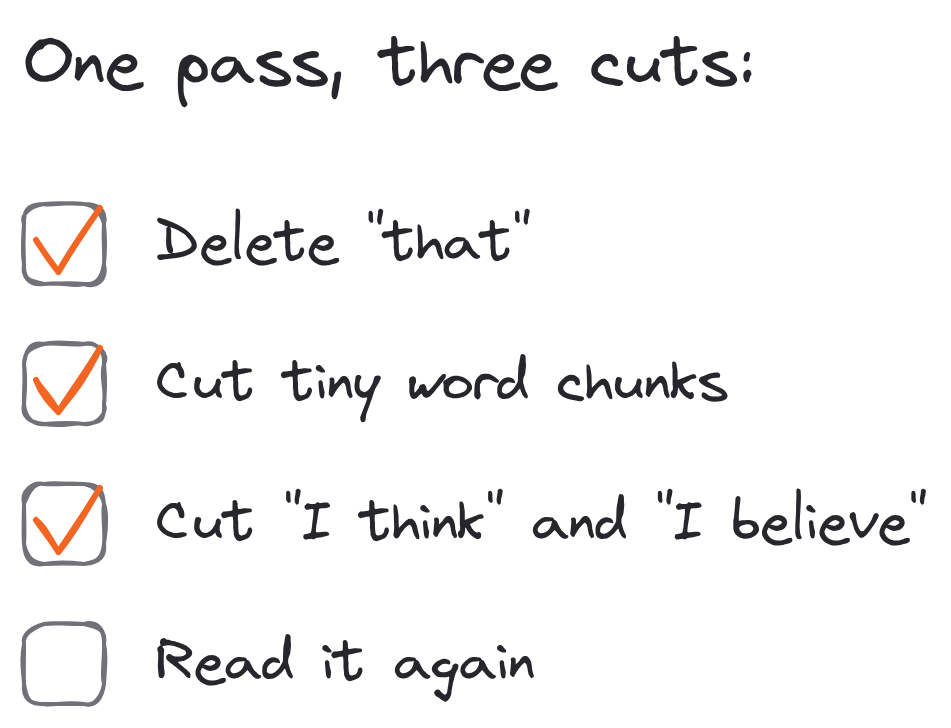
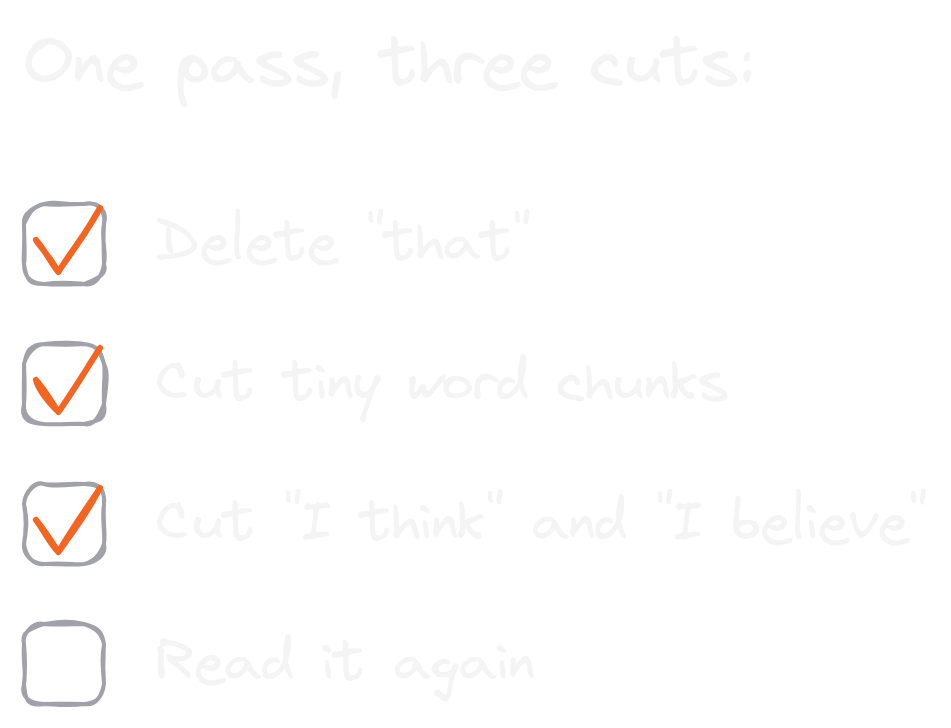
Three kinds show up in almost every beginner's draft:
- "That." 99% of the time, you don't need it. "I think that you should start" becomes "You should start."
- Tiny word chunks. "It is for," "If it is," "There are many people who." Rewrite around them.
- Opening "I" phrases. "I think," "I believe," "I have learned." Delete them and say the thing.
Here's one sentence with all three: "I believe that there are a lot of writers who never publish." Cut them and you get: "Most writers never publish." Seven words gone, and the claim got stronger.
Do a pass on your next draft for only these three. Use your editor's search to find every "that" and ask whether the sentence needs it. The piece comes out shorter and more confident.
Cut what the reader skips anyway.
Tip #12: Resist Every Urge To Be Clever
You're competing with Netflix and TikTok for attention.
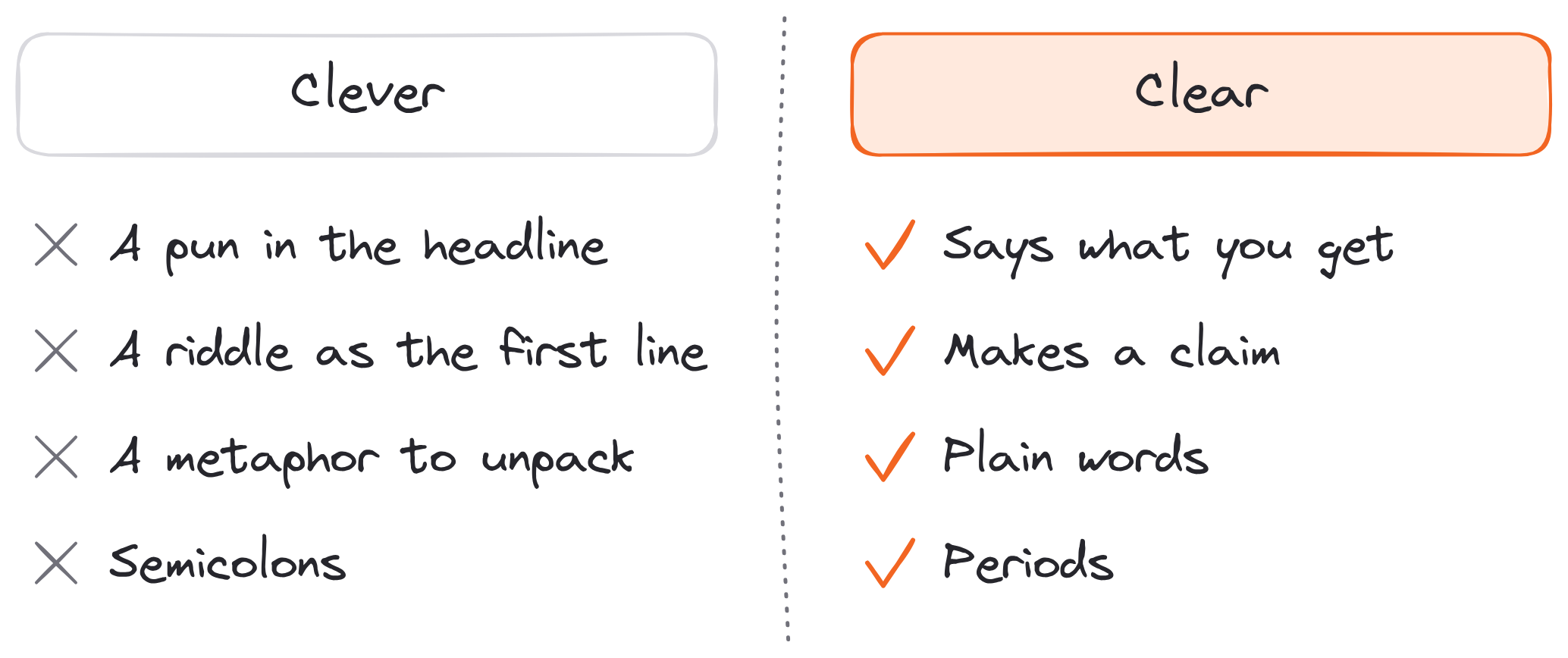
Plenty of writers think the way to stand out is to be clever: puns in the headline, a riddle in the first line, a metaphor that takes a second read to unpack. More often than not, clever leads to a confused reader. And a confused reader is a gone reader.
Clear always beats clever. Here's what that looks like in practice:
- A headline that says exactly what the reader gets.
- Plain words in place of fancy ones.
- No semicolons (most readers don't know what they mean).
- Language that matches your audience: niche terms for a niche crowd, everyday words for everyone else.
This goes for creative writing tips too. Even a story only works when the reader can follow it.
When in doubt, be clear.
Tip #13: Raise Your Rate Of Revelation
Readers stay as long as they keep learning something new.
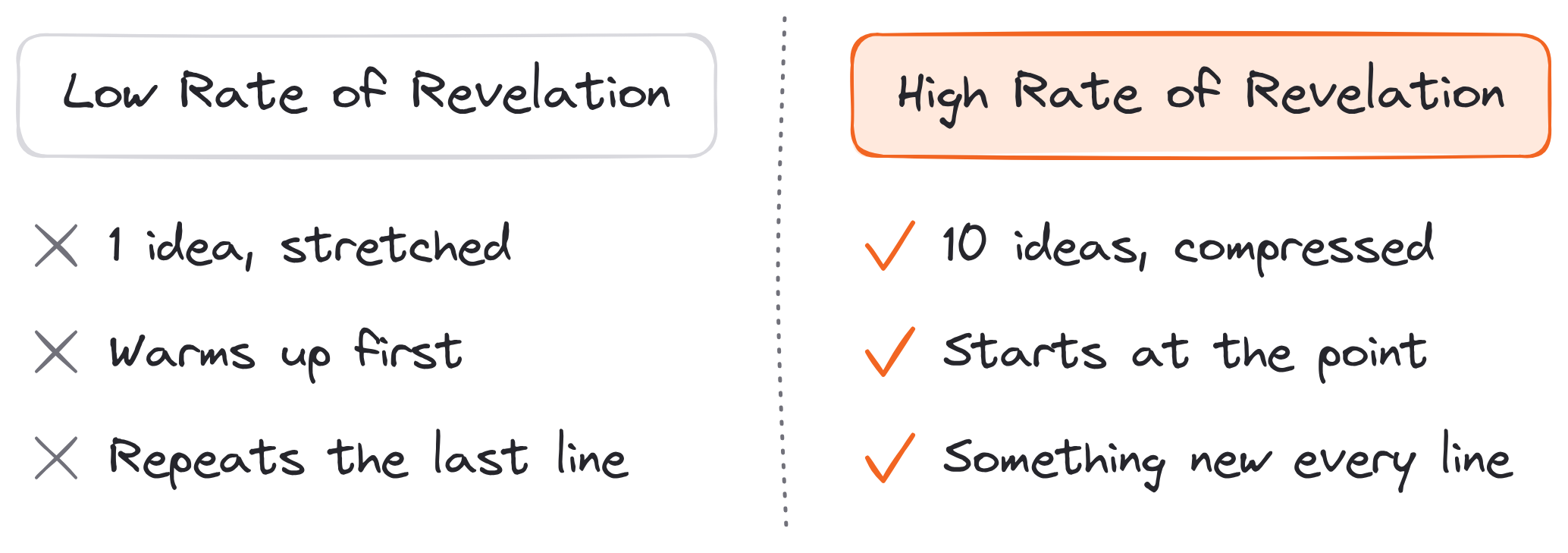
Cole calls this the Rate of Revelation: how quickly you introduce new information to the reader. A low rate is one idea stretched across hundreds of paragraphs. A high rate is ten ideas compressed into a handful. Readers feel the difference within a few lines, even if they couldn't name it.
So go through your draft and ask one question of every paragraph: does this tell the reader something they didn't know a line ago?
If it repeats the paragraph above it, cut it. If it warms up before getting to the point, start at the point. This is also why lists work so well online. Each line is a new piece of information, with nothing between them to wade through.
More new ideas per line, more readers to the end.
Tip #14: Pass The Tequila Test (One Of The Best Blog Writing Tips)
Most content on any topic says the same 10 things.
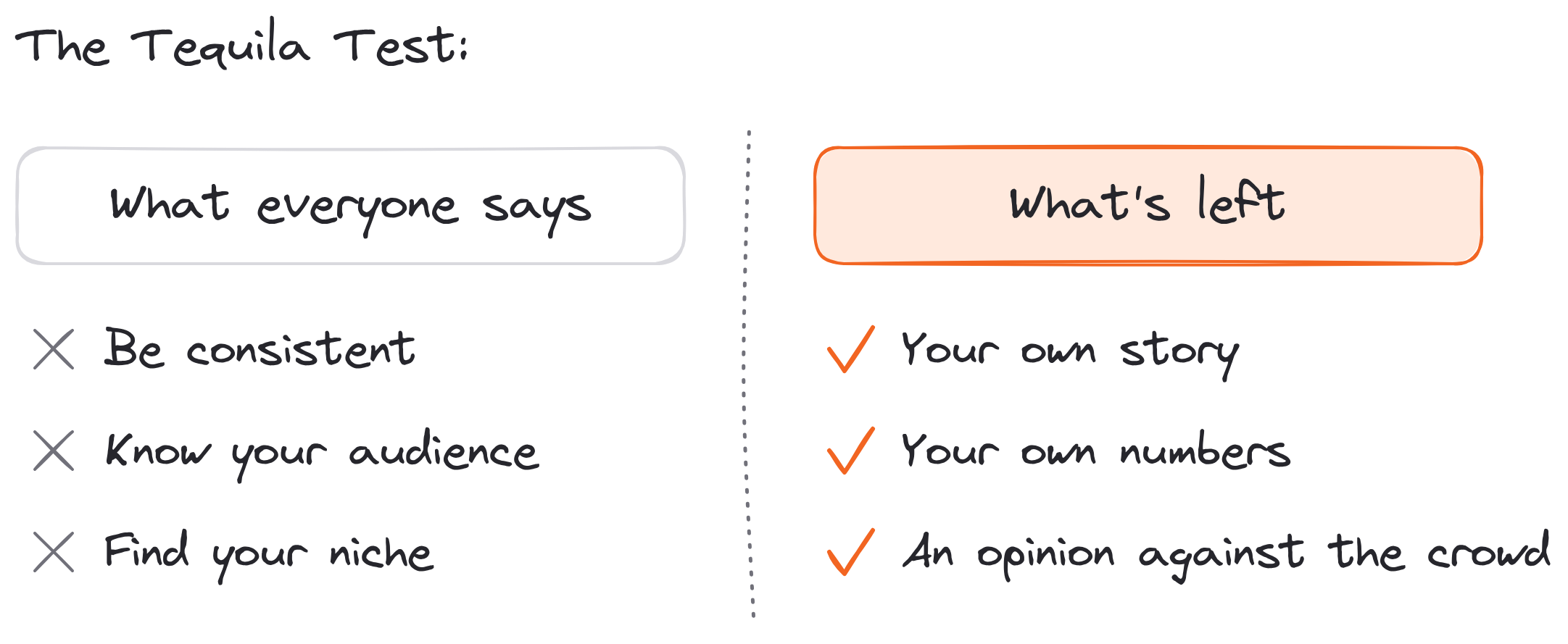
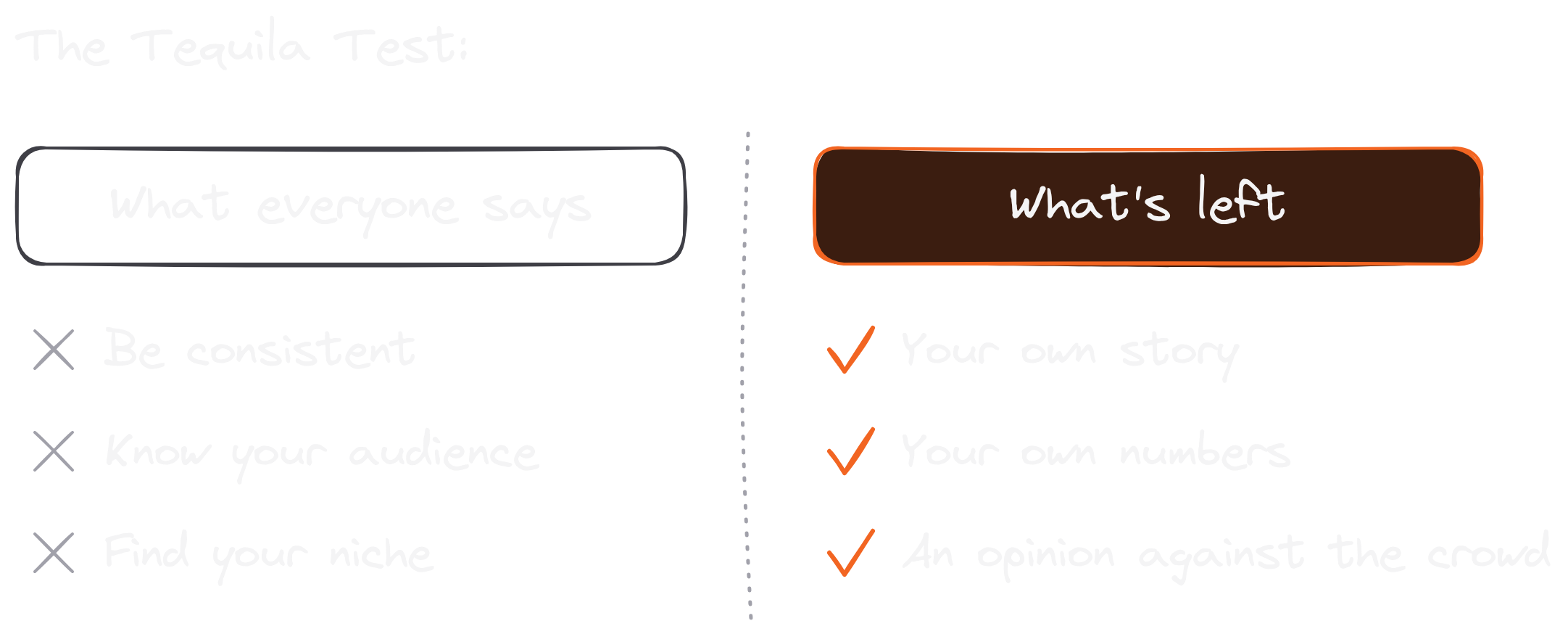
The Tequila Test is how you avoid becoming number 11. Before you write, list everything most people say about your topic. Then don't use anything on that list. Whatever you write next has to be something the reader hasn't heard.
My rule: say something different. Nobody remembers the 40th post that explains a topic a bit clearer than the other 39. They remember the one that said something they'd never heard: your own story, your own numbers or an opinion that goes against the crowd.
Where do those come from? I write about two things:
- What's obvious to me now but wasn't two years ago.
- What confuses me now that I want to understand in two years.
The first gives you lessons people a step behind you need. The second gives you a public record of figuring something out, and readers love following along.
Cross off what everyone says, and write what's left.
Tip #15: Publish Every Day (Don't Start With A Blog)
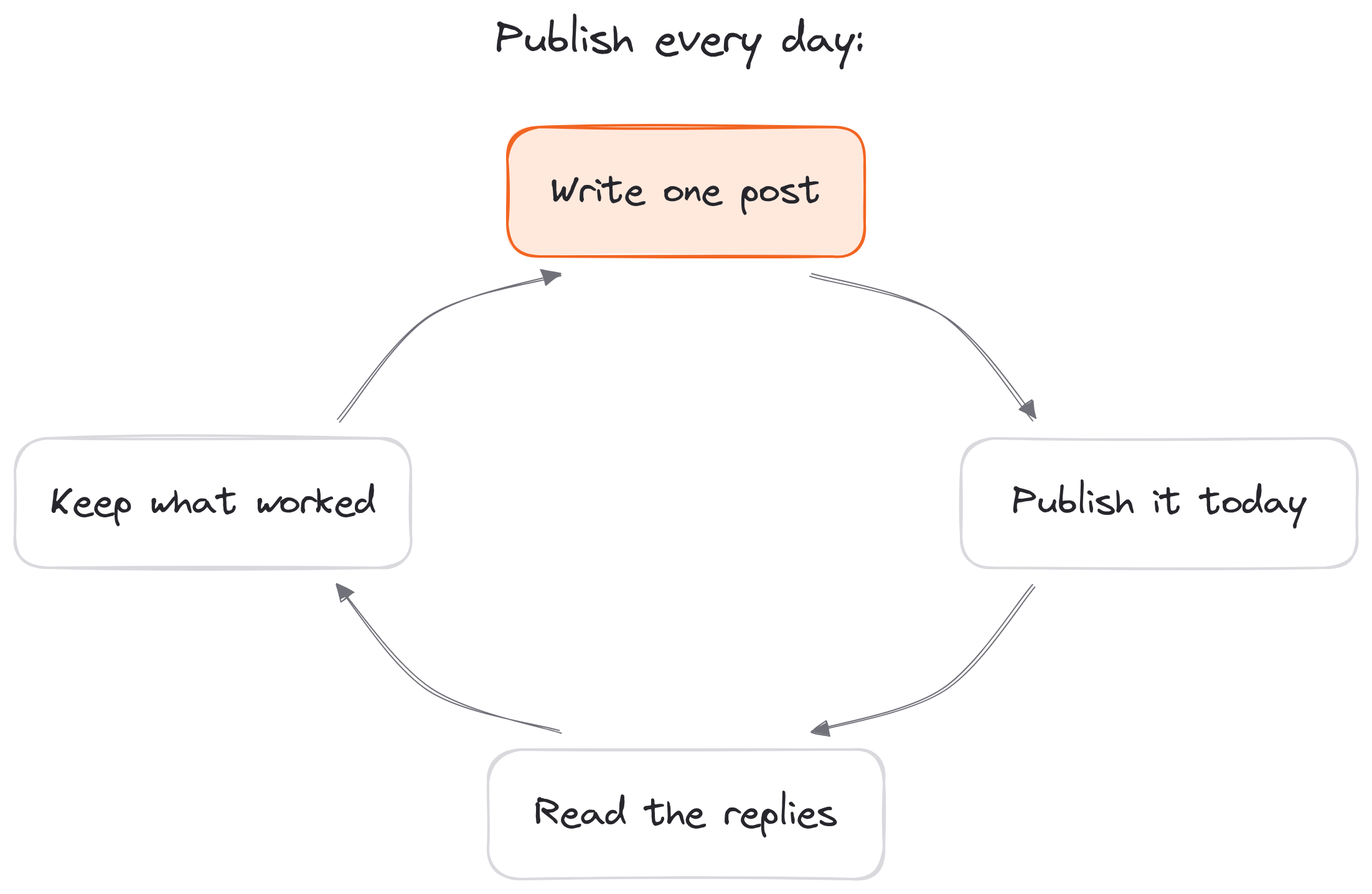
If I could give my beginner self one piece of writing advice, it would be this: put something out every day for 365 days.
My first mistake was starting a blog. Blog writing tips for beginners tell you to pick a domain and a theme. Then you write for an audience of zero, alone, for months. That's practicing in private, and it's exactly what I did for 9 months.
Here are the four things I'd tell myself now:
- Don't start a blog. Write on X and LinkedIn, where readers already are.
- Put something out every day for 365 days.
- Stop obsessing over tactics (time to post, apps to use).
- Listen to feedback, and stop blaming the algorithm.
Daily publishing beats every other tip on this list, because it's how you get to practice the other 14. Each post is a small test, and the readers tell you which ones worked. Start small: one post a day, or one Atomic Essay of 400 words or fewer. Typeshare counts your streak on your public profile, and a publishing queue lets you write a week of posts in one sitting.
Your first 100 posts are practice. Publish every day, and you'll be through them in about three months.
FAQ
What are the best writing tips for beginners?
Write to one specific person, write like you talk, and write and edit at different times. As I once put it, "every piece of writing advice is somehow related to these three." Then publish every day so you get the reps.
How can I write better every day?
Publish something short every day, read each piece aloud before you post it, and edit it the next morning on your phone. Small daily reps beat one big piece a month.
Do these writing tips work for content writing and blogs?
Yes. Prepping the page, compressing your idea into bullets and passing the Tequila Test work for any blog post, newsletter or social post. For a blog that ranks, add one thing: put the words people search for in your headline and your subheads.
Are there creative writing tips and story writing tips here?
Several carry over. Write like you talk, open with a short first sentence, end each sentence on its strongest word and keep your Rate of Revelation high. A story needs a reader who can follow it, just like a post does.