12 Blog Post Examples To Copy (By Type): What A Good Blog Post Looks Like, Plus 50 Blog Post Ideas For Beginners
Nicolas ColeNovember 14, 2026
12 blog post examples, one of each type, with what to copy from each, plus 50 blog post ideas for beginners and a way to test them before you publish.
The best way to learn how to write a blog post is to study a few great ones.
A dozen is enough, each a different type, each doing one thing so well you can see how it works. That's what this page is: 12 real blog posts from well-known writers and companies, what each one looks like and the one thing to copy from it. Then 50 blog post ideas, sorted by the same types, so you never start from a blank page.
Here's why you can trust me on this. I've been writing online since I was 17, and the first blog post I ever wrote was about my adventures in World of Warcraft (I told the story here). Since then I've racked up millions of views on Quora, written a daily column for Inc. and built a ghostwriting agency that wrote articles for startup founders. I've also told new writers, for years, not to start a blog (yet). I'll explain that at the end, because it changes where your best blog post ideas come from.
If you're new to writing online, read 15 writing tips for beginners first. Every example below lives or dies on its headline, so that's worth a look too. And when you're ready to write your own, start it in Typeshare. You do the writing; the robots do the rest.
What Does A Blog Post Look Like? (The 5 Parts Every Example Shares)
Every good blog post has the same skeleton under the skin.
The topics change, the lengths change and the styles change. But when you look at the examples below side by side, they share 5 parts. Once you can see the parts, you can see why a post works (and fix yours when it doesn't).
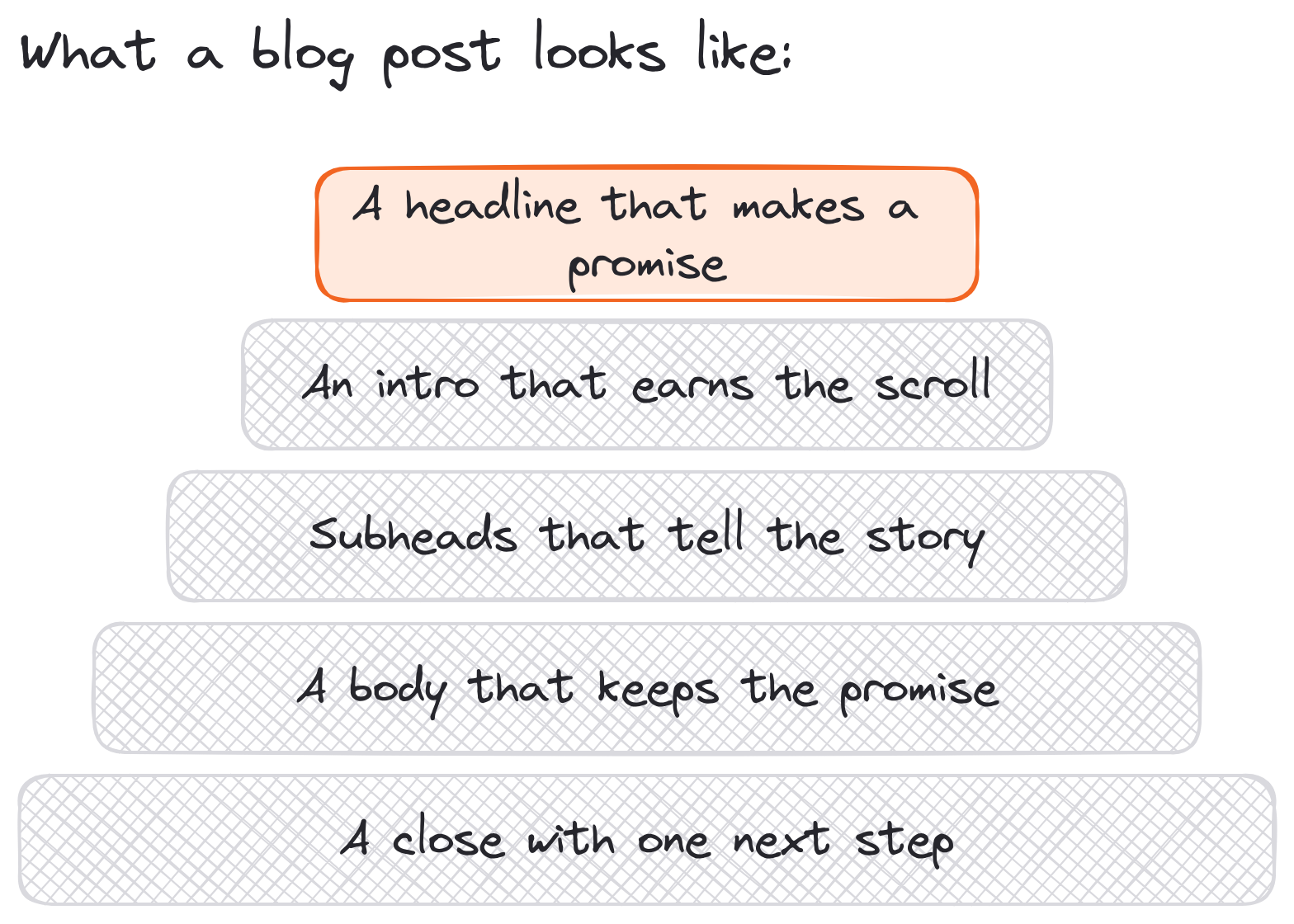
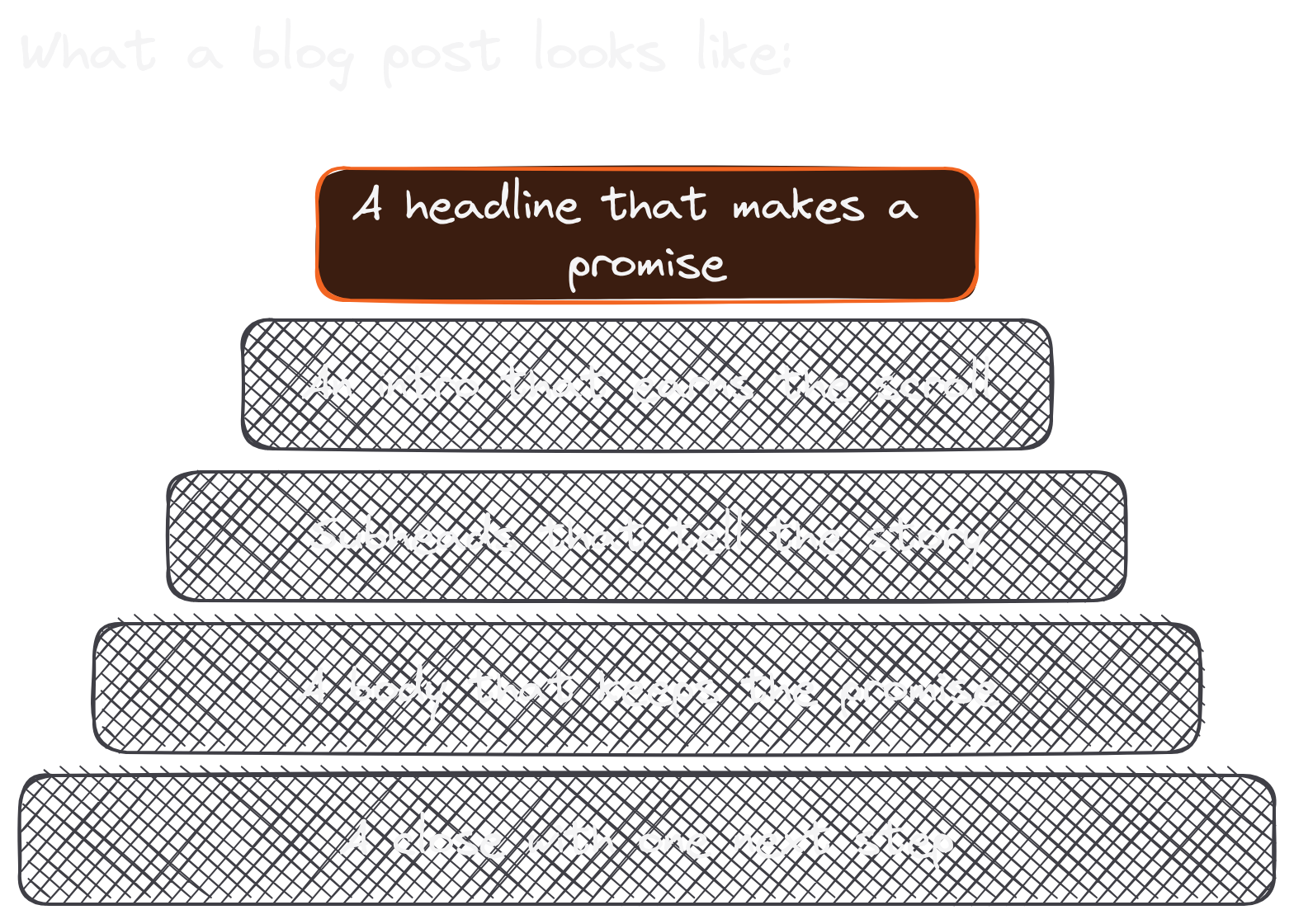
- A headline that makes a promise. It tells the reader what they get and who it's for.
- An intro that earns the scroll. The first line is a hook, and the paragraph after it says why you're the one to listen to.
- Subheads that tell the story. A reader skimming only the subheads should get the gist.
- A body that keeps the promise. Examples, steps, data or a story: the proof.
- A close with one next step. Read this next, try this or subscribe. Pick one.
That's what a blog post looks like. Now here's what each type does with it.
Blog Post Example #1: The Essay (Paul Graham, "How To Do Great Work")
An essay is a blog post that thinks out loud.
Paul Graham has published essays on his site for decades, and "How to Do Great Work" (July 2023) is one of his longest. It opens with a question: "If you collected lists of techniques for doing great work in a lot of different fields, what would the intersection look like?" Then he answers it. There are no subheads, no images and no pop-ups. Just plain text on a plain page, and it still gets passed around.
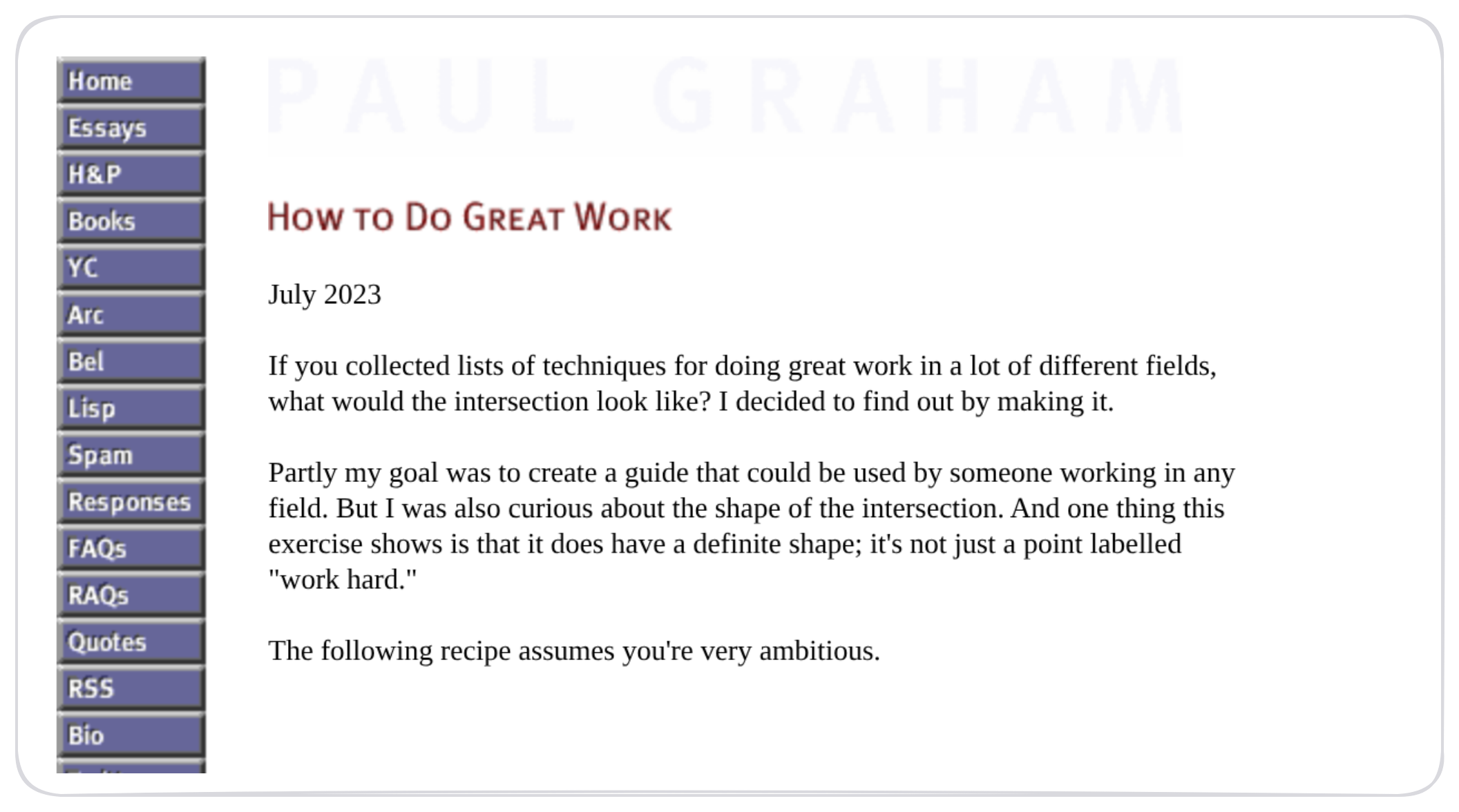
What to copy: the opening question. Graham doesn't announce his topic. He asks the question the whole essay answers, so the reader keeps going to find out.
The essay is the purest example of a blog post: one question, answered well.
Blog Post Example #2: The How-To (James Clear, "How To Start New Habits That Actually Stick")
A how-to post promises a result and walks you to it.
James Clear's "How to Start New Habits That Actually Stick" is an excerpt from his book Atomic Habits, which the page says at the top. It opens with one line, "Your life today is essentially the sum of your habits," then breaks a habit into four stages (cue, craving, response, reward) and gives you a law for each.
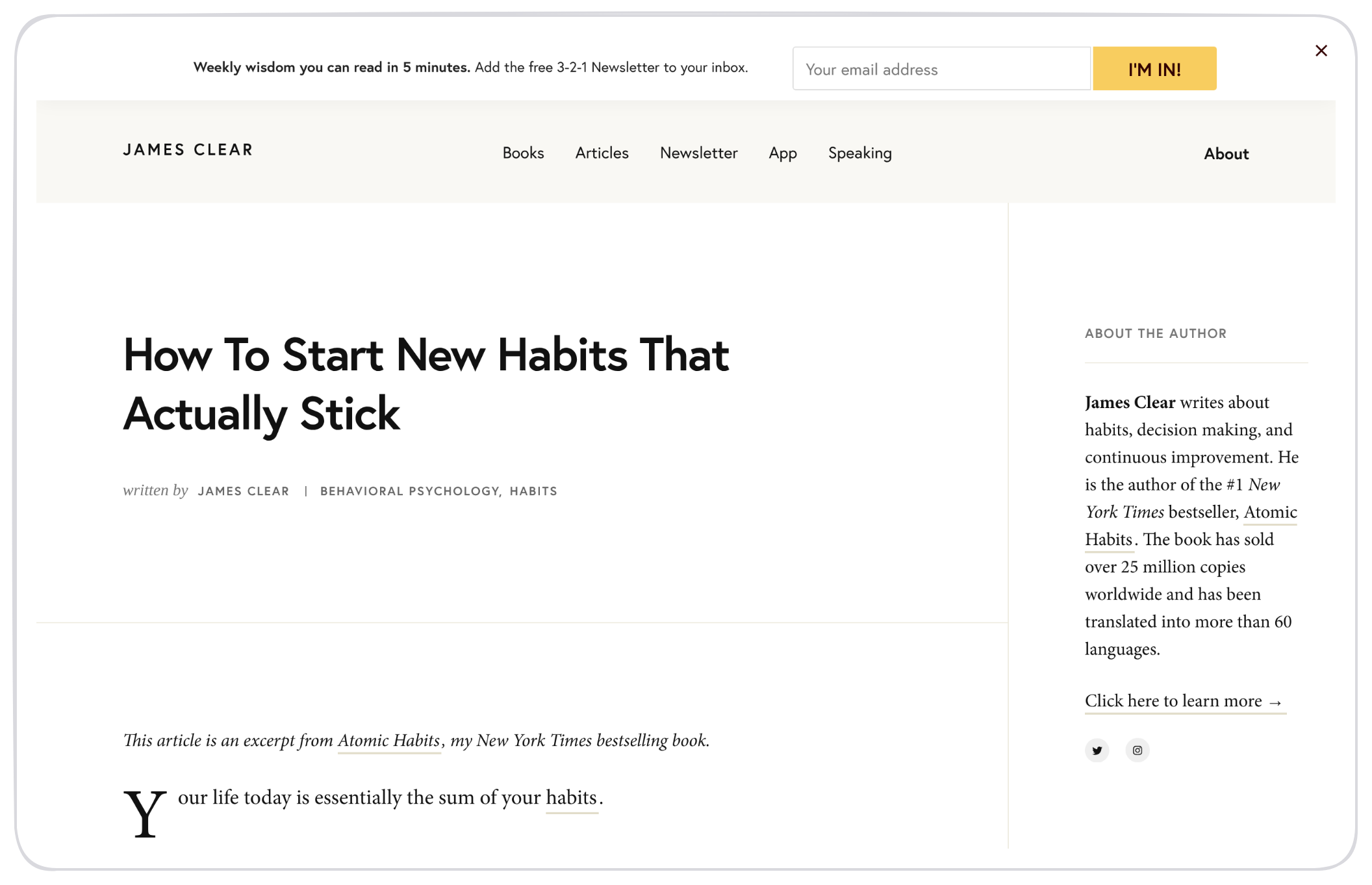
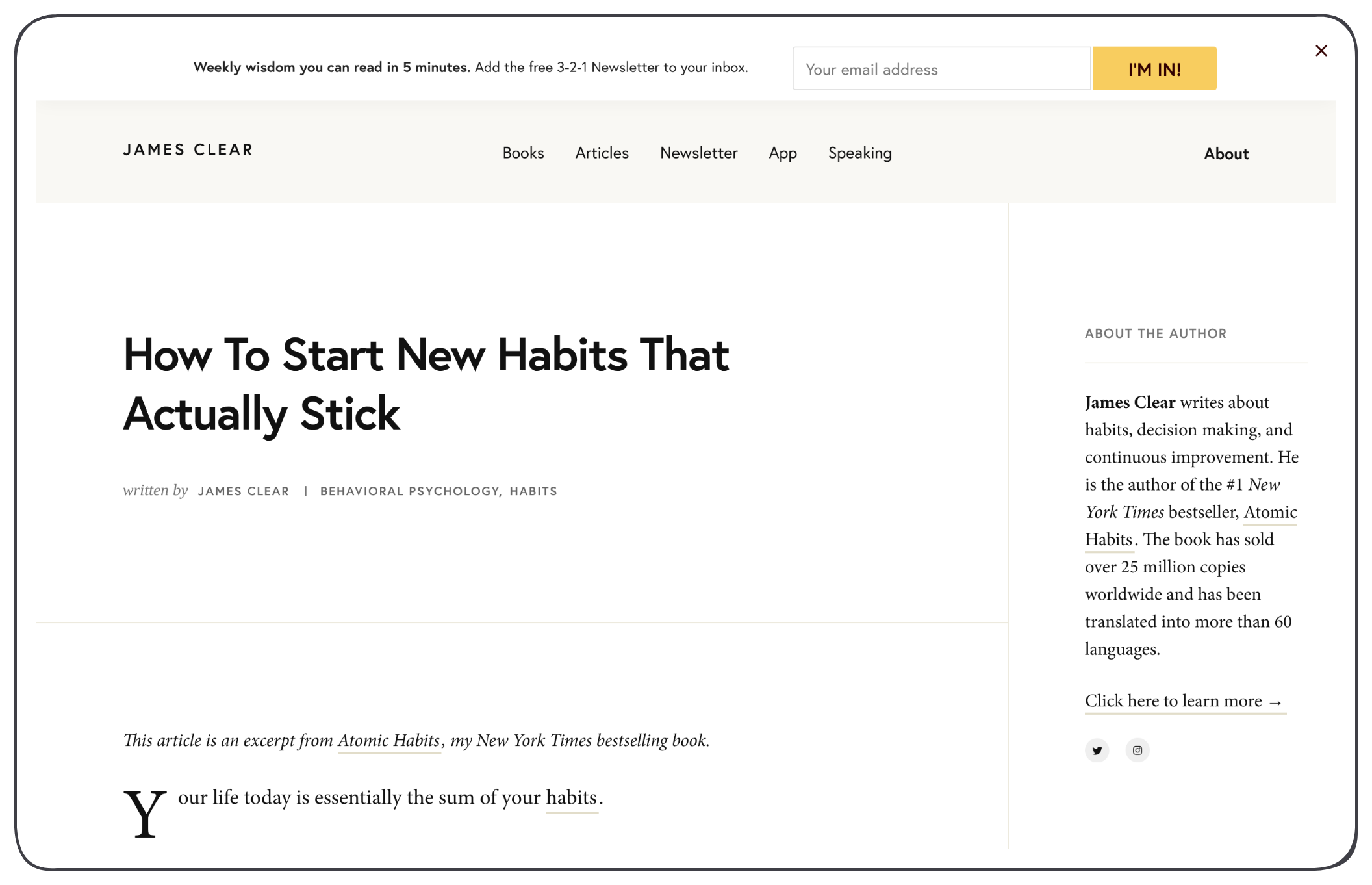
What to copy: the framework. Clear doesn't give you 17 tips. He gives you a model with 4 parts, and every section hangs off it. A reader can remember 4 things.
The how-to is the blog post example most beginners should write first, because the reader already knows what they want.
Blog Post Example #3: The Long Explainer (Wait But Why, "The AI Revolution")
Some topics are too big for one post, and the right readers will read every word anyway.
Tim Urban's "The AI Revolution: The Road to Superintelligence" (January 2015) is Part 1 of 2. In a note at the top, Urban explains the post took three weeks because the research kept surprising him, and that he split it in two because it ran so long. Graphs and drawings carry the hardest ideas, which makes a heavy topic feel light.
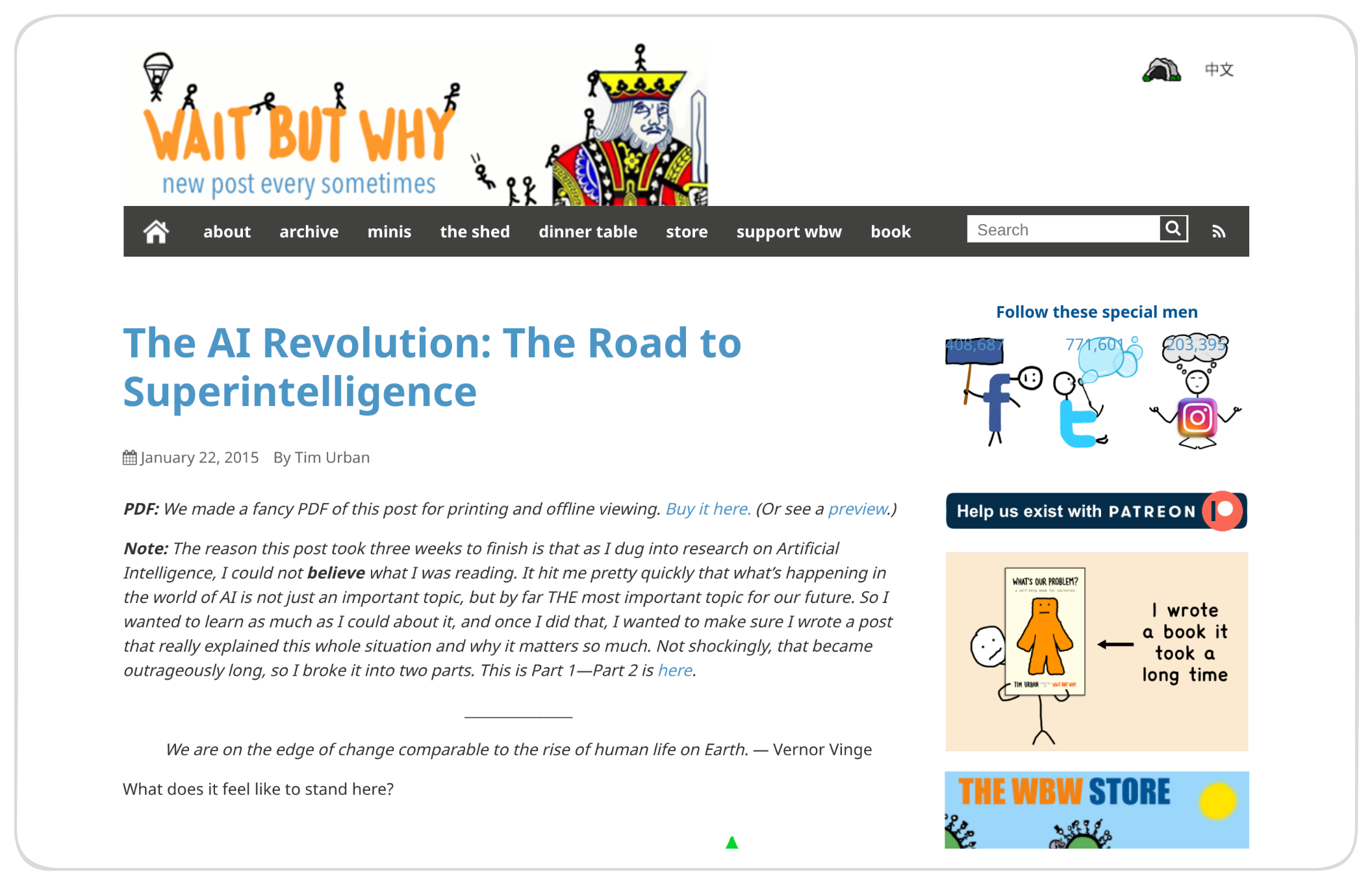
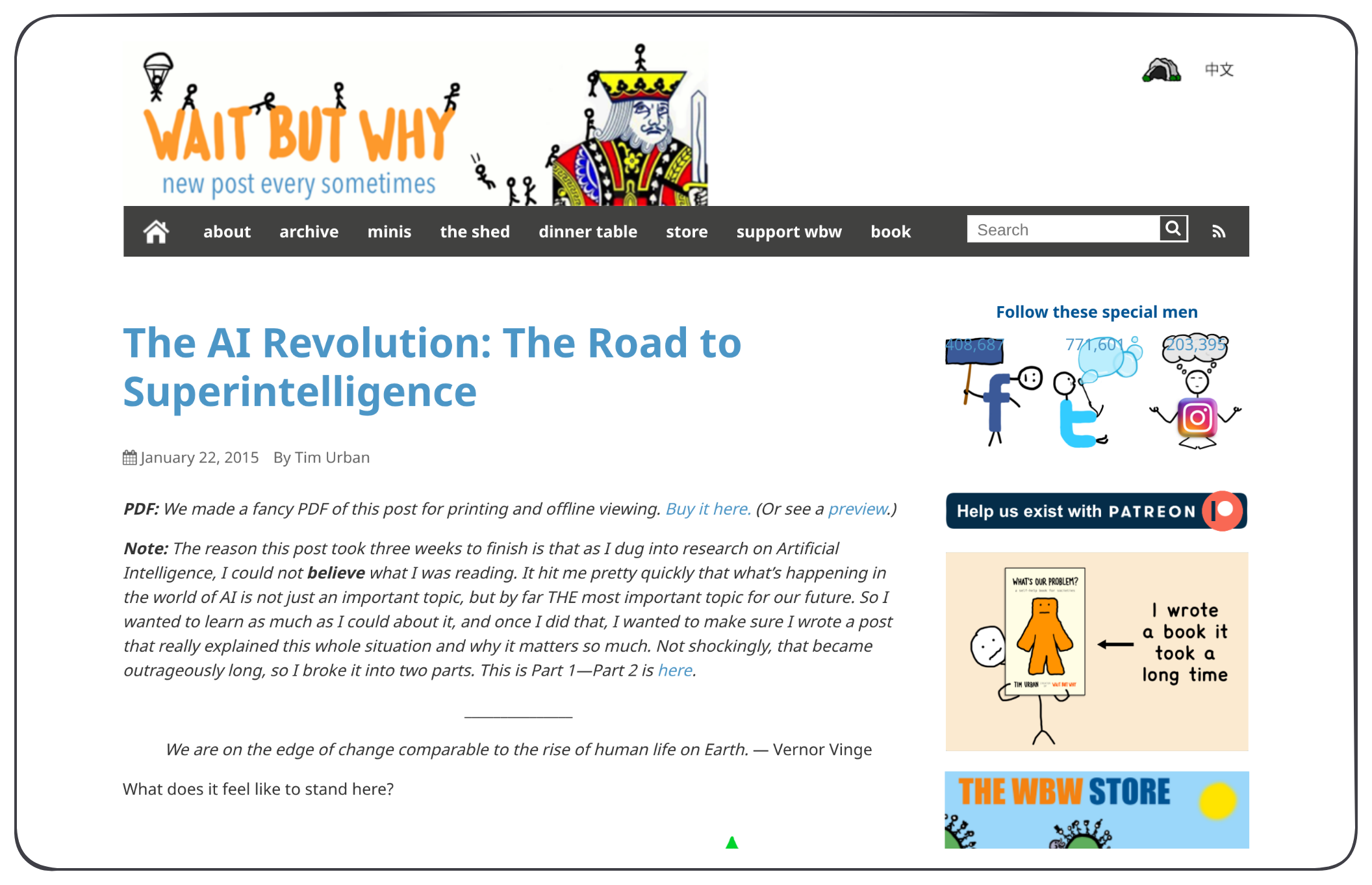
What to copy: the pictures. Urban turns his hardest ideas into a graph or a drawing a reader gets in one look. Even if you can't draw, a rough sketch of an idea beats a paragraph about it.
A long explainer works when it makes a hard topic feel easy, one picture at a time.
Blog Post Example #4: The List Post (Kevin Kelly, "68 Bits Of Unsolicited Advice")
A list post is the easiest blog post to read and one of the hardest to write well.
Kevin Kelly wrote "68 Bits of Unsolicited Advice" for his adult children on his 68th birthday and posted it on his blog. Each bit is a line or two: "Being enthusiastic is worth 25 IQ points." In an update at the top, Kelly says the list was so widely shared that Viking Penguin thought it should be a book. It became Excellent Advice for Living.
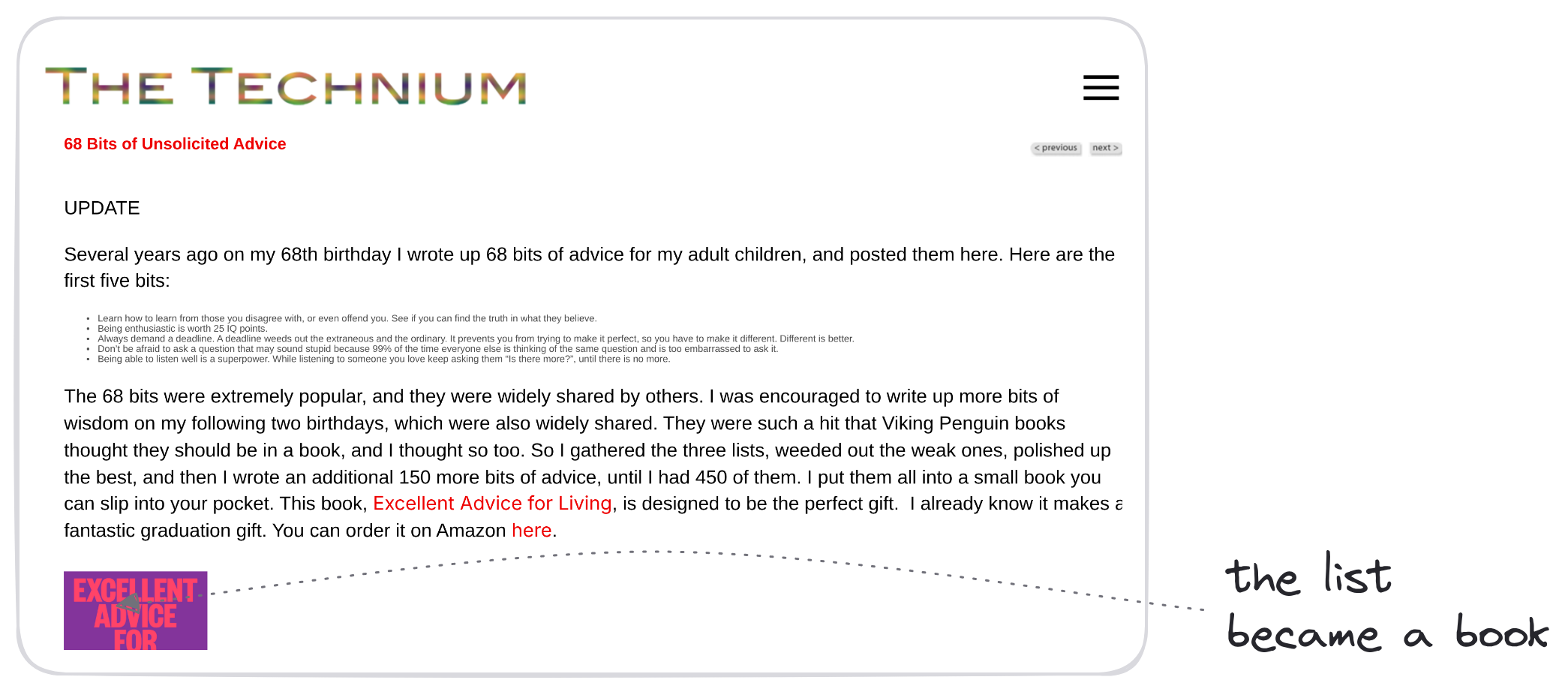
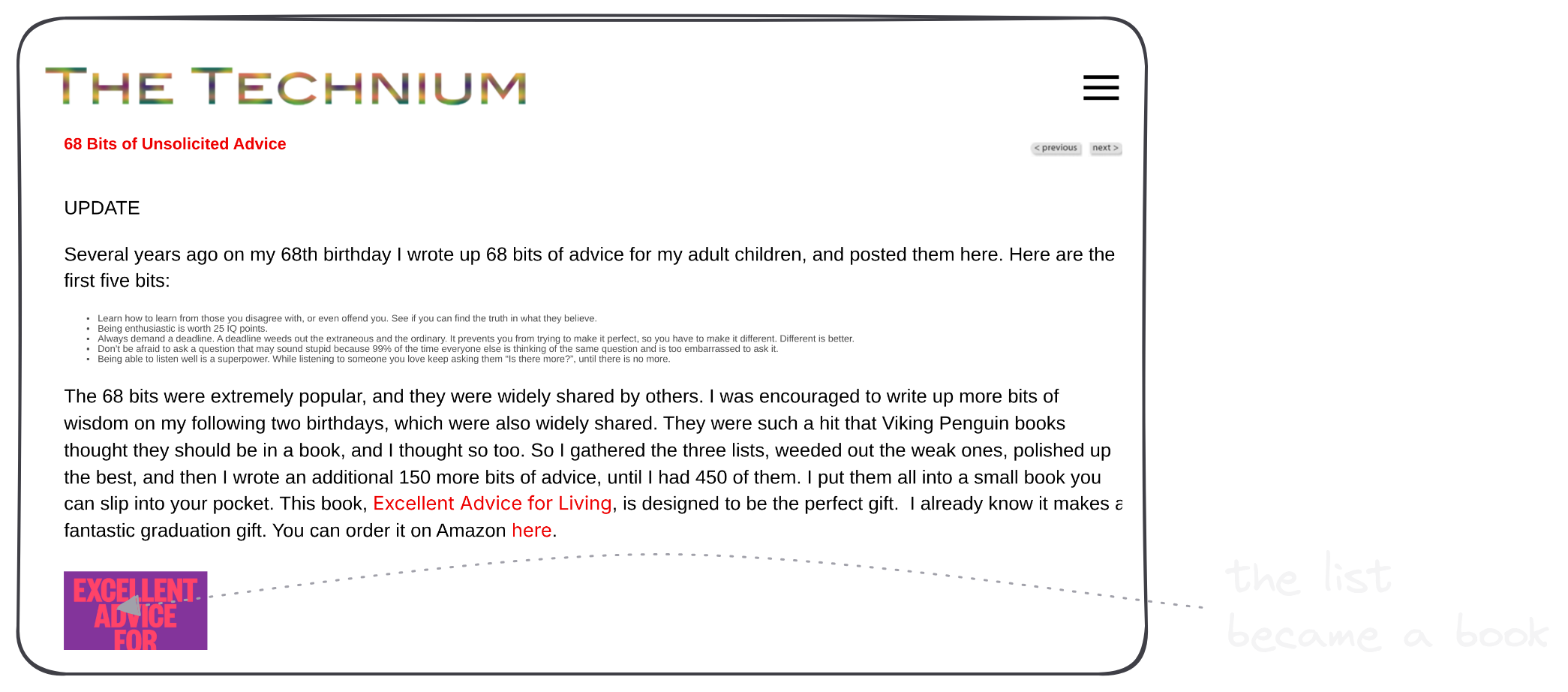
What to copy: the length of each item. Most bits are a sentence or two. If one line of your list needs a paragraph to explain, it's a different post.
A list post works when every item is good enough to share on its own.
Blog Post Example #5: The Data Study (Ahrefs, "96.55% Of Content Gets No Traffic From Google")
Nothing gets linked to like original numbers.
Ahrefs' "96.55% of Content Gets No Traffic From Google" by Tim Soulo (December 2023) puts its finding in the headline. The post says the study ran on Ahrefs' Content Explorer database of around 14 billion pages. Then it gives three reasons pages get no traffic and what to do about each.
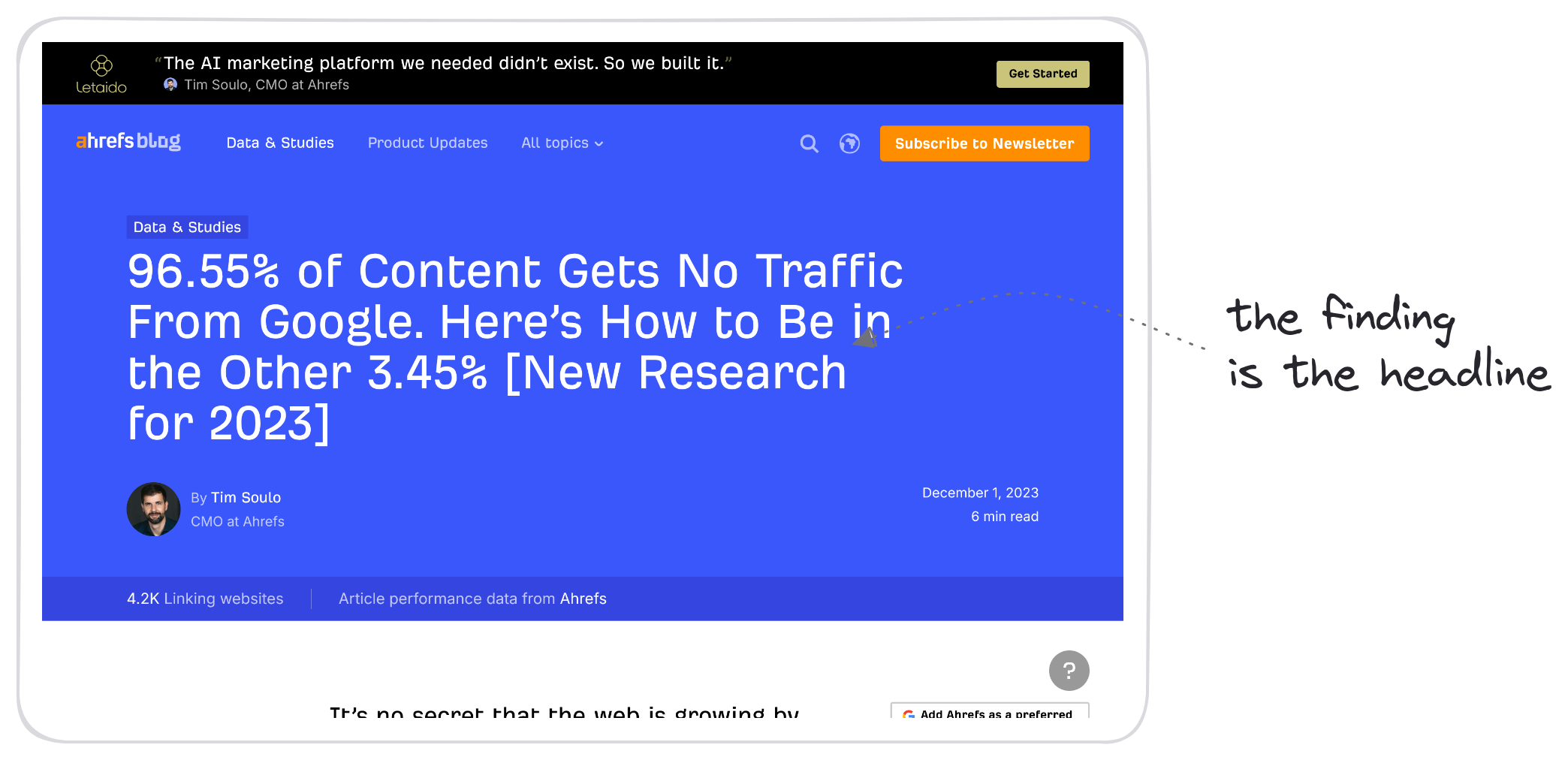
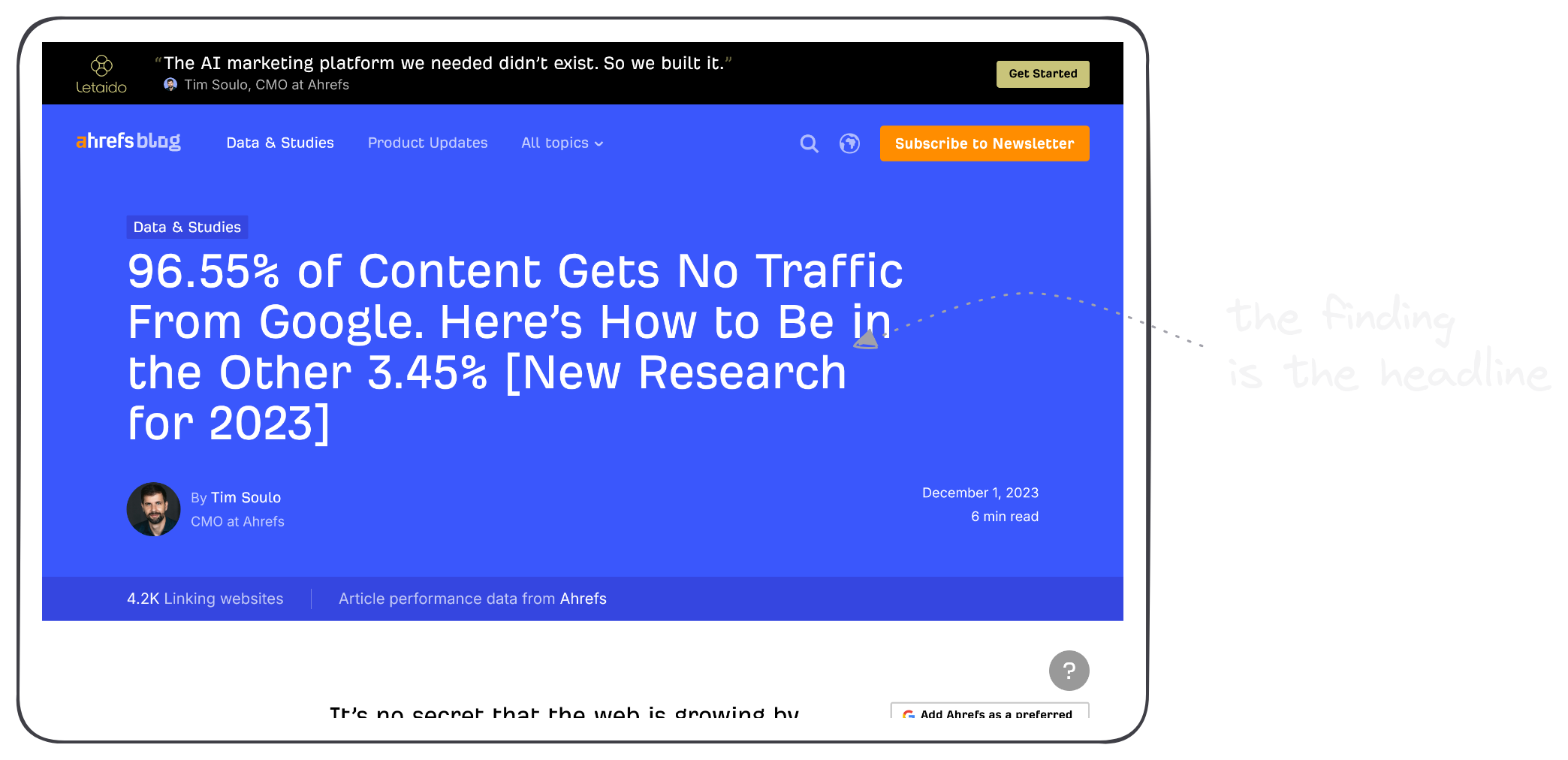
What to copy: the number in the headline, followed by "Here's how to be in the other 3.45%." The finding gets the click. The fix keeps the reader.
A data study is a sample blog post for anyone with numbers nobody else has: yours.
Blog Post Example #6: The Short Opinion Post (Derek Sivers, "Hell Yeah Or No")
A blog post can be 150 words long.
Derek Sivers' "No 'yes.' Either 'HELL YEAH!' or 'no.'" (August 2009) is a handful of short paragraphs. The whole post is one rule: "If you're not saying 'HELL YEAH!' about something, say no."
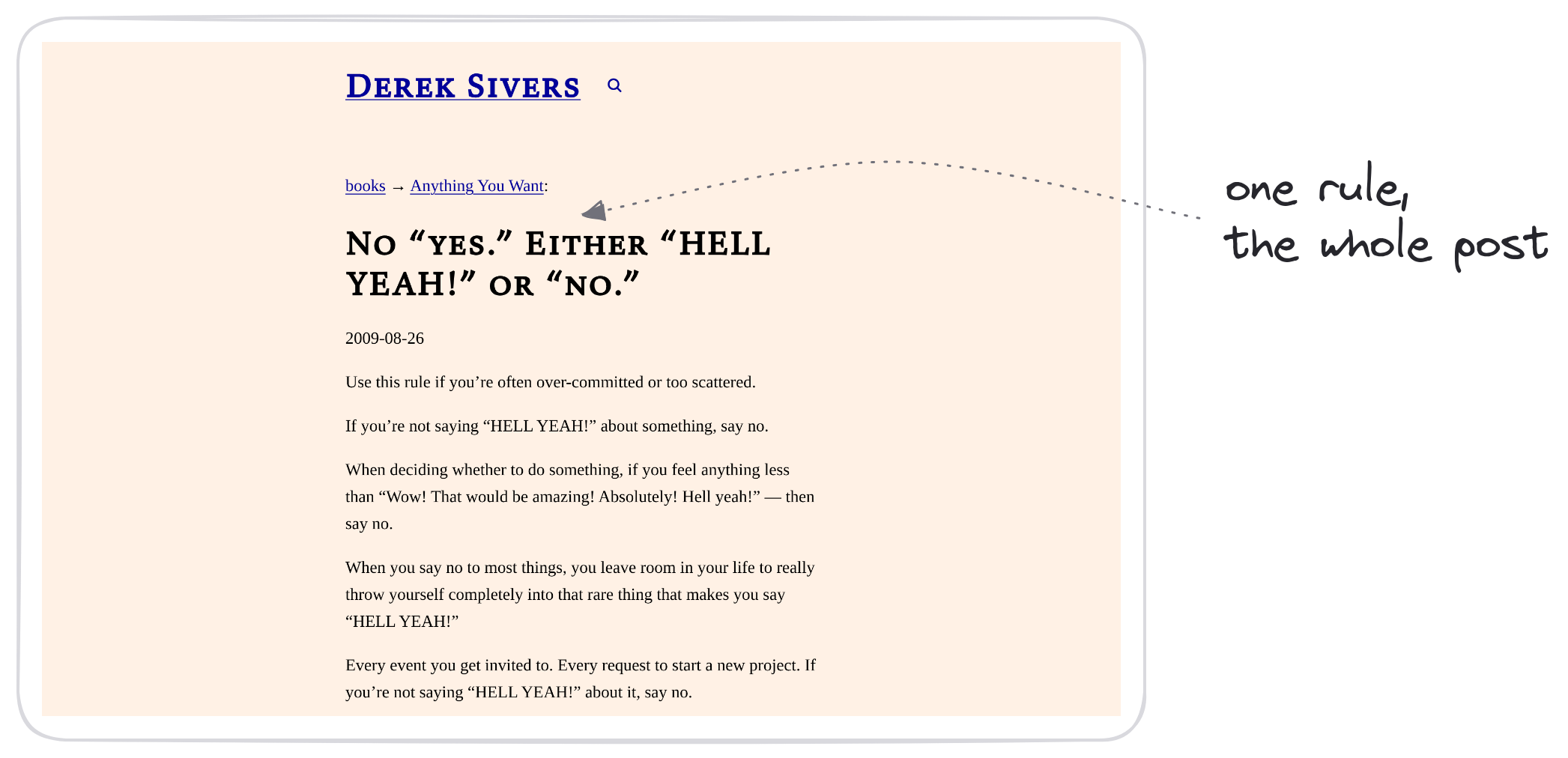
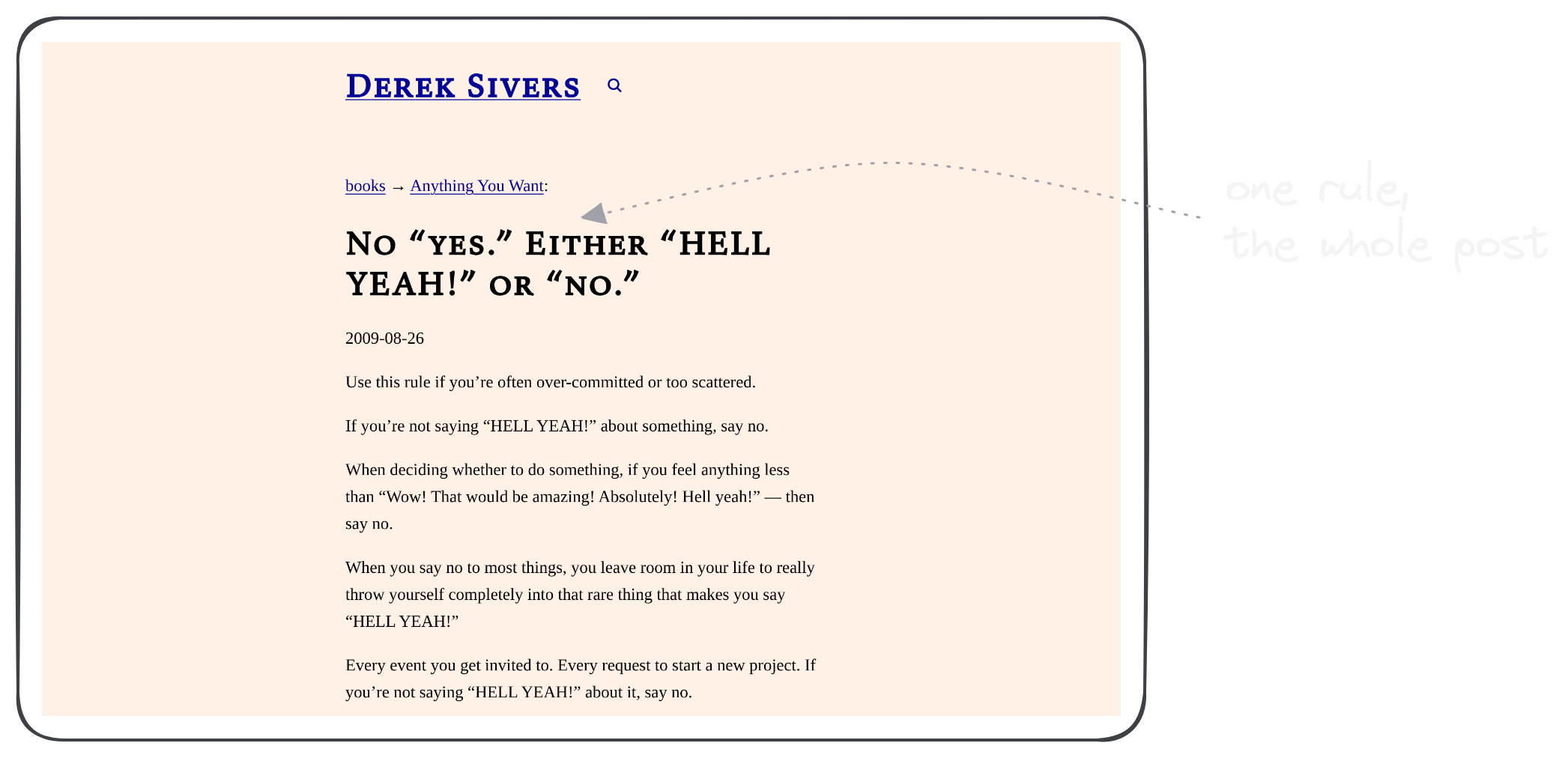
What to copy: the single idea. Sivers says one thing, gives one example of how to use it and stops. Most writers would have padded it to 1,500 words.
The short opinion post proves a blog post is as long as its idea, and no longer.
Blog Post Example #7: The Guest Post That Became A Book (Ryan Holiday, "Stoicism 101")
Some of the best blog posts are written on someone else's blog.
In April 2009, Ryan Holiday's "Stoicism 101: A Practical Guide for Entrepreneurs" ran as a guest post on Tim Ferriss's blog. I broke down what happened next in a post on how one blog post became a book empire: the post went viral, Holiday wrote two marketing books first, and then he went back and expanded that Stoicism post into The Obstacle Is the Way.
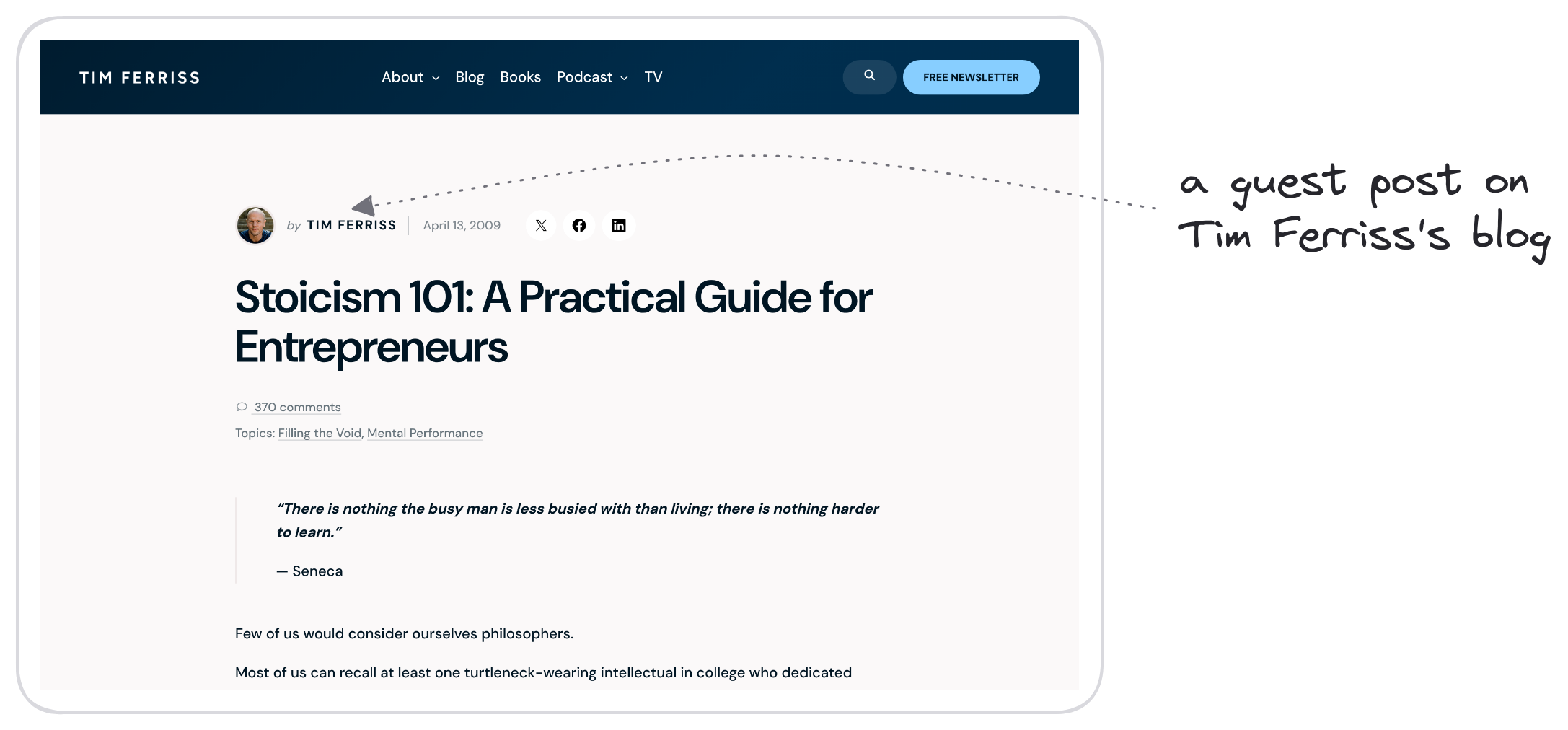
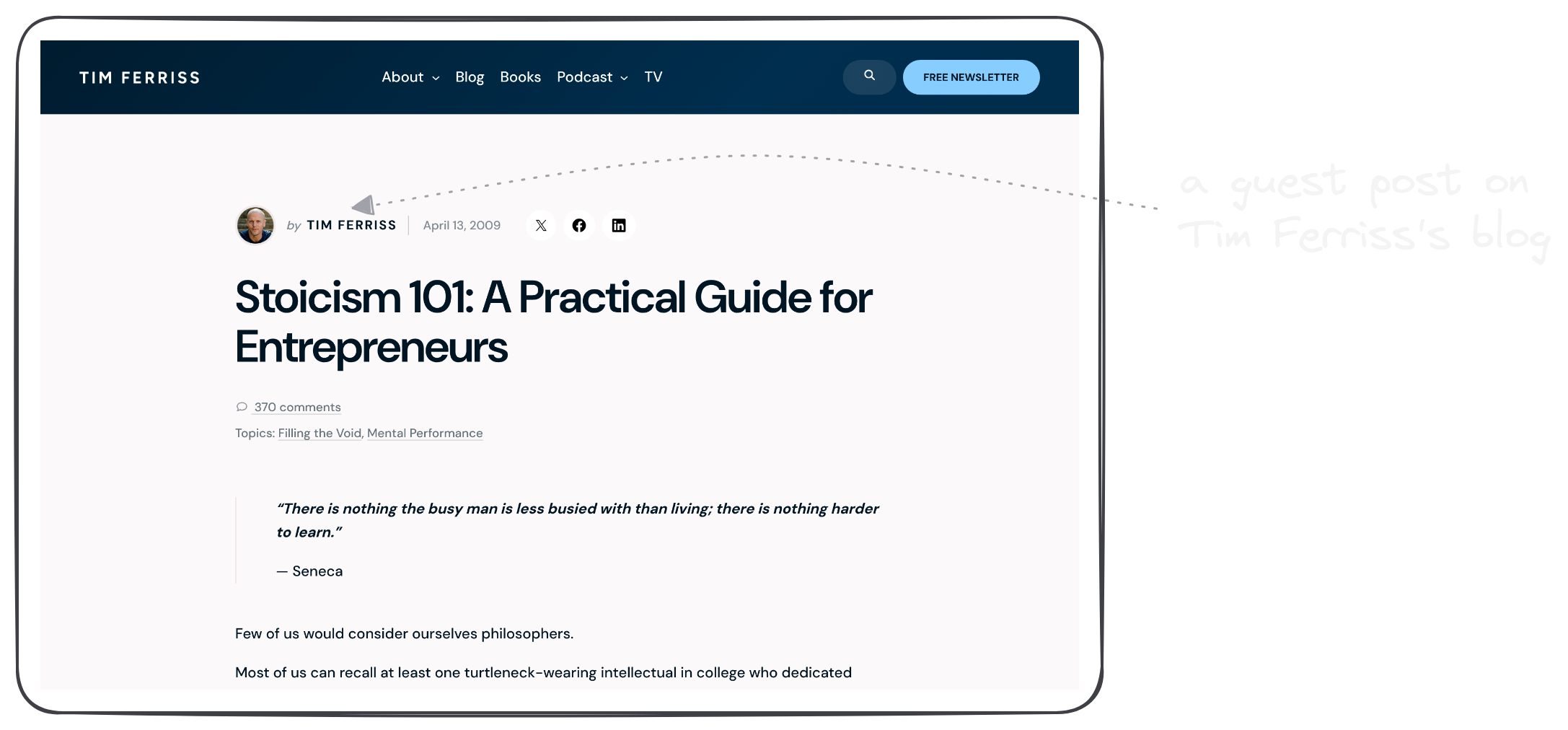
What to copy: the borrowed audience. Holiday wrote for readers who were already there (Ferriss's), and their response told him which idea to build a career on.
The guest post is the example of a blog post that proves an idea before you bet years on it.
Blog Post Example #8: The Personal Story (Paul Graham, "What I Worked On")
People read stories they'd never read as advice.
Paul Graham's "What I Worked On" (February 2021) is his own story, told in order. It opens: "Before college the two main things I worked on, outside of school, were writing and programming. I didn't write essays." It's an essay too, but a different kind from Example #1: there's no thesis, only what happened and what he learned.
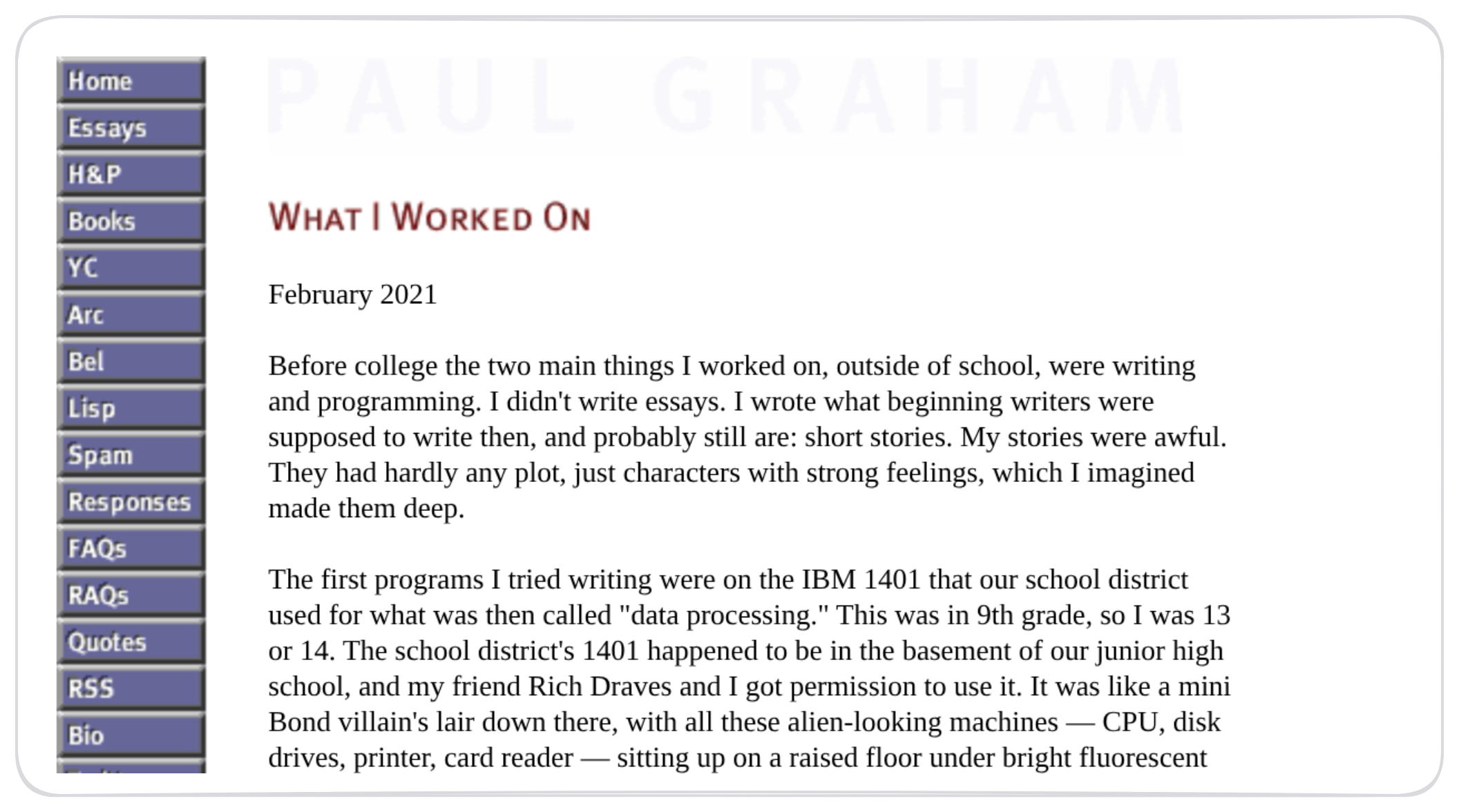
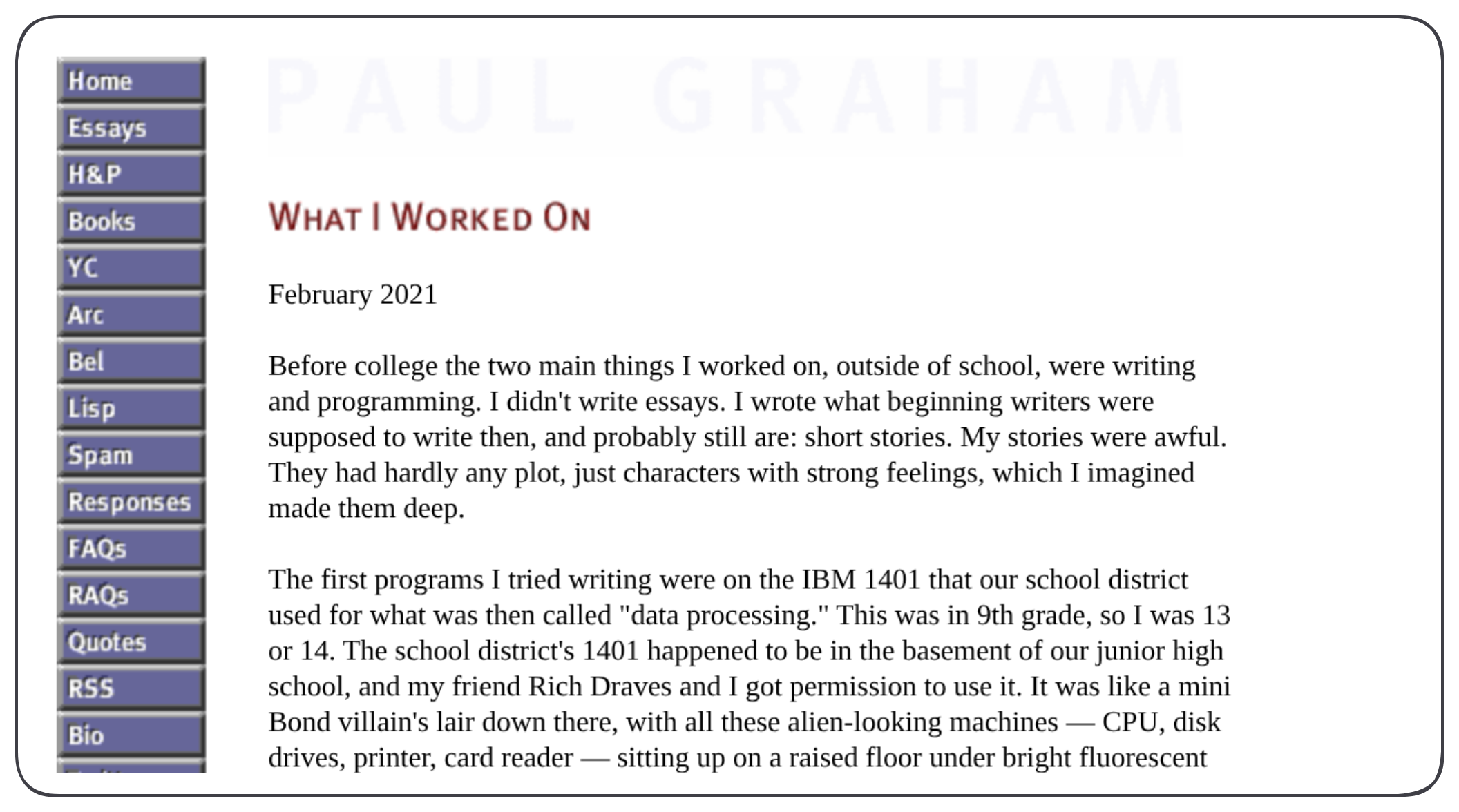
What to copy: the self-deprecating second line. "I didn't write essays" makes you trust everything after it.
A personal story works when you tell the parts that make you look bad too.
Blog Post Example #9: The Behind-The-Scenes Post (Buffer, "Transparent Salaries")
Readers love to see how a company works on the inside.
Buffer's "The Next Evolution of Transparent Salaries" (December 2017), by its finance team, opens with "Four years ago we introduced transparent salaries at Buffer." Then it shows the actual formula the company uses to pay people: a benchmark, a cost-of-living multiplier, a role multiplier and an experience factor.
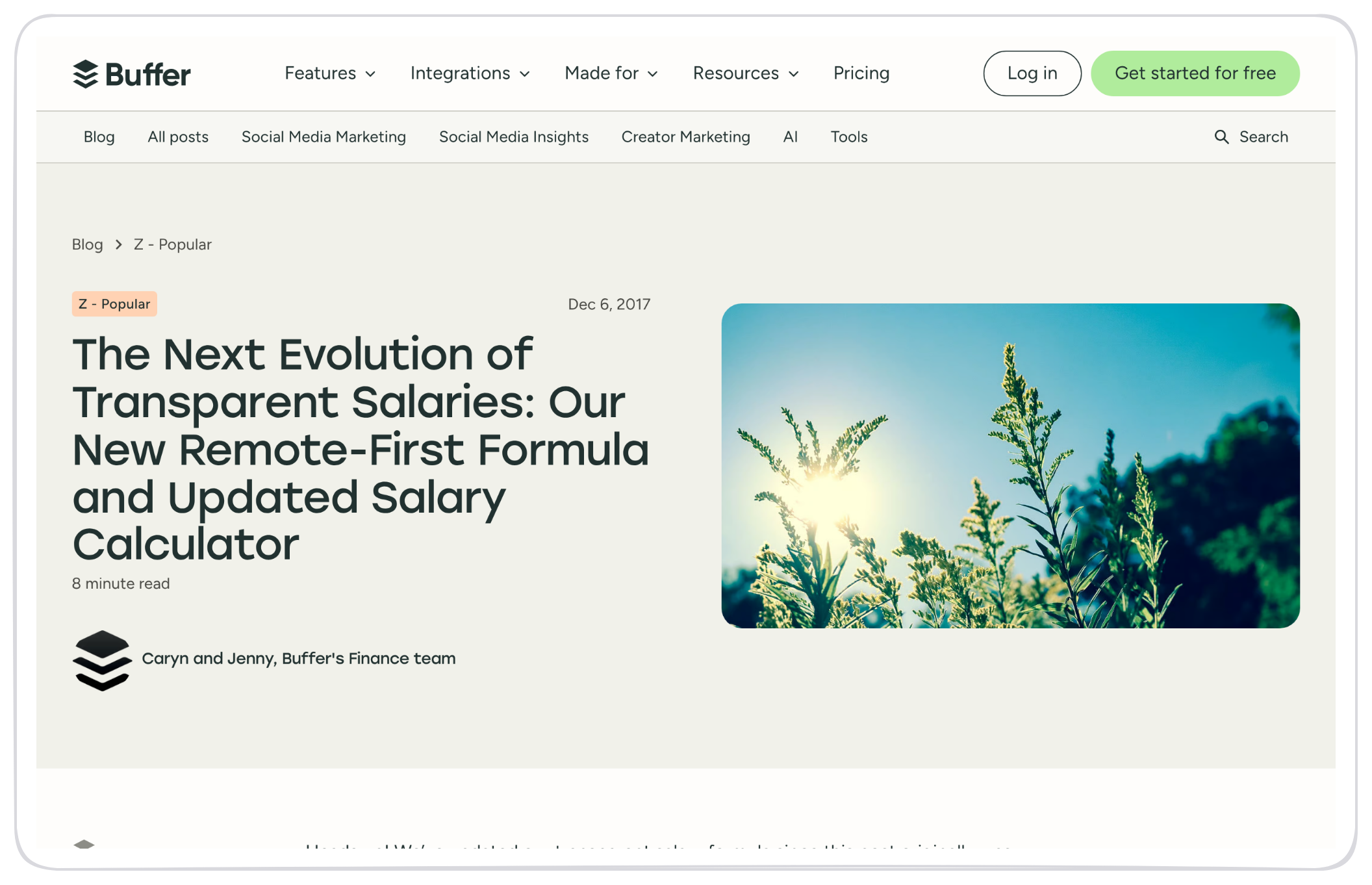
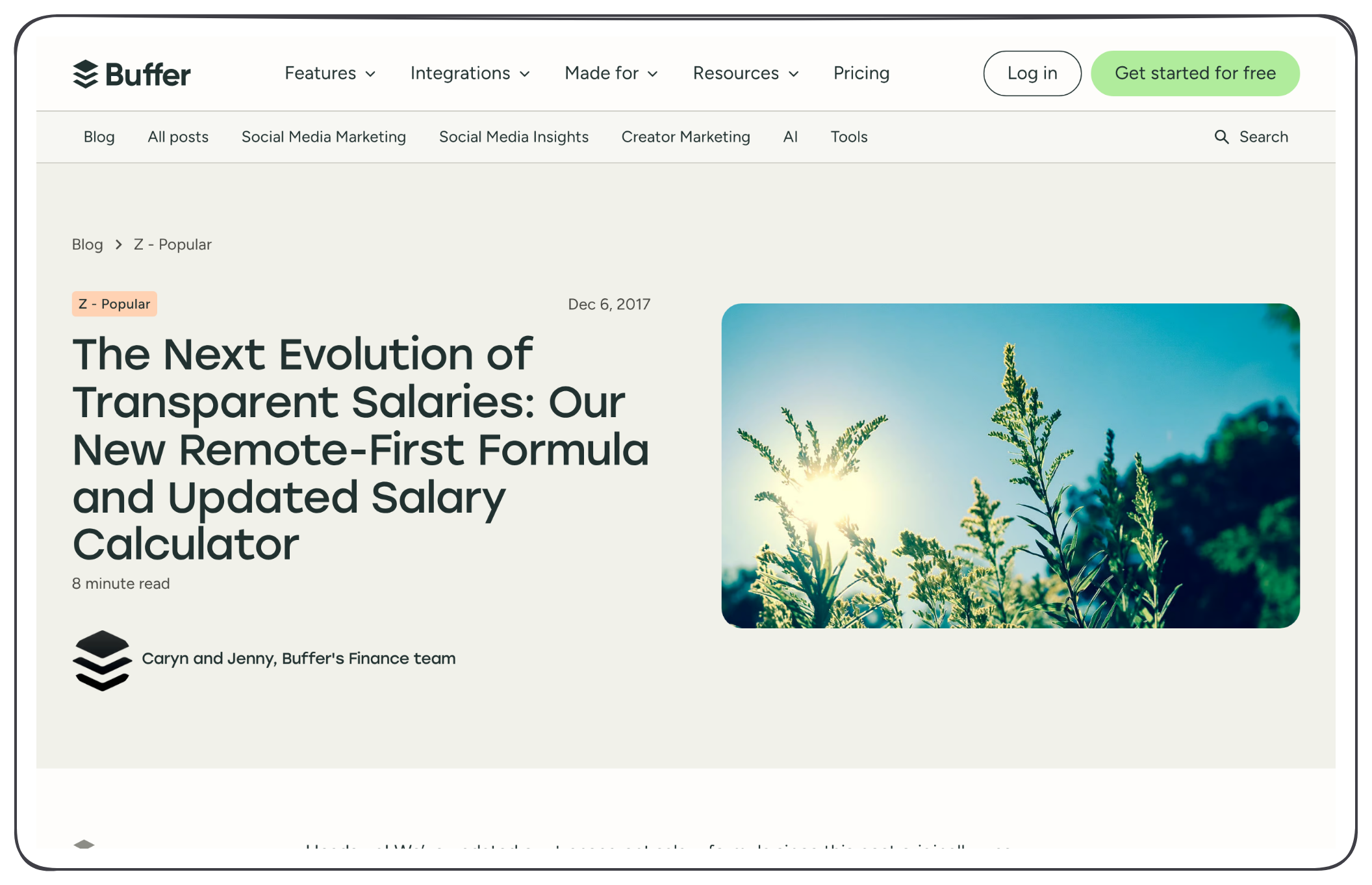
What to copy: the real numbers and the real reasons. A behind-the-scenes post works because it shows what other companies hide.
The behind-the-scenes post earns trust by showing the work.
Blog Post Example #10: The Comparison (Zapier, "Notion Vs. Evernote")
"X vs. Y" is one of the most searched kinds of blog post there is.
Zapier's "Notion vs. Evernote: Which app should you use?" by Miguel Rebelo puts the reader's question in the title. It opens with a table of contents and an at-a-glance comparison, covers what each app does best and ends with a verdict on which to pick.
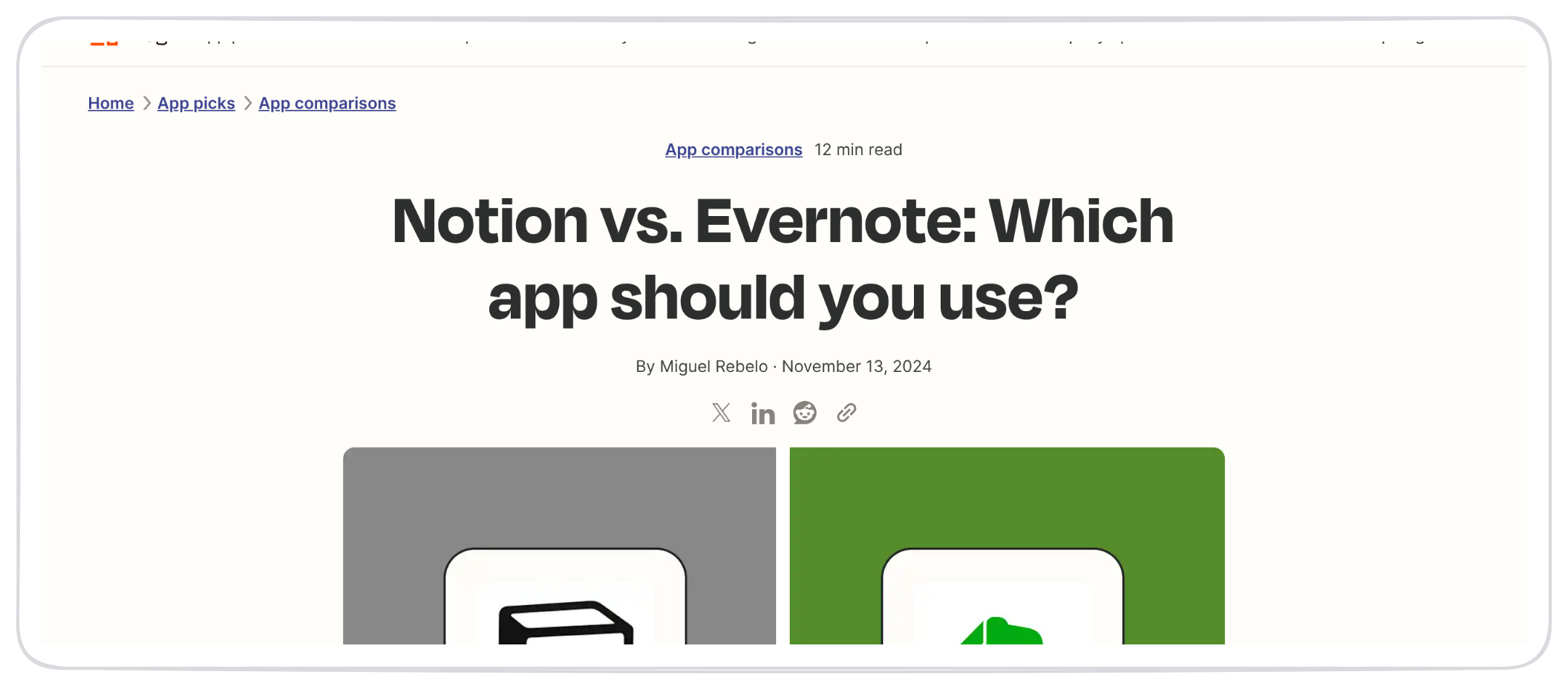
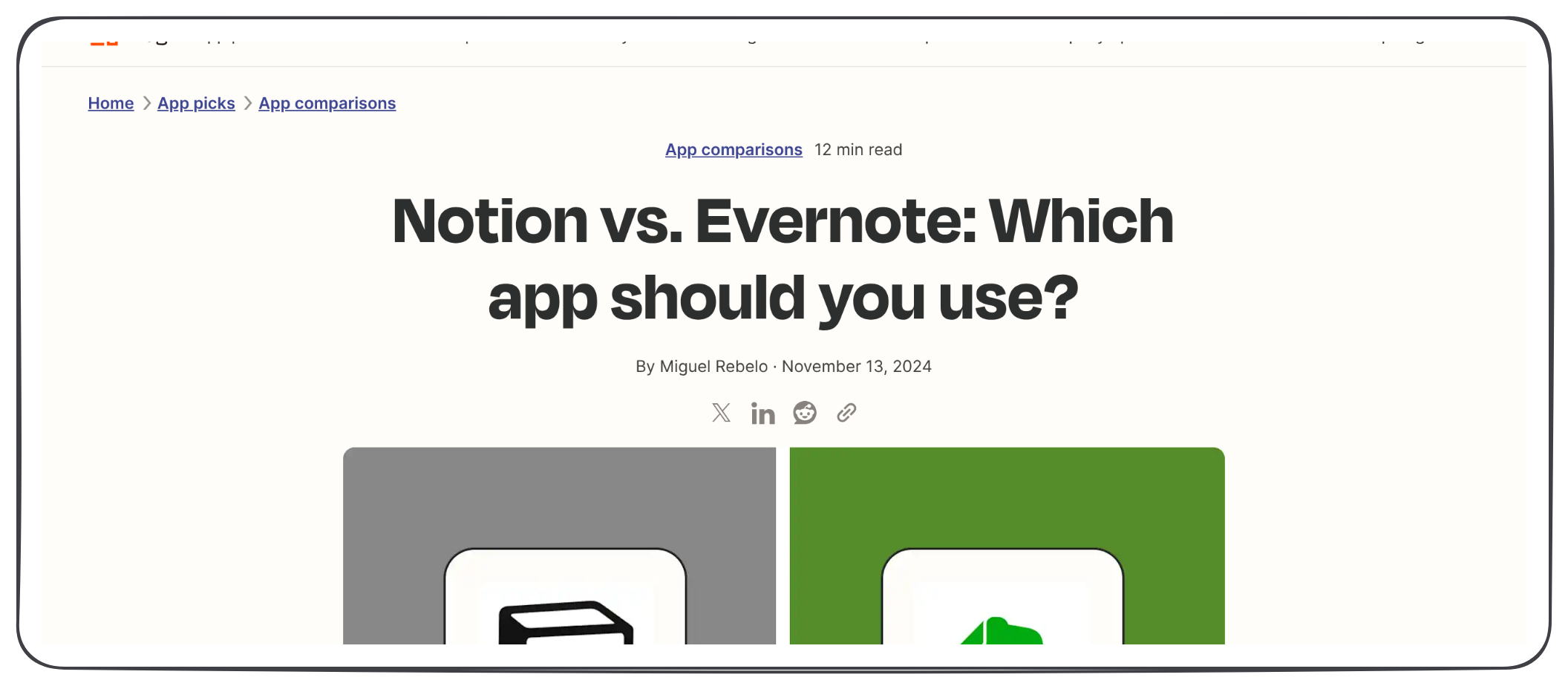
What to copy: the verdict. A comparison that ends with "it depends" wastes the reader's time. Zapier tells you which one to use, and when.
A comparison is a blog post example that answers the question the reader typed into Google.
Blog Post Example #11: The Interview (Tim Ferriss, The Ev Williams Transcript)
An interview is a blog post someone else writes for you, out loud.
Tim Ferriss publishes the full transcript of his podcast episodes on his blog. "The Tim Ferriss Show Transcripts: Ev Williams" (#800, March 2025) has a short intro on Ev Williams, links to listen and then the whole conversation, line by line.
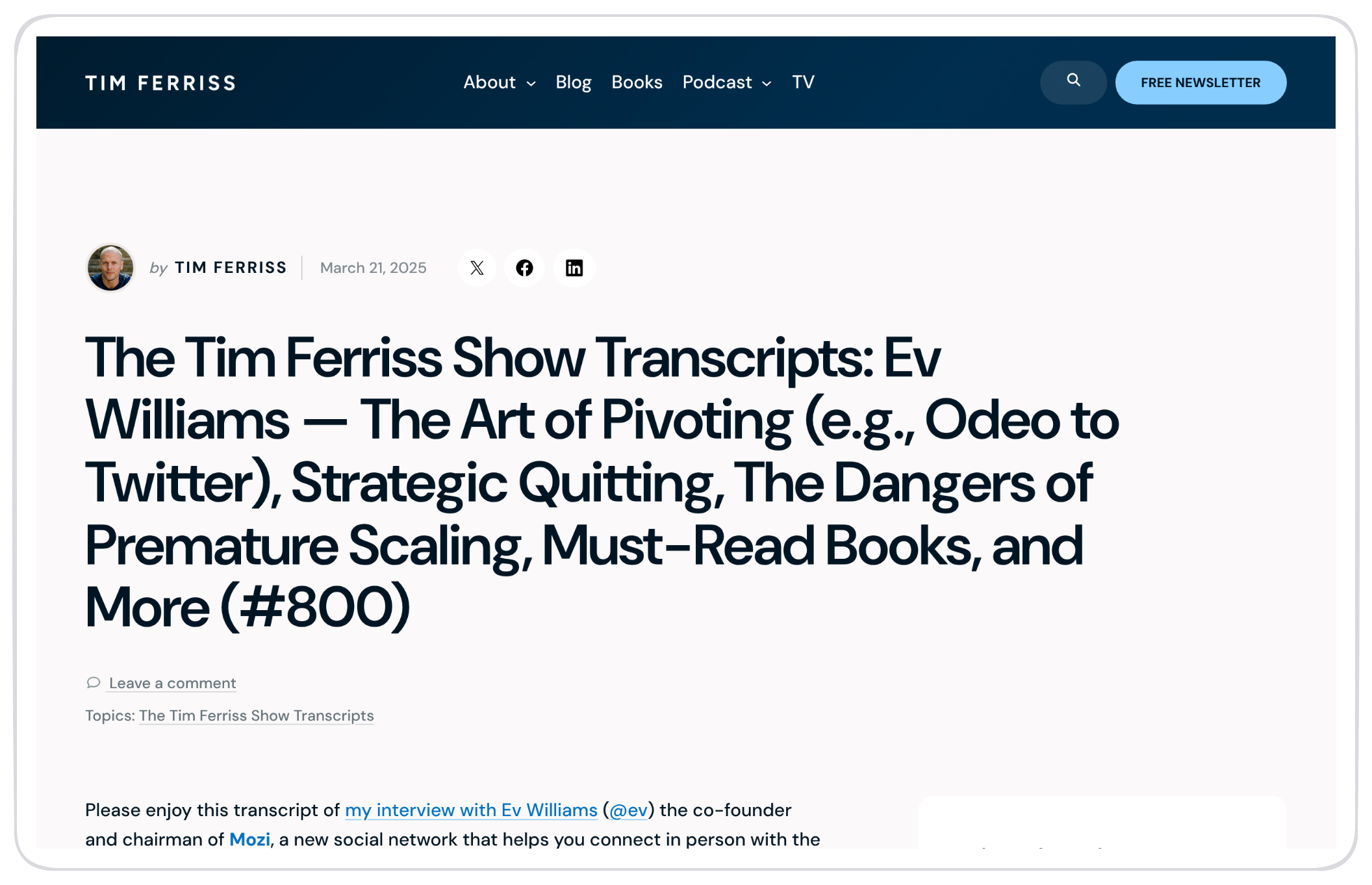
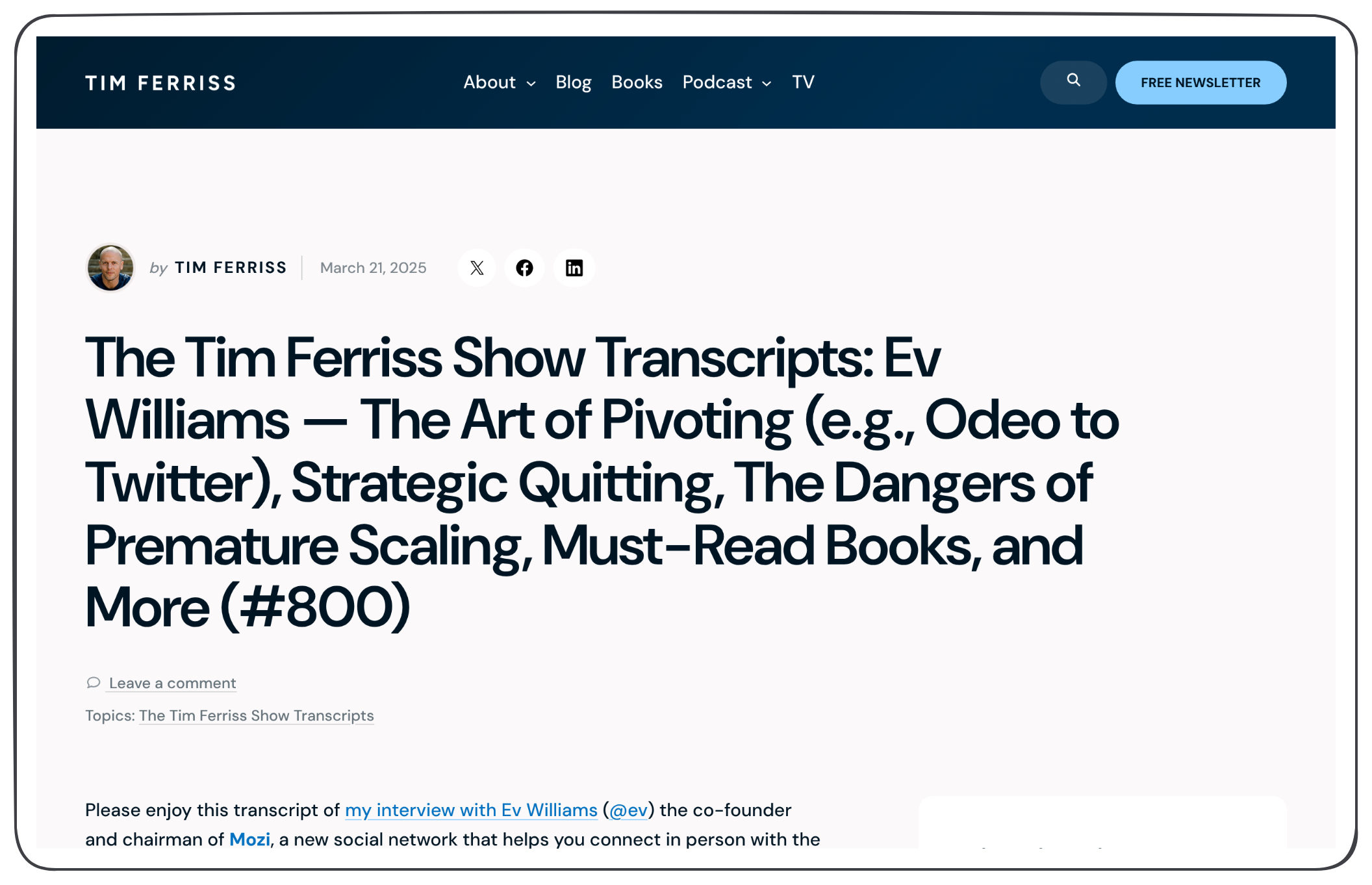
What to copy: the headline. It lists what's inside ("The Art of Pivoting," "Strategic Quitting," "The Dangers of Premature Scaling"), so a reader knows which questions get answered.
An interview works when the headline sells the answers the guest gives.
Blog Post Example #12: The Newsletter Post (Lenny's Newsletter, "How To Determine Your Activation Metric")
Today, a lot of the best blog posts arrive by email first.
Lenny Rachitsky's "How to determine your activation metric" (November 2022) is a post on Substack. It's a newsletter and a blog post at once: it went to subscribers' inboxes and lives on the web as a page. It answers a reader's question, and the full post is for paid subscribers.
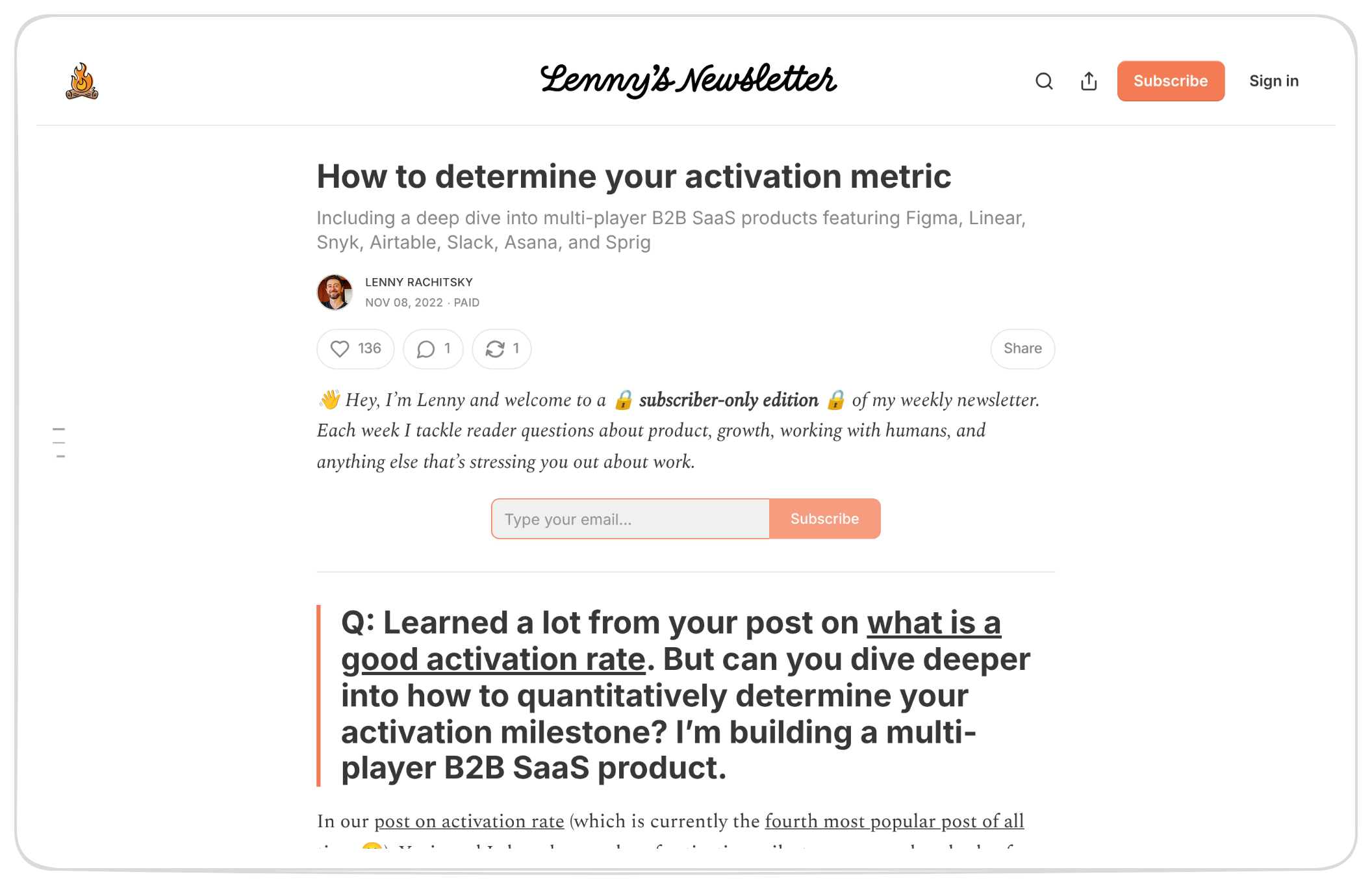
What to copy: the reader's question as the format. Lenny opens with the exact question a reader sent in, so every reader with the same problem feels it was written for them.
The newsletter post is the sample blog post that comes with its own readers.
50 Blog Post Ideas For Beginners (Sorted By Type)
All you need is a type and a topic.
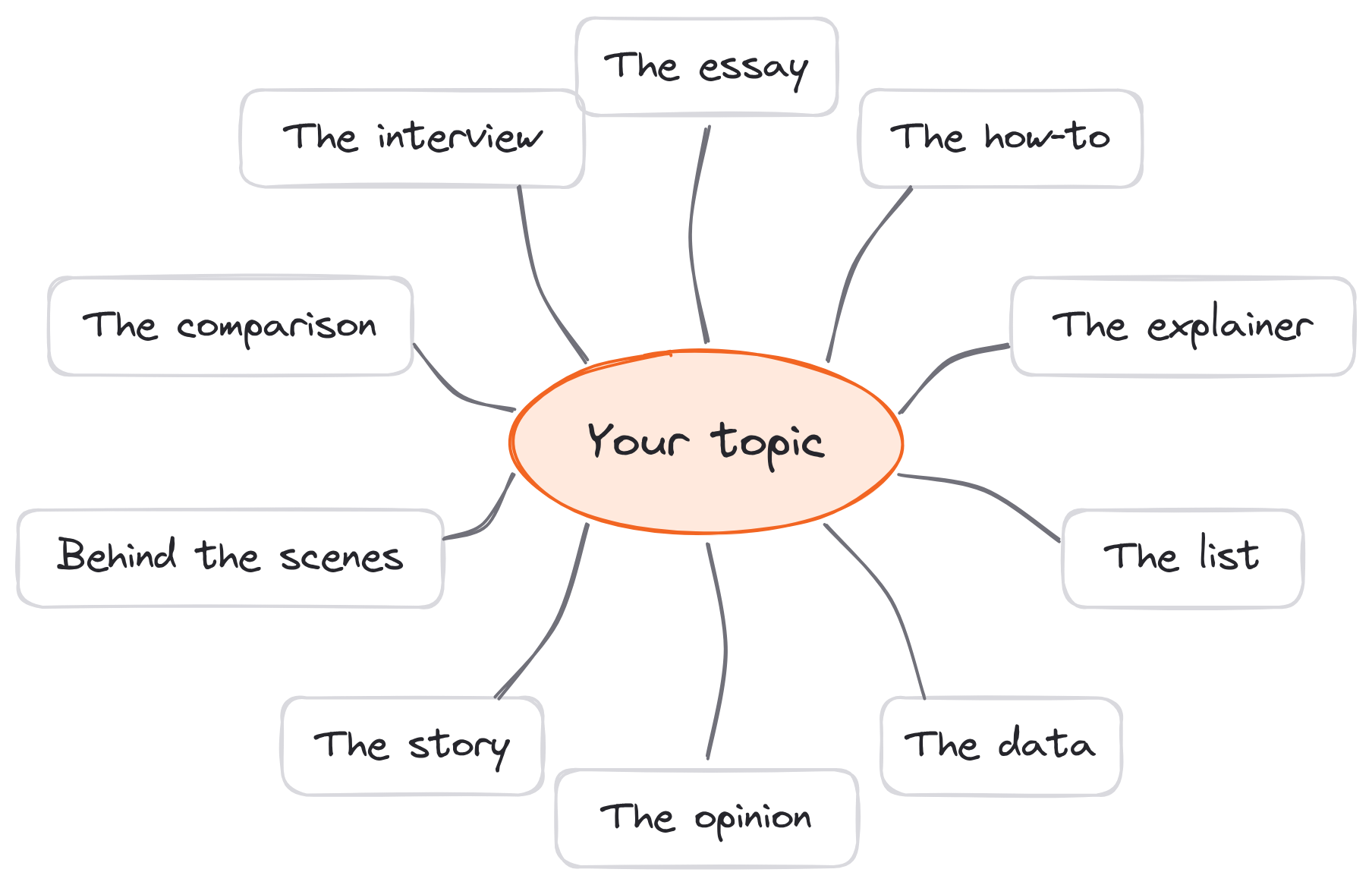
Here are 50 blog post ideas sorted into the same types as the examples above. Swap in your own topic (your job, your hobby, the thing you just learned) and each one becomes a post. For more, there's a list of newsletter ideas that work as blog posts too.
The essay
- The question everyone in your field argues about, answered
- What you believe about your work that most people don't
- Why the standard advice in your field is wrong (or right, for a different reason)
- What you'd tell yourself on your first day in your job
The how-to
- How to do the one task you get asked about most
- How to get started with your hobby for under $100
- The step-by-step process you use every week
- How to fix the most common mistake beginners make
- How to do it faster: your shortcut, written out
- A beginner's guide to the tool you use every day
The long explainer
- Everything a beginner needs to know about your field, in one post
- How the thing you work on works, explained to a 12-year-old
- The history of your industry in 10 moments
- A deep dive into a question you spent a month researching
The list post
- 10 lessons from 10 years of doing your job
- The books that changed how you work, and what each taught you
- 25 bits of advice for someone starting where you started
- The tools you'd buy again (and the ones you wouldn't)
- Mistakes you made in your first year, ranked
- 12 people in your field worth following, and why
The data post
- What you learned from tracking one habit for 30 days
- Your numbers from your first year: income, views, subscribers
- A survey of your readers or customers, with the results
- What happened when you tried something for a month, with the before and after
The short opinion post
- One rule you live by, in 150 words
- The one thing you'd change about your industry
- A popular idea you've stopped believing
- A short reply to a question you got this week
The guest post
- Your best how-to, written for a bigger blog in your niche
- Your story, pitched to a publication your readers already read
- A list post tailored to another writer's audience
The personal story
- How you got your first client (or job, or reader)
- The worst week of your career and what came out of it
- Why you quit something, and what you did next
- The moment you knew you were in the wrong job
- What you'd do differently if you started over
The behind-the-scenes post
- How you plan your week
- What a day in your job looks like, hour by hour
- How you price your work, and why
- The process behind your last project, start to finish
- Your setup: the desk, the apps, the routine
The comparison
- Tool A vs. tool B: which one to use, and when
- Two ways to do the same job, tested side by side
- Freelance vs. full-time in your field
- The cheap option vs. the expensive one: is it worth it?
The interview
- Ask 5 people in your field the same question
- An interview with your mentor
- A Q&A with your most successful customer
The newsletter post
- Answer a reader's question in full
- A roundup of the best things you read this week, with your take on each
Fifty blog post ideas, and every one of them is a type you've now seen done well.
How To Come Up With Blog Post Ideas (And Test Them Before You Publish)
The best blog post ideas are the ones readers have already told you they want.
That's the part most people skip. They sit down, think of an idea, spend a week on a blog post and publish it to nobody. Then they guess again. I'd rather you find out what works first, and there are two tools for that.
Tool #1: The 2-Year Test. When you're stuck, imagine you're talking to yourself 2 years ago. What skills have you built since? What struggles have you faced? What problems have you overcome? Every answer is a blog post for the person who is where you were. Being two years ahead of your reader is enough.
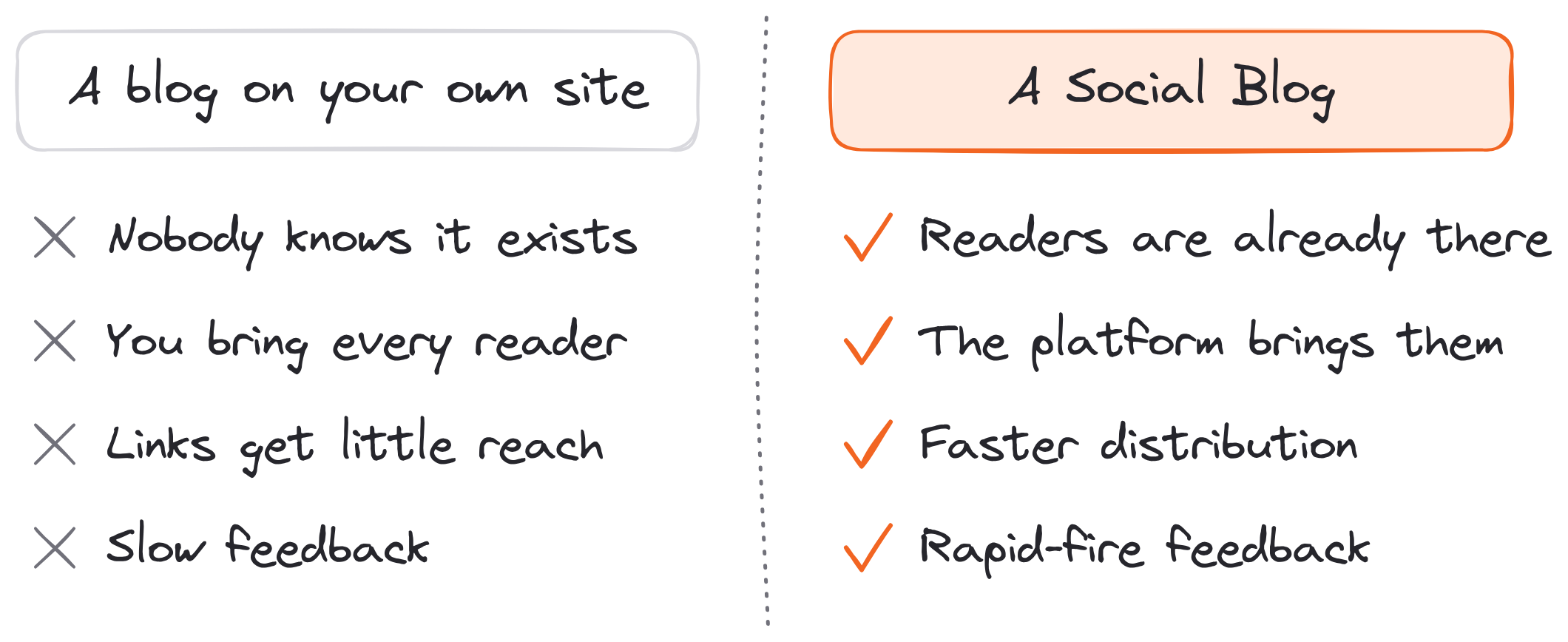
Tool #2: Test it on social first. This is why I tell new writers not to start a blog. As I wrote, when you're starting out you don't know what you want to write about yet. You don't know if readers want it either, and a blog slows down how fast you find out. Social platforms give you millions of potential readers, much faster distribution and rapid-fire feedback.
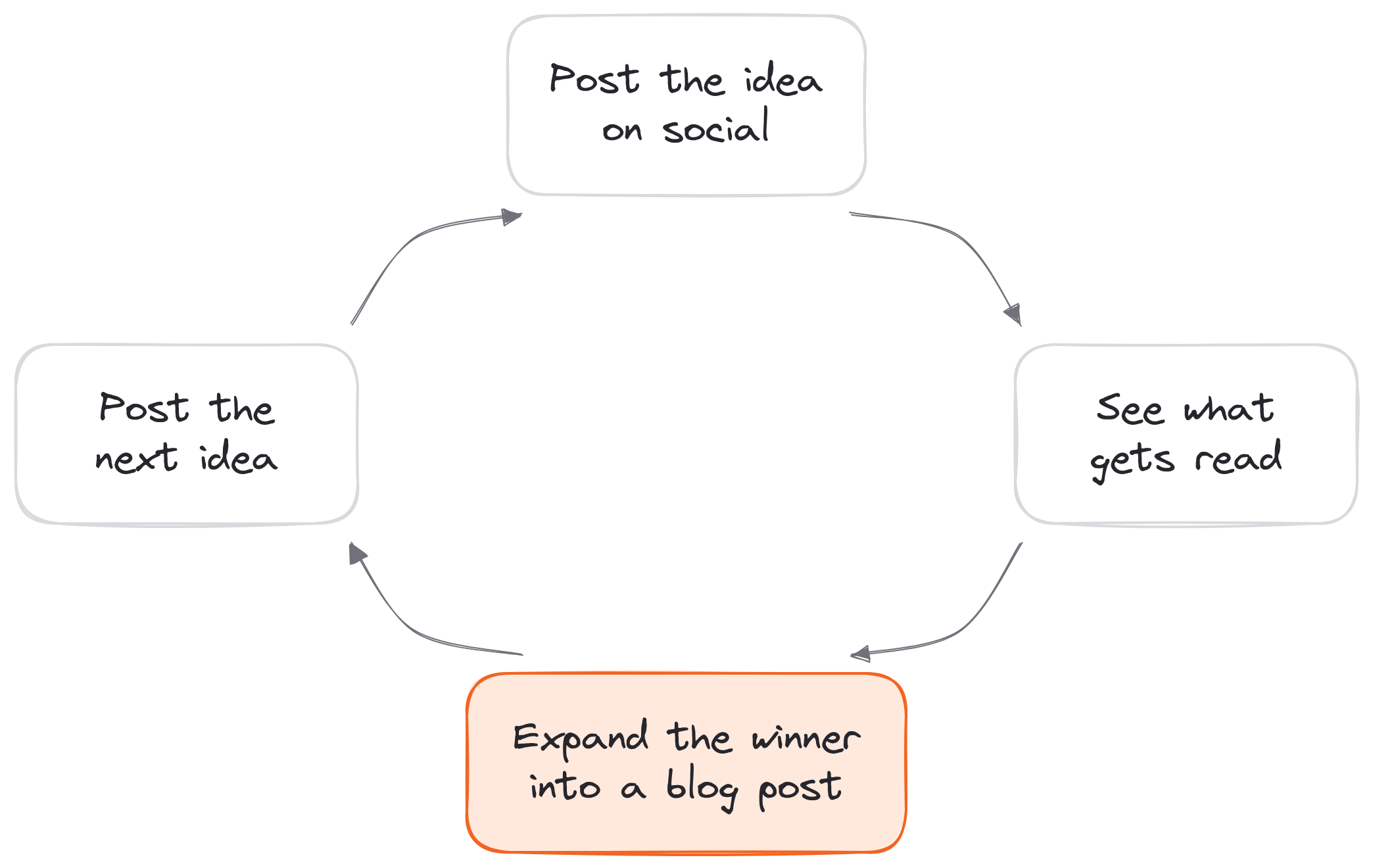
So here's the loop:
- Post the idea as a short post on LinkedIn, X, Threads or Substack Notes.
- Watch what gets read. Views, replies, saves.
- Expand the winner into a blog post. The reader already said yes to it.
- Repeat. The next post's idea is in this one's replies.
It's what I did on Quora in 2014. I wrote one answer a day, and each week I looked at which topic got the most views, then wrote more on that topic the next week. It's also the story of Example #7: Holiday's guest post went viral first, and the book came after.
That's how to come up with blog post ideas: let readers vote before you write the long version.
FAQ About Blog Post Examples
How long should a blog post be?
As long as it takes to keep the promise in your headline, and no longer. Derek Sivers' post above is about 150 words, and Wait But Why's runs to two parts. As I've written, word count is a horrible way of measuring value. If you can't say it in 8 words, you won't say it well in 800.
How often should I post?
As often as you can keep the quality up. When you're starting out, short posts every day on social (where you learn fastest) and one longer blog post a week from whatever did best is a good rhythm.
Where should I publish my blog posts?
Where your readers already are. That's what I call a Social Blog: your LinkedIn, your X profile, your Medium page, your Substack. Your own website can come later, once you know what works. If you want the blog post to also land in inboxes, start a newsletter on Substack (what Substack is and how it works).
What's the difference between a blog post and an article?
Mostly where it's published. A blog post lives on a blog (yours or someone else's) and is usually more personal. An article is the word publications use. The examples above use both, and the parts are the same.
Can I copy these blog post examples?
Copy the structure. Take the type, the shape of the headline and the one thing each example does well, and write it about your own topic in your own words.