How To Build A Personal Brand In 7 Steps (So Clients Find You Before You Pitch Them)
Nicolas ColeNovember 15, 2026
How to build a personal brand in 7 steps: pick your traits, own a niche, write your statement, set up LinkedIn and publish until clients come to you.
A prospect lands on your website and thinks, "Looks good. But who is this person?"
So they Google you.
When I ran Digital Press, my ghostwriting agency, that moment happened before almost every sales call. Prospects would Google my name and find a full first page of results: my articles, up-to-date profiles and tens of millions of views on my writing on Quora alone. They'd send one of my articles to a colleague. Then they'd reach out to me. That's how my personal brand became responsible for over $1 million in revenue for Digital Press.
I've also ghostwritten for 300+ industry leaders: founders, executives, investors. Most of them hired me for the same reason. They wanted to be the person prospects find when they search.
So here's the personal brand meaning I work from.
Your personal brand is what people find, and what they conclude, when they look you up. You can leave that to chance, or you can build it on purpose.
Building it on purpose takes 7 steps. You'll need a profile that says what you do (start with these LinkedIn headline examples), a habit of publishing (here's how to become a LinkedIn content creator), and somewhere to write and schedule your posts, like Typeshare for LinkedIn. You do the writing; the robots do the rest.
Step #1: Pick Your Personal Brand Traits
Who you are speaks louder than what you do.
There are thousands of marketers, financial planners, consultants and keynote speakers. The ones who stand out rarely do different work. They present it in a way that's theirs alone, and people gravitate toward people. As I wrote in 7 things that define you and your personal brand, a personal brand gives what you do more color, depth and expression.
So the first step is figuring out what kind of "content producer" you are.
Ask yourself four questions:
- What are you great at? List the skills people already pay you for, or thank you for.
- What do people ask you about? The questions friends and colleagues bring you are your raw material.
- How do you explain things when nobody's editing you? Do you tell stories, give opinions, share data or build step-by-step systems?
- What would you talk about for free? A personal brand takes years, and you'll only stick with topics you care about.
Question 3 matters more than most people think.
After ghostwriting for hundreds of clients, I found that almost everyone falls into one of 5 voices: the Storyteller, the Opinionator, the Fact Presenter, the Frameworker and the F-Bomber. These are your personal brand traits. Pick the one (or two) that sound like you, and lean into them in everything you write.
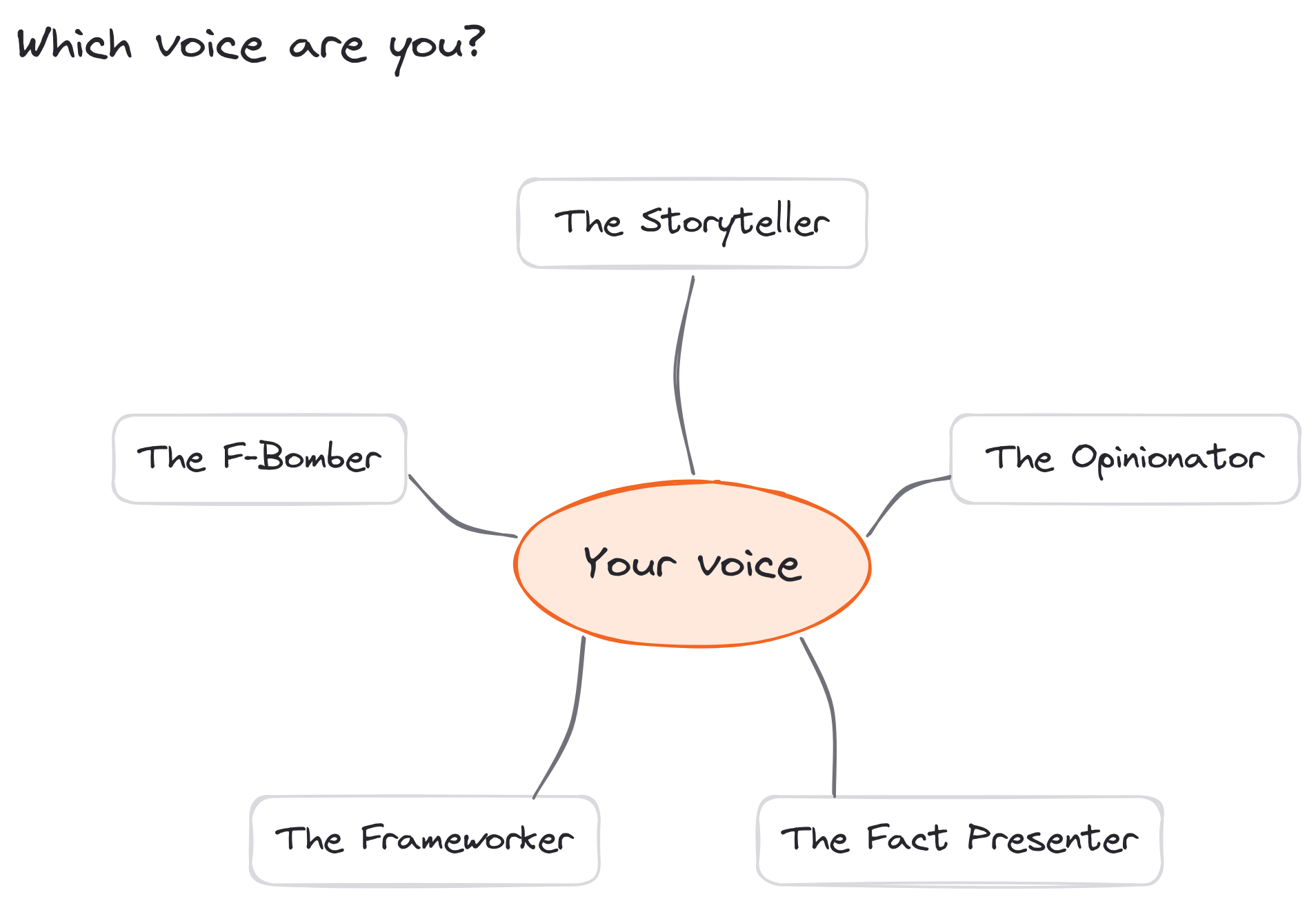
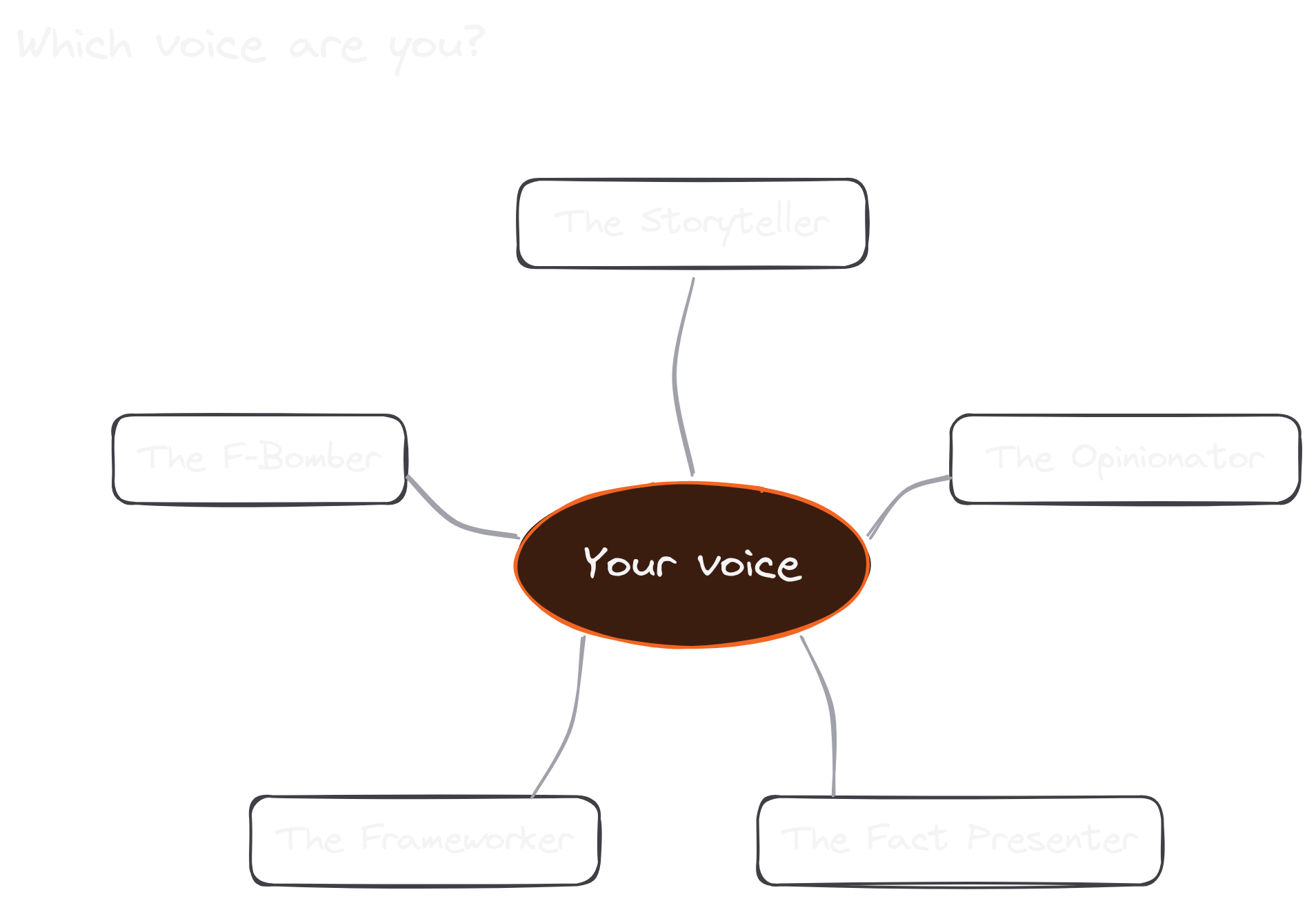
Pick the voice people already hear when you talk, even if another one sounds more impressive.
Your personal brand traits are the version of you that's already there, turned up.
Step #2: Own A Niche With Your Personal Brand Keywords
Personal branding means becoming known for a niche you own.
You get there by becoming associated with one specific topic. I don't want to be known as "Nicolas Cole" in general. I want to be the answer when someone asks, "Who should I follow to understand how to be a writer in the digital age?"
That's the test of a niche.
Here's how to find yours:
- Start with the reader, not yourself. You are not the niche. Your reader or customer is. People buy the niche, and they're mildly entertained by everything else.
- Write down 3 to 5 personal brand keywords. These are the words you want people to say when they describe you: "B2B sales," "first-time managers," "Shopify stores," "digital writing." They should be the same words your readers type into a search bar.
- Run the "who should I follow" test. Finish this sentence: "If you want to learn about ___, follow ___." If your name doesn't fit cleanly into the second blank, narrow the first one.
- Stay put. Every time you jump industries, you start over. A niche you own is the ultimate compounding mechanism.
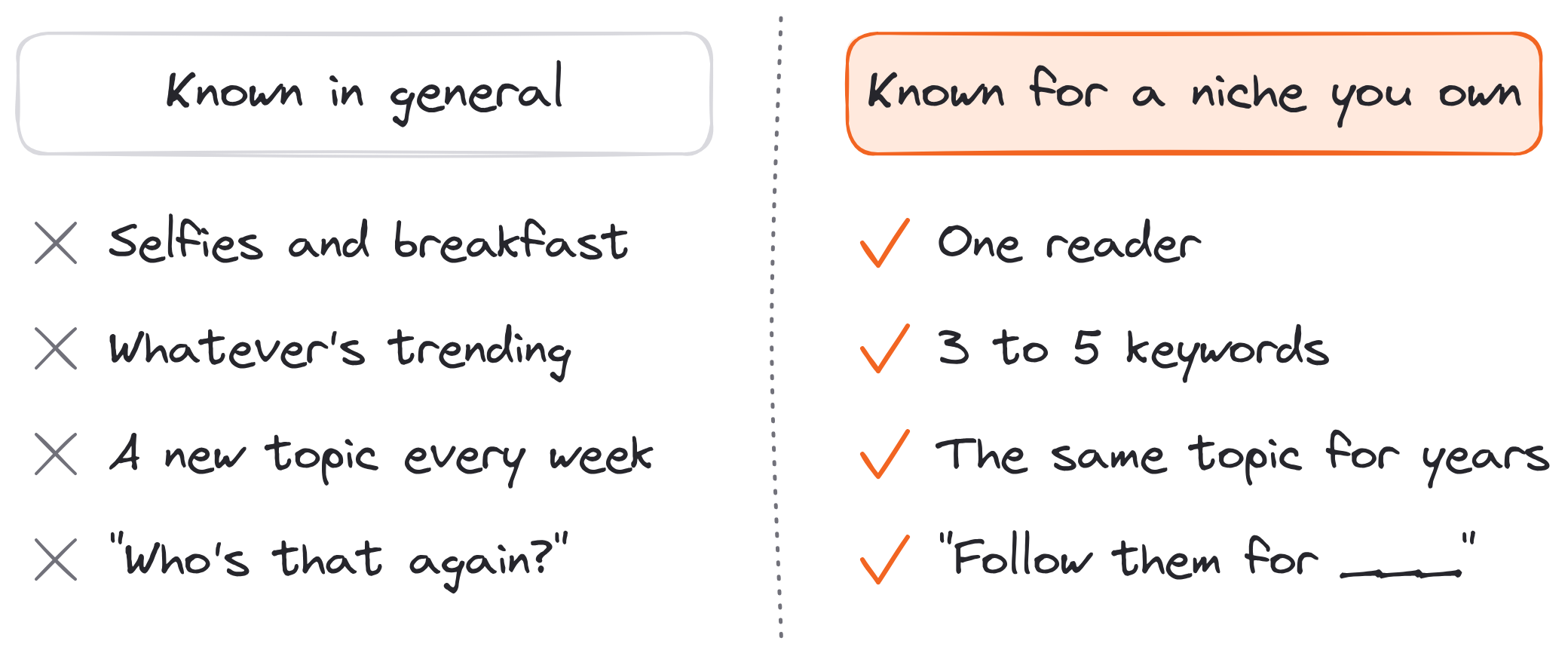
Your personal branding keywords also do a second job.
They're what you'll put in your profile headline, your bio and the first line of your best posts. When the same few words show up everywhere you do, both people and search engines learn what you're about.
Own the niche, and the keywords own the search.
Step #3: Write Your Personal Brand Statement (Personal Brand Statement Examples)
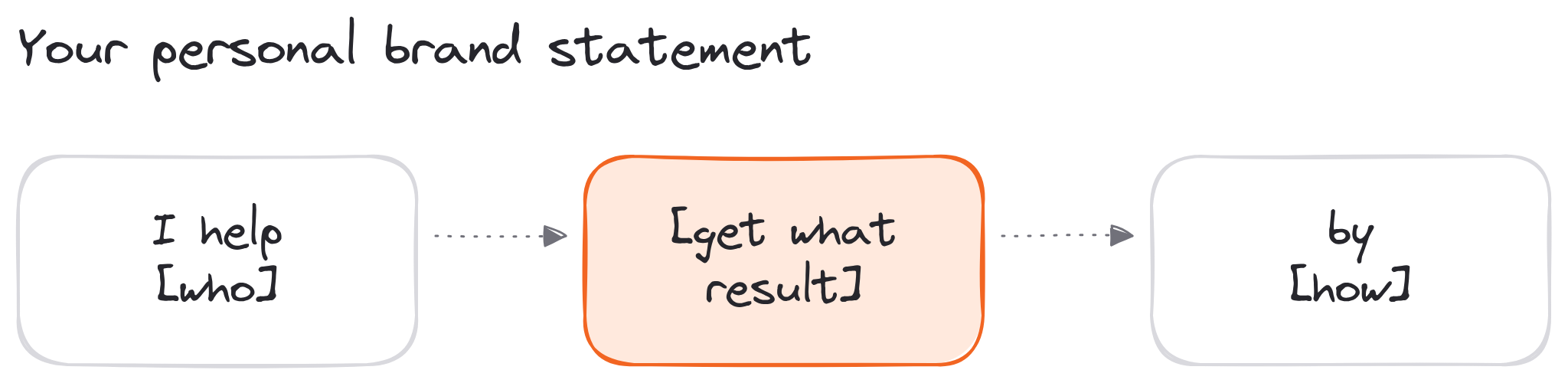
A personal brand statement is one sentence that says who you help, what you help them do and how.
It's your positioning in plain words. You'll use it in your LinkedIn headline, your bio, your speaker intro and every time someone at a dinner asks, "So, what do you do?" If you can't say it in one sentence, readers can't repeat it to anyone else.
Here's the simplest formula:
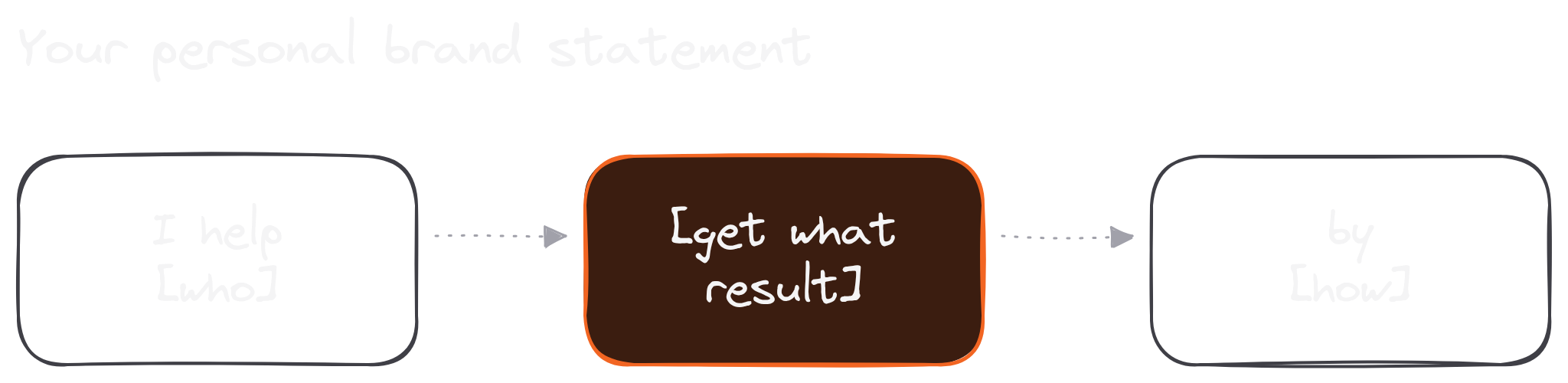
I help [a specific reader] [get a specific result] by [how you do it].
And here are 6 personal brand statement examples built on it. (These are made-up examples to show the formula, not real people.)
- A freelance designer: "I help Shopify stores turn more visitors into buyers by redesigning their product pages."
- A sales leader: "I help first-time B2B founders close their first 10 customers without hiring a sales team."
- An executive coach: "I help newly promoted managers lead their old peers without losing them."
- A financial planner: "I help freelancers pay themselves a steady salary from an unsteady income."
- A software engineer: "I help junior developers get their first promotion by writing about the code reviews I give."
- A founder: "I help small agencies stop trading hours for money by turning their services into products."
Notice what each example of a personal brand statement leaves out.
No "passionate." No "results-driven." No list of five job titles. Each one names one reader and one outcome, and a reader can tell in three seconds whether it's for them. The most common mistake I see is a statement written to impress peers.
Write it for the reader, and your personal brand statement becomes the sentence people repeat when they recommend you.
Step #4: Set Up Your Profiles For LinkedIn Personal Branding
Before anyone reads your first post, they'll check your profile.
When my prospects Googled me, they found professional headshots on every social platform, professional banners and up-to-date bios. They ticked each one off without thinking about it. None of those things sold anything on their own. But a missing one would have raised a question.
LinkedIn is where most of that checking happens now, so start there.
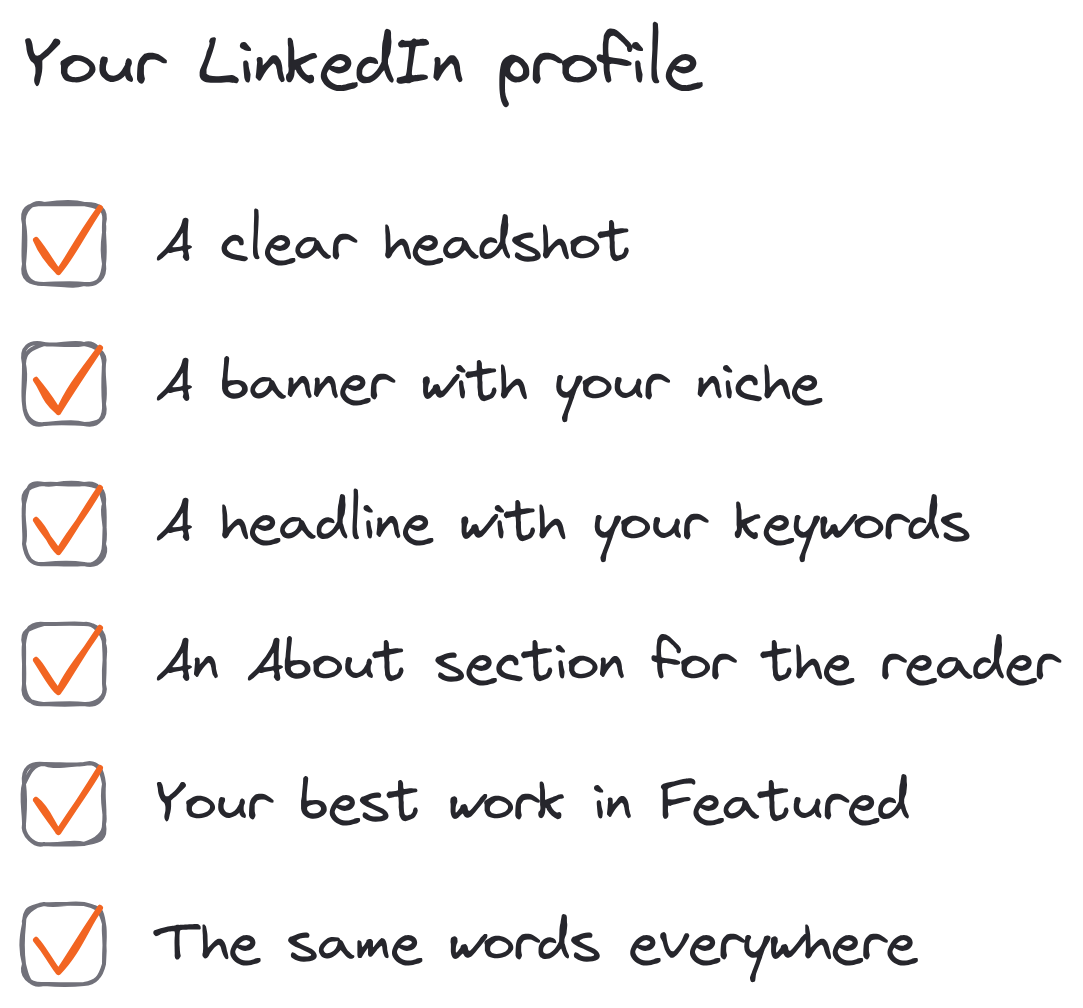
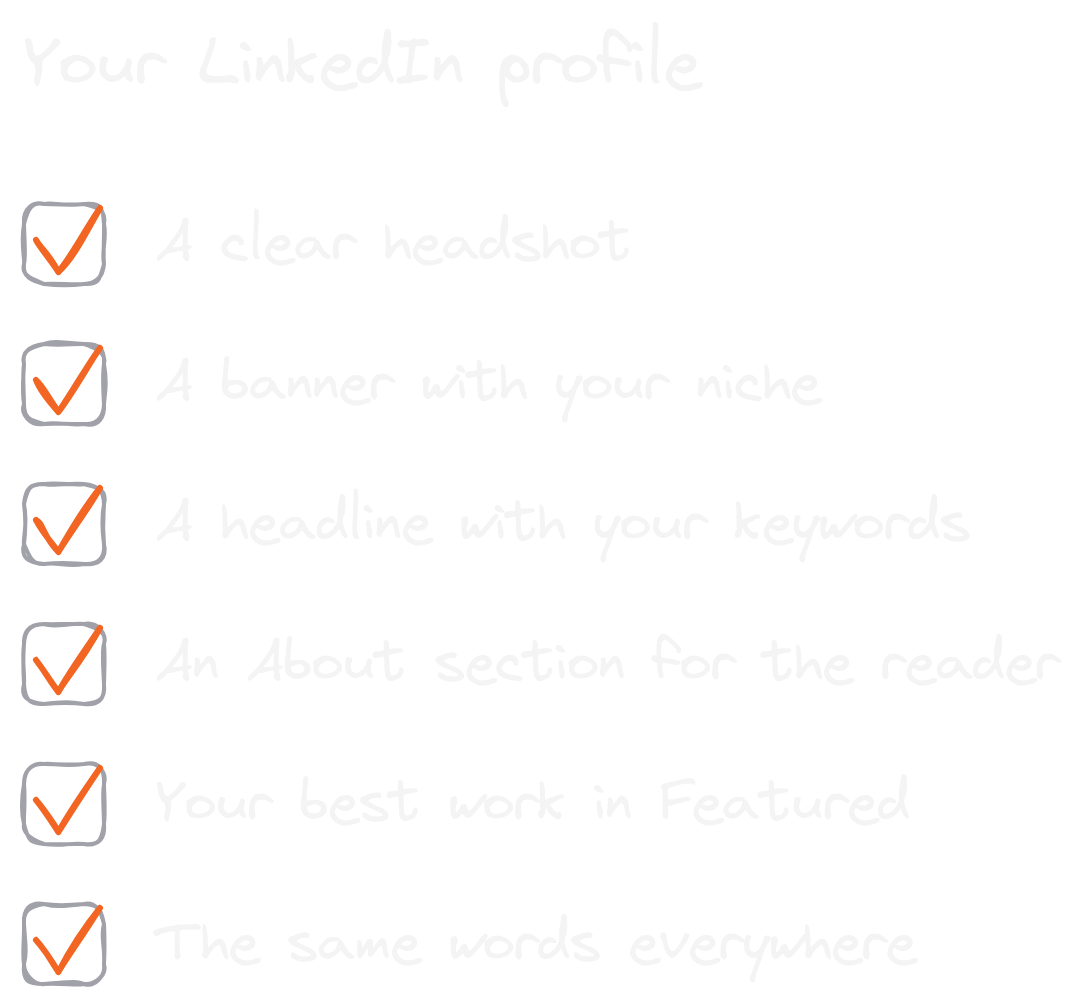
Here's the checklist I'd use for your LinkedIn personal brand:
- A clear headshot. Your face, well lit, looking at the camera. A phone and a window are enough.
- A banner that says your niche. Your personal brand statement, or the one result you deliver, in big type.
- A headline with your keywords. Say who you help and how, after your job title or in place of it (borrow a structure from these LinkedIn headline examples).
- An About section written to the reader. Open with their problem, then your story, then what to do next.
- A Featured section with your best work. Your top 3 posts or articles, so a visitor sees proof before they scroll.
- The same words everywhere. Your X bio, your website and your newsletter should repeat the same statement and keywords.
Then run the Google test.
Search your own name in a private browser window. Whatever's on that first page is your personal brand today, whether you planned it or not. Fix what's wrong, and fill the empty spots with profiles you control.
Your profile is your storefront, and LinkedIn personal branding starts with what a visitor sees in the first five seconds.
Step #5: Publish Where Your Readers Are (Personal Branding On Social Media)
A profile proves you exist, but publishing proves you're worth following.
This is the step most people skip. They polish a profile and wait. People follow someone who's telling them what they should know before they think to look it up. And the way you become that person fits in three words: you think, you share, and you do it consistently.
Why does personal branding on social media work so well? Three reasons.
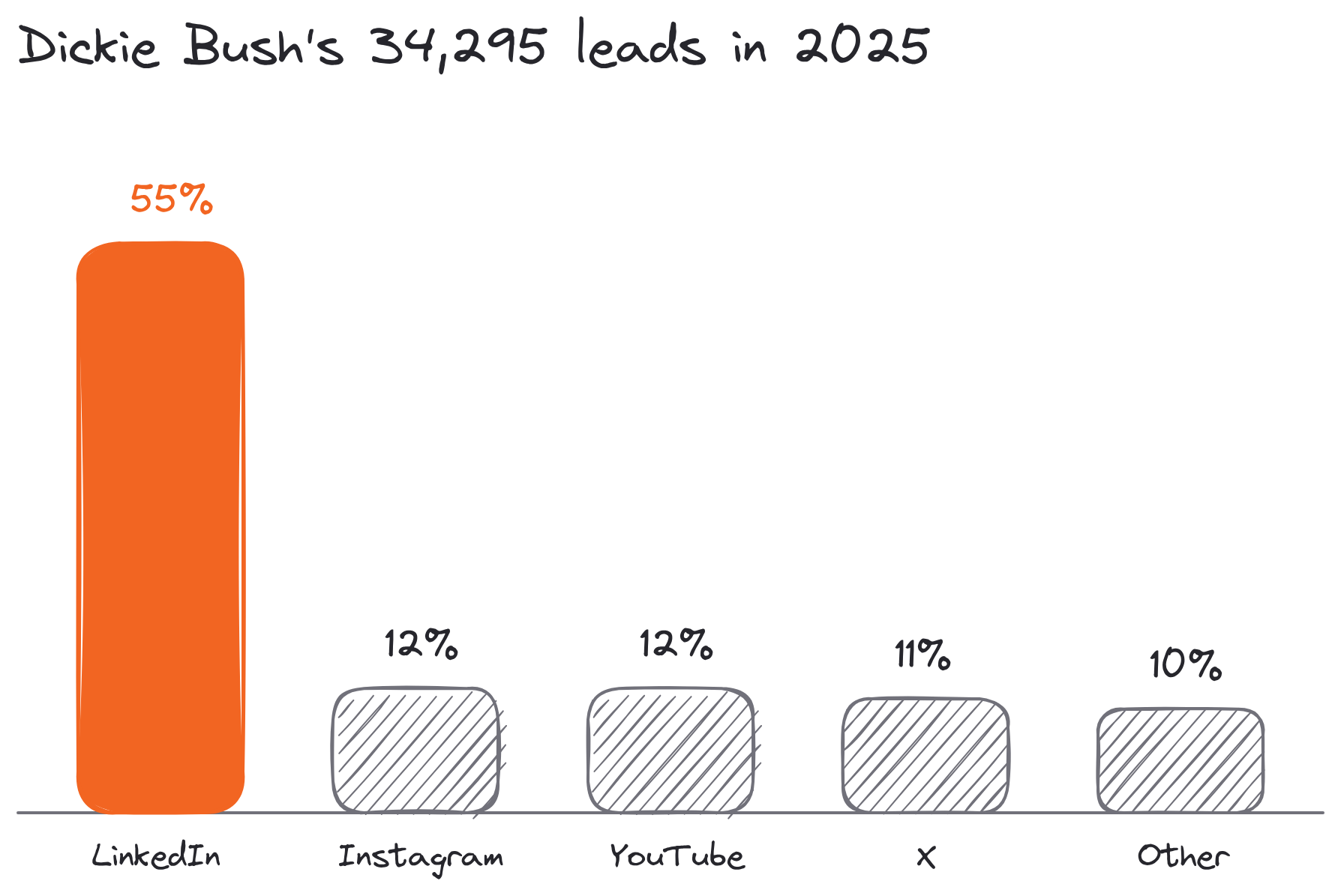
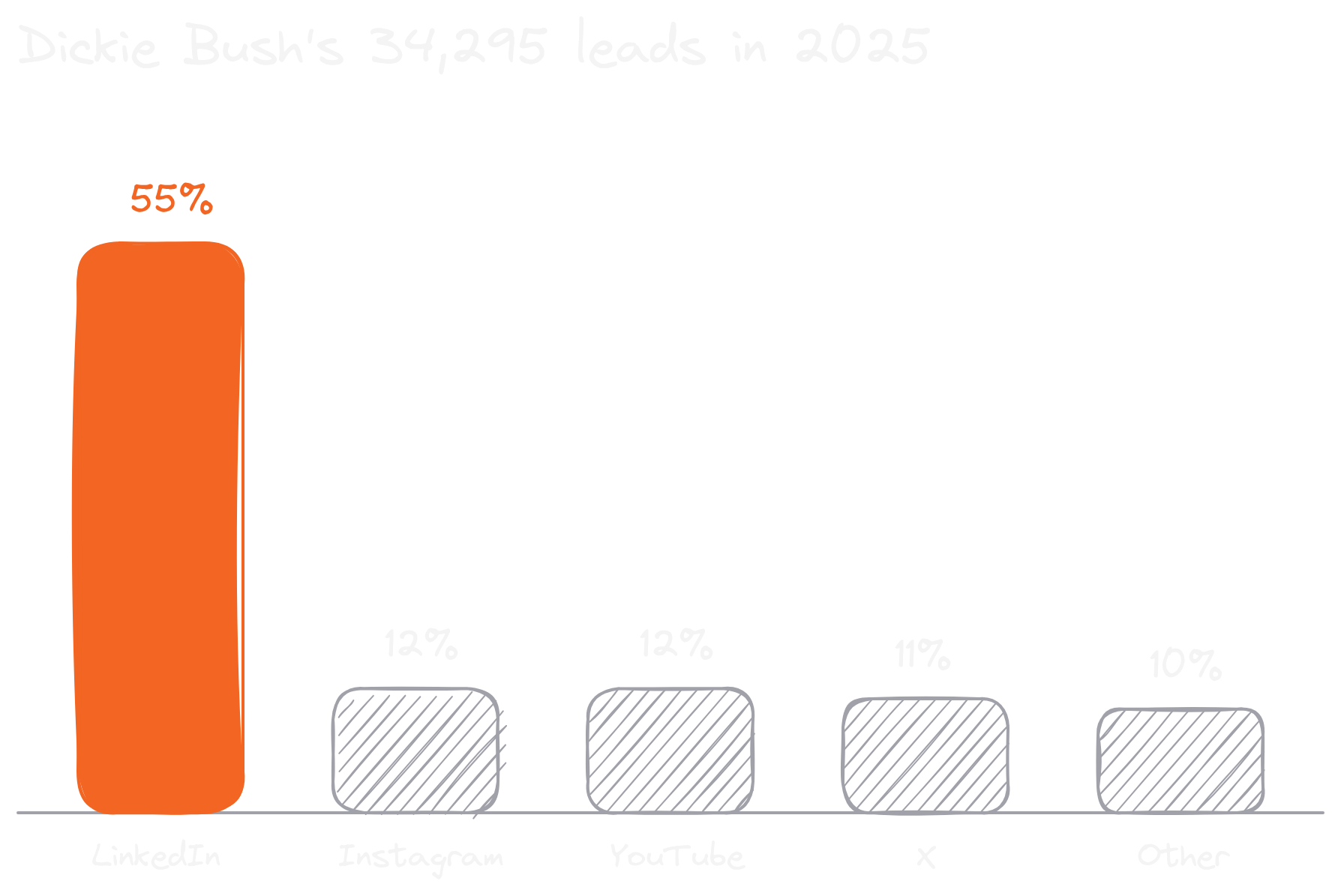
The first is reach. Your next client is already scrolling, and the right post puts your thinking in front of them for free. My co-founder Dickie Bush shared that his business generated 34,295 organic leads in 2025, and 55% of them came from LinkedIn.
The second is proof. Every post is a small piece of evidence that you know your niche. Fifty posts on the same topic say more than any line on a résumé.
The third is compounding. A post you wrote last spring can still be the reason someone books a call this week. The longer you publish, the more of these small pieces of proof are out there working for you.
So pick one platform where your readers already are (for most professionals, that's LinkedIn), and commit to a schedule you can keep. Three posts a week for a year beats a daily burst that dies in a month.
The easiest way to keep that schedule is to separate the writing from the posting. Write a week of posts in one sitting, put them in a queue, and let them go out on their own. That's what Typeshare for LinkedIn does: you write in one editor and schedule to LinkedIn, X, Threads and Substack.
Personal branding on social media is a habit you keep for years.
Step #6: Build Substance Before Image (Personal Branding Tips)
Some people think personal branding is about the image you present.
These are the consultants who spend meeting after meeting on the outfit in your profile picture. What they don't tell you is that image is meaningless if there isn't substance behind it. A dramatic profile picture won't convince anyone to work with you, and neither will a quirky tagline or a "signature font."
Those things amplify what's below the surface.
If you're truly an expert, they highlight your substance. If you talk more than you walk, they become gimmicks, and your lack of expertise gets louder. So my best personal branding tips are really a list of mistakes to avoid:
- Polishing before publishing. A perfect banner with no posts underneath it is a nicer-looking empty room.
- Chasing general attention. 99% of creators get personal branding wrong by aiming to be known in general: viral dances, breakfast photos, the latest selfie.
- Sharing your story for its own sake. Your story matters only when it teaches your reader something.
- Hiding everything personal. Everybody wants a personal brand. Nobody wants to share anything personal. One honest lesson from a mistake you made beats ten generic tips.
- Waiting to feel like an expert. People prefer to learn from someone a few steps ahead of them. Write to the person you were two years ago.
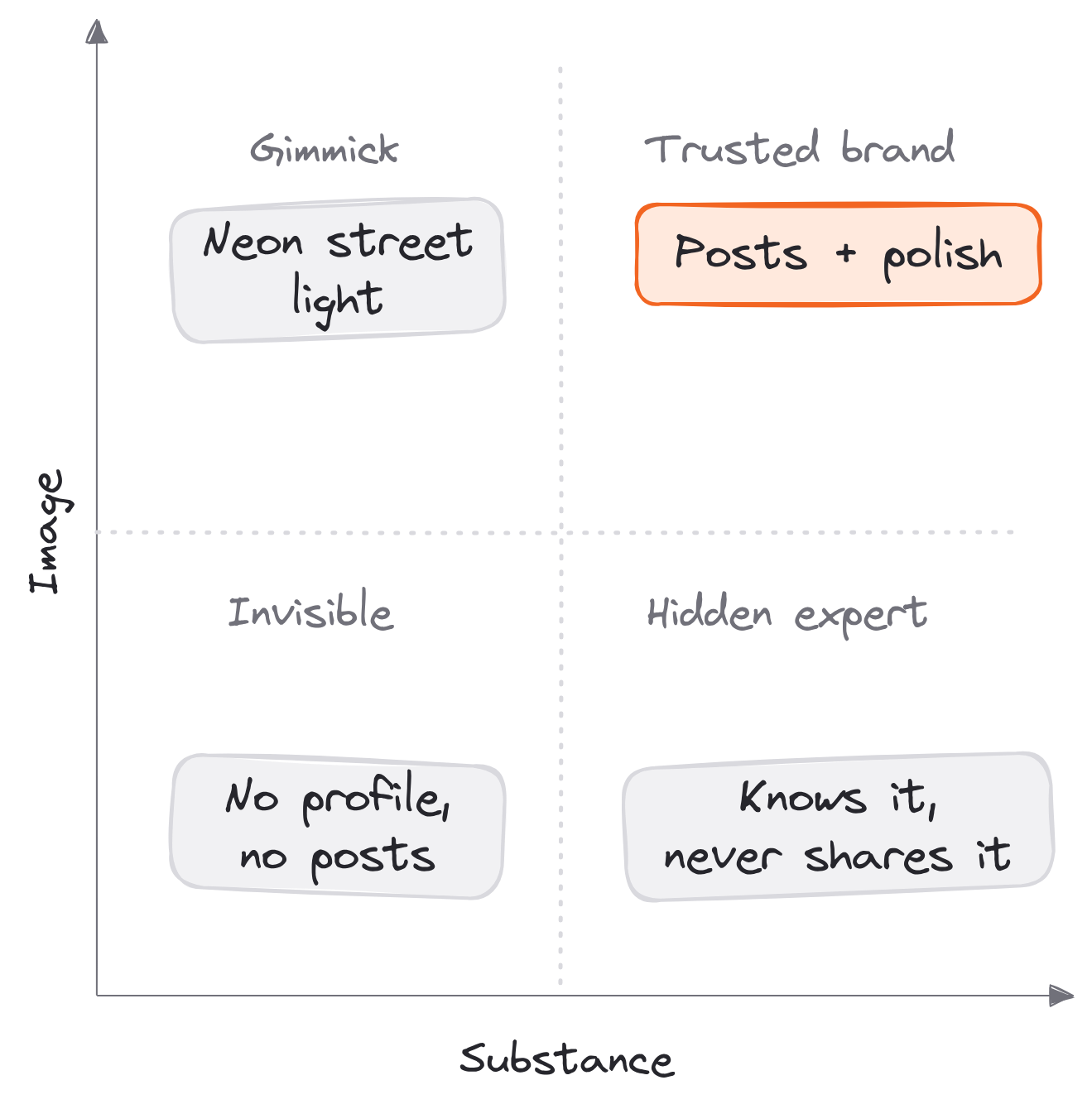
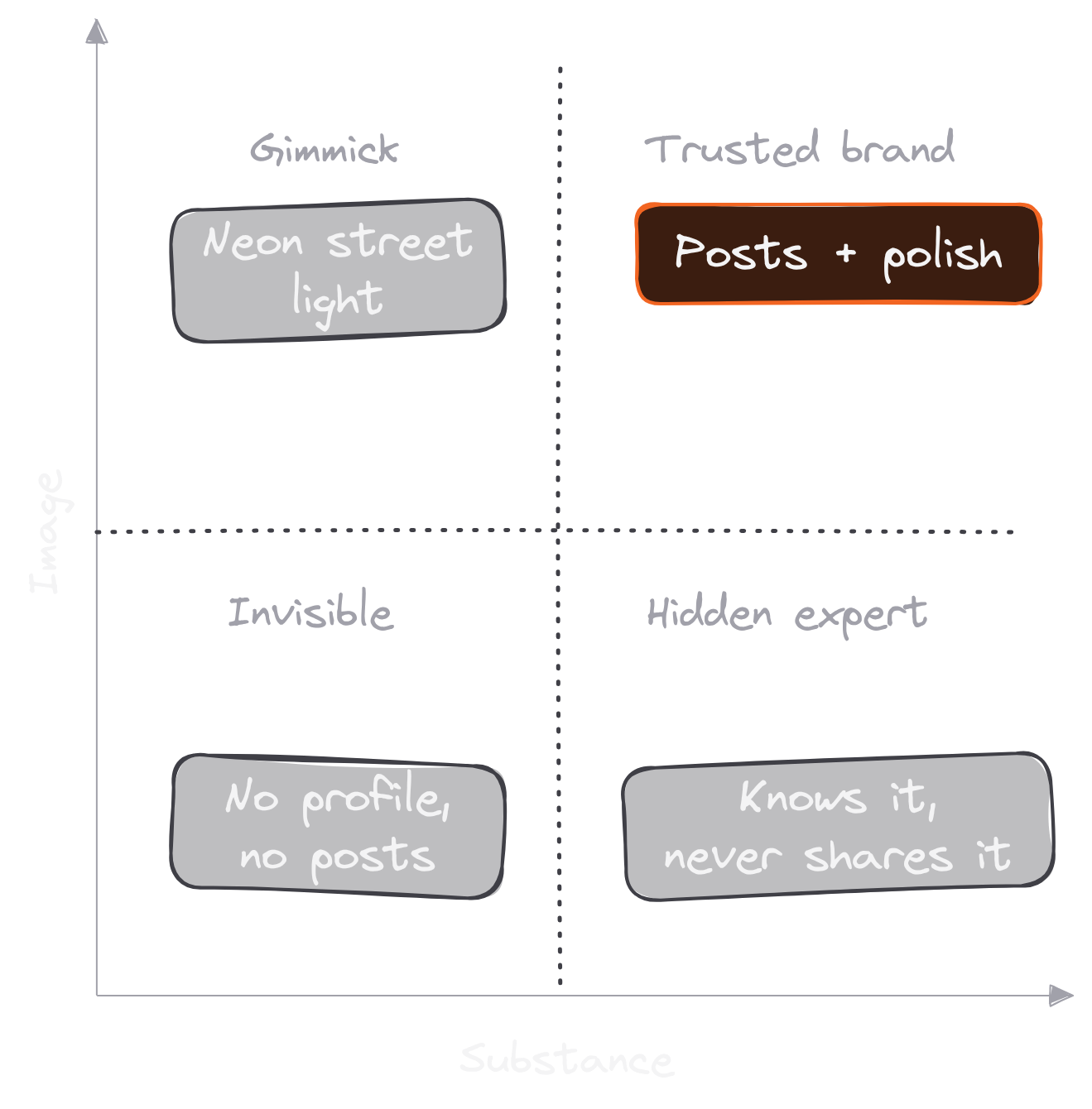
The hidden expert is the easiest box to fix.
If you already know your stuff, all you need is a clean profile and a publishing habit. If you're all image, there's no shortcut: go do the work, then write about it.
Be someone worth listening to before you turn yourself into a neon street light.
Step #7: Let Your Personal Brand Do The Selling (Executive Personal Branding)
"So, what sort of ROI can we expect from this?"
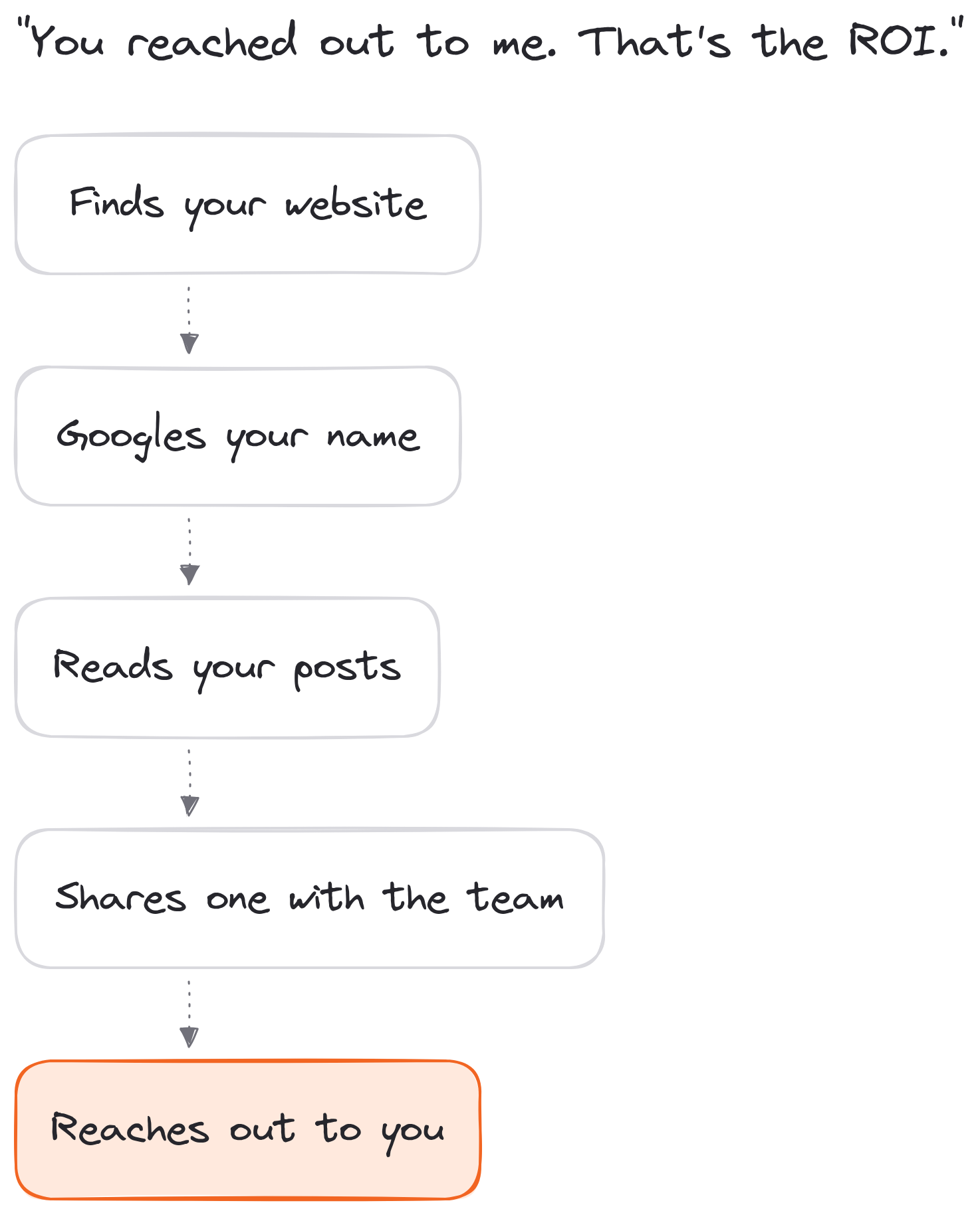
Every Digital Press sales call got to that question, the return on investment (ROI), eventually. The founder on the other end wanted to know what they'd get for paying us to write thought leadership articles in their name. I said the same thing every single time: "You reached out to me. That's the ROI."
Think about how they found me.
- They came across our website.
- They Googled my name.
- They found articles, profiles and proof on the first page.
- They sent one of my articles to someone on their team.
- They reached out to set up a call.
I didn't pitch any of them.
That's why executive personal branding has become its own industry. Every call opened with some version of "I looked you up online before this call and I was really impressed by what I saw". The hardest part of selling, earning trust, was done before we said hello.
Personal branding for executives works the same way, with one twist: executives rarely have time to write. The flywheel goes like this. The executive has years of knowledge locked in their head. They don't have time to sit down and write, because they have a company to run. So they hire a ghostwriter, who interviews them and turns those calls into posts that sound like them.
If that's you, you have three options:
- Write it yourself in short, regular sessions (20 minutes, three times a week is plenty).
- Hire a ghostwriter to interview you and draft in your voice.
- Use AI trained on your own writing to turn your notes into drafts, then edit them yourself. In Typeshare, the LinkedIn Agent writes posts from your Digital Brain (the writing you've already done) and leaves them for you to review.
Whichever you pick, the goal is the same.
Build your personal brand well enough, and it starts doing the selling before you ever get on the call.
FAQ
What does personal brand mean?
Your personal brand is what people find and conclude about you when they look you up: what you're known for, who you help and why they should trust you. Everyone has one. Building a personal brand means shaping it on purpose, by owning a niche and publishing about it consistently.
What is a personal brand statement?
A personal brand statement is one sentence that says who you help, what result you help them get and how. A simple formula is "I help [a specific reader] [get a specific result] by [how you do it]." Put it in your LinkedIn headline, your bio and your intro.
What are some good personal brand examples?
Look for people who are the obvious answer to "who should I follow to learn about ___?" I built mine around digital writing, so that's the answer I want people to give about me. Dickie Bush built his around building digital businesses, and publishes his own numbers to prove it. The best personal branding examples in your field will share the same three things: one niche, one clear statement and years of consistent publishing.
What should a personal brand strategy include?
A personal brand strategy covers four things: the niche and keywords you want to own, your personal brand statement, the profiles people will check, and a publishing schedule on one main platform. Write each one down. Then review it every few months against the questions people ask you.
How long does it take to build a personal brand?
Longer than most people want. Expect the first few months to feel quiet. Thought leadership marketing, as I told the founders who asked when to start, has no end date. You plant your flag, keep showing up for weeks and months, and one by one people come and stand next to you.