How To Build A Personal Brand Website That Turns A Google Search Into A Client (+ 7 Examples)
Nicolas ColeNovember 21, 2026
How to build a personal brand website: the 5 parts a visitor looks for after they google you, where to start, and 7 personal brand website examples to copy.
"So, I looked you up online before this call and I was really impressed by what I saw."
For years, that's how my calls with prospective clients started. It didn't matter if they were a cold lead, an inbound lead or a direct introduction. They all googled my name before the call, and they all found hundreds of articles I'd written on the exact subjects we were about to discuss. By the time we spoke, the hardest part of sales was done.
They already trusted me.
That's what a personal brand website is for. It's the page that greets someone right after they google you, and its job is to turn their curiosity into a conversation. My own personal brand became responsible for over $1 million in revenue for my ghostwriting agency, Digital Press, and the website was where those searches landed.
So here's how to build a personal brand website that does the same: where to start (hint: not with the website), the 5 parts every visitor looks for, how to fill it from your writing, and 7 real sites to copy. (If you haven't decided what you want to be known for yet, read how to build a personal brand first. For the words on each page, see website copywriting. And the library your site points to starts in the Typeshare editor. You do the writing; the robots do the rest.)
Step #1: Write Where Readers Are Before You Build A Personal Brand Website
The first rule I give every new writer is the same: don't start a blog.
It's Law #1 of my 22 Immutable Laws of Online Writing, and it applies to a personal brand website too. Most people build the site first. They spend hours (or thousands of dollars) on a logo and a design, publish a post or two, and hear nothing back. Nobody knows the site exists.
The fix is what I call a Social Blog: writing where readers already are. Your X profile is a Social Blog. So is your LinkedIn, your Substack and your answers on Quora. When you write there, the platform hands your work to readers. A brand-new website hands it to nobody.
Here's why I'd start on social before building anything:
- You don't know what you want to write about yet. Social shows you in weeks.
- You don't know what readers want from you. Engagement data tells you.
- Distribution is built in. Millions of potential readers, compared to your mom reading your blog.
- There's no cost or setup. You can publish today.
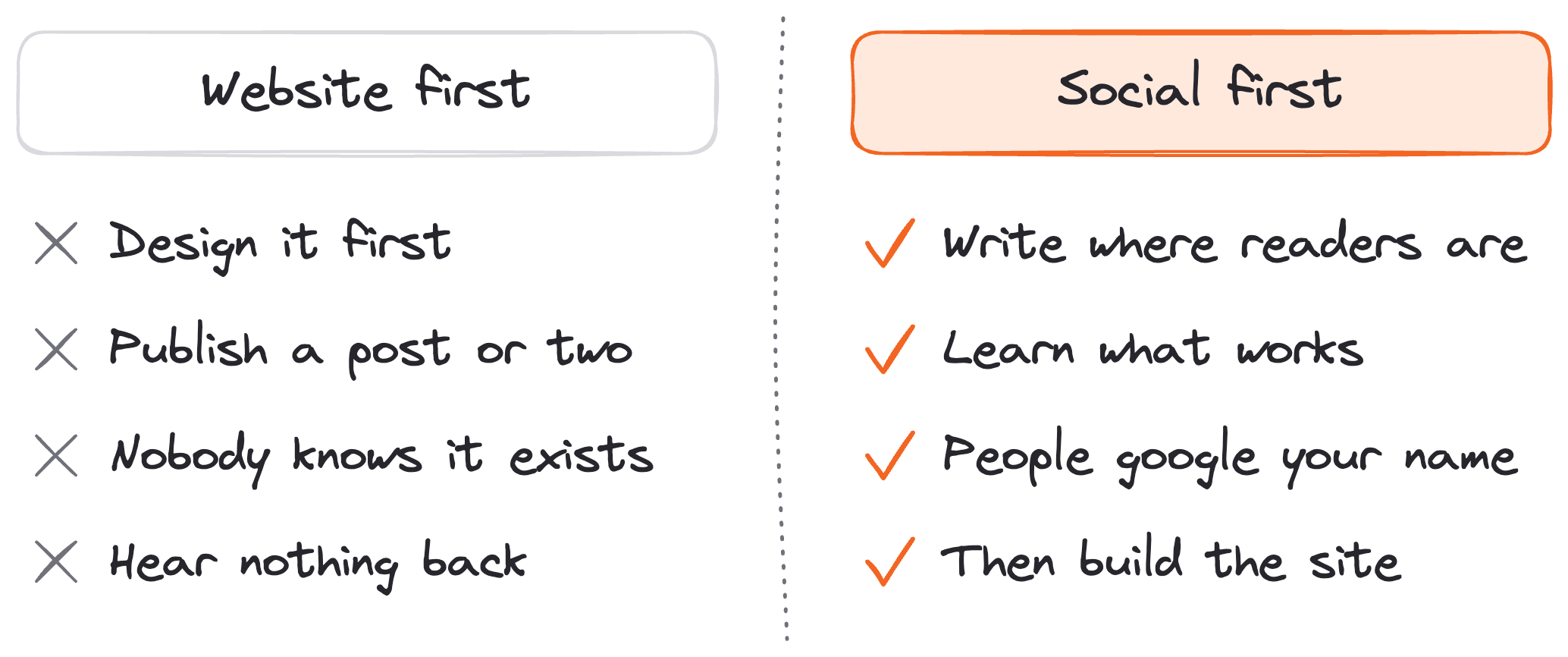
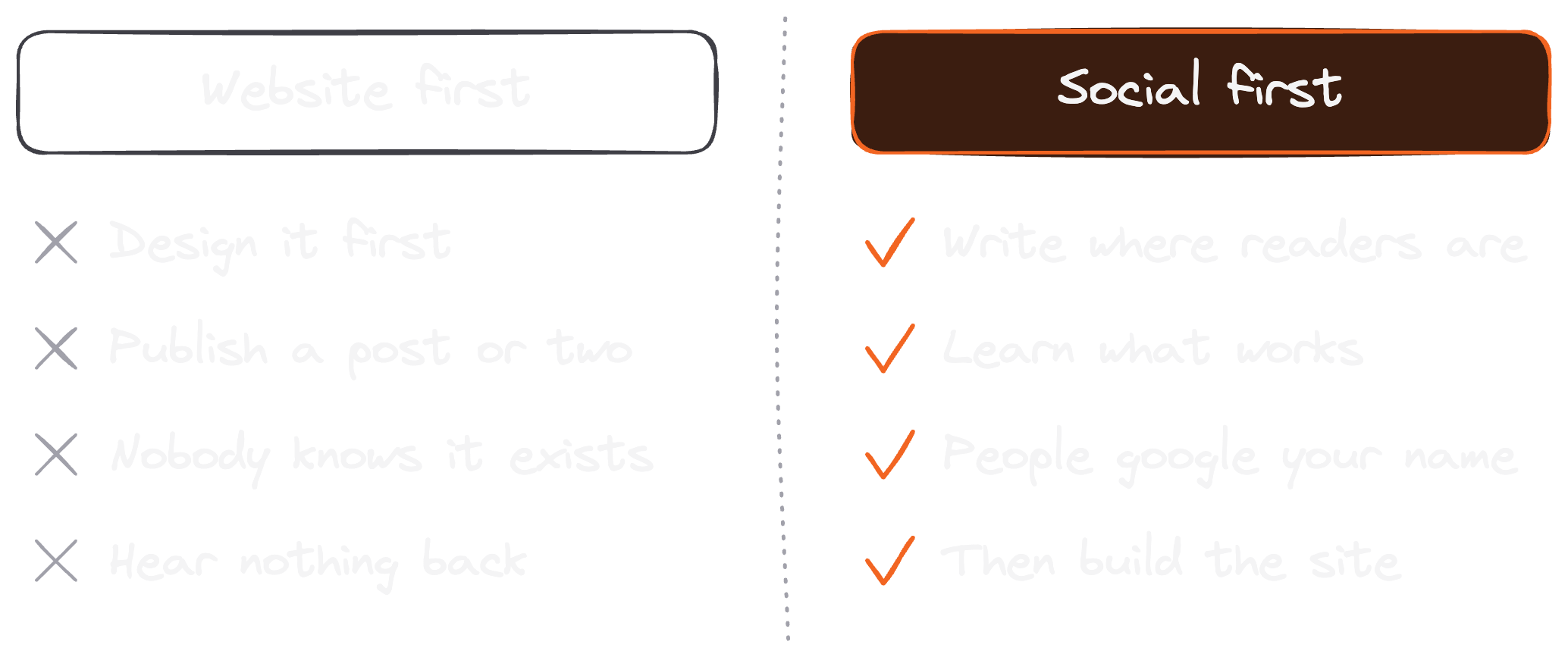
So, do you need a personal brand website? Eventually, yes. Once people start looking you up, you need a page that greets them. But the website is the second step. The writing is the first.
Write where readers are first, and your personal brand website will have something to show the day you build it.
Step #2: Know What A Personal Branding Website Is For
What happens in the 30 seconds after someone reads your post and thinks, "Who is this?"
They google you. That's the moment a personal branding website exists for, and it helps to picture it step by step. Here's how I described it years ago, when a prospect came across Digital Press:
- They come across your work. For my prospects, it was the Digital Press website.
- They google your name. They want to know who's behind it, and they see you own the first page of results.
- They check the basics. Professional headshots, banners, up-to-date bios on every platform.
- They start reading. Then they send one of your articles to someone on their team.
- They reach out. And on the call, the question "what's the ROI?" has already been answered.
My answer to that question was always the same: "You reached out to me. That's the ROI."


Notice what the website does in that chain. It confirms what they already suspected from your writing: this person is real, credible and worth a call. The selling happened in the articles they read.
That changes what you build. A personal branding website for a writer, consultant or founder needs to answer one question fast ("Can I trust this person?") and then give the visitor one clear next step. Everything else is decoration.
Know what your personal branding website is for, and every decision about it gets easier.
Step #3: Give Your Personal Brand Website These 5 Parts
Most personal brand websites fail by trying to say everything.
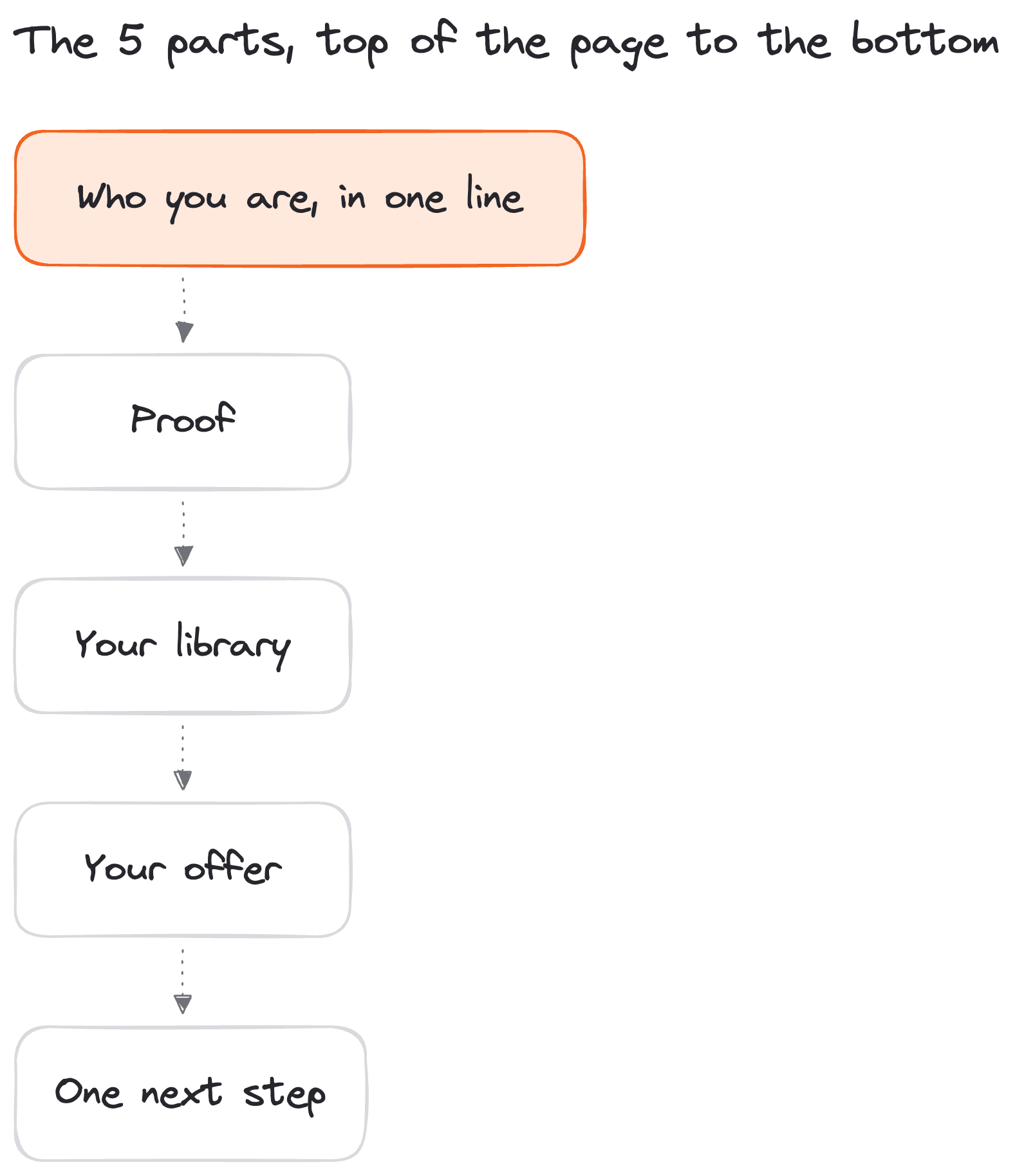
Visitors arrive with one question and very little patience. So the sites that work come down to 5 parts, in roughly this order:
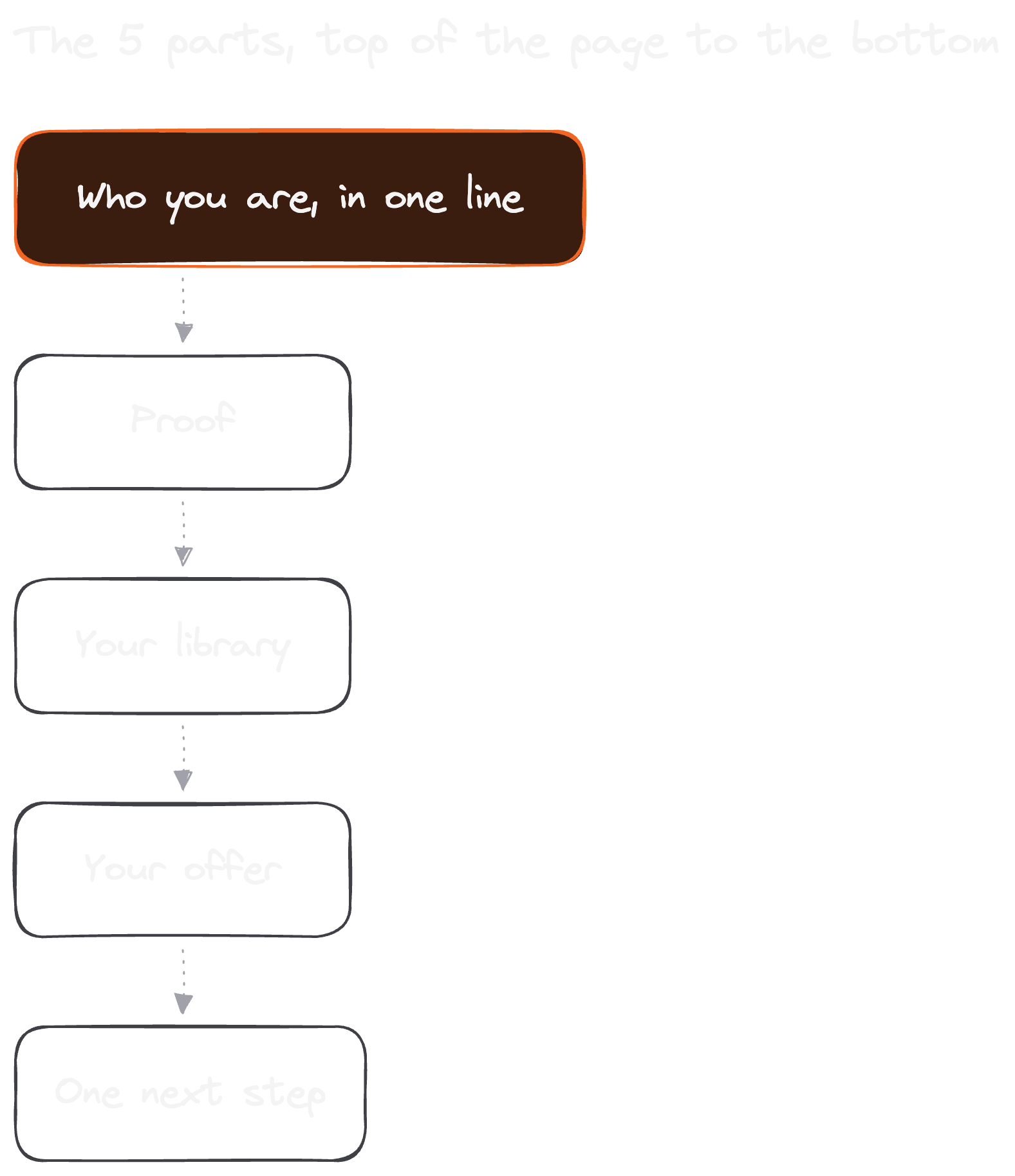
- Who you are, in one line. Your name and what you do, above the fold. "Digital Writer, Ghostwriter, Author, Serial Entrepreneur" is how my own site opens. One line, no paragraph.
- Proof. A reason to believe you: logos of places you've been featured, a number you can stand behind, a book, a testimonial. Pick the strongest one or two.
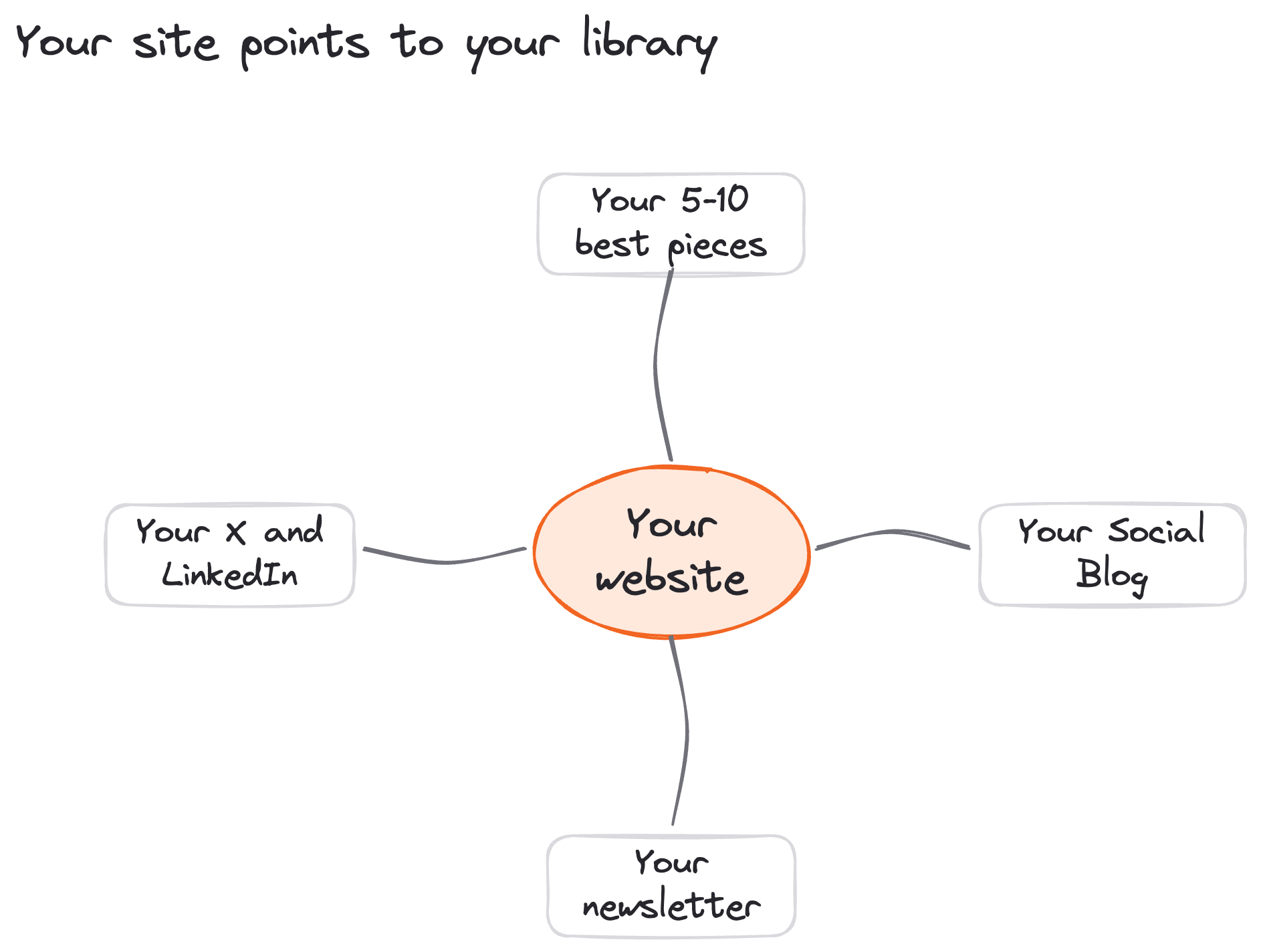
- Your library. Links to your best writing. This is what turns a skim into an hour of reading, and it's the part most sites leave out.
- Your offer. What you sell, or what you're building: a service, a product, a newsletter, a book. Be specific about who it's for.
- One next step. One button you most want them to click: subscribe, book a call, read your best piece. One, not five.
A few things to skip:
- A long origin story on the homepage. Put it on an About page for the people who want it.
- Every platform you've ever joined. Link the two or three where you actually post.
- Stock photos. A real photo of you does more than any image you can buy.
If you write the "who you are" line and get stuck, borrow from your social profiles. These LinkedIn headline examples and the LinkedIn summary guide are the same skill in a smaller box.
Give your personal brand website these 5 parts, and a visitor knows who you are, why to trust you and what to do next in under a minute.
Step #4: Fill Your Personal Brand Website From Your Writing
Here's the part nobody tells you: the website is the easy part.
The hard part is having something to point it at. A personal brand website with no writing behind it is a business card. A site that links to a body of work is what makes a stranger fall down your rabbit hole.
That's Law #15: don't focus on individual pieces, build your library. As I put it, "The more you write, the larger your library grows, the wider your web stretches on the Internet, the easier it becomes to attract the readers you desire."
So fill your site from what you've already written:
- Pick your 5 to 10 best pieces. The ones people still bring up, share or quote back to you.
- Group them by topic. Two or three topics that match what you want to be known for.
- Link your Social Blog. One page that holds everything you publish, so a curious visitor can keep reading.
- Refresh it every quarter. Swap in newer work as your thinking moves.
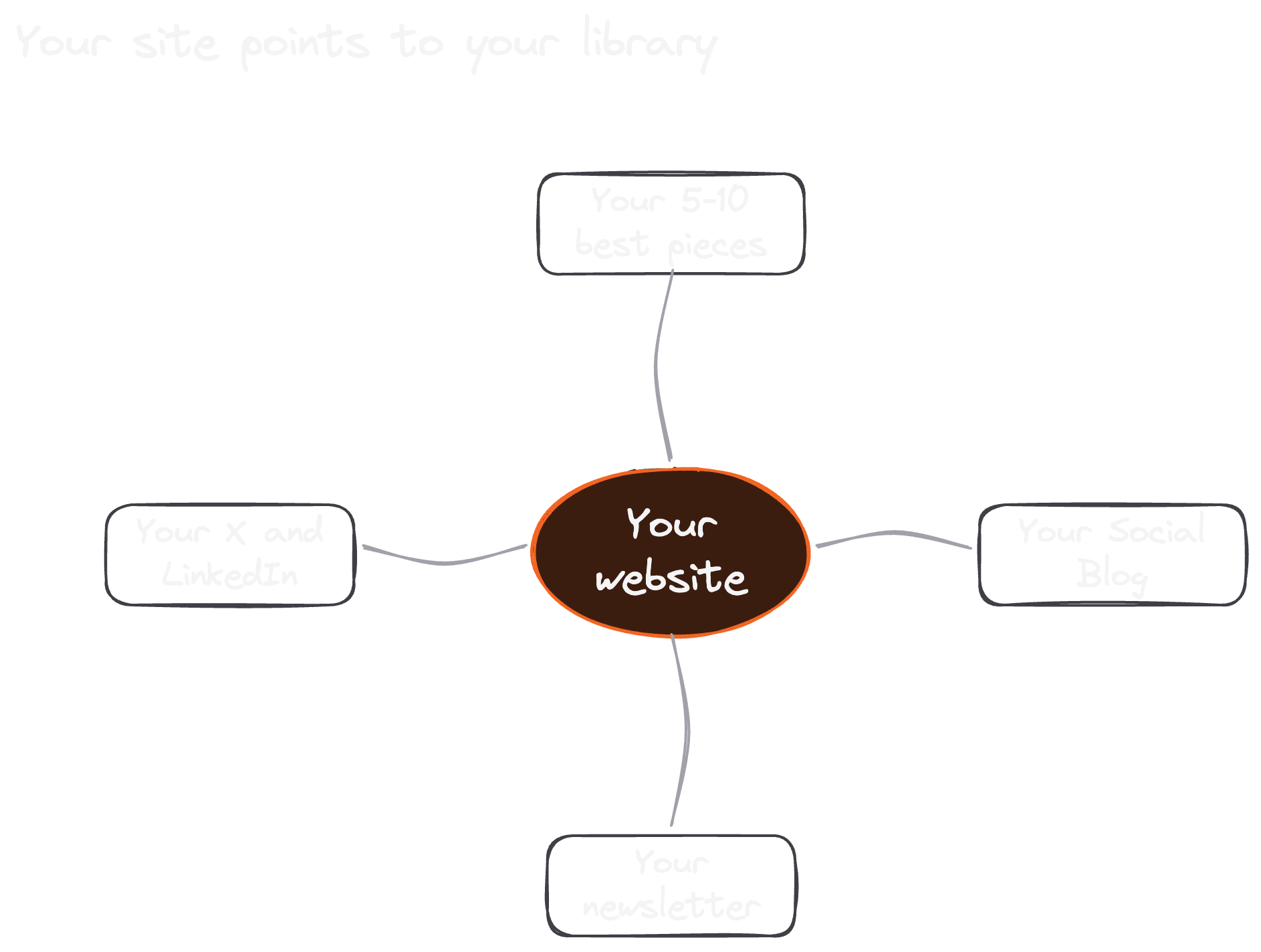
This is where Typeshare fits. Every account has a public profile at typeshare.co/yourname: your name, photo, bio, up to four links, your writing streak and every post you've published from Typeshare. You can also show the posts you published straight to X, LinkedIn or Threads (how the profile works). It's a Social Blog that fills itself as you write, and it's the page your personal brand website's "Read my writing" button can point to.
Fill your personal brand website from your writing, and it gets better every week without you touching it.
Step #5: Copy These 7 Personal Brand Website Examples
The fastest way to build your own site is to study the ones that already work.
Here are 7 personal brand website examples, from the plainest to the most built out. I've noted which of the 5 parts each one does best. (Everything quoted here is as each site showed it on November 22, 2026.)
1. Nicolas Cole: Who You Are In One Line
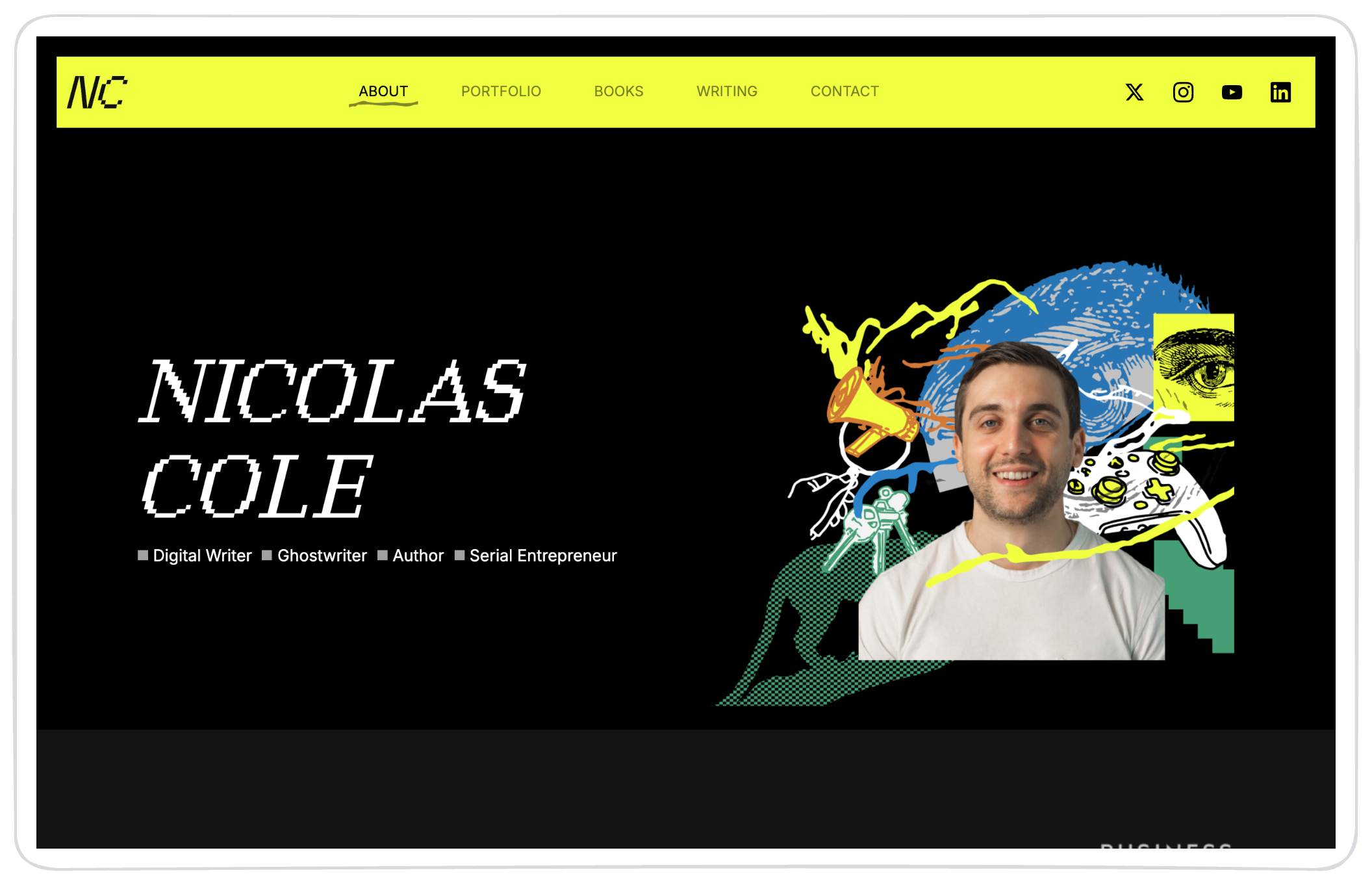
My own site opens with my name and four roles: Digital Writer, Ghostwriter, Author, Serial Entrepreneur. Scroll down and you get the rest of the 5 parts in order: a newsletter signup, logos of publications I've been featured in, a short bio, the businesses I've built, my books and my latest essays.
Copy this: one line that says what you do, right under your name.
2. Dickie Bush: One Next Step, Twice
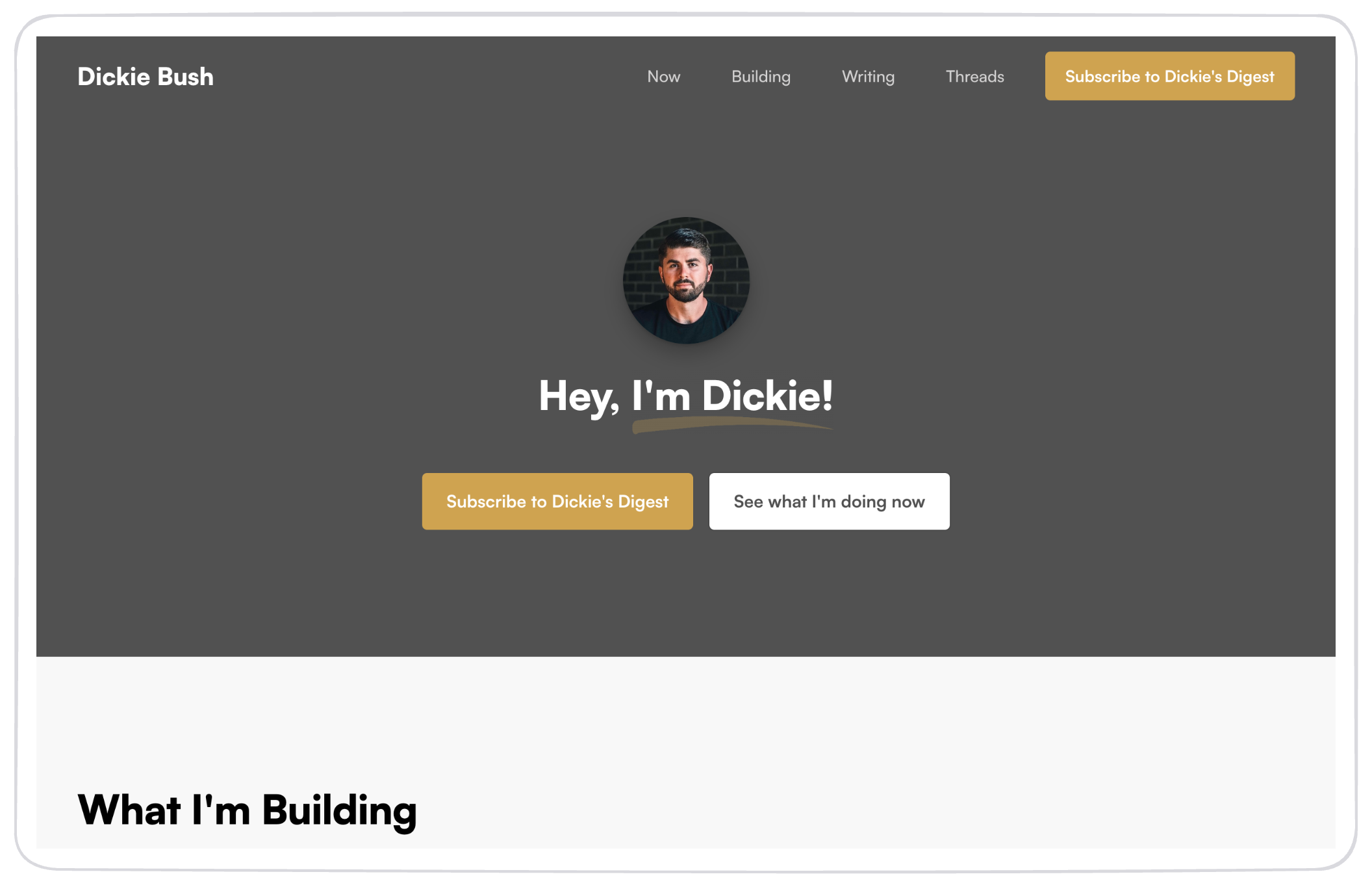
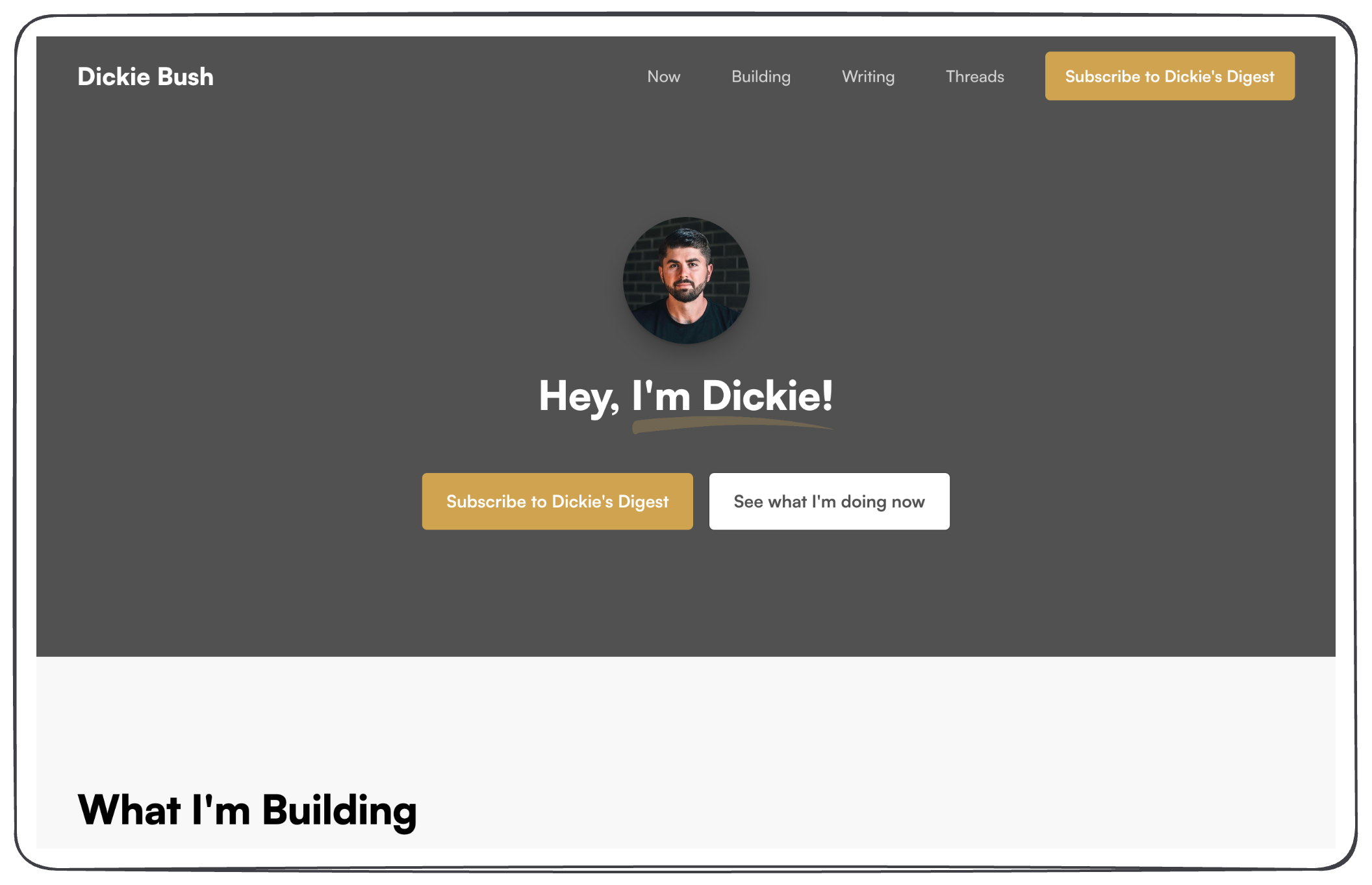
Dickie's site says "Hey, I'm Dickie!" and then gives you the same button twice: "Subscribe to Dickie's Digest," in the top bar and again in the middle of the screen. Below that, "What I'm Building" lists his offers and "What I'm Writing" links his essays and threads.
Copy this: decide the one thing you want visitors to do, and put it where they can't miss it.
3. A Typeshare Profile: The Library, Automatically
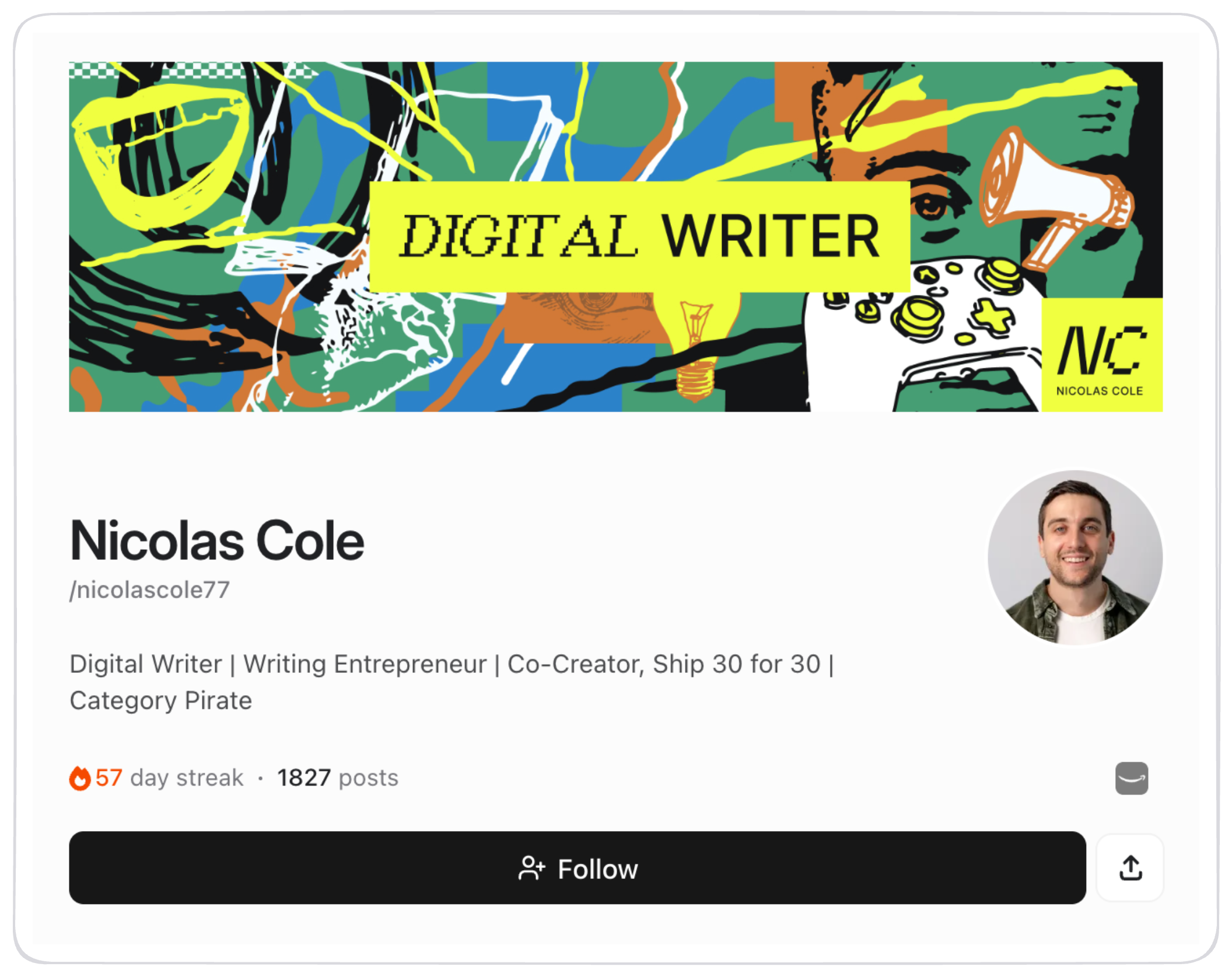
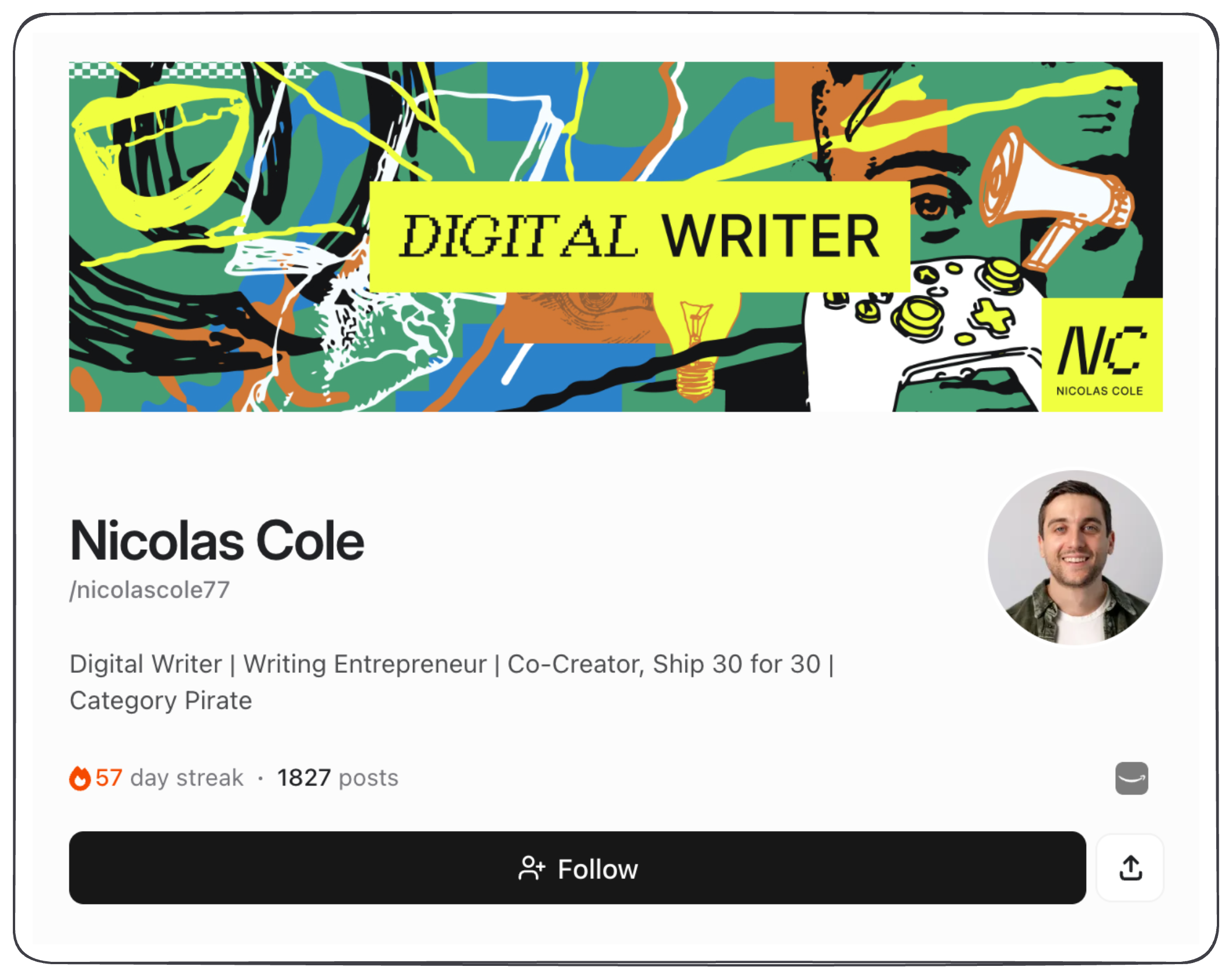
My Typeshare profile is the library part on its own: a short bio, my writing streak, 1,827 published posts and every one of them readable below. There's nothing to design. It fills as I publish.
Copy this: give your site a "read my writing" link to one page that holds everything.
4. James Clear: Proof Above The Fold
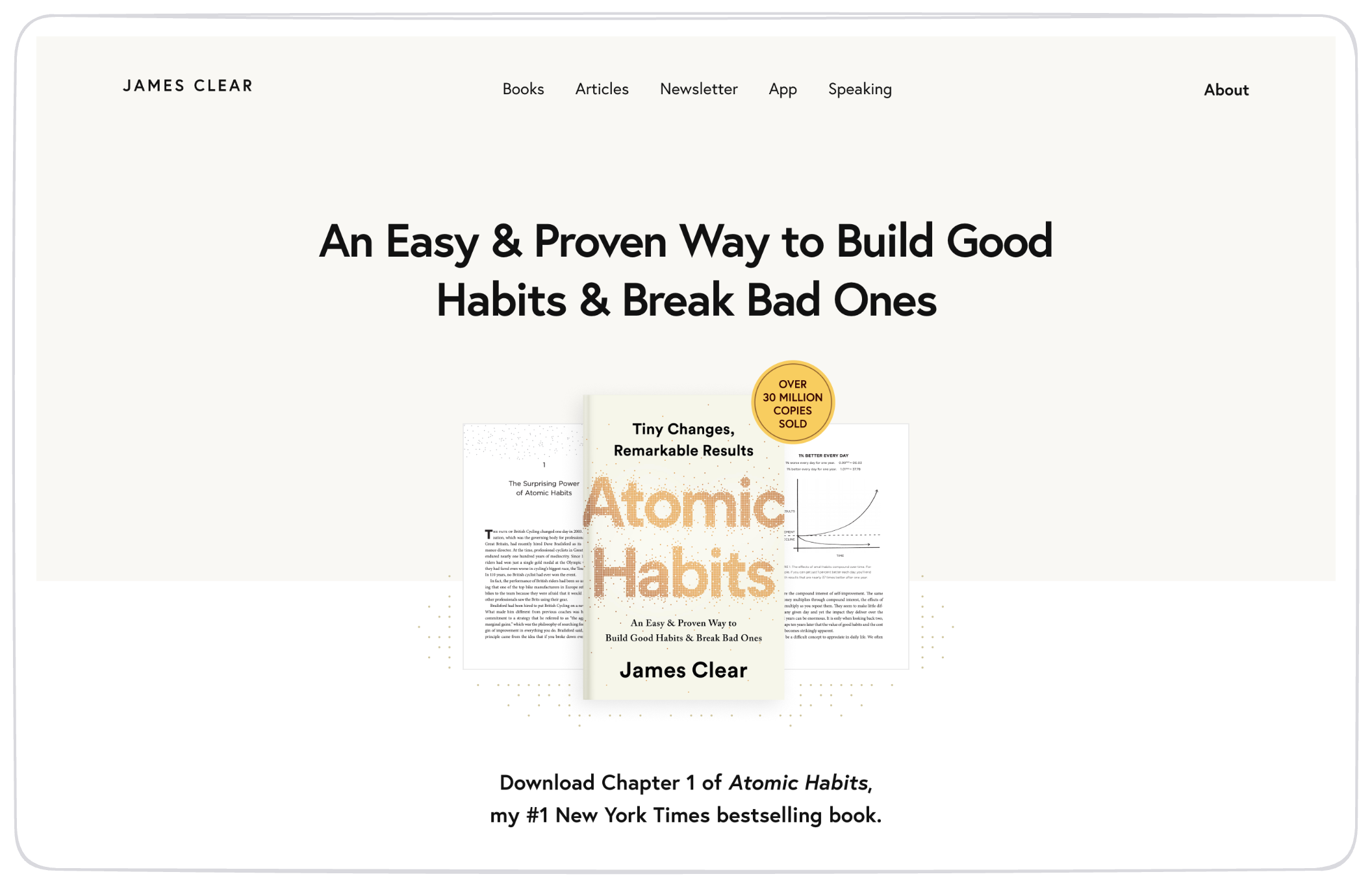
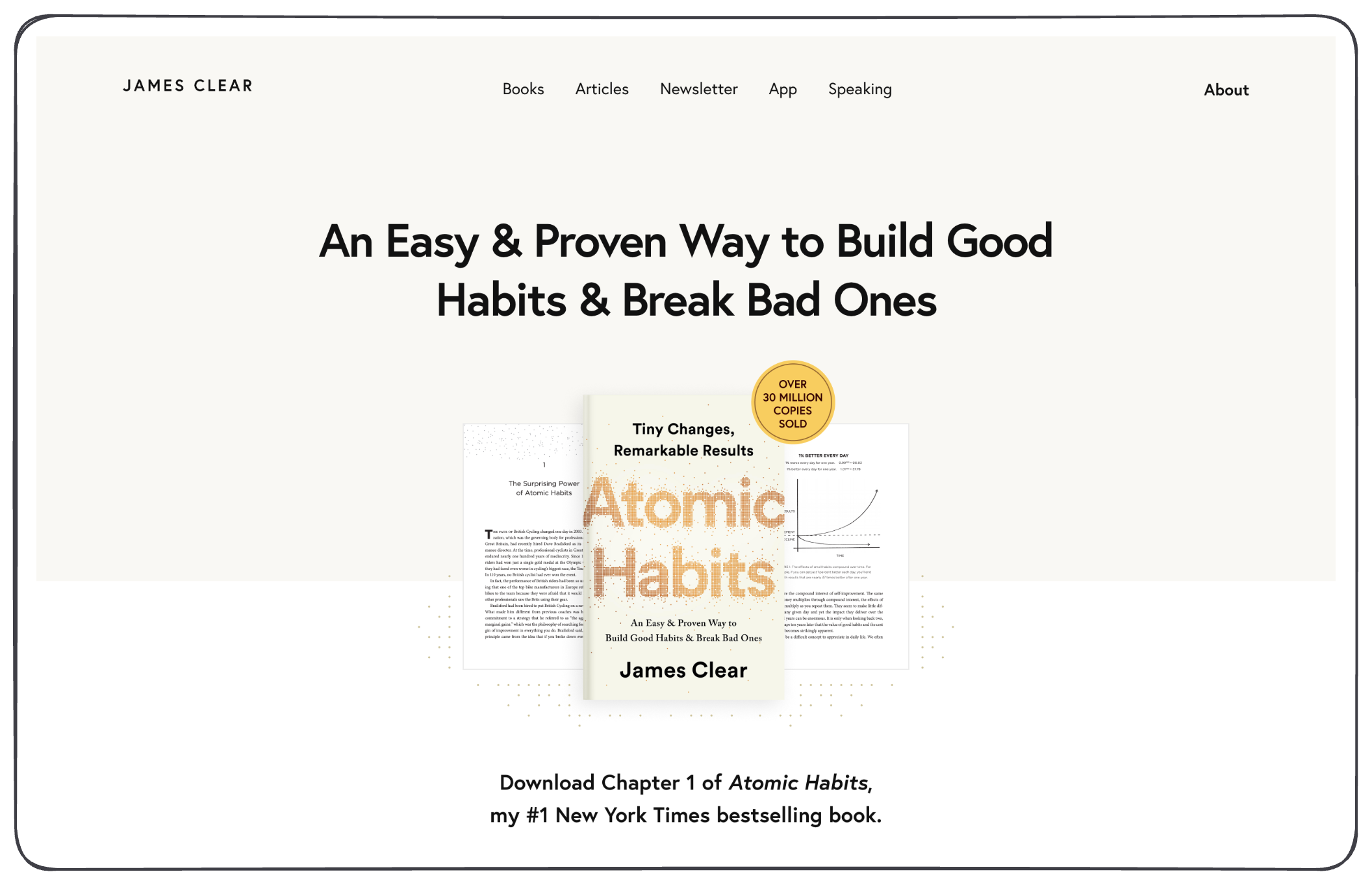
James Clear's homepage leads with the promise of his book ("An Easy & Proven Way to Build Good Habits & Break Bad Ones") and one piece of proof: a badge that says "Over 30 million copies sold." The next step is right under it: download Chapter 1 of Atomic Habits.
Copy this: if you have one number that does the convincing, put it next to your headline.
5. Justin Welsh: Who You Are, In His Own Voice
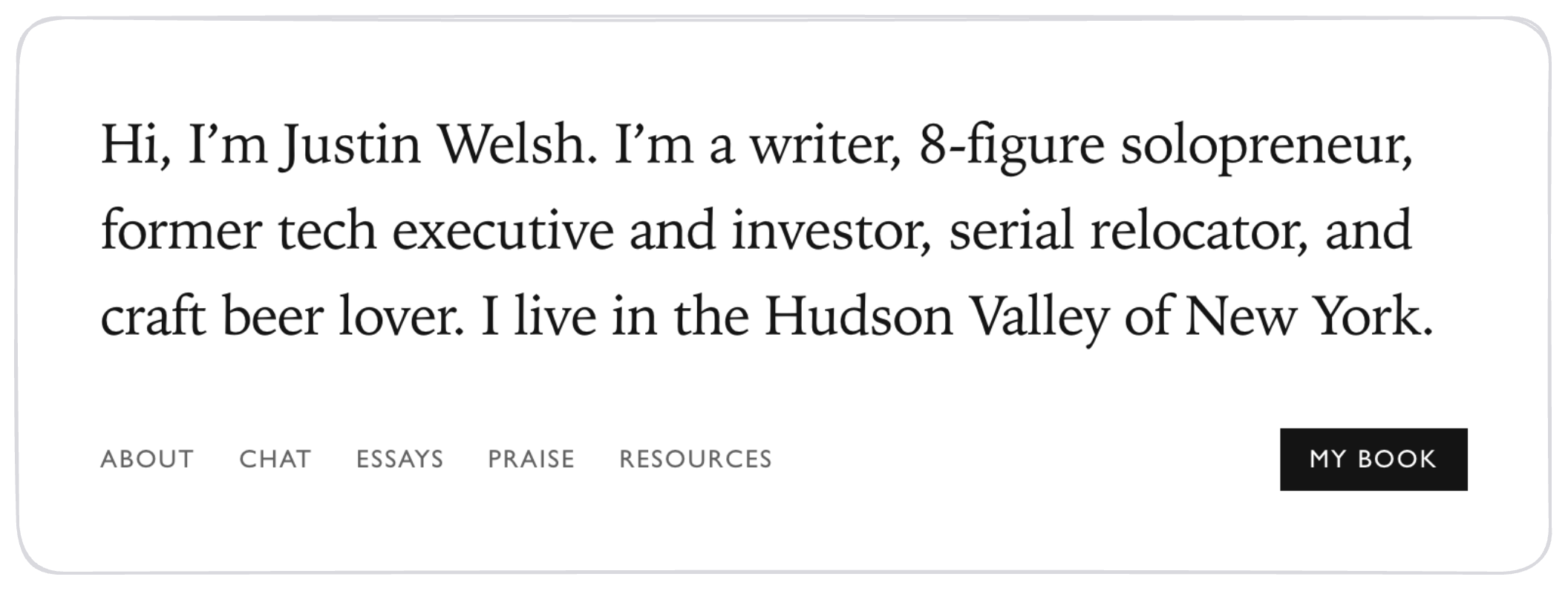
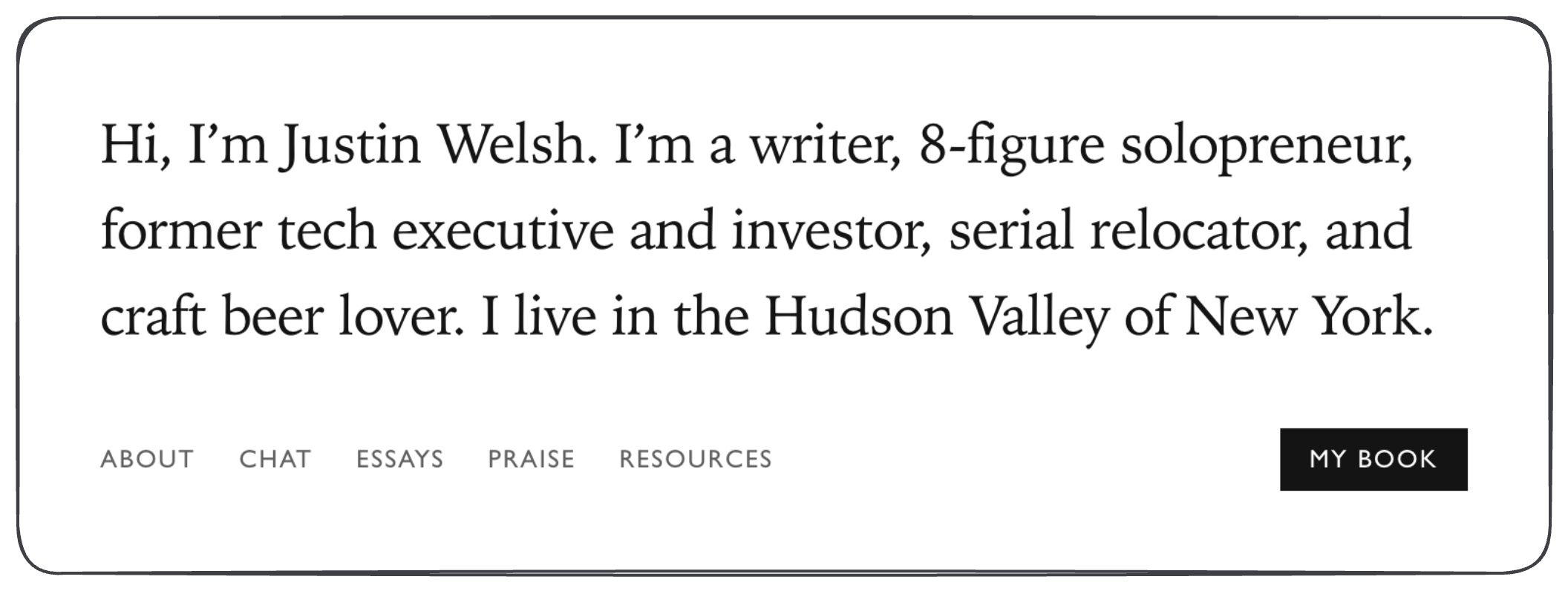
Justin Welsh's site is one paragraph: "Hi, I'm Justin Welsh. I'm a writer, 8-figure solopreneur, former tech executive and investor, serial relocator, and craft beer lover." Then a short menu (About, Chat, Essays, Praise, Resources) and a My Book button.
Copy this: write your intro the way you'd say it out loud, including one detail that's just you.
6. Sahil Bloom: The Offer, Built Out
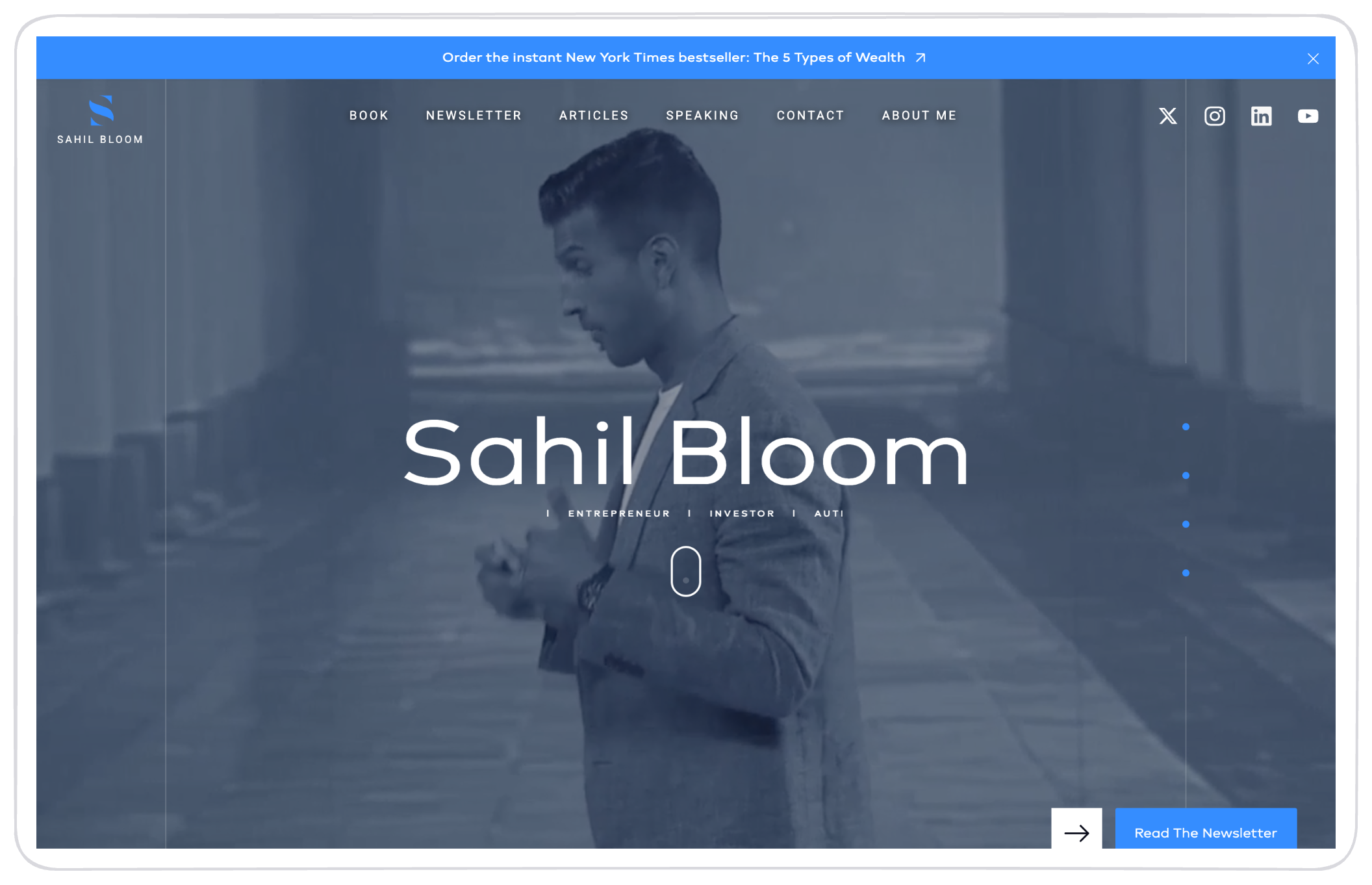
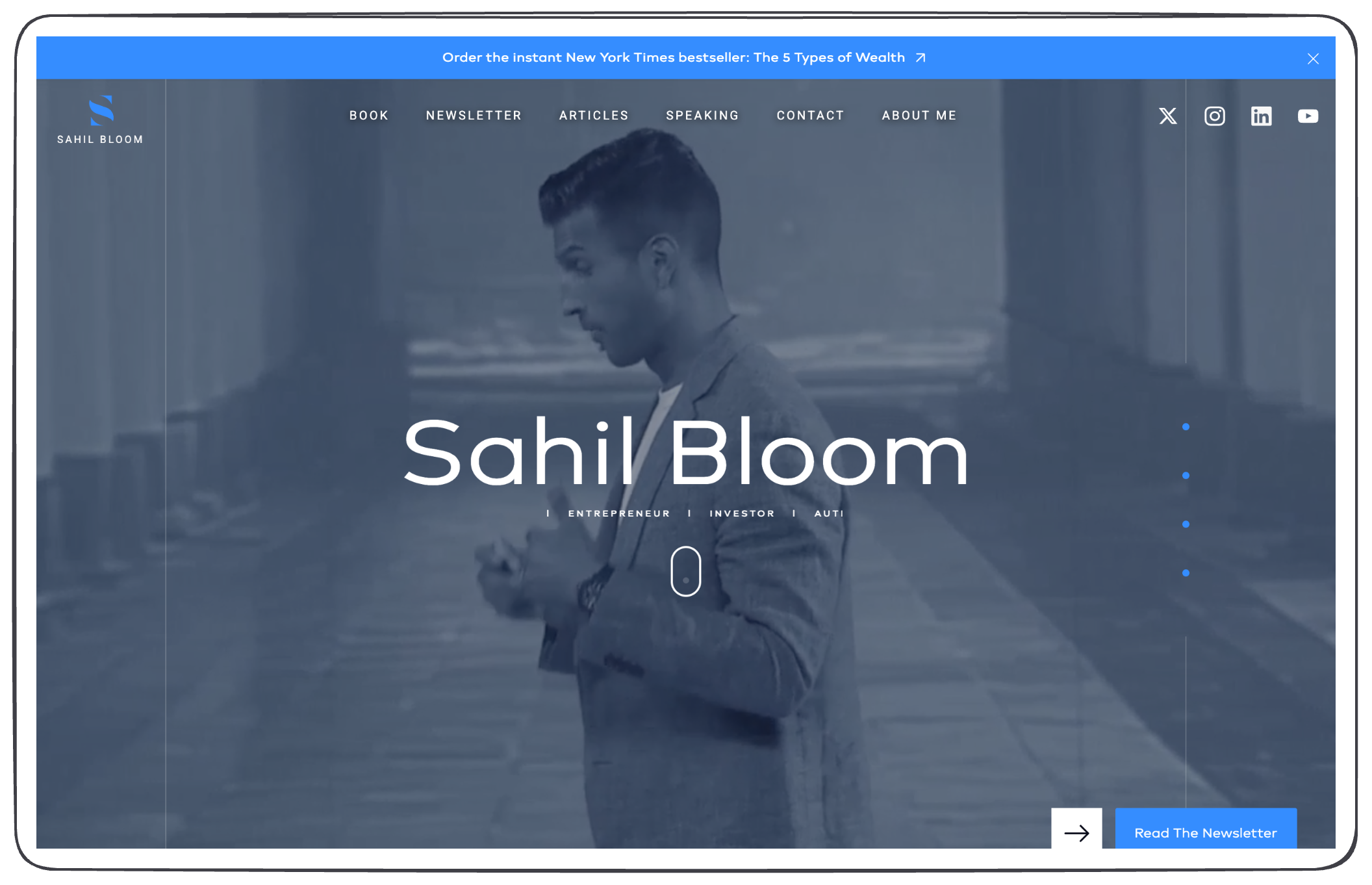
Sahil Bloom's site is the most built out of the seven. A banner at the top sells his book, The 5 Types of Wealth, as an "instant New York Times bestseller." The menu covers his book, newsletter, articles, speaking and contact, and the main button says "Read The Newsletter."
Copy this: when you have several offers, give each its own menu item and keep one main button.
7. Paul Graham: The Library Is The Website
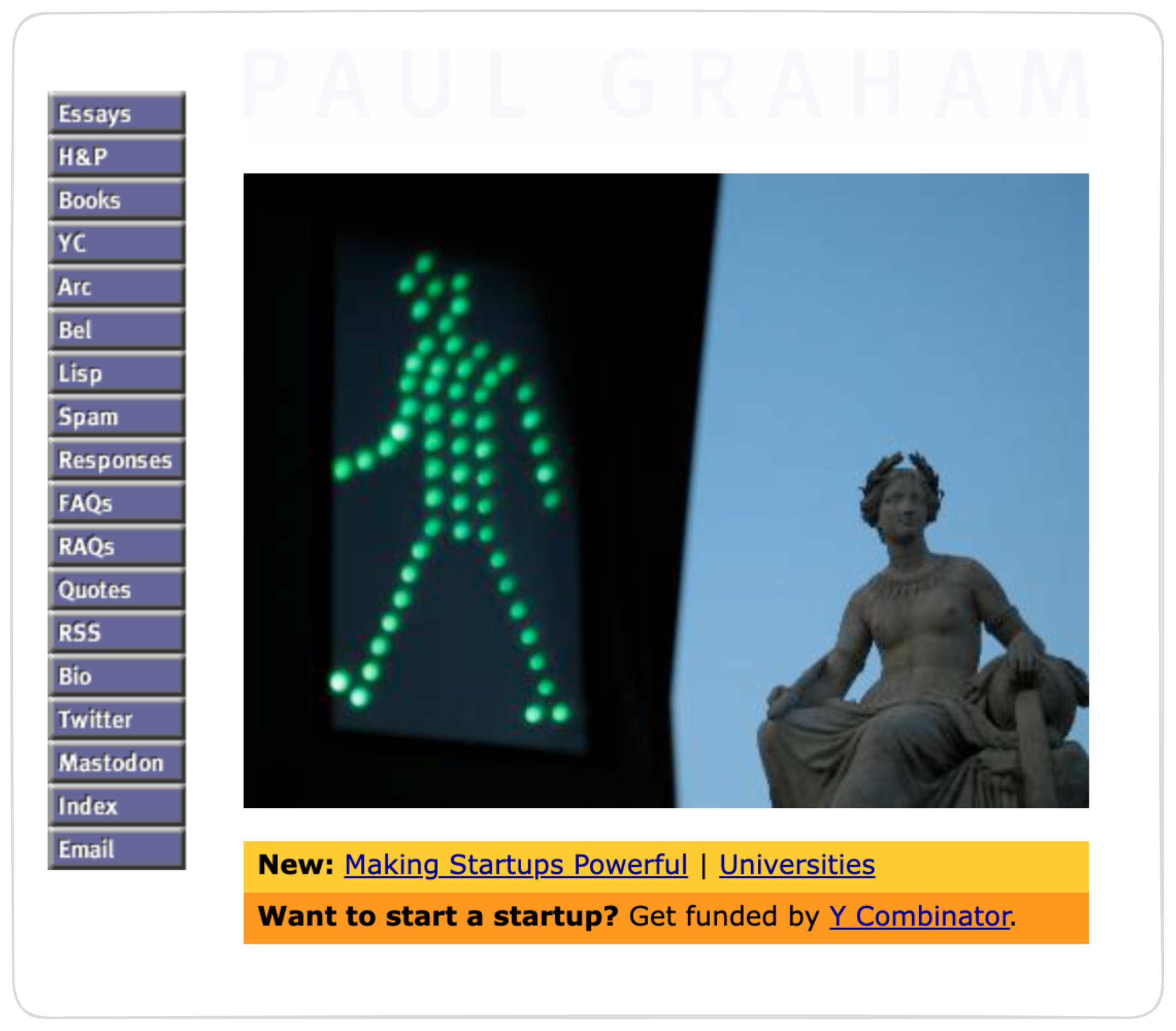
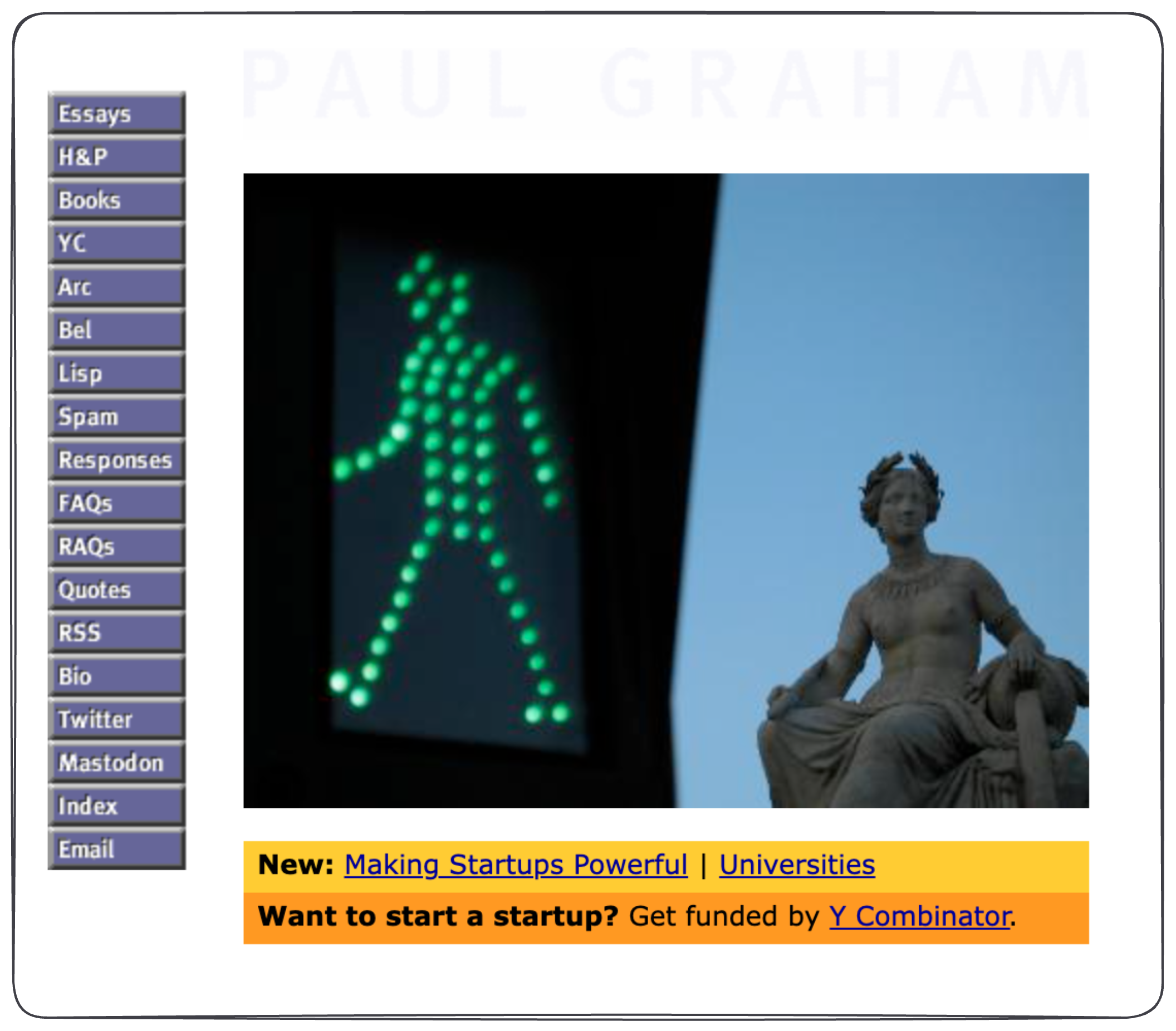
Paul Graham's homepage is a column of plain buttons (Essays, Books, Bio and more), a photo and two links to his newest essays. No headline, no signup form. The essays are the brand, and the site gets out of their way.
Copy this: if your writing is strong enough, let the library carry the whole page.
Copy these personal brand website examples part by part, and you'll never start from a blank page.
Step #6: Build Your Personal Brand Website In An Afternoon
Your first personal brand website should take one afternoon.
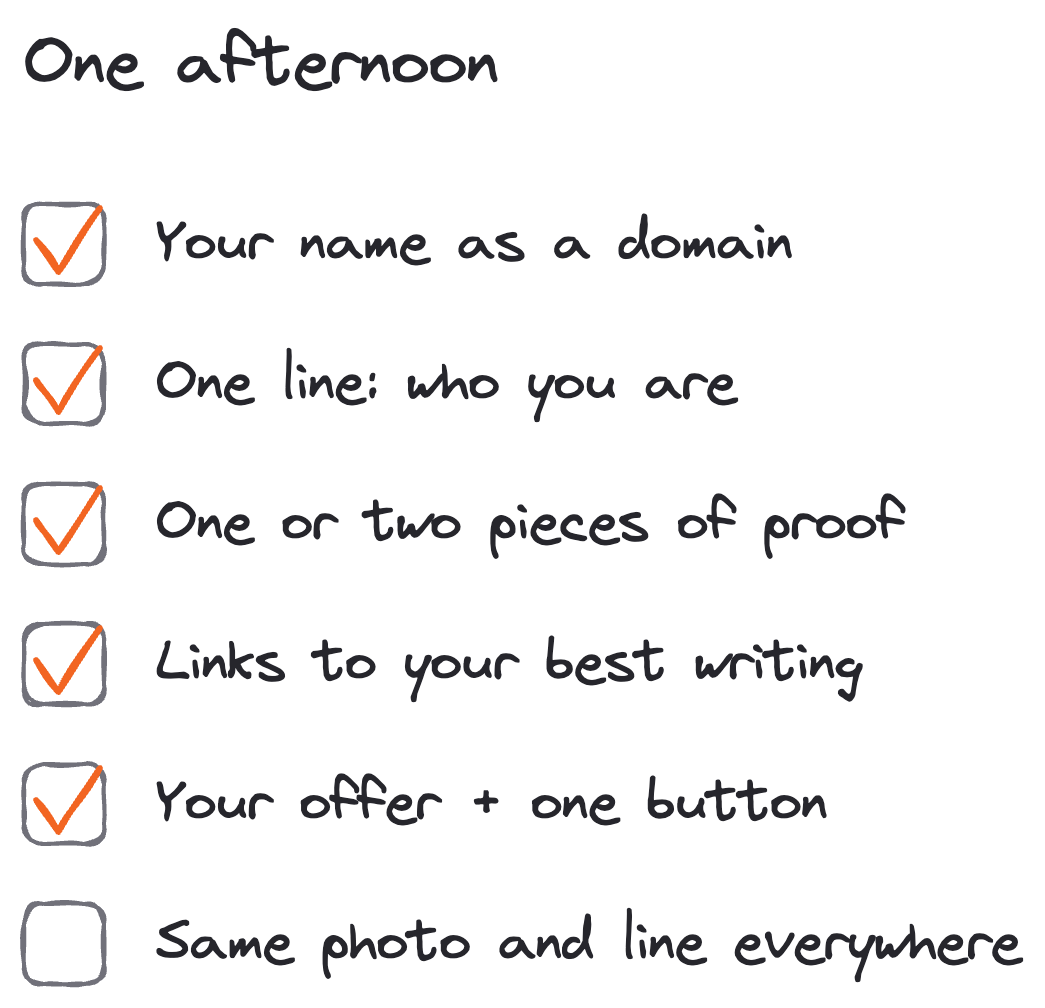
The goal is a page that answers "Can I trust this person?" and gives one next step. You can improve it forever after. Here's the afternoon:
- Get your name as a domain.
yourname.comif it's free; add a middle initial or a word like "writes" if it isn't. Your name is what people type into Google. - Pick a simple site builder. Any builder with a clean one-page template works. You're filling in 5 parts, not designing a brand.
- Write the one line. Who you are and what you do, under your name.
- Add your proof. One or two things: a number, a logo row, a quote from a client.
- Link your library. Your 5 to 10 best pieces and your Social Blog.
- Add your offer and one button. Subscribe, book a call or buy the book. Pick one.
- Match your profiles. Use the same photo and the same one line on X, LinkedIn and your site, so someone who googles you sees one person everywhere.
Then publish it and go back to writing. The site needs fresh writing to point to far more than it needs a redesign. As your work gets known, thought leadership does what no homepage can: it makes the right people look you up in the first place.
Build your personal brand website in an afternoon, and spend the rest of the week writing the things it points to.
FAQ
What should a personal brand website include?
Five parts: who you are in one line, proof, links to your best writing, your offer and one next step. Put them in that order, and skip the long origin story on the homepage.
Do I need a personal brand website if I'm active on social media?
Not on day one. Start by writing where readers already are. Once people start googling you, you need a page that greets them and gives them a next step, and that's when a personal brand website starts paying off.
What's the difference between a personal brand website and a portfolio?
A portfolio shows your work. A personal brand website shows who you are, why to trust you and what to do next, and links to your work as the proof. Most writers need the second, with a portfolio or library inside it.
Should my personal brand website use my name as the domain?
Yes, if you can get it. People find you by searching your name, and a domain that matches it is the easiest one to remember and share.
Can my Typeshare profile be my personal brand website?
It can be your library: a public page with your bio, up to four links and every post you publish from Typeshare. Point your website's "Read my writing" link to it, or share it as your first page while you don't have a website yet.
How often should I update my personal brand website?
Check it every quarter. Swap in your newest best pieces, update your proof and make sure your one line still matches what you do.