Substack vs Medium vs Beehiiv vs Ghost: Which One Gets Writers Read, Paid, And Their Own Email List
Nicolas ColeNovember 17, 2026
Substack vs Medium, plus beehiiv, Ghost and WordPress: who owns your readers, how each pays you, what it costs, and which to pick for your goal.
In 2018, I was one of the highest-paid writers on Medium.
I was making $6k to $12k a month, and Medium paid me over $100,000 a year. I didn't write a single new piece for it. Every article was a Quora answer I'd written two to four years earlier, copied over one a day. Then Medium caught on, and that income ended.
Since then I've built two paid newsletters on Substack to six figures. So I've been paid well by both sides of the Substack vs Medium question, and I know which one I'd pick today.
The short version: Medium pays you for reads, and Substack pays you for readers.
That difference decides almost everything. Below I compare Substack and Medium, then beehiiv, Ghost and WordPress, on the four things that matter to a writer: who owns your readers, how you get paid, where new readers come from and what it costs. If you're new to the platform, start with what Substack is and how it works. If you need things to write about once you've picked, here are newsletter ideas to fill your first months. And once you're publishing, Typeshare can schedule your Substack newsletters and Notes next to your posts for X and LinkedIn. You do the writing; the robots do the rest.
(Every fee and price below comes from each company's own site, checked on November 22, 2026.)
Substack vs Medium vs Beehiiv vs Ghost: The Short Answer
Here's the whole comparison on one screen.
| | Substack | Medium | beehiiv | Ghost | |---|---|---|---|---| | Who owns the readers | You: export your list any time | Medium: new followers' emails aren't shared | You | You | | How you get paid | Readers subscribe to you | A share of Medium members' dues, by read time | Readers subscribe to you | Readers subscribe to you | | What it takes | 10% of paid revenue, plus card fees | Nothing, but you need a Medium membership | 0% of paid revenue, plans from $0 | 0% of paid revenue, paid plans from $29/mo | | Where new readers come from | Notes, recommendations, the app | Medium's feed and Boosts | A recommendation network | Mostly you |
Substack is the only one of the four that gives you both halves: a network that sends you readers, and a list you own. More than half of new subscribers on Substack come from Substack's built-in network, and so do over 30% of paid subscriptions. Yet the company calls itself "free to start and free to leave," and you can export your posts, subscriber list and stats whenever you want.
Medium has the readers. You don't get to keep them.
beehiiv and Ghost hand you the keys and more tools, but they send you fewer strangers. That's the trade you're making.
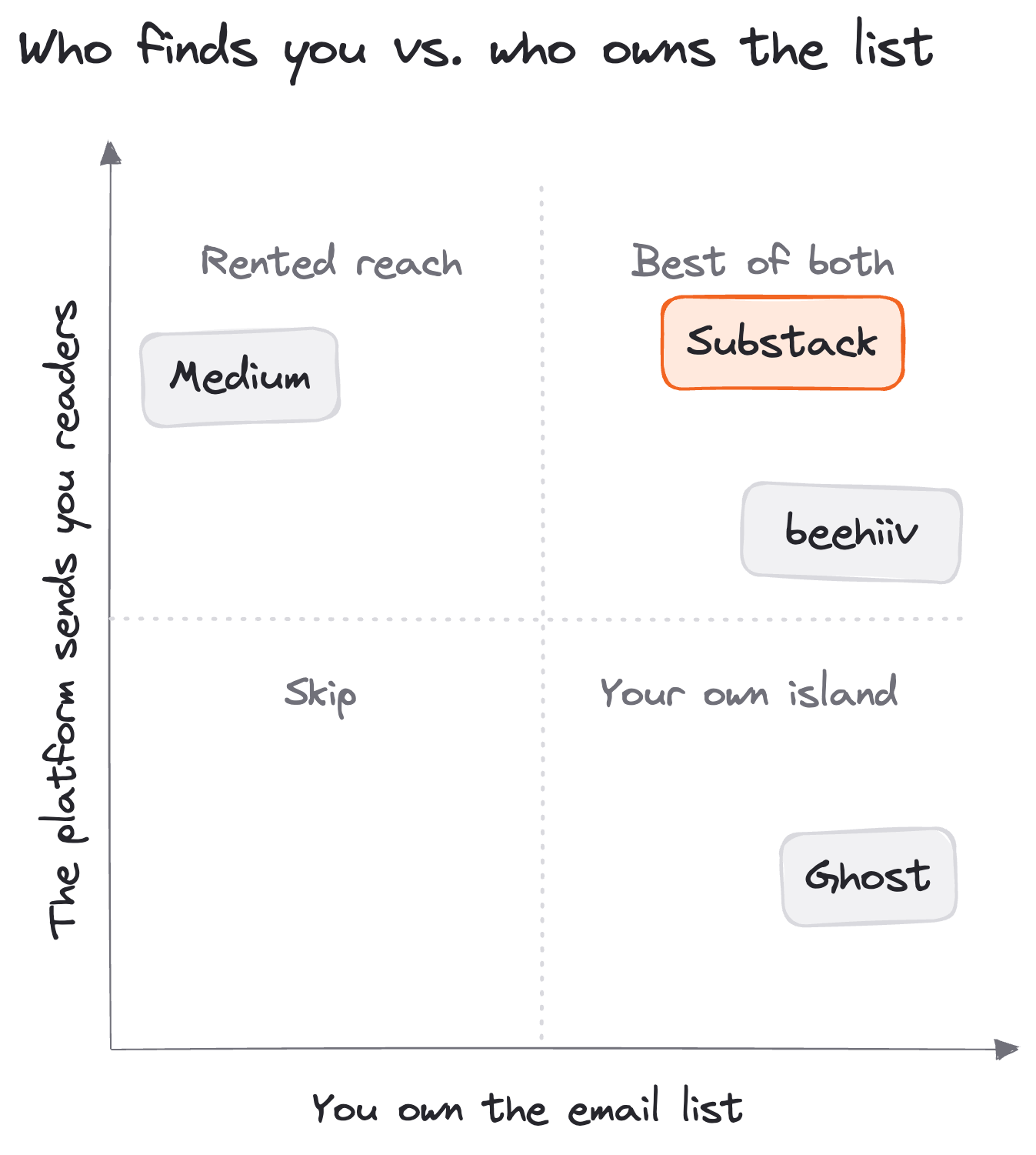
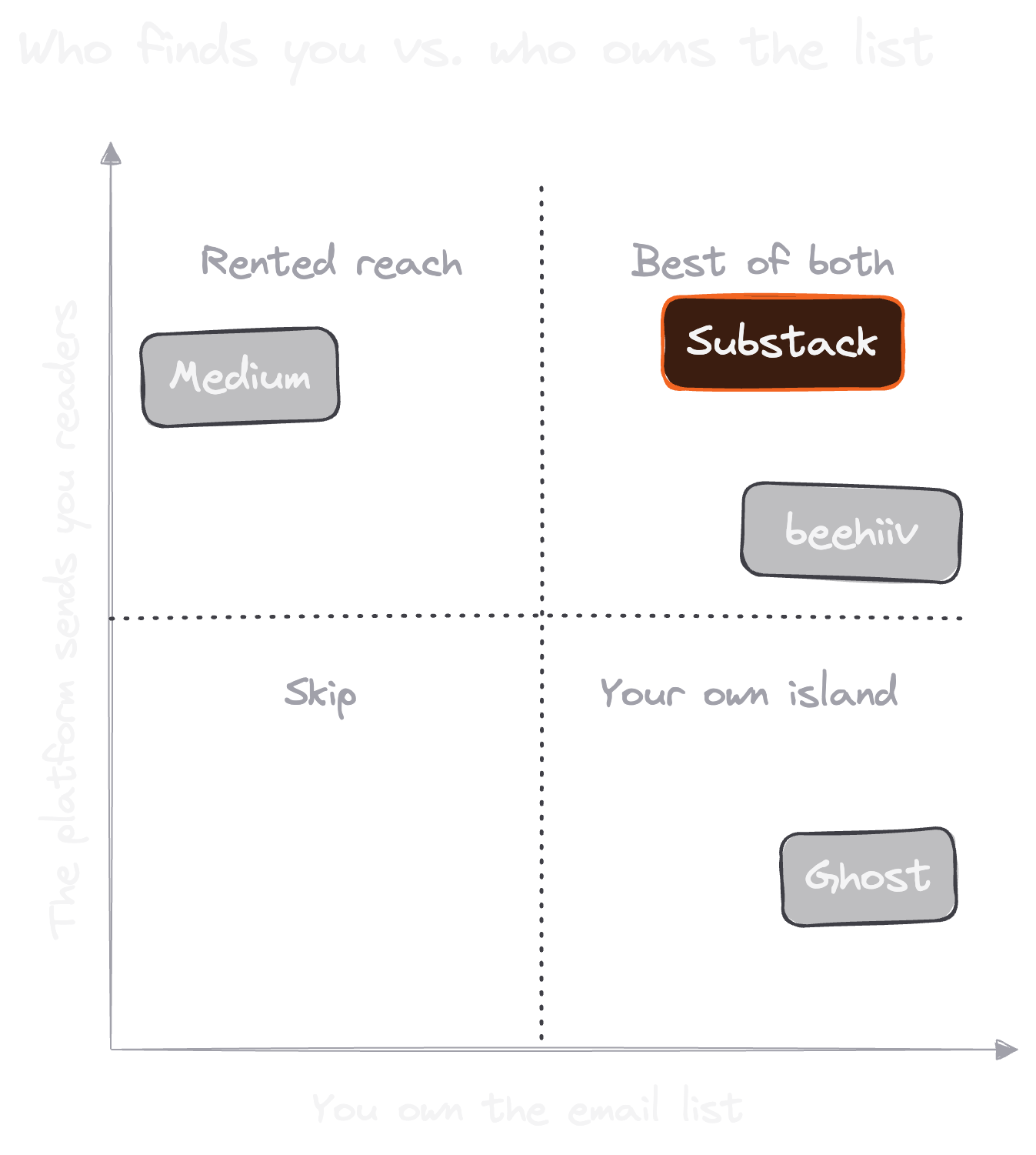
If you remember one line from this article, make it this one: pick the platform where the readers you win stay yours.
Medium vs Substack: 5 Differences That Decide It
Medium and Substack look alike from the outside, and they're built on opposite ideas.
Both let you publish long posts to a clean page. Both have an app full of readers. But Medium is a magazine you write for, and Substack is a newsletter you own. Five differences follow from that.
1. Who owns the reader. On Substack, every reader who subscribes lands on your list. On Medium, readers follow you inside Medium. Since April 2025, Medium no longer shares email addresses when readers subscribe to your stories, and the export only holds emails you imported or people who subscribed before that change.
2. How you get paid. Medium's Partner Program pays you a portion of members' dues when they read your members-only stories for 30 seconds or more. Claps, highlights and replies earn more, and so do stories Medium Boosts. On Substack, a reader decides your work is worth $5 or $10 a month and pays you directly. That gap is the whole game: one is a royalty check, the other is a business.
3. What it costs. To earn on Medium, you need an active Medium membership, and then Medium keeps the rest of the economics. Substack is free until you charge. Then it takes a 10% revenue share on paid subscriptions, and card fees come out too.
4. Where new readers come from. Medium's feed decides who sees you. Substack sends readers through Notes (its social feed), recommendations from other writers and its app. For Write With AI, almost 20% of our paid subscribers came from inside the Substack network.
5. What happens when the rules change. This is the one I learned the hard way. Medium paid by page reads and engagement, and it had no check for duplicate content. So I posted one viral Quora answer behind the paywall every day. From 2018 to 2020, that earned me hundreds of thousands of dollars in royalties, until Medium emailed to say they'd figured it out and I had to stop. When Medium changed how it paid, I had nothing that carried over: no list, no subscribers, only a library of posts.
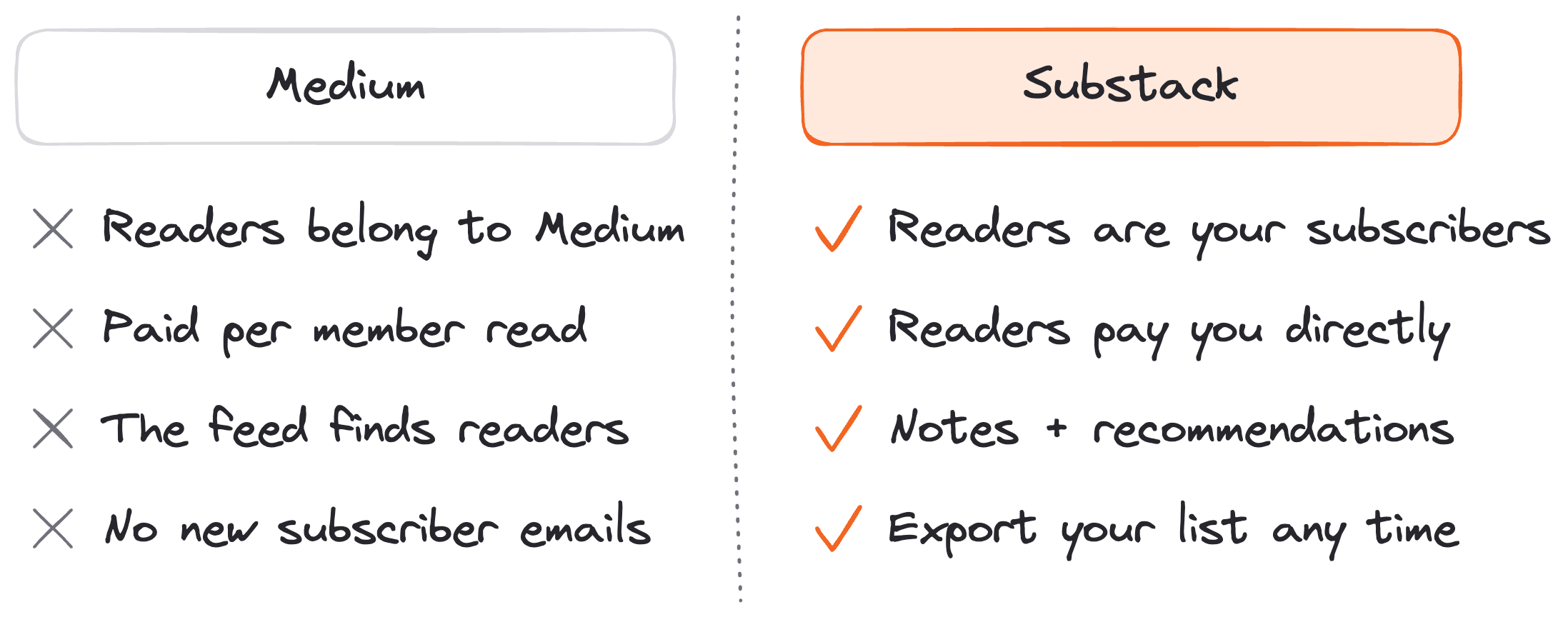
That's why I call Medium "officially dead" for writers building a business. It still pays for reads. It won't build you anything you keep.
So in the Medium vs Substack match-up, Substack wins for anyone who wants their writing to turn into an audience.
Beehiiv vs Substack: More Tools, Less Network
beehiiv is what you pick when the newsletter is the business.
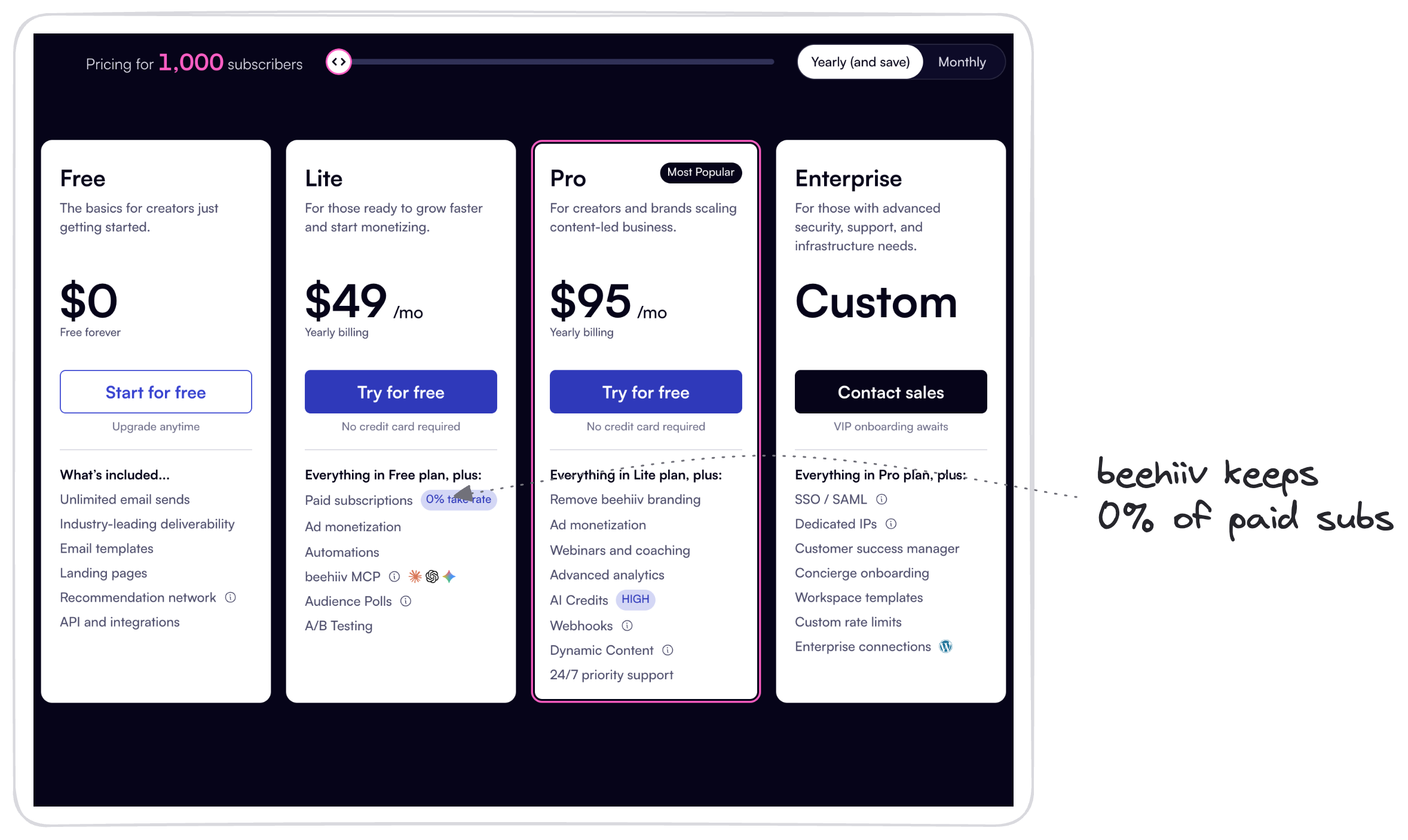
Its pricing is built that way. The Free plan covers up to 2,500 subscribers. Paid subscriptions start on Lite, at $49 a month billed yearly for 1,000 subscribers, and beehiiv lists a "0% take rate" on them. Pro is $95 a month on the same terms. Both prices climb as your list grows.
So beehiiv charges a flat fee where Substack takes a cut, and the gap widens as you grow. At $1,000 a month in paid subscriptions, Substack's 10% is $100, about double beehiiv's Lite plan. At $10,000 a month, it's $1,000.
What you get for the fee is a toolbox. beehiiv's plans list ad monetization, automations, A/B testing, landing pages and a recommendation network. As Dickie put it when we compared the platforms in Write With AI: "Substack for simple paid newsletters, ConvertKit for advanced digital product businesses, and Beehiiv for full publications." He pointed to Milk Road, a crypto newsletter, as what beehiiv does best.
What you give up is Substack's crowd. beehiiv readers don't scroll a beehiiv feed the way Substack readers scroll Notes. You'll bring most of your readers yourself, from X, LinkedIn or search.
Here's how I'd decide beehiiv vs Substack:
- Pick Substack if you're starting out, if your writing is the product and if you want the network to do some of the finding.
- Pick beehiiv if you already have traffic, plan to sell ads or sponsorships, or run a publication with a team.
- Run the math once you pass about $500 a month in paid subscriptions. That's where Substack's 10% starts to cost more than beehiiv's Lite plan.
beehiiv gives you more tools, and Substack gives you more readers.
Ghost vs Substack: Own Everything, Find Readers Yourself
Ghost is for writers who want to own the whole stack.
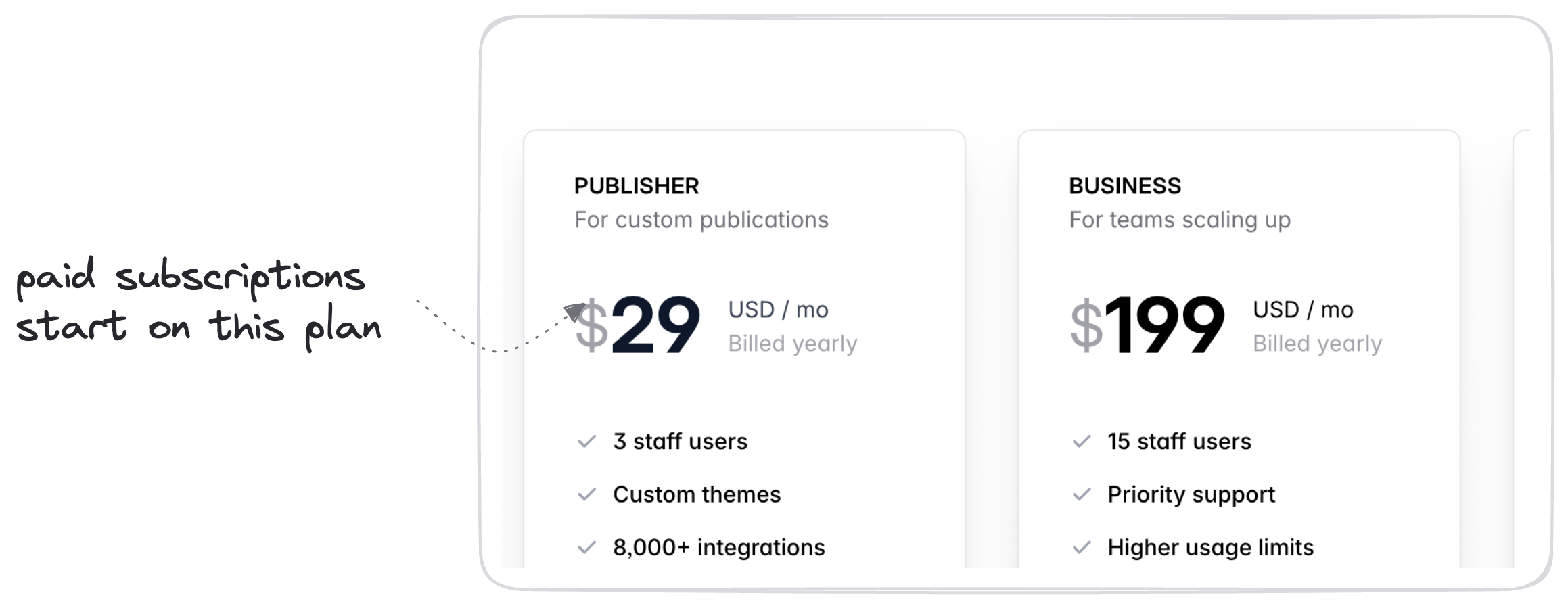
It's open-source software. You can run it on your own server for the cost of hosting, or pay for Ghost(Pro), its hosted version. Paid subscriptions start on the Publisher plan at $29 a month, billed yearly, for up to 1,000 members. Ghost says you can "process payments for your premium subscriptions without any additional transaction fees from Ghost." Stripe still takes its cut, the same as everywhere else.
You also get a full website: your own theme, your own domain and a members area. A Ghost site looks like a magazine. A Substack site looks like a Substack.
The catch is the same as beehiiv's, only sharper. Ghost has no feed that sends you strangers every day. Every reader comes from your own marketing: your social posts, your search traffic, your podcast.
Dickie had the honest take when he started his newest newsletter. He listed Kit, Ghost, Brevo, beehiiv, MailerLite and Mailchimp, and wrote: "all of these can work. They all have pros and cons." He still picked Substack, because it's free to run and its discoverability pays for the 10%.
That's the Ghost vs Substack decision. Ghost when you want to own everything and already know where your readers come from. Substack when you still need the network.
Own everything and find every reader yourself: that's Ghost.
Substack vs WordPress: A Newsletter Or A Website?
WordPress is a website that can send a newsletter; Substack is a newsletter that comes with a website.
That's the first thing to settle. If you want a blog with pages, categories, an online store or a portfolio, WordPress gives you all of it. WordPress.com now includes a built-in newsletter with unlimited subscribers on every plan, Free included.
The fees work like a ladder. WordPress.com takes a share of paid subscriptions and payments that drops as you upgrade: 10% on Free, 8% on Personal ($4 a month billed yearly), 4% on Premium ($8), 2% on Business ($25) and 0% on Commerce ($45). Stripe's processing fee is separate.
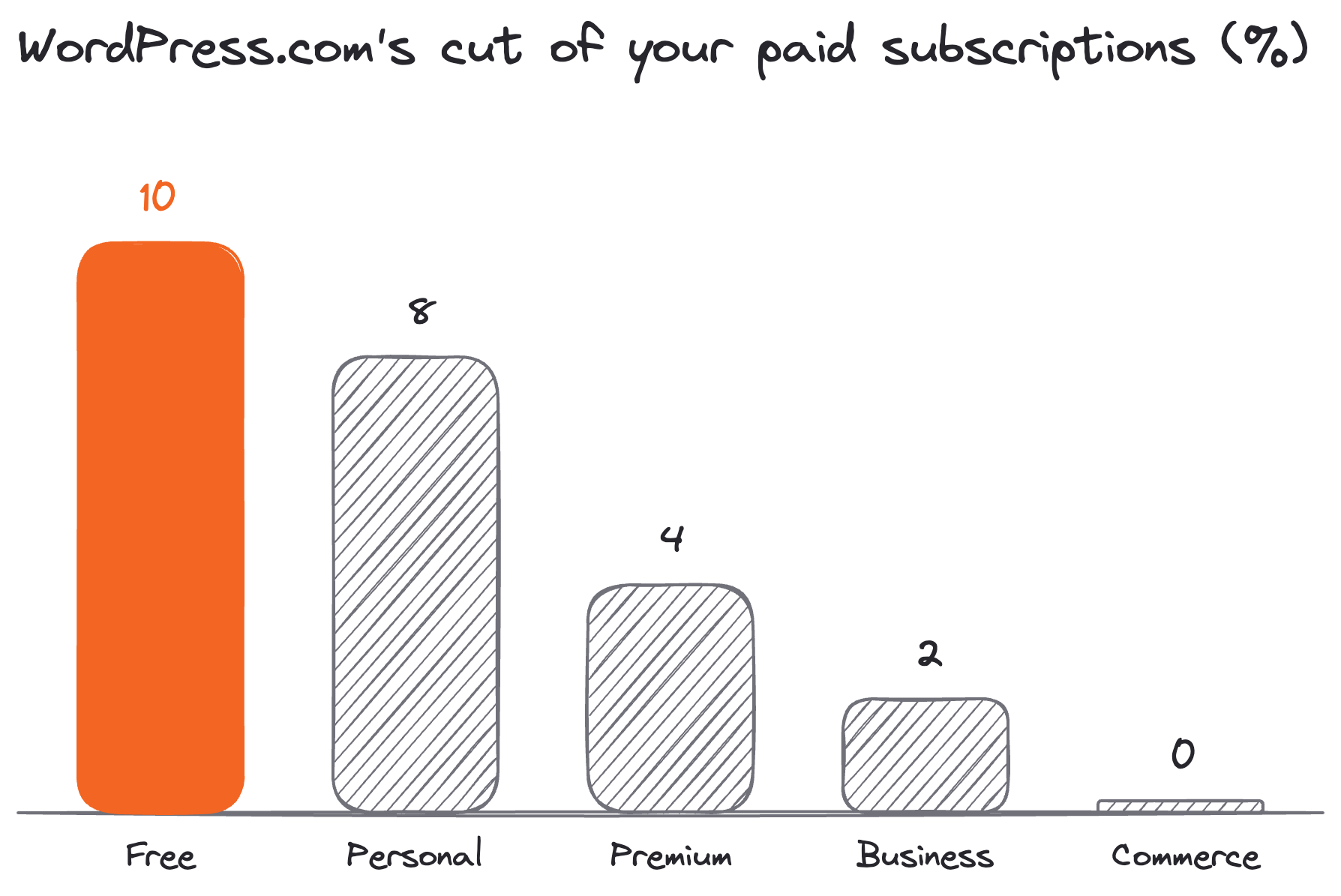
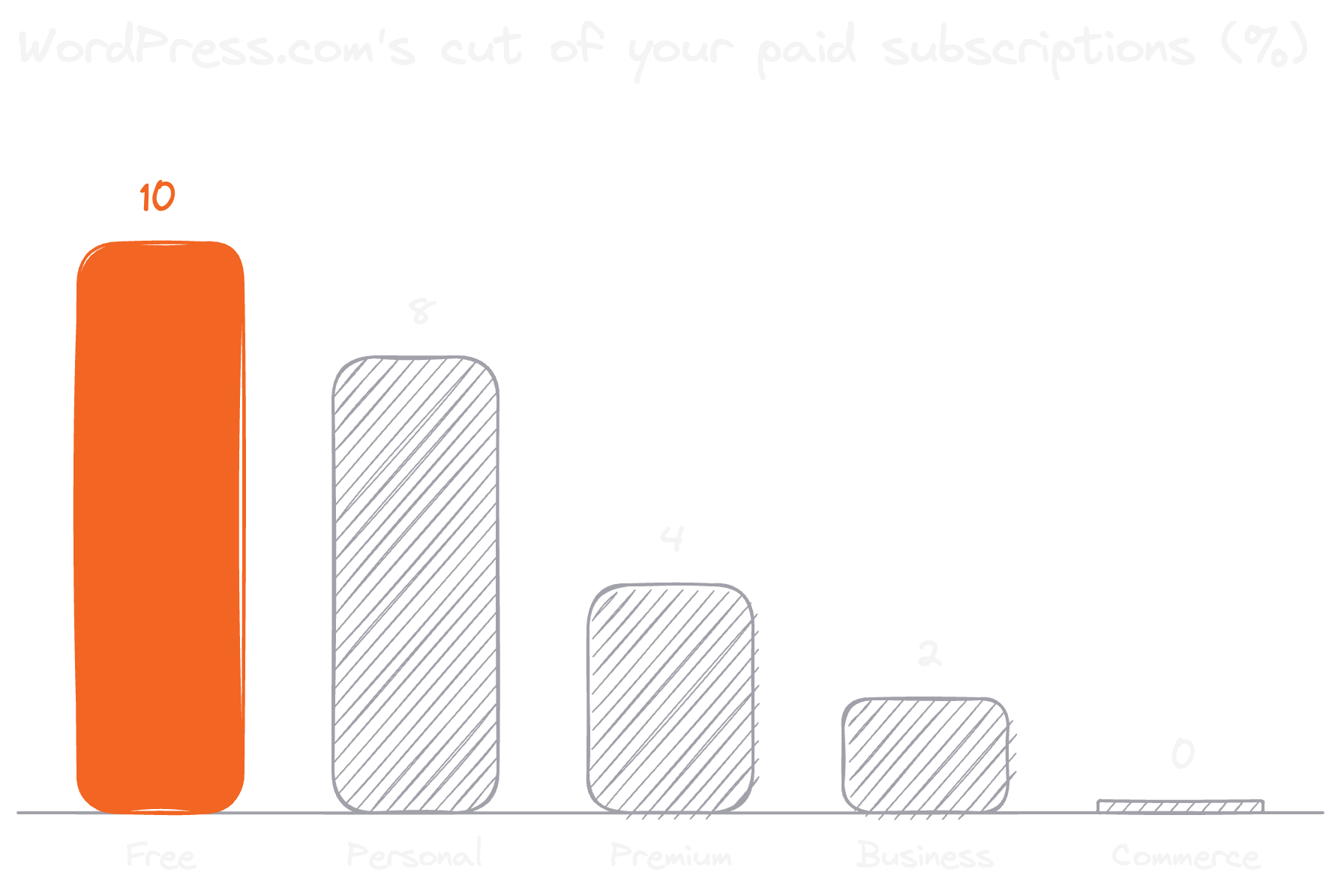
So on the Free plan, WordPress.com costs you the same 10% as Substack, without Substack's network. On Business, you pay $25 a month and keep 98%.
The bigger difference is where readers come from. WordPress is built for search: a post that ranks on Google can bring readers for years. Substack is built for subscribers: a post goes to inboxes the day you hit publish, and the network passes it around.
My rule for Substack vs WordPress: if people will find you through Google, start with WordPress. If they'll find you through other writers and social posts, start with Substack. And if you already have a WordPress blog, keep it and add a newsletter. Your library is already there.
A newsletter or a website: answer that, and the platform picks itself.
Which One To Pick: Substack, Medium, Beehiiv Or Ghost, By Goal
The right platform depends on what you want your writing to do.
Here's my pick for each goal:
- You want to start writing and get read this month: Substack. It's free, Notes puts you in front of readers on day one, and you can turn on paid subscriptions later.
- You want to earn from reads without building a list: Medium. Put your stories behind the paywall and let member reads pay you. Treat the money as a bonus.
- You want a paid newsletter: Substack, until the 10% starts to hurt. Both of my paid newsletters run on it.
- You run a publication with ads, sponsors or a team: beehiiv.
- You want your own site, your own design and 0% fees: Ghost, if you can bring your own readers.
- You want search traffic and a full website: WordPress.
None of these choices is permanent, and that matters more than the choice itself.
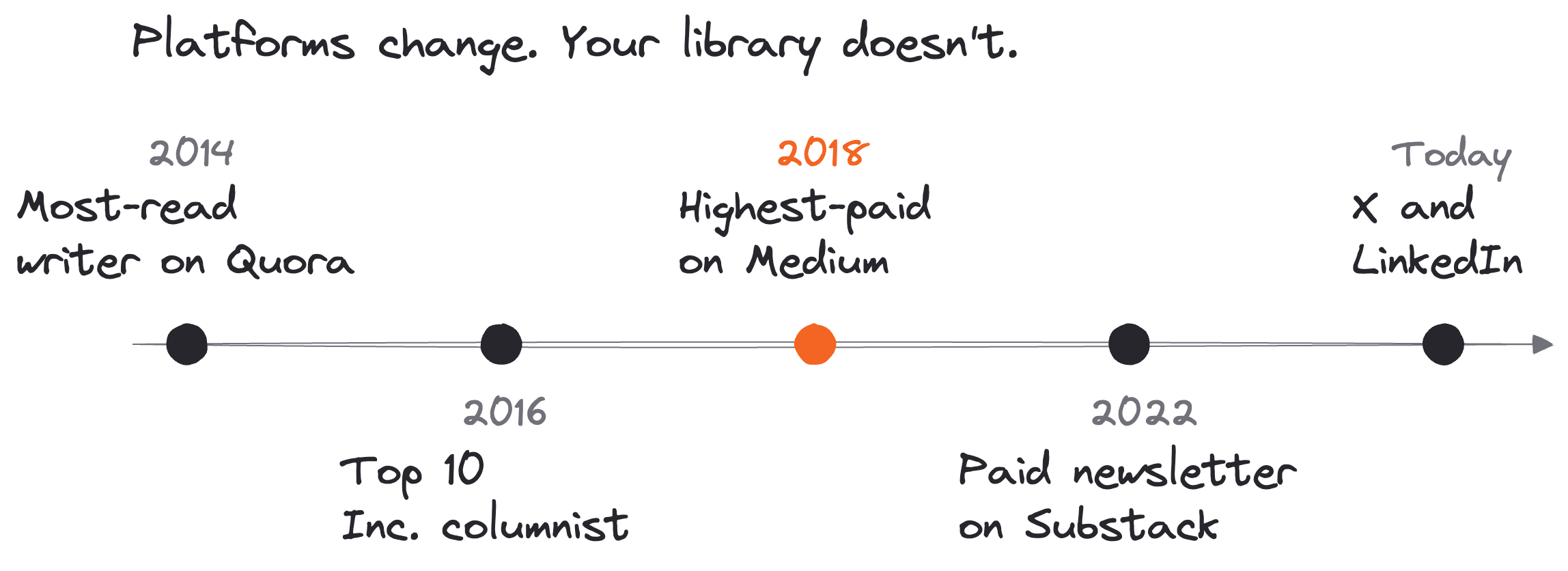
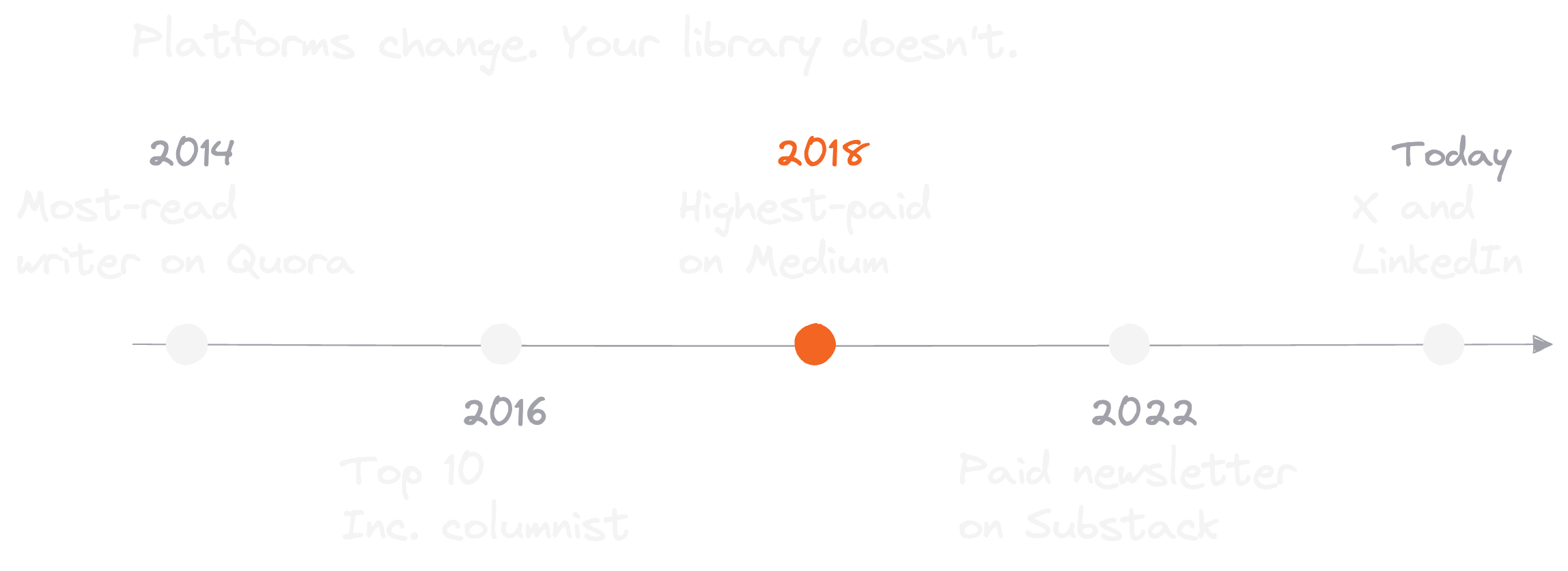
Look at my own path. I was the most-read writer on Quora in 2014, one of Inc. Magazine's top 10 columnists in 2016 and one of Medium's highest-paid writers in 2018. In 2022 I co-founded a paid newsletter on Substack, Category Pirates. Today the best places to publish are X and LinkedIn. Quora, Inc. and Medium each had their moment, and each one faded.
What lasted was the library. The Medium money came from Quora answers I'd already written. As I put it when I called Medium dead: "if you have a large, niche library of content, you don't have to start over."
So pick the platform that fits your goal today. Then build a library you can carry to the next one.
Where Typeshare Fits: Write Once, Publish To Substack, X And LinkedIn
Whichever newsletter platform you pick, your readers will come from somewhere else first.
That's how every paid newsletter I've built works. You write for free on X, LinkedIn or Threads every day, and you tell people you go deeper in your newsletter. In my posts on building a six-figure newsletter, I suggest pulling a dozen or more social posts out of every issue. Then you republish your best ones as Substack Notes.
Typeshare is built for that loop:
- Write and schedule your Substack newsletter in the Long Form editor, with or without emailing subscribers (how it works).
- Schedule a week of Notes in your Substack queue, next to the same ideas for X, LinkedIn, Threads and Bluesky.
- Let the Substack Agent turn your past newsletters into Notes, in your voice, on the schedule you choose.
- Bring your old library with you. Typeshare imports your Medium, WordPress and Ghost posts into your Digital Brain, so years of writing become fresh posts.
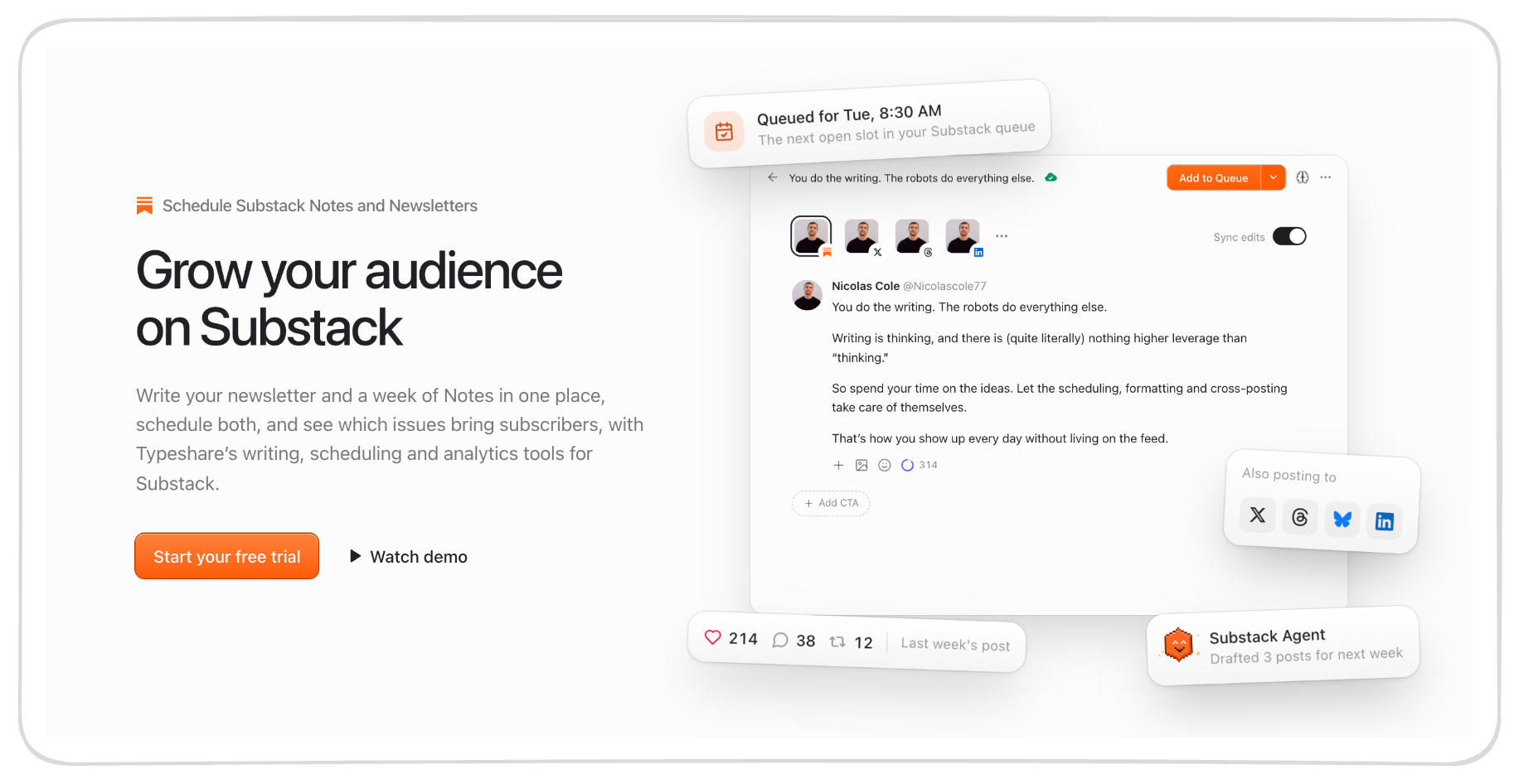
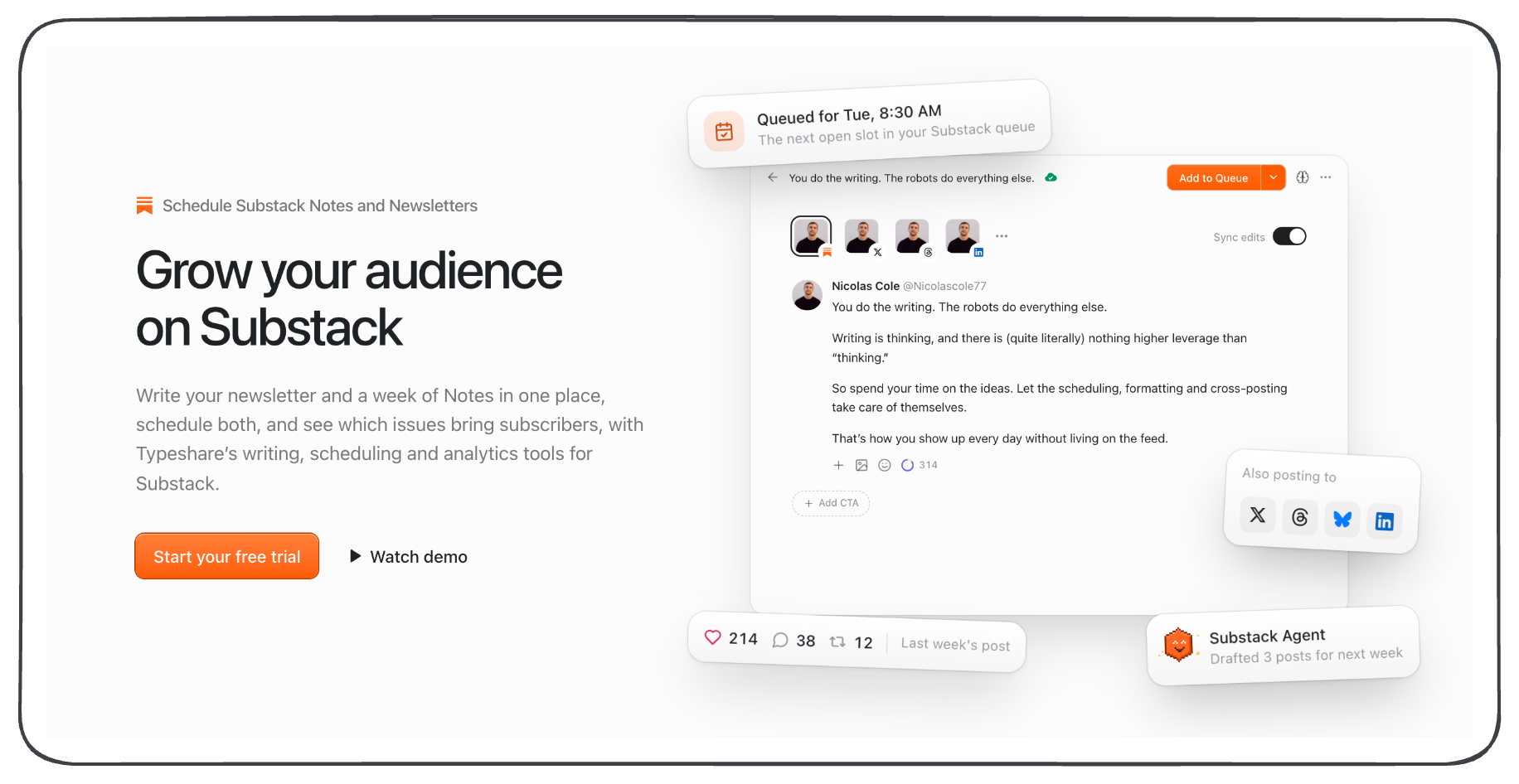
Typeshare publishes to Substack, X, LinkedIn, Threads and Bluesky. It doesn't post to Medium, beehiiv or Ghost. If you're on one of those, you can still write and schedule your social posts in Typeshare, and import your archive to turn it into new ones.
Write once, and let it travel to Substack, X and LinkedIn.
FAQ
Is Substack better than Medium?
For most writers, yes. Substack lets you keep your readers and charge them directly, and its network brings you new subscribers. Medium pays a share of membership dues for reads, which can be a nice bonus but builds no list you own.
Can I post the same article on Medium and Substack?
Yes. You can publish on Substack first and republish your best pieces on Medium later, with a link back to your newsletter, so Medium's readers become new subscribers. Medium has rules on which stories can go behind its paywall, so check them before you republish for money.
Is Medium dead?
For building an audience you own, I think so. Medium still pays Partner Program writers when members read their stories, but readers who subscribe to you there no longer share their email addresses with you.
Is beehiiv cheaper than Substack?
It depends on your revenue. Substack is free until you charge, then takes 10% of paid subscriptions. beehiiv is free up to 2,500 subscribers and charges a flat monthly fee for paid features, with 0% of your subscription revenue. Past roughly $500 a month in paid subscriptions, beehiiv's Lite plan usually costs less.
Can I move from Substack to beehiiv or Ghost later?
Yes. Substack lets you export your posts, subscriber list and stats at any time, and both beehiiv and Ghost let you import a subscriber list. Check the new platform's import guide before you switch, especially for paid subscribers.